How Graphene Battery Systems Support Smart Network Management?
AUG 6, 20259 MIN READ
Generate Your Research Report Instantly with AI Agent
Patsnap Eureka helps you evaluate technical feasibility & market potential.
Graphene Battery Evolution
Graphene battery technology has undergone significant evolution since its inception, marking a transformative journey in energy storage systems. The development of graphene batteries can be traced through several key stages, each characterized by notable advancements and breakthroughs.
In the early 2010s, researchers began exploring graphene's potential in battery applications, recognizing its exceptional electrical conductivity and high surface area. Initial experiments focused on incorporating graphene into existing lithium-ion battery architectures, primarily as an additive to enhance electrode performance.
By the mid-2010s, scientists had made substantial progress in developing graphene-based anodes. These anodes demonstrated remarkable improvements in charging speed and capacity compared to traditional graphite anodes. Concurrently, efforts to create graphene-enhanced cathodes gained momentum, aiming to address the limitations of conventional cathode materials.
The late 2010s saw the emergence of prototype graphene batteries, showcasing the technology's potential for high-power applications. These early prototypes exhibited significantly faster charging times and higher energy densities than conventional lithium-ion batteries, attracting attention from various industries, including electric vehicles and consumer electronics.
As research intensified, the focus shifted towards overcoming practical challenges in large-scale production and integration. Scientists and engineers worked on developing cost-effective methods for graphene synthesis and optimizing battery designs to maximize graphene's benefits.
Recent years have witnessed the introduction of hybrid graphene-silicon anodes, combining the advantages of both materials to achieve even higher energy densities. This innovation has opened new possibilities for extending the range of electric vehicles and improving the longevity of portable electronic devices.
In the context of smart network management, graphene battery evolution has played a crucial role. The technology's rapid charging capabilities and high power density make it ideal for grid stabilization and energy storage in smart grids. Graphene batteries can efficiently store excess energy during low-demand periods and rapidly release it during peak times, enhancing grid flexibility and reliability.
Furthermore, the evolution of graphene batteries has led to the development of more compact and lightweight energy storage solutions. This advancement is particularly beneficial for distributed energy systems and microgrids, enabling more efficient integration of renewable energy sources into smart networks.
As graphene battery technology continues to mature, ongoing research focuses on further improving cycle life, enhancing safety features, and reducing production costs. These advancements are expected to drive wider adoption of graphene batteries in smart network management systems, contributing to more resilient and sustainable energy infrastructures.
In the early 2010s, researchers began exploring graphene's potential in battery applications, recognizing its exceptional electrical conductivity and high surface area. Initial experiments focused on incorporating graphene into existing lithium-ion battery architectures, primarily as an additive to enhance electrode performance.
By the mid-2010s, scientists had made substantial progress in developing graphene-based anodes. These anodes demonstrated remarkable improvements in charging speed and capacity compared to traditional graphite anodes. Concurrently, efforts to create graphene-enhanced cathodes gained momentum, aiming to address the limitations of conventional cathode materials.
The late 2010s saw the emergence of prototype graphene batteries, showcasing the technology's potential for high-power applications. These early prototypes exhibited significantly faster charging times and higher energy densities than conventional lithium-ion batteries, attracting attention from various industries, including electric vehicles and consumer electronics.
As research intensified, the focus shifted towards overcoming practical challenges in large-scale production and integration. Scientists and engineers worked on developing cost-effective methods for graphene synthesis and optimizing battery designs to maximize graphene's benefits.
Recent years have witnessed the introduction of hybrid graphene-silicon anodes, combining the advantages of both materials to achieve even higher energy densities. This innovation has opened new possibilities for extending the range of electric vehicles and improving the longevity of portable electronic devices.
In the context of smart network management, graphene battery evolution has played a crucial role. The technology's rapid charging capabilities and high power density make it ideal for grid stabilization and energy storage in smart grids. Graphene batteries can efficiently store excess energy during low-demand periods and rapidly release it during peak times, enhancing grid flexibility and reliability.
Furthermore, the evolution of graphene batteries has led to the development of more compact and lightweight energy storage solutions. This advancement is particularly beneficial for distributed energy systems and microgrids, enabling more efficient integration of renewable energy sources into smart networks.
As graphene battery technology continues to mature, ongoing research focuses on further improving cycle life, enhancing safety features, and reducing production costs. These advancements are expected to drive wider adoption of graphene batteries in smart network management systems, contributing to more resilient and sustainable energy infrastructures.
Smart Grid Market Analysis
The smart grid market has been experiencing significant growth and transformation in recent years, driven by the increasing demand for efficient energy management systems and the integration of renewable energy sources. As of 2023, the global smart grid market size was valued at approximately $80 billion, with projections indicating a compound annual growth rate (CAGR) of around 18% over the next five years.
The adoption of smart grid technologies is being fueled by several key factors. Firstly, governments worldwide are implementing supportive policies and regulations to promote the modernization of power infrastructure. These initiatives aim to enhance grid reliability, reduce power outages, and improve overall energy efficiency. Secondly, the growing penetration of renewable energy sources, such as solar and wind power, necessitates advanced grid management systems to handle the intermittent nature of these resources.
In terms of regional market dynamics, North America and Europe currently lead the smart grid market, accounting for over 60% of the global market share. However, the Asia-Pacific region is expected to witness the highest growth rate in the coming years, driven by rapid urbanization, increasing energy demand, and government-led smart city initiatives in countries like China and India.
The smart grid market can be segmented into various components, including smart meters, grid optimization solutions, energy management systems, and advanced metering infrastructure. Among these, smart meters represent the largest segment, with a market share of approximately 35%. The demand for smart meters is expected to continue growing as utilities seek to improve billing accuracy and enable real-time energy consumption monitoring.
Key players in the smart grid market include established technology giants such as Siemens, ABB, and General Electric, as well as specialized smart grid solution providers like Itron and Landis+Gyr. These companies are investing heavily in research and development to enhance their product offerings and maintain their competitive edge in the rapidly evolving market.
The integration of graphene battery systems into smart grid infrastructure presents a significant opportunity for market growth. Graphene-based energy storage solutions offer several advantages over traditional battery technologies, including higher energy density, faster charging capabilities, and improved cycle life. These characteristics make graphene batteries particularly well-suited for smart grid applications, where efficient energy storage and rapid response to demand fluctuations are critical.
As the smart grid market continues to expand, emerging trends such as the Internet of Things (IoT), artificial intelligence, and blockchain technology are expected to play increasingly important roles in shaping the future of grid management. These technologies have the potential to further enhance grid efficiency, security, and reliability, driving continued innovation and market growth in the smart grid sector.
The adoption of smart grid technologies is being fueled by several key factors. Firstly, governments worldwide are implementing supportive policies and regulations to promote the modernization of power infrastructure. These initiatives aim to enhance grid reliability, reduce power outages, and improve overall energy efficiency. Secondly, the growing penetration of renewable energy sources, such as solar and wind power, necessitates advanced grid management systems to handle the intermittent nature of these resources.
In terms of regional market dynamics, North America and Europe currently lead the smart grid market, accounting for over 60% of the global market share. However, the Asia-Pacific region is expected to witness the highest growth rate in the coming years, driven by rapid urbanization, increasing energy demand, and government-led smart city initiatives in countries like China and India.
The smart grid market can be segmented into various components, including smart meters, grid optimization solutions, energy management systems, and advanced metering infrastructure. Among these, smart meters represent the largest segment, with a market share of approximately 35%. The demand for smart meters is expected to continue growing as utilities seek to improve billing accuracy and enable real-time energy consumption monitoring.
Key players in the smart grid market include established technology giants such as Siemens, ABB, and General Electric, as well as specialized smart grid solution providers like Itron and Landis+Gyr. These companies are investing heavily in research and development to enhance their product offerings and maintain their competitive edge in the rapidly evolving market.
The integration of graphene battery systems into smart grid infrastructure presents a significant opportunity for market growth. Graphene-based energy storage solutions offer several advantages over traditional battery technologies, including higher energy density, faster charging capabilities, and improved cycle life. These characteristics make graphene batteries particularly well-suited for smart grid applications, where efficient energy storage and rapid response to demand fluctuations are critical.
As the smart grid market continues to expand, emerging trends such as the Internet of Things (IoT), artificial intelligence, and blockchain technology are expected to play increasingly important roles in shaping the future of grid management. These technologies have the potential to further enhance grid efficiency, security, and reliability, driving continued innovation and market growth in the smart grid sector.
Graphene Battery Challenges
Despite the promising potential of graphene batteries in smart network management, several significant challenges hinder their widespread adoption and implementation. One of the primary obstacles is the scalability of graphene production. While laboratory-scale synthesis of high-quality graphene is achievable, mass production with consistent quality remains a formidable challenge. This limitation directly impacts the availability and cost-effectiveness of graphene batteries for large-scale network applications.
Another critical challenge lies in the integration of graphene batteries with existing network infrastructure. The unique properties of graphene, while advantageous in many aspects, require specialized charging and discharging protocols. Developing compatible systems that can efficiently manage these batteries within the current smart grid framework presents a significant engineering hurdle.
The long-term stability and cycling performance of graphene batteries also pose concerns. While graphene exhibits excellent theoretical capacities, maintaining this performance over thousands of charge-discharge cycles in real-world conditions is yet to be conclusively demonstrated. This uncertainty raises questions about the reliability and longevity of graphene battery systems in demanding network management scenarios.
Environmental and safety considerations present additional challenges. The production and disposal of graphene batteries must adhere to strict environmental regulations. Ensuring the safe handling of graphene materials throughout the battery lifecycle, from manufacturing to recycling, requires the development of new safety protocols and specialized equipment.
Furthermore, the cost of graphene battery systems remains a significant barrier to widespread adoption. Although the price of graphene has decreased in recent years, it is still considerably higher than traditional battery materials. This cost factor makes it difficult for network operators to justify the initial investment, despite the potential long-term benefits.
Lastly, there is a knowledge gap in understanding the full potential and limitations of graphene batteries in network management applications. This lack of comprehensive data on real-world performance hinders the development of optimized control algorithms and management strategies. Overcoming this challenge requires extensive field testing and data collection, which is both time-consuming and resource-intensive.
Addressing these challenges will be crucial for realizing the full potential of graphene battery systems in supporting smart network management. It will require collaborative efforts from researchers, engineers, and industry stakeholders to develop innovative solutions and overcome the current limitations.
Another critical challenge lies in the integration of graphene batteries with existing network infrastructure. The unique properties of graphene, while advantageous in many aspects, require specialized charging and discharging protocols. Developing compatible systems that can efficiently manage these batteries within the current smart grid framework presents a significant engineering hurdle.
The long-term stability and cycling performance of graphene batteries also pose concerns. While graphene exhibits excellent theoretical capacities, maintaining this performance over thousands of charge-discharge cycles in real-world conditions is yet to be conclusively demonstrated. This uncertainty raises questions about the reliability and longevity of graphene battery systems in demanding network management scenarios.
Environmental and safety considerations present additional challenges. The production and disposal of graphene batteries must adhere to strict environmental regulations. Ensuring the safe handling of graphene materials throughout the battery lifecycle, from manufacturing to recycling, requires the development of new safety protocols and specialized equipment.
Furthermore, the cost of graphene battery systems remains a significant barrier to widespread adoption. Although the price of graphene has decreased in recent years, it is still considerably higher than traditional battery materials. This cost factor makes it difficult for network operators to justify the initial investment, despite the potential long-term benefits.
Lastly, there is a knowledge gap in understanding the full potential and limitations of graphene batteries in network management applications. This lack of comprehensive data on real-world performance hinders the development of optimized control algorithms and management strategies. Overcoming this challenge requires extensive field testing and data collection, which is both time-consuming and resource-intensive.
Addressing these challenges will be crucial for realizing the full potential of graphene battery systems in supporting smart network management. It will require collaborative efforts from researchers, engineers, and industry stakeholders to develop innovative solutions and overcome the current limitations.
Graphene-Based Grid Solutions
01 Graphene-based battery management systems
Advanced battery management systems incorporating graphene technology for improved performance, efficiency, and longevity of energy storage devices. These systems utilize graphene's unique properties to enhance charge distribution, thermal management, and overall battery health monitoring in networked environments.- Graphene-based battery management systems: Advanced battery management systems incorporating graphene technology for improved performance and efficiency in energy storage networks. These systems optimize charging, discharging, and overall battery health monitoring, leveraging graphene's unique properties to enhance conductivity and thermal management.
- Network management for graphene battery systems: Specialized network management techniques for graphene battery systems, focusing on data communication, remote monitoring, and control of distributed energy storage units. These methods ensure efficient operation, load balancing, and seamless integration of graphene batteries into smart grids and renewable energy networks.
- Graphene-enhanced energy storage network optimization: Optimization strategies for energy storage networks utilizing graphene-based batteries, including algorithms for power distribution, demand response, and grid stability. These approaches maximize the benefits of graphene's high conductivity and capacity in large-scale energy storage applications.
- Thermal management in graphene battery networks: Innovative thermal management solutions for graphene battery networks, addressing heat dissipation and temperature control challenges in high-density energy storage systems. These techniques leverage graphene's excellent thermal conductivity to maintain optimal operating conditions and extend battery lifespan.
- Safety and fault detection in graphene battery systems: Advanced safety mechanisms and fault detection methods specifically designed for graphene-based battery systems and networks. These include real-time monitoring, predictive maintenance, and rapid response protocols to ensure the reliability and safety of large-scale graphene battery installations.
02 Network-based energy storage control and optimization
Intelligent network management systems for graphene battery arrays, focusing on load balancing, demand response, and energy distribution optimization. These systems employ advanced algorithms to maximize energy efficiency and grid stability across interconnected graphene battery installations.Expand Specific Solutions03 Graphene battery monitoring and diagnostics
Sophisticated monitoring and diagnostic tools for graphene-enhanced battery systems, enabling real-time performance analysis, predictive maintenance, and fault detection. These technologies leverage network connectivity to provide comprehensive insights into battery health and operational status.Expand Specific Solutions04 Integration of graphene batteries with smart grid systems
Methods and systems for seamlessly integrating graphene-based energy storage solutions with smart grid infrastructure. This includes protocols for bi-directional communication, grid synchronization, and adaptive power management to enhance overall grid resilience and flexibility.Expand Specific Solutions05 Wireless management of graphene battery networks
Wireless technologies and protocols specifically designed for managing distributed graphene battery systems. These solutions enable remote monitoring, control, and optimization of battery networks, facilitating efficient energy management across geographically dispersed installations.Expand Specific Solutions
Key Graphene Battery Players
The graphene battery systems market for smart network management is in its early growth stage, characterized by rapid technological advancements and increasing market potential. The global market size is expanding, driven by the growing demand for efficient energy storage solutions in smart grids and IoT applications. While the technology is still evolving, several key players are making significant strides in commercialization. Companies like ZTE Corp., Global Graphene Group, and Honeycomb Battery Co. are at the forefront, developing innovative graphene-based battery solutions. Research institutions such as The University of Queensland and Northwestern University are contributing to technological advancements, while established tech giants like IBM and Samsung are exploring potential applications in their product ecosystems.
ZTE Corp.
Technical Solution: ZTE has developed a comprehensive smart network management solution that incorporates graphene battery systems, leveraging their expertise in telecommunications infrastructure. Their approach focuses on integrating graphene-enhanced energy storage into 5G base stations and edge computing nodes to improve network reliability and energy efficiency. ZTE's graphene batteries offer high power density and fast charging capabilities, crucial for maintaining uninterrupted service in high-traffic areas. The company's smart management system uses AI algorithms to optimize power distribution across the network, balancing load between different cells and adjusting to real-time demand fluctuations[10]. Additionally, ZTE has implemented advanced thermal management techniques that leverage graphene's superior heat dissipation properties to extend battery life and improve overall system performance[11].
Strengths: Strong integration with existing telecom infrastructure, expertise in large-scale network management. Weaknesses: Less experience in energy storage compared to specialized battery manufacturers.
Global Graphene Group, Inc.
Technical Solution: Global Graphene Group has developed advanced graphene-based battery systems that support smart network management. Their technology utilizes graphene's exceptional electrical conductivity and high surface area to enhance energy storage capacity and charge/discharge rates. The company's graphene-enhanced batteries incorporate smart management systems that optimize performance based on real-time data analysis. These systems monitor battery health, predict maintenance needs, and adjust charging patterns to maximize efficiency and lifespan[1][3]. The integration of IoT sensors allows for seamless communication with smart grids, enabling dynamic load balancing and improved energy distribution across networks[2].
Strengths: Superior energy density, faster charging, and longer lifespan compared to traditional batteries. Weaknesses: Higher production costs and potential scalability challenges for mass production.
Graphene Battery Innovations
Fault tolerant wireless battery area network for a smart battery management system
PatentInactiveUS9559530B2
Innovation
- A self-organizing wireless battery area network (WiBaAN) that uses beamforming technology to establish optimal wireless communication conditions, allowing for scalable monitoring and control of individual battery cells through a master-slave architecture, eliminating the need for extensive wiring and enabling efficient energy management.


Graphene networks and methods for synthesis and use of the same
PatentPendingUS20230275229A1
Innovation
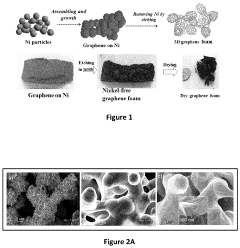
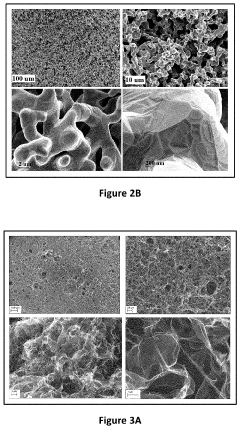
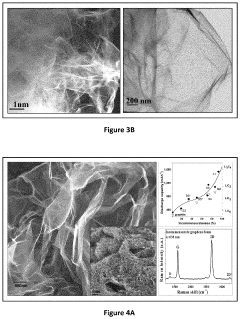
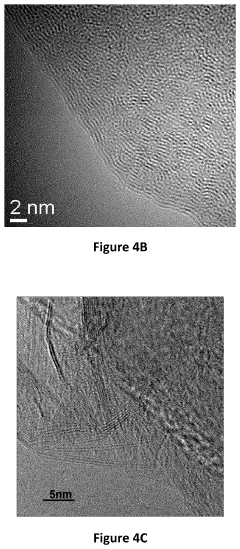
- A method for synthesizing a high crystalline, curved 3D graphene network with incommensurate multilayers by forming a metal catalyst template from non-uniform nickel particles, applying a hydrocarbon source, and removing the metal to produce a graphene foam with weak interplanar interactions, allowing for high reversible capacity as an anode material in lithium batteries.
Regulatory Framework
The regulatory framework surrounding graphene battery systems and smart network management is a complex and evolving landscape. As these technologies continue to advance, governments and regulatory bodies worldwide are working to establish guidelines that ensure safety, reliability, and environmental sustainability while fostering innovation.
In the United States, the Department of Energy (DOE) plays a crucial role in overseeing the development and implementation of energy storage technologies, including graphene-based batteries. The Federal Energy Regulatory Commission (FERC) has also issued orders and guidelines related to energy storage integration into the grid, which directly impact smart network management systems utilizing graphene batteries.
The European Union has taken significant steps in regulating energy storage and smart grid technologies. The European Commission's Clean Energy Package includes provisions for energy storage and aims to create a more flexible and efficient energy market. Additionally, the EU Battery Directive sets standards for battery production, use, and disposal, which will likely be updated to address the specific characteristics of graphene-based energy storage systems.
In Asia, countries like China, Japan, and South Korea have implemented policies to promote the development of advanced battery technologies and smart grid systems. China's Energy Storage Industry Research White Paper outlines the country's strategy for energy storage development, including support for graphene-based technologies.
International standards organizations, such as the International Electrotechnical Commission (IEC) and the Institute of Electrical and Electronics Engineers (IEEE), are working on developing global standards for energy storage systems and smart grid technologies. These standards will be crucial in ensuring interoperability and safety across different markets and applications.
Environmental regulations also play a significant role in shaping the development of graphene battery systems. Many countries have implemented or are considering carbon pricing mechanisms and emissions reduction targets, which indirectly incentivize the adoption of more efficient energy storage technologies like graphene batteries.
As the technology matures, regulators are likely to focus on specific aspects of graphene battery systems, such as safety protocols, recycling requirements, and performance standards. The unique properties of graphene may necessitate the development of new testing and certification procedures to ensure compliance with existing and future regulations.
Cybersecurity regulations are becoming increasingly important as smart network management systems become more prevalent. Governments are implementing stricter data protection and network security requirements, which will impact the design and operation of smart grids utilizing graphene battery systems.
In the United States, the Department of Energy (DOE) plays a crucial role in overseeing the development and implementation of energy storage technologies, including graphene-based batteries. The Federal Energy Regulatory Commission (FERC) has also issued orders and guidelines related to energy storage integration into the grid, which directly impact smart network management systems utilizing graphene batteries.
The European Union has taken significant steps in regulating energy storage and smart grid technologies. The European Commission's Clean Energy Package includes provisions for energy storage and aims to create a more flexible and efficient energy market. Additionally, the EU Battery Directive sets standards for battery production, use, and disposal, which will likely be updated to address the specific characteristics of graphene-based energy storage systems.
In Asia, countries like China, Japan, and South Korea have implemented policies to promote the development of advanced battery technologies and smart grid systems. China's Energy Storage Industry Research White Paper outlines the country's strategy for energy storage development, including support for graphene-based technologies.
International standards organizations, such as the International Electrotechnical Commission (IEC) and the Institute of Electrical and Electronics Engineers (IEEE), are working on developing global standards for energy storage systems and smart grid technologies. These standards will be crucial in ensuring interoperability and safety across different markets and applications.
Environmental regulations also play a significant role in shaping the development of graphene battery systems. Many countries have implemented or are considering carbon pricing mechanisms and emissions reduction targets, which indirectly incentivize the adoption of more efficient energy storage technologies like graphene batteries.
As the technology matures, regulators are likely to focus on specific aspects of graphene battery systems, such as safety protocols, recycling requirements, and performance standards. The unique properties of graphene may necessitate the development of new testing and certification procedures to ensure compliance with existing and future regulations.
Cybersecurity regulations are becoming increasingly important as smart network management systems become more prevalent. Governments are implementing stricter data protection and network security requirements, which will impact the design and operation of smart grids utilizing graphene battery systems.
Environmental Impact Assessment
The integration of graphene battery systems into smart network management presents a significant opportunity for enhancing energy efficiency and reducing environmental impact. These advanced battery systems offer several environmental benefits that align with sustainable development goals.
Graphene batteries have a longer lifespan compared to traditional lithium-ion batteries, potentially reducing the frequency of battery replacements and associated electronic waste. This longevity contributes to a decrease in the overall environmental footprint of energy storage systems within smart networks. Additionally, the improved charge-discharge efficiency of graphene batteries leads to reduced energy losses during operation, further minimizing the carbon footprint of network infrastructure.
The use of graphene in battery production also has potential advantages in terms of raw material sourcing and manufacturing processes. Graphene can be derived from various carbon sources, including some that are renewable or recycled, potentially reducing the environmental impact of battery production compared to traditional lithium-ion batteries that rely heavily on mining activities.
In smart network management, graphene batteries can support more efficient load balancing and peak shaving, leading to optimized energy consumption patterns. This capability can contribute to a reduction in overall energy demand and, consequently, lower greenhouse gas emissions associated with power generation. The rapid charging and discharging characteristics of graphene batteries also enable more effective integration of renewable energy sources into smart grids, supporting the transition to cleaner energy systems.
Furthermore, the enhanced thermal management properties of graphene batteries can reduce the need for extensive cooling systems in network infrastructure, potentially decreasing energy consumption and the use of environmentally harmful refrigerants. This aspect is particularly relevant in data centers and telecommunications facilities, where cooling requirements contribute significantly to overall energy consumption and environmental impact.
However, it is important to consider the full lifecycle environmental impact of graphene battery systems. While they offer numerous benefits, the production of graphene and the manufacturing of these advanced batteries may have their own environmental considerations. Ongoing research and development efforts are focused on optimizing production processes to minimize any potential negative impacts and ensure that the overall environmental benefits of graphene battery systems are maximized throughout their lifecycle.
Graphene batteries have a longer lifespan compared to traditional lithium-ion batteries, potentially reducing the frequency of battery replacements and associated electronic waste. This longevity contributes to a decrease in the overall environmental footprint of energy storage systems within smart networks. Additionally, the improved charge-discharge efficiency of graphene batteries leads to reduced energy losses during operation, further minimizing the carbon footprint of network infrastructure.
The use of graphene in battery production also has potential advantages in terms of raw material sourcing and manufacturing processes. Graphene can be derived from various carbon sources, including some that are renewable or recycled, potentially reducing the environmental impact of battery production compared to traditional lithium-ion batteries that rely heavily on mining activities.
In smart network management, graphene batteries can support more efficient load balancing and peak shaving, leading to optimized energy consumption patterns. This capability can contribute to a reduction in overall energy demand and, consequently, lower greenhouse gas emissions associated with power generation. The rapid charging and discharging characteristics of graphene batteries also enable more effective integration of renewable energy sources into smart grids, supporting the transition to cleaner energy systems.
Furthermore, the enhanced thermal management properties of graphene batteries can reduce the need for extensive cooling systems in network infrastructure, potentially decreasing energy consumption and the use of environmentally harmful refrigerants. This aspect is particularly relevant in data centers and telecommunications facilities, where cooling requirements contribute significantly to overall energy consumption and environmental impact.
However, it is important to consider the full lifecycle environmental impact of graphene battery systems. While they offer numerous benefits, the production of graphene and the manufacturing of these advanced batteries may have their own environmental considerations. Ongoing research and development efforts are focused on optimizing production processes to minimize any potential negative impacts and ensure that the overall environmental benefits of graphene battery systems are maximized throughout their lifecycle.
Unlock deeper insights with Patsnap Eureka Quick Research — get a full tech report to explore trends and direct your research. Try now!
Generate Your Research Report Instantly with AI Agent
Supercharge your innovation with Patsnap Eureka AI Agent Platform!