

How KERS reshapes energy-efficient classroom technologies
AUG 15, 20259 MIN READ
Generate Your Research Report Instantly with AI Agent
PatSnap Eureka helps you evaluate technical feasibility & market potential.
KERS in Education: Background and Objectives
Kinetic Energy Recovery Systems (KERS) have emerged as a promising technology in the realm of energy-efficient solutions, with potential applications extending beyond their initial use in automotive racing. The integration of KERS into classroom technologies represents a novel approach to addressing energy efficiency challenges in educational settings. This technological innovation aligns with the growing global emphasis on sustainability and the need for eco-friendly practices in all sectors, including education.
The evolution of KERS technology can be traced back to its origins in Formula One racing, where it was introduced to capture and reuse energy that would otherwise be lost during braking. Over time, the principles behind KERS have been adapted and refined, opening up possibilities for its application in various fields. The transition of KERS from high-performance racing to everyday applications, particularly in educational environments, marks a significant milestone in its technological journey.
In the context of classroom technologies, KERS aims to revolutionize energy management by harnessing kinetic energy generated through daily activities within educational spaces. This approach seeks to transform mundane actions, such as students' movements or the operation of classroom equipment, into valuable energy sources. The primary objective is to create self-sustaining, energy-efficient learning environments that reduce reliance on external power sources and minimize environmental impact.
The development of KERS for educational settings is driven by several key factors. Firstly, there is an increasing awareness of the need for sustainable practices in schools and universities, coupled with rising energy costs and environmental concerns. Secondly, advancements in miniaturization and cost-effective manufacturing of KERS components have made it feasible to integrate this technology into everyday classroom items and infrastructure.
As we explore the potential of KERS in reshaping energy-efficient classroom technologies, it is crucial to consider the multifaceted benefits this innovation could bring. Beyond mere energy savings, KERS in education has the potential to foster a culture of sustainability among students, enhance their understanding of energy conservation principles, and provide hands-on experience with cutting-edge green technologies. This aligns with broader educational goals of preparing students for a future where environmental consciousness and technological literacy are paramount.
The implementation of KERS in educational settings also presents an opportunity to address the digital divide by potentially reducing the operational costs associated with technology-enhanced learning. By making classrooms more energy-independent, schools in resource-constrained areas could potentially increase their access to and use of educational technologies, thereby leveling the playing field in terms of technological exposure and digital literacy.
The evolution of KERS technology can be traced back to its origins in Formula One racing, where it was introduced to capture and reuse energy that would otherwise be lost during braking. Over time, the principles behind KERS have been adapted and refined, opening up possibilities for its application in various fields. The transition of KERS from high-performance racing to everyday applications, particularly in educational environments, marks a significant milestone in its technological journey.
In the context of classroom technologies, KERS aims to revolutionize energy management by harnessing kinetic energy generated through daily activities within educational spaces. This approach seeks to transform mundane actions, such as students' movements or the operation of classroom equipment, into valuable energy sources. The primary objective is to create self-sustaining, energy-efficient learning environments that reduce reliance on external power sources and minimize environmental impact.
The development of KERS for educational settings is driven by several key factors. Firstly, there is an increasing awareness of the need for sustainable practices in schools and universities, coupled with rising energy costs and environmental concerns. Secondly, advancements in miniaturization and cost-effective manufacturing of KERS components have made it feasible to integrate this technology into everyday classroom items and infrastructure.
As we explore the potential of KERS in reshaping energy-efficient classroom technologies, it is crucial to consider the multifaceted benefits this innovation could bring. Beyond mere energy savings, KERS in education has the potential to foster a culture of sustainability among students, enhance their understanding of energy conservation principles, and provide hands-on experience with cutting-edge green technologies. This aligns with broader educational goals of preparing students for a future where environmental consciousness and technological literacy are paramount.
The implementation of KERS in educational settings also presents an opportunity to address the digital divide by potentially reducing the operational costs associated with technology-enhanced learning. By making classrooms more energy-independent, schools in resource-constrained areas could potentially increase their access to and use of educational technologies, thereby leveling the playing field in terms of technological exposure and digital literacy.
Market Analysis for KERS in Classrooms
The market for Kinetic Energy Recovery Systems (KERS) in classroom environments is experiencing significant growth potential as educational institutions increasingly prioritize energy efficiency and sustainability. The global education technology market, valued at $89.49 billion in 2020, is projected to reach $285.23 billion by 2027, with a compound annual growth rate of 18.1%. Within this broader market, energy-efficient technologies like KERS are gaining traction due to their ability to reduce energy costs and environmental impact.
The demand for KERS in classrooms is driven by several factors. First, there is a growing awareness of the need for sustainable practices in educational settings. Schools and universities are under pressure to reduce their carbon footprint and demonstrate environmental responsibility. KERS offers a innovative solution by capturing and repurposing kinetic energy generated through everyday classroom activities, such as students' movements or the opening and closing of doors.
Additionally, the rising costs of energy are compelling educational institutions to seek out cost-effective solutions. KERS can significantly reduce electricity consumption by harnessing otherwise wasted energy, potentially leading to substantial savings on energy bills. This economic incentive is particularly appealing to budget-conscious schools and universities.
The market for KERS in classrooms is also benefiting from government initiatives and regulations promoting energy efficiency in public buildings. Many countries have implemented policies that require or incentivize the adoption of green technologies in educational facilities. This regulatory environment is creating a favorable market landscape for KERS implementation.
Furthermore, the integration of KERS aligns with the growing emphasis on STEM education. The technology provides practical, real-world examples of energy conservation and engineering principles, enhancing the learning experience for students. This educational value adds another dimension to the market appeal of KERS in classroom settings.
However, the market faces certain challenges. The initial installation costs of KERS can be high, which may deter some institutions with limited budgets. There is also a need for increased awareness and understanding of the technology among decision-makers in the education sector. Overcoming these barriers will be crucial for widespread adoption.
Looking ahead, the market for KERS in classrooms is expected to expand as the technology becomes more refined and cost-effective. The increasing focus on creating smart, sustainable learning environments will likely drive further innovation and adoption of energy-efficient technologies like KERS. As the education sector continues to evolve and prioritize sustainability, KERS is well-positioned to play a significant role in reshaping energy-efficient classroom technologies.
The demand for KERS in classrooms is driven by several factors. First, there is a growing awareness of the need for sustainable practices in educational settings. Schools and universities are under pressure to reduce their carbon footprint and demonstrate environmental responsibility. KERS offers a innovative solution by capturing and repurposing kinetic energy generated through everyday classroom activities, such as students' movements or the opening and closing of doors.
Additionally, the rising costs of energy are compelling educational institutions to seek out cost-effective solutions. KERS can significantly reduce electricity consumption by harnessing otherwise wasted energy, potentially leading to substantial savings on energy bills. This economic incentive is particularly appealing to budget-conscious schools and universities.
The market for KERS in classrooms is also benefiting from government initiatives and regulations promoting energy efficiency in public buildings. Many countries have implemented policies that require or incentivize the adoption of green technologies in educational facilities. This regulatory environment is creating a favorable market landscape for KERS implementation.
Furthermore, the integration of KERS aligns with the growing emphasis on STEM education. The technology provides practical, real-world examples of energy conservation and engineering principles, enhancing the learning experience for students. This educational value adds another dimension to the market appeal of KERS in classroom settings.
However, the market faces certain challenges. The initial installation costs of KERS can be high, which may deter some institutions with limited budgets. There is also a need for increased awareness and understanding of the technology among decision-makers in the education sector. Overcoming these barriers will be crucial for widespread adoption.
Looking ahead, the market for KERS in classrooms is expected to expand as the technology becomes more refined and cost-effective. The increasing focus on creating smart, sustainable learning environments will likely drive further innovation and adoption of energy-efficient technologies like KERS. As the education sector continues to evolve and prioritize sustainability, KERS is well-positioned to play a significant role in reshaping energy-efficient classroom technologies.
KERS Technology: Current State and Challenges
Kinetic Energy Recovery Systems (KERS) have made significant strides in recent years, particularly in their application to energy-efficient classroom technologies. The current state of KERS in educational settings is characterized by a growing interest in sustainable energy solutions, but also faces several challenges in widespread implementation.
KERS technology in classrooms primarily focuses on capturing and storing energy from various student activities, such as movement on specially designed floor tiles or the use of exercise equipment integrated into desks. This harvested energy is then converted into electrical power to support classroom operations, reducing overall energy consumption and promoting sustainability awareness among students.
One of the main challenges facing KERS implementation in classrooms is the relatively low energy yield compared to the initial investment costs. While the technology has proven effective in high-energy environments like automotive racing, adapting it to the more subdued energy patterns of a classroom setting requires significant optimization. Engineers are working to improve the efficiency of energy capture and conversion systems to make KERS more viable for educational institutions.
Another hurdle is the integration of KERS with existing classroom infrastructure. Many schools, especially older buildings, lack the necessary electrical systems to effectively utilize the recovered energy. Retrofitting these structures can be costly and disruptive to ongoing educational activities. Additionally, there are concerns about the durability and maintenance requirements of KERS equipment in high-traffic school environments.
The regulatory landscape also presents challenges for KERS adoption in schools. Safety standards for energy-generating equipment in educational settings are still evolving, and obtaining necessary approvals can be a complex process. This uncertainty can deter some institutions from investing in the technology.
Despite these challenges, advancements in KERS technology are showing promise. Recent innovations include more sensitive energy capture mechanisms that can harness energy from subtle movements, such as typing on keyboards or writing on tablets. Improved energy storage solutions, including high-capacity, fast-charging batteries, are also enhancing the practicality of KERS in classroom settings.
Researchers are exploring hybrid systems that combine KERS with other renewable energy sources like solar panels, creating more robust and reliable energy solutions for schools. These integrated systems aim to provide a more consistent power supply, addressing one of the key limitations of standalone KERS implementations.
As KERS technology continues to evolve, its potential to reshape energy-efficient classroom technologies remains significant. Overcoming current challenges through ongoing research and development efforts will be crucial in realizing the full benefits of this innovative approach to sustainable energy in educational environments.
KERS technology in classrooms primarily focuses on capturing and storing energy from various student activities, such as movement on specially designed floor tiles or the use of exercise equipment integrated into desks. This harvested energy is then converted into electrical power to support classroom operations, reducing overall energy consumption and promoting sustainability awareness among students.
One of the main challenges facing KERS implementation in classrooms is the relatively low energy yield compared to the initial investment costs. While the technology has proven effective in high-energy environments like automotive racing, adapting it to the more subdued energy patterns of a classroom setting requires significant optimization. Engineers are working to improve the efficiency of energy capture and conversion systems to make KERS more viable for educational institutions.
Another hurdle is the integration of KERS with existing classroom infrastructure. Many schools, especially older buildings, lack the necessary electrical systems to effectively utilize the recovered energy. Retrofitting these structures can be costly and disruptive to ongoing educational activities. Additionally, there are concerns about the durability and maintenance requirements of KERS equipment in high-traffic school environments.
The regulatory landscape also presents challenges for KERS adoption in schools. Safety standards for energy-generating equipment in educational settings are still evolving, and obtaining necessary approvals can be a complex process. This uncertainty can deter some institutions from investing in the technology.
Despite these challenges, advancements in KERS technology are showing promise. Recent innovations include more sensitive energy capture mechanisms that can harness energy from subtle movements, such as typing on keyboards or writing on tablets. Improved energy storage solutions, including high-capacity, fast-charging batteries, are also enhancing the practicality of KERS in classroom settings.
Researchers are exploring hybrid systems that combine KERS with other renewable energy sources like solar panels, creating more robust and reliable energy solutions for schools. These integrated systems aim to provide a more consistent power supply, addressing one of the key limitations of standalone KERS implementations.
As KERS technology continues to evolve, its potential to reshape energy-efficient classroom technologies remains significant. Overcoming current challenges through ongoing research and development efforts will be crucial in realizing the full benefits of this innovative approach to sustainable energy in educational environments.
KERS Implementation in Classroom Technologies
01 Improved energy recovery mechanisms
Advanced KERS designs focus on enhancing energy recovery mechanisms to maximize efficiency. This includes optimizing the conversion of kinetic energy to electrical energy during braking, and improving energy storage systems to minimize losses. These improvements lead to higher overall system efficiency and better energy utilization in vehicles.- Improved energy recovery and storage systems: Advanced KERS designs focus on enhancing energy recovery and storage efficiency. These systems utilize innovative technologies to capture and store kinetic energy more effectively during braking, allowing for greater energy reuse during acceleration. Improvements in energy storage devices, such as high-capacity batteries or flywheels, contribute to increased overall system efficiency.
- Integration with hybrid and electric vehicle powertrains: KERS is increasingly integrated with hybrid and electric vehicle powertrains to maximize energy efficiency. These integrated systems allow for seamless energy transfer between the KERS and the vehicle's primary power source, optimizing overall vehicle performance and reducing energy waste. Advanced control algorithms manage the energy flow between different components of the powertrain.
- Lightweight and compact KERS designs: Innovations in KERS focus on reducing system weight and size while maintaining or improving efficiency. Lightweight materials and compact designs are employed to minimize the impact on vehicle dynamics and maximize energy savings. These advancements contribute to improved overall vehicle efficiency by reducing the energy required for propulsion.
- Regenerative braking optimization: Enhanced regenerative braking systems are developed to maximize energy recovery during deceleration. These systems employ sophisticated control strategies to balance between conventional friction braking and regenerative braking, ensuring optimal energy recovery without compromising vehicle safety or driver comfort. Adaptive algorithms adjust the regenerative braking force based on various driving conditions.
- Multi-mode KERS for diverse applications: Versatile KERS designs are developed to operate efficiently across various vehicle types and driving conditions. These systems feature multiple operating modes that can be selected based on the specific energy demands of different vehicles or driving scenarios. Adaptive control systems optimize energy recovery and deployment strategies in real-time, enhancing overall system efficiency across a wide range of applications.
02 Integration with hybrid and electric powertrains
KERS is increasingly integrated with hybrid and electric vehicle powertrains to enhance overall energy efficiency. This integration allows for seamless energy transfer between the KERS and the main propulsion system, optimizing energy use across different driving conditions and reducing fuel consumption in hybrid vehicles.Expand Specific Solutions03 Advanced control strategies
Sophisticated control algorithms are developed to manage KERS operation, optimizing energy recovery, storage, and deployment. These strategies consider factors such as vehicle speed, battery state of charge, and driver behavior to maximize energy efficiency and performance across various driving scenarios.Expand Specific Solutions04 Novel energy storage technologies
Research into new energy storage technologies for KERS aims to improve capacity, charge/discharge rates, and longevity. This includes advancements in high-power batteries, supercapacitors, and flywheel systems, which can store and release large amounts of energy quickly, enhancing the overall efficiency of the KERS.Expand Specific Solutions05 Application in non-automotive sectors
KERS technology is being adapted for use in non-automotive applications, such as industrial machinery, renewable energy systems, and public transportation. This expansion of KERS usage into diverse sectors demonstrates its potential for improving energy efficiency across various industries and applications.Expand Specific Solutions
Key Players in KERS for Education
The KERS (Kinetic Energy Recovery System) technology is reshaping energy-efficient classroom technologies, with the market in its early growth stage. The global smart classroom market, which includes KERS applications, is projected to expand significantly in the coming years. While the technology is still evolving, companies like Volvo Lastvagnar AB, Marelli Europe SpA, and Ford Otomotiv Sanayi AS are leading the way in KERS development for automotive applications. Educational institutions such as Tianjin University and Central China Normal University are exploring KERS integration in classroom settings. As the technology matures, we can expect increased adoption and innovation from both established players and emerging startups in the education technology sector.
Lenovo (Singapore) Pte Ltd.
Technical Solution: Lenovo has developed a KERS-enabled smart classroom solution that focuses on energy-efficient computing devices and peripherals. Their system incorporates low-power processors and displays that can operate on recovered kinetic energy from classroom activities. Lenovo's KERS technology is integrated into their educational laptops and tablets, allowing these devices to charge through movement and vibration. The company has also developed energy-harvesting keyboards and mice that generate power through typing and clicking actions[5]. Lenovo's KERS solution is complemented by their ThinkSmart Hub, which acts as a central control unit for managing and distributing recovered energy across all classroom devices[6].
Strengths: Seamless integration with existing Lenovo hardware ecosystem, focus on personal computing devices, and user-friendly implementation. Weaknesses: Limited to Lenovo devices, which may restrict flexibility in hardware choices for schools.
Amazon Technologies, Inc.
Technical Solution: Amazon Technologies has developed a comprehensive IoT-based KERS solution for classrooms. Their system integrates smart sensors, cloud computing, and machine learning algorithms to create an intelligent energy management ecosystem. The KERS captures energy from various sources, including thermal energy from HVAC systems and kinetic energy from student activities. Amazon's solution uses predictive analytics to optimize energy distribution and storage based on historical classroom usage data and real-time occupancy information[3]. The system also incorporates voice-controlled assistants to allow teachers and students to manage classroom energy consumption effortlessly[4].
Strengths: Seamless integration with existing Amazon ecosystem, advanced AI-driven energy optimization, and user-friendly interface. Weaknesses: Potential privacy concerns due to data collection, and reliance on constant internet connectivity.
Innovative KERS Applications for Education
Kinetic energy recovery system
PatentPendingCN118722205A
Innovation
- Employs a kinetic energy recovery system (KERS) connected to the vehicle's propulsion shaft, which converts energy from the propulsion shaft into electrical energy through internal energy storage and processing circuitry, and distributes it to non-propulsion batteries or propulsion shafts when appropriate, in lieu of generator charging and provide motivation.
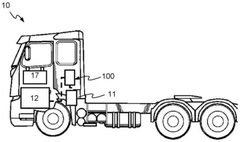
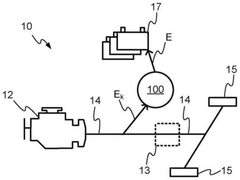
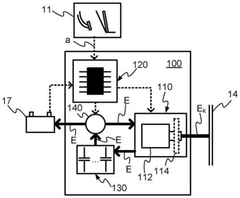
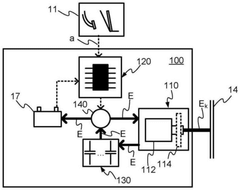
Kinetic energy recovery system
PatentWO2017216114A1
Innovation
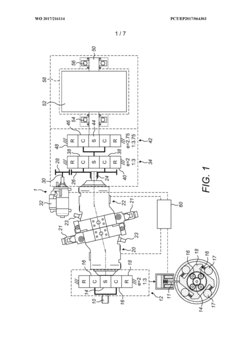
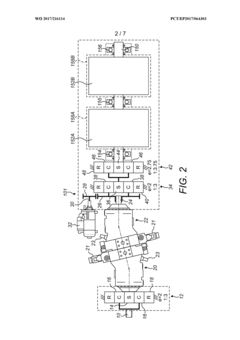
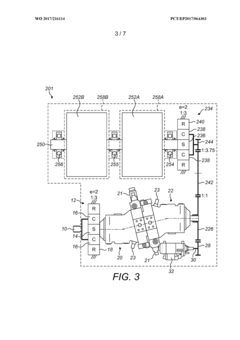
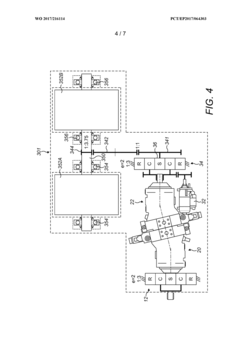
- A kinetic energy recovery system utilizing a hydraulic variator with bent axis motors and a flywheel located in a vacuum chamber, connected through speed-up gear arrangements, allowing for efficient energy storage and retrieval by varying motor displacement in response to vehicle powertrain demands.
Environmental Impact of KERS in Education
The implementation of Kinetic Energy Recovery Systems (KERS) in educational settings has the potential to significantly reduce the environmental footprint of classroom technologies. By harnessing and repurposing kinetic energy generated through everyday activities, KERS can substantially decrease the reliance on traditional power sources, leading to a reduction in overall energy consumption and associated carbon emissions.
One of the primary environmental benefits of KERS in education is the reduction of electricity demand from the grid. As classrooms integrate more technology, their energy requirements have increased. KERS can offset this demand by capturing energy from various sources, such as student movement, door operations, or even the vibrations from HVAC systems. This recovered energy can be used to power low-consumption devices like LED lighting, smart boards, or tablet charging stations, reducing the school's overall energy bills and carbon footprint.
Furthermore, KERS can play a crucial role in promoting sustainable practices and environmental awareness among students. By making energy recovery visible and tangible, it serves as an educational tool, demonstrating real-world applications of energy conservation principles. This hands-on experience can foster a culture of sustainability within the school community, potentially influencing long-term behavioral changes in energy consumption patterns.
The implementation of KERS in schools also aligns with broader environmental policies and initiatives. Many educational institutions are under pressure to meet sustainability targets and reduce their carbon emissions. KERS provides a innovative solution that not only helps meet these goals but also positions schools as leaders in environmental stewardship and technological innovation.
Additionally, the use of KERS can contribute to the reduction of electronic waste. By extending the battery life of portable devices through efficient energy recovery and storage, the system can potentially decrease the frequency of battery replacements and device upgrades. This not only reduces the environmental impact associated with the production and disposal of electronic components but also lowers the overall cost of technology maintenance for educational institutions.
In the long term, widespread adoption of KERS in educational settings could have a cumulative effect on energy consumption patterns across the education sector. As more schools implement these systems, the collective reduction in grid electricity demand could lead to decreased pressure on power generation facilities, potentially reducing the need for new power plants and associated infrastructure. This cascading effect could contribute to broader environmental goals, such as reducing greenhouse gas emissions and combating climate change.
One of the primary environmental benefits of KERS in education is the reduction of electricity demand from the grid. As classrooms integrate more technology, their energy requirements have increased. KERS can offset this demand by capturing energy from various sources, such as student movement, door operations, or even the vibrations from HVAC systems. This recovered energy can be used to power low-consumption devices like LED lighting, smart boards, or tablet charging stations, reducing the school's overall energy bills and carbon footprint.
Furthermore, KERS can play a crucial role in promoting sustainable practices and environmental awareness among students. By making energy recovery visible and tangible, it serves as an educational tool, demonstrating real-world applications of energy conservation principles. This hands-on experience can foster a culture of sustainability within the school community, potentially influencing long-term behavioral changes in energy consumption patterns.
The implementation of KERS in schools also aligns with broader environmental policies and initiatives. Many educational institutions are under pressure to meet sustainability targets and reduce their carbon emissions. KERS provides a innovative solution that not only helps meet these goals but also positions schools as leaders in environmental stewardship and technological innovation.
Additionally, the use of KERS can contribute to the reduction of electronic waste. By extending the battery life of portable devices through efficient energy recovery and storage, the system can potentially decrease the frequency of battery replacements and device upgrades. This not only reduces the environmental impact associated with the production and disposal of electronic components but also lowers the overall cost of technology maintenance for educational institutions.
In the long term, widespread adoption of KERS in educational settings could have a cumulative effect on energy consumption patterns across the education sector. As more schools implement these systems, the collective reduction in grid electricity demand could lead to decreased pressure on power generation facilities, potentially reducing the need for new power plants and associated infrastructure. This cascading effect could contribute to broader environmental goals, such as reducing greenhouse gas emissions and combating climate change.
Cost-Benefit Analysis of KERS in Schools
The implementation of Kinetic Energy Recovery Systems (KERS) in schools presents a complex cost-benefit scenario that requires careful analysis. Initial installation costs for KERS in educational settings can be substantial, encompassing hardware, integration with existing systems, and potential structural modifications to accommodate the technology. However, these upfront expenses should be weighed against long-term energy savings and educational benefits.
Energy cost reduction is a primary advantage of KERS in schools. By capturing and reusing kinetic energy from various sources, such as playground equipment or foot traffic in hallways, schools can significantly decrease their reliance on traditional power sources. This reduction in energy consumption translates to lower utility bills, potentially offsetting the initial investment over time. The exact payback period will vary depending on factors such as school size, energy prices, and the extent of KERS implementation.
Maintenance costs for KERS should also be considered. While the systems are generally designed for durability, regular upkeep and occasional repairs will be necessary to ensure optimal performance. These ongoing expenses should be factored into the long-term financial planning for the technology.
Beyond direct financial considerations, KERS offers educational benefits that are more challenging to quantify but nonetheless valuable. The presence of this technology provides hands-on learning opportunities in physics, engineering, and environmental science. Students can engage with real-world applications of energy conservation principles, potentially inspiring future careers in sustainable technologies.
Additionally, the implementation of KERS can enhance a school's reputation as an environmentally conscious institution. This may lead to intangible benefits such as increased community support, potential grants or funding opportunities, and a competitive edge in attracting students and faculty.
However, the cost-benefit analysis must also account for potential drawbacks. The technology's effectiveness may vary based on the school's layout and student population, potentially limiting returns in certain settings. There's also the risk of technological obsolescence, as rapid advancements in energy recovery systems could render early investments less efficient over time.
In conclusion, while KERS presents promising opportunities for energy efficiency and educational enhancement in schools, a thorough cost-benefit analysis must consider both quantifiable financial factors and less tangible educational and reputational benefits. Schools must carefully evaluate their specific circumstances to determine if the long-term advantages of KERS implementation outweigh the initial costs and ongoing commitments.
Energy cost reduction is a primary advantage of KERS in schools. By capturing and reusing kinetic energy from various sources, such as playground equipment or foot traffic in hallways, schools can significantly decrease their reliance on traditional power sources. This reduction in energy consumption translates to lower utility bills, potentially offsetting the initial investment over time. The exact payback period will vary depending on factors such as school size, energy prices, and the extent of KERS implementation.
Maintenance costs for KERS should also be considered. While the systems are generally designed for durability, regular upkeep and occasional repairs will be necessary to ensure optimal performance. These ongoing expenses should be factored into the long-term financial planning for the technology.
Beyond direct financial considerations, KERS offers educational benefits that are more challenging to quantify but nonetheless valuable. The presence of this technology provides hands-on learning opportunities in physics, engineering, and environmental science. Students can engage with real-world applications of energy conservation principles, potentially inspiring future careers in sustainable technologies.
Additionally, the implementation of KERS can enhance a school's reputation as an environmentally conscious institution. This may lead to intangible benefits such as increased community support, potential grants or funding opportunities, and a competitive edge in attracting students and faculty.
However, the cost-benefit analysis must also account for potential drawbacks. The technology's effectiveness may vary based on the school's layout and student population, potentially limiting returns in certain settings. There's also the risk of technological obsolescence, as rapid advancements in energy recovery systems could render early investments less efficient over time.
In conclusion, while KERS presents promising opportunities for energy efficiency and educational enhancement in schools, a thorough cost-benefit analysis must consider both quantifiable financial factors and less tangible educational and reputational benefits. Schools must carefully evaluate their specific circumstances to determine if the long-term advantages of KERS implementation outweigh the initial costs and ongoing commitments.
Unlock deeper insights with PatSnap Eureka Quick Research — get a full tech report to explore trends and direct your research. Try now!
Generate Your Research Report Instantly with AI Agent
Supercharge your innovation with PatSnap Eureka AI Agent Platform!