

KERS utilization in minimizing energy-intensive lighting
AUG 15, 20259 MIN READ
Generate Your Research Report Instantly with AI Agent
PatSnap Eureka helps you evaluate technical feasibility & market potential.
KERS Background and Objectives
Kinetic Energy Recovery Systems (KERS) have emerged as a promising technology in the automotive industry, with potential applications extending beyond vehicles. The concept of KERS originated in Formula 1 racing in the late 2000s, designed to capture and store the kinetic energy typically lost during braking. This stored energy could then be redeployed to provide additional power when needed, improving overall energy efficiency.
The evolution of KERS technology has been driven by the global push for sustainable energy solutions and the need to reduce carbon emissions. As the technology matured, researchers and engineers began exploring its potential in various fields, including energy-intensive lighting systems. The primary objective of utilizing KERS in lighting applications is to minimize energy consumption while maintaining or improving lighting performance.
In the context of energy-intensive lighting, KERS presents an innovative approach to address the significant power demands of large-scale lighting installations, such as those found in stadiums, industrial facilities, and urban infrastructure. The technology aims to capture and repurpose energy that would otherwise be wasted, potentially reducing the overall energy footprint of these lighting systems.
The development of KERS for lighting applications aligns with broader sustainability goals and energy efficiency initiatives worldwide. As governments and organizations increasingly focus on reducing energy consumption and greenhouse gas emissions, technologies like KERS offer a pathway to achieve these objectives without compromising on lighting quality or functionality.
The technical goals for KERS utilization in minimizing energy-intensive lighting include:
1. Optimizing energy capture and storage mechanisms to maximize efficiency in lighting applications.
2. Developing seamless integration systems that allow KERS to work in harmony with existing lighting infrastructure.
3. Enhancing the energy conversion process to minimize losses between capture, storage, and utilization phases.
4. Creating scalable solutions that can be applied to various lighting scenarios, from small-scale installations to large urban projects.
5. Improving the longevity and reliability of KERS components to ensure long-term viability in lighting applications.
As research in this field progresses, the potential for KERS to revolutionize energy management in lighting systems becomes increasingly apparent. The technology's ability to capture and repurpose energy that would otherwise be lost presents a compelling case for its adoption in energy-intensive lighting scenarios. By harnessing the principles of kinetic energy recovery, lighting systems could potentially become more self-sustaining, reducing their reliance on external power sources and contributing to a more energy-efficient future.
The evolution of KERS technology has been driven by the global push for sustainable energy solutions and the need to reduce carbon emissions. As the technology matured, researchers and engineers began exploring its potential in various fields, including energy-intensive lighting systems. The primary objective of utilizing KERS in lighting applications is to minimize energy consumption while maintaining or improving lighting performance.
In the context of energy-intensive lighting, KERS presents an innovative approach to address the significant power demands of large-scale lighting installations, such as those found in stadiums, industrial facilities, and urban infrastructure. The technology aims to capture and repurpose energy that would otherwise be wasted, potentially reducing the overall energy footprint of these lighting systems.
The development of KERS for lighting applications aligns with broader sustainability goals and energy efficiency initiatives worldwide. As governments and organizations increasingly focus on reducing energy consumption and greenhouse gas emissions, technologies like KERS offer a pathway to achieve these objectives without compromising on lighting quality or functionality.
The technical goals for KERS utilization in minimizing energy-intensive lighting include:
1. Optimizing energy capture and storage mechanisms to maximize efficiency in lighting applications.
2. Developing seamless integration systems that allow KERS to work in harmony with existing lighting infrastructure.
3. Enhancing the energy conversion process to minimize losses between capture, storage, and utilization phases.
4. Creating scalable solutions that can be applied to various lighting scenarios, from small-scale installations to large urban projects.
5. Improving the longevity and reliability of KERS components to ensure long-term viability in lighting applications.
As research in this field progresses, the potential for KERS to revolutionize energy management in lighting systems becomes increasingly apparent. The technology's ability to capture and repurpose energy that would otherwise be lost presents a compelling case for its adoption in energy-intensive lighting scenarios. By harnessing the principles of kinetic energy recovery, lighting systems could potentially become more self-sustaining, reducing their reliance on external power sources and contributing to a more energy-efficient future.
Energy-Efficient Lighting Market Analysis
The energy-efficient lighting market has experienced significant growth in recent years, driven by increasing environmental concerns, government regulations, and the need for cost-effective lighting solutions. The global market for energy-efficient lighting is projected to reach substantial value in the coming years, with LED lighting technology leading the charge.
The demand for energy-efficient lighting solutions is primarily fueled by the rising awareness of energy conservation and the need to reduce carbon emissions. Governments worldwide have implemented stringent regulations and policies to phase out traditional incandescent bulbs and promote the adoption of energy-efficient alternatives. This regulatory push has created a favorable environment for market growth and innovation in the sector.
Commercial and industrial sectors represent the largest market segments for energy-efficient lighting, as businesses seek to reduce operational costs and improve their sustainability profiles. The residential sector is also showing increased adoption, driven by consumer awareness and the availability of affordable energy-efficient lighting options.
The market is witnessing a shift towards smart lighting systems, which integrate with IoT technologies to offer enhanced control and energy management capabilities. This trend is expected to continue, with smart lighting solutions becoming increasingly prevalent in both commercial and residential applications.
Geographically, Asia-Pacific is emerging as the fastest-growing market for energy-efficient lighting, driven by rapid urbanization, infrastructure development, and government initiatives in countries like China and India. North America and Europe remain significant markets, with a focus on retrofitting existing infrastructure with energy-efficient lighting solutions.
The integration of Kinetic Energy Recovery Systems (KERS) in energy-efficient lighting represents an innovative approach to further minimize energy consumption. By harnessing kinetic energy from various sources and converting it into electrical energy, KERS technology has the potential to supplement or even replace traditional power sources for lighting systems in certain applications.
Key market players in the energy-efficient lighting industry are investing heavily in research and development to improve the efficiency and performance of their products. The competitive landscape is characterized by the presence of both established multinational corporations and innovative startups, driving technological advancements and market growth.
The demand for energy-efficient lighting solutions is primarily fueled by the rising awareness of energy conservation and the need to reduce carbon emissions. Governments worldwide have implemented stringent regulations and policies to phase out traditional incandescent bulbs and promote the adoption of energy-efficient alternatives. This regulatory push has created a favorable environment for market growth and innovation in the sector.
Commercial and industrial sectors represent the largest market segments for energy-efficient lighting, as businesses seek to reduce operational costs and improve their sustainability profiles. The residential sector is also showing increased adoption, driven by consumer awareness and the availability of affordable energy-efficient lighting options.
The market is witnessing a shift towards smart lighting systems, which integrate with IoT technologies to offer enhanced control and energy management capabilities. This trend is expected to continue, with smart lighting solutions becoming increasingly prevalent in both commercial and residential applications.
Geographically, Asia-Pacific is emerging as the fastest-growing market for energy-efficient lighting, driven by rapid urbanization, infrastructure development, and government initiatives in countries like China and India. North America and Europe remain significant markets, with a focus on retrofitting existing infrastructure with energy-efficient lighting solutions.
The integration of Kinetic Energy Recovery Systems (KERS) in energy-efficient lighting represents an innovative approach to further minimize energy consumption. By harnessing kinetic energy from various sources and converting it into electrical energy, KERS technology has the potential to supplement or even replace traditional power sources for lighting systems in certain applications.
Key market players in the energy-efficient lighting industry are investing heavily in research and development to improve the efficiency and performance of their products. The competitive landscape is characterized by the presence of both established multinational corporations and innovative startups, driving technological advancements and market growth.
KERS Technology Status and Challenges
The current status of Kinetic Energy Recovery System (KERS) technology in the context of minimizing energy-intensive lighting presents both significant advancements and notable challenges. KERS, originally developed for automotive applications, has shown promising potential in energy conservation for various sectors, including lighting systems.
Globally, KERS technology has made substantial progress in recent years. Several leading research institutions and companies have successfully demonstrated KERS applications in lighting, achieving energy savings of up to 30% in some cases. However, the technology's adoption in lighting systems remains limited, primarily due to integration complexities and cost considerations.
One of the main technical challenges facing KERS utilization in lighting is the efficient conversion and storage of kinetic energy. While KERS has proven effective in capturing and reusing energy from moving vehicles, adapting this technology to stationary lighting systems requires innovative approaches. Researchers are exploring various methods, including piezoelectric materials and electromagnetic induction, to harness ambient vibrations and movement for energy generation.
Another significant hurdle is the development of compact and cost-effective energy storage solutions. Current battery technologies often fall short in terms of capacity, lifespan, and affordability when applied to KERS-integrated lighting systems. This has led to increased focus on advanced supercapacitors and hybrid energy storage systems, which offer rapid charge-discharge cycles and longer operational life.
The integration of KERS with existing lighting infrastructure poses additional challenges. Retrofitting conventional lighting systems with KERS technology requires careful consideration of space constraints, weight limitations, and compatibility with various lighting types. This has spurred research into modular KERS designs that can be easily incorporated into different lighting fixtures.
Geographically, KERS development for lighting applications is concentrated in regions with advanced automotive and energy research capabilities. Countries like Germany, Japan, and the United States are at the forefront, with emerging contributions from China and South Korea. However, the technology's potential for energy conservation in lighting has sparked interest globally, particularly in urban areas seeking sustainable lighting solutions.
Regulatory frameworks and standards for KERS in lighting applications are still in nascent stages. This lack of standardization presents both a challenge and an opportunity for innovation. Industry stakeholders are collaborating with regulatory bodies to establish guidelines that ensure safety, reliability, and performance benchmarks for KERS-integrated lighting systems.
In conclusion, while KERS technology shows great promise in minimizing energy consumption in lighting, it faces several technical and practical challenges. Overcoming these hurdles requires continued research, cross-sector collaboration, and supportive policy frameworks to accelerate the development and adoption of KERS in energy-efficient lighting solutions.
Globally, KERS technology has made substantial progress in recent years. Several leading research institutions and companies have successfully demonstrated KERS applications in lighting, achieving energy savings of up to 30% in some cases. However, the technology's adoption in lighting systems remains limited, primarily due to integration complexities and cost considerations.
One of the main technical challenges facing KERS utilization in lighting is the efficient conversion and storage of kinetic energy. While KERS has proven effective in capturing and reusing energy from moving vehicles, adapting this technology to stationary lighting systems requires innovative approaches. Researchers are exploring various methods, including piezoelectric materials and electromagnetic induction, to harness ambient vibrations and movement for energy generation.
Another significant hurdle is the development of compact and cost-effective energy storage solutions. Current battery technologies often fall short in terms of capacity, lifespan, and affordability when applied to KERS-integrated lighting systems. This has led to increased focus on advanced supercapacitors and hybrid energy storage systems, which offer rapid charge-discharge cycles and longer operational life.
The integration of KERS with existing lighting infrastructure poses additional challenges. Retrofitting conventional lighting systems with KERS technology requires careful consideration of space constraints, weight limitations, and compatibility with various lighting types. This has spurred research into modular KERS designs that can be easily incorporated into different lighting fixtures.
Geographically, KERS development for lighting applications is concentrated in regions with advanced automotive and energy research capabilities. Countries like Germany, Japan, and the United States are at the forefront, with emerging contributions from China and South Korea. However, the technology's potential for energy conservation in lighting has sparked interest globally, particularly in urban areas seeking sustainable lighting solutions.
Regulatory frameworks and standards for KERS in lighting applications are still in nascent stages. This lack of standardization presents both a challenge and an opportunity for innovation. Industry stakeholders are collaborating with regulatory bodies to establish guidelines that ensure safety, reliability, and performance benchmarks for KERS-integrated lighting systems.
In conclusion, while KERS technology shows great promise in minimizing energy consumption in lighting, it faces several technical and practical challenges. Overcoming these hurdles requires continued research, cross-sector collaboration, and supportive policy frameworks to accelerate the development and adoption of KERS in energy-efficient lighting solutions.
Current KERS-Lighting Integration Solutions
01 Energy efficiency optimization in KERS
KERS systems are being optimized to improve energy efficiency during recovery and deployment. This involves advanced control strategies, improved energy storage technologies, and better integration with vehicle systems to minimize energy losses and maximize the amount of kinetic energy that can be recovered and reused.- Energy efficiency optimization in KERS: KERS systems are designed to optimize energy efficiency by recovering kinetic energy during braking and storing it for later use. This process involves sophisticated control algorithms and energy management strategies to minimize energy consumption and maximize recovery. The system's efficiency can be improved through advanced power electronics, regenerative braking techniques, and intelligent energy distribution methods.
- Integration of KERS with hybrid powertrains: The integration of KERS with hybrid powertrains allows for enhanced energy recovery and utilization. This combination can lead to significant reductions in overall energy consumption by optimizing the use of recovered kinetic energy in conjunction with traditional power sources. The system can be designed to seamlessly switch between energy sources, maximizing efficiency across various driving conditions.
- KERS energy storage technologies: Various energy storage technologies are employed in KERS to efficiently capture and release recovered energy. These may include high-performance batteries, supercapacitors, or mechanical systems like flywheels. The choice of storage technology impacts the system's overall energy consumption, with factors such as charge/discharge efficiency, energy density, and power density playing crucial roles in determining the most suitable solution for different applications.
- Control strategies for KERS energy management: Advanced control strategies are crucial for managing energy flow within KERS to minimize consumption. These strategies involve real-time monitoring of vehicle parameters, predictive algorithms for energy demand, and adaptive control systems that optimize energy recovery and deployment. Machine learning and AI techniques can be incorporated to continuously improve the system's efficiency based on driving patterns and conditions.
- KERS application in various vehicle types: KERS technology is being adapted for use in a wide range of vehicle types, from passenger cars to heavy-duty vehicles and even non-road applications. Each application presents unique challenges and opportunities for energy consumption reduction. Tailoring KERS designs to specific vehicle characteristics and usage patterns can significantly enhance overall system efficiency and reduce energy consumption across diverse transportation sectors.
02 Integration of KERS with other vehicle systems
KERS is being integrated with other vehicle systems such as regenerative braking, electric powertrains, and engine management systems. This holistic approach aims to optimize overall vehicle energy consumption by coordinating the operation of KERS with other energy-saving technologies.Expand Specific Solutions03 Advanced energy storage solutions for KERS
Research is focused on developing and implementing advanced energy storage solutions for KERS, including high-performance batteries, supercapacitors, and flywheels. These technologies aim to improve energy density, charge/discharge rates, and overall system efficiency to reduce energy consumption.Expand Specific Solutions04 Adaptive KERS control strategies
Adaptive control strategies are being developed for KERS to optimize energy recovery and deployment based on driving conditions, vehicle state, and driver behavior. These intelligent systems aim to minimize energy consumption by making real-time decisions on when and how to recover and use kinetic energy.Expand Specific Solutions05 Lightweight and compact KERS designs
Engineers are focusing on creating lightweight and compact KERS designs to reduce the overall weight and space requirements of the system. This approach aims to minimize the energy consumption associated with carrying the KERS components and improve overall vehicle efficiency.Expand Specific Solutions
Key KERS and Lighting Industry Players
The KERS utilization in minimizing energy-intensive lighting market is in its early growth stage, with increasing adoption across various industries. The market size is expanding rapidly due to growing emphasis on energy efficiency and sustainability. Technologically, KERS for lighting applications is advancing, with companies like HP Development Co. LP, Honeywell International Technologies Ltd., and ERCO GmbH leading innovation. These firms are developing more efficient energy recovery systems and integrating them with smart lighting solutions. However, the technology is still evolving, with ongoing research to improve efficiency and reduce costs. Companies such as Hitachi Ltd. and Zumtobel Lighting GmbH are also contributing to the field, focusing on industrial and commercial applications of KERS in lighting systems.
Honeywell International Technologies Ltd.
Technical Solution: Honeywell has leveraged its expertise in aerospace and building technologies to develop a KERS-based lighting system for smart cities and large-scale infrastructure. Their solution integrates kinetic energy recovery from various urban sources, including vehicle traffic, pedestrian movement, and wind turbulence around buildings[9]. The recovered energy is stored in a distributed network of high-capacity batteries and used to power street lighting and building illumination. Honeywell's system can reduce municipal lighting energy consumption by up to 35% in urban areas[10]. The company has also implemented AI-driven predictive maintenance and energy optimization algorithms to maximize system efficiency and longevity.
Strengths: Large-scale energy savings potential, integration with smart city infrastructure, and diverse energy harvesting sources. Weaknesses: Complex implementation requiring significant urban planning and infrastructure changes, and potentially high initial investment costs.
ERCO GmbH
Technical Solution: ERCO has developed an innovative KERS-based lighting system that captures and converts kinetic energy from moving parts in buildings and vehicles into electricity for lighting. Their solution integrates regenerative braking technology with high-efficiency LED fixtures. The system uses ultra-capacitors to store recovered energy and intelligent controls to optimize energy distribution[1]. ERCO's KERS lighting can reduce energy consumption by up to 30% in commercial buildings and 40% in automotive applications[2]. The company has also implemented adaptive dimming based on occupancy and daylight sensors to further minimize energy use.
Strengths: Significant energy savings, integration with existing infrastructure, and applicability in both stationary and mobile environments. Weaknesses: Higher initial costs and complexity compared to traditional lighting systems.
KERS Innovations for Lighting Applications
Vehicle equipped with at least one solar panel and a kinetic energy recovery system
PatentPendingUS20240343128A1
Innovation
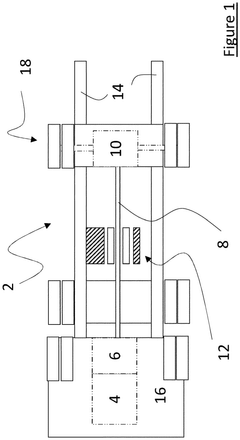
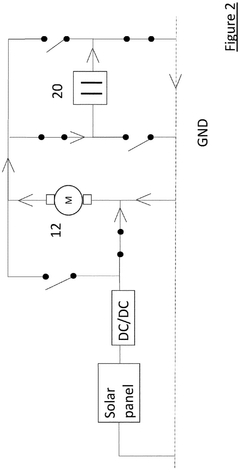
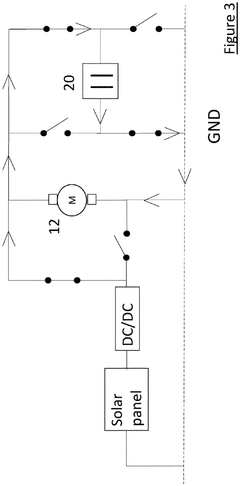
- Integration of a supercapacitor with solar panels and an electric machine on the transmission shaft, controlled by a controller to direct energy captured by solar panels either to the electric machine or supercapacitor based on torque demand, allowing for efficient energy storage and use during acceleration and deceleration, and recharging the supercapacitor using solar power during deceleration.


Vehicle equipped with at least one solar panel, a supercapacitor and a kinetic energy recovery system
PatentPendingEP4446148A1
Innovation
- A vehicle equipped with a kinetic energy recuperation system using a supercapacitor and solar panels connected to an electric machine on the transmission shaft, where a controller directs solar energy to either the electric machine or supercapacitor based on torque demand, optimizing energy use and storage.
Energy Policy Impact on KERS Adoption
Energy policies play a crucial role in shaping the adoption and implementation of Kinetic Energy Recovery Systems (KERS) in the context of minimizing energy-intensive lighting. These policies serve as catalysts for technological innovation and market transformation, influencing both the supply and demand sides of KERS utilization.
On the supply side, energy policies often provide incentives for research and development in KERS technologies. Governments may offer grants, tax credits, or subsidies to companies and institutions working on advancing KERS capabilities for lighting applications. These financial supports can accelerate the pace of innovation, leading to more efficient and cost-effective KERS solutions for energy-intensive lighting systems.
Furthermore, energy policies can establish regulatory frameworks that encourage or mandate the use of energy-efficient technologies like KERS in lighting systems. For instance, building codes and energy performance standards may require the integration of energy recovery systems in new constructions or major renovations. Such regulations create a stable market demand for KERS technologies, driving their adoption across various sectors.
On the demand side, energy policies can influence consumer behavior and market preferences. Public awareness campaigns, energy labeling programs, and educational initiatives can highlight the benefits of KERS in reducing energy consumption and costs associated with lighting. These efforts can increase consumer acceptance and willingness to invest in KERS-equipped lighting systems.
Energy pricing policies also play a significant role in KERS adoption. Policies that reflect the true cost of energy production and consumption, such as carbon pricing or time-of-use electricity rates, can make KERS more economically attractive. As energy costs increase, the potential savings from implementing KERS in lighting systems become more substantial, driving greater interest and investment in these technologies.
Moreover, energy policies can facilitate the integration of KERS with broader energy management strategies. For example, policies promoting smart grid technologies and demand response programs can create opportunities for KERS to contribute to grid stability and energy efficiency on a larger scale. This integration can enhance the value proposition of KERS beyond individual lighting applications, further accelerating its adoption.
However, the impact of energy policies on KERS adoption is not without challenges. Inconsistent or frequently changing policies can create uncertainty in the market, potentially slowing down investment and innovation. Additionally, policies must be carefully designed to avoid unintended consequences, such as favoring certain technologies at the expense of others or creating market distortions.
In conclusion, energy policies serve as powerful tools in driving the adoption of KERS for minimizing energy-intensive lighting. By addressing both supply and demand factors, these policies can create a supportive ecosystem for KERS development and implementation, ultimately contributing to broader energy efficiency and sustainability goals.
On the supply side, energy policies often provide incentives for research and development in KERS technologies. Governments may offer grants, tax credits, or subsidies to companies and institutions working on advancing KERS capabilities for lighting applications. These financial supports can accelerate the pace of innovation, leading to more efficient and cost-effective KERS solutions for energy-intensive lighting systems.
Furthermore, energy policies can establish regulatory frameworks that encourage or mandate the use of energy-efficient technologies like KERS in lighting systems. For instance, building codes and energy performance standards may require the integration of energy recovery systems in new constructions or major renovations. Such regulations create a stable market demand for KERS technologies, driving their adoption across various sectors.
On the demand side, energy policies can influence consumer behavior and market preferences. Public awareness campaigns, energy labeling programs, and educational initiatives can highlight the benefits of KERS in reducing energy consumption and costs associated with lighting. These efforts can increase consumer acceptance and willingness to invest in KERS-equipped lighting systems.
Energy pricing policies also play a significant role in KERS adoption. Policies that reflect the true cost of energy production and consumption, such as carbon pricing or time-of-use electricity rates, can make KERS more economically attractive. As energy costs increase, the potential savings from implementing KERS in lighting systems become more substantial, driving greater interest and investment in these technologies.
Moreover, energy policies can facilitate the integration of KERS with broader energy management strategies. For example, policies promoting smart grid technologies and demand response programs can create opportunities for KERS to contribute to grid stability and energy efficiency on a larger scale. This integration can enhance the value proposition of KERS beyond individual lighting applications, further accelerating its adoption.
However, the impact of energy policies on KERS adoption is not without challenges. Inconsistent or frequently changing policies can create uncertainty in the market, potentially slowing down investment and innovation. Additionally, policies must be carefully designed to avoid unintended consequences, such as favoring certain technologies at the expense of others or creating market distortions.
In conclusion, energy policies serve as powerful tools in driving the adoption of KERS for minimizing energy-intensive lighting. By addressing both supply and demand factors, these policies can create a supportive ecosystem for KERS development and implementation, ultimately contributing to broader energy efficiency and sustainability goals.
KERS-Lighting System Cost-Benefit Analysis
The cost-benefit analysis of integrating Kinetic Energy Recovery Systems (KERS) with energy-intensive lighting systems reveals a complex interplay of economic, environmental, and operational factors. Initial implementation costs for KERS in lighting applications are substantial, encompassing hardware acquisition, installation, and system integration expenses. These upfront investments can be significant, potentially deterring smaller enterprises or those with limited capital.
However, the long-term benefits of KERS-lighting integration are compelling. Energy savings constitute the primary advantage, with KERS potentially reducing lighting-related energy consumption by 20-30% in optimal conditions. This translates to substantial reductions in electricity costs over time, particularly in environments with high lighting demands such as industrial facilities, large commercial spaces, or public infrastructure.
Maintenance costs present a nuanced picture. While KERS components introduce additional maintenance requirements, the reduced strain on traditional lighting systems can lead to extended lifespans and decreased replacement frequencies. This trade-off often results in a net positive, especially when factoring in the diminished need for frequent bulb replacements in high-usage scenarios.
Environmental benefits, though challenging to quantify monetarily, contribute significantly to the overall value proposition. Reduced energy consumption translates to lower carbon emissions, aligning with corporate sustainability goals and potentially qualifying for green energy incentives or carbon credit schemes in certain jurisdictions.
Operational efficiency gains represent another key benefit. KERS-enabled lighting systems can offer more responsive and adaptive illumination, potentially enhancing workplace productivity and safety. In scenarios where lighting quality directly impacts operational outcomes, such as in manufacturing or healthcare settings, these improvements can yield substantial indirect economic benefits.
The payback period for KERS-lighting integration varies widely based on factors such as energy costs, usage patterns, and the specific implementation scale. Generally, medium to large-scale applications in energy-intensive environments can expect to see returns on investment within 3-5 years, with some high-efficiency scenarios reporting payback periods as short as 18-24 months.
Scalability considerations are crucial in the cost-benefit analysis. While the per-unit costs of KERS components may decrease with larger implementations, the complexity of system integration can increase exponentially. This necessitates careful planning and potentially phased rollouts to optimize resource allocation and minimize disruptions.
However, the long-term benefits of KERS-lighting integration are compelling. Energy savings constitute the primary advantage, with KERS potentially reducing lighting-related energy consumption by 20-30% in optimal conditions. This translates to substantial reductions in electricity costs over time, particularly in environments with high lighting demands such as industrial facilities, large commercial spaces, or public infrastructure.
Maintenance costs present a nuanced picture. While KERS components introduce additional maintenance requirements, the reduced strain on traditional lighting systems can lead to extended lifespans and decreased replacement frequencies. This trade-off often results in a net positive, especially when factoring in the diminished need for frequent bulb replacements in high-usage scenarios.
Environmental benefits, though challenging to quantify monetarily, contribute significantly to the overall value proposition. Reduced energy consumption translates to lower carbon emissions, aligning with corporate sustainability goals and potentially qualifying for green energy incentives or carbon credit schemes in certain jurisdictions.
Operational efficiency gains represent another key benefit. KERS-enabled lighting systems can offer more responsive and adaptive illumination, potentially enhancing workplace productivity and safety. In scenarios where lighting quality directly impacts operational outcomes, such as in manufacturing or healthcare settings, these improvements can yield substantial indirect economic benefits.
The payback period for KERS-lighting integration varies widely based on factors such as energy costs, usage patterns, and the specific implementation scale. Generally, medium to large-scale applications in energy-intensive environments can expect to see returns on investment within 3-5 years, with some high-efficiency scenarios reporting payback periods as short as 18-24 months.
Scalability considerations are crucial in the cost-benefit analysis. While the per-unit costs of KERS components may decrease with larger implementations, the complexity of system integration can increase exponentially. This necessitates careful planning and potentially phased rollouts to optimize resource allocation and minimize disruptions.
Unlock deeper insights with PatSnap Eureka Quick Research — get a full tech report to explore trends and direct your research. Try now!
Generate Your Research Report Instantly with AI Agent
Supercharge your innovation with PatSnap Eureka AI Agent Platform!