

How to Adapt Eutectic Systems for Bio-Inspired Applications
APR 27, 20269 MIN READ
Generate Your Research Report Instantly with AI Agent
PatSnap Eureka helps you evaluate technical feasibility & market potential.
Bio-Inspired Eutectic Systems Background and Objectives
Eutectic systems represent a fascinating intersection of materials science and biological inspiration, where the unique properties of eutectic compositions mirror many naturally occurring phenomena. These systems, characterized by their lowest melting point compositions in binary or multi-component mixtures, have gained significant attention for their potential in bio-inspired applications due to their inherent self-organization capabilities and phase transition behaviors that closely resemble biological processes.
The historical development of eutectic systems traces back to early metallurgical studies in the late 19th century, where researchers first identified the unique thermal and structural properties of specific alloy compositions. Over the past century, the understanding of eutectic behavior has evolved from simple binary metal systems to complex multi-component organic and inorganic materials, with recent decades witnessing a paradigm shift toward biomimetic applications.
Nature provides abundant examples of eutectic-like behaviors, from the antifreeze proteins in polar fish that create localized phase transitions to the sophisticated self-assembly mechanisms observed in cellular membranes. These biological systems demonstrate remarkable efficiency in energy management, structural adaptation, and functional responsiveness, serving as blueprints for artificial eutectic system design.
The primary objective of adapting eutectic systems for bio-inspired applications centers on harnessing their unique phase behavior to replicate biological functionalities. Key targets include developing smart materials that exhibit temperature-responsive behavior similar to biological thermostats, creating self-healing systems that mimic tissue regeneration, and designing adaptive structures that respond to environmental stimuli like living organisms.
Current research objectives focus on engineering eutectic compositions that can demonstrate controlled phase transitions at biologically relevant temperatures, typically within the range of 20-40°C. This temperature window is crucial for applications in biomedical devices, soft robotics, and biomimetic sensors where compatibility with biological systems is essential.
Another critical objective involves developing eutectic systems with enhanced biocompatibility while maintaining their unique phase transition properties. This requires careful selection of constituent materials that are non-toxic, biodegradable when necessary, and capable of interfacing seamlessly with biological tissues or fluids.
The integration of stimuli-responsive capabilities represents a frontier objective, where eutectic systems are designed to respond not only to temperature changes but also to pH variations, mechanical stress, electrical fields, or chemical gradients, mimicking the multi-modal responsiveness observed in biological systems.
Ultimately, the overarching goal is to establish a new class of bio-inspired materials that leverage eutectic principles to achieve unprecedented functionality in applications ranging from drug delivery systems and tissue engineering scaffolds to adaptive architectural materials and environmental sensing platforms.
The historical development of eutectic systems traces back to early metallurgical studies in the late 19th century, where researchers first identified the unique thermal and structural properties of specific alloy compositions. Over the past century, the understanding of eutectic behavior has evolved from simple binary metal systems to complex multi-component organic and inorganic materials, with recent decades witnessing a paradigm shift toward biomimetic applications.
Nature provides abundant examples of eutectic-like behaviors, from the antifreeze proteins in polar fish that create localized phase transitions to the sophisticated self-assembly mechanisms observed in cellular membranes. These biological systems demonstrate remarkable efficiency in energy management, structural adaptation, and functional responsiveness, serving as blueprints for artificial eutectic system design.
The primary objective of adapting eutectic systems for bio-inspired applications centers on harnessing their unique phase behavior to replicate biological functionalities. Key targets include developing smart materials that exhibit temperature-responsive behavior similar to biological thermostats, creating self-healing systems that mimic tissue regeneration, and designing adaptive structures that respond to environmental stimuli like living organisms.
Current research objectives focus on engineering eutectic compositions that can demonstrate controlled phase transitions at biologically relevant temperatures, typically within the range of 20-40°C. This temperature window is crucial for applications in biomedical devices, soft robotics, and biomimetic sensors where compatibility with biological systems is essential.
Another critical objective involves developing eutectic systems with enhanced biocompatibility while maintaining their unique phase transition properties. This requires careful selection of constituent materials that are non-toxic, biodegradable when necessary, and capable of interfacing seamlessly with biological tissues or fluids.
The integration of stimuli-responsive capabilities represents a frontier objective, where eutectic systems are designed to respond not only to temperature changes but also to pH variations, mechanical stress, electrical fields, or chemical gradients, mimicking the multi-modal responsiveness observed in biological systems.
Ultimately, the overarching goal is to establish a new class of bio-inspired materials that leverage eutectic principles to achieve unprecedented functionality in applications ranging from drug delivery systems and tissue engineering scaffolds to adaptive architectural materials and environmental sensing platforms.
Market Demand for Bio-Inspired Eutectic Applications
The market demand for bio-inspired eutectic applications is experiencing unprecedented growth across multiple industrial sectors, driven by the increasing need for sustainable and multifunctional materials. Healthcare and biomedical industries represent the most significant demand drivers, where eutectic systems are being explored for drug delivery platforms, biocompatible implants, and tissue engineering scaffolds. The unique phase behavior and tunable properties of eutectics make them particularly attractive for creating materials that can mimic biological processes and structures.
Pharmaceutical companies are actively seeking eutectic formulations to enhance drug solubility and bioavailability, particularly for poorly water-soluble compounds. The ability to create deep eutectic solvents that can dissolve complex biomolecules while maintaining their stability has opened new possibilities for pharmaceutical manufacturing and drug formulation strategies.
The electronics and materials science sectors are demonstrating strong interest in bio-inspired eutectic systems for developing flexible electronics, self-healing materials, and adaptive sensors. These applications leverage the natural responsiveness of eutectic systems to environmental changes, mimicking biological adaptation mechanisms. The demand is particularly pronounced in wearable technology and soft robotics, where materials must exhibit both mechanical flexibility and electrical functionality.
Environmental applications constitute another rapidly expanding market segment. Industries are increasingly demanding eutectic-based solutions for green chemistry processes, biodegradable plastics, and environmental remediation technologies. The ability to design eutectic systems that can break down naturally while maintaining performance during their operational lifetime addresses critical sustainability concerns.
The aerospace and automotive industries are exploring bio-inspired eutectic materials for lightweight structural components and thermal management systems. These sectors require materials that can adapt to extreme conditions while maintaining structural integrity, similar to how biological systems respond to environmental stresses.
Market growth is further accelerated by regulatory pressures favoring environmentally friendly alternatives to traditional synthetic materials. Government initiatives promoting green technology adoption and circular economy principles are creating favorable conditions for bio-inspired eutectic applications across various industries.
Pharmaceutical companies are actively seeking eutectic formulations to enhance drug solubility and bioavailability, particularly for poorly water-soluble compounds. The ability to create deep eutectic solvents that can dissolve complex biomolecules while maintaining their stability has opened new possibilities for pharmaceutical manufacturing and drug formulation strategies.
The electronics and materials science sectors are demonstrating strong interest in bio-inspired eutectic systems for developing flexible electronics, self-healing materials, and adaptive sensors. These applications leverage the natural responsiveness of eutectic systems to environmental changes, mimicking biological adaptation mechanisms. The demand is particularly pronounced in wearable technology and soft robotics, where materials must exhibit both mechanical flexibility and electrical functionality.
Environmental applications constitute another rapidly expanding market segment. Industries are increasingly demanding eutectic-based solutions for green chemistry processes, biodegradable plastics, and environmental remediation technologies. The ability to design eutectic systems that can break down naturally while maintaining performance during their operational lifetime addresses critical sustainability concerns.
The aerospace and automotive industries are exploring bio-inspired eutectic materials for lightweight structural components and thermal management systems. These sectors require materials that can adapt to extreme conditions while maintaining structural integrity, similar to how biological systems respond to environmental stresses.
Market growth is further accelerated by regulatory pressures favoring environmentally friendly alternatives to traditional synthetic materials. Government initiatives promoting green technology adoption and circular economy principles are creating favorable conditions for bio-inspired eutectic applications across various industries.
Current Challenges in Eutectic Bio-Adaptation
The adaptation of eutectic systems for bio-inspired applications faces significant technical barriers that limit their widespread implementation across biological and biomedical domains. One of the primary challenges lies in achieving biocompatibility while maintaining the unique physicochemical properties that make eutectic systems attractive for biological applications. Traditional eutectic formulations often contain components that may exhibit cytotoxicity or trigger immune responses when introduced into biological environments, necessitating careful selection and modification of constituent materials.
Temperature sensitivity represents another critical constraint in bio-adaptation efforts. Many eutectic systems demonstrate optimal performance within narrow temperature ranges that may not align with physiological conditions. The challenge becomes particularly acute when attempting to maintain eutectic behavior at body temperature while preserving the desired functional properties such as enhanced solubility, permeability, or stability.
Stability issues pose substantial obstacles in biological environments where pH fluctuations, enzymatic activity, and protein interactions can disrupt eutectic formation. The dynamic nature of biological systems introduces variables that can lead to phase separation, precipitation, or degradation of eutectic components, compromising their intended functionality and potentially creating safety concerns.
Scalability and reproducibility challenges emerge when transitioning from laboratory-scale synthesis to industrial production suitable for biological applications. The precise stoichiometric ratios required for eutectic formation demand sophisticated manufacturing processes and quality control systems that can consistently produce materials meeting stringent biological application standards.
Characterization and standardization difficulties further complicate the development process. Unlike conventional pharmaceutical or biomaterial systems, eutectic bio-adaptations lack established analytical protocols and regulatory frameworks. This absence of standardized evaluation methods creates uncertainty in performance assessment and regulatory approval pathways.
The integration of eutectic systems with existing biological delivery mechanisms presents additional complexity. Conventional drug delivery systems, tissue engineering scaffolds, and diagnostic platforms may require significant modifications to accommodate eutectic formulations, potentially affecting their established performance characteristics and manufacturing processes.
Finally, the limited understanding of long-term biological interactions and potential accumulation effects creates regulatory and safety assessment challenges. The novel nature of bio-adapted eutectic systems means that comprehensive toxicological data and biocompatibility studies are often insufficient, requiring extensive research investments before clinical translation becomes feasible.
Temperature sensitivity represents another critical constraint in bio-adaptation efforts. Many eutectic systems demonstrate optimal performance within narrow temperature ranges that may not align with physiological conditions. The challenge becomes particularly acute when attempting to maintain eutectic behavior at body temperature while preserving the desired functional properties such as enhanced solubility, permeability, or stability.
Stability issues pose substantial obstacles in biological environments where pH fluctuations, enzymatic activity, and protein interactions can disrupt eutectic formation. The dynamic nature of biological systems introduces variables that can lead to phase separation, precipitation, or degradation of eutectic components, compromising their intended functionality and potentially creating safety concerns.
Scalability and reproducibility challenges emerge when transitioning from laboratory-scale synthesis to industrial production suitable for biological applications. The precise stoichiometric ratios required for eutectic formation demand sophisticated manufacturing processes and quality control systems that can consistently produce materials meeting stringent biological application standards.
Characterization and standardization difficulties further complicate the development process. Unlike conventional pharmaceutical or biomaterial systems, eutectic bio-adaptations lack established analytical protocols and regulatory frameworks. This absence of standardized evaluation methods creates uncertainty in performance assessment and regulatory approval pathways.
The integration of eutectic systems with existing biological delivery mechanisms presents additional complexity. Conventional drug delivery systems, tissue engineering scaffolds, and diagnostic platforms may require significant modifications to accommodate eutectic formulations, potentially affecting their established performance characteristics and manufacturing processes.
Finally, the limited understanding of long-term biological interactions and potential accumulation effects creates regulatory and safety assessment challenges. The novel nature of bio-adapted eutectic systems means that comprehensive toxicological data and biocompatibility studies are often insufficient, requiring extensive research investments before clinical translation becomes feasible.
Current Bio-Eutectic Adaptation Solutions
01 Binary and multi-component eutectic compositions for pharmaceutical applications
Eutectic systems involving two or more pharmaceutical compounds that form a mixture with a lower melting point than individual components. These systems enhance drug solubility, bioavailability, and stability by creating intimate molecular-level mixing. The eutectic formation allows for improved dissolution rates and can overcome limitations of poorly soluble active pharmaceutical ingredients.- Binary eutectic systems for pharmaceutical applications: Binary eutectic systems involve the combination of two components that form a mixture with a lower melting point than either individual component. These systems are particularly useful in pharmaceutical formulations to enhance drug solubility, bioavailability, and stability. The eutectic composition allows for improved dissolution rates and can facilitate the development of solid dosage forms with enhanced therapeutic properties.
- Deep eutectic solvents and ionic liquid systems: Deep eutectic solvents represent a class of eutectic mixtures formed by combining hydrogen bond donors and acceptors, creating environmentally friendly alternatives to conventional organic solvents. These systems exhibit unique properties such as low volatility, thermal stability, and tunable physicochemical characteristics. They find applications in extraction processes, electrochemistry, and green chemistry applications where traditional solvents may be problematic.
- Metal alloy eutectic compositions: Metal alloy eutectic systems involve the formation of specific compositions where two or more metals create a mixture with distinct melting characteristics. These systems are crucial in metallurgy and materials science for creating alloys with desired properties such as improved strength, corrosion resistance, or specific thermal behaviors. The eutectic point represents the optimal composition for achieving uniform microstructures and enhanced mechanical properties.
- Eutectic systems for thermal management and phase change materials: Eutectic compositions are utilized in thermal management applications where controlled phase transitions are required. These systems can store and release thermal energy efficiently during phase changes, making them valuable for temperature regulation, heat storage, and thermal buffering applications. The predictable melting and solidification behavior of eutectic mixtures enables precise thermal control in various industrial and consumer applications.
- Crystallization control and polymorphic systems: Eutectic systems play a crucial role in controlling crystallization processes and managing polymorphic forms of active compounds. These systems can influence crystal structure, particle size distribution, and solid-state properties of materials. By utilizing eutectic principles, it becomes possible to direct crystallization toward desired polymorphic forms, improve processing characteristics, and enhance the stability of crystalline materials in various applications.
02 Deep eutectic solvents as green alternatives
Formation of deep eutectic solvents through hydrogen bonding between hydrogen bond donors and acceptors, creating liquid systems at room temperature. These environmentally friendly solvents serve as alternatives to conventional organic solvents in various applications including extraction, synthesis, and material processing. The systems exhibit unique physicochemical properties and tunability.Expand Specific Solutions03 Metallic eutectic alloys for industrial applications
Development of metal-based eutectic systems with specific melting points and mechanical properties for industrial use. These alloys combine different metals to achieve desired characteristics such as improved strength, corrosion resistance, or thermal properties. Applications include soldering materials, thermal management systems, and specialized manufacturing processes.Expand Specific Solutions04 Eutectic systems for drug delivery and formulation enhancement
Utilization of eutectic mixtures to improve drug delivery systems and pharmaceutical formulations. These systems enable controlled release mechanisms, enhanced permeation through biological membranes, and improved therapeutic efficacy. The approach involves creating eutectic compositions that optimize drug distribution and absorption characteristics.Expand Specific Solutions05 Crystallization control and polymorphic modifications in eutectic systems
Management of crystal formation and polymorphic behavior in eutectic compositions to achieve desired physical and chemical properties. This involves controlling nucleation, growth kinetics, and solid-state transformations to optimize material characteristics. Applications include improving stability, processability, and performance of crystalline materials.Expand Specific Solutions
Key Players in Bio-Inspired Eutectic Research
The eutectic systems adaptation for bio-inspired applications represents an emerging interdisciplinary field currently in its early development stage, with significant growth potential driven by increasing demand for biomimetic materials and sustainable technologies. The market remains relatively small but shows promising expansion opportunities across pharmaceutical, biotechnology, and materials science sectors. Technology maturity varies considerably among key players, with established pharmaceutical giants like Regeneron Pharmaceuticals, Genentech, Roche, and Novartis leading in bio-application expertise, while specialized biotechnology firms such as Meiogenix and Eco-Solution provide innovative platform technologies. Academic institutions including Carnegie Mellon University, Boston University, and Sorbonne Université contribute fundamental research capabilities. The competitive landscape features a mix of mature pharmaceutical companies leveraging existing bio-expertise, emerging biotech firms developing novel approaches, and research institutions driving scientific advancement, creating a dynamic ecosystem poised for technological breakthroughs.
F. Hoffmann-La Roche Ltd.
Technical Solution: Roche has developed advanced eutectic solvent systems for pharmaceutical applications, particularly focusing on deep eutectic solvents (DES) for drug delivery and bioactive compound extraction. Their approach utilizes natural choline chloride-based eutectic systems combined with biodegradable polymers to create bio-inspired drug carriers that mimic cellular membrane properties. The company has pioneered the use of eutectic mixtures in creating temperature-responsive drug delivery systems that can adapt to physiological conditions, enabling controlled release mechanisms similar to biological processes. Their research extends to using eutectic systems for protein stabilization and enzyme immobilization in biotechnology applications.
Strengths: Extensive pharmaceutical expertise and regulatory experience. Weaknesses: Limited focus on non-pharmaceutical bio-inspired applications.
The Regents of the University of California
Technical Solution: UC researchers have pioneered fundamental research in bio-inspired eutectic systems, particularly in developing biomimetic materials that replicate natural antifreeze proteins and cryoprotective mechanisms found in extremophile organisms. Their work includes creating eutectic mixtures that can form hierarchical structures similar to those found in biological systems, such as bone matrix and plant cell walls. The university has developed innovative approaches using eutectic systems to create self-healing materials inspired by biological repair mechanisms, and bio-inspired sensors that utilize eutectic properties to detect environmental changes similar to how organisms respond to stimuli. Their research also encompasses using eutectic systems in tissue engineering applications where the materials can adapt and respond to cellular environments.
Strengths: Cutting-edge research capabilities and interdisciplinary collaboration. Weaknesses: Limited commercial manufacturing experience and scalability challenges.
Core Patents in Bio-Inspired Eutectic Technologies
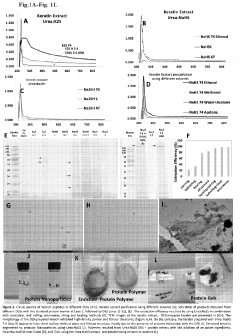
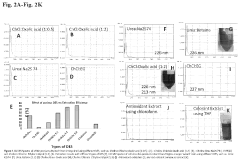
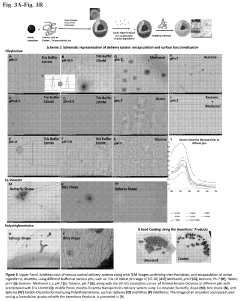
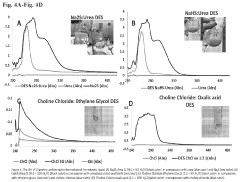
Green Closed Loop Bio-waste Refining Process For Producing Smart Active Extracts and Delivery Systems for Their Application
PatentPendingUS20240180150A1
Innovation
- A novel method using Natural Deep Eutectic Solvents (NADES) to extract organic-rich waste biomass, recycling natural agricultural nutrients like peptides, carbohydrates, and inorganic compounds, which are then engineered to create sustainable, targeted formulations for agricultural applications.
A process utilizing a thermomorphic deep eutectic solvent system within biocatalytic applications to recover the biocatalyst and the products
PatentWO2023180310A1
Innovation
- A thermomorphic deep eutectic solvent system comprising a deep eutectic solvent and a polar solvent, which changes phase with temperature, allowing for monophasic biocatalytic reactions at low temperatures and biphasic separation for easy biocatalyst and product separation.


Biocompatibility Standards for Eutectic Materials
The establishment of comprehensive biocompatibility standards for eutectic materials represents a critical foundation for their successful integration into bio-inspired applications. Current regulatory frameworks primarily focus on traditional biomaterials, creating significant gaps in evaluation protocols specifically designed for eutectic systems with their unique phase behaviors and compositional characteristics.
International standards organizations, including ISO 10993 series and ASTM International, provide baseline biocompatibility testing requirements that serve as starting points for eutectic material evaluation. However, these standards require substantial adaptation to address the dynamic nature of eutectic systems, particularly their temperature-dependent phase transitions and potential component migration in biological environments.
Cytotoxicity assessment protocols must be modified to account for eutectic materials' variable composition ratios and their behavior at physiological temperatures. Standard cell viability assays, including MTT and LDH release tests, need extended observation periods to capture delayed toxic effects that may emerge as eutectic phases equilibrate in biological media. Additionally, testing should encompass both individual eutectic components and their combined systems to understand synergistic effects.
Hemocompatibility evaluation presents unique challenges for eutectic materials, requiring specialized protocols that assess hemolysis, platelet activation, and coagulation cascade effects under conditions that simulate the materials' intended application environment. The dynamic nature of eutectic systems necessitates real-time monitoring of blood-material interactions across different temperature ranges and phase states.
Genotoxicity and mutagenicity testing standards must incorporate considerations for eutectic materials' potential to release components over extended periods. Modified Ames tests and chromosomal aberration assays should evaluate both acute and chronic exposure scenarios, accounting for the gradual release of eutectic components in biological systems.
Sensitization and irritation testing protocols require adaptation to address the unique surface properties of eutectic materials and their potential for compositional changes upon contact with biological tissues. Guinea pig maximization tests and local lymph node assays must be modified to account for the materials' phase behavior and component mobility.
Implantation studies for eutectic materials demand extended observation periods and specialized histological evaluation techniques to assess long-term biocompatibility. These studies must monitor tissue response to both the bulk material and any released components, requiring sophisticated analytical methods to track material degradation and biological integration over time.
International standards organizations, including ISO 10993 series and ASTM International, provide baseline biocompatibility testing requirements that serve as starting points for eutectic material evaluation. However, these standards require substantial adaptation to address the dynamic nature of eutectic systems, particularly their temperature-dependent phase transitions and potential component migration in biological environments.
Cytotoxicity assessment protocols must be modified to account for eutectic materials' variable composition ratios and their behavior at physiological temperatures. Standard cell viability assays, including MTT and LDH release tests, need extended observation periods to capture delayed toxic effects that may emerge as eutectic phases equilibrate in biological media. Additionally, testing should encompass both individual eutectic components and their combined systems to understand synergistic effects.
Hemocompatibility evaluation presents unique challenges for eutectic materials, requiring specialized protocols that assess hemolysis, platelet activation, and coagulation cascade effects under conditions that simulate the materials' intended application environment. The dynamic nature of eutectic systems necessitates real-time monitoring of blood-material interactions across different temperature ranges and phase states.
Genotoxicity and mutagenicity testing standards must incorporate considerations for eutectic materials' potential to release components over extended periods. Modified Ames tests and chromosomal aberration assays should evaluate both acute and chronic exposure scenarios, accounting for the gradual release of eutectic components in biological systems.
Sensitization and irritation testing protocols require adaptation to address the unique surface properties of eutectic materials and their potential for compositional changes upon contact with biological tissues. Guinea pig maximization tests and local lymph node assays must be modified to account for the materials' phase behavior and component mobility.
Implantation studies for eutectic materials demand extended observation periods and specialized histological evaluation techniques to assess long-term biocompatibility. These studies must monitor tissue response to both the bulk material and any released components, requiring sophisticated analytical methods to track material degradation and biological integration over time.
Environmental Impact of Bio-Eutectic Systems
The environmental implications of bio-eutectic systems represent a critical consideration in their development and deployment across various applications. These systems, which combine naturally derived components to form low-melting-point mixtures, offer significant potential for reducing environmental footprint compared to conventional synthetic alternatives. The biodegradability of most bio-eutectic components ensures minimal long-term environmental persistence, addressing growing concerns about persistent organic pollutants in industrial applications.
Life cycle assessment studies indicate that bio-eutectic systems demonstrate substantially lower carbon footprints during production phases. The utilization of renewable feedstocks, such as plant-derived organic acids, sugars, and amino acids, reduces dependency on petroleum-based chemicals. This shift toward bio-based raw materials contributes to decreased greenhouse gas emissions and supports circular economy principles through the integration of agricultural waste streams and byproducts.
Water resource management emerges as another significant environmental advantage. Bio-eutectic systems typically exhibit enhanced biodegradation rates in aquatic environments, reducing the risk of bioaccumulation in marine ecosystems. Their lower toxicity profiles compared to traditional organic solvents minimize adverse effects on aquatic organisms and soil microbiomes when released into natural environments.
However, environmental challenges persist in scaling bio-eutectic production. Large-scale cultivation of feedstock materials may compete with food production systems and potentially contribute to land-use changes. The energy requirements for purification and processing of bio-derived components must be carefully optimized to maintain overall environmental benefits.
Waste management considerations favor bio-eutectic systems due to their inherent biodegradability and reduced hazardous waste generation. End-of-life disposal typically involves standard biological treatment processes rather than specialized hazardous waste handling protocols. This characteristic significantly reduces long-term environmental liability and disposal costs.
The regulatory landscape increasingly supports bio-eutectic adoption through environmental legislation favoring green chemistry initiatives. Compliance with emerging environmental standards becomes more achievable through bio-eutectic implementation, positioning these systems as environmentally responsible alternatives for sustainable industrial processes.
Life cycle assessment studies indicate that bio-eutectic systems demonstrate substantially lower carbon footprints during production phases. The utilization of renewable feedstocks, such as plant-derived organic acids, sugars, and amino acids, reduces dependency on petroleum-based chemicals. This shift toward bio-based raw materials contributes to decreased greenhouse gas emissions and supports circular economy principles through the integration of agricultural waste streams and byproducts.
Water resource management emerges as another significant environmental advantage. Bio-eutectic systems typically exhibit enhanced biodegradation rates in aquatic environments, reducing the risk of bioaccumulation in marine ecosystems. Their lower toxicity profiles compared to traditional organic solvents minimize adverse effects on aquatic organisms and soil microbiomes when released into natural environments.
However, environmental challenges persist in scaling bio-eutectic production. Large-scale cultivation of feedstock materials may compete with food production systems and potentially contribute to land-use changes. The energy requirements for purification and processing of bio-derived components must be carefully optimized to maintain overall environmental benefits.
Waste management considerations favor bio-eutectic systems due to their inherent biodegradability and reduced hazardous waste generation. End-of-life disposal typically involves standard biological treatment processes rather than specialized hazardous waste handling protocols. This characteristic significantly reduces long-term environmental liability and disposal costs.
The regulatory landscape increasingly supports bio-eutectic adoption through environmental legislation favoring green chemistry initiatives. Compliance with emerging environmental standards becomes more achievable through bio-eutectic implementation, positioning these systems as environmentally responsible alternatives for sustainable industrial processes.
Unlock deeper insights with PatSnap Eureka Quick Research — get a full tech report to explore trends and direct your research. Try now!
Generate Your Research Report Instantly with AI Agent
Supercharge your innovation with PatSnap Eureka AI Agent Platform!