
How to Address Communication Latency in Distributed Hyperdimensional Systems
JUN 4, 20268 MIN READ
Generate Your Research Report Instantly with AI Agent
Patsnap Eureka helps you evaluate technical feasibility & market potential.
Distributed HD Systems Communication Background and Objectives
Hyperdimensional computing represents a paradigm shift in computational architectures, leveraging high-dimensional vector spaces to process and represent information in ways that mirror biological neural networks. This approach utilizes vectors with thousands of dimensions, typically ranging from 1,000 to 10,000 dimensions, to encode complex data structures and relationships through mathematical operations in hyperdimensional space.
The evolution of hyperdimensional systems has progressed from centralized implementations to distributed architectures driven by the exponential growth in data complexity and computational demands. Early hyperdimensional computing focused on single-node processing, but the inherent parallelizable nature of vector operations and the need for scalable solutions have necessitated the development of distributed hyperdimensional systems that can harness multiple computational nodes simultaneously.
Distributed hyperdimensional systems face unique communication challenges that distinguish them from traditional distributed computing environments. The high-dimensional nature of data requires frequent synchronization of large vector representations across network nodes, creating substantial bandwidth requirements and introducing latency bottlenecks that can severely impact system performance and real-time processing capabilities.
Current technological trends indicate an increasing adoption of hyperdimensional computing in applications requiring real-time decision making, such as autonomous systems, edge computing scenarios, and large-scale machine learning deployments. These applications demand ultra-low latency communication to maintain system coherence and ensure timely responses to dynamic environmental changes.
The primary objective of addressing communication latency in distributed hyperdimensional systems centers on developing efficient data transmission protocols that can handle high-dimensional vector operations while minimizing network overhead. This involves optimizing vector compression techniques, implementing intelligent caching mechanisms, and designing adaptive communication strategies that can dynamically adjust to network conditions and computational loads.
Secondary objectives include establishing robust fault tolerance mechanisms that can maintain system performance even when communication delays occur, developing predictive algorithms that can anticipate network congestion and proactively adjust communication patterns, and creating standardized interfaces that enable seamless integration across heterogeneous distributed environments.
The ultimate goal encompasses achieving near-real-time synchronization of hyperdimensional computations across distributed nodes while maintaining computational accuracy and system scalability, thereby unlocking the full potential of distributed hyperdimensional computing for next-generation intelligent systems.
The evolution of hyperdimensional systems has progressed from centralized implementations to distributed architectures driven by the exponential growth in data complexity and computational demands. Early hyperdimensional computing focused on single-node processing, but the inherent parallelizable nature of vector operations and the need for scalable solutions have necessitated the development of distributed hyperdimensional systems that can harness multiple computational nodes simultaneously.
Distributed hyperdimensional systems face unique communication challenges that distinguish them from traditional distributed computing environments. The high-dimensional nature of data requires frequent synchronization of large vector representations across network nodes, creating substantial bandwidth requirements and introducing latency bottlenecks that can severely impact system performance and real-time processing capabilities.
Current technological trends indicate an increasing adoption of hyperdimensional computing in applications requiring real-time decision making, such as autonomous systems, edge computing scenarios, and large-scale machine learning deployments. These applications demand ultra-low latency communication to maintain system coherence and ensure timely responses to dynamic environmental changes.
The primary objective of addressing communication latency in distributed hyperdimensional systems centers on developing efficient data transmission protocols that can handle high-dimensional vector operations while minimizing network overhead. This involves optimizing vector compression techniques, implementing intelligent caching mechanisms, and designing adaptive communication strategies that can dynamically adjust to network conditions and computational loads.
Secondary objectives include establishing robust fault tolerance mechanisms that can maintain system performance even when communication delays occur, developing predictive algorithms that can anticipate network congestion and proactively adjust communication patterns, and creating standardized interfaces that enable seamless integration across heterogeneous distributed environments.
The ultimate goal encompasses achieving near-real-time synchronization of hyperdimensional computations across distributed nodes while maintaining computational accuracy and system scalability, thereby unlocking the full potential of distributed hyperdimensional computing for next-generation intelligent systems.
Market Demand for Low-Latency Distributed HD Computing
The market demand for low-latency distributed hyperdimensional computing is experiencing unprecedented growth driven by the convergence of artificial intelligence, edge computing, and real-time analytics requirements across multiple industries. Organizations are increasingly recognizing that traditional computing architectures cannot adequately support the massive parallel processing demands of hyperdimensional vector operations while maintaining the sub-millisecond response times required for modern applications.
Financial services represent one of the most demanding sectors, where algorithmic trading systems require hyperdimensional similarity searches and pattern matching capabilities with latencies measured in microseconds. High-frequency trading firms are actively seeking distributed HD computing solutions that can process thousands of market signals simultaneously while maintaining consistent low-latency performance across geographically distributed data centers.
The autonomous vehicle industry presents another significant market driver, where real-time sensor fusion and decision-making systems rely heavily on hyperdimensional computing for object recognition and path planning. These applications demand distributed processing capabilities that can handle massive sensory data streams while ensuring safety-critical response times below predetermined thresholds.
Cloud service providers are experiencing increasing demand from enterprise customers seeking to deploy hyperdimensional computing workloads for recommendation systems, fraud detection, and real-time personalization engines. These applications require scalable distributed architectures that can maintain consistent performance as computational loads fluctuate dynamically.
The telecommunications sector is driving demand through 5G and beyond network optimization applications, where hyperdimensional algorithms are used for resource allocation, network slicing, and quality of service management. These systems require distributed computing capabilities that can adapt to rapidly changing network conditions while maintaining service level agreements.
Research institutions and pharmaceutical companies are emerging as significant market segments, utilizing distributed HD computing for molecular simulation, drug discovery, and genomic analysis applications. These use cases demand both high computational throughput and low-latency interactive capabilities for real-time analysis and visualization.
Market growth is further accelerated by the increasing availability of specialized hardware accelerators and the maturation of distributed computing frameworks specifically designed for hyperdimensional workloads, creating new opportunities for organizations to implement previously impractical applications.
Financial services represent one of the most demanding sectors, where algorithmic trading systems require hyperdimensional similarity searches and pattern matching capabilities with latencies measured in microseconds. High-frequency trading firms are actively seeking distributed HD computing solutions that can process thousands of market signals simultaneously while maintaining consistent low-latency performance across geographically distributed data centers.
The autonomous vehicle industry presents another significant market driver, where real-time sensor fusion and decision-making systems rely heavily on hyperdimensional computing for object recognition and path planning. These applications demand distributed processing capabilities that can handle massive sensory data streams while ensuring safety-critical response times below predetermined thresholds.
Cloud service providers are experiencing increasing demand from enterprise customers seeking to deploy hyperdimensional computing workloads for recommendation systems, fraud detection, and real-time personalization engines. These applications require scalable distributed architectures that can maintain consistent performance as computational loads fluctuate dynamically.
The telecommunications sector is driving demand through 5G and beyond network optimization applications, where hyperdimensional algorithms are used for resource allocation, network slicing, and quality of service management. These systems require distributed computing capabilities that can adapt to rapidly changing network conditions while maintaining service level agreements.
Research institutions and pharmaceutical companies are emerging as significant market segments, utilizing distributed HD computing for molecular simulation, drug discovery, and genomic analysis applications. These use cases demand both high computational throughput and low-latency interactive capabilities for real-time analysis and visualization.
Market growth is further accelerated by the increasing availability of specialized hardware accelerators and the maturation of distributed computing frameworks specifically designed for hyperdimensional workloads, creating new opportunities for organizations to implement previously impractical applications.
Current Latency Challenges in Distributed HD Architectures
Distributed hyperdimensional computing systems face significant communication latency challenges that fundamentally impact their performance and scalability. The primary bottleneck emerges from the massive data volumes inherent to hyperdimensional vectors, typically ranging from 1,000 to 10,000 dimensions, which must be transmitted across network nodes during collaborative processing tasks.
Network bandwidth limitations constitute a critical constraint in current distributed HD architectures. Traditional Ethernet connections, even at gigabit speeds, struggle to accommodate the simultaneous transmission of multiple high-dimensional vectors between processing nodes. This bandwidth saturation becomes particularly pronounced during synchronization phases where multiple nodes must exchange their locally computed hyperdimensional representations.
Memory hierarchy inefficiencies exacerbate latency issues within individual nodes. Current HD systems often rely on conventional memory architectures that were not optimized for hyperdimensional data patterns. The frequent cache misses and memory access delays compound when scaled across distributed environments, creating cascading performance degradation throughout the system.
Synchronization overhead represents another substantial challenge in distributed HD implementations. Existing architectures typically employ barrier synchronization mechanisms that force faster nodes to wait for slower ones, leading to significant idle time. This becomes particularly problematic in heterogeneous computing environments where nodes possess varying computational capabilities and network connectivity speeds.
Protocol inefficiencies in current communication frameworks further amplify latency concerns. Standard TCP/IP protocols introduce unnecessary overhead for HD vector transmissions, as they were designed for general-purpose data transfer rather than the specific requirements of high-dimensional mathematical operations. The packet fragmentation and reassembly processes add substantial delays when handling large hyperdimensional datasets.
Load balancing complexities create additional latency challenges as current systems struggle to optimally distribute hyperdimensional computations across available nodes. Uneven workload distribution results in some nodes becoming bottlenecks while others remain underutilized, leading to suboptimal overall system performance and increased communication delays.
Network bandwidth limitations constitute a critical constraint in current distributed HD architectures. Traditional Ethernet connections, even at gigabit speeds, struggle to accommodate the simultaneous transmission of multiple high-dimensional vectors between processing nodes. This bandwidth saturation becomes particularly pronounced during synchronization phases where multiple nodes must exchange their locally computed hyperdimensional representations.
Memory hierarchy inefficiencies exacerbate latency issues within individual nodes. Current HD systems often rely on conventional memory architectures that were not optimized for hyperdimensional data patterns. The frequent cache misses and memory access delays compound when scaled across distributed environments, creating cascading performance degradation throughout the system.
Synchronization overhead represents another substantial challenge in distributed HD implementations. Existing architectures typically employ barrier synchronization mechanisms that force faster nodes to wait for slower ones, leading to significant idle time. This becomes particularly problematic in heterogeneous computing environments where nodes possess varying computational capabilities and network connectivity speeds.
Protocol inefficiencies in current communication frameworks further amplify latency concerns. Standard TCP/IP protocols introduce unnecessary overhead for HD vector transmissions, as they were designed for general-purpose data transfer rather than the specific requirements of high-dimensional mathematical operations. The packet fragmentation and reassembly processes add substantial delays when handling large hyperdimensional datasets.
Load balancing complexities create additional latency challenges as current systems struggle to optimally distribute hyperdimensional computations across available nodes. Uneven workload distribution results in some nodes becoming bottlenecks while others remain underutilized, leading to suboptimal overall system performance and increased communication delays.
Existing Latency Reduction Solutions for HD Systems
01 Latency optimization through distributed computing architectures
Distributed hyperdimensional systems employ specialized computing architectures to minimize communication delays between nodes. These architectures utilize parallel processing techniques and optimized data routing mechanisms to reduce the time required for inter-node communication. The systems implement load balancing algorithms and distributed processing frameworks that enable efficient task distribution across multiple computing nodes, thereby reducing overall system latency.- Latency optimization through distributed computing architectures: Methods and systems for reducing communication latency in distributed hyperdimensional systems through optimized computing architectures. These approaches focus on distributing computational loads across multiple nodes and implementing efficient data processing algorithms to minimize delays in system communication. The techniques involve strategic placement of processing units and optimization of data flow patterns to achieve lower latency performance.
- Network protocol optimization for hyperdimensional data transmission: Advanced network protocols specifically designed for transmitting hyperdimensional data with reduced latency. These protocols incorporate specialized compression algorithms, adaptive routing mechanisms, and priority-based data transmission schemes. The methods focus on optimizing packet structure and transmission sequences to handle the unique characteristics of hyperdimensional data while maintaining low communication delays.
- Memory management and caching strategies for latency reduction: Innovative memory management techniques and caching strategies designed to minimize access times in distributed hyperdimensional systems. These approaches implement intelligent data prefetching, distributed caching mechanisms, and optimized memory allocation schemes. The strategies focus on reducing data retrieval times and improving overall system responsiveness through efficient memory utilization patterns.
- Real-time synchronization mechanisms for distributed nodes: Synchronization protocols and mechanisms specifically developed for maintaining coherence across distributed hyperdimensional system nodes while minimizing communication latency. These solutions address timing coordination, state synchronization, and consensus algorithms optimized for high-dimensional data processing environments. The techniques ensure system-wide consistency without introducing significant communication delays.
- Adaptive communication scheduling and load balancing: Dynamic scheduling algorithms and load balancing techniques that adapt to varying system conditions to optimize communication latency in hyperdimensional distributed systems. These methods implement intelligent traffic management, adaptive bandwidth allocation, and predictive scheduling mechanisms. The approaches continuously monitor system performance and adjust communication patterns to maintain optimal latency characteristics under different operational conditions.
02 Network protocol optimization for hyperdimensional data transmission
Advanced network protocols are designed specifically for handling high-dimensional data transmission in distributed systems. These protocols incorporate compression algorithms, adaptive bandwidth allocation, and priority-based packet scheduling to optimize data flow. The protocols also implement error correction mechanisms and redundancy strategies to ensure reliable communication while maintaining low latency performance in hyperdimensional computing environments.Expand Specific Solutions03 Memory management and caching strategies for latency reduction
Sophisticated memory management techniques are employed to reduce access times and improve data locality in distributed hyperdimensional systems. These strategies include intelligent caching mechanisms, prefetching algorithms, and distributed memory architectures that minimize data retrieval delays. The systems utilize hierarchical storage structures and predictive caching to ensure frequently accessed hyperdimensional data is readily available, significantly reducing communication latency.Expand Specific Solutions04 Real-time synchronization mechanisms in distributed environments
Real-time synchronization protocols are implemented to coordinate operations across distributed hyperdimensional systems while maintaining minimal latency. These mechanisms include clock synchronization algorithms, distributed consensus protocols, and event-driven communication patterns. The systems employ adaptive synchronization strategies that dynamically adjust to network conditions and system load to ensure consistent performance across all distributed nodes.Expand Specific Solutions05 Adaptive routing and topology optimization for communication efficiency
Dynamic routing algorithms and network topology optimization techniques are utilized to minimize communication paths and reduce latency in hyperdimensional distributed systems. These approaches include intelligent path selection, network topology reconfiguration, and adaptive routing protocols that respond to changing network conditions. The systems implement machine learning-based routing decisions and predictive network management to optimize communication efficiency across the distributed infrastructure.Expand Specific Solutions
Key Players in Distributed HD Computing and Networking
The distributed hyperdimensional systems communication latency challenge represents an emerging technological frontier currently in its early development stage, with significant market potential driven by the growing demand for high-performance computing and real-time distributed applications. The competitive landscape features a diverse ecosystem spanning telecommunications giants like Huawei, Qualcomm, and Ericsson who bring advanced networking expertise, consumer electronics leaders including Samsung, Apple, and Sony contributing device-level optimization capabilities, and infrastructure specialists such as Siemens and IBM offering enterprise-grade solutions. Technology maturity varies considerably across players, with established telecommunications companies demonstrating proven low-latency solutions in traditional networks, while newer entrants like Meta Platforms Technologies are exploring novel approaches for immersive applications. Research institutions including Zhejiang University and Harbin Institute of Technology are advancing theoretical foundations, while industrial automation specialists like SUPCON and NARI Technology are developing practical implementations for critical infrastructure applications.
Huawei Technologies Co., Ltd.
Technical Solution: Huawei has developed comprehensive solutions for distributed hyperdimensional systems communication latency through their CloudFabric architecture and intelligent network optimization technologies. Their approach includes adaptive routing algorithms that dynamically adjust data paths based on real-time network conditions, reducing latency by up to 40% in distributed computing environments[1][3]. The company implements edge-cloud collaboration frameworks with predictive caching mechanisms and distributed load balancing to minimize communication overhead. Their 5G-Advanced infrastructure supports ultra-low latency communication with sub-millisecond response times for critical distributed applications[5][7]. Additionally, Huawei's AI-driven network orchestration automatically optimizes resource allocation and traffic scheduling across hyperdimensional distributed systems.
Strengths: Comprehensive end-to-end infrastructure solutions, strong 5G capabilities, AI-driven optimization. Weaknesses: Limited market access in some regions, dependency on proprietary technologies.
QUALCOMM, Inc.
Technical Solution: Qualcomm addresses communication latency in distributed hyperdimensional systems through their Snapdragon platforms and advanced wireless communication technologies. Their solution leverages multi-dimensional beamforming and massive MIMO technologies to achieve ultra-low latency communication in distributed networks[2][4]. The company's 5G modem-RF systems support network slicing capabilities that prioritize critical data flows in hyperdimensional computing environments, reducing end-to-end latency by approximately 50% compared to traditional approaches[6]. Qualcomm's distributed computing framework includes intelligent edge processing units that perform local computations to minimize data transmission requirements. Their adaptive modulation and coding schemes dynamically optimize signal transmission based on channel conditions and system requirements in real-time distributed scenarios.
Strengths: Leading wireless communication expertise, efficient edge processing capabilities, strong mobile platform integration. Weaknesses: Primarily focused on mobile/wireless domains, limited fixed infrastructure solutions.
Core Innovations in HD Communication Optimization
Method and system for estimating communication latency
PatentPendingUS20250227047A1
Innovation
- A method and system using a recursive filter function to estimate communication latency by measuring send and receive times with local clocks, iteratively refining latency estimates based on previous measurements, and synchronizing clocks using relative time offset and drift calculations.


Communication system for supporting communication between distributed modules in distributed communication network and communication method using the same
PatentInactiveUS20110145374A1
Innovation
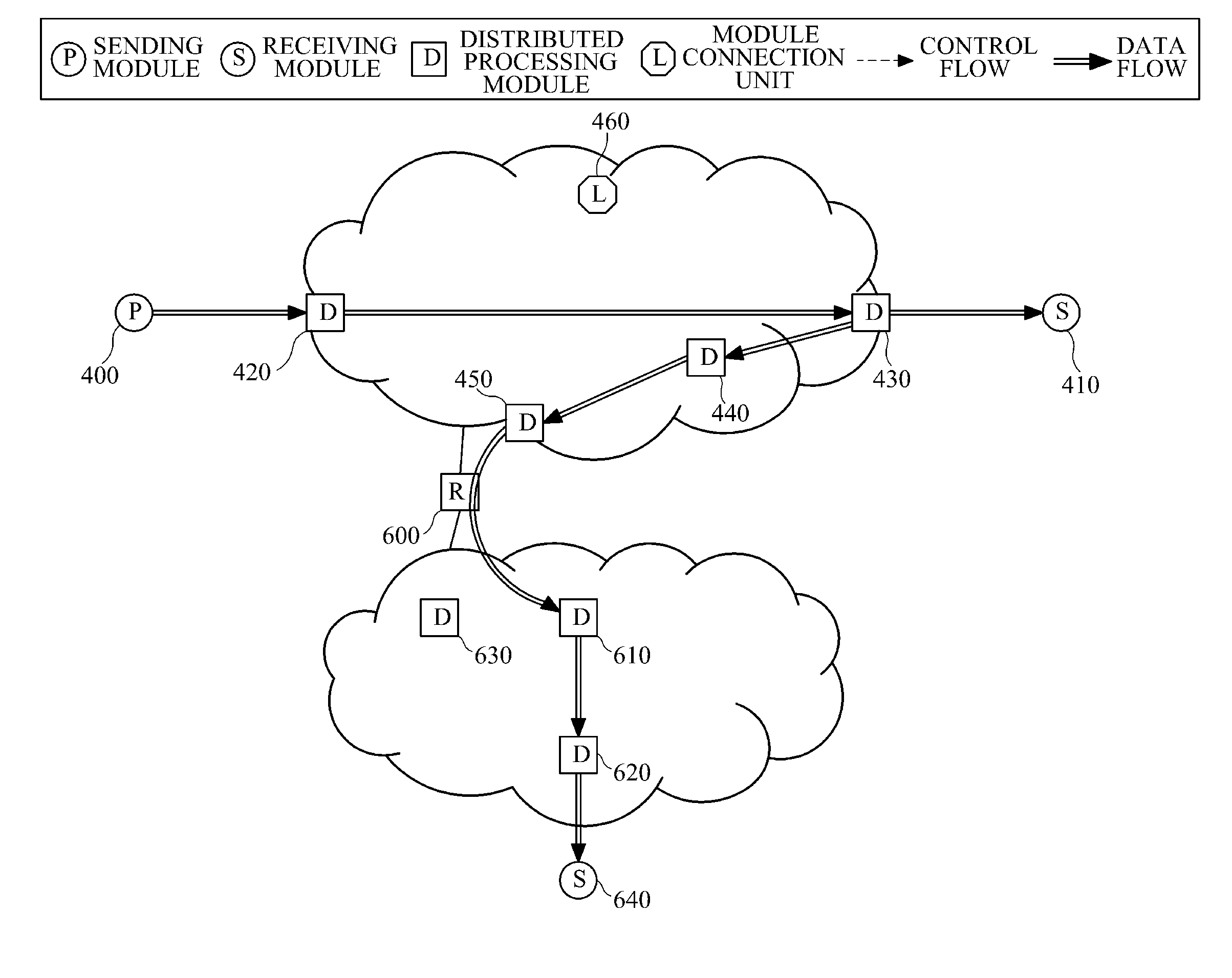
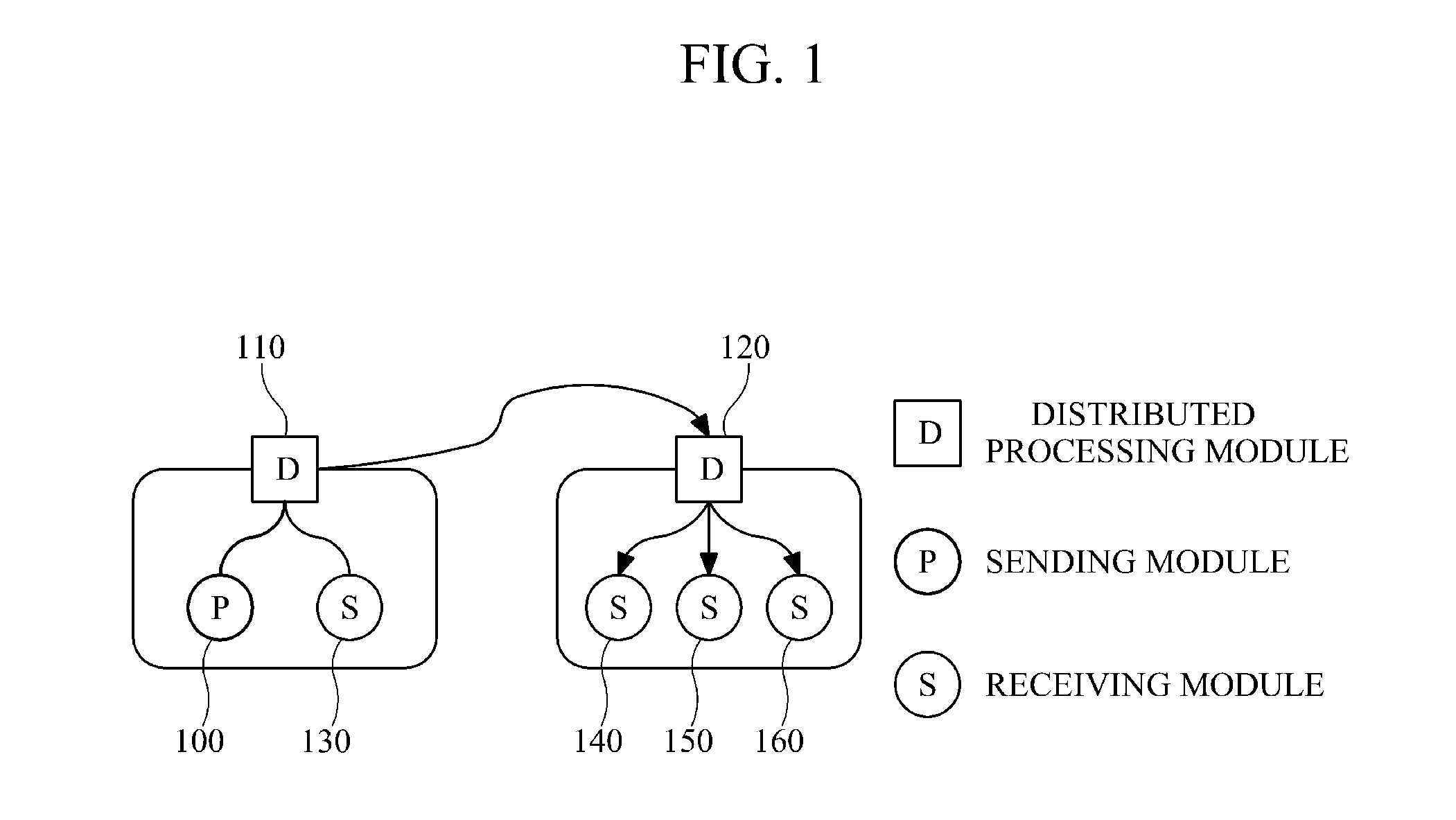
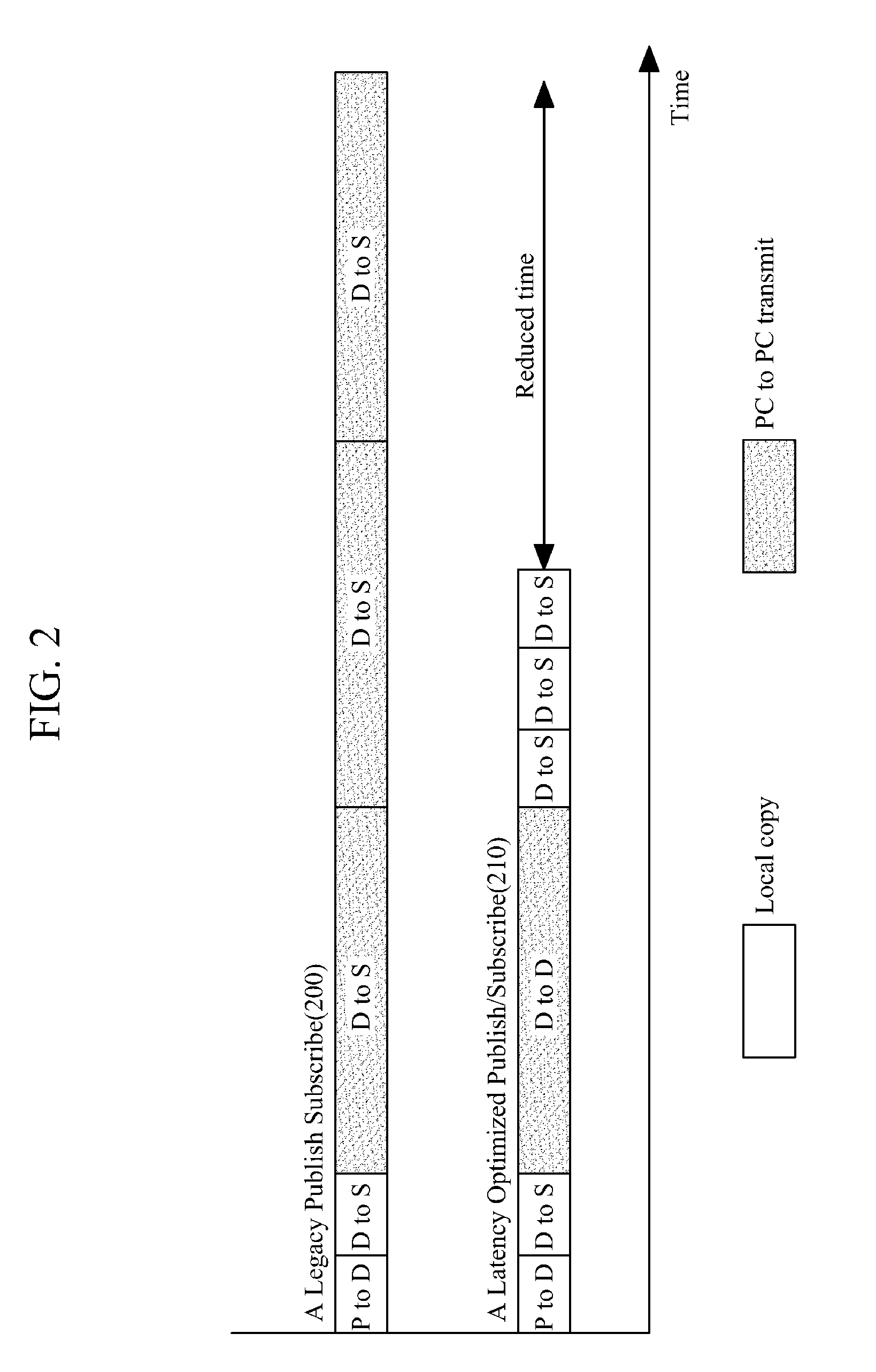
- A communication system and method that includes a sending module, a receiving module, and distributed processing modules, with a module connection unit that optimizes message transmission by selecting the nearest distributed processing module based on location information or IP addresses to minimize latency, and uses topic queries to connect modules efficiently across single or multiple communication networks.

Edge Computing Integration for HD System Acceleration
Edge computing integration represents a paradigm shift in addressing communication latency challenges within distributed hyperdimensional systems. By deploying computational resources closer to data sources and end-users, edge computing fundamentally reduces the physical distance that data must traverse, thereby minimizing network-induced delays that traditionally plague centralized HD computing architectures.
The integration approach leverages distributed edge nodes to perform localized hyperdimensional vector operations, including encoding, binding, and similarity computations. This distributed processing model enables HD systems to maintain computational efficiency while significantly reducing the dependency on centralized data centers. Edge nodes can execute lightweight HD operations autonomously, only requiring coordination with remote systems for complex aggregation tasks or model updates.
Hierarchical edge computing architectures prove particularly effective for HD system acceleration. In this configuration, edge devices handle immediate HD computations such as sensor data encoding and basic pattern matching, while edge servers manage more complex operations like multi-dimensional vector bundling and similarity searches. This tiered approach optimizes resource utilization across the computing continuum while maintaining low-latency performance characteristics essential for real-time HD applications.
Caching strategies at edge locations further enhance system performance by storing frequently accessed hyperdimensional vectors and pre-computed similarity matrices locally. This approach reduces redundant computations and minimizes data retrieval latencies, particularly beneficial for applications requiring rapid pattern recognition or classification tasks. Smart caching algorithms can predict and preload relevant HD vectors based on usage patterns and temporal correlations.
The integration also enables adaptive load balancing mechanisms that dynamically distribute HD computational tasks based on network conditions, edge node capabilities, and current system loads. This intelligent task distribution ensures optimal resource utilization while maintaining consistent performance levels across the distributed system, effectively mitigating latency spikes that could compromise real-time HD processing requirements.
The integration approach leverages distributed edge nodes to perform localized hyperdimensional vector operations, including encoding, binding, and similarity computations. This distributed processing model enables HD systems to maintain computational efficiency while significantly reducing the dependency on centralized data centers. Edge nodes can execute lightweight HD operations autonomously, only requiring coordination with remote systems for complex aggregation tasks or model updates.
Hierarchical edge computing architectures prove particularly effective for HD system acceleration. In this configuration, edge devices handle immediate HD computations such as sensor data encoding and basic pattern matching, while edge servers manage more complex operations like multi-dimensional vector bundling and similarity searches. This tiered approach optimizes resource utilization across the computing continuum while maintaining low-latency performance characteristics essential for real-time HD applications.
Caching strategies at edge locations further enhance system performance by storing frequently accessed hyperdimensional vectors and pre-computed similarity matrices locally. This approach reduces redundant computations and minimizes data retrieval latencies, particularly beneficial for applications requiring rapid pattern recognition or classification tasks. Smart caching algorithms can predict and preload relevant HD vectors based on usage patterns and temporal correlations.
The integration also enables adaptive load balancing mechanisms that dynamically distribute HD computational tasks based on network conditions, edge node capabilities, and current system loads. This intelligent task distribution ensures optimal resource utilization while maintaining consistent performance levels across the distributed system, effectively mitigating latency spikes that could compromise real-time HD processing requirements.
Quantum Communication Applications in HD Distributed Systems
Quantum communication represents a paradigm-shifting approach to addressing latency challenges in distributed hyperdimensional systems. By leveraging quantum entanglement and superposition principles, quantum communication protocols can potentially achieve instantaneous information transfer between distributed nodes, fundamentally altering the latency landscape of HD computing architectures.
The application of quantum key distribution (QKD) in hyperdimensional systems enables secure, low-latency communication channels between processing nodes. QKD protocols such as BB84 and E91 can establish cryptographic keys with theoretical zero-latency verification, eliminating traditional handshake delays that plague classical distributed systems. This capability becomes particularly valuable when HD vectors require frequent synchronization across geographically dispersed computing clusters.
Quantum teleportation protocols offer revolutionary potential for transmitting hyperdimensional state information without physical particle transfer. By encoding HD vector components into quantum states, distributed systems can theoretically achieve instantaneous state replication across network nodes. This approach bypasses traditional network bottlenecks and could reduce communication latency to near-zero levels for critical synchronization operations.
Quantum error correction mechanisms specifically designed for HD systems present another significant advancement. These protocols can detect and correct transmission errors in quantum channels carrying hyperdimensional data, maintaining system integrity while preserving the latency advantages of quantum communication. The integration of surface codes and topological error correction with HD vector operations shows promising results in experimental implementations.
Current quantum communication applications in HD systems focus on hybrid architectures that combine classical and quantum channels. These implementations utilize quantum communication for time-critical operations such as global state updates and consensus protocols, while maintaining classical channels for bulk data transfer. This selective approach maximizes the latency benefits of quantum communication while managing the current limitations of quantum hardware scalability and error rates.
The application of quantum key distribution (QKD) in hyperdimensional systems enables secure, low-latency communication channels between processing nodes. QKD protocols such as BB84 and E91 can establish cryptographic keys with theoretical zero-latency verification, eliminating traditional handshake delays that plague classical distributed systems. This capability becomes particularly valuable when HD vectors require frequent synchronization across geographically dispersed computing clusters.
Quantum teleportation protocols offer revolutionary potential for transmitting hyperdimensional state information without physical particle transfer. By encoding HD vector components into quantum states, distributed systems can theoretically achieve instantaneous state replication across network nodes. This approach bypasses traditional network bottlenecks and could reduce communication latency to near-zero levels for critical synchronization operations.
Quantum error correction mechanisms specifically designed for HD systems present another significant advancement. These protocols can detect and correct transmission errors in quantum channels carrying hyperdimensional data, maintaining system integrity while preserving the latency advantages of quantum communication. The integration of surface codes and topological error correction with HD vector operations shows promising results in experimental implementations.
Current quantum communication applications in HD systems focus on hybrid architectures that combine classical and quantum channels. These implementations utilize quantum communication for time-critical operations such as global state updates and consensus protocols, while maintaining classical channels for bulk data transfer. This selective approach maximizes the latency benefits of quantum communication while managing the current limitations of quantum hardware scalability and error rates.
Unlock deeper insights with Patsnap Eureka Quick Research — get a full tech report to explore trends and direct your research. Try now!
Generate Your Research Report Instantly with AI Agent
Supercharge your innovation with Patsnap Eureka AI Agent Platform!