
Optimizing Hash Code Lengths for Secure Hyperdimensional Computing Systems
JUN 4, 20269 MIN READ
Generate Your Research Report Instantly with AI Agent
Patsnap Eureka helps you evaluate technical feasibility & market potential.
Hash Code Optimization in HDC Background and Objectives
Hyperdimensional Computing (HDC) represents a paradigm shift in computational approaches, leveraging high-dimensional vector spaces to perform cognitive tasks with remarkable efficiency and robustness. This brain-inspired computing model operates on hypervectors, typically ranging from 1,000 to 10,000 dimensions, enabling distributed representation of information that mirrors neural processing patterns. The fundamental principle relies on the mathematical properties of high-dimensional spaces, where random vectors become nearly orthogonal, providing natural error tolerance and associative memory capabilities.
The evolution of HDC has been driven by the increasing demand for energy-efficient computing solutions capable of handling uncertainty and noise in real-world applications. Traditional von Neumann architectures struggle with the computational complexity and power consumption requirements of modern AI workloads, particularly in edge computing scenarios where resources are constrained. HDC addresses these limitations by offering a computing model that maintains performance even with significant hardware imperfections and reduced precision arithmetic.
Hash code optimization within HDC systems has emerged as a critical research area due to its direct impact on both security and computational efficiency. The length of hash codes fundamentally determines the trade-off between memory requirements, processing speed, and the system's ability to maintain data integrity under various attack vectors. Shorter hash codes reduce computational overhead and memory footprint but may compromise the system's resilience against adversarial inputs and collision attacks.
The primary objective of optimizing hash code lengths in secure HDC systems centers on establishing an optimal balance between computational efficiency and security robustness. This involves developing mathematical frameworks that can predict the minimum hash code length required to maintain specified security levels while maximizing processing throughput. The optimization process must consider various factors including the dimensionality of input data, the complexity of target applications, and the threat model under which the system operates.
Current research objectives focus on developing adaptive hash code length selection algorithms that can dynamically adjust based on real-time security assessments and computational load requirements. These systems aim to provide provable security guarantees while maintaining the inherent advantages of HDC, including fault tolerance, parallel processing capabilities, and low-power operation characteristics that make them suitable for deployment in resource-constrained environments.
The evolution of HDC has been driven by the increasing demand for energy-efficient computing solutions capable of handling uncertainty and noise in real-world applications. Traditional von Neumann architectures struggle with the computational complexity and power consumption requirements of modern AI workloads, particularly in edge computing scenarios where resources are constrained. HDC addresses these limitations by offering a computing model that maintains performance even with significant hardware imperfections and reduced precision arithmetic.
Hash code optimization within HDC systems has emerged as a critical research area due to its direct impact on both security and computational efficiency. The length of hash codes fundamentally determines the trade-off between memory requirements, processing speed, and the system's ability to maintain data integrity under various attack vectors. Shorter hash codes reduce computational overhead and memory footprint but may compromise the system's resilience against adversarial inputs and collision attacks.
The primary objective of optimizing hash code lengths in secure HDC systems centers on establishing an optimal balance between computational efficiency and security robustness. This involves developing mathematical frameworks that can predict the minimum hash code length required to maintain specified security levels while maximizing processing throughput. The optimization process must consider various factors including the dimensionality of input data, the complexity of target applications, and the threat model under which the system operates.
Current research objectives focus on developing adaptive hash code length selection algorithms that can dynamically adjust based on real-time security assessments and computational load requirements. These systems aim to provide provable security guarantees while maintaining the inherent advantages of HDC, including fault tolerance, parallel processing capabilities, and low-power operation characteristics that make them suitable for deployment in resource-constrained environments.
Market Demand for Secure HDC Applications
The market demand for secure hyperdimensional computing applications is experiencing significant growth across multiple sectors, driven by the increasing need for privacy-preserving computation and efficient processing of high-dimensional data. Healthcare organizations represent one of the most promising market segments, where HDC systems can enable secure analysis of patient genomics data, medical imaging, and electronic health records while maintaining strict privacy compliance with regulations such as HIPAA and GDPR.
Financial services institutions are actively seeking HDC solutions for fraud detection, risk assessment, and algorithmic trading applications. The ability to perform secure computations on sensitive financial data without exposing underlying information makes HDC particularly attractive for cross-institutional collaborations and regulatory compliance scenarios. Banks and insurance companies are exploring HDC implementations for real-time transaction monitoring and customer behavior analysis.
The Internet of Things and edge computing markets present substantial opportunities for secure HDC applications. As connected devices proliferate across smart cities, industrial automation, and consumer electronics, the demand for lightweight yet secure computation methods continues to expand. HDC's inherent efficiency in handling sensor data fusion and pattern recognition makes it well-suited for resource-constrained environments where traditional cryptographic approaches may be computationally prohibitive.
Government and defense sectors are increasingly interested in HDC applications for secure communications, intelligence analysis, and cybersecurity operations. The technology's resistance to certain types of attacks and its ability to maintain functionality even with partial data corruption align well with national security requirements and critical infrastructure protection needs.
Enterprise software vendors are beginning to integrate HDC capabilities into their platforms to address growing customer demands for privacy-preserving analytics and secure multi-party computation. Cloud service providers are exploring HDC as a differentiating feature for their security-focused offerings, particularly in regulated industries where data sovereignty and privacy are paramount concerns.
The automotive industry represents an emerging market segment, with autonomous vehicle manufacturers requiring secure processing of sensor data and vehicle-to-vehicle communications. HDC's potential for real-time decision making while maintaining data privacy addresses critical safety and security requirements in connected transportation systems.
Financial services institutions are actively seeking HDC solutions for fraud detection, risk assessment, and algorithmic trading applications. The ability to perform secure computations on sensitive financial data without exposing underlying information makes HDC particularly attractive for cross-institutional collaborations and regulatory compliance scenarios. Banks and insurance companies are exploring HDC implementations for real-time transaction monitoring and customer behavior analysis.
The Internet of Things and edge computing markets present substantial opportunities for secure HDC applications. As connected devices proliferate across smart cities, industrial automation, and consumer electronics, the demand for lightweight yet secure computation methods continues to expand. HDC's inherent efficiency in handling sensor data fusion and pattern recognition makes it well-suited for resource-constrained environments where traditional cryptographic approaches may be computationally prohibitive.
Government and defense sectors are increasingly interested in HDC applications for secure communications, intelligence analysis, and cybersecurity operations. The technology's resistance to certain types of attacks and its ability to maintain functionality even with partial data corruption align well with national security requirements and critical infrastructure protection needs.
Enterprise software vendors are beginning to integrate HDC capabilities into their platforms to address growing customer demands for privacy-preserving analytics and secure multi-party computation. Cloud service providers are exploring HDC as a differentiating feature for their security-focused offerings, particularly in regulated industries where data sovereignty and privacy are paramount concerns.
The automotive industry represents an emerging market segment, with autonomous vehicle manufacturers requiring secure processing of sensor data and vehicle-to-vehicle communications. HDC's potential for real-time decision making while maintaining data privacy addresses critical safety and security requirements in connected transportation systems.
Current HDC Hash Length Limitations and Security Challenges
Current hyperdimensional computing systems face significant constraints in hash code length optimization, primarily stemming from the fundamental trade-offs between computational efficiency and security robustness. Traditional HDC implementations typically employ fixed-length hash codes ranging from 1,000 to 10,000 dimensions, but this approach creates inherent vulnerabilities in security-critical applications where adaptive adversarial attacks can exploit predictable dimensional structures.
The primary limitation lies in the static nature of current hash length determination methodologies. Most existing systems rely on empirical testing or theoretical capacity calculations that fail to account for dynamic security threats. This results in either over-dimensioned systems that waste computational resources or under-dimensioned systems that compromise security integrity. The lack of real-time adaptability means that once deployed, these systems cannot respond to evolving attack vectors or changing security requirements.
Security challenges emerge from several critical vulnerabilities in current HDC hash implementations. Dimension correlation attacks represent a significant threat, where adversaries analyze patterns in high-dimensional vectors to reverse-engineer sensitive information. Current systems lack sufficient randomization in their hash generation processes, making them susceptible to statistical analysis attacks that can compromise data confidentiality.
Another major challenge involves the collision resistance properties of existing hash length configurations. Shorter hash codes, while computationally efficient, exhibit higher collision probabilities that can be exploited for data manipulation attacks. Conversely, longer hash codes provide better security but introduce computational bottlenecks that make real-time processing impractical for many applications.
The scalability limitations of current approaches become particularly problematic in distributed HDC systems. Fixed hash lengths cannot accommodate varying security requirements across different network nodes or application contexts. This inflexibility forces system designers to adopt worst-case security parameters globally, resulting in significant performance penalties for components that could operate efficiently with reduced security overhead.
Memory bandwidth constraints further compound these limitations, as current HDC systems struggle to balance hash length optimization with available hardware resources. The lack of dynamic memory allocation strategies means that systems cannot adapt their hash lengths based on real-time resource availability or threat assessment levels.
The primary limitation lies in the static nature of current hash length determination methodologies. Most existing systems rely on empirical testing or theoretical capacity calculations that fail to account for dynamic security threats. This results in either over-dimensioned systems that waste computational resources or under-dimensioned systems that compromise security integrity. The lack of real-time adaptability means that once deployed, these systems cannot respond to evolving attack vectors or changing security requirements.
Security challenges emerge from several critical vulnerabilities in current HDC hash implementations. Dimension correlation attacks represent a significant threat, where adversaries analyze patterns in high-dimensional vectors to reverse-engineer sensitive information. Current systems lack sufficient randomization in their hash generation processes, making them susceptible to statistical analysis attacks that can compromise data confidentiality.
Another major challenge involves the collision resistance properties of existing hash length configurations. Shorter hash codes, while computationally efficient, exhibit higher collision probabilities that can be exploited for data manipulation attacks. Conversely, longer hash codes provide better security but introduce computational bottlenecks that make real-time processing impractical for many applications.
The scalability limitations of current approaches become particularly problematic in distributed HDC systems. Fixed hash lengths cannot accommodate varying security requirements across different network nodes or application contexts. This inflexibility forces system designers to adopt worst-case security parameters globally, resulting in significant performance penalties for components that could operate efficiently with reduced security overhead.
Memory bandwidth constraints further compound these limitations, as current HDC systems struggle to balance hash length optimization with available hardware resources. The lack of dynamic memory allocation strategies means that systems cannot adapt their hash lengths based on real-time resource availability or threat assessment levels.
Existing Hash Length Optimization Solutions for HDC
01 Variable length hash code generation methods
Techniques for generating hash codes with variable lengths based on input data characteristics or security requirements. These methods allow for dynamic adjustment of hash code length to optimize performance and security trade-offs in different applications.- Variable length hash code generation methods: Techniques for generating hash codes with variable lengths based on input data characteristics or security requirements. These methods allow for dynamic adjustment of hash code length to optimize performance and security trade-offs in different applications.
- Fixed length hash code optimization: Approaches for optimizing hash functions that produce fixed-length hash codes, focusing on collision resistance and computational efficiency. These methods ensure consistent output size while maintaining cryptographic strength and processing speed.
- Hash code length selection algorithms: Algorithms and systems for automatically determining optimal hash code lengths based on data volume, security requirements, and performance constraints. These solutions provide intelligent selection mechanisms for various cryptographic and data integrity applications.
- Adaptive hash code length management: Systems that dynamically adjust hash code lengths during runtime based on changing conditions such as network load, security threats, or data characteristics. These implementations provide flexible hash length management for distributed systems and real-time applications.
- Hash code truncation and extension techniques: Methods for modifying existing hash codes by truncating longer hashes to shorter lengths or extending shorter hashes to meet specific length requirements. These techniques maintain hash properties while adapting to different system constraints and compatibility requirements.
02 Fixed length hash code optimization
Approaches for optimizing hash functions that produce fixed-length hash codes. These techniques focus on improving collision resistance and distribution properties while maintaining consistent output length for system compatibility and performance predictability.Expand Specific Solutions03 Hash code length selection algorithms
Algorithms and methods for determining optimal hash code lengths based on data set size, collision probability requirements, and computational constraints. These systems analyze input parameters to recommend appropriate hash lengths for specific use cases.Expand Specific Solutions04 Adaptive hash code length management
Systems that dynamically adjust hash code lengths during runtime based on performance metrics, security threats, or changing data patterns. These implementations provide flexibility in hash length management for evolving system requirements.Expand Specific Solutions05 Hash code truncation and extension techniques
Methods for modifying existing hash codes by truncating longer hashes to shorter lengths or extending shorter hashes to meet minimum length requirements. These techniques maintain hash properties while adapting to different system specifications.Expand Specific Solutions
Key Players in HDC and Secure Computing Industry
The hyperdimensional computing security landscape is in its nascent stage, characterized by emerging market opportunities and evolving technological frameworks. The industry represents a specialized intersection of neuromorphic computing and cryptographic security, with limited commercial deployment but growing research momentum. Market size remains constrained due to the experimental nature of hyperdimensional computing applications, though potential spans IoT security, edge computing, and privacy-preserving machine learning. Technology maturity varies significantly across key players: established tech giants like Microsoft, IBM, and Huawei bring substantial R&D resources and integration capabilities, while specialized firms such as Zama SAS focus on homomorphic encryption innovations. Academic institutions including Zhejiang University, Peking University, and University of Florida contribute foundational research in hash optimization and secure computing architectures. Chinese semiconductor companies like MediaTek and various microelectronics firms are developing hardware implementations, though most solutions remain in prototype phases, indicating an industry poised for growth but requiring further technological refinement and standardization.
Microsoft Technology Licensing LLC
Technical Solution: Microsoft has developed comprehensive hyperdimensional computing frameworks that incorporate adaptive hash code length optimization for secure applications. Their approach utilizes dynamic bit-width adjustment algorithms that can scale hash codes from 1024 to 10240 dimensions based on security requirements and computational constraints. The system employs machine learning-based optimization to determine optimal hash lengths for specific use cases, balancing security strength with processing efficiency. Microsoft's implementation includes hardware-accelerated hyperdimensional operations with built-in security features such as noise injection and randomized encoding patterns to enhance resistance against side-channel attacks.
Strengths: Comprehensive enterprise-grade security features, scalable architecture, strong hardware acceleration support. Weaknesses: High computational overhead for maximum security configurations, complex implementation requiring specialized expertise.
Huawei Technologies Co., Ltd.
Technical Solution: Huawei has implemented hyperdimensional computing solutions with optimized hash code lengths specifically designed for secure edge computing and 5G network applications. Their technology focuses on lightweight hyperdimensional vectors with adaptive compression techniques that maintain security while reducing computational load. The system uses proprietary algorithms to dynamically adjust hash code lengths between 512 to 8192 bits depending on threat levels and available processing power. Huawei's approach integrates quantum-resistant cryptographic principles with hyperdimensional computing, creating multi-layered security architectures suitable for telecommunications infrastructure and IoT devices.
Strengths: Optimized for telecommunications and edge computing, quantum-resistant security features, efficient resource utilization. Weaknesses: Limited availability outside China due to regulatory restrictions, proprietary algorithms may lack transparency.
Core Innovations in HDC Hash Code Security Patents
Computation and Storage of Object Identity Hash Values
PatentPendingUS20230367638A1
Innovation
- The proposed solution involves deriving object identifiers by mixing and hashing seed values with nonce values and salt values, which are unique per allocation region, ensuring unpredictable identifiers and minimizing hash collisions by dynamically adjusting identifier lengths based on the number of objects in the runtime environment.


Efficient implementation of arithmetical secure hash techniques
PatentInactiveUS20100086127A1
Innovation
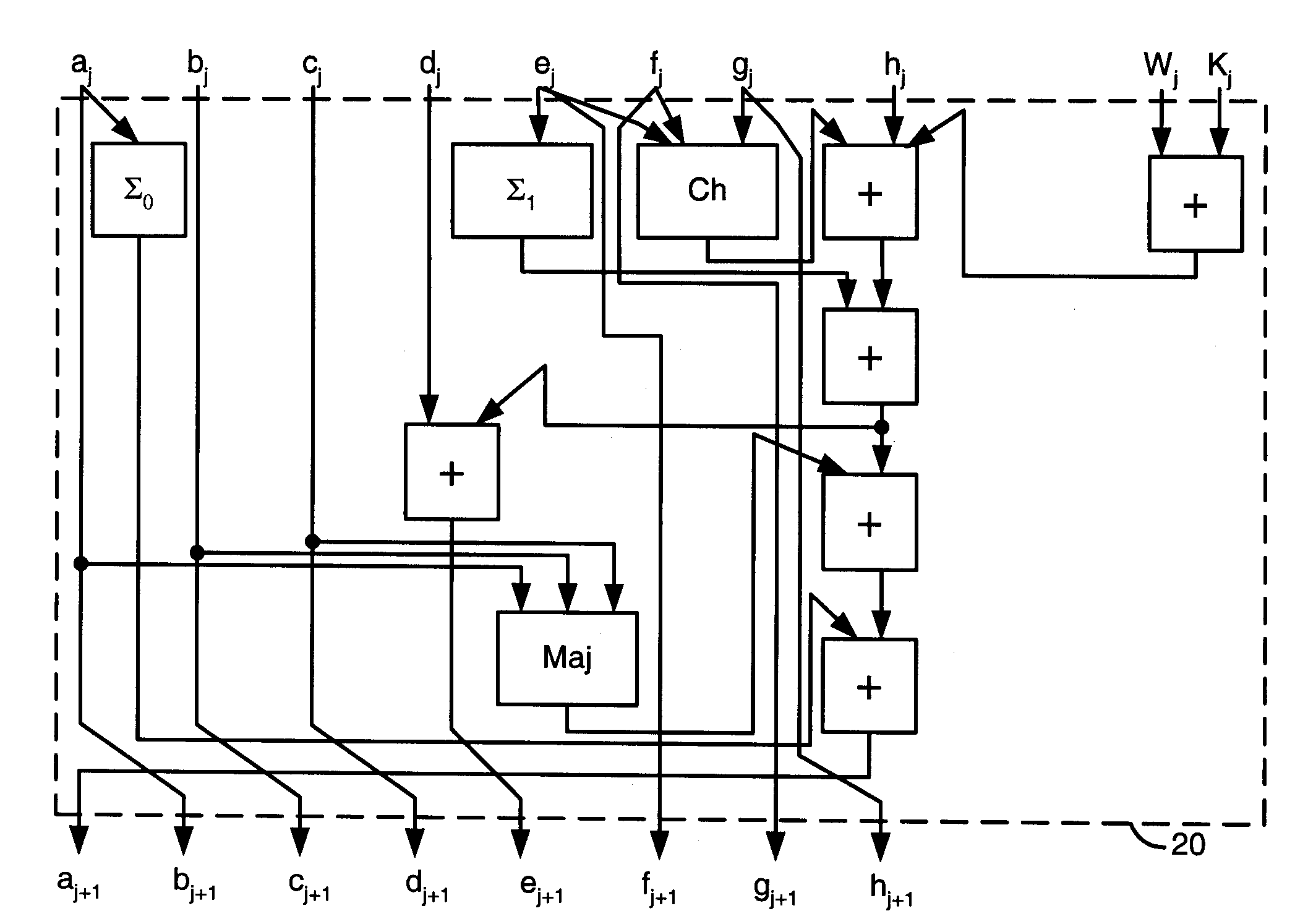
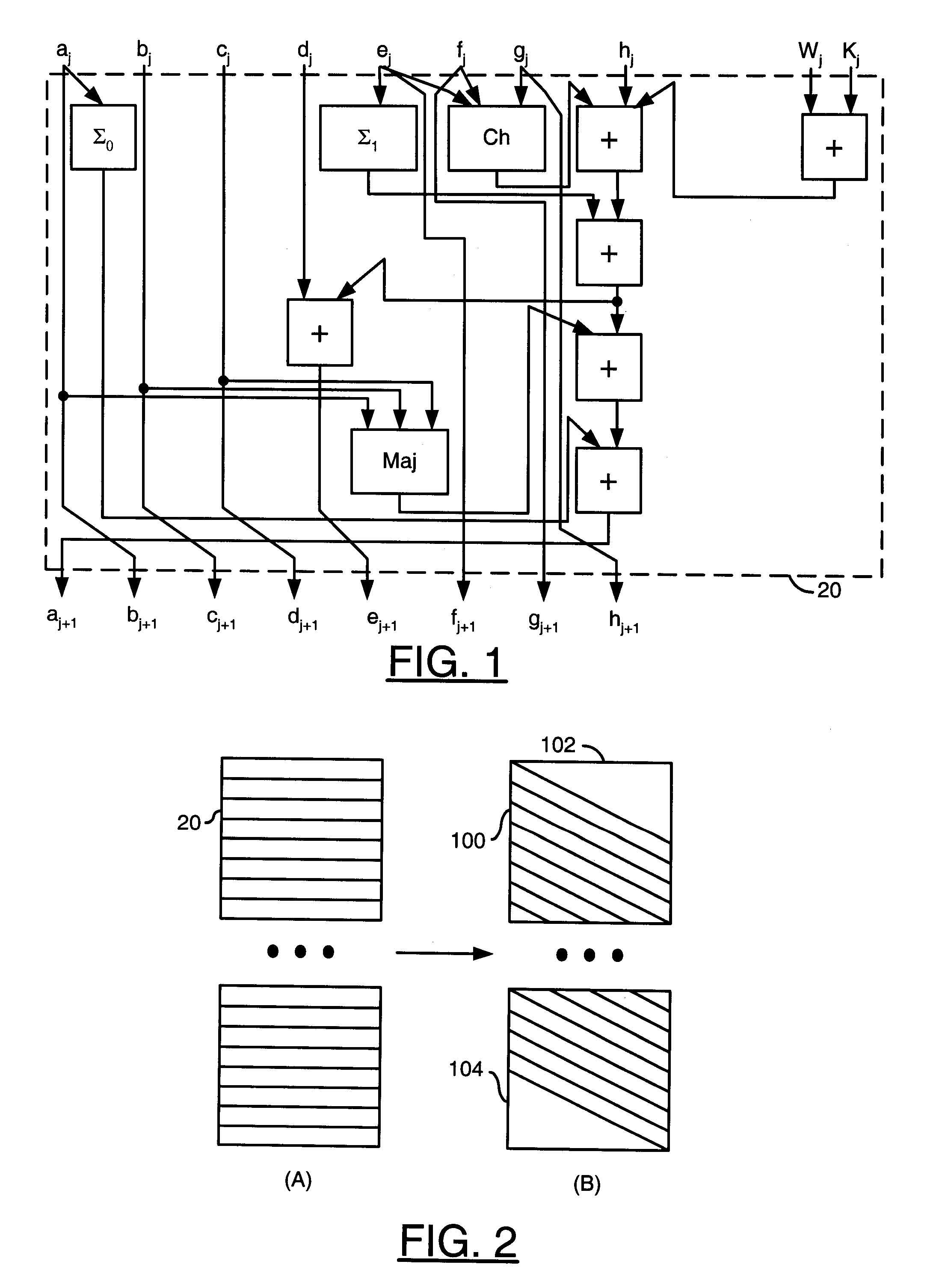
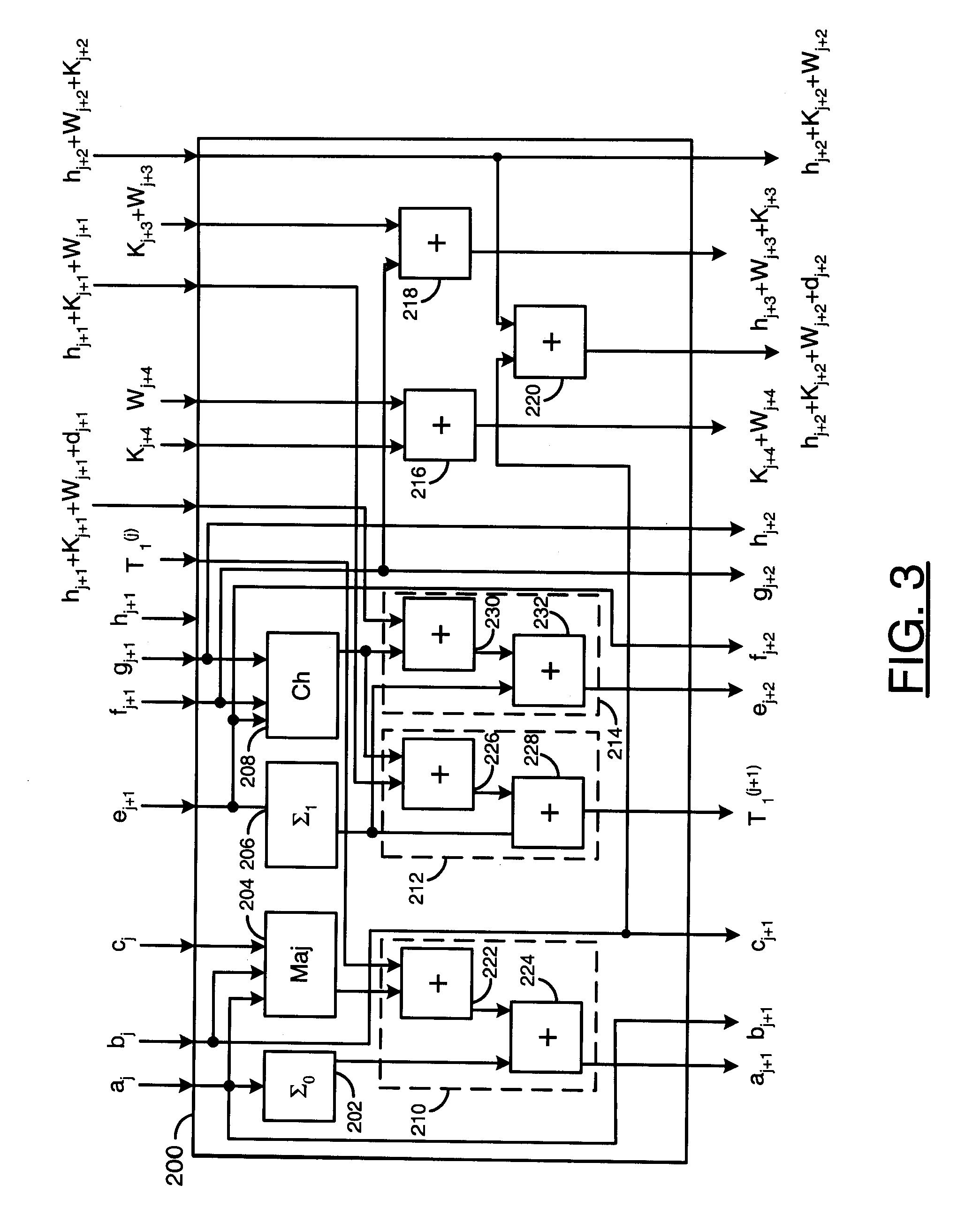
- The implementation of a diagonal cut technique in the hash computation circuit allows simultaneous use of values from multiple cycle rounds in a single cycle round, optimizing the design by reducing scheme depth, area usage, and eliminating storage of constants, thereby supporting high-frequency designs and cost reduction.

Privacy Standards for HDC Security Implementation
The implementation of privacy standards for HDC security systems requires adherence to established regulatory frameworks while addressing the unique characteristics of hyperdimensional computing architectures. Current privacy regulations such as GDPR, CCPA, and emerging AI governance frameworks provide foundational requirements that must be adapted for HDC-specific implementations. These standards emphasize data minimization, purpose limitation, and user consent mechanisms that directly impact how hash code optimization strategies are developed and deployed.
Privacy-by-design principles form the cornerstone of secure HDC implementations, requiring that privacy protections be embedded throughout the system architecture rather than added as an afterthought. This approach necessitates careful consideration of hash code length optimization to ensure that dimensional reduction processes do not inadvertently create privacy vulnerabilities or enable unauthorized data reconstruction. The principle of data minimization particularly influences hash code design, as shorter codes may reduce storage and computational overhead while potentially compromising the privacy guarantees of the hyperdimensional representation.
Differential privacy standards have emerged as a critical framework for HDC security implementations, providing mathematical guarantees for privacy protection even when hash codes are subject to analysis or inference attacks. The integration of differential privacy mechanisms with hash code optimization requires careful calibration of noise injection parameters to maintain both computational efficiency and privacy bounds. This balance becomes particularly challenging when optimizing hash code lengths, as shorter representations may amplify the impact of privacy-preserving noise on system accuracy.
Industry-specific privacy standards, such as HIPAA for healthcare applications and PCI DSS for financial systems, impose additional constraints on HDC implementations that must be considered during hash code optimization. These sector-specific requirements often mandate specific encryption standards, access control mechanisms, and audit trail capabilities that influence the design of hyperdimensional computing systems. The optimization of hash code lengths must therefore account for compliance overhead and ensure that dimensional representations maintain sufficient entropy to meet cryptographic requirements.
Emerging international standards for AI privacy, including ISO/IEC 23053 and IEEE standards for algorithmic bias, are beginning to address the unique challenges posed by high-dimensional computing systems. These evolving frameworks recognize the need for specialized privacy protections in systems that operate on abstract mathematical representations of sensitive data, providing guidance for hash code optimization strategies that preserve both utility and privacy guarantees.
Privacy-by-design principles form the cornerstone of secure HDC implementations, requiring that privacy protections be embedded throughout the system architecture rather than added as an afterthought. This approach necessitates careful consideration of hash code length optimization to ensure that dimensional reduction processes do not inadvertently create privacy vulnerabilities or enable unauthorized data reconstruction. The principle of data minimization particularly influences hash code design, as shorter codes may reduce storage and computational overhead while potentially compromising the privacy guarantees of the hyperdimensional representation.
Differential privacy standards have emerged as a critical framework for HDC security implementations, providing mathematical guarantees for privacy protection even when hash codes are subject to analysis or inference attacks. The integration of differential privacy mechanisms with hash code optimization requires careful calibration of noise injection parameters to maintain both computational efficiency and privacy bounds. This balance becomes particularly challenging when optimizing hash code lengths, as shorter representations may amplify the impact of privacy-preserving noise on system accuracy.
Industry-specific privacy standards, such as HIPAA for healthcare applications and PCI DSS for financial systems, impose additional constraints on HDC implementations that must be considered during hash code optimization. These sector-specific requirements often mandate specific encryption standards, access control mechanisms, and audit trail capabilities that influence the design of hyperdimensional computing systems. The optimization of hash code lengths must therefore account for compliance overhead and ensure that dimensional representations maintain sufficient entropy to meet cryptographic requirements.
Emerging international standards for AI privacy, including ISO/IEC 23053 and IEEE standards for algorithmic bias, are beginning to address the unique challenges posed by high-dimensional computing systems. These evolving frameworks recognize the need for specialized privacy protections in systems that operate on abstract mathematical representations of sensitive data, providing guidance for hash code optimization strategies that preserve both utility and privacy guarantees.
Performance Trade-offs in Hash-Security Balance
The optimization of hash code lengths in secure hyperdimensional computing systems presents a fundamental trade-off between computational performance and security robustness. Shorter hash codes enable faster processing, reduced memory consumption, and improved system throughput, making them attractive for real-time applications and resource-constrained environments. However, these performance gains come at the cost of reduced cryptographic strength and increased vulnerability to collision attacks.
Performance benefits of shorter hash codes manifest across multiple dimensions. Computational overhead decreases significantly as hash length reduces, with processing time scaling approximately linearly with code length in most HDC architectures. Memory bandwidth utilization improves substantially, particularly in vector-intensive operations where shorter representations enable better cache locality and reduced data movement costs. System latency benefits are especially pronounced in distributed computing scenarios where network transmission overhead directly correlates with hash code size.
Security implications of hash length reduction create substantial risks that must be carefully evaluated. Collision probability increases exponentially as hash space contracts, following the birthday paradox principles. For instance, reducing hash length from 512 to 256 bits can increase collision likelihood by several orders of magnitude, potentially compromising data integrity and system security. Cryptographic resistance against brute-force attacks diminishes proportionally, with each bit reduction halving the computational effort required for successful attacks.
The optimal balance point varies significantly across application domains and threat models. High-security applications such as financial systems or defense networks typically require longer hash codes despite performance penalties, while consumer IoT devices may prioritize efficiency over maximum security. Adaptive hash length strategies have emerged as promising solutions, dynamically adjusting code lengths based on real-time security assessments and performance requirements.
Emerging research suggests hybrid approaches that maintain security through alternative mechanisms while enabling shorter hash codes. These include multi-layer hashing schemes, temporal key rotation strategies, and context-aware security protocols that compensate for reduced hash length through enhanced algorithmic complexity in other system components.
Performance benefits of shorter hash codes manifest across multiple dimensions. Computational overhead decreases significantly as hash length reduces, with processing time scaling approximately linearly with code length in most HDC architectures. Memory bandwidth utilization improves substantially, particularly in vector-intensive operations where shorter representations enable better cache locality and reduced data movement costs. System latency benefits are especially pronounced in distributed computing scenarios where network transmission overhead directly correlates with hash code size.
Security implications of hash length reduction create substantial risks that must be carefully evaluated. Collision probability increases exponentially as hash space contracts, following the birthday paradox principles. For instance, reducing hash length from 512 to 256 bits can increase collision likelihood by several orders of magnitude, potentially compromising data integrity and system security. Cryptographic resistance against brute-force attacks diminishes proportionally, with each bit reduction halving the computational effort required for successful attacks.
The optimal balance point varies significantly across application domains and threat models. High-security applications such as financial systems or defense networks typically require longer hash codes despite performance penalties, while consumer IoT devices may prioritize efficiency over maximum security. Adaptive hash length strategies have emerged as promising solutions, dynamically adjusting code lengths based on real-time security assessments and performance requirements.
Emerging research suggests hybrid approaches that maintain security through alternative mechanisms while enabling shorter hash codes. These include multi-layer hashing schemes, temporal key rotation strategies, and context-aware security protocols that compensate for reduced hash length through enhanced algorithmic complexity in other system components.
Unlock deeper insights with Patsnap Eureka Quick Research — get a full tech report to explore trends and direct your research. Try now!
Generate Your Research Report Instantly with AI Agent
Supercharge your innovation with Patsnap Eureka AI Agent Platform!