
How to Address Weak Links in Array Configuration Chains
MAR 5, 20269 MIN READ
Generate Your Research Report Instantly with AI Agent
Patsnap Eureka helps you evaluate technical feasibility & market potential.
Array Configuration Chain Reliability Background and Objectives
Array configuration chains represent critical infrastructure components in modern distributed systems, where multiple interconnected elements must operate cohesively to deliver intended functionality. These chains encompass various technological domains, from storage arrays and sensor networks to processing clusters and communication systems. The fundamental challenge lies in maintaining system-wide reliability when individual components within the chain exhibit varying degrees of dependability.
The evolution of array-based systems has progressed from simple redundant configurations in the 1980s to today's complex, multi-layered architectures supporting cloud computing, IoT networks, and high-performance computing environments. Early implementations focused primarily on hardware redundancy, while contemporary approaches integrate software-defined resilience, predictive maintenance, and adaptive reconfiguration capabilities.
Weak links in configuration chains manifest as components or connections that disproportionately impact overall system performance and reliability. These vulnerabilities can emerge from hardware degradation, software bugs, network latency variations, or inadequate fault tolerance mechanisms. The cascading nature of failures in interconnected systems amplifies the significance of addressing these weak points proactively.
Current market demands for 99.99% uptime requirements across enterprise applications, real-time data processing systems, and mission-critical infrastructure have intensified focus on chain reliability optimization. The proliferation of edge computing and distributed architectures has further complicated the challenge, as traditional centralized monitoring and control mechanisms prove insufficient for geographically dispersed array configurations.
The primary objective of addressing weak links centers on developing comprehensive identification, mitigation, and prevention strategies that enhance overall system resilience without compromising performance or scalability. This involves creating robust monitoring frameworks capable of detecting potential failure points before they impact system operations, implementing dynamic reconfiguration mechanisms that can isolate or bypass problematic components, and establishing predictive models that anticipate component degradation patterns.
Secondary objectives include minimizing maintenance costs through intelligent resource allocation, reducing system downtime through proactive intervention strategies, and ensuring seamless scalability as array configurations expand. The ultimate goal encompasses building self-healing systems that can automatically adapt to changing conditions while maintaining optimal performance levels across diverse operational environments and use cases.
The evolution of array-based systems has progressed from simple redundant configurations in the 1980s to today's complex, multi-layered architectures supporting cloud computing, IoT networks, and high-performance computing environments. Early implementations focused primarily on hardware redundancy, while contemporary approaches integrate software-defined resilience, predictive maintenance, and adaptive reconfiguration capabilities.
Weak links in configuration chains manifest as components or connections that disproportionately impact overall system performance and reliability. These vulnerabilities can emerge from hardware degradation, software bugs, network latency variations, or inadequate fault tolerance mechanisms. The cascading nature of failures in interconnected systems amplifies the significance of addressing these weak points proactively.
Current market demands for 99.99% uptime requirements across enterprise applications, real-time data processing systems, and mission-critical infrastructure have intensified focus on chain reliability optimization. The proliferation of edge computing and distributed architectures has further complicated the challenge, as traditional centralized monitoring and control mechanisms prove insufficient for geographically dispersed array configurations.
The primary objective of addressing weak links centers on developing comprehensive identification, mitigation, and prevention strategies that enhance overall system resilience without compromising performance or scalability. This involves creating robust monitoring frameworks capable of detecting potential failure points before they impact system operations, implementing dynamic reconfiguration mechanisms that can isolate or bypass problematic components, and establishing predictive models that anticipate component degradation patterns.
Secondary objectives include minimizing maintenance costs through intelligent resource allocation, reducing system downtime through proactive intervention strategies, and ensuring seamless scalability as array configurations expand. The ultimate goal encompasses building self-healing systems that can automatically adapt to changing conditions while maintaining optimal performance levels across diverse operational environments and use cases.
Market Demand for Robust Array System Solutions
The global demand for robust array system solutions has experienced unprecedented growth across multiple industries, driven by the increasing complexity of modern technological infrastructure and the critical need for system reliability. Organizations worldwide are recognizing that weak links in array configuration chains represent significant operational risks that can cascade into system-wide failures, resulting in substantial financial losses and operational disruptions.
Data centers and cloud computing infrastructure represent the largest segment of market demand, where array system reliability directly impacts service availability and customer satisfaction. The exponential growth of digital services has created an environment where even minimal downtime can result in severe business consequences. Enterprise customers are increasingly prioritizing vendors who can demonstrate superior array configuration resilience and proactive weak link mitigation capabilities.
The telecommunications sector has emerged as another major driver of demand, particularly with the rollout of 5G networks and edge computing infrastructure. Network operators require array systems that can maintain consistent performance under varying load conditions while automatically identifying and compensating for potential weak points in the configuration chain. The distributed nature of modern telecommunications infrastructure amplifies the importance of robust array solutions.
Industrial automation and manufacturing sectors are experiencing growing demand for reliable array systems as Industry 4.0 initiatives expand. Smart manufacturing environments depend on interconnected sensor arrays and control systems where weak links can disrupt entire production lines. Manufacturing companies are actively seeking solutions that provide real-time monitoring and predictive maintenance capabilities for array configurations.
The renewable energy sector, particularly solar and wind power installations, represents an emerging market segment with substantial growth potential. Large-scale renewable energy projects utilize extensive array configurations where weak links can significantly impact power generation efficiency. Energy companies are increasingly investing in robust array management solutions that can optimize performance while minimizing maintenance requirements.
Financial services and trading platforms constitute a specialized but high-value market segment where array system reliability is paramount. High-frequency trading operations and real-time financial processing systems require array configurations that can maintain consistent performance without weak link vulnerabilities that could result in trading losses or regulatory compliance issues.
Market research indicates that organizations are shifting from reactive maintenance approaches to proactive weak link prevention strategies. This transition is driving demand for advanced monitoring solutions, predictive analytics capabilities, and automated remediation systems that can address potential issues before they impact system performance.
Data centers and cloud computing infrastructure represent the largest segment of market demand, where array system reliability directly impacts service availability and customer satisfaction. The exponential growth of digital services has created an environment where even minimal downtime can result in severe business consequences. Enterprise customers are increasingly prioritizing vendors who can demonstrate superior array configuration resilience and proactive weak link mitigation capabilities.
The telecommunications sector has emerged as another major driver of demand, particularly with the rollout of 5G networks and edge computing infrastructure. Network operators require array systems that can maintain consistent performance under varying load conditions while automatically identifying and compensating for potential weak points in the configuration chain. The distributed nature of modern telecommunications infrastructure amplifies the importance of robust array solutions.
Industrial automation and manufacturing sectors are experiencing growing demand for reliable array systems as Industry 4.0 initiatives expand. Smart manufacturing environments depend on interconnected sensor arrays and control systems where weak links can disrupt entire production lines. Manufacturing companies are actively seeking solutions that provide real-time monitoring and predictive maintenance capabilities for array configurations.
The renewable energy sector, particularly solar and wind power installations, represents an emerging market segment with substantial growth potential. Large-scale renewable energy projects utilize extensive array configurations where weak links can significantly impact power generation efficiency. Energy companies are increasingly investing in robust array management solutions that can optimize performance while minimizing maintenance requirements.
Financial services and trading platforms constitute a specialized but high-value market segment where array system reliability is paramount. High-frequency trading operations and real-time financial processing systems require array configurations that can maintain consistent performance without weak link vulnerabilities that could result in trading losses or regulatory compliance issues.
Market research indicates that organizations are shifting from reactive maintenance approaches to proactive weak link prevention strategies. This transition is driving demand for advanced monitoring solutions, predictive analytics capabilities, and automated remediation systems that can address potential issues before they impact system performance.
Current Weak Link Issues in Array Configuration Chains
Array configuration chains face several critical weak link issues that significantly impact system reliability and performance across various technological domains. These vulnerabilities manifest primarily in interconnection failures, signal degradation, and cascading fault propagation throughout the array structure.
Physical interconnection failures represent one of the most prevalent weak link categories in array configurations. Solder joint degradation, connector corrosion, and wire bond failures create intermittent or permanent disconnections that compromise entire array segments. These failures often occur at stress concentration points where mechanical, thermal, or electrical loads exceed material tolerances over extended operational periods.
Signal integrity degradation poses another fundamental challenge in array configuration chains. Impedance mismatches, crosstalk interference, and transmission line discontinuities introduce noise and distortion that accumulate across array elements. High-frequency applications particularly suffer from these issues, where even minor impedance variations can cause significant signal reflection and power loss throughout the chain.
Thermal management inadequacies create cascading failure scenarios in densely packed array configurations. Hotspot formation due to uneven heat distribution leads to accelerated component degradation and thermal runaway conditions. The interdependence of array elements means that thermal failures in one section can rapidly propagate to adjacent components, creating system-wide reliability concerns.
Power distribution imbalances constitute a critical weak link category affecting array performance uniformity. Voltage drops across long distribution paths, current sharing inequalities, and ground loop formation result in inconsistent power delivery to individual array elements. These variations cause performance disparities and can lead to premature failure of components operating under suboptimal power conditions.
Control signal synchronization failures represent increasingly problematic weak links in modern array systems. Clock skew, jitter accumulation, and control signal propagation delays create timing misalignments that degrade array coordination. Digital array systems are particularly susceptible to these issues, where precise timing relationships are essential for proper operation.
Manufacturing process variations introduce inherent weak links through component parameter mismatches and assembly tolerances. Even within specified tolerances, cumulative variations across large arrays can create significant performance deviations and reliability disparities between individual elements.
Environmental stress factors exacerbate existing weak links through accelerated aging mechanisms. Temperature cycling, humidity exposure, vibration, and electromagnetic interference interact with inherent system vulnerabilities to create complex failure modes that are difficult to predict and mitigate through conventional design approaches.
Physical interconnection failures represent one of the most prevalent weak link categories in array configurations. Solder joint degradation, connector corrosion, and wire bond failures create intermittent or permanent disconnections that compromise entire array segments. These failures often occur at stress concentration points where mechanical, thermal, or electrical loads exceed material tolerances over extended operational periods.
Signal integrity degradation poses another fundamental challenge in array configuration chains. Impedance mismatches, crosstalk interference, and transmission line discontinuities introduce noise and distortion that accumulate across array elements. High-frequency applications particularly suffer from these issues, where even minor impedance variations can cause significant signal reflection and power loss throughout the chain.
Thermal management inadequacies create cascading failure scenarios in densely packed array configurations. Hotspot formation due to uneven heat distribution leads to accelerated component degradation and thermal runaway conditions. The interdependence of array elements means that thermal failures in one section can rapidly propagate to adjacent components, creating system-wide reliability concerns.
Power distribution imbalances constitute a critical weak link category affecting array performance uniformity. Voltage drops across long distribution paths, current sharing inequalities, and ground loop formation result in inconsistent power delivery to individual array elements. These variations cause performance disparities and can lead to premature failure of components operating under suboptimal power conditions.
Control signal synchronization failures represent increasingly problematic weak links in modern array systems. Clock skew, jitter accumulation, and control signal propagation delays create timing misalignments that degrade array coordination. Digital array systems are particularly susceptible to these issues, where precise timing relationships are essential for proper operation.
Manufacturing process variations introduce inherent weak links through component parameter mismatches and assembly tolerances. Even within specified tolerances, cumulative variations across large arrays can create significant performance deviations and reliability disparities between individual elements.
Environmental stress factors exacerbate existing weak links through accelerated aging mechanisms. Temperature cycling, humidity exposure, vibration, and electromagnetic interference interact with inherent system vulnerabilities to create complex failure modes that are difficult to predict and mitigate through conventional design approaches.
Existing Solutions for Array Chain Weak Link Mitigation
01 Redundant link configuration in chain arrays
Chain array systems can be configured with redundant links to prevent complete system failure when individual links fail. This approach involves providing backup or parallel connection paths that can maintain functionality even when primary links become weak or break. The redundancy can be achieved through duplicate chains, parallel load paths, or alternative connection routes that automatically engage when a weak link is detected.- Redundant link configuration in chain arrays: Chain array systems can be configured with redundant links to prevent complete system failure when individual links fail. This approach involves providing backup or parallel connection paths that can maintain array functionality even when primary links become weak or break. The redundancy can be achieved through duplicate mechanical connections, electrical pathways, or communication channels that automatically engage when weakness is detected in the primary chain configuration.
- Load distribution mechanisms for chain arrays: Implementing load distribution systems helps prevent weak links by ensuring forces are evenly spread across all chain elements. This includes mechanical designs that balance tension, compression, or other stresses throughout the array structure. Advanced configurations may incorporate dynamic load sensing and redistribution capabilities that detect stress concentrations and automatically adjust the load paths to avoid overloading individual chain components.
- Monitoring and detection systems for weak links: Integrated monitoring systems can identify weak links in chain arrays before catastrophic failure occurs. These systems employ sensors, diagnostic algorithms, and real-time analysis to detect degradation, stress anomalies, or performance deviations in individual chain elements. Early detection enables preventive maintenance or automatic reconfiguration to bypass weakened components while maintaining overall array functionality.
- Reinforcement structures at connection points: Strengthening the connection points and interfaces between chain elements reduces the likelihood of weak link formation. This involves specialized joint designs, reinforcement materials, or coupling mechanisms that provide enhanced structural integrity at critical junctions. The reinforcement may include additional support members, stress-distributing geometries, or materials with superior fatigue resistance to prevent localized weakness development.
- Modular replacement and maintenance systems: Designing chain arrays with modular components allows for rapid identification and replacement of weak links without disrupting the entire system. This approach includes standardized interfaces, quick-disconnect mechanisms, and hot-swappable elements that can be serviced while the array remains operational. Modular designs facilitate regular maintenance schedules and enable targeted upgrades to specific chain segments that show signs of weakness or degradation.
02 Load distribution mechanisms for chain arrays
Load distribution systems are designed to evenly distribute forces across multiple chain links to prevent concentration of stress on weak points. These mechanisms include tensioning devices, load equalizers, and force distribution components that monitor and adjust the load carried by each link in the array. By balancing the load, the system reduces the likelihood of individual link failure and extends overall chain life.Expand Specific Solutions03 Weak link detection and monitoring systems
Advanced monitoring systems are employed to detect weak links in chain arrays before catastrophic failure occurs. These systems utilize sensors, inspection mechanisms, and diagnostic tools to identify links showing signs of wear, fatigue, or reduced strength. Detection methods may include visual inspection systems, load monitoring, vibration analysis, or material testing techniques that provide early warning of potential failures.Expand Specific Solutions04 Reinforced connection points in chain configurations
Chain array designs incorporate reinforced connection points and strengthened link interfaces to address weak points in the configuration. This includes enhanced joint designs, improved coupling mechanisms, and strengthened attachment points that provide greater resistance to failure. The reinforcement may involve special materials, geometric optimization, or additional support structures at critical connection locations.Expand Specific Solutions05 Modular chain array design with replaceable segments
Modular chain array configurations allow for easy replacement of weak or damaged segments without requiring complete system disassembly. These designs feature standardized connection interfaces, quick-release mechanisms, and interchangeable components that enable rapid maintenance and repair. The modular approach facilitates inspection, testing, and replacement of individual links or sections while minimizing system downtime.Expand Specific Solutions
Key Players in Array System and Chain Configuration Industry
The competitive landscape for addressing weak links in array configuration chains reflects a mature technology sector experiencing rapid growth driven by increasing demand for reliable distributed systems and cloud infrastructure. The market spans multiple billions globally, encompassing networking equipment, cloud services, and enterprise infrastructure solutions. Technology maturity varies significantly across players, with established leaders like Cisco Systems, Qualcomm, and Huawei Technologies demonstrating advanced capabilities in network reliability and fault tolerance. Cloud infrastructure providers including Hewlett Packard Enterprise, Microsoft Technology Licensing, and Akamai Technologies have developed sophisticated array management solutions. Traditional hardware manufacturers such as Samsung Electronics, Hitachi, and NEC Corp maintain strong positions through integrated hardware-software approaches. Emerging players like New H3C Technologies and Inspur represent growing regional competition, particularly in Asian markets. The sector shows high innovation velocity with companies investing heavily in software-defined networking, AI-driven fault detection, and automated recovery systems to minimize array configuration vulnerabilities.
QUALCOMM, Inc.
Technical Solution: QUALCOMM's approach to addressing weak links in array configuration chains focuses on wireless and mobile array deployments, utilizing advanced signal processing and adaptive communication protocols. Their solution implements dynamic spectrum management and intelligent beamforming techniques to maintain robust connections even when individual array elements experience degradation. The technology incorporates machine learning algorithms that continuously optimize array configurations based on environmental conditions and performance metrics. QUALCOMM's system features rapid failover mechanisms that can switch to backup communication paths within microseconds, ensuring minimal disruption to array operations when weak links are detected.
Strengths: Leading wireless technology expertise and low-power consumption designs. Weaknesses: Primarily focused on wireless applications, limiting applicability to wired array configurations.
Cisco Systems, Inc.
Technical Solution: Cisco addresses weak links in array configuration chains through their resilient network architecture framework, which includes dynamic path selection and automatic failover capabilities. Their solution utilizes distributed control plane mechanisms that maintain multiple backup paths for critical array connections. The system implements continuous health monitoring with sub-second detection of link degradation or failure. Cisco's approach incorporates software-defined networking principles to enable rapid reconfiguration of array topologies when weak links are identified. The technology also features intelligent traffic engineering that can redistribute loads to prevent single points of failure from affecting overall system performance.
Strengths: Industry-leading network expertise and extensive ecosystem integration capabilities. Weaknesses: Higher licensing costs and vendor lock-in concerns for some deployment scenarios.
Core Innovations in Array Chain Reliability Enhancement
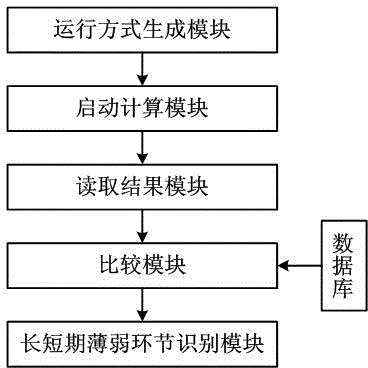
System and method for identifying long-term and short-term weak links in power grid operation status
PatentActiveCN103701112B
Innovation
- Read real-time data through the operating mode generation module, start the stability margin evaluation system and BPA simulation calculation software, perform power flow analysis, static safety check and short-circuit current calculation, compare the results with the limit values in the database, and automatically identify over-limit results. Use historical data to determine long- and short-term weak links.
Method for detection of weak links in the current path of electrically continuous superconductors
PatentInactiveUS4904929A
Innovation
- The method involves measuring the magnetically modulated electrical resistance of the sample while varying temperature and maintaining the magnetic field below its critical value, using a four-point probe technique to detect phase transitions and identify weak links through distinct resistance peaks and tails in the resistance curves.


Safety Standards for Array Configuration Systems
Safety standards for array configuration systems have evolved significantly to address the inherent vulnerabilities in chain-based architectures. The International Electrotechnical Commission (IEC) 61730 series provides comprehensive guidelines for photovoltaic array safety, while IEEE 1547 establishes interconnection standards that directly impact array configuration reliability. These standards emphasize the critical importance of identifying and mitigating weak links that can compromise entire system performance.
Current safety frameworks mandate rigorous testing protocols for array components, including accelerated aging tests, thermal cycling assessments, and mechanical stress evaluations. The IEC 62790 standard specifically addresses junction box safety requirements, recognizing these components as frequent failure points in array chains. Additionally, UL 1703 certification requirements have been enhanced to include more stringent evaluation criteria for potential induced degradation and hot-spot formation.
Emerging safety standards are increasingly focusing on predictive maintenance and real-time monitoring capabilities. The recently updated IEC 61215 standard incorporates requirements for embedded diagnostic systems that can detect early signs of component degradation before they become critical weak links. These standards now mandate the implementation of module-level monitoring systems capable of identifying performance anomalies within individual array elements.
Fire safety considerations have become paramount in modern array configuration standards. NFPA 70 (National Electrical Code) has introduced specific provisions for rapid shutdown systems and arc-fault circuit interrupters to prevent cascading failures initiated by weak links. The standard requires that array systems maintain safe operating conditions even when individual components experience degradation or failure.
International harmonization efforts are driving the development of unified safety standards that address weak link mitigation across different geographical markets. The Global Wind Energy Council and International Solar Alliance are collaborating to establish common safety protocols that ensure consistent reliability standards regardless of deployment location, thereby reducing the risk of weak link propagation in large-scale array installations.
Current safety frameworks mandate rigorous testing protocols for array components, including accelerated aging tests, thermal cycling assessments, and mechanical stress evaluations. The IEC 62790 standard specifically addresses junction box safety requirements, recognizing these components as frequent failure points in array chains. Additionally, UL 1703 certification requirements have been enhanced to include more stringent evaluation criteria for potential induced degradation and hot-spot formation.
Emerging safety standards are increasingly focusing on predictive maintenance and real-time monitoring capabilities. The recently updated IEC 61215 standard incorporates requirements for embedded diagnostic systems that can detect early signs of component degradation before they become critical weak links. These standards now mandate the implementation of module-level monitoring systems capable of identifying performance anomalies within individual array elements.
Fire safety considerations have become paramount in modern array configuration standards. NFPA 70 (National Electrical Code) has introduced specific provisions for rapid shutdown systems and arc-fault circuit interrupters to prevent cascading failures initiated by weak links. The standard requires that array systems maintain safe operating conditions even when individual components experience degradation or failure.
International harmonization efforts are driving the development of unified safety standards that address weak link mitigation across different geographical markets. The Global Wind Energy Council and International Solar Alliance are collaborating to establish common safety protocols that ensure consistent reliability standards regardless of deployment location, thereby reducing the risk of weak link propagation in large-scale array installations.
Risk Assessment Framework for Array Chain Failures
A comprehensive risk assessment framework for array chain failures requires systematic evaluation of vulnerability patterns, failure propagation mechanisms, and impact quantification methodologies. This framework serves as a critical foundation for identifying potential weak points before they manifest as operational failures, enabling proactive maintenance strategies and design improvements.
The framework begins with vulnerability identification through multi-layered analysis approaches. Primary assessment focuses on component-level reliability metrics, examining individual array elements for degradation indicators, manufacturing defects, and operational stress factors. Secondary analysis evaluates interconnection integrity, assessing solder joint quality, wire bond strength, and thermal cycling effects on connection reliability.
Failure mode classification forms the core analytical component, categorizing potential failures into systematic patterns. Open-circuit failures represent the most critical category, where complete signal path interruption occurs due to wire bond failures, metallization migration, or mechanical stress-induced fractures. Short-circuit failures create alternative current paths, leading to performance degradation and potential cascade effects throughout the array structure.
Probabilistic modeling techniques enable quantitative risk assessment through statistical analysis of historical failure data and accelerated life testing results. Monte Carlo simulations provide comprehensive failure scenario modeling, incorporating environmental variables, operational parameters, and manufacturing tolerances. These models generate probability distributions for failure occurrence, enabling risk-based maintenance scheduling and design optimization priorities.
Impact severity assessment evaluates consequences of identified failure modes across multiple dimensions. Performance impact analysis quantifies signal degradation, throughput reduction, and functional capability loss associated with specific failure scenarios. Economic impact evaluation encompasses repair costs, downtime expenses, and potential system replacement requirements.
The framework incorporates real-time monitoring integration capabilities, establishing threshold parameters for early warning systems. Continuous impedance monitoring, thermal imaging analysis, and electrical parameter tracking provide dynamic risk assessment updates. These monitoring systems enable adaptive risk models that evolve based on actual operational conditions and emerging failure patterns.
Mitigation strategy prioritization utilizes risk scoring matrices that combine failure probability with impact severity ratings. High-risk scenarios receive immediate attention through enhanced monitoring protocols, preventive maintenance scheduling, or design modifications. Medium-risk conditions trigger periodic assessment reviews and contingency planning development.
The framework begins with vulnerability identification through multi-layered analysis approaches. Primary assessment focuses on component-level reliability metrics, examining individual array elements for degradation indicators, manufacturing defects, and operational stress factors. Secondary analysis evaluates interconnection integrity, assessing solder joint quality, wire bond strength, and thermal cycling effects on connection reliability.
Failure mode classification forms the core analytical component, categorizing potential failures into systematic patterns. Open-circuit failures represent the most critical category, where complete signal path interruption occurs due to wire bond failures, metallization migration, or mechanical stress-induced fractures. Short-circuit failures create alternative current paths, leading to performance degradation and potential cascade effects throughout the array structure.
Probabilistic modeling techniques enable quantitative risk assessment through statistical analysis of historical failure data and accelerated life testing results. Monte Carlo simulations provide comprehensive failure scenario modeling, incorporating environmental variables, operational parameters, and manufacturing tolerances. These models generate probability distributions for failure occurrence, enabling risk-based maintenance scheduling and design optimization priorities.
Impact severity assessment evaluates consequences of identified failure modes across multiple dimensions. Performance impact analysis quantifies signal degradation, throughput reduction, and functional capability loss associated with specific failure scenarios. Economic impact evaluation encompasses repair costs, downtime expenses, and potential system replacement requirements.
The framework incorporates real-time monitoring integration capabilities, establishing threshold parameters for early warning systems. Continuous impedance monitoring, thermal imaging analysis, and electrical parameter tracking provide dynamic risk assessment updates. These monitoring systems enable adaptive risk models that evolve based on actual operational conditions and emerging failure patterns.
Mitigation strategy prioritization utilizes risk scoring matrices that combine failure probability with impact severity ratings. High-risk scenarios receive immediate attention through enhanced monitoring protocols, preventive maintenance scheduling, or design modifications. Medium-risk conditions trigger periodic assessment reviews and contingency planning development.
Unlock deeper insights with Patsnap Eureka Quick Research — get a full tech report to explore trends and direct your research. Try now!
Generate Your Research Report Instantly with AI Agent
Supercharge your innovation with Patsnap Eureka AI Agent Platform!