

How to Adjust Cyclone Separator Configuration for Enhanced Performance
FEB 11, 20269 MIN READ
Generate Your Research Report Instantly with AI Agent
Patsnap Eureka helps you evaluate technical feasibility & market potential.
Cyclone Separator Technology Background and Performance Goals
Cyclone separators have served as fundamental industrial equipment for particle-gas separation since their introduction in the late 19th century. Initially developed for dust collection in grain processing facilities, these devices have evolved into sophisticated separation systems employed across diverse industries including petroleum refining, chemical processing, power generation, and environmental control. The fundamental operating principle relies on centrifugal force generated by tangential gas inlet flow, which drives particles toward the cyclone wall where they lose momentum and fall into collection hoppers. This elegant mechanical simplicity, requiring no moving parts or external energy input beyond the pressure drop, has sustained their widespread adoption for over a century.
The evolution of cyclone technology has been marked by continuous refinement of geometric configurations to optimize separation efficiency while minimizing pressure drop. Early designs featured simple cylindrical bodies with conical bottoms, but subsequent research revealed that subtle modifications to dimensional ratios significantly impact performance. Critical parameters including inlet dimensions, cylinder height, cone angle, vortex finder diameter, and overall body proportions have been systematically investigated through experimental studies and computational fluid dynamics simulations. These investigations have established that cyclone performance represents a complex interplay between particle collection efficiency, pressure drop characteristics, and operational stability.
Contemporary performance goals for cyclone separators extend beyond traditional efficiency metrics to encompass energy optimization, footprint reduction, and adaptability to varying process conditions. Modern industrial applications demand separation efficiencies exceeding 95% for particles above 5 micrometers while maintaining pressure drops below 1000 Pascals. Additionally, emerging environmental regulations require enhanced capture of fine particulate matter, pushing the technology toward sub-micrometer separation capabilities. The challenge lies in achieving these ambitious targets through configuration adjustments that balance competing performance criteria, as improvements in collection efficiency typically correlate with increased pressure drop and energy consumption.
The strategic importance of cyclone separator optimization has intensified as industries pursue sustainability objectives and operational cost reduction. Enhanced performance through intelligent configuration adjustment offers pathways to reduced energy consumption, improved product quality, and compliance with stringent emission standards, positioning cyclone technology as a critical component in modern industrial process optimization strategies.
The evolution of cyclone technology has been marked by continuous refinement of geometric configurations to optimize separation efficiency while minimizing pressure drop. Early designs featured simple cylindrical bodies with conical bottoms, but subsequent research revealed that subtle modifications to dimensional ratios significantly impact performance. Critical parameters including inlet dimensions, cylinder height, cone angle, vortex finder diameter, and overall body proportions have been systematically investigated through experimental studies and computational fluid dynamics simulations. These investigations have established that cyclone performance represents a complex interplay between particle collection efficiency, pressure drop characteristics, and operational stability.
Contemporary performance goals for cyclone separators extend beyond traditional efficiency metrics to encompass energy optimization, footprint reduction, and adaptability to varying process conditions. Modern industrial applications demand separation efficiencies exceeding 95% for particles above 5 micrometers while maintaining pressure drops below 1000 Pascals. Additionally, emerging environmental regulations require enhanced capture of fine particulate matter, pushing the technology toward sub-micrometer separation capabilities. The challenge lies in achieving these ambitious targets through configuration adjustments that balance competing performance criteria, as improvements in collection efficiency typically correlate with increased pressure drop and energy consumption.
The strategic importance of cyclone separator optimization has intensified as industries pursue sustainability objectives and operational cost reduction. Enhanced performance through intelligent configuration adjustment offers pathways to reduced energy consumption, improved product quality, and compliance with stringent emission standards, positioning cyclone technology as a critical component in modern industrial process optimization strategies.
Market Demand Analysis for Cyclone Separation Systems
The global cyclone separator market has experienced steady expansion driven by stringent environmental regulations and increasing industrial demand for efficient particulate removal systems. Industries such as cement manufacturing, power generation, chemical processing, and mining represent primary application sectors where cyclone separators serve as critical components in air pollution control and material recovery operations. The growing emphasis on sustainable manufacturing practices and workplace air quality standards has intensified the need for optimized separation technologies capable of handling diverse particle size distributions and operating conditions.
Emerging economies in Asia-Pacific and Latin America are witnessing accelerated industrialization, creating substantial demand for cost-effective and reliable cyclone separation systems. These regions face dual pressures of expanding production capacity while meeting increasingly stringent emission standards, positioning enhanced cyclone configurations as economically viable solutions compared to more complex filtration technologies. The cement and mineral processing industries in these markets particularly seek performance improvements that can reduce operational costs while maintaining compliance with environmental mandates.
The energy sector presents significant growth opportunities, especially in biomass power plants and coal-fired facilities undergoing efficiency upgrades. These applications require cyclone separators capable of handling high-temperature gas streams and varying particle loads, driving demand for advanced configuration adjustments that enhance separation efficiency without compromising pressure drop characteristics. The transition toward cleaner energy sources has also created niche markets for specialized cyclone designs in gasification and pyrolysis applications.
Industrial end-users increasingly prioritize total cost of ownership over initial capital expenditure, creating market demand for cyclone configurations that optimize the balance between separation efficiency, pressure drop, and maintenance requirements. This shift reflects growing awareness that configuration adjustments—such as inlet geometry modifications, vortex finder optimization, and cone angle refinement—can deliver measurable performance improvements without requiring complete system replacement. The retrofit and upgrade segment consequently represents a substantial market opportunity alongside new installations.
Technological convergence with computational fluid dynamics and real-time monitoring systems has elevated customer expectations regarding performance predictability and operational flexibility. Market demand now extends beyond basic separation efficiency to encompass adaptive configurations capable of responding to variable process conditions, reflecting the broader industrial trend toward smart manufacturing and process optimization.
Emerging economies in Asia-Pacific and Latin America are witnessing accelerated industrialization, creating substantial demand for cost-effective and reliable cyclone separation systems. These regions face dual pressures of expanding production capacity while meeting increasingly stringent emission standards, positioning enhanced cyclone configurations as economically viable solutions compared to more complex filtration technologies. The cement and mineral processing industries in these markets particularly seek performance improvements that can reduce operational costs while maintaining compliance with environmental mandates.
The energy sector presents significant growth opportunities, especially in biomass power plants and coal-fired facilities undergoing efficiency upgrades. These applications require cyclone separators capable of handling high-temperature gas streams and varying particle loads, driving demand for advanced configuration adjustments that enhance separation efficiency without compromising pressure drop characteristics. The transition toward cleaner energy sources has also created niche markets for specialized cyclone designs in gasification and pyrolysis applications.
Industrial end-users increasingly prioritize total cost of ownership over initial capital expenditure, creating market demand for cyclone configurations that optimize the balance between separation efficiency, pressure drop, and maintenance requirements. This shift reflects growing awareness that configuration adjustments—such as inlet geometry modifications, vortex finder optimization, and cone angle refinement—can deliver measurable performance improvements without requiring complete system replacement. The retrofit and upgrade segment consequently represents a substantial market opportunity alongside new installations.
Technological convergence with computational fluid dynamics and real-time monitoring systems has elevated customer expectations regarding performance predictability and operational flexibility. Market demand now extends beyond basic separation efficiency to encompass adaptive configurations capable of responding to variable process conditions, reflecting the broader industrial trend toward smart manufacturing and process optimization.
Current Cyclone Configuration Status and Technical Challenges
Cyclone separators currently operate across diverse industrial applications with configurations that have evolved incrementally over decades. The fundamental design comprises a cylindrical upper section transitioning to a conical lower section, with tangential inlet arrangements that generate centrifugal forces for particle separation. Standard configurations typically feature inlet dimensions ranging from 0.2 to 0.8 times the cyclone body diameter, with cone angles between 15 and 30 degrees. However, these conventional parameters often represent compromises rather than optimized solutions for specific operational contexts.
The primary technical challenge lies in balancing competing performance metrics. Increasing separation efficiency through reduced vortex finder diameters or extended cone lengths inevitably elevates pressure drop, resulting in higher energy consumption. Industrial operators frequently encounter efficiency rates plateauing at 85-92% for particles above 5 micrometers, while sub-micron particle capture remains problematic. This limitation becomes particularly acute in applications requiring ultra-fine particle removal, such as pharmaceutical manufacturing and advanced materials processing.
Geometric constraints present another significant obstacle. Many existing installations operate with fixed spatial envelopes, restricting opportunities for dimensional optimization. The interaction between inlet velocity, body diameter, and overall height creates complex fluid dynamics that are difficult to predict without sophisticated computational modeling. Empirical adjustment attempts often yield inconsistent results due to inadequate understanding of internal flow patterns and secondary vortex formation.
Material erosion constitutes a persistent operational challenge, especially in high-velocity applications processing abrasive particles. Conventional configurations concentrate particle impact zones near the cone apex and lower cylindrical walls, leading to premature equipment failure. Current designs lack adaptive features to redistribute wear patterns or accommodate varying particle characteristics without complete unit replacement.
The absence of standardized performance benchmarks across different industries further complicates configuration optimization. What constitutes "enhanced performance" varies significantly between coal processing facilities prioritizing throughput and semiconductor manufacturing requiring maximum purity. This variability demands flexible configuration strategies rather than universal design templates, yet most existing systems lack modular adjustment capabilities to address evolving operational requirements efficiently.
The primary technical challenge lies in balancing competing performance metrics. Increasing separation efficiency through reduced vortex finder diameters or extended cone lengths inevitably elevates pressure drop, resulting in higher energy consumption. Industrial operators frequently encounter efficiency rates plateauing at 85-92% for particles above 5 micrometers, while sub-micron particle capture remains problematic. This limitation becomes particularly acute in applications requiring ultra-fine particle removal, such as pharmaceutical manufacturing and advanced materials processing.
Geometric constraints present another significant obstacle. Many existing installations operate with fixed spatial envelopes, restricting opportunities for dimensional optimization. The interaction between inlet velocity, body diameter, and overall height creates complex fluid dynamics that are difficult to predict without sophisticated computational modeling. Empirical adjustment attempts often yield inconsistent results due to inadequate understanding of internal flow patterns and secondary vortex formation.
Material erosion constitutes a persistent operational challenge, especially in high-velocity applications processing abrasive particles. Conventional configurations concentrate particle impact zones near the cone apex and lower cylindrical walls, leading to premature equipment failure. Current designs lack adaptive features to redistribute wear patterns or accommodate varying particle characteristics without complete unit replacement.
The absence of standardized performance benchmarks across different industries further complicates configuration optimization. What constitutes "enhanced performance" varies significantly between coal processing facilities prioritizing throughput and semiconductor manufacturing requiring maximum purity. This variability demands flexible configuration strategies rather than universal design templates, yet most existing systems lack modular adjustment capabilities to address evolving operational requirements efficiently.
Mainstream Cyclone Configuration Solutions
01 Structural design optimization for enhanced separation efficiency
Cyclone separator performance can be improved through optimized structural configurations including inlet geometry, cylindrical and conical section dimensions, and vortex finder design. These structural modifications affect the flow pattern, residence time, and centrifugal force distribution within the separator, leading to enhanced particle separation efficiency and reduced pressure drop. Key design parameters include the cone angle, cylinder-to-cone ratio, and inlet velocity profile optimization.- Structural design optimization for enhanced separation efficiency: Cyclone separator performance can be improved through optimized structural configurations including inlet geometry, cylindrical and conical section dimensions, and outlet arrangements. Key design parameters such as vortex finder diameter, cone angle, and body length ratios significantly affect separation efficiency and pressure drop. Advanced structural modifications like helical inlets, multiple outlets, or specialized vortex stabilizers enhance particle separation by controlling flow patterns and reducing turbulence.
- Multi-stage and series-parallel cyclone configurations: Performance enhancement can be achieved through multi-stage cyclone arrangements where separators are connected in series or parallel configurations. This approach allows for progressive separation of particles of different sizes and improves overall collection efficiency. The system design includes primary and secondary separation stages with optimized flow distribution to handle varying particle loads and achieve higher separation rates for fine particles.
- Flow field control and vortex stabilization techniques: Cyclone performance is enhanced by controlling internal flow patterns and stabilizing the vortex structure. Methods include installation of guide vanes, flow straighteners, or internal baffles that reduce secondary flows and prevent short-circuiting. These modifications minimize energy losses, reduce particle re-entrainment, and improve separation efficiency by maintaining stable rotational flow throughout the separation chamber.
- Dust collection and discharge mechanisms: Effective dust collection and discharge systems are critical for maintaining cyclone separator performance. Innovations include specialized dust hoppers with anti-bridging features, rotary valves, and sealed discharge mechanisms that prevent air leakage and re-entrainment of separated particles. These systems ensure continuous operation and maintain separation efficiency by facilitating smooth removal of collected materials without disrupting internal flow patterns.
- Performance monitoring and adaptive control systems: Advanced cyclone separators incorporate monitoring systems and adaptive controls to optimize performance under varying operating conditions. These systems measure parameters such as pressure drop, flow rate, and particle concentration to adjust operational settings in real-time. Integration of sensors and control mechanisms enables automatic optimization of separation efficiency, energy consumption, and maintenance scheduling based on actual performance data.
02 Multi-stage and series cyclone separator systems
Performance enhancement can be achieved by implementing multi-stage cyclone configurations or series arrangements where multiple cyclone units work in tandem. This approach allows for progressive separation of particles of different sizes, with coarser particles removed in primary stages and finer particles captured in subsequent stages. The system design considers flow distribution, pressure balancing, and particle size classification to maximize overall separation efficiency.Expand Specific Solutions03 Internal flow field control and vortex stabilization
Cyclone separator performance is significantly influenced by internal flow field characteristics and vortex stability. Techniques to control the flow field include the use of guide vanes, flow straighteners, and vortex stabilization devices that reduce turbulence and prevent short-circuiting. These modifications help maintain a stable rotating flow pattern, minimize energy losses, and improve particle capture efficiency by ensuring particles follow optimal trajectories toward collection zones.Expand Specific Solutions04 Dust collection and discharge mechanism improvements
Enhanced performance is achieved through improved dust collection chambers and discharge mechanisms that prevent re-entrainment of separated particles. Design features include optimized hopper geometry, sealed discharge systems, and anti-backflow devices. These improvements ensure that once particles are separated and collected, they are efficiently removed from the system without being drawn back into the gas stream, thereby maintaining high separation efficiency over extended operation periods.Expand Specific Solutions05 Material selection and wear resistance enhancement
Long-term cyclone separator performance depends on wear resistance and durability of construction materials, particularly in high-abrasion applications. Performance is maintained through the use of wear-resistant linings, ceramic coatings, or hardened materials in high-impact zones such as the inlet region and cone section. Material selection also considers corrosion resistance and temperature tolerance to ensure consistent performance across various operating conditions and extend equipment service life.Expand Specific Solutions
Major Players in Cyclone Separator Industry
The cyclone separator configuration optimization technology operates in a mature industrial market characterized by diverse applications across petrochemical, manufacturing, and environmental sectors. The competitive landscape spans established filtration specialists like MANN+HUMMEL and Donaldson Filtration Deutschland, major industrial conglomerates including Siemens AG and Robert Bosch GmbH, and petrochemical giants such as China Petroleum & Chemical Corp. and SINOPEC Engineering Group. Technology maturity varies significantly: while traditional cyclone designs are well-established, advanced computational optimization and multi-phase separation techniques represent emerging innovation areas. Academic institutions like Lanzhou University and China Petroleum University Beijing contribute fundamental research, while engineering firms like KHD Humboldt Wedag and AUSTRIAN ENERGY & ENVIRONMENT provide specialized industrial implementations. The market demonstrates steady growth driven by stricter environmental regulations and energy efficiency demands, with increasing focus on digitalization and performance modeling capabilities.
MANN+HUMMEL GmbH
Technical Solution: MANN+HUMMEL has developed advanced cyclone separator configurations featuring optimized vortex finder geometry and inlet design modifications to enhance particle separation efficiency. Their technology incorporates adjustable inlet velocity control systems and variable cone angle designs that can be tailored to specific particle size distributions. The company's cyclone separators utilize computational fluid dynamics (CFD) optimization to minimize pressure drop while maximizing collection efficiency, particularly for submicron particles in automotive and industrial filtration applications. Their modular design allows for easy configuration adjustments including inlet duct positioning, cylinder-to-cone ratio modifications, and dust outlet diameter optimization to achieve separation efficiencies exceeding 95% for particles above 5 micrometers.
Strengths: Industry-leading expertise in filtration technology with extensive R&D capabilities and proven track record in automotive applications. Weaknesses: Higher initial investment costs compared to conventional designs and complexity in maintenance procedures.
China Petroleum & Chemical Corp.
Technical Solution: Sinopec has implemented enhanced cyclone separator configurations in petroleum refining processes, focusing on optimizing separation performance for catalyst particles and hydrocarbon droplets. Their approach includes adjusting the cyclone body length-to-diameter ratio, implementing tangential inlet modifications with variable entry angles, and utilizing multi-stage cyclone arrangements for improved separation efficiency. The company has developed proprietary designs that incorporate wear-resistant materials in high-erosion zones and adjustable vortex stabilizers to reduce turbulence. Their configurations feature optimized dust collection hopper designs with pneumatic discharge systems and pressure balance mechanisms to prevent re-entrainment. These modifications have achieved separation efficiencies of 98% for particles larger than 10 micrometers in fluid catalytic cracking units.
Strengths: Extensive operational experience in large-scale industrial applications with strong integration capabilities in petrochemical processes. Weaknesses: Technology primarily optimized for specific petroleum industry applications with limited flexibility for other industrial sectors.
Core Patents in Cyclone Performance Enhancement
Cyclone separator with surface vanes
PatentInactiveUS6837912B1
Innovation
- Incorporating adjustable vanes on the inside surface of the cyclone cone to control axial velocity, allowing for empirical optimization of gas flow direction and velocity by adjusting the angle of the vanes based on specific gas flow rates, particulate loading, and particle size distribution.
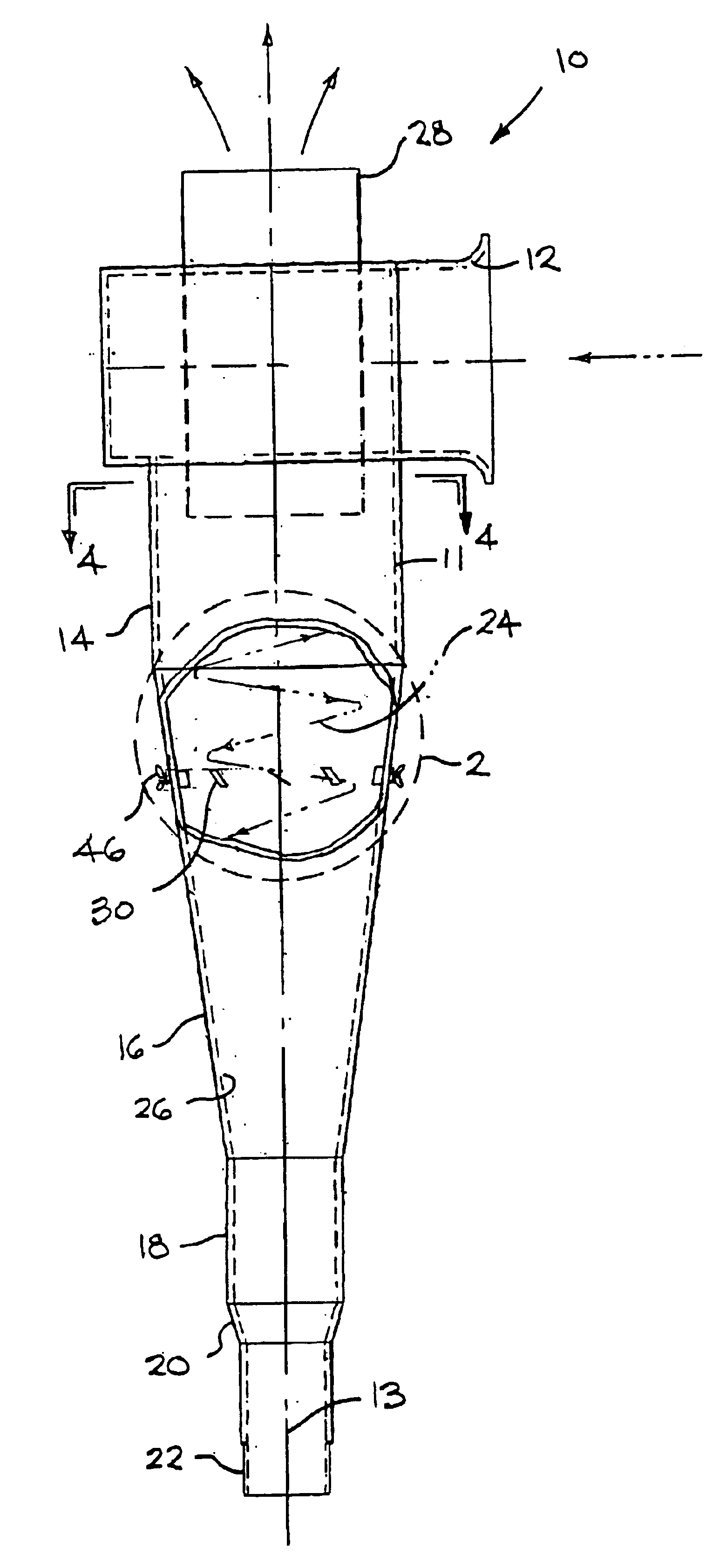
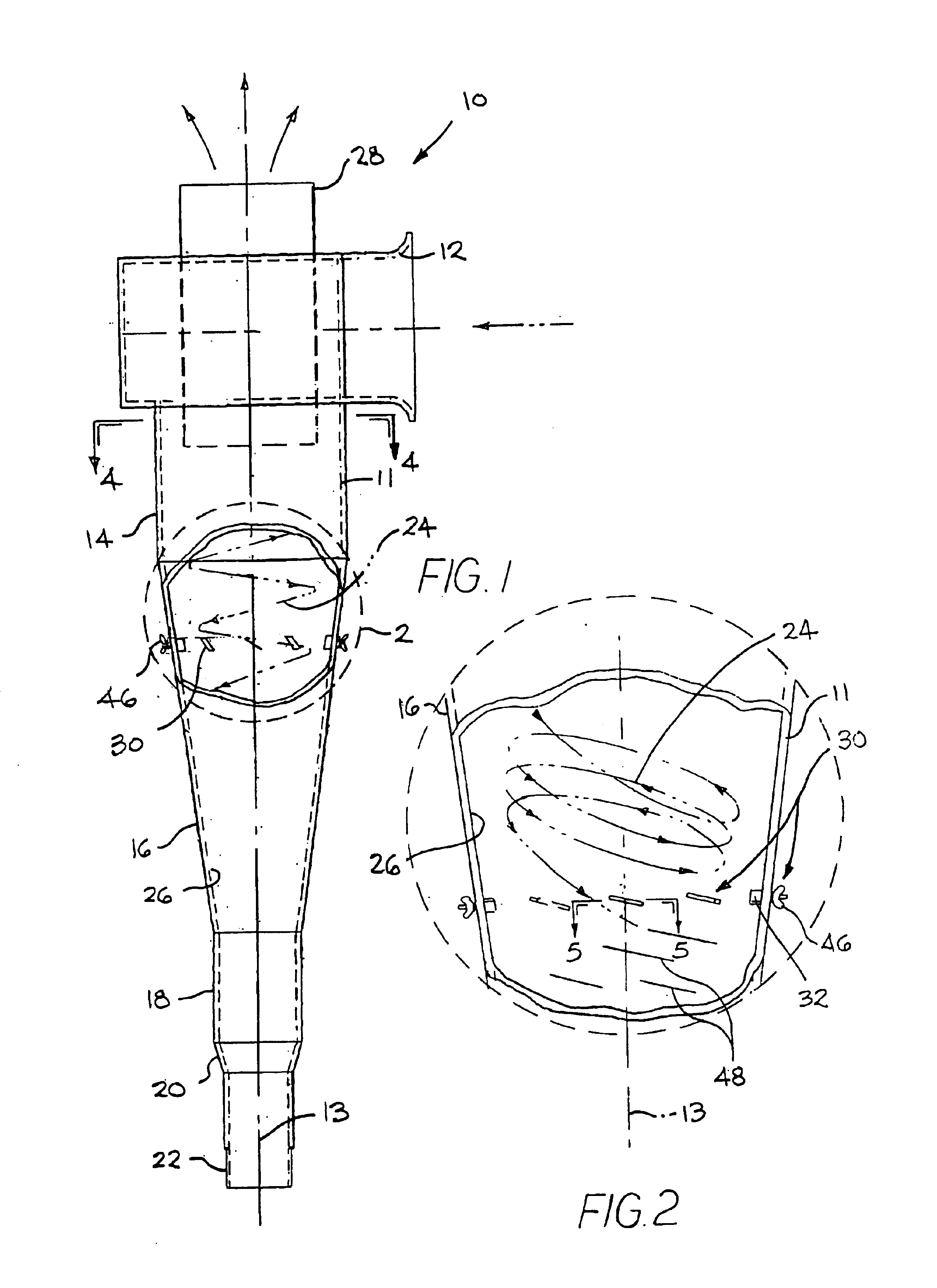
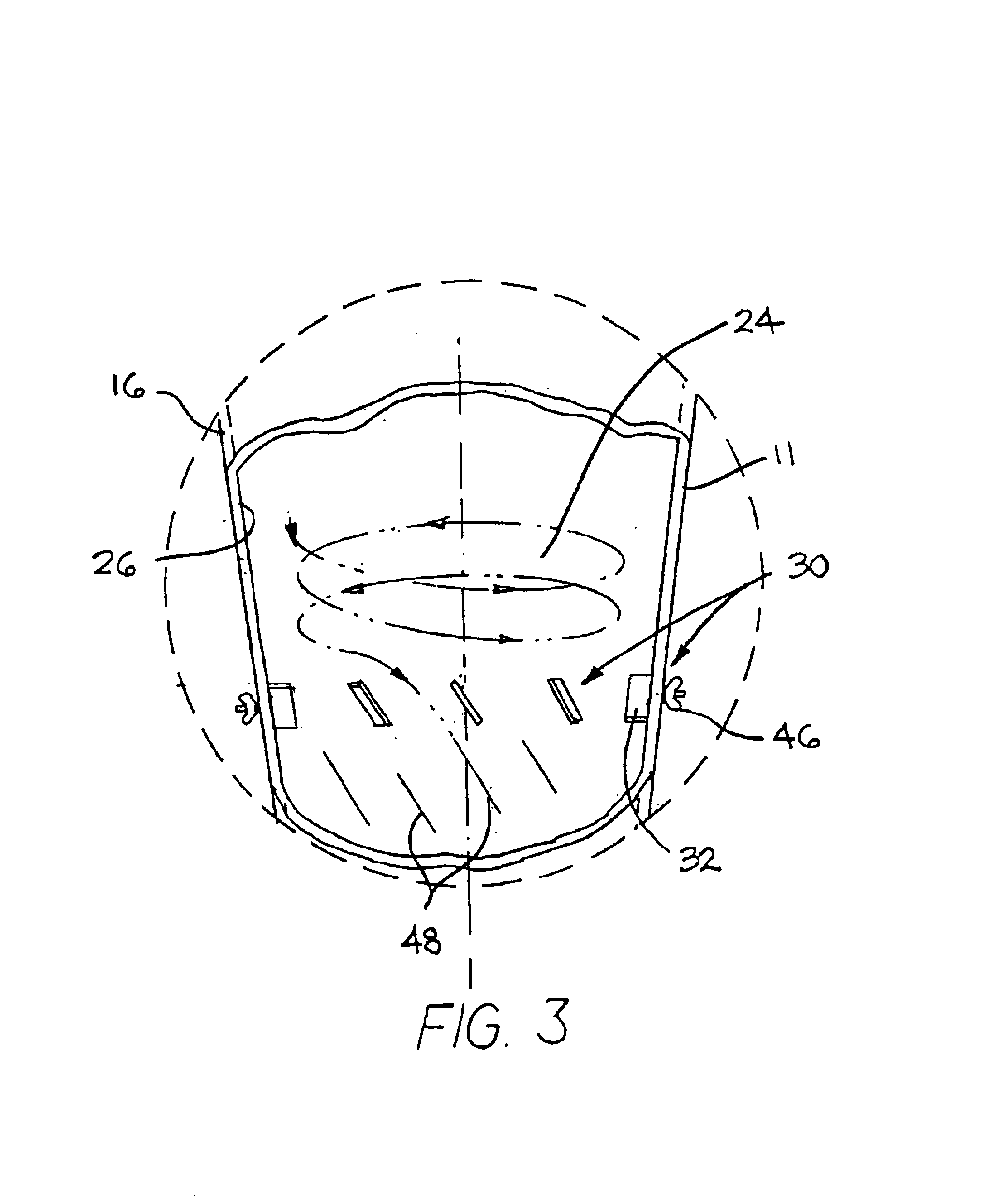

Cyclone separator
PatentInactiveAU1988013983A1
Innovation
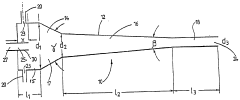
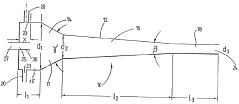
- A cyclone separator of the de-watering type is designed with specific geometrical modifications, including a reduced cross-sectional dimension at the downstream end of the feed inlet section and a vortex finder to prevent re-entrainment of droplets, allowing for efficient separation of denser and less dense components.
Environmental Regulations Impacting Cyclone Separator Design
Environmental regulations have become increasingly stringent worldwide, fundamentally reshaping cyclone separator design requirements and operational parameters. Regulatory frameworks such as the U.S. EPA's National Emission Standards for Hazardous Air Pollutants (NESHAP), the European Union's Industrial Emissions Directive (IED), and China's Air Pollution Prevention and Control Law impose strict limits on particulate matter emissions across various industrial sectors. These regulations typically specify maximum allowable emission concentrations, often requiring collection efficiencies exceeding 95% for particles above certain size thresholds, which directly influences the geometric configuration and operational settings of cyclone separators.
The regulatory emphasis on fine particulate matter, particularly PM2.5 and PM10, has driven significant modifications in cyclone design philosophy. Traditional cyclone configurations optimized primarily for coarse particle separation now require enhanced performance characteristics to capture smaller particles effectively. This regulatory pressure necessitates adjustments such as reduced inlet dimensions, increased cyclone body length-to-diameter ratios, and optimized vortex finder configurations to improve cut-point diameter performance while maintaining acceptable pressure drop levels.
Emission monitoring and reporting requirements further impact cyclone separator implementation. Many jurisdictions mandate continuous emission monitoring systems (CEMS) or periodic stack testing to verify compliance, requiring cyclone installations to incorporate sampling ports, access platforms, and instrumentation interfaces. These regulatory requirements influence the physical layout and accessibility features of cyclone separator systems, adding complexity to configuration decisions beyond pure separation efficiency considerations.
Regional variations in environmental standards create additional complexity for multinational operations. Facilities operating across different jurisdictions must often design cyclone systems to meet the most stringent applicable standards, or implement flexible configurations that can be adjusted to satisfy varying regulatory requirements. This regulatory landscape increasingly favors modular cyclone designs with adjustable geometric parameters and multi-stage separation systems that provide operational flexibility while ensuring consistent compliance across diverse regulatory environments.
The regulatory emphasis on fine particulate matter, particularly PM2.5 and PM10, has driven significant modifications in cyclone design philosophy. Traditional cyclone configurations optimized primarily for coarse particle separation now require enhanced performance characteristics to capture smaller particles effectively. This regulatory pressure necessitates adjustments such as reduced inlet dimensions, increased cyclone body length-to-diameter ratios, and optimized vortex finder configurations to improve cut-point diameter performance while maintaining acceptable pressure drop levels.
Emission monitoring and reporting requirements further impact cyclone separator implementation. Many jurisdictions mandate continuous emission monitoring systems (CEMS) or periodic stack testing to verify compliance, requiring cyclone installations to incorporate sampling ports, access platforms, and instrumentation interfaces. These regulatory requirements influence the physical layout and accessibility features of cyclone separator systems, adding complexity to configuration decisions beyond pure separation efficiency considerations.
Regional variations in environmental standards create additional complexity for multinational operations. Facilities operating across different jurisdictions must often design cyclone systems to meet the most stringent applicable standards, or implement flexible configurations that can be adjusted to satisfy varying regulatory requirements. This regulatory landscape increasingly favors modular cyclone designs with adjustable geometric parameters and multi-stage separation systems that provide operational flexibility while ensuring consistent compliance across diverse regulatory environments.
Energy Efficiency Standards for Industrial Separation Equipment
Energy efficiency standards for industrial separation equipment have become increasingly stringent worldwide, driven by environmental regulations and operational cost considerations. For cyclone separators, these standards typically address power consumption per unit of processed material, pressure drop limitations, and overall system efficiency metrics. The International Organization for Standardization (ISO) and regional bodies such as the European Union's Ecodesign Directive have established frameworks that mandate minimum efficiency requirements for industrial separation systems. These standards often specify maximum allowable pressure drops, typically ranging from 500 to 1500 Pa for conventional cyclones, as pressure drop directly correlates with energy consumption in fan or blower operations.
Compliance with energy efficiency standards necessitates careful consideration of cyclone configuration parameters. The relationship between separation efficiency and energy consumption creates a critical optimization challenge, as higher collection efficiencies often require design modifications that increase pressure drop. Modern standards emphasize the energy efficiency ratio, calculated as the ratio of separation performance to power input, encouraging manufacturers to develop configurations that maximize particle capture while minimizing operational energy costs. This has led to the adoption of performance benchmarking systems where cyclone separators are rated based on their ability to achieve specified separation targets within defined energy consumption limits.
Recent regulatory developments have introduced lifecycle energy assessment requirements, compelling operators to evaluate not only operational energy consumption but also the embodied energy in equipment manufacturing and maintenance. This holistic approach influences configuration decisions, favoring designs with longer service lives and reduced maintenance energy requirements. Additionally, many jurisdictions now require periodic efficiency testing and reporting, creating demand for cyclone configurations that maintain consistent performance over extended operational periods without significant energy penalty degradation.
The implementation of these standards has catalyzed innovation in cyclone design optimization, with manufacturers developing computational tools and testing protocols to demonstrate compliance. Variable geometry cyclones and adaptive inlet configurations have emerged as solutions that allow operators to adjust performance characteristics in response to changing process conditions while maintaining energy efficiency within regulatory limits. These developments underscore the growing importance of integrating energy efficiency considerations into cyclone separator configuration strategies from the initial design phase through operational optimization.
Compliance with energy efficiency standards necessitates careful consideration of cyclone configuration parameters. The relationship between separation efficiency and energy consumption creates a critical optimization challenge, as higher collection efficiencies often require design modifications that increase pressure drop. Modern standards emphasize the energy efficiency ratio, calculated as the ratio of separation performance to power input, encouraging manufacturers to develop configurations that maximize particle capture while minimizing operational energy costs. This has led to the adoption of performance benchmarking systems where cyclone separators are rated based on their ability to achieve specified separation targets within defined energy consumption limits.
Recent regulatory developments have introduced lifecycle energy assessment requirements, compelling operators to evaluate not only operational energy consumption but also the embodied energy in equipment manufacturing and maintenance. This holistic approach influences configuration decisions, favoring designs with longer service lives and reduced maintenance energy requirements. Additionally, many jurisdictions now require periodic efficiency testing and reporting, creating demand for cyclone configurations that maintain consistent performance over extended operational periods without significant energy penalty degradation.
The implementation of these standards has catalyzed innovation in cyclone design optimization, with manufacturers developing computational tools and testing protocols to demonstrate compliance. Variable geometry cyclones and adaptive inlet configurations have emerged as solutions that allow operators to adjust performance characteristics in response to changing process conditions while maintaining energy efficiency within regulatory limits. These developments underscore the growing importance of integrating energy efficiency considerations into cyclone separator configuration strategies from the initial design phase through operational optimization.
Unlock deeper insights with Patsnap Eureka Quick Research — get a full tech report to explore trends and direct your research. Try now!
Generate Your Research Report Instantly with AI Agent
Supercharge your innovation with Patsnap Eureka AI Agent Platform!