
How to Analyze Control System Efficiency Using Simulation Tools
MAR 27, 20269 MIN READ
Generate Your Research Report Instantly with AI Agent
Patsnap Eureka helps you evaluate technical feasibility & market potential.
Control System Simulation Background and Objectives
Control system simulation has emerged as a cornerstone technology in modern engineering, fundamentally transforming how engineers design, analyze, and optimize complex control systems across diverse industries. The evolution of simulation tools traces back to the early analog computers of the 1940s, progressing through digital simulation platforms in the 1970s, and culminating in today's sophisticated multi-physics simulation environments that can model intricate system behaviors with unprecedented accuracy.
The historical development of control system simulation reflects the growing complexity of industrial processes and the increasing demand for system reliability and efficiency. Early simulation efforts focused primarily on linear systems analysis using frequency domain techniques. However, as industrial automation expanded and systems became more interconnected, the need for comprehensive simulation tools capable of handling nonlinear dynamics, multi-domain interactions, and real-time constraints became paramount.
Contemporary simulation platforms have evolved to address critical challenges in control system design, including the need to predict system performance under various operating conditions, validate control algorithms before implementation, and optimize system parameters to achieve desired efficiency metrics. These tools now incorporate advanced mathematical modeling techniques, enabling engineers to simulate everything from simple feedback loops to complex distributed control architectures spanning multiple physical domains.
The primary objective of utilizing simulation tools for control system efficiency analysis centers on creating accurate virtual representations of physical systems that allow for comprehensive performance evaluation without the risks and costs associated with physical prototyping. This approach enables engineers to explore design alternatives, conduct sensitivity analyses, and identify potential system bottlenecks before committing to hardware implementation.
Modern simulation objectives extend beyond basic performance prediction to encompass robust design verification, fault tolerance analysis, and optimization under uncertainty. Engineers now leverage simulation tools to evaluate control system efficiency across multiple dimensions, including energy consumption, response time, stability margins, and disturbance rejection capabilities. These comprehensive analyses support informed decision-making throughout the system development lifecycle.
The strategic importance of simulation-based efficiency analysis has intensified with the advent of Industry 4.0 and the increasing emphasis on sustainable manufacturing practices. Organizations recognize that simulation tools provide essential capabilities for achieving operational excellence while minimizing environmental impact and resource consumption in increasingly complex industrial environments.
The historical development of control system simulation reflects the growing complexity of industrial processes and the increasing demand for system reliability and efficiency. Early simulation efforts focused primarily on linear systems analysis using frequency domain techniques. However, as industrial automation expanded and systems became more interconnected, the need for comprehensive simulation tools capable of handling nonlinear dynamics, multi-domain interactions, and real-time constraints became paramount.
Contemporary simulation platforms have evolved to address critical challenges in control system design, including the need to predict system performance under various operating conditions, validate control algorithms before implementation, and optimize system parameters to achieve desired efficiency metrics. These tools now incorporate advanced mathematical modeling techniques, enabling engineers to simulate everything from simple feedback loops to complex distributed control architectures spanning multiple physical domains.
The primary objective of utilizing simulation tools for control system efficiency analysis centers on creating accurate virtual representations of physical systems that allow for comprehensive performance evaluation without the risks and costs associated with physical prototyping. This approach enables engineers to explore design alternatives, conduct sensitivity analyses, and identify potential system bottlenecks before committing to hardware implementation.
Modern simulation objectives extend beyond basic performance prediction to encompass robust design verification, fault tolerance analysis, and optimization under uncertainty. Engineers now leverage simulation tools to evaluate control system efficiency across multiple dimensions, including energy consumption, response time, stability margins, and disturbance rejection capabilities. These comprehensive analyses support informed decision-making throughout the system development lifecycle.
The strategic importance of simulation-based efficiency analysis has intensified with the advent of Industry 4.0 and the increasing emphasis on sustainable manufacturing practices. Organizations recognize that simulation tools provide essential capabilities for achieving operational excellence while minimizing environmental impact and resource consumption in increasingly complex industrial environments.
Market Demand for Simulation-Based Control Analysis
The global market for simulation-based control analysis tools is experiencing robust growth driven by increasing complexity in industrial automation systems and the critical need for optimized performance across manufacturing sectors. Industries such as automotive, aerospace, chemical processing, and power generation are actively seeking advanced simulation solutions to enhance their control system efficiency while reducing operational costs and minimizing downtime risks.
Manufacturing enterprises are increasingly recognizing that traditional trial-and-error approaches to control system optimization are insufficient for modern competitive requirements. The demand for predictive analysis capabilities has intensified as companies strive to achieve higher precision in process control, improved energy efficiency, and enhanced product quality consistency. This shift toward data-driven decision making has created substantial market opportunities for sophisticated simulation platforms.
The automotive industry represents a particularly significant demand driver, where electric vehicle development and autonomous driving technologies require precise control system validation before physical implementation. Similarly, the renewable energy sector demands advanced simulation tools for optimizing wind turbine control systems and solar panel tracking mechanisms, contributing to the expanding market landscape.
Industrial digitalization initiatives and Industry 4.0 adoption have accelerated the integration of simulation tools into standard engineering workflows. Companies are investing heavily in digital twin technologies that incorporate control system simulation capabilities, enabling real-time performance monitoring and predictive maintenance strategies. This trend has created sustained demand for comprehensive simulation platforms that can handle complex multi-domain control scenarios.
The market is also responding to regulatory pressures in safety-critical industries where control system failures can result in significant consequences. Pharmaceutical manufacturing, nuclear power, and chemical processing facilities increasingly require validated simulation-based analysis to demonstrate compliance with stringent safety standards and operational reliability requirements.
Emerging markets in Asia-Pacific regions are contributing substantially to demand growth as manufacturing capabilities expand and technological sophistication increases. Local industries are adopting simulation-based control analysis to compete effectively in global markets while meeting international quality and efficiency standards.
The integration of artificial intelligence and machine learning capabilities into simulation platforms has created new market segments focused on intelligent control optimization. Organizations seek tools that can automatically identify performance bottlenecks and recommend control parameter adjustments, driving demand for next-generation simulation solutions with embedded intelligence features.
Manufacturing enterprises are increasingly recognizing that traditional trial-and-error approaches to control system optimization are insufficient for modern competitive requirements. The demand for predictive analysis capabilities has intensified as companies strive to achieve higher precision in process control, improved energy efficiency, and enhanced product quality consistency. This shift toward data-driven decision making has created substantial market opportunities for sophisticated simulation platforms.
The automotive industry represents a particularly significant demand driver, where electric vehicle development and autonomous driving technologies require precise control system validation before physical implementation. Similarly, the renewable energy sector demands advanced simulation tools for optimizing wind turbine control systems and solar panel tracking mechanisms, contributing to the expanding market landscape.
Industrial digitalization initiatives and Industry 4.0 adoption have accelerated the integration of simulation tools into standard engineering workflows. Companies are investing heavily in digital twin technologies that incorporate control system simulation capabilities, enabling real-time performance monitoring and predictive maintenance strategies. This trend has created sustained demand for comprehensive simulation platforms that can handle complex multi-domain control scenarios.
The market is also responding to regulatory pressures in safety-critical industries where control system failures can result in significant consequences. Pharmaceutical manufacturing, nuclear power, and chemical processing facilities increasingly require validated simulation-based analysis to demonstrate compliance with stringent safety standards and operational reliability requirements.
Emerging markets in Asia-Pacific regions are contributing substantially to demand growth as manufacturing capabilities expand and technological sophistication increases. Local industries are adopting simulation-based control analysis to compete effectively in global markets while meeting international quality and efficiency standards.
The integration of artificial intelligence and machine learning capabilities into simulation platforms has created new market segments focused on intelligent control optimization. Organizations seek tools that can automatically identify performance bottlenecks and recommend control parameter adjustments, driving demand for next-generation simulation solutions with embedded intelligence features.
Current State of Control System Simulation Technologies
Control system simulation technologies have evolved significantly over the past two decades, driven by increasing complexity in industrial automation and the demand for more sophisticated analysis capabilities. The current landscape encompasses a diverse range of simulation platforms, from general-purpose tools like MATLAB/Simulink and LabVIEW to specialized control system simulators such as PSIM, PLECS, and PowerWorld. These platforms have matured to offer comprehensive modeling capabilities for various control system types, including linear and nonlinear systems, discrete-time controllers, and hybrid systems.
Modern simulation environments integrate multiple domain modeling capabilities, enabling engineers to analyze control systems within broader system contexts. Tools like Modelica-based platforms (Dymola, OpenModelica) and ANSYS Twin Builder provide multi-physics simulation capabilities, allowing for the simultaneous analysis of mechanical, electrical, thermal, and fluid dynamics aspects alongside control algorithms. This integration addresses the growing need for holistic system analysis in complex applications such as automotive systems, aerospace controls, and smart grid technologies.
Real-time simulation capabilities have become increasingly prominent, with platforms like dSPACE, OPAL-RT, and National Instruments offering hardware-in-the-loop (HIL) and software-in-the-loop (SIL) testing environments. These technologies enable continuous validation of control algorithms throughout the development cycle, significantly reducing the time and cost associated with physical prototyping. The integration of real-time operating systems and high-performance computing resources has made it possible to simulate complex control systems with microsecond-level precision.
Cloud-based simulation platforms are emerging as a significant trend, with companies like MathWorks, Siemens, and Altair offering cloud-hosted simulation services. These platforms provide scalable computing resources and collaborative development environments, enabling distributed teams to work on complex control system projects. The integration of artificial intelligence and machine learning algorithms into simulation workflows is also gaining traction, particularly for parameter optimization and automated model validation.
Despite these advances, current simulation technologies face several challenges. Computational complexity remains a significant constraint when dealing with large-scale systems or high-fidelity models. Model accuracy and validation continue to be critical issues, particularly when translating simulation results to real-world performance. Additionally, the integration of cybersecurity considerations into control system simulations is becoming increasingly important as industrial systems become more connected and vulnerable to cyber threats.
Modern simulation environments integrate multiple domain modeling capabilities, enabling engineers to analyze control systems within broader system contexts. Tools like Modelica-based platforms (Dymola, OpenModelica) and ANSYS Twin Builder provide multi-physics simulation capabilities, allowing for the simultaneous analysis of mechanical, electrical, thermal, and fluid dynamics aspects alongside control algorithms. This integration addresses the growing need for holistic system analysis in complex applications such as automotive systems, aerospace controls, and smart grid technologies.
Real-time simulation capabilities have become increasingly prominent, with platforms like dSPACE, OPAL-RT, and National Instruments offering hardware-in-the-loop (HIL) and software-in-the-loop (SIL) testing environments. These technologies enable continuous validation of control algorithms throughout the development cycle, significantly reducing the time and cost associated with physical prototyping. The integration of real-time operating systems and high-performance computing resources has made it possible to simulate complex control systems with microsecond-level precision.
Cloud-based simulation platforms are emerging as a significant trend, with companies like MathWorks, Siemens, and Altair offering cloud-hosted simulation services. These platforms provide scalable computing resources and collaborative development environments, enabling distributed teams to work on complex control system projects. The integration of artificial intelligence and machine learning algorithms into simulation workflows is also gaining traction, particularly for parameter optimization and automated model validation.
Despite these advances, current simulation technologies face several challenges. Computational complexity remains a significant constraint when dealing with large-scale systems or high-fidelity models. Model accuracy and validation continue to be critical issues, particularly when translating simulation results to real-world performance. Additionally, the integration of cybersecurity considerations into control system simulations is becoming increasingly important as industrial systems become more connected and vulnerable to cyber threats.
Existing Control System Efficiency Analysis Methods
01 Advanced control algorithms for system optimization
Implementation of sophisticated control algorithms including adaptive control, predictive control, and fuzzy logic control to optimize system performance and improve overall efficiency. These algorithms dynamically adjust system parameters based on real-time conditions and historical data to minimize energy consumption while maintaining desired output levels.- Advanced control algorithms for system optimization: Implementation of sophisticated control algorithms including adaptive control, predictive control, and fuzzy logic control to optimize system performance and improve overall efficiency. These algorithms dynamically adjust system parameters based on real-time conditions and historical data to minimize energy consumption while maintaining desired output levels.
- Energy management and power optimization techniques: Methods for managing energy distribution and optimizing power consumption across control systems through intelligent load balancing, power factor correction, and demand response strategies. These techniques focus on reducing energy waste and improving the overall energy efficiency of the control system by monitoring and adjusting power usage patterns.
- Real-time monitoring and feedback control mechanisms: Integration of real-time monitoring systems with feedback control loops to continuously track system performance and make immediate adjustments. These mechanisms utilize sensors and data acquisition systems to collect operational data, enabling rapid response to deviations and maintaining optimal efficiency levels through closed-loop control.
- Multi-variable control and coordination strategies: Coordination of multiple control variables and subsystems to achieve enhanced overall system efficiency through integrated control strategies. This approach involves simultaneous optimization of interdependent parameters and synchronization of multiple control loops to prevent conflicts and maximize system-wide performance.
- Intelligent automation and machine learning integration: Application of artificial intelligence and machine learning techniques to enable self-learning control systems that continuously improve efficiency over time. These systems analyze operational patterns, predict future conditions, and automatically optimize control parameters without human intervention, leading to sustained efficiency improvements.
02 Energy management and power optimization techniques
Methods for managing energy distribution and optimizing power consumption across control systems through intelligent load balancing, power factor correction, and demand response strategies. These techniques enable systems to operate at peak efficiency by reducing unnecessary power draw and improving energy utilization rates.Expand Specific Solutions03 Real-time monitoring and feedback control mechanisms
Integration of sensors and monitoring devices with feedback control loops to continuously track system performance metrics and make instantaneous adjustments. This approach enables rapid response to changing conditions and maintains optimal efficiency through closed-loop control strategies that minimize deviations from target parameters.Expand Specific Solutions04 Multi-variable coordination and integrated control systems
Coordination of multiple control variables and subsystems through integrated control architectures that consider interdependencies and optimize overall system efficiency. These systems employ hierarchical or distributed control structures to manage complex interactions between components and achieve superior performance compared to isolated control approaches.Expand Specific Solutions05 Machine learning and artificial intelligence for efficiency enhancement
Application of machine learning algorithms and artificial intelligence techniques to analyze system behavior patterns, predict optimal operating conditions, and automatically adjust control parameters. These intelligent systems learn from operational data to continuously improve efficiency and adapt to changing environmental or operational conditions.Expand Specific Solutions
Key Players in Control Simulation Software Industry
The control system efficiency analysis using simulation tools represents a mature technology sector experiencing steady growth, with the global market valued at approximately $15 billion and projected to expand at 6-8% annually. The industry has reached technological maturity, evidenced by established players like Siemens AG, Rockwell Automation, and dSPACE GmbH offering comprehensive simulation platforms. Major industrial automation companies including Bosch, Hitachi, and YASKAWA Electric have integrated advanced simulation capabilities into their control systems portfolios. The competitive landscape spans traditional automation giants, specialized software providers like Siemens Industry Software, and emerging players from Asia-Pacific regions. Technology convergence is occurring through digital twin integration, cloud-based simulation platforms, and AI-enhanced optimization algorithms, with companies like Mitsubishi Electric and NEC Corporation driving innovation in next-generation control system simulation methodologies.
Siemens AG
Technical Solution: Siemens provides comprehensive simulation solutions through their Simcenter portfolio, including Simcenter Amesim for multi-domain system simulation and control system analysis. Their approach integrates model-based design with real-time simulation capabilities, enabling engineers to analyze control system efficiency through virtual prototyping and hardware-in-the-loop testing. The platform supports co-simulation with MATLAB/Simulink and offers advanced post-processing tools for performance metrics evaluation. Siemens' Digital Twin technology allows for continuous monitoring and optimization of control system performance throughout the product lifecycle, providing detailed insights into system dynamics, stability margins, and energy consumption patterns.
Strengths: Comprehensive multi-domain simulation capabilities and strong industry integration. Weaknesses: High licensing costs and steep learning curve for complex systems.
Robert Bosch GmbH
Technical Solution: Bosch utilizes advanced simulation tools for automotive control system development, particularly focusing on engine management, transmission control, and vehicle dynamics systems. Their simulation approach integrates model-in-the-loop and hardware-in-the-loop testing methodologies to analyze control system efficiency across various driving conditions. The company employs co-simulation techniques combining GT-Power, MATLAB/Simulink, and proprietary tools to evaluate fuel efficiency, emissions performance, and system response characteristics. Their methodology includes statistical analysis of control parameter variations and optimization algorithms for real-time performance enhancement. Bosch's simulation framework supports rapid prototyping and validation of control algorithms before ECU implementation, enabling comprehensive efficiency analysis.
Strengths: Deep automotive domain expertise and comprehensive testing methodologies. Weaknesses: Solutions are primarily tailored for automotive applications with limited general applicability.
Core Simulation Algorithms for Control Performance
Integrated simulation of controllers and devices
PatentInactiveUS20090089031A1
Innovation
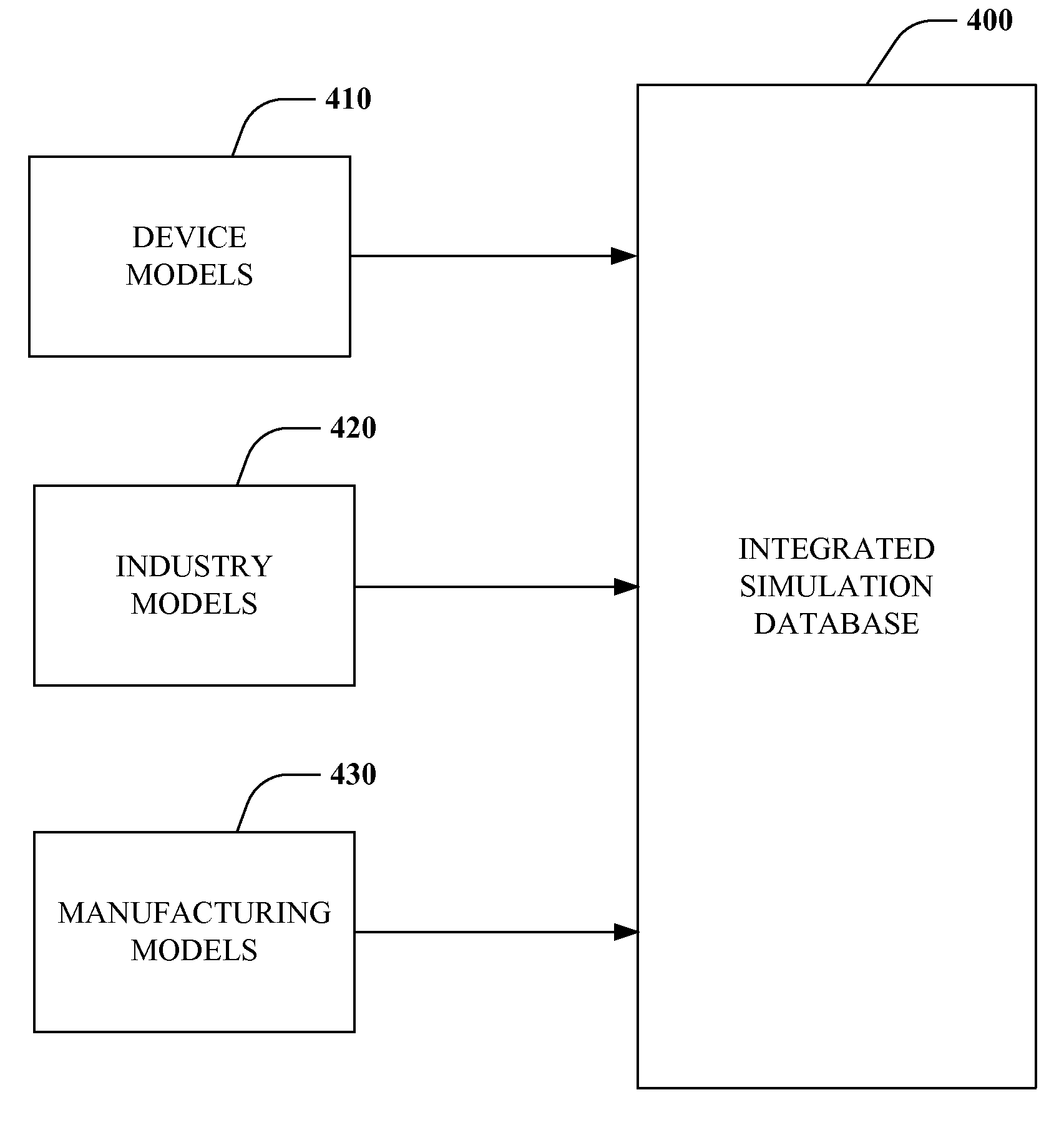
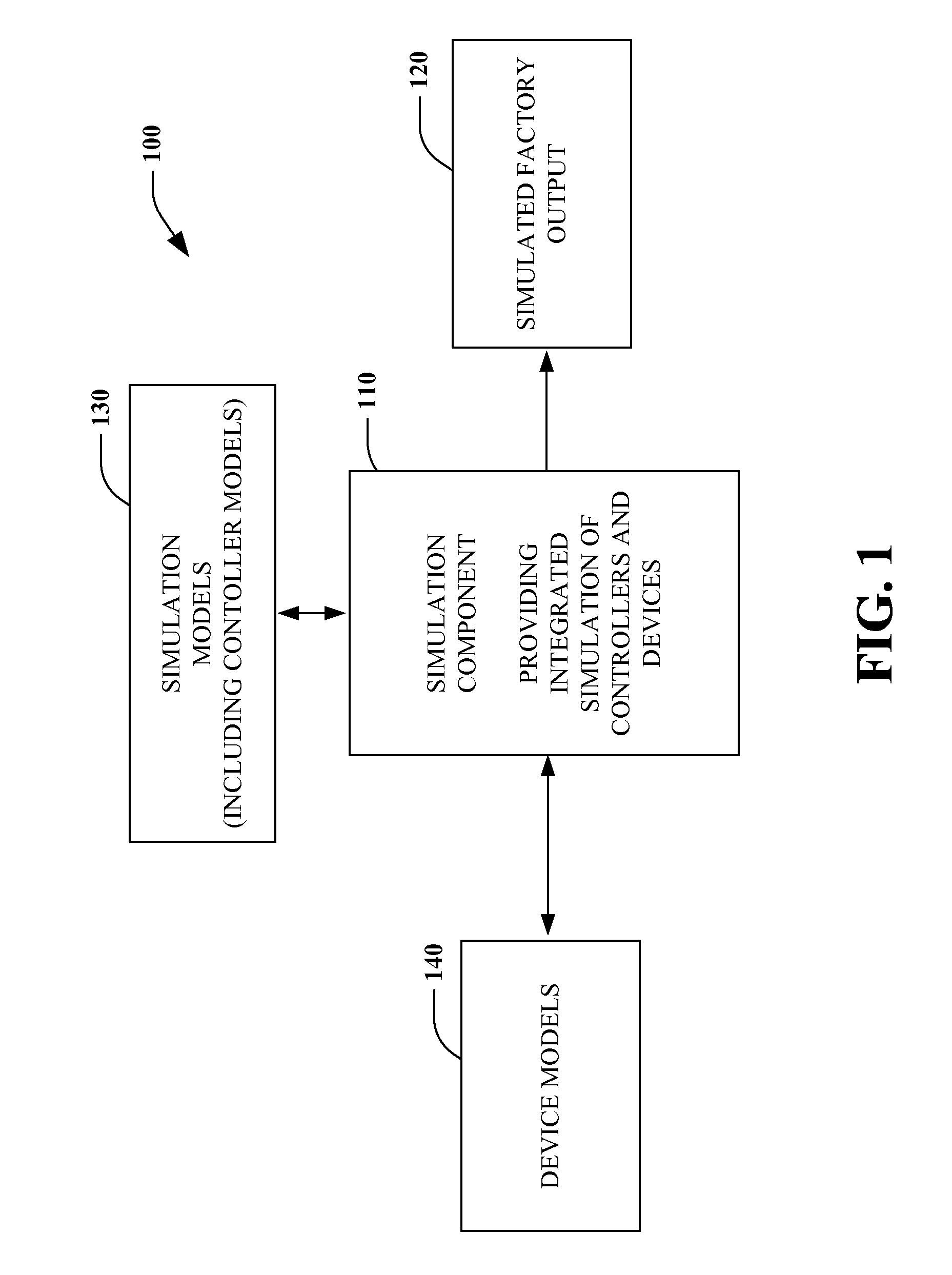
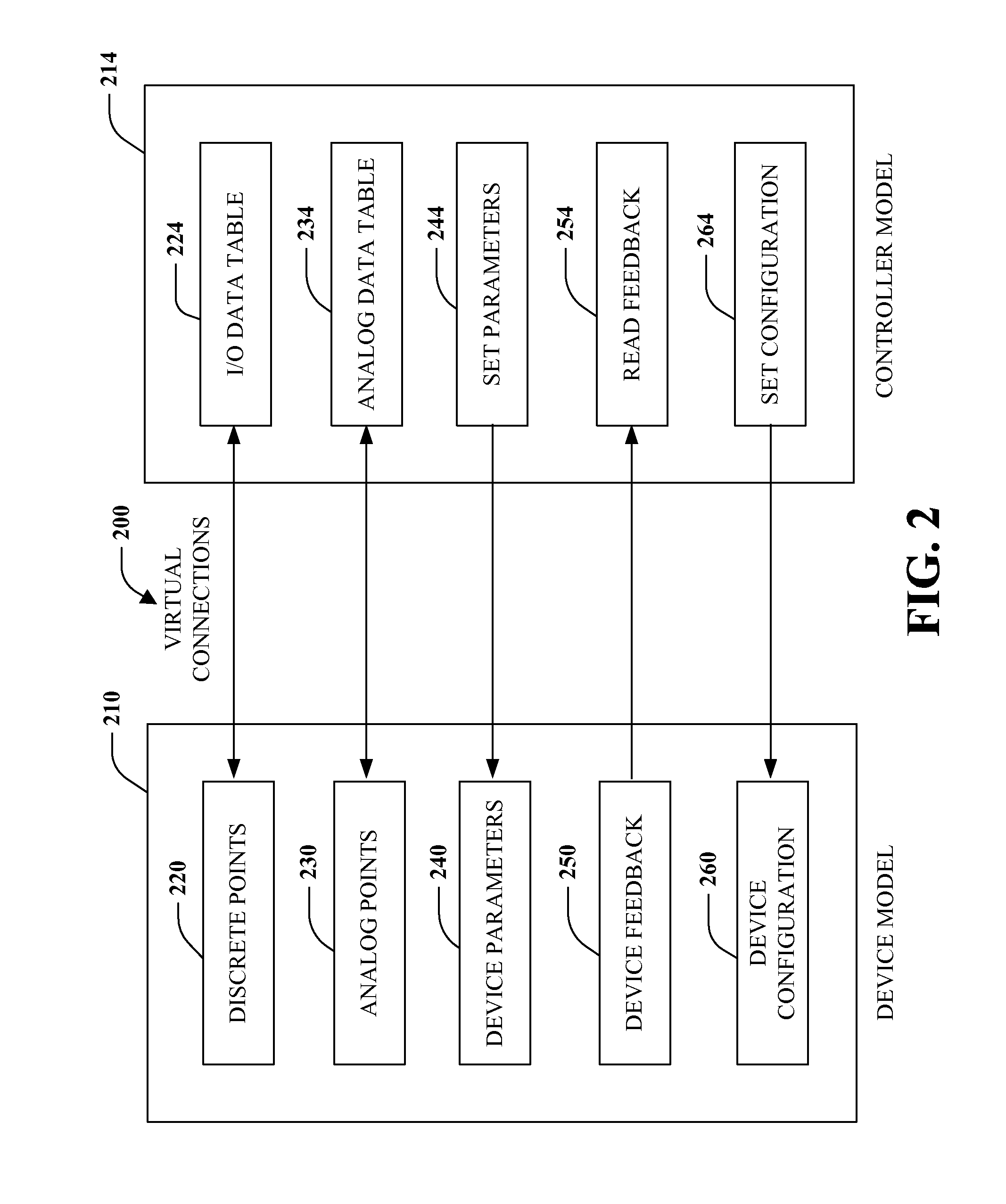
- An integrated simulation tool that models both controllers and devices within a common platform, allowing for the development of simulation models for various devices and controllers, enabling an overall system-level simulation by integrating device models and controller models, and providing a realistic simulation environment with controlled variables like timing and communications.

Simulation system and computer-implemented method for simulation and verifying a control system
PatentInactiveEP1530137A1
Innovation
- Implementing a dynamic interconnection approach using distinct memory locations for inter-module communication, allowing for real-time replication of signal values and dynamic reconfiguration of module interconnections via a cross-bar switch or distributed approach, enabling modifications during running experiments without interrupting the simulation.


Industry Standards for Control System Validation
Control system validation relies on a comprehensive framework of industry standards that ensure reliability, safety, and performance across diverse applications. These standards provide essential guidelines for validating simulation-based efficiency analyses and establishing credible benchmarks for system performance evaluation.
The International Electrotechnical Commission (IEC) 61508 series serves as the foundational standard for functional safety of electrical, electronic, and programmable electronic safety-related systems. This standard establishes Safety Integrity Levels (SIL) that directly impact validation requirements for control systems. IEC 61511 extends these principles specifically to process industry safety instrumented systems, providing detailed validation protocols for control loop performance and efficiency metrics.
IEEE standards play a crucial role in control system validation, particularly IEEE 1012 for software verification and validation, and IEEE 829 for software test documentation. These standards define systematic approaches for validating simulation models and ensuring that efficiency analysis results meet acceptable accuracy thresholds. The standards specify documentation requirements, test procedures, and acceptance criteria that simulation-based analyses must satisfy.
Industry-specific standards further refine validation requirements. The automotive sector follows ISO 26262 for functional safety, which mandates specific validation procedures for control system efficiency in safety-critical applications. Similarly, the aerospace industry adheres to DO-178C and DO-254, which establish rigorous validation protocols for airborne systems and hardware components respectively.
The ISA-95 standard provides a framework for enterprise-control system integration, defining validation requirements for control system efficiency within broader manufacturing execution systems. This standard emphasizes the importance of validating control performance metrics against operational objectives and business requirements.
Emerging standards like IEC 62443 address cybersecurity aspects of industrial automation and control systems, introducing new validation requirements that consider security impacts on system efficiency. These standards mandate validation of control system performance under various security scenarios and threat conditions.
Compliance with these standards requires systematic validation approaches that combine simulation-based analysis with physical testing, documentation protocols, and continuous monitoring procedures to ensure sustained control system efficiency throughout operational lifecycles.
The International Electrotechnical Commission (IEC) 61508 series serves as the foundational standard for functional safety of electrical, electronic, and programmable electronic safety-related systems. This standard establishes Safety Integrity Levels (SIL) that directly impact validation requirements for control systems. IEC 61511 extends these principles specifically to process industry safety instrumented systems, providing detailed validation protocols for control loop performance and efficiency metrics.
IEEE standards play a crucial role in control system validation, particularly IEEE 1012 for software verification and validation, and IEEE 829 for software test documentation. These standards define systematic approaches for validating simulation models and ensuring that efficiency analysis results meet acceptable accuracy thresholds. The standards specify documentation requirements, test procedures, and acceptance criteria that simulation-based analyses must satisfy.
Industry-specific standards further refine validation requirements. The automotive sector follows ISO 26262 for functional safety, which mandates specific validation procedures for control system efficiency in safety-critical applications. Similarly, the aerospace industry adheres to DO-178C and DO-254, which establish rigorous validation protocols for airborne systems and hardware components respectively.
The ISA-95 standard provides a framework for enterprise-control system integration, defining validation requirements for control system efficiency within broader manufacturing execution systems. This standard emphasizes the importance of validating control performance metrics against operational objectives and business requirements.
Emerging standards like IEC 62443 address cybersecurity aspects of industrial automation and control systems, introducing new validation requirements that consider security impacts on system efficiency. These standards mandate validation of control system performance under various security scenarios and threat conditions.
Compliance with these standards requires systematic validation approaches that combine simulation-based analysis with physical testing, documentation protocols, and continuous monitoring procedures to ensure sustained control system efficiency throughout operational lifecycles.
Real-time Simulation Implementation Challenges
Real-time simulation implementation presents significant computational and technical challenges that directly impact the effectiveness of control system efficiency analysis. The primary constraint lies in achieving deterministic execution within strict timing requirements, where simulation models must complete their calculations within predefined time steps to maintain temporal accuracy. This becomes particularly challenging when dealing with complex control algorithms that require extensive mathematical computations or when simulating large-scale systems with numerous interconnected components.
Hardware limitations constitute another critical challenge in real-time simulation deployment. The computational power required for real-time execution often exceeds standard computing capabilities, necessitating specialized hardware such as real-time processors, FPGA-based systems, or dedicated simulation platforms. These hardware requirements significantly increase implementation costs and complexity, while also demanding specialized expertise for configuration and maintenance.
Synchronization issues emerge when integrating multiple simulation components or when interfacing with external hardware-in-the-loop systems. Maintaining precise timing coordination between different simulation modules, data acquisition systems, and control hardware becomes increasingly difficult as system complexity grows. Clock drift, communication delays, and varying execution times can introduce timing errors that compromise simulation accuracy and reliability.
Model complexity reduction represents a fundamental trade-off in real-time simulation implementation. High-fidelity models that accurately represent system dynamics often require computational resources that exceed real-time constraints. Engineers must balance model accuracy against computational efficiency, potentially sacrificing simulation precision to meet timing requirements. This challenge is particularly pronounced in multi-physics simulations where mechanical, electrical, and thermal dynamics must be simultaneously computed.
Memory management and data handling present additional implementation hurdles, especially in continuous operation scenarios. Real-time simulations generate substantial amounts of data that must be processed, stored, and transmitted without interrupting simulation execution. Buffer overflows, memory leaks, and data corruption can severely impact simulation reliability and system performance.
Integration with existing control infrastructure poses compatibility challenges, as real-time simulation systems must interface seamlessly with various communication protocols, data formats, and legacy systems. Ensuring robust connectivity while maintaining real-time performance requires careful consideration of communication architectures and protocol selection.
Hardware limitations constitute another critical challenge in real-time simulation deployment. The computational power required for real-time execution often exceeds standard computing capabilities, necessitating specialized hardware such as real-time processors, FPGA-based systems, or dedicated simulation platforms. These hardware requirements significantly increase implementation costs and complexity, while also demanding specialized expertise for configuration and maintenance.
Synchronization issues emerge when integrating multiple simulation components or when interfacing with external hardware-in-the-loop systems. Maintaining precise timing coordination between different simulation modules, data acquisition systems, and control hardware becomes increasingly difficult as system complexity grows. Clock drift, communication delays, and varying execution times can introduce timing errors that compromise simulation accuracy and reliability.
Model complexity reduction represents a fundamental trade-off in real-time simulation implementation. High-fidelity models that accurately represent system dynamics often require computational resources that exceed real-time constraints. Engineers must balance model accuracy against computational efficiency, potentially sacrificing simulation precision to meet timing requirements. This challenge is particularly pronounced in multi-physics simulations where mechanical, electrical, and thermal dynamics must be simultaneously computed.
Memory management and data handling present additional implementation hurdles, especially in continuous operation scenarios. Real-time simulations generate substantial amounts of data that must be processed, stored, and transmitted without interrupting simulation execution. Buffer overflows, memory leaks, and data corruption can severely impact simulation reliability and system performance.
Integration with existing control infrastructure poses compatibility challenges, as real-time simulation systems must interface seamlessly with various communication protocols, data formats, and legacy systems. Ensuring robust connectivity while maintaining real-time performance requires careful consideration of communication architectures and protocol selection.
Unlock deeper insights with Patsnap Eureka Quick Research — get a full tech report to explore trends and direct your research. Try now!
Generate Your Research Report Instantly with AI Agent
Supercharge your innovation with Patsnap Eureka AI Agent Platform!