

How to Develop Next-Gen Models for Thermal Runaway Mitigation
FEB 26, 20269 MIN READ
Generate Your Research Report Instantly with AI Agent
PatSnap Eureka helps you evaluate technical feasibility & market potential.
Thermal Runaway Background and Mitigation Goals
Thermal runaway represents one of the most critical safety challenges in lithium-ion battery technology, characterized by an uncontrolled chain reaction where heat generation exceeds heat dissipation capacity. This phenomenon occurs when internal battery temperature rises beyond a critical threshold, typically around 130-150°C, triggering exothermic reactions that generate additional heat and accelerate the process exponentially. The cascading nature of thermal runaway can lead to catastrophic failures including fire, explosion, and toxic gas emission, posing significant risks to both human safety and property.
The evolution of thermal runaway research has progressed through distinct phases since the early commercialization of lithium-ion batteries in the 1990s. Initial investigations focused primarily on understanding the fundamental electrochemical mechanisms and identifying trigger conditions. The field gained substantial momentum following high-profile incidents in consumer electronics and electric vehicles, driving intensive research into predictive modeling and prevention strategies. Recent developments have shifted toward sophisticated multi-physics modeling approaches that integrate thermal, electrical, and mechanical phenomena to capture the complex interdependencies governing thermal runaway propagation.
Current technological objectives center on developing next-generation predictive models capable of real-time thermal runaway detection and mitigation. These models must achieve microsecond-level response times while maintaining high accuracy across diverse operating conditions and battery chemistries. The primary goal involves creating comprehensive simulation frameworks that can predict thermal runaway onset with sufficient lead time to enable effective intervention strategies. Advanced modeling approaches aim to incorporate machine learning algorithms, multi-scale physics simulations, and sensor fusion techniques to enhance predictive capabilities.
The strategic importance of thermal runaway mitigation extends beyond immediate safety concerns to encompass broader market adoption of energy storage technologies. Effective mitigation strategies are essential for enabling higher energy density battery designs, reducing safety margins that currently limit performance, and supporting the widespread deployment of electric vehicles and grid-scale energy storage systems. The development of robust thermal runaway models represents a critical enabler for next-generation battery management systems that can optimize performance while maintaining stringent safety standards.
Emerging research directions emphasize the integration of artificial intelligence and digital twin technologies to create adaptive thermal management systems. These advanced approaches seek to establish predictive maintenance protocols, optimize thermal design parameters, and enable proactive safety interventions that prevent thermal runaway initiation rather than merely responding to its occurrence.
The evolution of thermal runaway research has progressed through distinct phases since the early commercialization of lithium-ion batteries in the 1990s. Initial investigations focused primarily on understanding the fundamental electrochemical mechanisms and identifying trigger conditions. The field gained substantial momentum following high-profile incidents in consumer electronics and electric vehicles, driving intensive research into predictive modeling and prevention strategies. Recent developments have shifted toward sophisticated multi-physics modeling approaches that integrate thermal, electrical, and mechanical phenomena to capture the complex interdependencies governing thermal runaway propagation.
Current technological objectives center on developing next-generation predictive models capable of real-time thermal runaway detection and mitigation. These models must achieve microsecond-level response times while maintaining high accuracy across diverse operating conditions and battery chemistries. The primary goal involves creating comprehensive simulation frameworks that can predict thermal runaway onset with sufficient lead time to enable effective intervention strategies. Advanced modeling approaches aim to incorporate machine learning algorithms, multi-scale physics simulations, and sensor fusion techniques to enhance predictive capabilities.
The strategic importance of thermal runaway mitigation extends beyond immediate safety concerns to encompass broader market adoption of energy storage technologies. Effective mitigation strategies are essential for enabling higher energy density battery designs, reducing safety margins that currently limit performance, and supporting the widespread deployment of electric vehicles and grid-scale energy storage systems. The development of robust thermal runaway models represents a critical enabler for next-generation battery management systems that can optimize performance while maintaining stringent safety standards.
Emerging research directions emphasize the integration of artificial intelligence and digital twin technologies to create adaptive thermal management systems. These advanced approaches seek to establish predictive maintenance protocols, optimize thermal design parameters, and enable proactive safety interventions that prevent thermal runaway initiation rather than merely responding to its occurrence.
Market Demand for Advanced Battery Safety Solutions
The global battery market is experiencing unprecedented growth driven by the rapid expansion of electric vehicles, energy storage systems, and portable electronics. This surge has intensified focus on battery safety, particularly thermal runaway prevention, as high-profile incidents have highlighted the catastrophic consequences of battery failures. The market demand for advanced battery safety solutions has evolved from a regulatory compliance requirement to a critical competitive differentiator.
Electric vehicle manufacturers represent the largest demand segment for thermal runaway mitigation technologies. As EV adoption accelerates globally, automakers face increasing pressure to ensure battery pack safety while maintaining performance and cost competitiveness. The automotive sector requires solutions that can operate reliably across diverse environmental conditions and provide real-time monitoring capabilities to prevent thermal events before they occur.
Energy storage system operators constitute another significant market segment driving demand for advanced safety solutions. Grid-scale battery installations require sophisticated thermal management systems capable of monitoring thousands of cells simultaneously. The consequences of thermal runaway in these large-scale deployments extend beyond equipment damage to potential grid instability and public safety concerns.
Consumer electronics manufacturers continue to demand miniaturized safety solutions that do not compromise device form factors or battery performance. The proliferation of high-energy-density batteries in smartphones, laptops, and wearable devices has created a market need for predictive safety technologies that can identify potential thermal runaway conditions in advance.
The regulatory landscape is increasingly stringent, with safety standards evolving to require more sophisticated monitoring and mitigation capabilities. This regulatory pressure creates sustained market demand for next-generation thermal runaway models that can demonstrate compliance with emerging safety requirements while providing actionable insights for system optimization.
Market demand is also driven by insurance and liability considerations, as organizations seek to minimize risks associated with battery deployments. Advanced thermal runaway mitigation models offer the potential to reduce insurance premiums and liability exposure through demonstrated safety improvements and predictive maintenance capabilities.
Electric vehicle manufacturers represent the largest demand segment for thermal runaway mitigation technologies. As EV adoption accelerates globally, automakers face increasing pressure to ensure battery pack safety while maintaining performance and cost competitiveness. The automotive sector requires solutions that can operate reliably across diverse environmental conditions and provide real-time monitoring capabilities to prevent thermal events before they occur.
Energy storage system operators constitute another significant market segment driving demand for advanced safety solutions. Grid-scale battery installations require sophisticated thermal management systems capable of monitoring thousands of cells simultaneously. The consequences of thermal runaway in these large-scale deployments extend beyond equipment damage to potential grid instability and public safety concerns.
Consumer electronics manufacturers continue to demand miniaturized safety solutions that do not compromise device form factors or battery performance. The proliferation of high-energy-density batteries in smartphones, laptops, and wearable devices has created a market need for predictive safety technologies that can identify potential thermal runaway conditions in advance.
The regulatory landscape is increasingly stringent, with safety standards evolving to require more sophisticated monitoring and mitigation capabilities. This regulatory pressure creates sustained market demand for next-generation thermal runaway models that can demonstrate compliance with emerging safety requirements while providing actionable insights for system optimization.
Market demand is also driven by insurance and liability considerations, as organizations seek to minimize risks associated with battery deployments. Advanced thermal runaway mitigation models offer the potential to reduce insurance premiums and liability exposure through demonstrated safety improvements and predictive maintenance capabilities.
Current Thermal Runaway Modeling Limitations
Current thermal runaway modeling approaches face significant computational and accuracy limitations that hinder their effectiveness in real-world battery safety applications. Traditional models primarily rely on simplified thermal-electrochemical coupling mechanisms that fail to capture the complex multi-physics interactions occurring during thermal runaway events. These models often assume uniform temperature distributions and linear heat generation patterns, which inadequately represent the highly localized and non-linear nature of thermal runaway propagation.
Existing modeling frameworks struggle with multi-scale integration challenges, particularly in bridging molecular-level electrochemical reactions with cell-level and pack-level thermal behaviors. Most current models operate at single scales, either focusing on detailed electrochemical kinetics or macroscopic thermal dynamics, but rarely achieving seamless integration across multiple length and time scales. This limitation results in significant gaps in predictive accuracy when scaling from laboratory conditions to real-world battery systems.
The temporal resolution constraints of current models present another critical limitation. Thermal runaway events can occur within seconds to minutes, involving rapid temperature rises and complex phase transitions. However, existing computational models often require extensive simulation times that exceed real-time requirements, making them unsuitable for real-time monitoring and control applications. The trade-off between computational efficiency and model fidelity remains a persistent challenge.
Material property characterization represents a fundamental weakness in current modeling approaches. Many models rely on temperature-independent or linearly temperature-dependent material properties, failing to account for the dramatic changes in thermal conductivity, specific heat capacity, and electrochemical parameters that occur during thermal runaway. The lack of comprehensive high-temperature material databases further compounds this limitation.
Current models also exhibit insufficient consideration of manufacturing variabilities and aging effects on thermal runaway behavior. Real battery cells contain inherent non-uniformities in electrode thickness, electrolyte distribution, and separator properties that significantly influence thermal runaway initiation and propagation patterns. Most existing models assume idealized, homogeneous cell structures that do not reflect these practical variations.
The validation and calibration challenges of existing models pose additional constraints. Limited availability of controlled thermal runaway experimental data, particularly at different scales and under various abuse conditions, restricts model validation efforts. Many models are calibrated using specific cell chemistries or configurations, limiting their generalizability across different battery technologies and applications.
Existing modeling frameworks struggle with multi-scale integration challenges, particularly in bridging molecular-level electrochemical reactions with cell-level and pack-level thermal behaviors. Most current models operate at single scales, either focusing on detailed electrochemical kinetics or macroscopic thermal dynamics, but rarely achieving seamless integration across multiple length and time scales. This limitation results in significant gaps in predictive accuracy when scaling from laboratory conditions to real-world battery systems.
The temporal resolution constraints of current models present another critical limitation. Thermal runaway events can occur within seconds to minutes, involving rapid temperature rises and complex phase transitions. However, existing computational models often require extensive simulation times that exceed real-time requirements, making them unsuitable for real-time monitoring and control applications. The trade-off between computational efficiency and model fidelity remains a persistent challenge.
Material property characterization represents a fundamental weakness in current modeling approaches. Many models rely on temperature-independent or linearly temperature-dependent material properties, failing to account for the dramatic changes in thermal conductivity, specific heat capacity, and electrochemical parameters that occur during thermal runaway. The lack of comprehensive high-temperature material databases further compounds this limitation.
Current models also exhibit insufficient consideration of manufacturing variabilities and aging effects on thermal runaway behavior. Real battery cells contain inherent non-uniformities in electrode thickness, electrolyte distribution, and separator properties that significantly influence thermal runaway initiation and propagation patterns. Most existing models assume idealized, homogeneous cell structures that do not reflect these practical variations.
The validation and calibration challenges of existing models pose additional constraints. Limited availability of controlled thermal runaway experimental data, particularly at different scales and under various abuse conditions, restricts model validation efforts. Many models are calibrated using specific cell chemistries or configurations, limiting their generalizability across different battery technologies and applications.
Existing Next-Gen Thermal Runaway Models
01 Thermal runaway detection and monitoring systems
Advanced detection systems utilize sensors and monitoring technologies to identify early signs of thermal runaway in battery systems. These systems employ temperature sensors, voltage monitoring, and predictive algorithms to detect abnormal conditions before thermal runaway occurs. Real-time monitoring enables rapid response and intervention to prevent catastrophic failures. The detection systems can be integrated with battery management systems to provide continuous surveillance of critical parameters.- Thermal runaway detection and monitoring systems: Advanced detection systems utilize sensors and monitoring technologies to identify early signs of thermal runaway in battery systems. These systems employ temperature sensors, voltage monitoring, and predictive algorithms to detect abnormal conditions before thermal runaway occurs. Real-time monitoring enables rapid response and intervention to prevent catastrophic failures. The detection systems can be integrated with battery management systems to provide continuous surveillance of critical parameters.
- Thermal management and cooling systems for runaway mitigation: Thermal management solutions incorporate active and passive cooling mechanisms to dissipate heat and prevent temperature escalation. These systems include heat sinks, cooling plates, phase change materials, and liquid cooling circuits designed to maintain safe operating temperatures. Enhanced thermal conductivity materials and optimized heat dissipation pathways help distribute heat evenly across battery modules. The cooling systems can be automatically activated when temperature thresholds are exceeded.
- Battery cell design and material modifications for thermal stability: Innovative battery cell designs incorporate materials and structures that enhance thermal stability and reduce the risk of thermal runaway propagation. Modified electrode materials, improved separators, and flame-retardant electrolytes contribute to safer battery operation. Cell-level safety features include pressure relief mechanisms and internal shutdown devices that activate under abnormal conditions. Advanced cell architectures minimize internal short circuits and improve overall thermal performance.
- Thermal runaway propagation prevention and containment: Containment strategies focus on preventing thermal runaway from spreading between adjacent cells or modules within a battery pack. Thermal barriers, insulation materials, and physical separation techniques isolate affected cells to limit cascade failures. Fire-resistant enclosures and venting systems safely direct gases and heat away from critical components. Module-level design considerations include spacing optimization and the use of non-combustible materials to create thermal breaks.
- Predictive modeling and simulation for thermal runaway assessment: Computational models and simulation tools predict thermal runaway behavior under various operating conditions and failure scenarios. These models incorporate electrochemical, thermal, and mechanical parameters to assess risk factors and optimize safety designs. Machine learning algorithms analyze historical data to identify patterns and predict potential failure modes. Simulation results guide the development of mitigation strategies and inform safety testing protocols for battery systems.
02 Thermal management and cooling systems for runaway mitigation
Thermal management solutions incorporate active and passive cooling mechanisms to dissipate heat and prevent temperature escalation. These systems include heat sinks, cooling plates, phase change materials, and liquid cooling circuits designed to maintain safe operating temperatures. Enhanced thermal conductivity materials and optimized heat dissipation pathways help distribute heat evenly across battery modules. The cooling systems can be automatically activated when temperature thresholds are exceeded.Expand Specific Solutions03 Battery cell design and material modifications for thermal stability
Innovative battery cell designs incorporate materials and structures that enhance thermal stability and reduce the risk of thermal runaway propagation. Modified electrode materials, improved separators, and electrolyte additives contribute to increased thermal resistance. Cell-level safety features include pressure relief mechanisms and internal shutdown devices that activate under abnormal conditions. Advanced cell architectures prevent internal short circuits and minimize heat generation during operation.Expand Specific Solutions04 Thermal runaway propagation prevention and containment
Containment strategies focus on preventing thermal runaway from spreading between adjacent cells or modules within a battery pack. Thermal barriers, insulation materials, and physical separation techniques isolate affected cells to limit cascade failures. Fire-resistant materials and flame retardant coatings provide additional protection layers. Module-level design incorporates compartmentalization to confine thermal events and protect surrounding components from heat exposure.Expand Specific Solutions05 Predictive modeling and simulation for thermal runaway assessment
Computational models and simulation tools predict thermal runaway behavior under various operating conditions and failure scenarios. These models incorporate electrochemical reactions, heat transfer mechanisms, and material properties to forecast temperature evolution and potential failure modes. Machine learning algorithms analyze historical data to identify patterns and risk factors associated with thermal runaway events. Predictive analytics enable proactive maintenance and design optimization to enhance battery safety.Expand Specific Solutions
Key Players in Battery Safety and Modeling Industry
The thermal runaway mitigation technology landscape is experiencing rapid evolution as the electric vehicle and energy storage markets expand exponentially. The industry is transitioning from early-stage research to commercial deployment, with market size projected to reach billions as EV adoption accelerates globally. Technology maturity varies significantly across players, with established automotive manufacturers like Tesla, BMW, and BYD leading commercial implementation, while battery specialists such as Contemporary Amperex Technology and Cadenza Innovation focus on advanced cell-level solutions. Research institutions including Tsinghua University and Beihang University are driving fundamental breakthroughs in thermal management materials and predictive modeling. Component suppliers like Aspen Aerogels and Hyundai Mobis are developing specialized thermal barrier systems, while traditional automotive players such as Stellantis and Renault are integrating comprehensive safety architectures into their EV platforms, creating a competitive ecosystem spanning the entire value chain.
Tesla, Inc.
Technical Solution: Tesla has developed advanced thermal management systems incorporating structural battery packs with integrated cooling channels and predictive thermal modeling algorithms. Their approach utilizes machine learning-based early detection systems that monitor cell-level temperature variations, voltage irregularities, and impedance changes to predict potential thermal runaway events. The company implements multi-layered safety protocols including active cooling systems, fire-resistant barriers between battery modules, and automated disconnect mechanisms. Tesla's Battery Management System (BMS) employs real-time data analytics to optimize thermal distribution and prevent hotspot formation through dynamic load balancing across battery cells.
Strengths: Industry-leading integration of hardware and software solutions, extensive real-world data collection from fleet operations, proven scalability in mass production. Weaknesses: Proprietary systems limit third-party integration, high development costs, dependency on specific battery chemistry configurations.
Contemporary Amperex Technology Co., Ltd.
Technical Solution: CATL has pioneered the development of Qilin battery technology featuring advanced thermal propagation control through innovative cell-to-pack design and thermal barrier materials. Their next-generation models incorporate phase change materials (PCM) for passive thermal regulation and AI-driven predictive algorithms that analyze electrochemical impedance spectroscopy data to forecast thermal events. The company's approach includes development of flame-retardant electrolytes, ceramic-coated separators, and multi-directional cooling systems that can reduce thermal propagation speed by up to 70%. CATL's thermal runaway mitigation strategy also encompasses structural innovations like honeycomb cooling plates and intelligent thermal management controllers.
Strengths: Leading battery manufacturer with extensive R&D capabilities, strong focus on material science innovations, cost-effective manufacturing processes. Weaknesses: Limited integration with vehicle-level systems, dependency on OEM partnerships for implementation, regional market concentration.
Core Innovations in Predictive Thermal Modeling
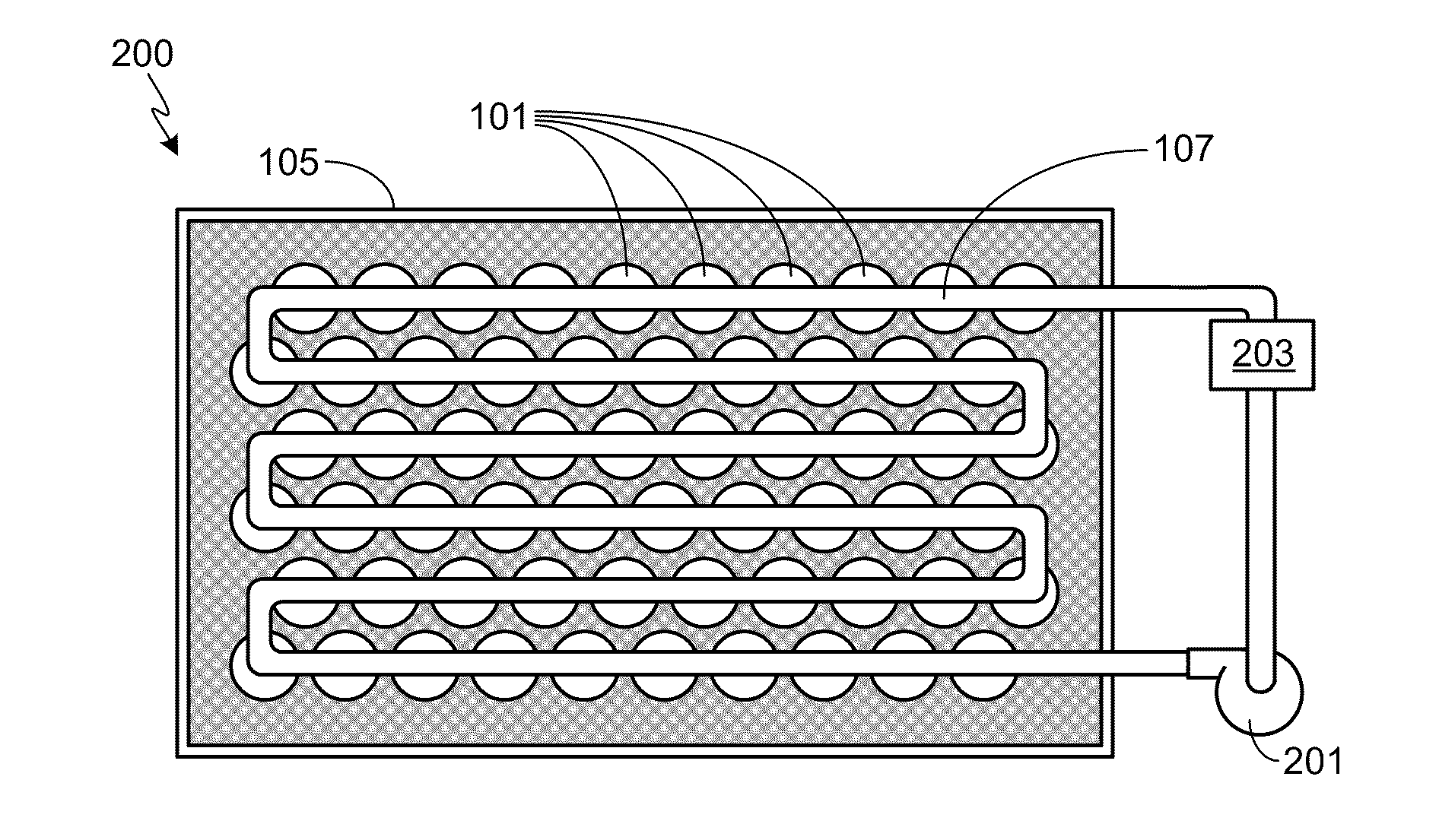
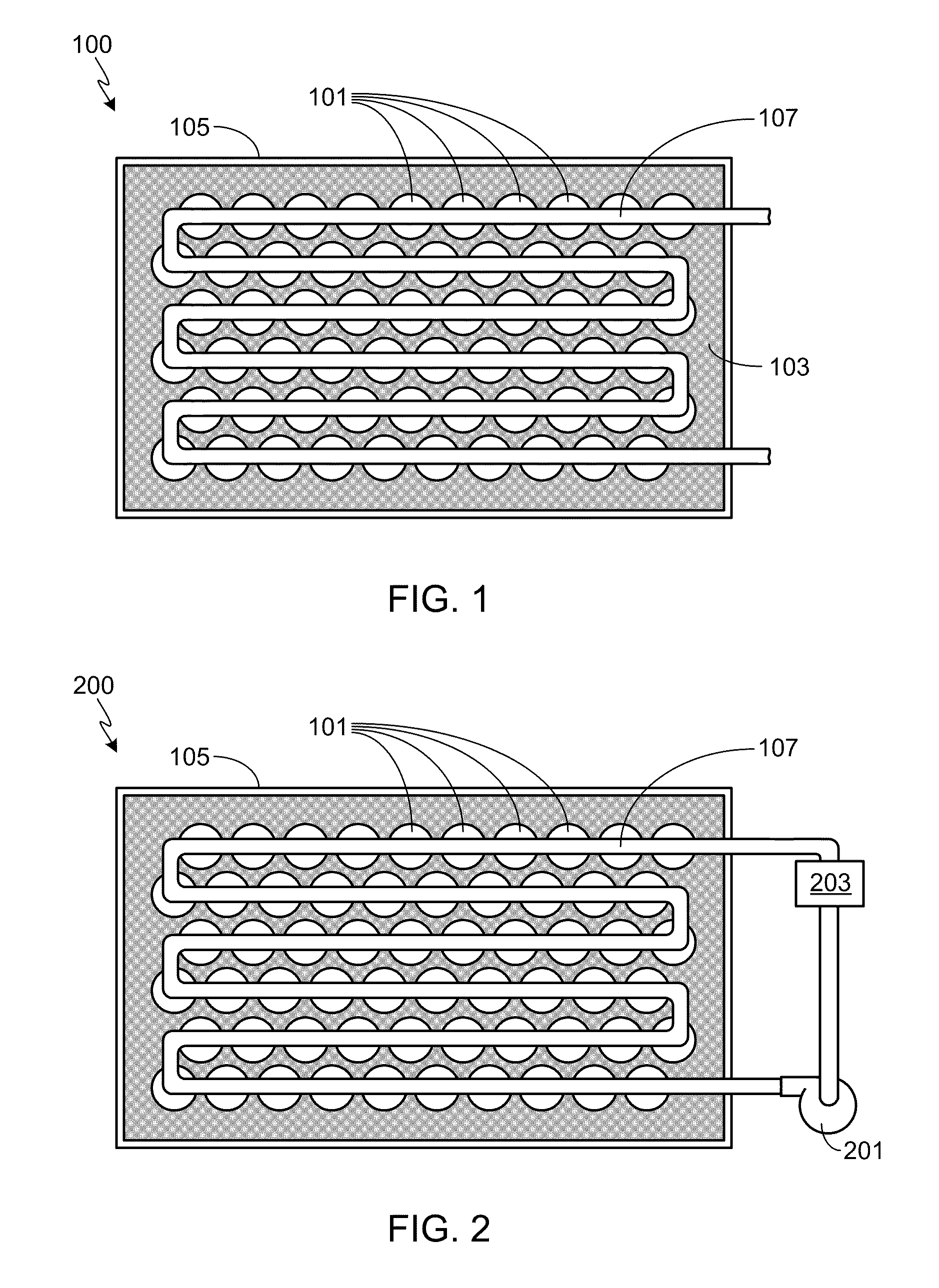
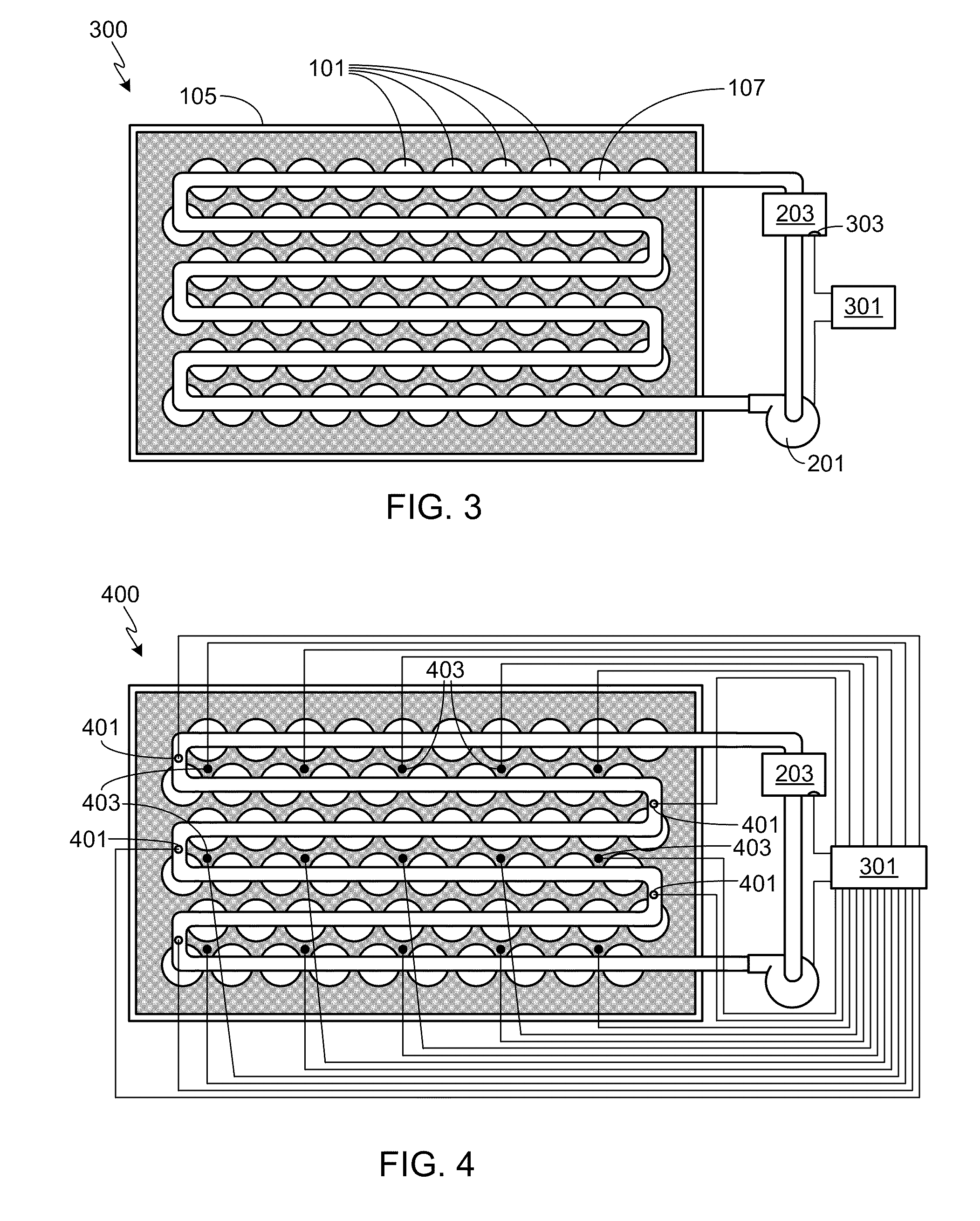
Active Thermal Runaway Mitigation System for Use Within a Battery Pack
PatentActiveUS20100136391A1
Innovation
- An active thermal runaway mitigation system is implemented, featuring a battery pack enclosure with fluid-containing conduits that breach at a preset temperature to discharge cooling fluids or gases onto overheated cells, using sensors and a system controller to manage fluid flow and prevent propagation of thermal runaway to adjacent cells.

Method and Device for Detecting a Thermal Runaway in a Battery Module
PatentActiveUS20220021037A1
Innovation
- A method that continuously captures current, temperature, and state of charge values for each cell in a battery module, using these parameters to calculate temperature and runaway predictor values, allowing for early detection of thermal runaway events with minimal false alarms and precise location identification.


Safety Standards and Regulatory Framework
The regulatory landscape for thermal runaway mitigation in battery systems is governed by a complex framework of international, national, and industry-specific standards. Key regulatory bodies including the International Electrotechnical Commission (IEC), Underwriters Laboratories (UL), and the Society of Automotive Engineers (SAE) have established comprehensive safety protocols that directly impact the development and validation of next-generation thermal runaway models.
Current safety standards such as IEC 62133, UL 2054, and UN 38.3 provide foundational requirements for battery safety testing, including thermal abuse scenarios and propagation prevention measures. These standards mandate specific test conditions, temperature thresholds, and failure criteria that serve as benchmarks for model validation. The automotive sector follows additional regulations like ISO 26262 for functional safety and ECE R100 for electric vehicle battery systems, which require sophisticated predictive modeling capabilities.
Emerging regulatory trends indicate a shift toward performance-based standards rather than prescriptive testing methods. The Federal Aviation Administration's recent updates to lithium battery transportation regulations and the European Union's Battery Regulation 2023/1542 emphasize the need for advanced modeling approaches that can predict thermal behavior under diverse operational conditions. These evolving requirements create opportunities for next-generation models to demonstrate compliance through simulation rather than extensive physical testing.
Compliance challenges arise from the fragmented nature of global regulations and varying interpretation of safety margins across different applications. Automotive applications require different thermal runaway thresholds compared to stationary energy storage systems, necessitating adaptable modeling frameworks. The integration of artificial intelligence and machine learning in predictive models also raises questions about validation methodologies and regulatory acceptance of algorithm-based safety assessments.
Future regulatory developments are expected to incorporate real-time monitoring requirements and predictive maintenance protocols, driving demand for models capable of continuous risk assessment. The establishment of harmonized international standards for thermal runaway modeling will likely accelerate adoption of advanced simulation tools across industries, creating standardized validation procedures for next-generation mitigation technologies.
Current safety standards such as IEC 62133, UL 2054, and UN 38.3 provide foundational requirements for battery safety testing, including thermal abuse scenarios and propagation prevention measures. These standards mandate specific test conditions, temperature thresholds, and failure criteria that serve as benchmarks for model validation. The automotive sector follows additional regulations like ISO 26262 for functional safety and ECE R100 for electric vehicle battery systems, which require sophisticated predictive modeling capabilities.
Emerging regulatory trends indicate a shift toward performance-based standards rather than prescriptive testing methods. The Federal Aviation Administration's recent updates to lithium battery transportation regulations and the European Union's Battery Regulation 2023/1542 emphasize the need for advanced modeling approaches that can predict thermal behavior under diverse operational conditions. These evolving requirements create opportunities for next-generation models to demonstrate compliance through simulation rather than extensive physical testing.
Compliance challenges arise from the fragmented nature of global regulations and varying interpretation of safety margins across different applications. Automotive applications require different thermal runaway thresholds compared to stationary energy storage systems, necessitating adaptable modeling frameworks. The integration of artificial intelligence and machine learning in predictive models also raises questions about validation methodologies and regulatory acceptance of algorithm-based safety assessments.
Future regulatory developments are expected to incorporate real-time monitoring requirements and predictive maintenance protocols, driving demand for models capable of continuous risk assessment. The establishment of harmonized international standards for thermal runaway modeling will likely accelerate adoption of advanced simulation tools across industries, creating standardized validation procedures for next-generation mitigation technologies.
Environmental Impact of Battery Thermal Events
Battery thermal runaway events pose significant environmental risks that extend far beyond immediate safety concerns. When lithium-ion batteries experience thermal runaway, they release toxic gases including hydrogen fluoride, carbon monoxide, and various organic compounds into the atmosphere. These emissions can contaminate air quality in both indoor and outdoor environments, potentially affecting human health and ecosystem stability. The severity of environmental impact correlates directly with battery size, chemistry, and the scale of thermal events.
Soil and water contamination represent critical long-term environmental consequences of battery thermal incidents. Electrolyte leakage during thermal runaway introduces heavy metals such as lithium, cobalt, and nickel into surrounding environments. These substances can persist in soil systems for extended periods, affecting plant growth and entering food chains through bioaccumulation processes. Groundwater contamination poses particular risks in areas with high water table levels or inadequate containment systems.
The carbon footprint associated with battery thermal events encompasses both direct and indirect environmental impacts. Direct emissions result from combustion processes during thermal runaway, while indirect impacts include the environmental cost of battery replacement, emergency response activities, and remediation efforts. Large-scale incidents in energy storage facilities can release substantial quantities of greenhouse gases, undermining carbon reduction objectives in renewable energy systems.
Ecosystem disruption occurs when thermal runaway events affect natural habitats, particularly in cases involving electric vehicle accidents or energy storage system failures in sensitive environmental areas. Aquatic ecosystems face heightened vulnerability due to the water-soluble nature of many battery electrolyte components. Marine environments may experience additional stress from thermal runaway incidents in electric vessels or offshore energy storage installations.
Waste generation and resource depletion constitute additional environmental burdens associated with battery thermal events. Failed batteries require specialized disposal processes, often involving energy-intensive recycling methods or hazardous waste treatment. The premature failure of battery systems due to thermal runaway accelerates the demand for raw material extraction, contributing to mining-related environmental degradation and resource scarcity concerns in critical mineral supply chains.
Soil and water contamination represent critical long-term environmental consequences of battery thermal incidents. Electrolyte leakage during thermal runaway introduces heavy metals such as lithium, cobalt, and nickel into surrounding environments. These substances can persist in soil systems for extended periods, affecting plant growth and entering food chains through bioaccumulation processes. Groundwater contamination poses particular risks in areas with high water table levels or inadequate containment systems.
The carbon footprint associated with battery thermal events encompasses both direct and indirect environmental impacts. Direct emissions result from combustion processes during thermal runaway, while indirect impacts include the environmental cost of battery replacement, emergency response activities, and remediation efforts. Large-scale incidents in energy storage facilities can release substantial quantities of greenhouse gases, undermining carbon reduction objectives in renewable energy systems.
Ecosystem disruption occurs when thermal runaway events affect natural habitats, particularly in cases involving electric vehicle accidents or energy storage system failures in sensitive environmental areas. Aquatic ecosystems face heightened vulnerability due to the water-soluble nature of many battery electrolyte components. Marine environments may experience additional stress from thermal runaway incidents in electric vessels or offshore energy storage installations.
Waste generation and resource depletion constitute additional environmental burdens associated with battery thermal events. Failed batteries require specialized disposal processes, often involving energy-intensive recycling methods or hazardous waste treatment. The premature failure of battery systems due to thermal runaway accelerates the demand for raw material extraction, contributing to mining-related environmental degradation and resource scarcity concerns in critical mineral supply chains.
Unlock deeper insights with PatSnap Eureka Quick Research — get a full tech report to explore trends and direct your research. Try now!
Generate Your Research Report Instantly with AI Agent
Supercharge your innovation with PatSnap Eureka AI Agent Platform!