

How to Employ Simulation Tools for Axial Load Experiments
MAR 25, 20269 MIN READ
Generate Your Research Report Instantly with AI Agent
Patsnap Eureka helps you evaluate technical feasibility & market potential.
Simulation-Based Axial Load Testing Background and Objectives
Axial load testing has been a cornerstone of structural engineering and materials science for over a century, evolving from simple mechanical testing apparatus to sophisticated computer-aided simulation systems. The traditional approach relied heavily on physical specimens and mechanical testing machines, which, while providing accurate real-world data, presented significant limitations in terms of cost, time, and the ability to explore diverse loading scenarios comprehensively.
The emergence of computational mechanics in the 1960s marked a pivotal shift toward simulation-based approaches. Early finite element analysis (FEA) software laid the groundwork for what would eventually become comprehensive simulation platforms capable of modeling complex axial loading conditions. This technological evolution accelerated dramatically with advances in computing power and numerical methods throughout the 1980s and 1990s.
Modern simulation tools for axial load experiments represent a convergence of multiple technological streams, including advanced material modeling, high-performance computing, and sophisticated visualization techniques. These tools have transformed from simple stress-strain calculators to comprehensive platforms capable of predicting failure modes, optimizing designs, and exploring parametric variations that would be prohibitively expensive or impossible to achieve through physical testing alone.
The primary objective of employing simulation tools in axial load experiments is to enhance the predictive capability and efficiency of structural analysis while reducing dependency on extensive physical testing programs. Contemporary simulation platforms aim to provide accurate representations of material behavior under various axial loading conditions, including static, dynamic, and cyclic loading scenarios.
A critical objective involves bridging the gap between theoretical models and real-world performance through validated simulation frameworks. This includes developing robust material models that accurately capture nonlinear behavior, failure mechanisms, and time-dependent effects such as creep and fatigue under axial loading conditions.
Furthermore, simulation tools seek to enable comprehensive parametric studies that would be impractical through physical testing alone. This capability allows engineers to explore design spaces efficiently, optimize structural configurations, and assess sensitivity to various parameters including material properties, geometric variations, and loading conditions.
The integration of uncertainty quantification and reliability analysis represents another key objective, enabling engineers to account for material variability, manufacturing tolerances, and loading uncertainties in their axial load assessments. This probabilistic approach provides more robust design insights compared to traditional deterministic methods.
The emergence of computational mechanics in the 1960s marked a pivotal shift toward simulation-based approaches. Early finite element analysis (FEA) software laid the groundwork for what would eventually become comprehensive simulation platforms capable of modeling complex axial loading conditions. This technological evolution accelerated dramatically with advances in computing power and numerical methods throughout the 1980s and 1990s.
Modern simulation tools for axial load experiments represent a convergence of multiple technological streams, including advanced material modeling, high-performance computing, and sophisticated visualization techniques. These tools have transformed from simple stress-strain calculators to comprehensive platforms capable of predicting failure modes, optimizing designs, and exploring parametric variations that would be prohibitively expensive or impossible to achieve through physical testing alone.
The primary objective of employing simulation tools in axial load experiments is to enhance the predictive capability and efficiency of structural analysis while reducing dependency on extensive physical testing programs. Contemporary simulation platforms aim to provide accurate representations of material behavior under various axial loading conditions, including static, dynamic, and cyclic loading scenarios.
A critical objective involves bridging the gap between theoretical models and real-world performance through validated simulation frameworks. This includes developing robust material models that accurately capture nonlinear behavior, failure mechanisms, and time-dependent effects such as creep and fatigue under axial loading conditions.
Furthermore, simulation tools seek to enable comprehensive parametric studies that would be impractical through physical testing alone. This capability allows engineers to explore design spaces efficiently, optimize structural configurations, and assess sensitivity to various parameters including material properties, geometric variations, and loading conditions.
The integration of uncertainty quantification and reliability analysis represents another key objective, enabling engineers to account for material variability, manufacturing tolerances, and loading uncertainties in their axial load assessments. This probabilistic approach provides more robust design insights compared to traditional deterministic methods.
Market Demand for Virtual Axial Load Testing Solutions
The global market for virtual axial load testing solutions is experiencing significant growth driven by the increasing complexity of engineering structures and the need for cost-effective testing methodologies. Traditional physical testing approaches require substantial investments in specialized equipment, testing facilities, and material resources, creating strong economic incentives for organizations to adopt simulation-based alternatives. Industries such as aerospace, automotive, construction, and manufacturing are actively seeking virtual testing solutions to reduce development costs while maintaining rigorous safety and performance standards.
Regulatory compliance requirements across multiple industries are creating sustained demand for comprehensive testing documentation and validation processes. Virtual axial load testing solutions enable organizations to generate detailed test reports, perform parametric studies, and conduct sensitivity analyses that would be prohibitively expensive using physical testing methods alone. The ability to simulate extreme loading conditions and failure scenarios without material waste or safety risks represents a compelling value proposition for engineering teams.
The aerospace and defense sectors demonstrate particularly strong demand for virtual axial load testing capabilities, driven by stringent certification requirements and the high cost of prototype development. Commercial aircraft manufacturers and defense contractors require extensive validation of structural components under various loading conditions, making simulation tools essential for design optimization and regulatory approval processes.
Automotive industry transformation toward electric vehicles and lightweight materials is generating new testing requirements that favor virtual solutions. Battery pack structural integrity, composite material behavior, and crash safety analysis all benefit from advanced simulation capabilities that can model complex axial loading scenarios with high fidelity.
Construction and infrastructure sectors are increasingly adopting virtual testing solutions to evaluate building materials, structural connections, and seismic performance under axial loads. The growing emphasis on sustainable construction practices and material optimization creates additional market opportunities for simulation-based testing approaches.
Market growth is further supported by advances in computational power, cloud computing accessibility, and user-friendly simulation software interfaces. These technological improvements are lowering barriers to adoption and enabling smaller organizations to access sophisticated virtual testing capabilities previously available only to large enterprises with substantial technical resources.
Regulatory compliance requirements across multiple industries are creating sustained demand for comprehensive testing documentation and validation processes. Virtual axial load testing solutions enable organizations to generate detailed test reports, perform parametric studies, and conduct sensitivity analyses that would be prohibitively expensive using physical testing methods alone. The ability to simulate extreme loading conditions and failure scenarios without material waste or safety risks represents a compelling value proposition for engineering teams.
The aerospace and defense sectors demonstrate particularly strong demand for virtual axial load testing capabilities, driven by stringent certification requirements and the high cost of prototype development. Commercial aircraft manufacturers and defense contractors require extensive validation of structural components under various loading conditions, making simulation tools essential for design optimization and regulatory approval processes.
Automotive industry transformation toward electric vehicles and lightweight materials is generating new testing requirements that favor virtual solutions. Battery pack structural integrity, composite material behavior, and crash safety analysis all benefit from advanced simulation capabilities that can model complex axial loading scenarios with high fidelity.
Construction and infrastructure sectors are increasingly adopting virtual testing solutions to evaluate building materials, structural connections, and seismic performance under axial loads. The growing emphasis on sustainable construction practices and material optimization creates additional market opportunities for simulation-based testing approaches.
Market growth is further supported by advances in computational power, cloud computing accessibility, and user-friendly simulation software interfaces. These technological improvements are lowering barriers to adoption and enabling smaller organizations to access sophisticated virtual testing capabilities previously available only to large enterprises with substantial technical resources.
Current State of Axial Load Simulation Technologies
Axial load simulation technologies have reached a mature stage of development, with multiple sophisticated approaches now available for researchers and engineers. The field encompasses both traditional finite element analysis (FEA) methods and advanced computational techniques that enable accurate prediction of material behavior under axial loading conditions. Current simulation capabilities extend from simple linear elastic models to complex nonlinear analyses incorporating material plasticity, damage mechanics, and failure criteria.
Finite element analysis remains the dominant approach for axial load simulations, with established software platforms offering comprehensive modeling capabilities. These tools can accurately simulate stress distribution, deformation patterns, and failure mechanisms in various materials including metals, composites, and concrete structures. The technology has evolved to handle multi-scale modeling, allowing researchers to bridge microscopic material properties with macroscopic structural behavior under axial loading conditions.
Advanced material modeling constitutes a significant component of current simulation technologies. Constitutive models have been developed to capture complex material behaviors such as strain hardening, softening, and rate-dependent responses. These models incorporate sophisticated failure criteria including von Mises, Mohr-Coulomb, and Drucker-Prager theories, enabling accurate prediction of material failure under various axial loading scenarios. Recent developments include damage mechanics models that can simulate progressive failure and post-peak behavior.
Computational efficiency has improved substantially through parallel processing capabilities and optimized algorithms. Modern simulation tools can handle large-scale models with millions of elements while maintaining reasonable computational times. High-performance computing integration allows for parametric studies and uncertainty quantification analyses that were previously computationally prohibitive.
Validation and verification protocols have become standardized within the simulation community. Current technologies incorporate robust error estimation techniques and adaptive mesh refinement capabilities to ensure solution accuracy. Benchmark problems and experimental validation databases provide reliable references for assessing simulation quality and establishing confidence in numerical predictions for axial load applications.
Finite element analysis remains the dominant approach for axial load simulations, with established software platforms offering comprehensive modeling capabilities. These tools can accurately simulate stress distribution, deformation patterns, and failure mechanisms in various materials including metals, composites, and concrete structures. The technology has evolved to handle multi-scale modeling, allowing researchers to bridge microscopic material properties with macroscopic structural behavior under axial loading conditions.
Advanced material modeling constitutes a significant component of current simulation technologies. Constitutive models have been developed to capture complex material behaviors such as strain hardening, softening, and rate-dependent responses. These models incorporate sophisticated failure criteria including von Mises, Mohr-Coulomb, and Drucker-Prager theories, enabling accurate prediction of material failure under various axial loading scenarios. Recent developments include damage mechanics models that can simulate progressive failure and post-peak behavior.
Computational efficiency has improved substantially through parallel processing capabilities and optimized algorithms. Modern simulation tools can handle large-scale models with millions of elements while maintaining reasonable computational times. High-performance computing integration allows for parametric studies and uncertainty quantification analyses that were previously computationally prohibitive.
Validation and verification protocols have become standardized within the simulation community. Current technologies incorporate robust error estimation techniques and adaptive mesh refinement capabilities to ensure solution accuracy. Benchmark problems and experimental validation databases provide reliable references for assessing simulation quality and establishing confidence in numerical predictions for axial load applications.
Existing Axial Load Simulation Methodologies
01 Circuit and electronic system simulation tools
Simulation tools designed for analyzing and modeling electronic circuits and systems, enabling engineers to test circuit behavior, performance, and functionality before physical implementation. These tools support various simulation types including analog, digital, and mixed-signal simulations, allowing for comprehensive verification of circuit designs and optimization of component parameters.- Circuit and system-level simulation tools: Simulation tools designed for circuit and system-level analysis enable engineers to model and verify electronic circuits and systems before physical implementation. These tools provide capabilities for analog, digital, and mixed-signal simulation, allowing designers to optimize performance, identify potential issues, and reduce development time. The tools typically include graphical interfaces, component libraries, and analysis features for transient, AC, DC, and other types of simulations.
- Software development and testing simulation platforms: Simulation platforms for software development provide virtual environments where developers can test and validate software applications without requiring physical hardware. These tools enable debugging, performance analysis, and functional verification in controlled conditions. They support various programming languages and development frameworks, offering features such as breakpoint setting, variable monitoring, and execution tracing to facilitate efficient software development cycles.
- Manufacturing and process simulation systems: Manufacturing simulation systems allow organizations to model production processes, optimize workflows, and predict outcomes before implementing changes in actual facilities. These tools can simulate material flow, resource allocation, bottleneck identification, and production scheduling. They help manufacturers reduce costs, improve efficiency, and minimize risks associated with process modifications by providing detailed analysis of various scenarios and configurations.
- Network and communication simulation tools: Network simulation tools enable the modeling and analysis of communication networks, protocols, and data transmission scenarios. These tools allow researchers and engineers to evaluate network performance, test new protocols, and optimize network configurations in virtual environments. They support simulation of various network topologies, traffic patterns, and communication protocols, providing metrics such as latency, throughput, and packet loss for comprehensive network analysis.
- Multi-domain and integrated simulation environments: Integrated simulation environments provide comprehensive platforms that support multiple engineering domains and enable co-simulation across different physical systems. These tools allow engineers to model complex systems involving mechanical, electrical, thermal, and other physical phenomena in a unified framework. They facilitate system-level design and analysis by enabling interaction between different simulation models and supporting data exchange between various specialized simulation tools.
02 Software development and testing simulation platforms
Platforms that provide virtual environments for software development, debugging, and testing processes. These tools enable developers to simulate different operating conditions, test scenarios, and system configurations without requiring actual hardware. They support automated testing, performance analysis, and validation of software applications across various platforms and environments.Expand Specific Solutions03 Physical process and engineering simulation systems
Advanced simulation systems for modeling physical phenomena and engineering processes, including fluid dynamics, structural mechanics, thermal analysis, and material behavior. These tools utilize numerical methods and computational algorithms to predict system performance under various conditions, enabling optimization of designs and reduction of physical prototyping costs.Expand Specific Solutions04 Network and communication system simulators
Specialized tools for simulating network architectures, communication protocols, and data transmission systems. These simulators allow for testing network performance, bandwidth utilization, latency, and reliability under different traffic conditions and network topologies. They support the design and optimization of telecommunications infrastructure and distributed systems.Expand Specific Solutions05 Manufacturing and production process simulation tools
Tools designed to model and optimize manufacturing processes, production lines, and supply chain operations. These simulation systems enable analysis of production efficiency, resource allocation, workflow optimization, and quality control measures. They help identify bottlenecks, reduce waste, and improve overall manufacturing performance through virtual testing of different production scenarios.Expand Specific Solutions
Key Players in Simulation Software and Testing Industry
The simulation tools for axial load experiments field represents a mature technology sector experiencing steady growth, driven by increasing demand across aerospace, automotive, and infrastructure industries. The market demonstrates significant scale with established players spanning research institutions, industrial manufacturers, and specialized testing companies. Technology maturity varies considerably among key participants: research organizations like Fraunhofer-Gesellschaft, Zhejiang University, and Southwest Jiaotong University drive fundamental innovation, while industrial giants such as Samsung Electronics, Robert Bosch GmbH, and Mitsubishi Heavy Industries integrate advanced simulation capabilities into comprehensive product ecosystems. Specialized firms like SPEKTRA Schwingungstechnik and ONO SOKKI offer highly refined testing solutions, indicating strong technical sophistication. The competitive landscape shows geographic diversification with strong representation from German engineering firms, Chinese research institutions, and Japanese precision manufacturers, suggesting a globally distributed but technologically concentrated market where established players leverage decades of expertise in mechanical testing and simulation methodologies.
Ford Global Technologies LLC
Technical Solution: Ford implements comprehensive simulation-driven approaches for axial load testing in automotive applications, particularly for powertrain and chassis components. Their methodology utilizes LS-DYNA and Abaqus simulation platforms combined with proprietary algorithms for crash simulation and durability analysis. The company's approach integrates virtual testing environments with physical validation, employing digital twins to replicate real-world loading conditions. Ford's simulation framework includes advanced material modeling capabilities, enabling accurate prediction of component behavior under cyclic and static axial loads. Their system incorporates probabilistic analysis methods to account for manufacturing variations and material uncertainties, achieving correlation coefficients above 0.95 between simulation and physical test results.
Strengths: Extensive automotive application experience, robust validation processes, strong correlation with physical testing. Weaknesses: Primarily focused on automotive applications, complex setup requirements, significant computational resource demands.
Robert Bosch GmbH
Technical Solution: Bosch employs advanced finite element analysis (FEA) simulation tools integrated with their proprietary testing frameworks for axial load experiments. Their approach combines multi-physics simulation capabilities with real-time data acquisition systems, enabling precise prediction of component behavior under various axial loading conditions. The company utilizes ANSYS and custom-developed simulation software to model material deformation, stress distribution, and failure mechanisms. Their simulation methodology incorporates machine learning algorithms to optimize test parameters and reduce physical testing requirements by up to 40%. The integrated approach allows for virtual prototyping and validation before physical testing, significantly reducing development time and costs.
Strengths: Industry-leading simulation accuracy, extensive validation database, strong integration with manufacturing processes. Weaknesses: High implementation costs, requires specialized expertise, limited flexibility for non-standard applications.
Core Innovations in Virtual Load Testing Technologies
Method for establishing load sensitivity controlled axial plunger pump virtual prototype
PatentInactiveCN102799705A
Innovation
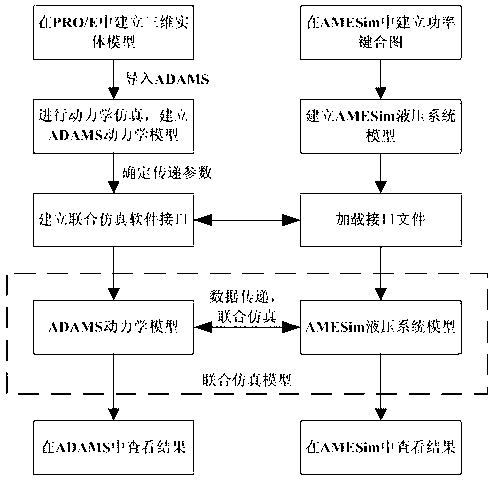
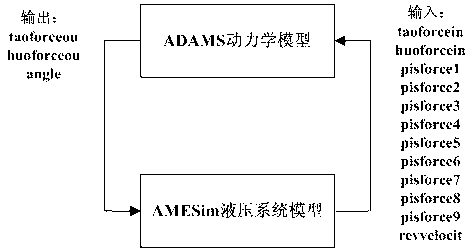
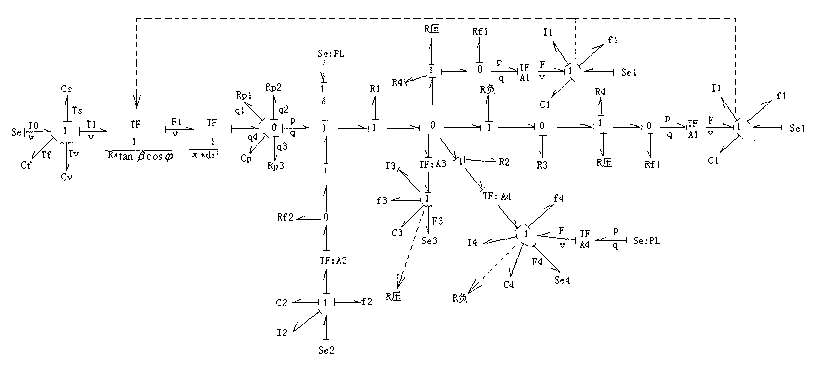
- Establish the dynamics model and hydraulic system model of the axial piston pump in the dynamics simulation software ADAMS and the hydraulic system simulation software AMESim, conduct joint simulation through the software interface, transfer real-time data, calculate the swash plate inclination angle and pressure changes, and realize the dynamics Co-simulation of the model with the hydraulic system model.

Multifunctional impact experiment method capable of continuously applying axial force
PatentActiveCN111595545A
Innovation
- A multifunctional impact experimental platform that can continuously apply axial force is designed, including a rigid support, a sliding end, a loading component, a hydraulic component and a data acquisition component. Through the design of the sliding end and loading component, the axial force of the specimen can be gradually reduced. It conforms to the actual "axial force fading" process in engineering, and realizes experimental working conditions with different boundary conditions by adjusting bolt connections.


Standards and Validation Requirements for Simulation Testing
The establishment of rigorous standards and validation requirements for simulation testing in axial load experiments represents a critical foundation for ensuring reliability and accuracy in computational modeling. Current industry practices rely heavily on established international standards such as ASTM E8/E8M for tensile testing and ISO 6892 for metallic materials, which provide fundamental guidelines for experimental validation of simulation results.
Validation protocols typically require multi-level verification approaches, beginning with mesh convergence studies to ensure numerical stability and accuracy. These studies must demonstrate that simulation results remain consistent across different mesh densities, with convergence criteria typically set at less than 5% variation in critical stress and strain measurements. Material property validation forms another essential component, requiring correlation between simulation input parameters and experimentally derived material constants.
Benchmark testing standards mandate comparison between simulation predictions and physical test results across multiple loading scenarios. Industry best practices require validation against at least three different loading rates and two distinct specimen geometries to establish confidence intervals. Statistical validation methods, including correlation coefficients exceeding 0.95 and root mean square error calculations below 10%, serve as quantitative acceptance criteria.
Certification requirements for simulation tools in axial load applications often reference ASME V&V 10 guidelines, which establish systematic procedures for verification and validation activities. These standards emphasize the importance of code verification through analytical solutions and method of manufactured solutions, followed by solution verification using grid refinement studies.
Documentation standards require comprehensive reporting of simulation parameters, including element types, boundary conditions, material models, and convergence criteria. Traceability requirements mandate retention of all input files, solver logs, and post-processing scripts to enable independent verification of results. Quality assurance protocols typically involve peer review processes and independent validation by certified simulation specialists.
Regulatory compliance considerations vary by industry sector, with aerospace applications requiring adherence to DO-178C software standards, while automotive applications follow ISO 26262 functional safety requirements. These sector-specific standards impose additional validation burdens, including software qualification testing and formal verification procedures that extend beyond basic accuracy requirements.
Validation protocols typically require multi-level verification approaches, beginning with mesh convergence studies to ensure numerical stability and accuracy. These studies must demonstrate that simulation results remain consistent across different mesh densities, with convergence criteria typically set at less than 5% variation in critical stress and strain measurements. Material property validation forms another essential component, requiring correlation between simulation input parameters and experimentally derived material constants.
Benchmark testing standards mandate comparison between simulation predictions and physical test results across multiple loading scenarios. Industry best practices require validation against at least three different loading rates and two distinct specimen geometries to establish confidence intervals. Statistical validation methods, including correlation coefficients exceeding 0.95 and root mean square error calculations below 10%, serve as quantitative acceptance criteria.
Certification requirements for simulation tools in axial load applications often reference ASME V&V 10 guidelines, which establish systematic procedures for verification and validation activities. These standards emphasize the importance of code verification through analytical solutions and method of manufactured solutions, followed by solution verification using grid refinement studies.
Documentation standards require comprehensive reporting of simulation parameters, including element types, boundary conditions, material models, and convergence criteria. Traceability requirements mandate retention of all input files, solver logs, and post-processing scripts to enable independent verification of results. Quality assurance protocols typically involve peer review processes and independent validation by certified simulation specialists.
Regulatory compliance considerations vary by industry sector, with aerospace applications requiring adherence to DO-178C software standards, while automotive applications follow ISO 26262 functional safety requirements. These sector-specific standards impose additional validation burdens, including software qualification testing and formal verification procedures that extend beyond basic accuracy requirements.
Cost-Benefit Analysis of Virtual vs Physical Testing
The economic evaluation of virtual versus physical testing methodologies in axial load experiments reveals significant disparities in both initial investments and long-term operational costs. Virtual testing through advanced simulation tools requires substantial upfront capital for software licensing, high-performance computing infrastructure, and specialized personnel training. Leading simulation platforms such as ANSYS, Abaqus, and LS-DYNA typically demand licensing fees ranging from $50,000 to $200,000 annually, while the necessary computational hardware can cost between $100,000 to $500,000 depending on processing requirements.
Physical testing infrastructure presents different cost structures, with universal testing machines for axial load experiments ranging from $150,000 to $1,000,000 based on load capacity and precision requirements. Additional expenses include specimen preparation facilities, environmental chambers, and safety systems. However, the most significant cost factor in physical testing lies in consumables and specimen materials, which can accumulate to $10,000-50,000 per comprehensive test campaign.
Time efficiency analysis demonstrates virtual testing's substantial advantages in iterative design processes. Simulation-based axial load experiments can be completed within hours or days, enabling rapid parameter studies and design optimization cycles. Physical testing campaigns typically require weeks to months for specimen preparation, testing execution, and data analysis, creating bottlenecks in product development timelines.
The accuracy-cost relationship presents nuanced considerations. While physical testing provides definitive validation, simulation tools have achieved remarkable precision levels, often within 5-10% of experimental results for well-characterized materials and loading conditions. This accuracy improvement reduces the necessity for extensive physical validation, particularly during preliminary design phases.
Risk mitigation through virtual testing offers substantial value propositions. Simulation tools enable exploration of extreme loading conditions and failure scenarios without material waste or safety concerns. This capability proves particularly valuable for high-consequence applications where physical testing limitations could compromise design validation.
The scalability factor strongly favors virtual approaches, as simulation tools can efficiently handle parametric studies involving hundreds of design variations without proportional cost increases. Physical testing costs scale linearly with specimen quantity, making comprehensive design space exploration economically prohibitive.
Physical testing infrastructure presents different cost structures, with universal testing machines for axial load experiments ranging from $150,000 to $1,000,000 based on load capacity and precision requirements. Additional expenses include specimen preparation facilities, environmental chambers, and safety systems. However, the most significant cost factor in physical testing lies in consumables and specimen materials, which can accumulate to $10,000-50,000 per comprehensive test campaign.
Time efficiency analysis demonstrates virtual testing's substantial advantages in iterative design processes. Simulation-based axial load experiments can be completed within hours or days, enabling rapid parameter studies and design optimization cycles. Physical testing campaigns typically require weeks to months for specimen preparation, testing execution, and data analysis, creating bottlenecks in product development timelines.
The accuracy-cost relationship presents nuanced considerations. While physical testing provides definitive validation, simulation tools have achieved remarkable precision levels, often within 5-10% of experimental results for well-characterized materials and loading conditions. This accuracy improvement reduces the necessity for extensive physical validation, particularly during preliminary design phases.
Risk mitigation through virtual testing offers substantial value propositions. Simulation tools enable exploration of extreme loading conditions and failure scenarios without material waste or safety concerns. This capability proves particularly valuable for high-consequence applications where physical testing limitations could compromise design validation.
The scalability factor strongly favors virtual approaches, as simulation tools can efficiently handle parametric studies involving hundreds of design variations without proportional cost increases. Physical testing costs scale linearly with specimen quantity, making comprehensive design space exploration economically prohibitive.
Unlock deeper insights with Patsnap Eureka Quick Research — get a full tech report to explore trends and direct your research. Try now!
Generate Your Research Report Instantly with AI Agent
Supercharge your innovation with Patsnap Eureka AI Agent Platform!