

How to Enhance Drone Maneuverability with Feedback Linearization
MAR 27, 20269 MIN READ
Generate Your Research Report Instantly with AI Agent
PatSnap Eureka helps you evaluate technical feasibility & market potential.
Drone Control System Background and Linearization Objectives
Drone control systems have evolved significantly since the early days of unmanned aerial vehicles, transitioning from simple radio-controlled aircraft to sophisticated autonomous platforms capable of complex flight maneuvers. The fundamental challenge in drone control lies in managing the inherently nonlinear and coupled dynamics of multi-rotor systems, where changes in one control input affect multiple degrees of freedom simultaneously.
Traditional drone control architectures rely on cascaded PID controllers that manage attitude, velocity, and position loops independently. While effective for basic flight operations, these linear control approaches struggle with aggressive maneuvers, external disturbances, and varying flight conditions. The nonlinear nature of drone dynamics becomes particularly pronounced during rapid attitude changes, high-speed flight, or when carrying variable payloads.
The mathematical representation of drone dynamics involves complex interactions between rotational and translational motions, with coupling effects that traditional linear controllers cannot adequately address. These limitations manifest as reduced tracking accuracy, slower response times, and potential instability during demanding flight scenarios.
Feedback linearization emerges as a promising solution to overcome these fundamental limitations by transforming the nonlinear drone dynamics into equivalent linear systems through mathematical transformation. This approach enables the application of well-established linear control theory while preserving the system's natural dynamics characteristics.
The primary objective of implementing feedback linearization in drone control systems is to achieve precise trajectory tracking and enhanced maneuverability across the entire flight envelope. By canceling nonlinear terms and decoupling the system dynamics, feedback linearization aims to provide uniform control performance regardless of flight conditions or operating points.
Secondary objectives include improving disturbance rejection capabilities, reducing control effort requirements, and enabling more aggressive flight maneuvers without compromising stability. The linearization process also facilitates the implementation of advanced control strategies such as optimal control and robust control techniques.
Furthermore, feedback linearization seeks to address the scalability challenges in drone control, providing a systematic framework that can be adapted to various drone configurations and mission requirements. This approach promises to unlock new capabilities in applications ranging from precision agriculture to search and rescue operations, where enhanced maneuverability directly translates to improved mission effectiveness.
Traditional drone control architectures rely on cascaded PID controllers that manage attitude, velocity, and position loops independently. While effective for basic flight operations, these linear control approaches struggle with aggressive maneuvers, external disturbances, and varying flight conditions. The nonlinear nature of drone dynamics becomes particularly pronounced during rapid attitude changes, high-speed flight, or when carrying variable payloads.
The mathematical representation of drone dynamics involves complex interactions between rotational and translational motions, with coupling effects that traditional linear controllers cannot adequately address. These limitations manifest as reduced tracking accuracy, slower response times, and potential instability during demanding flight scenarios.
Feedback linearization emerges as a promising solution to overcome these fundamental limitations by transforming the nonlinear drone dynamics into equivalent linear systems through mathematical transformation. This approach enables the application of well-established linear control theory while preserving the system's natural dynamics characteristics.
The primary objective of implementing feedback linearization in drone control systems is to achieve precise trajectory tracking and enhanced maneuverability across the entire flight envelope. By canceling nonlinear terms and decoupling the system dynamics, feedback linearization aims to provide uniform control performance regardless of flight conditions or operating points.
Secondary objectives include improving disturbance rejection capabilities, reducing control effort requirements, and enabling more aggressive flight maneuvers without compromising stability. The linearization process also facilitates the implementation of advanced control strategies such as optimal control and robust control techniques.
Furthermore, feedback linearization seeks to address the scalability challenges in drone control, providing a systematic framework that can be adapted to various drone configurations and mission requirements. This approach promises to unlock new capabilities in applications ranging from precision agriculture to search and rescue operations, where enhanced maneuverability directly translates to improved mission effectiveness.
Market Demand for Enhanced Drone Maneuverability Solutions
The global drone market has experienced unprecedented growth, driven by expanding applications across commercial, industrial, and defense sectors. Enhanced maneuverability capabilities represent a critical differentiator in this competitive landscape, as operators increasingly demand precise control systems for complex operational environments. Traditional flight control systems often struggle with nonlinear dynamics and external disturbances, creating substantial market opportunities for advanced control solutions.
Commercial applications demonstrate the strongest demand for enhanced maneuverability solutions. Package delivery services require drones capable of precise navigation through urban environments, including tight spaces between buildings and accurate landing on designated platforms. Agricultural operations demand sophisticated flight patterns for crop monitoring and precision spraying, where traditional control systems prove inadequate for maintaining stable flight paths under varying wind conditions and payload distributions.
Industrial inspection markets present significant growth potential, particularly in oil and gas, power generation, and infrastructure monitoring sectors. These applications require drones to maintain stable positioning near complex structures while performing detailed inspections. Current market solutions often fail to provide the necessary precision, creating opportunities for feedback linearization-based control systems that can compensate for aerodynamic disturbances and maintain consistent flight performance.
Defense and security applications represent the highest-value market segment, where mission-critical operations demand superior maneuverability capabilities. Military reconnaissance, surveillance, and tactical operations require drones capable of rapid directional changes, precise hovering, and stable flight under adverse conditions. Existing control systems frequently exhibit limitations in dynamic response and disturbance rejection, driving demand for advanced nonlinear control approaches.
The emerging autonomous vehicle integration market creates additional demand drivers. Urban air mobility concepts and autonomous delivery networks require drones with predictable, reliable flight characteristics that can operate safely in shared airspace. Regulatory frameworks increasingly emphasize flight stability and control precision, making enhanced maneuverability solutions essential for market entry and operational approval.
Market research indicates strong preference for control systems that can adapt to varying payload configurations and environmental conditions without requiring extensive recalibration. End users consistently prioritize solutions that maintain performance consistency across different operational scenarios while reducing pilot training requirements and operational complexity.
Commercial applications demonstrate the strongest demand for enhanced maneuverability solutions. Package delivery services require drones capable of precise navigation through urban environments, including tight spaces between buildings and accurate landing on designated platforms. Agricultural operations demand sophisticated flight patterns for crop monitoring and precision spraying, where traditional control systems prove inadequate for maintaining stable flight paths under varying wind conditions and payload distributions.
Industrial inspection markets present significant growth potential, particularly in oil and gas, power generation, and infrastructure monitoring sectors. These applications require drones to maintain stable positioning near complex structures while performing detailed inspections. Current market solutions often fail to provide the necessary precision, creating opportunities for feedback linearization-based control systems that can compensate for aerodynamic disturbances and maintain consistent flight performance.
Defense and security applications represent the highest-value market segment, where mission-critical operations demand superior maneuverability capabilities. Military reconnaissance, surveillance, and tactical operations require drones capable of rapid directional changes, precise hovering, and stable flight under adverse conditions. Existing control systems frequently exhibit limitations in dynamic response and disturbance rejection, driving demand for advanced nonlinear control approaches.
The emerging autonomous vehicle integration market creates additional demand drivers. Urban air mobility concepts and autonomous delivery networks require drones with predictable, reliable flight characteristics that can operate safely in shared airspace. Regulatory frameworks increasingly emphasize flight stability and control precision, making enhanced maneuverability solutions essential for market entry and operational approval.
Market research indicates strong preference for control systems that can adapt to varying payload configurations and environmental conditions without requiring extensive recalibration. End users consistently prioritize solutions that maintain performance consistency across different operational scenarios while reducing pilot training requirements and operational complexity.
Current State and Challenges in Drone Flight Control Systems
The current landscape of drone flight control systems represents a complex intersection of traditional control theory and modern computational capabilities. Contemporary unmanned aerial vehicles predominantly rely on cascaded PID controllers for attitude and position regulation, supplemented by various sensor fusion algorithms that integrate data from inertial measurement units, GPS receivers, and optical sensors. These systems have achieved remarkable success in stable flight conditions but face significant limitations when confronted with aggressive maneuvers or dynamic environmental disturbances.
Modern flight control architectures typically employ a hierarchical structure where high-level trajectory planning feeds reference commands to mid-level attitude controllers, which subsequently generate motor commands for low-level actuator management. While this approach provides adequate performance for conventional operations, it inherently suffers from coupling effects between rotational and translational dynamics, particularly during rapid directional changes or when operating near the vehicle's performance envelope.
The integration of advanced control methodologies such as model predictive control and adaptive control has shown promise in research environments, yet practical implementation remains constrained by computational limitations and real-time processing requirements. Current commercial systems often sacrifice theoretical optimality for computational efficiency, resulting in conservative control strategies that limit operational agility.
Sensor technology presents another critical challenge, as existing systems struggle with measurement delays, noise, and limited bandwidth that directly impact control loop performance. The reliance on GPS for position feedback introduces vulnerabilities in indoor environments or areas with signal interference, necessitating alternative localization strategies that may compromise precision or increase system complexity.
Environmental factors such as wind disturbances, ground effects, and aerodynamic uncertainties continue to pose significant challenges for maintaining precise control during dynamic maneuvers. Current systems often employ conservative gain scheduling or robust control techniques that prioritize stability over performance, resulting in suboptimal maneuverability characteristics.
The computational burden associated with real-time control implementation remains a persistent constraint, particularly for smaller platforms with limited processing power. This limitation often forces designers to choose between control sophistication and system responsiveness, creating a fundamental trade-off that impacts overall vehicle performance and operational capabilities in demanding scenarios.
Modern flight control architectures typically employ a hierarchical structure where high-level trajectory planning feeds reference commands to mid-level attitude controllers, which subsequently generate motor commands for low-level actuator management. While this approach provides adequate performance for conventional operations, it inherently suffers from coupling effects between rotational and translational dynamics, particularly during rapid directional changes or when operating near the vehicle's performance envelope.
The integration of advanced control methodologies such as model predictive control and adaptive control has shown promise in research environments, yet practical implementation remains constrained by computational limitations and real-time processing requirements. Current commercial systems often sacrifice theoretical optimality for computational efficiency, resulting in conservative control strategies that limit operational agility.
Sensor technology presents another critical challenge, as existing systems struggle with measurement delays, noise, and limited bandwidth that directly impact control loop performance. The reliance on GPS for position feedback introduces vulnerabilities in indoor environments or areas with signal interference, necessitating alternative localization strategies that may compromise precision or increase system complexity.
Environmental factors such as wind disturbances, ground effects, and aerodynamic uncertainties continue to pose significant challenges for maintaining precise control during dynamic maneuvers. Current systems often employ conservative gain scheduling or robust control techniques that prioritize stability over performance, resulting in suboptimal maneuverability characteristics.
The computational burden associated with real-time control implementation remains a persistent constraint, particularly for smaller platforms with limited processing power. This limitation often forces designers to choose between control sophistication and system responsiveness, creating a fundamental trade-off that impacts overall vehicle performance and operational capabilities in demanding scenarios.
Existing Feedback Linearization Solutions for UAV Control
01 Advanced flight control systems and algorithms
Implementation of sophisticated flight control systems that utilize advanced algorithms to enhance drone stability and responsiveness. These systems incorporate real-time processing capabilities to adjust flight parameters dynamically, enabling precise control during complex maneuvers. The control systems may include adaptive algorithms that learn from flight patterns and environmental conditions to optimize maneuverability performance.- Advanced propulsion and rotor systems for enhanced maneuverability: Innovative propulsion configurations including multi-rotor designs, variable pitch rotors, and tilting rotor mechanisms enable drones to achieve superior maneuverability. These systems allow for precise control of thrust direction and magnitude, enabling complex flight patterns such as rapid directional changes, hovering stability, and agile movements in confined spaces. Advanced rotor arrangements can include coaxial designs, ducted fans, or hybrid configurations that optimize both vertical and horizontal flight capabilities.
- Flight control algorithms and autonomous navigation systems: Sophisticated flight control systems utilize advanced algorithms for trajectory planning, obstacle avoidance, and autonomous maneuvering. These systems integrate sensor data from multiple sources to enable real-time decision-making and adaptive flight behavior. Control methods may include model predictive control, neural network-based approaches, and fuzzy logic systems that enhance the drone's ability to perform complex maneuvers while maintaining stability and responding to environmental changes.
- Structural design and aerodynamic optimization: Lightweight frame structures combined with aerodynamically optimized body designs improve drone agility and responsiveness. Design features include streamlined fuselages, adjustable wing configurations, and modular components that reduce weight while maintaining structural integrity. Aerodynamic enhancements such as winglets, fairings, and optimized airfoil profiles minimize drag and improve lift characteristics, enabling faster acceleration, tighter turns, and more efficient energy usage during maneuvering operations.
- Sensor integration and situational awareness systems: Multi-sensor fusion systems combining cameras, LiDAR, IMU, and GPS enable enhanced spatial awareness and precise maneuvering capabilities. These integrated sensor suites provide comprehensive environmental perception, allowing drones to detect obstacles, track targets, and navigate complex environments. Real-time data processing from multiple sensors supports dynamic path planning and enables responsive adjustments to flight trajectories, improving overall maneuverability in challenging operational scenarios.
- Stabilization and gimbal systems for precision control: Active stabilization mechanisms and multi-axis gimbal systems enhance drone maneuverability by compensating for external disturbances and maintaining desired orientations. These systems employ gyroscopic sensors, accelerometers, and servo-controlled actuators to counteract wind, vibrations, and sudden movements. Advanced stabilization technologies enable smooth transitions between flight modes, precise positioning during complex maneuvers, and stable payload operation even during aggressive flight patterns.
02 Multi-rotor configuration and propulsion optimization
Design approaches focusing on optimized rotor arrangements and propulsion systems to improve agility and maneuverability. These configurations may include variable rotor speeds, tilting mechanisms, or specialized rotor geometries that allow for enhanced directional control and rapid attitude changes. The propulsion optimization enables drones to perform tight turns, quick ascents and descents, and maintain stability during aggressive maneuvers.Expand Specific Solutions03 Structural design for enhanced agility
Lightweight and aerodynamic structural designs that reduce inertia and improve the drone's ability to change direction quickly. These designs incorporate materials and geometries that optimize the strength-to-weight ratio while maintaining structural integrity. The frame configurations are engineered to minimize air resistance and allow for rapid acceleration and deceleration, contributing to overall maneuverability improvements.Expand Specific Solutions04 Sensor integration and navigation systems
Integration of multiple sensors and advanced navigation systems that provide real-time environmental awareness and positioning data. These systems enable autonomous obstacle avoidance, precise trajectory planning, and adaptive flight path adjustments. The sensor fusion techniques combine data from various sources to enhance situational awareness and support complex maneuvering capabilities in challenging environments.Expand Specific Solutions05 Gimbal and stabilization mechanisms
Mechanical and electronic stabilization systems that maintain platform stability during dynamic maneuvers. These mechanisms compensate for sudden movements and vibrations, ensuring smooth operation even during aggressive flight patterns. The stabilization technology allows drones to maintain payload orientation and control precision while executing complex maneuvers, improving overall operational effectiveness.Expand Specific Solutions
Key Players in Drone Control and Autonomous Flight Industry
The drone maneuverability enhancement through feedback linearization represents a rapidly evolving technological domain currently in its growth phase, with substantial market expansion driven by increasing commercial and military applications. The market demonstrates significant scale potential across sectors including surveillance, delivery services, and defense systems. Technology maturity varies considerably among key players, with established companies like DJI and Parrot leading commercial implementation, while aerospace manufacturers such as Bombardier and defense contractors like NEC Corp. focus on advanced control systems. Academic institutions including Beihang University, Northwestern Polytechnical University, and Nanjing University of Aeronautics & Astronautics contribute fundamental research in control theory and flight dynamics. The competitive landscape shows a clear division between commercial drone manufacturers emphasizing user-friendly applications and research institutions developing sophisticated mathematical frameworks for enhanced maneuverability control systems.
Nanjing University of Aeronautics & Astronautics
Technical Solution: NUAA specializes in advanced feedback linearization techniques for various drone configurations including multi-rotor, fixed-wing, and hybrid VTOL aircraft. Their research focuses on robust feedback linearization methods that maintain performance under model uncertainties and actuator failures. The university has developed innovative approaches combining feedback linearization with neural network compensation to handle unmodeled dynamics and improve system adaptability. Their work includes comprehensive stability analysis and practical implementation guidelines for different drone platforms. NUAA's research extends to formation flight control using distributed feedback linearization approaches, enabling coordinated maneuvering of multiple drones with enhanced collision avoidance capabilities.
Strengths: Comprehensive research covering multiple drone types, strong focus on practical implementation and stability analysis. Weaknesses: Academic institution with limited direct commercial application, longer development cycles for technology transfer.
Beihang University
Technical Solution: Beihang University has developed comprehensive feedback linearization frameworks for unmanned aerial vehicles, particularly focusing on quadrotor and fixed-wing platforms. Their research emphasizes exact feedback linearization combined with sliding mode control to handle model uncertainties and external disturbances. The university's approach includes novel techniques for handling actuator constraints and input saturation problems commonly encountered in aggressive maneuvering scenarios. Their work extends to adaptive feedback linearization methods that can estimate and compensate for unknown parameters in real-time, significantly improving drone performance in varying operational conditions. Recent developments include integration with machine learning algorithms to enhance the linearization accuracy.
Strengths: Strong theoretical foundation with extensive research publications, innovative approaches to handling system uncertainties. Weaknesses: Primarily academic focus with limited commercial implementation and real-world validation.
Core Innovations in Nonlinear Drone Control Algorithms
Anti-interference attitude control method for four-rotor unmanned aerial vehicle
PatentActiveCN107491081A
Innovation
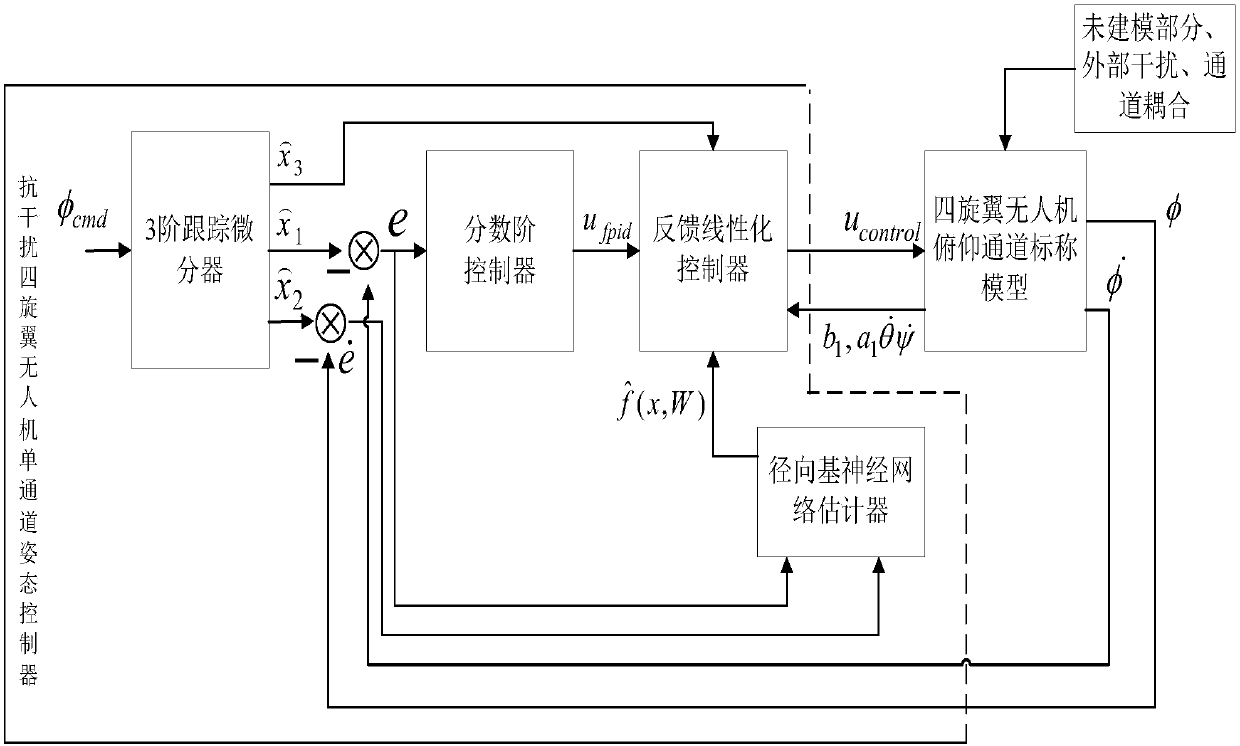
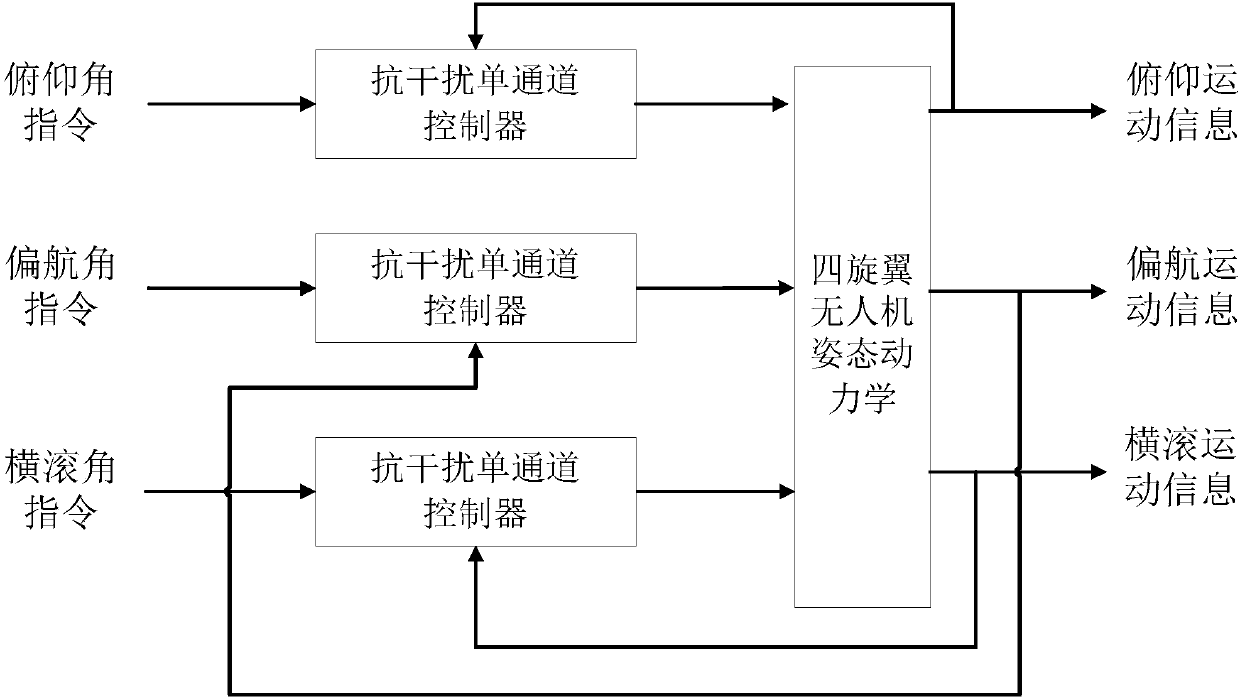
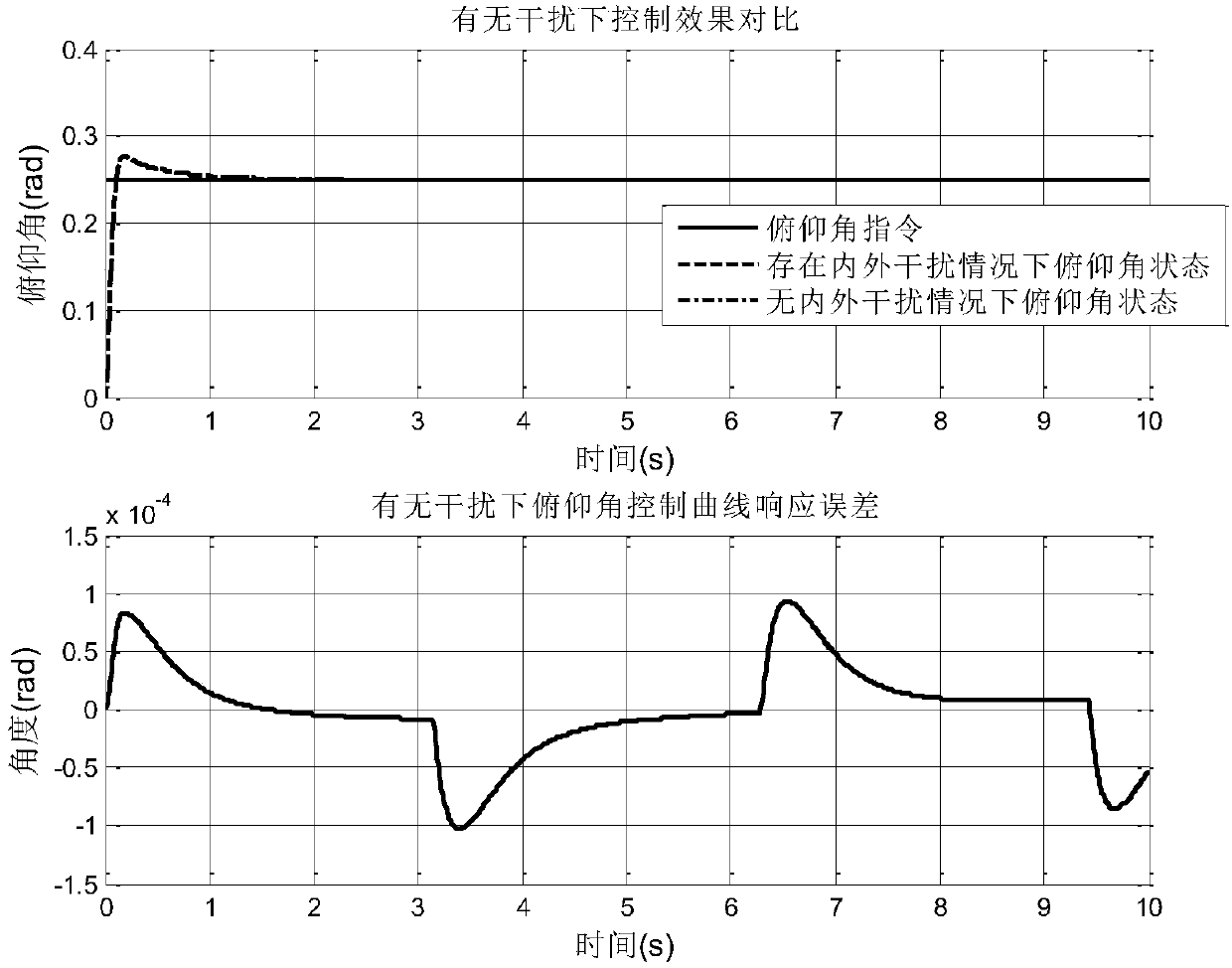
- The fractional-order PID control method is used, combined with the radial basis neural network, to design an anti-interference compensator, estimate the model uncertainty and external interference, and achieve the stability of the quad-rotor UAV through the fractional-order differential controller and feedback linearization controller. Posture control.

Feedback linearization based sliding mode control system for quad-rotor UAV with a Ground effect
PatentActiveKR1020200116332A
Innovation
- A feedback linearization-based sliding mode control system integrates a quad rotor dynamics unit, generator unit, and feedback linearization unit to calculate and stabilize position and attitude, incorporating a sliding mode control to counteract ground effects and disturbances, using a sliding plane design.


Aviation Safety Regulations for Advanced Drone Control
The integration of feedback linearization techniques in drone control systems presents significant regulatory challenges that require comprehensive aviation safety frameworks. Current aviation authorities worldwide are grappling with the complexity of certifying advanced control algorithms that fundamentally alter aircraft dynamics through mathematical transformations. The Federal Aviation Administration (FAA) and European Union Aviation Safety Agency (EASA) have begun developing specialized certification pathways for autonomous flight systems, though specific guidelines for feedback linearization implementations remain in early stages.
Regulatory frameworks must address the inherent risks associated with nonlinear control transformations, particularly concerning system stability and predictability. Traditional aviation safety regulations were designed for conventional control systems with linear responses, making them inadequate for feedback linearization applications. The challenge lies in establishing verification and validation protocols that can adequately assess the safety of systems where control inputs are continuously transformed through complex mathematical models.
Certification requirements for feedback linearization-enhanced drones must encompass both software and hardware validation processes. Regulatory bodies are developing new testing methodologies that evaluate system performance across the entire operational envelope, including edge cases where linearization assumptions may break down. These protocols require extensive simulation testing, hardware-in-the-loop validation, and real-world flight testing under controlled conditions.
International harmonization of safety standards represents a critical challenge for global drone operations. Different regulatory authorities are developing varying approaches to advanced control system certification, potentially creating barriers to international drone operations. The International Civil Aviation Organization (ICAO) is working to establish unified standards that address feedback linearization and other advanced control techniques while maintaining safety equivalency across jurisdictions.
Operational safety requirements for feedback linearization systems include mandatory redundancy protocols, real-time system health monitoring, and automatic fallback mechanisms. Regulations mandate that drones equipped with advanced control systems must demonstrate safe degradation capabilities when linearization models encounter uncertainties or system failures. These requirements ensure that enhanced maneuverability does not compromise fundamental safety principles in commercial and civilian airspace operations.
Regulatory frameworks must address the inherent risks associated with nonlinear control transformations, particularly concerning system stability and predictability. Traditional aviation safety regulations were designed for conventional control systems with linear responses, making them inadequate for feedback linearization applications. The challenge lies in establishing verification and validation protocols that can adequately assess the safety of systems where control inputs are continuously transformed through complex mathematical models.
Certification requirements for feedback linearization-enhanced drones must encompass both software and hardware validation processes. Regulatory bodies are developing new testing methodologies that evaluate system performance across the entire operational envelope, including edge cases where linearization assumptions may break down. These protocols require extensive simulation testing, hardware-in-the-loop validation, and real-world flight testing under controlled conditions.
International harmonization of safety standards represents a critical challenge for global drone operations. Different regulatory authorities are developing varying approaches to advanced control system certification, potentially creating barriers to international drone operations. The International Civil Aviation Organization (ICAO) is working to establish unified standards that address feedback linearization and other advanced control techniques while maintaining safety equivalency across jurisdictions.
Operational safety requirements for feedback linearization systems include mandatory redundancy protocols, real-time system health monitoring, and automatic fallback mechanisms. Regulations mandate that drones equipped with advanced control systems must demonstrate safe degradation capabilities when linearization models encounter uncertainties or system failures. These requirements ensure that enhanced maneuverability does not compromise fundamental safety principles in commercial and civilian airspace operations.
Real-time Implementation Challenges for Complex Control
The implementation of feedback linearization for drone maneuverability enhancement faces significant computational constraints that directly impact real-time performance. Modern flight control systems typically operate with sampling frequencies ranging from 100Hz to 1kHz, requiring control algorithms to complete all calculations within 1-10 milliseconds. Feedback linearization involves complex matrix operations, including real-time computation of the decoupling matrix and its inverse, which can be computationally intensive for multi-rotor systems with six degrees of freedom.
Processing power limitations present a fundamental challenge, particularly for embedded flight controllers with limited CPU resources. Standard flight control units often utilize ARM Cortex processors with clock speeds between 168MHz to 480MHz, which may struggle with the floating-point operations required for continuous matrix inversions and nonlinear function evaluations inherent in feedback linearization algorithms.
Memory constraints further complicate implementation, as feedback linearization requires storage of system models, transformation matrices, and intermediate calculation results. The limited RAM available in typical flight controllers, often ranging from 256KB to 2MB, necessitates careful memory management and optimization of data structures to prevent buffer overflows or system crashes during critical flight operations.
Sensor data processing introduces additional latency challenges, as feedback linearization relies on accurate state estimation from multiple sensors including IMUs, magnetometers, and GPS units. The time delays associated with sensor fusion algorithms and communication protocols can introduce phase lags that compromise the effectiveness of the linearization process, potentially leading to system instability.
Numerical stability becomes critical when implementing feedback linearization in real-time environments with finite precision arithmetic. Ill-conditioned matrices or singularities in the decoupling matrix can cause computational failures, requiring robust numerical methods and condition number monitoring to ensure reliable operation across varying flight conditions.
The integration of feedback linearization with existing flight control architectures presents compatibility challenges, particularly when interfacing with legacy systems or commercial autopilot platforms that may not support the required computational flexibility or real-time operating system capabilities necessary for deterministic control loop execution.
Processing power limitations present a fundamental challenge, particularly for embedded flight controllers with limited CPU resources. Standard flight control units often utilize ARM Cortex processors with clock speeds between 168MHz to 480MHz, which may struggle with the floating-point operations required for continuous matrix inversions and nonlinear function evaluations inherent in feedback linearization algorithms.
Memory constraints further complicate implementation, as feedback linearization requires storage of system models, transformation matrices, and intermediate calculation results. The limited RAM available in typical flight controllers, often ranging from 256KB to 2MB, necessitates careful memory management and optimization of data structures to prevent buffer overflows or system crashes during critical flight operations.
Sensor data processing introduces additional latency challenges, as feedback linearization relies on accurate state estimation from multiple sensors including IMUs, magnetometers, and GPS units. The time delays associated with sensor fusion algorithms and communication protocols can introduce phase lags that compromise the effectiveness of the linearization process, potentially leading to system instability.
Numerical stability becomes critical when implementing feedback linearization in real-time environments with finite precision arithmetic. Ill-conditioned matrices or singularities in the decoupling matrix can cause computational failures, requiring robust numerical methods and condition number monitoring to ensure reliable operation across varying flight conditions.
The integration of feedback linearization with existing flight control architectures presents compatibility challenges, particularly when interfacing with legacy systems or commercial autopilot platforms that may not support the required computational flexibility or real-time operating system capabilities necessary for deterministic control loop execution.
Unlock deeper insights with PatSnap Eureka Quick Research — get a full tech report to explore trends and direct your research. Try now!
Generate Your Research Report Instantly with AI Agent
Supercharge your innovation with PatSnap Eureka AI Agent Platform!