

How to Fine-Tune Laser Cladding Parameters for Versatility
APR 8, 20269 MIN READ
Generate Your Research Report Instantly with AI Agent
PatSnap Eureka helps you evaluate technical feasibility & market potential.
Laser Cladding Technology Background and Objectives
Laser cladding technology emerged in the 1970s as an advanced surface modification technique that utilizes high-energy laser beams to melt and fuse coating materials onto substrate surfaces. This additive manufacturing process creates metallurgically bonded layers with superior properties compared to conventional coating methods. The technology has evolved from simple single-track deposition to sophisticated multi-layer manufacturing capabilities, enabling the production of complex three-dimensional components and the repair of high-value industrial parts.
The fundamental principle involves directing a focused laser beam onto a substrate while simultaneously feeding powder or wire materials into the melt pool. The rapid heating and cooling cycles characteristic of laser processing result in fine microstructures with enhanced mechanical properties, including improved wear resistance, corrosion protection, and fatigue strength. This controlled thermal process allows for precise material placement with minimal heat-affected zones and reduced substrate distortion.
Historical development of laser cladding has been driven by increasing demands for component longevity and performance in harsh operating environments. Early applications focused primarily on tool and die repair, but the technology has expanded significantly to encompass aerospace component manufacturing, automotive part restoration, and oil and gas equipment refurbishment. The evolution from CO2 lasers to fiber and diode laser systems has dramatically improved process efficiency and beam quality while reducing operational costs.
Current technological objectives center on achieving parameter optimization for enhanced process versatility across diverse material systems and geometric configurations. Key goals include developing predictive models for parameter selection, establishing real-time monitoring and control systems, and expanding the range of processable materials. The industry seeks to minimize trial-and-error approaches through systematic understanding of process-structure-property relationships.
The strategic importance of parameter fine-tuning lies in unlocking laser cladding's full potential for industrial applications. Optimal parameter selection directly influences coating quality, dimensional accuracy, and production efficiency. As manufacturing demands increasingly favor customized solutions and rapid prototyping capabilities, the ability to quickly adapt laser cladding parameters for different materials and geometries becomes a critical competitive advantage in advanced manufacturing sectors.
The fundamental principle involves directing a focused laser beam onto a substrate while simultaneously feeding powder or wire materials into the melt pool. The rapid heating and cooling cycles characteristic of laser processing result in fine microstructures with enhanced mechanical properties, including improved wear resistance, corrosion protection, and fatigue strength. This controlled thermal process allows for precise material placement with minimal heat-affected zones and reduced substrate distortion.
Historical development of laser cladding has been driven by increasing demands for component longevity and performance in harsh operating environments. Early applications focused primarily on tool and die repair, but the technology has expanded significantly to encompass aerospace component manufacturing, automotive part restoration, and oil and gas equipment refurbishment. The evolution from CO2 lasers to fiber and diode laser systems has dramatically improved process efficiency and beam quality while reducing operational costs.
Current technological objectives center on achieving parameter optimization for enhanced process versatility across diverse material systems and geometric configurations. Key goals include developing predictive models for parameter selection, establishing real-time monitoring and control systems, and expanding the range of processable materials. The industry seeks to minimize trial-and-error approaches through systematic understanding of process-structure-property relationships.
The strategic importance of parameter fine-tuning lies in unlocking laser cladding's full potential for industrial applications. Optimal parameter selection directly influences coating quality, dimensional accuracy, and production efficiency. As manufacturing demands increasingly favor customized solutions and rapid prototyping capabilities, the ability to quickly adapt laser cladding parameters for different materials and geometries becomes a critical competitive advantage in advanced manufacturing sectors.
Market Demand for Versatile Laser Cladding Applications
The global laser cladding market is experiencing unprecedented growth driven by increasing demands for surface enhancement, component repair, and additive manufacturing applications across multiple industries. Manufacturing sectors are actively seeking versatile laser cladding solutions that can adapt to diverse material combinations, geometric complexities, and performance requirements without requiring extensive equipment modifications or lengthy setup procedures.
Aerospace and defense industries represent the largest market segment, demanding laser cladding systems capable of processing various superalloys, titanium alloys, and specialized coatings for turbine components, landing gear, and structural elements. The ability to fine-tune parameters for different materials within a single production cycle has become a critical competitive advantage, as manufacturers seek to reduce inventory costs and improve operational flexibility.
The automotive sector is driving significant demand for versatile laser cladding applications, particularly in electric vehicle manufacturing where lightweight materials and enhanced surface properties are essential. Engine components, transmission parts, and battery housing elements require different cladding materials and processing parameters, creating strong market pull for adaptable systems that can handle multiple specifications efficiently.
Oil and gas industries are increasingly adopting laser cladding for pipeline maintenance, drilling equipment refurbishment, and offshore component protection. The harsh operating environments demand coatings with varying properties such as corrosion resistance, wear protection, and thermal stability, necessitating systems capable of parameter optimization across different application requirements.
Medical device manufacturing presents a rapidly expanding market opportunity, where biocompatible materials and precise surface modifications are crucial. The sector requires laser cladding systems that can seamlessly transition between different medical-grade alloys and coating materials while maintaining strict quality standards and regulatory compliance.
The renewable energy sector, particularly wind and solar power industries, is generating substantial demand for versatile laser cladding solutions. Wind turbine components, solar panel manufacturing equipment, and energy storage systems require diverse surface treatments and repair capabilities, driving the need for parameter-flexible laser cladding technologies.
Market research indicates that companies offering versatile laser cladding solutions with advanced parameter control capabilities are capturing premium pricing and expanding market share. The ability to provide multi-material processing capabilities within a single system is becoming a key differentiator in competitive bidding processes across industrial sectors.
Aerospace and defense industries represent the largest market segment, demanding laser cladding systems capable of processing various superalloys, titanium alloys, and specialized coatings for turbine components, landing gear, and structural elements. The ability to fine-tune parameters for different materials within a single production cycle has become a critical competitive advantage, as manufacturers seek to reduce inventory costs and improve operational flexibility.
The automotive sector is driving significant demand for versatile laser cladding applications, particularly in electric vehicle manufacturing where lightweight materials and enhanced surface properties are essential. Engine components, transmission parts, and battery housing elements require different cladding materials and processing parameters, creating strong market pull for adaptable systems that can handle multiple specifications efficiently.
Oil and gas industries are increasingly adopting laser cladding for pipeline maintenance, drilling equipment refurbishment, and offshore component protection. The harsh operating environments demand coatings with varying properties such as corrosion resistance, wear protection, and thermal stability, necessitating systems capable of parameter optimization across different application requirements.
Medical device manufacturing presents a rapidly expanding market opportunity, where biocompatible materials and precise surface modifications are crucial. The sector requires laser cladding systems that can seamlessly transition between different medical-grade alloys and coating materials while maintaining strict quality standards and regulatory compliance.
The renewable energy sector, particularly wind and solar power industries, is generating substantial demand for versatile laser cladding solutions. Wind turbine components, solar panel manufacturing equipment, and energy storage systems require diverse surface treatments and repair capabilities, driving the need for parameter-flexible laser cladding technologies.
Market research indicates that companies offering versatile laser cladding solutions with advanced parameter control capabilities are capturing premium pricing and expanding market share. The ability to provide multi-material processing capabilities within a single system is becoming a key differentiator in competitive bidding processes across industrial sectors.
Current Status and Challenges in Parameter Optimization
Laser cladding parameter optimization currently faces significant challenges due to the complex interdependencies between multiple process variables. The primary parameters requiring fine-tuning include laser power, scanning speed, powder feed rate, beam diameter, overlap ratio, and substrate preheating temperature. Each parameter influences coating quality through different mechanisms, creating a multidimensional optimization space that is difficult to navigate systematically.
The current state of parameter optimization relies heavily on empirical approaches and trial-and-error methodologies. Most industrial applications still depend on operator experience and incremental adjustments based on visual inspection of clad quality. This approach is time-consuming, material-intensive, and often fails to achieve optimal results across different substrate materials and geometric configurations.
Existing optimization strategies predominantly focus on single-objective optimization, typically targeting either coating thickness, dilution rate, or surface roughness independently. However, real-world applications demand multi-objective optimization that simultaneously considers mechanical properties, metallurgical bonding, dimensional accuracy, and surface finish. The lack of comprehensive optimization frameworks that address these competing objectives represents a major limitation in current practice.
Process monitoring and feedback control systems remain underdeveloped in most laser cladding applications. While some advanced systems incorporate real-time temperature monitoring and melt pool observation, the integration of this data into automated parameter adjustment algorithms is still in its infancy. The absence of robust closed-loop control systems limits the ability to maintain consistent quality during long cladding operations or when processing complex geometries.
Material-specific parameter databases are fragmented and often proprietary, hindering the development of standardized optimization procedures. Different powder compositions, particle size distributions, and substrate materials require unique parameter sets, but systematic knowledge transfer between applications remains limited. This situation is particularly challenging when working with novel alloy systems or functionally graded materials.
The scalability of parameter optimization from laboratory conditions to industrial production environments presents additional complications. Parameters optimized for small-scale specimens often require significant adjustment for larger components due to heat accumulation effects, varying cooling rates, and geometric constraints. Current optimization methodologies inadequately address these scale-dependent factors.
Computational modeling approaches, while promising, face validation challenges and computational complexity limitations. Finite element models for laser cladding processes require extensive calibration and often fail to capture the full complexity of powder-laser-substrate interactions. The gap between theoretical predictions and experimental results continues to limit the practical application of simulation-based optimization tools.
The current state of parameter optimization relies heavily on empirical approaches and trial-and-error methodologies. Most industrial applications still depend on operator experience and incremental adjustments based on visual inspection of clad quality. This approach is time-consuming, material-intensive, and often fails to achieve optimal results across different substrate materials and geometric configurations.
Existing optimization strategies predominantly focus on single-objective optimization, typically targeting either coating thickness, dilution rate, or surface roughness independently. However, real-world applications demand multi-objective optimization that simultaneously considers mechanical properties, metallurgical bonding, dimensional accuracy, and surface finish. The lack of comprehensive optimization frameworks that address these competing objectives represents a major limitation in current practice.
Process monitoring and feedback control systems remain underdeveloped in most laser cladding applications. While some advanced systems incorporate real-time temperature monitoring and melt pool observation, the integration of this data into automated parameter adjustment algorithms is still in its infancy. The absence of robust closed-loop control systems limits the ability to maintain consistent quality during long cladding operations or when processing complex geometries.
Material-specific parameter databases are fragmented and often proprietary, hindering the development of standardized optimization procedures. Different powder compositions, particle size distributions, and substrate materials require unique parameter sets, but systematic knowledge transfer between applications remains limited. This situation is particularly challenging when working with novel alloy systems or functionally graded materials.
The scalability of parameter optimization from laboratory conditions to industrial production environments presents additional complications. Parameters optimized for small-scale specimens often require significant adjustment for larger components due to heat accumulation effects, varying cooling rates, and geometric constraints. Current optimization methodologies inadequately address these scale-dependent factors.
Computational modeling approaches, while promising, face validation challenges and computational complexity limitations. Finite element models for laser cladding processes require extensive calibration and often fail to capture the full complexity of powder-laser-substrate interactions. The gap between theoretical predictions and experimental results continues to limit the practical application of simulation-based optimization tools.
Existing Parameter Fine-Tuning Solutions and Approaches
01 Multi-material laser cladding capabilities
Laser cladding technology demonstrates versatility through its ability to process multiple material types including metals, alloys, ceramics, and composite materials. The process allows for selective deposition of different materials on various substrate surfaces, enabling the creation of functionally graded materials and multi-layer coatings with distinct properties. This versatility extends to processing materials with different melting points and thermal properties within a single operation.- Multi-material laser cladding capabilities: Laser cladding technology demonstrates versatility through its ability to process multiple material types including metals, alloys, ceramics, and composite materials. The process allows for selective deposition of different materials on various substrate surfaces, enabling the creation of functionally graded materials and multi-layer coatings with distinct properties. This versatility extends to processing materials with different melting points and thermal properties, making it suitable for diverse industrial applications requiring customized surface characteristics.
- Adaptive process parameter control systems: Advanced laser cladding systems incorporate versatile parameter control mechanisms that can adjust laser power, scanning speed, powder feed rate, and beam focus in real-time. These adaptive systems enable optimization for different geometries, substrate materials, and coating requirements. The versatility in parameter adjustment allows for processing complex three-dimensional surfaces, varying thickness requirements, and different part sizes without requiring extensive equipment reconfiguration.
- Diverse application in component repair and remanufacturing: Laser cladding demonstrates significant versatility in repair and remanufacturing applications across multiple industries. The technology can restore worn or damaged components, add material to undersized parts, and modify existing surfaces with new functional properties. This versatility extends to repairing components of various sizes, from small precision parts to large industrial equipment, and can be applied to components made from different base materials including steel, aluminum, titanium, and nickel-based alloys.
- Flexible powder delivery and feeding mechanisms: Versatile powder delivery systems in laser cladding enable the use of different powder types, particle sizes, and feeding methods. These systems can accommodate coaxial powder feeding, lateral feeding, and pre-placed powder techniques, providing flexibility in material deposition strategies. The versatility in powder handling allows for processing single materials, powder mixtures, or sequential deposition of different materials, enabling the creation of complex coating compositions and gradient structures.
- Integration with automated and robotic systems: Modern laser cladding technology exhibits versatility through seamless integration with various automation platforms including multi-axis CNC systems, industrial robots, and coordinate measuring machines. This integration enables automated processing of complex geometries, batch production capabilities, and in-situ quality monitoring. The versatility in automation integration allows for programming different motion paths, processing strategies, and adaptive control algorithms suitable for diverse manufacturing environments and production requirements.
02 Adaptive process parameter control systems
Advanced laser cladding systems incorporate versatile parameter control mechanisms that can adjust laser power, scanning speed, powder feed rate, and beam characteristics in real-time. These adaptive systems enable optimization for different geometries, material combinations, and application requirements. The flexibility in parameter adjustment allows the same equipment to handle diverse cladding tasks ranging from thin coating applications to thick build-up repairs.Expand Specific Solutions03 Variable geometry and complex surface processing
Laser cladding systems demonstrate versatility in processing components with complex geometries including curved surfaces, internal channels, edges, and three-dimensional structures. The technology accommodates various workpiece sizes from small precision components to large industrial parts. Multi-axis positioning systems and robotic integration enable cladding operations on irregular surfaces and hard-to-reach areas that would be difficult with conventional coating methods.Expand Specific Solutions04 Diverse application-specific implementations
The versatility of laser cladding extends across multiple industrial applications including surface repair and restoration, wear-resistant coating deposition, corrosion protection, dimensional restoration of worn parts, and additive manufacturing. The technology can be adapted for different industries such as aerospace, automotive, oil and gas, and tooling. Application-specific modifications allow the same fundamental process to address varied functional requirements from hardness enhancement to thermal barrier protection.Expand Specific Solutions05 Integrated powder delivery and beam manipulation systems
Versatile laser cladding systems feature adaptable powder delivery mechanisms including coaxial nozzles, lateral feeding systems, and pre-placed powder methods. The beam delivery systems can be configured for different spot sizes, energy distributions, and scanning patterns to suit specific cladding requirements. Integration capabilities with various laser sources including fiber lasers, CO2 lasers, and diode lasers provide flexibility in selecting optimal energy sources for different material processing needs.Expand Specific Solutions
Major Players in Laser Cladding Equipment and Services
The laser cladding parameter optimization field represents a mature industrial technology experiencing steady growth, driven by increasing demand for precision manufacturing and component repair across aerospace, automotive, and energy sectors. The competitive landscape spans diverse players from established industrial giants like General Electric, Siemens Energy, and Mercedes-Benz Group who integrate cladding into manufacturing processes, to specialized technology providers such as TRUMPF Laser-und Systemtechnik and EOS GmbH offering advanced laser systems. Academic institutions including Osaka University, Shandong University, and Zhejiang University of Technology contribute fundamental research, while companies like Laserbond Ltd. focus specifically on cladding applications. The technology has reached commercial maturity with proven applications, though ongoing research by organizations like Fraunhofer-Gesellschaft continues advancing parameter control methodologies. Market consolidation is evident as automotive manufacturers like Toyota, Nissan, and Renault increasingly adopt these technologies for production efficiency, indicating a shift from experimental to mainstream industrial adoption.
Zhejiang University of Technology
Technical Solution: Zhejiang University of Technology conducts research on laser cladding parameter optimization through experimental design methodologies and process modeling approaches. Their work focuses on establishing correlations between processing parameters including laser power, scanning velocity, powder feed rate, and carrier gas flow with resulting clad characteristics such as dilution ratio, microhardness, and geometric accuracy. The university's research emphasizes developing response surface models and artificial neural networks to predict optimal parameter combinations for specific material systems and application requirements. Their studies investigate the effects of substrate preheating, multi-pass strategies, and post-processing treatments on final component properties.
Strengths: Academic research depth with systematic experimental approaches and strong theoretical modeling capabilities. Weaknesses: Limited industrial scale implementation experience and potential gaps in commercial manufacturing considerations.
TRUMPF Laser- und Systemtechnik GmbH
Technical Solution: TRUMPF develops advanced laser cladding systems with real-time parameter monitoring and adaptive control technologies. Their approach integrates multi-sensor feedback systems including pyrometers, high-speed cameras, and acoustic emission sensors to continuously monitor melt pool characteristics, powder flow rates, and substrate temperature during the cladding process. The company's TruLaser Cell series incorporates machine learning algorithms that automatically adjust laser power, scanning speed, powder feed rate, and beam focus position based on real-time process feedback to maintain consistent clad quality across different substrate geometries and materials.
Strengths: Industry-leading laser technology with comprehensive process monitoring capabilities and established market presence. Weaknesses: High equipment costs and complexity may limit accessibility for smaller operations.
Core Technologies in Adaptive Parameter Control Systems
Apparatus and method for laser cladding
PatentInactiveJP2009045638A
Innovation
- A laser cladding processing apparatus equipped with a shape measuring instrument to objectively evaluate the build-up shape at the processing start portion, allowing for real-time adjustment of laser output and metal powder supply to prevent defects.


Method and system for laser cladding
PatentInactiveUS20060153996A1
Innovation
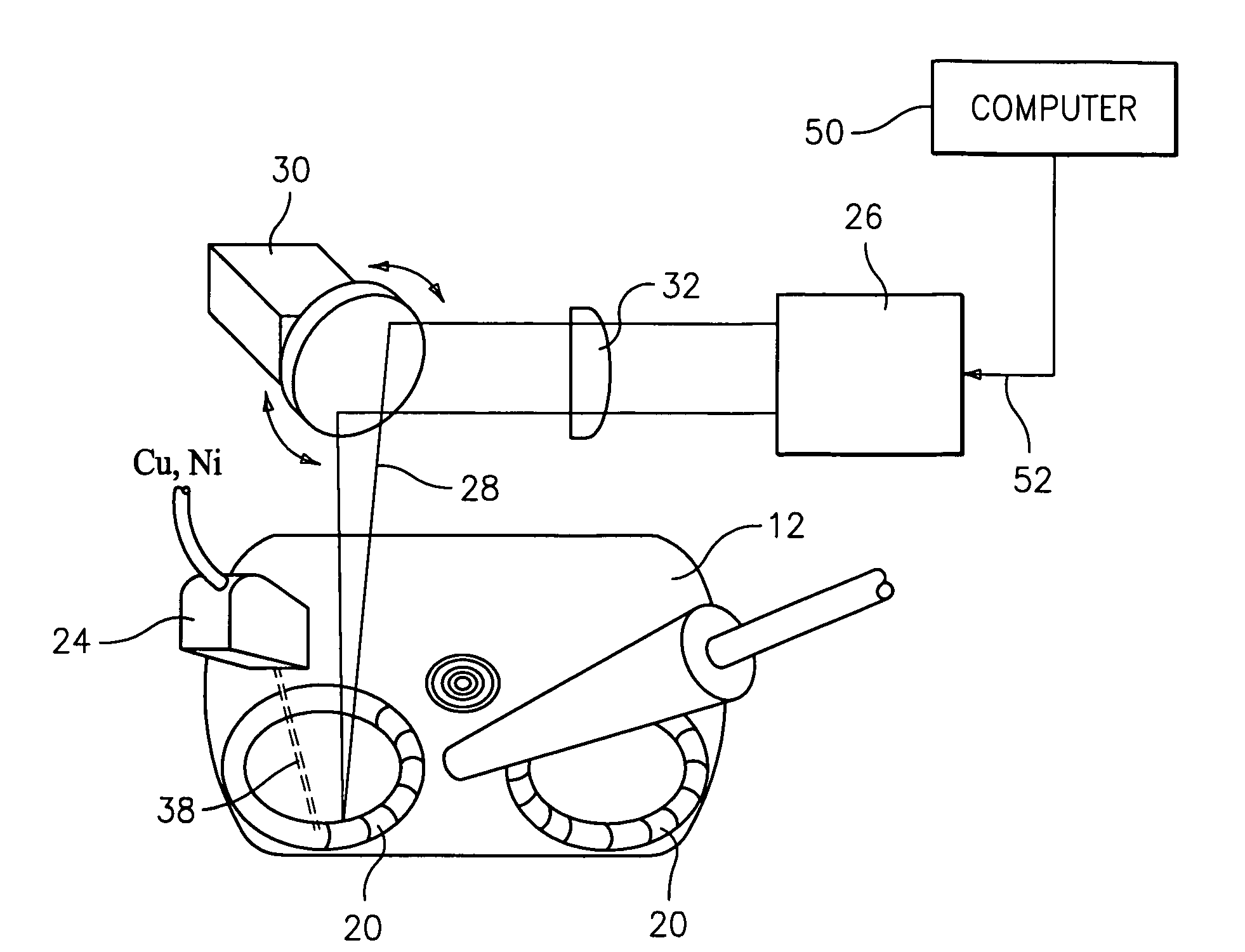
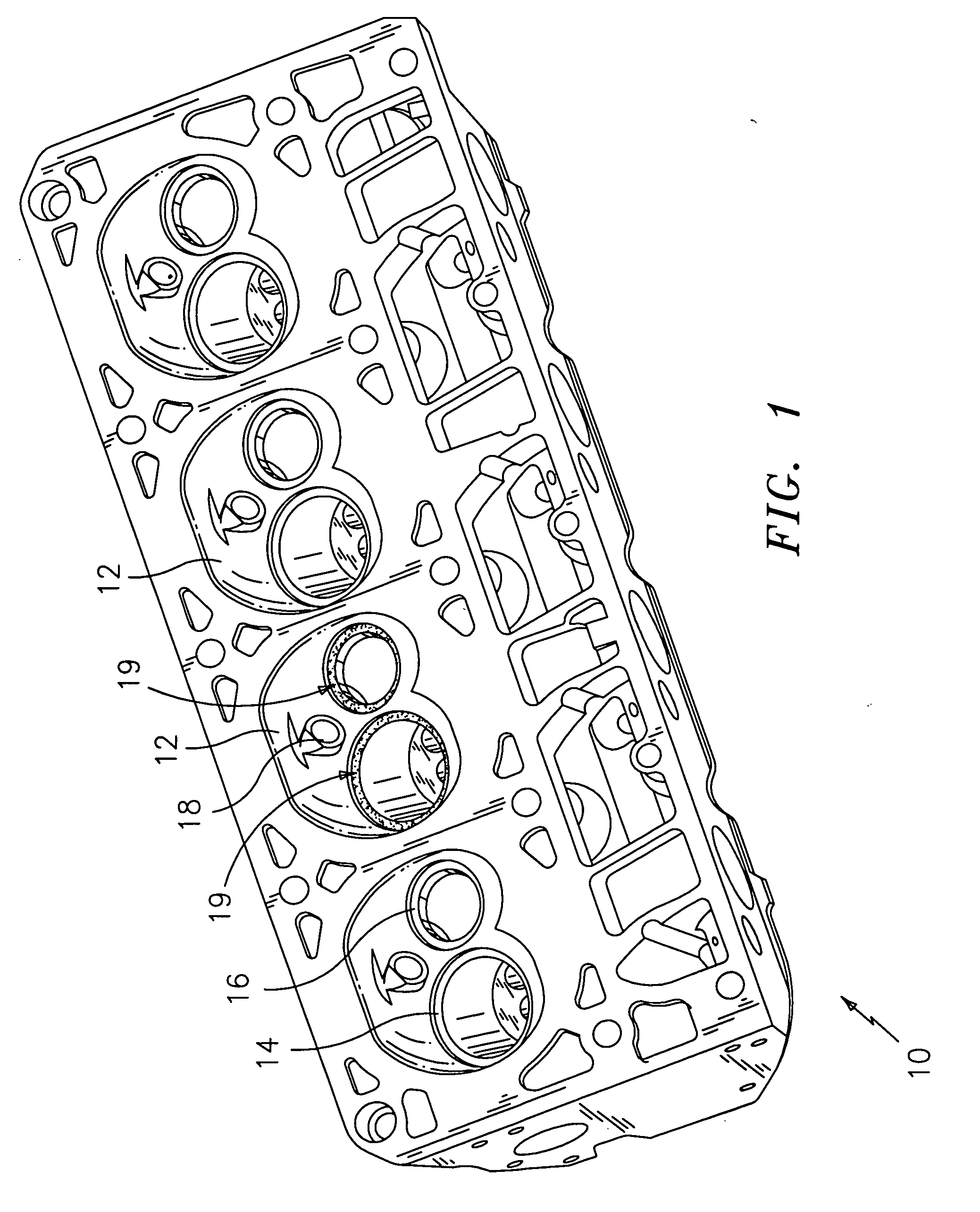
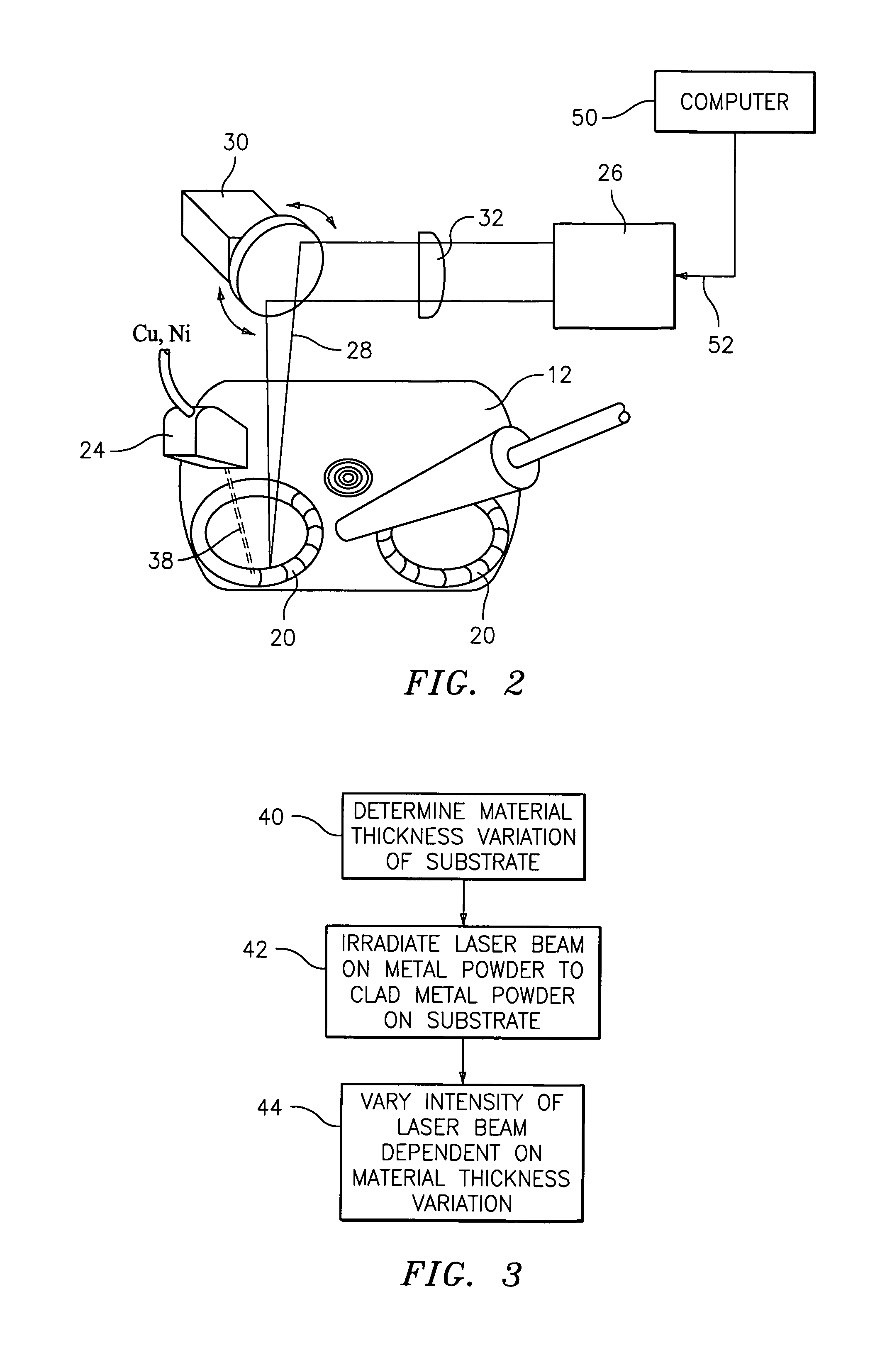
- A method and system that determine material thickness variations using 3D modeling and adjust laser intensity accordingly to achieve uniform dilution between the metal mixture and the substrate, ensuring consistent fusion and improved durability.

Quality Standards and Certification for Laser Cladding
Quality standards and certification frameworks for laser cladding have evolved significantly as the technology transitions from experimental applications to industrial-scale manufacturing. The establishment of comprehensive quality benchmarks is essential for ensuring consistent performance across diverse applications, particularly when fine-tuning parameters for versatility across multiple substrate materials and coating compositions.
International standards organizations have developed specific guidelines for laser cladding processes, with ISO 17636 and ASTM F3187 serving as foundational documents for quality assessment. These standards define critical quality metrics including coating thickness uniformity, porosity levels, microstructural integrity, and bond strength requirements. The certification process typically involves rigorous testing protocols that evaluate both mechanical properties and metallurgical characteristics of clad layers.
Industry-specific certification requirements vary considerably across sectors. Aerospace applications demand compliance with AS9100 quality management systems and specific material certifications such as AMS specifications for superalloy coatings. The automotive industry follows ISO/TS 16949 standards, emphasizing statistical process control and traceability throughout the cladding operation. Medical device manufacturers must adhere to ISO 13485 requirements, with additional biocompatibility testing for implantable components.
Non-destructive testing methods form the cornerstone of quality verification in laser cladding operations. Ultrasonic testing, radiographic inspection, and eddy current analysis are commonly employed to detect internal defects without compromising component integrity. Advanced techniques such as computed tomography and laser scanning confocal microscopy provide detailed three-dimensional characterization of coating quality and interface bonding.
Certification bodies such as Lloyd's Register, DNV GL, and Bureau Veritas have established specialized programs for laser cladding operations. These programs evaluate facility capabilities, operator qualifications, and process documentation to ensure consistent quality delivery. The certification process includes witness testing of representative samples and ongoing surveillance audits to maintain compliance status.
Emerging quality standards are incorporating real-time monitoring capabilities and artificial intelligence-based defect detection systems. These advanced approaches enable immediate process adjustments and predictive quality control, supporting the development of adaptive parameter optimization strategies for enhanced versatility across diverse application requirements.
International standards organizations have developed specific guidelines for laser cladding processes, with ISO 17636 and ASTM F3187 serving as foundational documents for quality assessment. These standards define critical quality metrics including coating thickness uniformity, porosity levels, microstructural integrity, and bond strength requirements. The certification process typically involves rigorous testing protocols that evaluate both mechanical properties and metallurgical characteristics of clad layers.
Industry-specific certification requirements vary considerably across sectors. Aerospace applications demand compliance with AS9100 quality management systems and specific material certifications such as AMS specifications for superalloy coatings. The automotive industry follows ISO/TS 16949 standards, emphasizing statistical process control and traceability throughout the cladding operation. Medical device manufacturers must adhere to ISO 13485 requirements, with additional biocompatibility testing for implantable components.
Non-destructive testing methods form the cornerstone of quality verification in laser cladding operations. Ultrasonic testing, radiographic inspection, and eddy current analysis are commonly employed to detect internal defects without compromising component integrity. Advanced techniques such as computed tomography and laser scanning confocal microscopy provide detailed three-dimensional characterization of coating quality and interface bonding.
Certification bodies such as Lloyd's Register, DNV GL, and Bureau Veritas have established specialized programs for laser cladding operations. These programs evaluate facility capabilities, operator qualifications, and process documentation to ensure consistent quality delivery. The certification process includes witness testing of representative samples and ongoing surveillance audits to maintain compliance status.
Emerging quality standards are incorporating real-time monitoring capabilities and artificial intelligence-based defect detection systems. These advanced approaches enable immediate process adjustments and predictive quality control, supporting the development of adaptive parameter optimization strategies for enhanced versatility across diverse application requirements.
AI-Driven Process Control and Machine Learning Integration
The integration of artificial intelligence and machine learning technologies represents a transformative approach to addressing the complex parameter optimization challenges inherent in laser cladding processes. Traditional manual parameter adjustment methods are increasingly inadequate for achieving the versatility required in modern manufacturing environments, where diverse substrate materials, coating compositions, and geometric configurations demand rapid and precise process adaptation.
Machine learning algorithms, particularly neural networks and ensemble methods, demonstrate exceptional capability in modeling the nonlinear relationships between laser cladding parameters and resulting coating quality metrics. These systems can process vast datasets encompassing power density, scanning speed, powder feed rate, and environmental conditions to predict optimal parameter combinations for specific applications. Deep learning architectures, including convolutional neural networks, excel at analyzing real-time thermal imaging and melt pool dynamics to enable predictive process control.
Real-time process monitoring through AI-driven systems enables dynamic parameter adjustment during cladding operations. Computer vision algorithms analyze melt pool geometry, temperature distribution, and powder interaction patterns to detect deviations from optimal conditions. This continuous feedback mechanism allows for immediate parameter corrections, significantly reducing defect rates and improving coating consistency across varying substrate conditions.
Reinforcement learning approaches show particular promise for autonomous parameter optimization in laser cladding applications. These systems learn optimal control strategies through iterative experimentation, gradually improving parameter selection accuracy while minimizing material waste and processing time. The ability to adapt to new material combinations and geometric constraints without extensive retraining makes reinforcement learning especially valuable for versatile manufacturing environments.
Advanced sensor fusion techniques combine multiple data streams, including pyrometry, acoustic emission monitoring, and spectroscopic analysis, to provide comprehensive process state information for AI algorithms. This multi-modal approach enhances the robustness and reliability of automated parameter control systems, enabling successful operation across diverse industrial conditions and material specifications.
The implementation of digital twin technologies, powered by machine learning models, enables virtual process optimization and parameter prediction before physical cladding operations commence. These predictive capabilities significantly reduce development time and material consumption while expanding the accessible parameter space for novel applications and material combinations.
Machine learning algorithms, particularly neural networks and ensemble methods, demonstrate exceptional capability in modeling the nonlinear relationships between laser cladding parameters and resulting coating quality metrics. These systems can process vast datasets encompassing power density, scanning speed, powder feed rate, and environmental conditions to predict optimal parameter combinations for specific applications. Deep learning architectures, including convolutional neural networks, excel at analyzing real-time thermal imaging and melt pool dynamics to enable predictive process control.
Real-time process monitoring through AI-driven systems enables dynamic parameter adjustment during cladding operations. Computer vision algorithms analyze melt pool geometry, temperature distribution, and powder interaction patterns to detect deviations from optimal conditions. This continuous feedback mechanism allows for immediate parameter corrections, significantly reducing defect rates and improving coating consistency across varying substrate conditions.
Reinforcement learning approaches show particular promise for autonomous parameter optimization in laser cladding applications. These systems learn optimal control strategies through iterative experimentation, gradually improving parameter selection accuracy while minimizing material waste and processing time. The ability to adapt to new material combinations and geometric constraints without extensive retraining makes reinforcement learning especially valuable for versatile manufacturing environments.
Advanced sensor fusion techniques combine multiple data streams, including pyrometry, acoustic emission monitoring, and spectroscopic analysis, to provide comprehensive process state information for AI algorithms. This multi-modal approach enhances the robustness and reliability of automated parameter control systems, enabling successful operation across diverse industrial conditions and material specifications.
The implementation of digital twin technologies, powered by machine learning models, enables virtual process optimization and parameter prediction before physical cladding operations commence. These predictive capabilities significantly reduce development time and material consumption while expanding the accessible parameter space for novel applications and material combinations.
Unlock deeper insights with PatSnap Eureka Quick Research — get a full tech report to explore trends and direct your research. Try now!
Generate Your Research Report Instantly with AI Agent
Supercharge your innovation with PatSnap Eureka AI Agent Platform!