

How to Implement Vanadium Battery in Smart Grids
APR 27, 20269 MIN READ
Generate Your Research Report Instantly with AI Agent
Patsnap Eureka helps you evaluate technical feasibility & market potential.
Vanadium Battery Smart Grid Integration Background and Objectives
The global energy landscape is undergoing a fundamental transformation driven by the urgent need to decarbonize power systems and integrate increasing volumes of renewable energy sources. Traditional grid infrastructure, designed for centralized fossil fuel generation, faces unprecedented challenges in managing the intermittent and distributed nature of solar and wind power. This paradigm shift has created critical gaps in grid stability, energy storage capacity, and demand-response capabilities that require innovative technological solutions.
Vanadium redox flow batteries have emerged as a promising technology to address these challenges through their unique characteristics of long cycle life, deep discharge capability, and scalable energy storage capacity. Unlike conventional lithium-ion batteries, vanadium batteries offer the advantage of decoupled power and energy ratings, making them particularly suitable for grid-scale applications where duration and reliability are paramount considerations.
The integration of vanadium battery systems into smart grid infrastructure represents a convergence of advanced energy storage technology with intelligent grid management systems. Smart grids leverage digital communication technologies, advanced sensors, and automated control systems to optimize electricity generation, distribution, and consumption in real-time. The incorporation of vanadium batteries into this ecosystem aims to enhance grid flexibility, improve renewable energy utilization, and provide essential ancillary services.
The primary objective of vanadium battery smart grid integration is to create a more resilient and efficient electrical infrastructure capable of supporting high penetration levels of renewable energy sources. This integration seeks to address critical technical challenges including frequency regulation, voltage stability, peak load management, and grid balancing services. Additionally, the implementation aims to reduce overall system costs while improving power quality and reliability for end consumers.
The technological evolution in this field has been driven by advances in battery chemistry, power electronics, and grid communication protocols. Recent developments in vanadium electrolyte formulations, membrane technologies, and system optimization have significantly improved the economic viability of these systems for grid applications. Simultaneously, the maturation of smart grid standards and interoperability protocols has created the necessary framework for seamless integration of distributed energy storage resources.
Current research and development efforts focus on optimizing the synergies between vanadium battery characteristics and smart grid requirements, with particular emphasis on developing advanced control algorithms, improving system efficiency, and reducing capital costs to accelerate widespread deployment across diverse grid applications.
Vanadium redox flow batteries have emerged as a promising technology to address these challenges through their unique characteristics of long cycle life, deep discharge capability, and scalable energy storage capacity. Unlike conventional lithium-ion batteries, vanadium batteries offer the advantage of decoupled power and energy ratings, making them particularly suitable for grid-scale applications where duration and reliability are paramount considerations.
The integration of vanadium battery systems into smart grid infrastructure represents a convergence of advanced energy storage technology with intelligent grid management systems. Smart grids leverage digital communication technologies, advanced sensors, and automated control systems to optimize electricity generation, distribution, and consumption in real-time. The incorporation of vanadium batteries into this ecosystem aims to enhance grid flexibility, improve renewable energy utilization, and provide essential ancillary services.
The primary objective of vanadium battery smart grid integration is to create a more resilient and efficient electrical infrastructure capable of supporting high penetration levels of renewable energy sources. This integration seeks to address critical technical challenges including frequency regulation, voltage stability, peak load management, and grid balancing services. Additionally, the implementation aims to reduce overall system costs while improving power quality and reliability for end consumers.
The technological evolution in this field has been driven by advances in battery chemistry, power electronics, and grid communication protocols. Recent developments in vanadium electrolyte formulations, membrane technologies, and system optimization have significantly improved the economic viability of these systems for grid applications. Simultaneously, the maturation of smart grid standards and interoperability protocols has created the necessary framework for seamless integration of distributed energy storage resources.
Current research and development efforts focus on optimizing the synergies between vanadium battery characteristics and smart grid requirements, with particular emphasis on developing advanced control algorithms, improving system efficiency, and reducing capital costs to accelerate widespread deployment across diverse grid applications.
Market Demand Analysis for Grid-Scale Vanadium Flow Batteries
The global energy storage market is experiencing unprecedented growth driven by the urgent need for grid modernization and renewable energy integration. Grid-scale energy storage systems have become critical infrastructure components as utilities worldwide grapple with the intermittency challenges posed by solar and wind power generation. The increasing penetration of renewable energy sources, which now account for a substantial portion of new power generation capacity additions globally, has created a compelling demand for reliable, long-duration energy storage solutions.
Vanadium flow batteries are emerging as a particularly attractive solution for grid-scale applications due to their unique operational characteristics. Unlike conventional battery technologies, vanadium flow batteries offer exceptional cycle life, deep discharge capabilities, and scalable energy capacity independent of power rating. These attributes align perfectly with grid operators' requirements for systems that can provide multiple services including peak shaving, load leveling, frequency regulation, and renewable energy time-shifting.
The market demand is being further amplified by evolving regulatory frameworks and policy incentives. Many jurisdictions have implemented energy storage mandates, renewable portfolio standards, and grid modernization initiatives that specifically favor long-duration storage technologies. Utilities are increasingly recognizing that vanadium flow batteries can provide cost-effective solutions for applications requiring four to twelve hours of energy storage duration, a sweet spot where traditional lithium-ion systems become economically challenging.
Industrial and commercial sectors represent another significant demand driver, particularly for facilities with high energy consumption patterns and demand charge exposure. Large manufacturing plants, data centers, and mining operations are evaluating vanadium flow batteries as a means to reduce electricity costs while enhancing power quality and reliability. The technology's ability to provide uninterrupted power during grid disturbances while simultaneously offering economic benefits through demand management creates a compelling value proposition.
Geographic demand patterns show strong concentration in regions with aggressive renewable energy deployment and supportive regulatory environments. Markets with high electricity costs and frequent grid stability challenges are demonstrating particularly robust interest in vanadium flow battery deployments. The technology's suitability for harsh environmental conditions and minimal maintenance requirements make it especially attractive for remote and off-grid applications where traditional energy storage solutions face operational challenges.
Market analysts project sustained growth in demand for grid-scale vanadium flow batteries, driven by declining technology costs, improved manufacturing scalability, and growing recognition of the technology's superior performance characteristics for long-duration applications. The convergence of renewable energy growth, grid modernization needs, and supportive policy frameworks creates a favorable market environment for widespread vanadium flow battery adoption across diverse grid-scale applications.
Vanadium flow batteries are emerging as a particularly attractive solution for grid-scale applications due to their unique operational characteristics. Unlike conventional battery technologies, vanadium flow batteries offer exceptional cycle life, deep discharge capabilities, and scalable energy capacity independent of power rating. These attributes align perfectly with grid operators' requirements for systems that can provide multiple services including peak shaving, load leveling, frequency regulation, and renewable energy time-shifting.
The market demand is being further amplified by evolving regulatory frameworks and policy incentives. Many jurisdictions have implemented energy storage mandates, renewable portfolio standards, and grid modernization initiatives that specifically favor long-duration storage technologies. Utilities are increasingly recognizing that vanadium flow batteries can provide cost-effective solutions for applications requiring four to twelve hours of energy storage duration, a sweet spot where traditional lithium-ion systems become economically challenging.
Industrial and commercial sectors represent another significant demand driver, particularly for facilities with high energy consumption patterns and demand charge exposure. Large manufacturing plants, data centers, and mining operations are evaluating vanadium flow batteries as a means to reduce electricity costs while enhancing power quality and reliability. The technology's ability to provide uninterrupted power during grid disturbances while simultaneously offering economic benefits through demand management creates a compelling value proposition.
Geographic demand patterns show strong concentration in regions with aggressive renewable energy deployment and supportive regulatory environments. Markets with high electricity costs and frequent grid stability challenges are demonstrating particularly robust interest in vanadium flow battery deployments. The technology's suitability for harsh environmental conditions and minimal maintenance requirements make it especially attractive for remote and off-grid applications where traditional energy storage solutions face operational challenges.
Market analysts project sustained growth in demand for grid-scale vanadium flow batteries, driven by declining technology costs, improved manufacturing scalability, and growing recognition of the technology's superior performance characteristics for long-duration applications. The convergence of renewable energy growth, grid modernization needs, and supportive policy frameworks creates a favorable market environment for widespread vanadium flow battery adoption across diverse grid-scale applications.
Current Status and Implementation Challenges of VFB in Smart Grids
Vanadium Flow Batteries have emerged as a promising energy storage solution for smart grid applications, yet their widespread deployment faces significant technical and economic barriers. Currently, VFB technology demonstrates excellent scalability and long cycle life, making it theoretically suitable for grid-scale energy storage requirements. However, the technology remains in early commercial stages with limited large-scale implementations worldwide.
The primary technical challenge lies in the relatively low energy density of VFB systems compared to lithium-ion alternatives. Current VFB installations typically achieve energy densities of 15-25 Wh/kg, significantly lower than conventional battery technologies. This limitation necessitates larger physical footprints and higher infrastructure costs for equivalent energy storage capacity, creating deployment constraints in space-limited urban grid applications.
Economic viability represents another substantial implementation barrier. The high initial capital expenditure for VFB systems, primarily driven by expensive vanadium electrolyte costs, creates unfavorable economics compared to competing storage technologies. Vanadium price volatility further complicates long-term project financing and return on investment calculations for utility-scale deployments.
Integration complexity with existing smart grid infrastructure poses additional challenges. VFB systems require sophisticated power conversion systems and advanced control algorithms to effectively interface with grid management systems. The need for specialized maintenance protocols and trained personnel creates operational overhead that many utilities are reluctant to adopt without proven long-term reliability data.
Regulatory and standardization gaps also impede VFB adoption in smart grids. Many jurisdictions lack specific safety standards and grid interconnection requirements for flow battery technologies, creating uncertainty for project developers and system integrators. The absence of standardized testing protocols makes it difficult to compare VFB performance across different manufacturers and applications.
Despite these challenges, several pilot projects worldwide demonstrate VFB potential in smart grid applications. Notable installations in China, Japan, and Europe have validated the technology's ability to provide grid stabilization services, peak shaving, and renewable energy integration support. These projects reveal that while technical feasibility exists, achieving commercial competitiveness requires continued technological advancement and cost reduction initiatives.
The primary technical challenge lies in the relatively low energy density of VFB systems compared to lithium-ion alternatives. Current VFB installations typically achieve energy densities of 15-25 Wh/kg, significantly lower than conventional battery technologies. This limitation necessitates larger physical footprints and higher infrastructure costs for equivalent energy storage capacity, creating deployment constraints in space-limited urban grid applications.
Economic viability represents another substantial implementation barrier. The high initial capital expenditure for VFB systems, primarily driven by expensive vanadium electrolyte costs, creates unfavorable economics compared to competing storage technologies. Vanadium price volatility further complicates long-term project financing and return on investment calculations for utility-scale deployments.
Integration complexity with existing smart grid infrastructure poses additional challenges. VFB systems require sophisticated power conversion systems and advanced control algorithms to effectively interface with grid management systems. The need for specialized maintenance protocols and trained personnel creates operational overhead that many utilities are reluctant to adopt without proven long-term reliability data.
Regulatory and standardization gaps also impede VFB adoption in smart grids. Many jurisdictions lack specific safety standards and grid interconnection requirements for flow battery technologies, creating uncertainty for project developers and system integrators. The absence of standardized testing protocols makes it difficult to compare VFB performance across different manufacturers and applications.
Despite these challenges, several pilot projects worldwide demonstrate VFB potential in smart grid applications. Notable installations in China, Japan, and Europe have validated the technology's ability to provide grid stabilization services, peak shaving, and renewable energy integration support. These projects reveal that while technical feasibility exists, achieving commercial competitiveness requires continued technological advancement and cost reduction initiatives.
Existing VFB Smart Grid Implementation Solutions
01 Vanadium redox flow battery electrolyte composition and preparation
Development of optimized electrolyte solutions for vanadium redox flow batteries, focusing on the preparation methods and composition of vanadium-containing electrolytes. These solutions are crucial for the electrochemical reactions that enable energy storage and discharge in the battery system. The electrolyte composition directly affects the battery's performance, efficiency, and operational stability.- Vanadium redox flow battery electrolyte composition and preparation: Development of electrolyte solutions containing vanadium ions in different oxidation states for redox flow batteries. These compositions focus on optimizing the concentration, stability, and conductivity of vanadium-based electrolytes to enhance battery performance and energy density. The electrolyte preparation methods involve specific chemical processes to achieve the desired vanadium ion distribution.
- Vanadium battery electrode materials and structures: Design and fabrication of electrode materials specifically for vanadium battery systems. This includes carbon-based electrodes, modified electrode surfaces, and novel electrode architectures that improve the electrochemical reactions of vanadium species. The electrode structures are optimized for better ion transport and reduced resistance.
- Vanadium battery stack design and cell configuration: Engineering of battery stack assemblies and individual cell configurations for vanadium flow batteries. This encompasses the arrangement of multiple cells, flow field designs, and mechanical structures that support the battery operation. The configurations aim to maximize power output while maintaining system reliability and ease of maintenance.
- Membrane technology for vanadium batteries: Development of ion-selective membranes that separate the positive and negative electrolyte compartments in vanadium flow batteries. These membranes are designed to allow selective ion transport while preventing crossover of vanadium species, which is crucial for maintaining battery efficiency and preventing capacity fade over cycling.
- Vanadium battery system control and monitoring: Control systems and monitoring technologies for managing vanadium battery operations. This includes battery management systems that monitor electrolyte flow rates, temperature control, state of charge determination, and safety protocols. The systems ensure optimal performance and prevent operational issues during charge and discharge cycles.
02 Vanadium battery electrode materials and structures
Innovation in electrode design and materials specifically tailored for vanadium battery applications. This includes the development of specialized electrode structures that can efficiently facilitate the redox reactions of vanadium ions while maintaining durability and conductivity over extended charge-discharge cycles.Expand Specific Solutions03 Vanadium battery system design and configuration
Comprehensive battery system architectures that integrate various components including flow management, cell stacking, and overall system optimization. These designs focus on maximizing energy density, improving operational efficiency, and ensuring reliable performance in practical applications.Expand Specific Solutions04 Vanadium battery membrane and separator technology
Development of specialized membranes and separators that prevent cross-contamination between different vanadium oxidation states while allowing selective ion transport. These components are essential for maintaining the integrity of the electrochemical processes and preventing capacity fade over time.Expand Specific Solutions05 Vanadium battery manufacturing processes and equipment
Industrial manufacturing techniques and specialized equipment designed for the production of vanadium batteries. This encompasses scalable production methods, quality control processes, and manufacturing equipment that can efficiently produce vanadium battery components and complete systems.Expand Specific Solutions
Major Players in Vanadium Battery and Smart Grid Sectors
The vanadium battery implementation in smart grids represents an emerging market segment within the broader energy storage industry, currently in its early commercialization phase with significant growth potential driven by renewable energy integration demands. The market demonstrates moderate technical maturity, with established players like VRB Energy and Hunan Yinfeng New Energy leading commercial deployment, while research institutions including Central South University, Institute of Metal Research Chinese Academy of Sciences, and Korea Institute of Energy Research advance core technologies. Major industrial corporations such as Toyota Motor Corp., LG Electronics, and IBM are exploring integration opportunities, indicating cross-sector interest. The competitive landscape features a mix of specialized vanadium battery manufacturers, traditional energy companies, and academic institutions, suggesting the technology is transitioning from research-focused development to market-ready solutions, though widespread adoption remains limited by cost considerations and infrastructure requirements.
VRB Energy, Inc.
Technical Solution: VRB Energy specializes in vanadium redox flow battery (VRFB) systems specifically designed for smart grid applications. Their technology features modular scalability from 250kW to multi-MW installations, with 20+ year operational lifespan and unlimited cycling capability. The system integrates advanced battery management systems (BMS) with real-time monitoring and grid-tie inverters for seamless smart grid integration. Their VRFB technology provides 4-6 hour energy storage duration, making it ideal for load shifting, peak shaving, and renewable energy integration in smart grids.
Advantages: Proven commercial VRFB technology, unlimited cycling, long lifespan, modular scalability. Disadvantages: Higher initial capital costs, lower energy density compared to lithium-ion systems.
Uchicago Argonne LLC
Technical Solution: Argonne National Laboratory has developed advanced vanadium battery technologies focusing on improved electrolyte formulations and system optimization for grid-scale applications. Their research includes novel vanadium electrolyte compositions that enhance energy density by 15-20% and reduce operating temperature requirements. They have developed integrated power management systems that enable seamless grid connection with advanced control algorithms for frequency regulation and voltage support. Their technology emphasizes cost reduction through improved manufacturing processes and enhanced system efficiency reaching 85-90% round-trip efficiency.
Advantages: Advanced research capabilities, improved electrolyte formulations, high system efficiency. Disadvantages: Technology still in development phase, limited commercial deployment experience.
Core Technologies for Vanadium Battery Grid Integration
Circuit and adaptive control method for suppressing self-starting surge current of vanadium battery
PatentWO2015117262A1
Innovation
- A circuit structure including a DC inductor and an auxiliary relay is designed, combined with an adaptive control method, by connecting a DC inductor in series between the charger and the stack, and using a software current limiting algorithm to calculate the stack voltage and charging internal resistance. Establish an appropriate limit value for the inrush current to ensure that the inrush current is suppressed when the vanadium battery is started, and after the inrush current is stabilized, the inductor is cut off to achieve continued current flow.


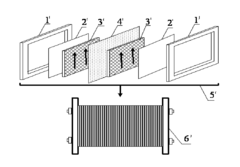
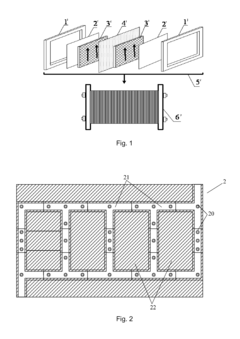
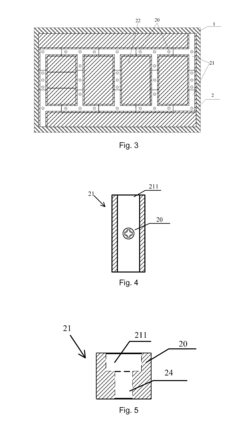
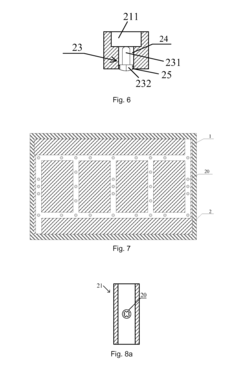
Flow battery pack with monitoring system
PatentActiveUS20150104723A1
Innovation
- A flow battery pack with a monitoring system that includes a measuring probe extending into the battery pack through a measuring port on the pole plate, allowing for direct measurement of flow pressure and temperature, and a sealing and fixing mechanism to ensure secure installation and prevent liquid leakage.
Grid Integration Standards and Regulatory Framework
The integration of vanadium redox flow batteries (VRFBs) into smart grids requires adherence to comprehensive standards and regulatory frameworks that ensure safe, reliable, and efficient operation. Current grid integration standards primarily focus on IEEE 1547 series, which establishes interconnection requirements for distributed energy resources, including energy storage systems. These standards define voltage regulation, frequency response, and power quality parameters that VRFBs must meet when connecting to utility networks.
IEC 62933 series provides specific guidelines for electrical energy storage systems, addressing safety requirements, performance testing, and grid integration protocols. For vanadium batteries, these standards emphasize electrolyte management, system monitoring, and emergency shutdown procedures. The standards also mandate compliance with power conversion system requirements, including inverter specifications and grid synchronization protocols that are crucial for VRFB deployment.
Regulatory frameworks vary significantly across different jurisdictions, creating challenges for widespread VRFB adoption. In the United States, FERC Order 841 has opened wholesale electricity markets to energy storage participation, while state-level regulations govern distribution-connected systems. European Union directives focus on grid stability and renewable energy integration, with specific provisions for large-scale storage systems that favor VRFB characteristics such as long discharge duration and cycle stability.
Safety regulations constitute a critical component of the framework, particularly addressing electrolyte handling, system containment, and environmental protection measures. National electrical codes require specific installation practices for flow battery systems, including proper ventilation, leak detection systems, and emergency response protocols. These safety standards often necessitate additional certification processes that can impact deployment timelines.
Emerging regulatory trends indicate increasing recognition of energy storage value streams, including grid services compensation and capacity market participation. However, standardization gaps remain in areas such as electrolyte transportation, recycling requirements, and cross-border system deployment, requiring continued regulatory development to support broader VRFB implementation in smart grid infrastructure.
IEC 62933 series provides specific guidelines for electrical energy storage systems, addressing safety requirements, performance testing, and grid integration protocols. For vanadium batteries, these standards emphasize electrolyte management, system monitoring, and emergency shutdown procedures. The standards also mandate compliance with power conversion system requirements, including inverter specifications and grid synchronization protocols that are crucial for VRFB deployment.
Regulatory frameworks vary significantly across different jurisdictions, creating challenges for widespread VRFB adoption. In the United States, FERC Order 841 has opened wholesale electricity markets to energy storage participation, while state-level regulations govern distribution-connected systems. European Union directives focus on grid stability and renewable energy integration, with specific provisions for large-scale storage systems that favor VRFB characteristics such as long discharge duration and cycle stability.
Safety regulations constitute a critical component of the framework, particularly addressing electrolyte handling, system containment, and environmental protection measures. National electrical codes require specific installation practices for flow battery systems, including proper ventilation, leak detection systems, and emergency response protocols. These safety standards often necessitate additional certification processes that can impact deployment timelines.
Emerging regulatory trends indicate increasing recognition of energy storage value streams, including grid services compensation and capacity market participation. However, standardization gaps remain in areas such as electrolyte transportation, recycling requirements, and cross-border system deployment, requiring continued regulatory development to support broader VRFB implementation in smart grid infrastructure.
Environmental Impact Assessment of Vanadium Battery Deployment
The deployment of vanadium redox flow batteries (VRFBs) in smart grid applications presents a complex environmental profile that requires comprehensive assessment across multiple impact categories. Unlike conventional battery technologies, VRFBs offer unique environmental characteristics stemming from their electrolyte-based energy storage mechanism and extended operational lifespan.
The primary environmental advantage of vanadium batteries lies in their exceptional longevity and recyclability. With operational lifespans exceeding 20 years and minimal capacity degradation, VRFBs significantly reduce the frequency of battery replacement cycles compared to lithium-ion alternatives. The vanadium electrolyte maintains its chemical properties throughout numerous charge-discharge cycles, enabling near-complete recovery and reuse of vanadium compounds at end-of-life, achieving recycling rates above 95%.
Carbon footprint analysis reveals that while initial manufacturing processes are energy-intensive, the extended operational period and high efficiency of VRFBs result in favorable lifecycle carbon emissions. The manufacturing phase contributes approximately 60% of total lifecycle emissions, primarily from vanadium extraction and electrolyte preparation. However, the absence of thermal runaway risks and minimal maintenance requirements offset these initial impacts over the system's operational lifetime.
Water resource considerations present both challenges and opportunities. VRFB manufacturing requires substantial water usage for electrolyte preparation and system testing. However, the closed-loop design prevents electrolyte leakage during normal operations, and the non-toxic nature of vanadium compounds reduces groundwater contamination risks compared to heavy metal-based batteries.
Land use impacts vary significantly based on deployment scale and configuration. Grid-scale installations require dedicated facilities with appropriate containment systems, while distributed deployments can utilize existing infrastructure. The modular design allows for flexible scaling without proportional increases in environmental footprint.
Waste generation during operational phases remains minimal due to the system's robust design and replaceable components. End-of-life management benefits from established vanadium recovery processes, though proper handling protocols are essential to prevent environmental release during decommissioning activities.
The primary environmental advantage of vanadium batteries lies in their exceptional longevity and recyclability. With operational lifespans exceeding 20 years and minimal capacity degradation, VRFBs significantly reduce the frequency of battery replacement cycles compared to lithium-ion alternatives. The vanadium electrolyte maintains its chemical properties throughout numerous charge-discharge cycles, enabling near-complete recovery and reuse of vanadium compounds at end-of-life, achieving recycling rates above 95%.
Carbon footprint analysis reveals that while initial manufacturing processes are energy-intensive, the extended operational period and high efficiency of VRFBs result in favorable lifecycle carbon emissions. The manufacturing phase contributes approximately 60% of total lifecycle emissions, primarily from vanadium extraction and electrolyte preparation. However, the absence of thermal runaway risks and minimal maintenance requirements offset these initial impacts over the system's operational lifetime.
Water resource considerations present both challenges and opportunities. VRFB manufacturing requires substantial water usage for electrolyte preparation and system testing. However, the closed-loop design prevents electrolyte leakage during normal operations, and the non-toxic nature of vanadium compounds reduces groundwater contamination risks compared to heavy metal-based batteries.
Land use impacts vary significantly based on deployment scale and configuration. Grid-scale installations require dedicated facilities with appropriate containment systems, while distributed deployments can utilize existing infrastructure. The modular design allows for flexible scaling without proportional increases in environmental footprint.
Waste generation during operational phases remains minimal due to the system's robust design and replaceable components. End-of-life management benefits from established vanadium recovery processes, though proper handling protocols are essential to prevent environmental release during decommissioning activities.
Unlock deeper insights with Patsnap Eureka Quick Research — get a full tech report to explore trends and direct your research. Try now!
Generate Your Research Report Instantly with AI Agent
Supercharge your innovation with Patsnap Eureka AI Agent Platform!