

How to Improve Wind Load Mitigation Using Advanced Morphing Wing Systems
MAY 18, 20269 MIN READ
Generate Your Research Report Instantly with AI Agent
Patsnap Eureka helps you evaluate technical feasibility & market potential.
Morphing Wing Wind Load Mitigation Background and Objectives
Wind load mitigation has emerged as a critical challenge in aerospace engineering, particularly as aircraft designs push toward higher efficiency and performance standards. Traditional fixed-wing aircraft face significant limitations when encountering varying wind conditions, leading to increased structural stress, reduced fuel efficiency, and compromised flight safety. The aviation industry has long sought solutions to dynamically adapt aircraft structures to changing aerodynamic environments, driving the evolution from passive design approaches to active flow control systems.
The concept of morphing wing technology represents a paradigm shift from conventional aircraft design philosophy. Inspired by biological systems such as bird flight mechanics, morphing wings offer the potential to continuously adapt their geometric configuration in response to real-time aerodynamic conditions. This biomimetic approach addresses fundamental limitations of fixed-wing designs, where optimal performance is typically achieved only within narrow operational envelopes.
Historical development of morphing wing systems traces back to early aviation pioneers who observed nature's adaptive mechanisms. However, technological constraints limited practical implementation until recent advances in smart materials, computational fluid dynamics, and control systems. The integration of shape memory alloys, piezoelectric actuators, and advanced composite materials has now made real-time wing morphing feasible for practical applications.
Current wind load challenges encompass multiple operational scenarios, including turbulence encounters, crosswind landings, and variable atmospheric conditions during extended flights. These situations generate dynamic loading patterns that exceed design margins of conventional structures, necessitating conservative approaches that compromise overall performance. The economic impact includes increased maintenance costs, reduced operational flexibility, and suboptimal fuel consumption across diverse flight conditions.
The primary objective of advanced morphing wing systems centers on developing intelligent structural adaptation capabilities that respond proactively to wind load variations. This involves creating integrated sensing networks that monitor real-time aerodynamic conditions, coupled with rapid-response actuation systems capable of modifying wing geometry within milliseconds. The target performance includes reducing peak structural loads by 30-40% while maintaining or improving overall aerodynamic efficiency.
Secondary objectives encompass broader operational benefits, including enhanced passenger comfort through reduced turbulence effects, expanded operational envelopes for adverse weather conditions, and improved fuel efficiency across diverse flight profiles. Long-term goals involve developing fully autonomous morphing systems that require minimal pilot intervention while providing robust performance guarantees under extreme environmental conditions.
The concept of morphing wing technology represents a paradigm shift from conventional aircraft design philosophy. Inspired by biological systems such as bird flight mechanics, morphing wings offer the potential to continuously adapt their geometric configuration in response to real-time aerodynamic conditions. This biomimetic approach addresses fundamental limitations of fixed-wing designs, where optimal performance is typically achieved only within narrow operational envelopes.
Historical development of morphing wing systems traces back to early aviation pioneers who observed nature's adaptive mechanisms. However, technological constraints limited practical implementation until recent advances in smart materials, computational fluid dynamics, and control systems. The integration of shape memory alloys, piezoelectric actuators, and advanced composite materials has now made real-time wing morphing feasible for practical applications.
Current wind load challenges encompass multiple operational scenarios, including turbulence encounters, crosswind landings, and variable atmospheric conditions during extended flights. These situations generate dynamic loading patterns that exceed design margins of conventional structures, necessitating conservative approaches that compromise overall performance. The economic impact includes increased maintenance costs, reduced operational flexibility, and suboptimal fuel consumption across diverse flight conditions.
The primary objective of advanced morphing wing systems centers on developing intelligent structural adaptation capabilities that respond proactively to wind load variations. This involves creating integrated sensing networks that monitor real-time aerodynamic conditions, coupled with rapid-response actuation systems capable of modifying wing geometry within milliseconds. The target performance includes reducing peak structural loads by 30-40% while maintaining or improving overall aerodynamic efficiency.
Secondary objectives encompass broader operational benefits, including enhanced passenger comfort through reduced turbulence effects, expanded operational envelopes for adverse weather conditions, and improved fuel efficiency across diverse flight profiles. Long-term goals involve developing fully autonomous morphing systems that require minimal pilot intervention while providing robust performance guarantees under extreme environmental conditions.
Market Demand for Advanced Wind Load Control Systems
The aviation industry faces mounting pressure to develop advanced wind load control systems as aircraft designs push toward higher efficiency and performance standards. Commercial airlines increasingly demand solutions that can reduce fuel consumption while maintaining safety margins, driving significant interest in morphing wing technologies that can actively respond to varying wind conditions during flight operations.
Military and defense sectors represent another substantial market segment, where advanced wind load mitigation systems offer tactical advantages through improved maneuverability and reduced radar signatures. Defense contractors are actively seeking morphing wing solutions that can enhance aircraft performance across diverse mission profiles, from high-altitude reconnaissance to low-level penetration flights.
The renewable energy sector presents an expanding market opportunity, particularly for wind turbine applications where morphing blade technologies can optimize energy capture while reducing structural stress. Wind farm operators are increasingly interested in adaptive systems that can respond to turbulent conditions and extend equipment lifespan through intelligent load management.
Emerging urban air mobility markets, including electric vertical takeoff and landing aircraft, create new demand for compact, lightweight wind load control systems. These applications require morphing wing technologies that can operate efficiently across multiple flight modes while meeting stringent weight and power consumption constraints.
Research institutions and aerospace manufacturers are investing heavily in morphing wing development programs, indicating strong institutional demand for breakthrough technologies. Government funding initiatives across multiple countries support advanced aerodynamic research, creating sustained market demand for innovative wind load mitigation solutions.
The market exhibits geographic concentration in regions with established aerospace industries, including North America, Europe, and emerging Asian markets. Supply chain considerations and regulatory requirements vary significantly across these regions, influencing technology adoption patterns and market entry strategies.
Cost-benefit analysis remains a critical factor driving market demand, as potential customers evaluate morphing wing systems against traditional control surfaces and passive load mitigation approaches. Market acceptance depends on demonstrating clear performance advantages that justify the additional complexity and maintenance requirements associated with advanced morphing technologies.
Military and defense sectors represent another substantial market segment, where advanced wind load mitigation systems offer tactical advantages through improved maneuverability and reduced radar signatures. Defense contractors are actively seeking morphing wing solutions that can enhance aircraft performance across diverse mission profiles, from high-altitude reconnaissance to low-level penetration flights.
The renewable energy sector presents an expanding market opportunity, particularly for wind turbine applications where morphing blade technologies can optimize energy capture while reducing structural stress. Wind farm operators are increasingly interested in adaptive systems that can respond to turbulent conditions and extend equipment lifespan through intelligent load management.
Emerging urban air mobility markets, including electric vertical takeoff and landing aircraft, create new demand for compact, lightweight wind load control systems. These applications require morphing wing technologies that can operate efficiently across multiple flight modes while meeting stringent weight and power consumption constraints.
Research institutions and aerospace manufacturers are investing heavily in morphing wing development programs, indicating strong institutional demand for breakthrough technologies. Government funding initiatives across multiple countries support advanced aerodynamic research, creating sustained market demand for innovative wind load mitigation solutions.
The market exhibits geographic concentration in regions with established aerospace industries, including North America, Europe, and emerging Asian markets. Supply chain considerations and regulatory requirements vary significantly across these regions, influencing technology adoption patterns and market entry strategies.
Cost-benefit analysis remains a critical factor driving market demand, as potential customers evaluate morphing wing systems against traditional control surfaces and passive load mitigation approaches. Market acceptance depends on demonstrating clear performance advantages that justify the additional complexity and maintenance requirements associated with advanced morphing technologies.
Current State and Challenges of Morphing Wing Technologies
Morphing wing technologies have emerged as a promising solution for adaptive flight control and wind load mitigation, yet their current development status reveals significant disparities between theoretical potential and practical implementation. Contemporary morphing wing systems primarily focus on discrete shape changes through mechanisms such as variable camber, twist distribution, and span extension. Leading research institutions including NASA, MIT, and European aerospace consortiums have developed prototype systems demonstrating controlled shape modifications, but these implementations remain largely confined to laboratory environments and limited flight testing scenarios.
The technological landscape is dominated by several distinct approaches to morphing wing design. Shape memory alloy actuators represent one of the most mature technologies, offering reliable shape changes in response to thermal stimuli. However, their response times and energy requirements pose substantial limitations for real-time wind load mitigation applications. Piezoelectric actuators provide faster response capabilities but suffer from limited displacement ranges and high voltage requirements that complicate integration into existing aircraft systems.
Current morphing wing implementations face critical structural integrity challenges when subjected to dynamic wind loads. Traditional aircraft wings rely on rigid structural frameworks to distribute aerodynamic forces, while morphing systems must maintain structural performance across multiple configurations. This fundamental contradiction creates complex engineering trade-offs between morphing capability and load-bearing capacity. Existing solutions often compromise either morphing range or structural robustness, limiting their effectiveness in high-stress wind environments.
Manufacturing and materials science present additional technological barriers to widespread adoption. Advanced composite materials with embedded actuators require sophisticated fabrication processes that significantly increase production costs and complexity. Quality control and reliability assessment for morphing components remain underdeveloped compared to conventional aerospace manufacturing standards. The integration of sensors, actuators, and control systems within flexible wing structures creates unprecedented challenges for system reliability and maintenance protocols.
Control system development represents another critical challenge area where current technologies fall short of operational requirements. Real-time wind load sensing and morphing response coordination demand advanced algorithms capable of processing multiple sensor inputs while predicting optimal wing configurations. Existing control systems typically operate with simplified models that inadequately capture the complex interactions between morphing geometry, aerodynamic forces, and structural dynamics during turbulent wind conditions.
The technological landscape is dominated by several distinct approaches to morphing wing design. Shape memory alloy actuators represent one of the most mature technologies, offering reliable shape changes in response to thermal stimuli. However, their response times and energy requirements pose substantial limitations for real-time wind load mitigation applications. Piezoelectric actuators provide faster response capabilities but suffer from limited displacement ranges and high voltage requirements that complicate integration into existing aircraft systems.
Current morphing wing implementations face critical structural integrity challenges when subjected to dynamic wind loads. Traditional aircraft wings rely on rigid structural frameworks to distribute aerodynamic forces, while morphing systems must maintain structural performance across multiple configurations. This fundamental contradiction creates complex engineering trade-offs between morphing capability and load-bearing capacity. Existing solutions often compromise either morphing range or structural robustness, limiting their effectiveness in high-stress wind environments.
Manufacturing and materials science present additional technological barriers to widespread adoption. Advanced composite materials with embedded actuators require sophisticated fabrication processes that significantly increase production costs and complexity. Quality control and reliability assessment for morphing components remain underdeveloped compared to conventional aerospace manufacturing standards. The integration of sensors, actuators, and control systems within flexible wing structures creates unprecedented challenges for system reliability and maintenance protocols.
Control system development represents another critical challenge area where current technologies fall short of operational requirements. Real-time wind load sensing and morphing response coordination demand advanced algorithms capable of processing multiple sensor inputs while predicting optimal wing configurations. Existing control systems typically operate with simplified models that inadequately capture the complex interactions between morphing geometry, aerodynamic forces, and structural dynamics during turbulent wind conditions.
Existing Morphing Wing Solutions for Wind Load Control
01 Adaptive wing morphing control systems
Advanced control systems that enable real-time adaptation of wing geometry to optimize aerodynamic performance and reduce wind loads. These systems utilize sensors and actuators to continuously monitor flight conditions and adjust wing shape accordingly, providing enhanced load distribution and structural efficiency during various flight phases.- Adaptive wing morphing control systems: Advanced control systems that enable real-time adaptation of wing geometry to optimize aerodynamic performance and reduce wind loads. These systems utilize sensors and actuators to continuously monitor flight conditions and adjust wing shape accordingly, providing enhanced load distribution and structural efficiency during various flight phases.
- Variable geometry wing structures: Wing designs that incorporate flexible or segmented structures allowing for geometric transformation to mitigate wind loads. These structures can change their span, sweep, or camber to adapt to different aerodynamic conditions, reducing structural stress and improving overall aircraft performance under varying wind conditions.
- Smart material integration for load mitigation: Implementation of smart materials and shape memory alloys in wing construction to provide passive load mitigation capabilities. These materials respond to environmental changes and stress conditions, automatically adjusting wing characteristics to reduce wind loads without requiring active control systems.
- Active load alleviation mechanisms: Mechanical systems designed to actively counteract wind loads through dynamic response mechanisms. These include deployable surfaces, adjustable control surfaces, and active damping systems that work in real-time to reduce structural loads and improve flight stability during turbulent conditions.
- Distributed actuation systems for morphing wings: Networks of distributed actuators embedded throughout the wing structure to enable localized shape changes for optimal load distribution. These systems provide fine-grained control over wing deformation, allowing for precise adjustment of aerodynamic properties to minimize wind loads across different sections of the wing.
02 Variable wing geometry mechanisms
Mechanical systems that allow for controlled changes in wing configuration including sweep angle, camber, and twist to mitigate adverse wind loads. These mechanisms incorporate flexible structures and articulated joints that can be dynamically adjusted to maintain optimal aerodynamic characteristics while reducing structural stress concentrations.Expand Specific Solutions03 Smart material integration for load mitigation
Implementation of intelligent materials such as shape memory alloys and piezoelectric actuators within wing structures to provide autonomous response to changing wind conditions. These materials enable passive and active load alleviation by automatically adjusting structural properties based on environmental stimuli and operational requirements.Expand Specific Solutions04 Distributed actuation systems
Networks of multiple small actuators positioned throughout the wing structure to provide localized control over aerodynamic surfaces and load distribution. This approach enables fine-tuned adjustments to wing characteristics while maintaining structural integrity and reducing overall system complexity compared to traditional centralized control methods.Expand Specific Solutions05 Computational optimization algorithms
Advanced algorithms and control strategies that process real-time flight data to determine optimal wing configurations for minimizing wind loads and maximizing performance. These systems integrate machine learning and predictive modeling to anticipate load conditions and preemptively adjust wing parameters for enhanced safety and efficiency.Expand Specific Solutions
Key Players in Morphing Wing and Aerospace Industry
The advanced morphing wing systems market for wind load mitigation is in its early development stage, characterized by significant research activity but limited commercial deployment. The market remains relatively small with substantial growth potential as the technology transitions from laboratory concepts to practical applications. Major aerospace manufacturers like Airbus Operations Ltd., Safran Aircraft Engines SAS, and General Electric Company are driving technological advancement alongside wind energy leaders including Goldwind Science & Technology Co., Ltd., Siemens AG, and Ming Yang Smart Energy Group Co., Ltd. Academic institutions such as University of Bristol, Nanjing University of Aeronautics & Astronautics, and Harbin Institute of Technology contribute fundamental research. Technology maturity varies significantly across applications, with aerospace companies like Tamarack Aerospace Group demonstrating more advanced implementations while wind energy applications remain largely experimental, indicating a fragmented competitive landscape with opportunities for breakthrough innovations.
Safran Aircraft Engines SAS
Technical Solution: Safran has developed morphing wing technologies focused on engine integration and propulsion system optimization for wind load mitigation. Their approach includes adaptive inlet geometries and variable fan blade configurations that respond to changing aerodynamic conditions. The company's morphing wing systems incorporate advanced composite materials with integrated actuation mechanisms for real-time shape modification. Safran's technology emphasizes the integration of morphing surfaces with propulsion systems to achieve coordinated load alleviation. Their solutions include smart material-based actuators and distributed control systems for precise wing geometry management under varying wind load conditions.
Strengths: Deep expertise in aerospace propulsion systems and advanced materials technology. Weaknesses: Primary focus on engine-related applications may limit broader morphing wing system development.
Siemens AG
Technical Solution: Siemens has developed morphing blade technology for wind turbines that incorporates adaptive aerodynamic surfaces to mitigate wind loads. Their system uses smart materials and distributed actuation to modify blade geometry in real-time based on wind conditions. The morphing blade technology includes variable twist mechanisms and adaptive trailing edge flaps that respond to wind load variations. Siemens' approach integrates advanced control algorithms with sensor networks to optimize blade shape for load reduction while maintaining energy efficiency. Their morphing wing systems utilize fiber-reinforced composites with embedded actuators for structural adaptation.
Strengths: Strong industrial automation and control systems expertise with proven wind energy experience. Weaknesses: Limited focus on aerospace applications compared to dedicated aircraft manufacturers.
Core Innovations in Advanced Morphing Wing Patents
Morphing segmented wind turbine and related method
PatentActiveUS20130064663A1
Innovation
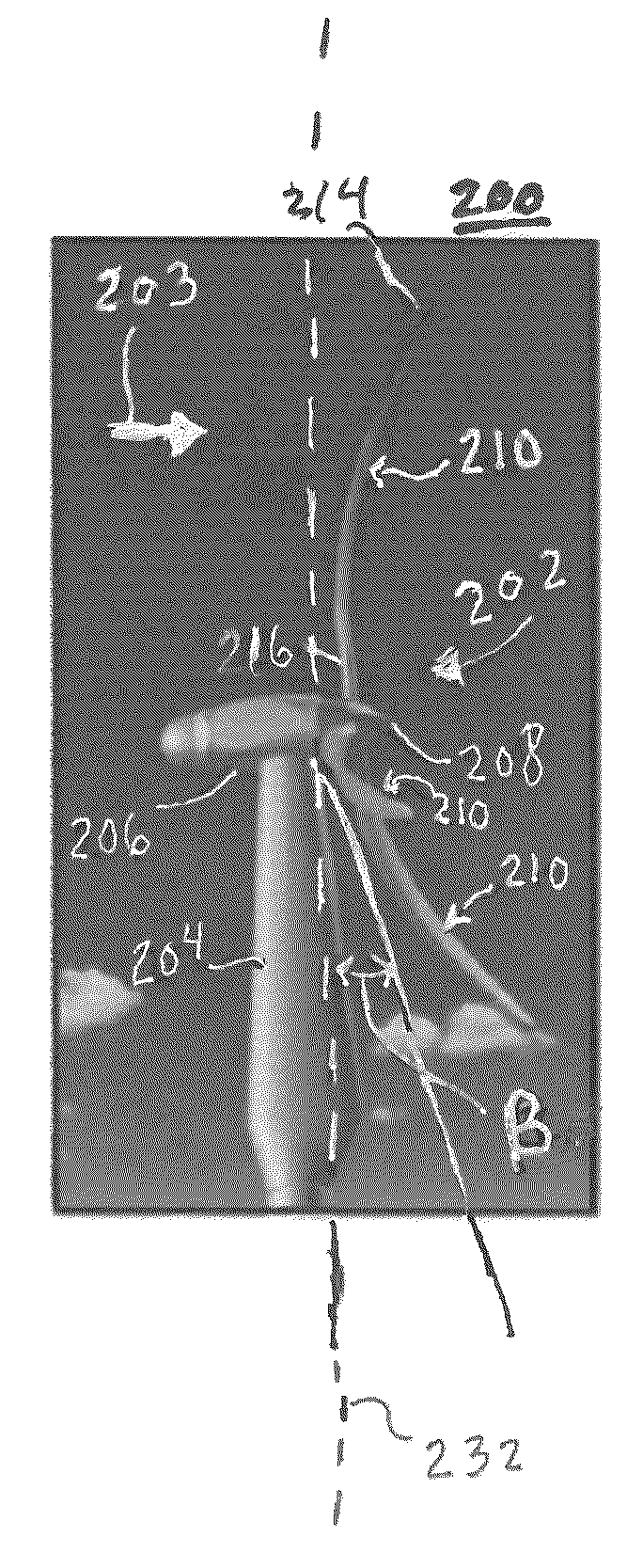
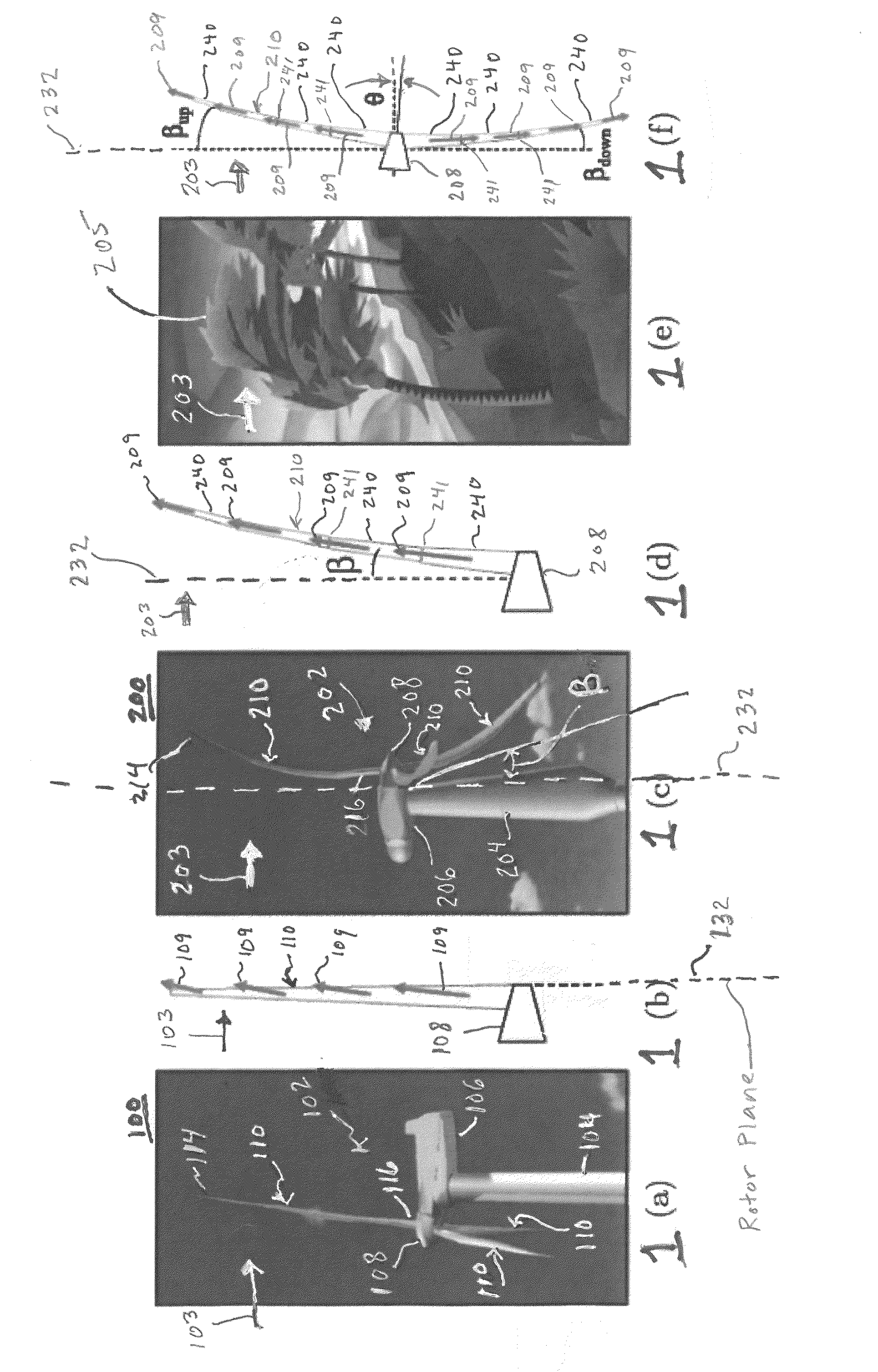
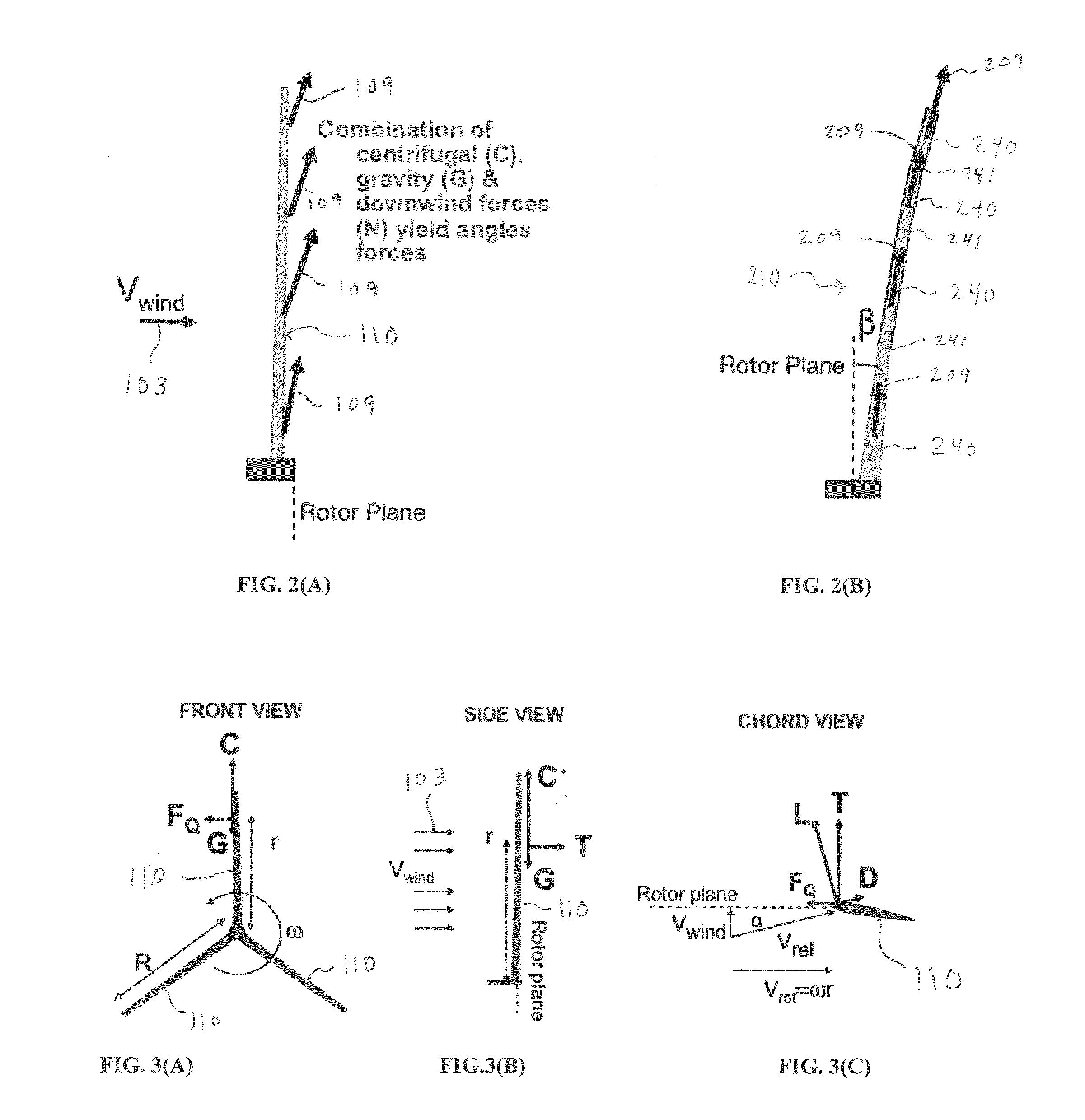
- The morphing segmented wind turbine concept, employing 'twist morphing' and 'downwind morphing' designs, uses segmented blades connected by screw sockets and tension cables to adjust pitch and alignment with wind speed, reducing blade weight and stress by allowing centrifugal forces to drive blade segments outward and aligning with composite forces, respectively.

Morphing segmented wind turbine and related method
PatentActiveUS20200141384A1
Innovation
- The morphing segmented wind turbine concept, employing 'twist morphing' and 'downwind morphing' techniques, uses segmented blades connected by screw sockets and tension cables to adjust pitch and alignment with wind speed, reducing blade weight and stress by allowing centrifugal forces to drive blade segments outward and aligning with composite forces, respectively.


Aviation Safety Regulations for Morphing Wing Systems
The regulatory landscape for morphing wing systems represents a complex intersection of traditional aviation safety standards and emerging adaptive technologies. Current aviation authorities, including the Federal Aviation Administration (FAA) and European Union Aviation Safety Agency (EASA), are developing comprehensive frameworks to address the unique challenges posed by dynamically reconfigurable aircraft structures. These regulations must account for the inherent variability in wing geometry while maintaining stringent safety requirements equivalent to conventional fixed-wing aircraft.
Certification processes for morphing wing systems require extensive validation of structural integrity across all operational configurations. Unlike traditional wings with static geometries, morphing systems must demonstrate consistent performance throughout their entire range of shape variations. This necessitates comprehensive testing protocols that evaluate fatigue resistance, failure modes, and redundancy systems under dynamic loading conditions. Regulatory bodies mandate that morphing mechanisms include fail-safe features ensuring the wing can maintain a safe configuration even during system malfunctions.
Flight testing requirements for morphing wing aircraft involve expanded envelope exploration compared to conventional aircraft. Pilots must demonstrate proficiency in managing variable wing configurations during different flight phases, requiring specialized training programs and updated certification standards. The regulations specify minimum pilot training hours and simulation requirements specific to morphing wing operations, ensuring adequate familiarity with the system's behavioral characteristics.
Maintenance and inspection protocols for morphing wing systems demand specialized procedures addressing the complexity of adaptive mechanisms. Regulatory frameworks establish mandatory inspection intervals for actuators, sensors, and control systems, with particular emphasis on wear patterns unique to morphing components. These regulations require certified maintenance personnel to undergo additional training specific to morphing wing technologies.
International harmonization efforts are underway to establish consistent global standards for morphing wing certification. Regulatory authorities are collaborating to develop unified testing methodologies and safety criteria, facilitating international aircraft operations while maintaining rigorous safety standards. This coordination ensures that morphing wing aircraft certified in one jurisdiction can operate safely in international airspace without compromising regulatory compliance or operational safety.
Certification processes for morphing wing systems require extensive validation of structural integrity across all operational configurations. Unlike traditional wings with static geometries, morphing systems must demonstrate consistent performance throughout their entire range of shape variations. This necessitates comprehensive testing protocols that evaluate fatigue resistance, failure modes, and redundancy systems under dynamic loading conditions. Regulatory bodies mandate that morphing mechanisms include fail-safe features ensuring the wing can maintain a safe configuration even during system malfunctions.
Flight testing requirements for morphing wing aircraft involve expanded envelope exploration compared to conventional aircraft. Pilots must demonstrate proficiency in managing variable wing configurations during different flight phases, requiring specialized training programs and updated certification standards. The regulations specify minimum pilot training hours and simulation requirements specific to morphing wing operations, ensuring adequate familiarity with the system's behavioral characteristics.
Maintenance and inspection protocols for morphing wing systems demand specialized procedures addressing the complexity of adaptive mechanisms. Regulatory frameworks establish mandatory inspection intervals for actuators, sensors, and control systems, with particular emphasis on wear patterns unique to morphing components. These regulations require certified maintenance personnel to undergo additional training specific to morphing wing technologies.
International harmonization efforts are underway to establish consistent global standards for morphing wing certification. Regulatory authorities are collaborating to develop unified testing methodologies and safety criteria, facilitating international aircraft operations while maintaining rigorous safety standards. This coordination ensures that morphing wing aircraft certified in one jurisdiction can operate safely in international airspace without compromising regulatory compliance or operational safety.
Environmental Impact of Advanced Wing Technologies
Advanced morphing wing systems represent a paradigm shift in aviation technology with significant environmental implications that extend beyond traditional aircraft design considerations. The environmental impact assessment of these technologies encompasses multiple dimensions, including lifecycle carbon footprint, material sustainability, and operational ecological effects.
The manufacturing phase of morphing wing systems presents both challenges and opportunities from an environmental perspective. Advanced materials such as shape memory alloys, smart composites, and adaptive actuators require energy-intensive production processes that initially increase the carbon footprint compared to conventional wing structures. However, the enhanced aerodynamic efficiency achieved through real-time wing morphing capabilities can offset these initial environmental costs through reduced fuel consumption over the aircraft's operational lifetime.
Operational environmental benefits emerge primarily through improved fuel efficiency and reduced emissions. Morphing wing systems enable continuous optimization of wing geometry across different flight phases, potentially reducing fuel consumption by 8-15% compared to fixed-wing configurations. This translates to substantial reductions in CO2 emissions, nitrogen oxides, and particulate matter release, particularly beneficial for high-frequency commercial aviation routes.
The noise pollution mitigation potential of morphing wings represents another significant environmental advantage. Adaptive wing surfaces can minimize turbulence and reduce acoustic signatures during critical flight phases such as takeoff and landing, addressing growing concerns about aviation noise impact on communities surrounding airports.
Material lifecycle considerations reveal complex environmental trade-offs. While morphing wing systems incorporate advanced materials with higher embodied energy, their enhanced durability and adaptive capabilities can extend aircraft service life and reduce maintenance requirements. The integration of bio-inspired design principles in morphing mechanisms also opens pathways for incorporating sustainable materials and biomimetic structures.
End-of-life environmental impact depends heavily on material recyclability and component separability. Current morphing wing designs face challenges in material recovery due to the integration of multiple material systems, but emerging design approaches prioritize modular architectures that facilitate component separation and material recycling, potentially achieving higher recovery rates than conventional wing structures.
The manufacturing phase of morphing wing systems presents both challenges and opportunities from an environmental perspective. Advanced materials such as shape memory alloys, smart composites, and adaptive actuators require energy-intensive production processes that initially increase the carbon footprint compared to conventional wing structures. However, the enhanced aerodynamic efficiency achieved through real-time wing morphing capabilities can offset these initial environmental costs through reduced fuel consumption over the aircraft's operational lifetime.
Operational environmental benefits emerge primarily through improved fuel efficiency and reduced emissions. Morphing wing systems enable continuous optimization of wing geometry across different flight phases, potentially reducing fuel consumption by 8-15% compared to fixed-wing configurations. This translates to substantial reductions in CO2 emissions, nitrogen oxides, and particulate matter release, particularly beneficial for high-frequency commercial aviation routes.
The noise pollution mitigation potential of morphing wings represents another significant environmental advantage. Adaptive wing surfaces can minimize turbulence and reduce acoustic signatures during critical flight phases such as takeoff and landing, addressing growing concerns about aviation noise impact on communities surrounding airports.
Material lifecycle considerations reveal complex environmental trade-offs. While morphing wing systems incorporate advanced materials with higher embodied energy, their enhanced durability and adaptive capabilities can extend aircraft service life and reduce maintenance requirements. The integration of bio-inspired design principles in morphing mechanisms also opens pathways for incorporating sustainable materials and biomimetic structures.
End-of-life environmental impact depends heavily on material recyclability and component separability. Current morphing wing designs face challenges in material recovery due to the integration of multiple material systems, but emerging design approaches prioritize modular architectures that facilitate component separation and material recycling, potentially achieving higher recovery rates than conventional wing structures.
Unlock deeper insights with Patsnap Eureka Quick Research — get a full tech report to explore trends and direct your research. Try now!
Generate Your Research Report Instantly with AI Agent
Supercharge your innovation with Patsnap Eureka AI Agent Platform!