

Morphing Wings vs Bio-Inspired Wing Shapes: Practical Engineering Benefits
MAY 18, 20269 MIN READ
Generate Your Research Report Instantly with AI Agent
PatSnap Eureka helps you evaluate technical feasibility & market potential.
Morphing Wing Technology Background and Engineering Goals
Morphing wing technology represents a paradigm shift in aerospace engineering, drawing inspiration from nature's most efficient flyers while addressing fundamental limitations of conventional fixed-wing aircraft. The concept emerged from decades of observing how birds seamlessly adapt their wing configurations during flight, optimizing performance across diverse flight conditions that would challenge traditional aircraft designs.
The evolutionary journey of morphing wing research began in the early 20th century with theoretical studies, but gained substantial momentum during the 1980s and 1990s as advanced materials science and computational capabilities enabled practical implementation. Early investigations focused on simple geometric changes, such as variable sweep angles and chord extensions, gradually evolving toward more sophisticated multi-dimensional morphing capabilities.
Contemporary morphing wing technology encompasses several distinct approaches, including span morphing for optimized lift distribution, chord-wise morphing for enhanced aerodynamic efficiency, and twist morphing for improved roll control and load alleviation. These technologies integrate advanced smart materials, including shape memory alloys, piezoelectric actuators, and flexible composite structures, enabling real-time wing reconfiguration without compromising structural integrity.
The primary engineering objectives driving morphing wing development center on achieving multi-point optimization across the entire flight envelope. Traditional aircraft designs represent compromises between conflicting requirements for takeoff, cruise, and landing phases. Morphing wings aim to eliminate these compromises by dynamically adapting wing geometry to match instantaneous flight conditions, potentially delivering significant improvements in fuel efficiency, range, and operational versatility.
Current research priorities focus on developing lightweight actuation systems, creating durable flexible skin materials, and establishing robust control algorithms for seamless morphing transitions. The integration of artificial intelligence and machine learning techniques promises to enable predictive morphing strategies that anticipate optimal configurations based on flight path planning and environmental conditions.
The ultimate goal extends beyond incremental performance improvements to enable entirely new aircraft categories, including vehicles capable of efficient operation across vastly different speed regimes and atmospheric conditions, potentially revolutionizing both civilian aviation and unmanned aerial systems applications.
The evolutionary journey of morphing wing research began in the early 20th century with theoretical studies, but gained substantial momentum during the 1980s and 1990s as advanced materials science and computational capabilities enabled practical implementation. Early investigations focused on simple geometric changes, such as variable sweep angles and chord extensions, gradually evolving toward more sophisticated multi-dimensional morphing capabilities.
Contemporary morphing wing technology encompasses several distinct approaches, including span morphing for optimized lift distribution, chord-wise morphing for enhanced aerodynamic efficiency, and twist morphing for improved roll control and load alleviation. These technologies integrate advanced smart materials, including shape memory alloys, piezoelectric actuators, and flexible composite structures, enabling real-time wing reconfiguration without compromising structural integrity.
The primary engineering objectives driving morphing wing development center on achieving multi-point optimization across the entire flight envelope. Traditional aircraft designs represent compromises between conflicting requirements for takeoff, cruise, and landing phases. Morphing wings aim to eliminate these compromises by dynamically adapting wing geometry to match instantaneous flight conditions, potentially delivering significant improvements in fuel efficiency, range, and operational versatility.
Current research priorities focus on developing lightweight actuation systems, creating durable flexible skin materials, and establishing robust control algorithms for seamless morphing transitions. The integration of artificial intelligence and machine learning techniques promises to enable predictive morphing strategies that anticipate optimal configurations based on flight path planning and environmental conditions.
The ultimate goal extends beyond incremental performance improvements to enable entirely new aircraft categories, including vehicles capable of efficient operation across vastly different speed regimes and atmospheric conditions, potentially revolutionizing both civilian aviation and unmanned aerial systems applications.
Market Demand for Advanced Adaptive Wing Systems
The aerospace industry is experiencing unprecedented demand for advanced adaptive wing systems driven by multiple converging factors. Environmental regulations and sustainability mandates are pushing manufacturers toward more fuel-efficient aircraft designs, creating substantial market pressure for technologies that can reduce operational costs and emissions. Airlines worldwide are seeking solutions that can deliver measurable improvements in fuel consumption, particularly as fuel costs represent a significant portion of operational expenses.
Commercial aviation represents the largest market segment for adaptive wing technologies, with both narrow-body and wide-body aircraft manufacturers actively pursuing morphing wing solutions. The growing emphasis on electric and hybrid-electric aircraft has further intensified interest in adaptive wing systems, as these platforms require maximum aerodynamic efficiency to overcome energy density limitations. Regional aircraft operators are particularly interested in bio-inspired wing designs that can optimize performance across diverse flight profiles and operating conditions.
Military and defense applications constitute another significant demand driver, where adaptive wing systems offer tactical advantages including enhanced maneuverability, stealth capabilities, and mission flexibility. Unmanned aerial vehicles represent a rapidly expanding market segment, with operators seeking wing technologies that can adapt to varying payload configurations and mission requirements without compromising performance.
The urban air mobility sector is emerging as a promising market for advanced adaptive wing systems, particularly for electric vertical takeoff and landing aircraft. These platforms require wing designs that can efficiently transition between hover and forward flight modes, creating demand for morphing wing technologies that can dynamically reconfigure based on flight phase requirements.
Market demand is also being shaped by technological maturation in related fields including smart materials, actuator systems, and control algorithms. The convergence of these enabling technologies has made adaptive wing systems more commercially viable, attracting investment from both established aerospace companies and innovative startups.
Cargo and freight operators are increasingly interested in adaptive wing solutions that can optimize performance for different loading conditions and route profiles. The growth of e-commerce and time-sensitive logistics has created demand for more efficient cargo aircraft, driving interest in wing technologies that can adapt to varying operational requirements while maintaining structural integrity and reliability standards.
Commercial aviation represents the largest market segment for adaptive wing technologies, with both narrow-body and wide-body aircraft manufacturers actively pursuing morphing wing solutions. The growing emphasis on electric and hybrid-electric aircraft has further intensified interest in adaptive wing systems, as these platforms require maximum aerodynamic efficiency to overcome energy density limitations. Regional aircraft operators are particularly interested in bio-inspired wing designs that can optimize performance across diverse flight profiles and operating conditions.
Military and defense applications constitute another significant demand driver, where adaptive wing systems offer tactical advantages including enhanced maneuverability, stealth capabilities, and mission flexibility. Unmanned aerial vehicles represent a rapidly expanding market segment, with operators seeking wing technologies that can adapt to varying payload configurations and mission requirements without compromising performance.
The urban air mobility sector is emerging as a promising market for advanced adaptive wing systems, particularly for electric vertical takeoff and landing aircraft. These platforms require wing designs that can efficiently transition between hover and forward flight modes, creating demand for morphing wing technologies that can dynamically reconfigure based on flight phase requirements.
Market demand is also being shaped by technological maturation in related fields including smart materials, actuator systems, and control algorithms. The convergence of these enabling technologies has made adaptive wing systems more commercially viable, attracting investment from both established aerospace companies and innovative startups.
Cargo and freight operators are increasingly interested in adaptive wing solutions that can optimize performance for different loading conditions and route profiles. The growth of e-commerce and time-sensitive logistics has created demand for more efficient cargo aircraft, driving interest in wing technologies that can adapt to varying operational requirements while maintaining structural integrity and reliability standards.
Current State of Morphing Wing and Bio-Inspired Technologies
Morphing wing technology has achieved significant progress in recent years, with several demonstrable prototypes and flight-tested systems emerging from research institutions and aerospace companies. NASA's Adaptive Compliant Trailing Edge (ACTE) program successfully demonstrated variable camber wing sections on modified aircraft, achieving fuel efficiency improvements of 2-5%. The European Clean Sky initiative has developed morphing wing demonstrators that can alter their chord length and sweep angle during flight operations.
Current morphing mechanisms primarily rely on shape memory alloys, piezoelectric actuators, and compliant structures to achieve controlled deformation. Companies like FlexSys have commercialized adaptive trailing edge systems for business jets, while research groups at MIT and TU Delft have developed morphing concepts using distributed actuation networks. However, these systems face significant challenges in terms of structural integrity, weight penalties, and control complexity.
Bio-inspired wing design has matured considerably, drawing from extensive studies of avian and insect flight mechanics. Modern implementations focus on incorporating features such as tubercle leading edges inspired by humpback whale fins, which have been successfully applied to wind turbine blades and UAV designs. Researchers have identified key biological principles including variable wing twist, adaptive aspect ratios, and surface texture modifications that enhance aerodynamic performance across different flight regimes.
The integration of biomimetic surface features has shown promising results in laboratory testing. Shark skin-inspired riblets have been implemented on commercial aircraft surfaces, demonstrating measurable drag reduction. Bird-inspired wingtip designs, such as split-tip winglets mimicking raptor feathers, have become standard features on modern commercial aircraft, providing fuel savings of 3-7%.
Despite these advances, both technologies face substantial engineering challenges. Morphing wings struggle with the fundamental trade-off between structural stiffness required for load-bearing and flexibility needed for shape change. Current actuation systems add significant weight and complexity while providing limited deformation ranges. Bio-inspired designs, while more structurally feasible, often require manufacturing precision that challenges conventional production methods and may not translate directly from biological systems to engineering applications operating at different scales and speeds.
The convergence of advanced materials, particularly carbon fiber composites and smart materials, is enabling more sophisticated implementations of both approaches, though commercial viability remains limited to specific applications.
Current morphing mechanisms primarily rely on shape memory alloys, piezoelectric actuators, and compliant structures to achieve controlled deformation. Companies like FlexSys have commercialized adaptive trailing edge systems for business jets, while research groups at MIT and TU Delft have developed morphing concepts using distributed actuation networks. However, these systems face significant challenges in terms of structural integrity, weight penalties, and control complexity.
Bio-inspired wing design has matured considerably, drawing from extensive studies of avian and insect flight mechanics. Modern implementations focus on incorporating features such as tubercle leading edges inspired by humpback whale fins, which have been successfully applied to wind turbine blades and UAV designs. Researchers have identified key biological principles including variable wing twist, adaptive aspect ratios, and surface texture modifications that enhance aerodynamic performance across different flight regimes.
The integration of biomimetic surface features has shown promising results in laboratory testing. Shark skin-inspired riblets have been implemented on commercial aircraft surfaces, demonstrating measurable drag reduction. Bird-inspired wingtip designs, such as split-tip winglets mimicking raptor feathers, have become standard features on modern commercial aircraft, providing fuel savings of 3-7%.
Despite these advances, both technologies face substantial engineering challenges. Morphing wings struggle with the fundamental trade-off between structural stiffness required for load-bearing and flexibility needed for shape change. Current actuation systems add significant weight and complexity while providing limited deformation ranges. Bio-inspired designs, while more structurally feasible, often require manufacturing precision that challenges conventional production methods and may not translate directly from biological systems to engineering applications operating at different scales and speeds.
The convergence of advanced materials, particularly carbon fiber composites and smart materials, is enabling more sophisticated implementations of both approaches, though commercial viability remains limited to specific applications.
Current Engineering Solutions for Wing Morphing Systems
01 Morphing wing structures with variable geometry
Morphing wing technologies enable aircraft to dynamically change their wing shape during flight to optimize aerodynamic performance across different flight conditions. These systems utilize flexible materials, actuators, and control mechanisms to alter wing camber, sweep angle, or chord length. The adaptive geometry provides improved fuel efficiency, enhanced maneuverability, and better performance across various flight phases from takeoff to cruise.- Adaptive wing morphing mechanisms for aerodynamic optimization: Wing structures that can dynamically change their shape during flight to optimize aerodynamic performance under different flight conditions. These mechanisms allow for real-time adjustment of wing geometry, including camber, twist, and span modifications to enhance lift-to-drag ratios and improve fuel efficiency across various flight phases.
- Bio-inspired wing surface textures and micro-structures: Wing designs that incorporate surface features inspired by natural flyers such as birds and insects. These include specialized textures, riblets, and micro-scale structures that reduce drag, control boundary layer flow, and improve overall aerodynamic efficiency by mimicking the natural flow control mechanisms found in biological systems.
- Variable geometry wing configurations: Wing systems that can alter their geometric parameters including sweep angle, aspect ratio, and planform shape to adapt to different mission requirements. These configurations provide enhanced performance across multiple flight regimes, from takeoff and landing to high-speed cruise, offering improved versatility and operational efficiency.
- Smart materials and actuator systems for wing morphing: Integration of advanced materials and actuation technologies that enable controlled wing deformation. These systems utilize shape memory alloys, piezoelectric actuators, and other smart materials to provide the necessary forces and control mechanisms for precise wing shape modifications while maintaining structural integrity and reliability.
- Biomimetic wing joint and articulation mechanisms: Joint systems and articulation mechanisms inspired by the wing structures of birds and bats that allow for complex multi-degree-of-freedom movements. These designs enable sophisticated wing motions including folding, twisting, and bending capabilities that enhance maneuverability and provide adaptive flight characteristics for various operational scenarios.
02 Bio-inspired wing design based on natural flight mechanisms
Wing designs that mimic the flight characteristics of birds, insects, and other flying creatures to achieve superior aerodynamic efficiency. These bio-inspired approaches incorporate features such as wing flexibility, feather-like structures, and natural motion patterns observed in biological systems. The biomimetic designs offer advantages in lift generation, drag reduction, and energy efficiency compared to conventional rigid wing structures.Expand Specific Solutions03 Adaptive wing control systems and actuation mechanisms
Advanced control systems that manage the morphing capabilities of adaptive wings through sophisticated actuation mechanisms and feedback systems. These systems integrate sensors, processors, and actuators to enable real-time wing shape optimization based on flight conditions and performance requirements. The control mechanisms ensure smooth transitions between different wing configurations while maintaining structural integrity and flight stability.Expand Specific Solutions04 Flexible wing materials and structural innovations
Development of advanced materials and structural designs that enable wing morphing while maintaining necessary strength and durability requirements. These innovations include smart materials, composite structures, and flexible joint mechanisms that allow for controlled deformation. The materials provide the foundation for morphing capabilities while ensuring the wing can withstand aerodynamic loads and environmental conditions throughout the morphing process.Expand Specific Solutions05 Performance optimization through wing shape adaptation
Methods and systems for optimizing aircraft performance by adapting wing shapes to specific flight requirements and environmental conditions. These approaches focus on maximizing aerodynamic efficiency, reducing fuel consumption, and improving overall flight performance through intelligent wing configuration management. The optimization strategies consider factors such as speed, altitude, payload, and weather conditions to determine optimal wing shapes for different flight scenarios.Expand Specific Solutions
Key Players in Morphing Wing and Aerospace Industry
The morphing wings versus bio-inspired wing shapes technology represents an emerging field within aerospace engineering, currently in the early-to-mid development stage with significant growth potential. The market remains relatively niche but shows expanding interest from both military and civilian aviation sectors. Technology maturity varies considerably across different approaches, with major aerospace manufacturers like Boeing, Airbus Operations, and Bombardier leading practical implementation efforts alongside specialized UAV companies such as Blue Bear Systems Research. Academic institutions including Nanjing University of Aeronautics & Astronautics, Northwestern Polytechnical University, and Harbin Institute of Technology are driving fundamental research breakthroughs. Government research organizations like JAXA and DLR provide substantial R&D support, while Chinese aerospace companies like Chengdu Aircraft Industrial Group are advancing military applications. The competitive landscape indicates a technology transitioning from laboratory concepts toward commercial viability, with established aerospace giants competing against innovative startups and research institutions for market leadership.
The Boeing Co.
Technical Solution: Boeing has developed advanced morphing wing technologies focusing on variable camber systems and adaptive wing structures. Their approach integrates smart materials and actuator systems to enable real-time wing shape optimization during flight. The company's morphing wing solutions utilize piezoelectric actuators and shape memory alloys to achieve continuous wing surface deformation, improving aerodynamic efficiency across different flight phases. Boeing's technology emphasizes practical implementation with robust control systems that can withstand commercial aviation operational requirements while providing fuel efficiency improvements of up to 12% compared to conventional fixed-wing designs.
Strengths: Extensive flight testing experience, robust engineering for commercial applications, proven safety standards. Weaknesses: Higher manufacturing costs, complex maintenance requirements, limited morphing range compared to research prototypes.
Japan Aerospace Exploration Agency
Technical Solution: JAXA has developed innovative morphing wing technologies inspired by bird flight biomechanics, particularly focusing on variable geometry systems for unmanned aerial vehicles and future aircraft concepts. Their approach integrates flexible skin materials with distributed actuation systems to achieve continuous wing shape adaptation. JAXA's morphing wing designs utilize smart materials including shape memory alloys and piezoelectric actuators to enable real-time aerodynamic optimization. The agency's research demonstrates significant improvements in lift-to-drag ratios and fuel efficiency through bio-inspired wing morphing mechanisms that mimic natural flight adaptations observed in various bird species.
Strengths: Advanced materials research capabilities, strong biomimetics expertise, innovative UAV testing platforms. Weaknesses: Limited large-scale aircraft experience, technology transfer challenges, smaller commercial aviation market presence.
Core Innovations in Morphing Wing Mechanisms
Morphing wing, flight control device, flight control method, and program
PatentActiveGB2623227A
Innovation
- A morphing wing design featuring a link mechanism that deploys and retracts, with streamlined front wing covers and flight feathers that rotate and adjust to optimize aerodynamics, and a control system using deep reinforcement learning for efficient flight control.


Morphing Foil or Wing
PatentActiveUS20160176502A1
Innovation
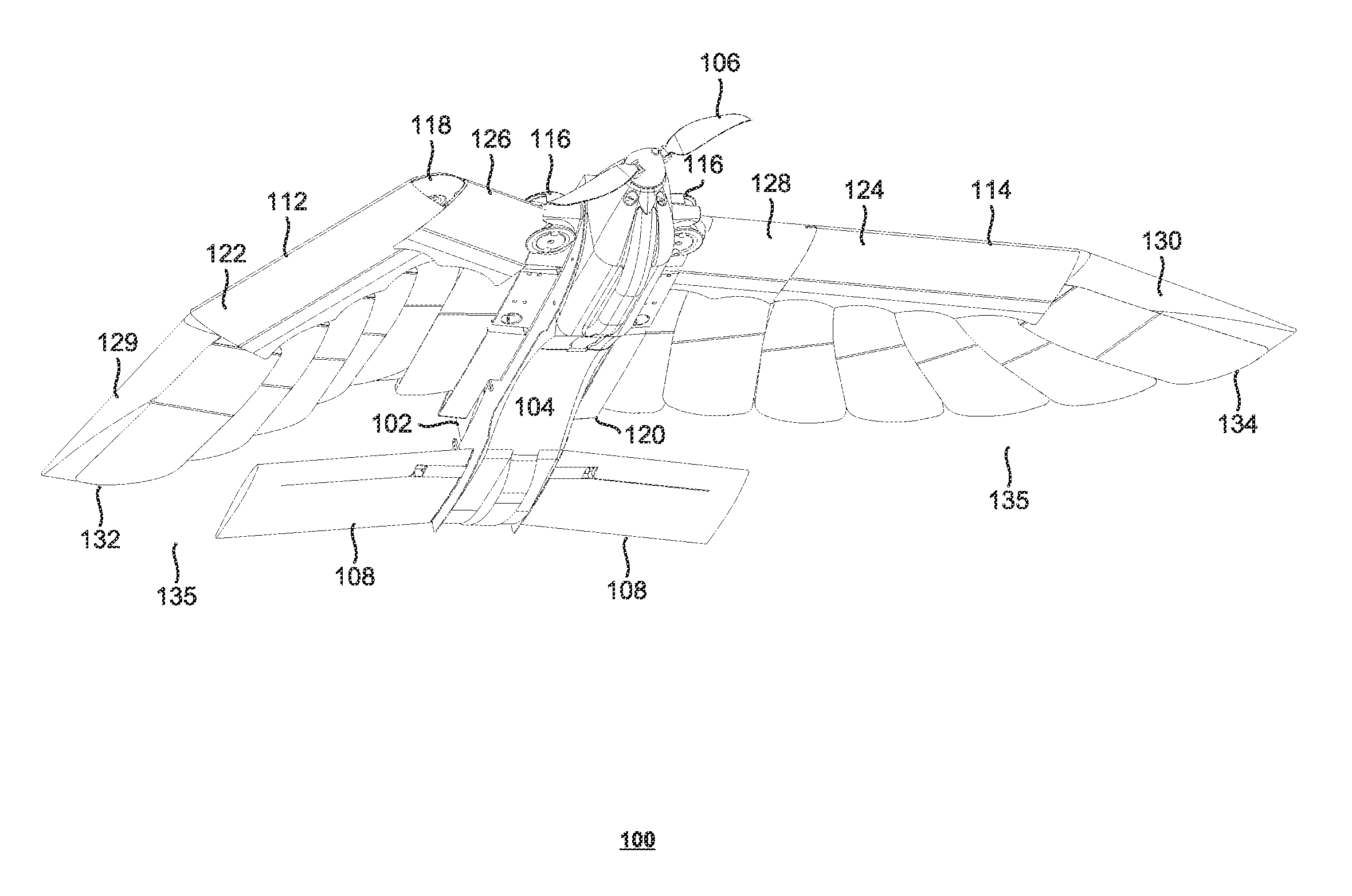
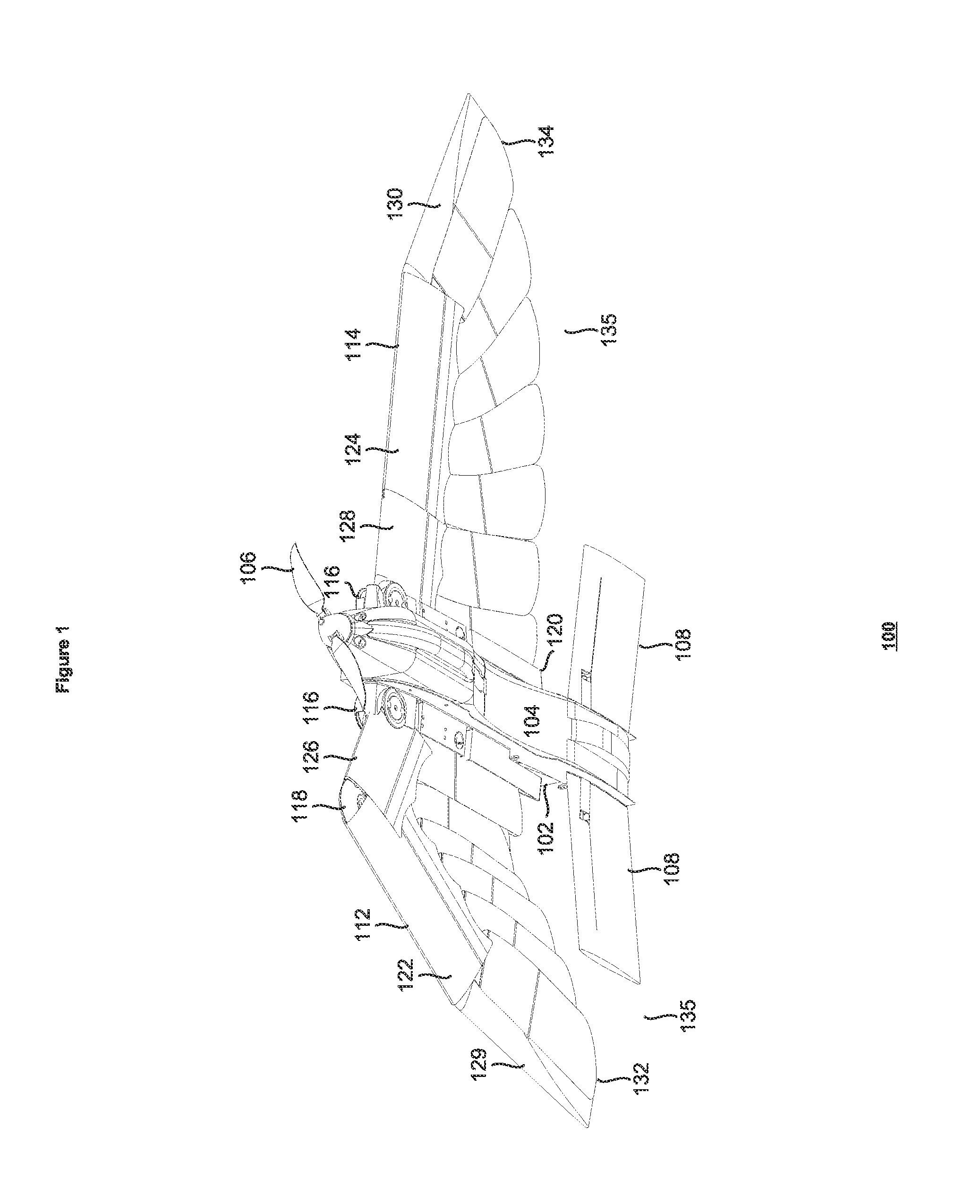
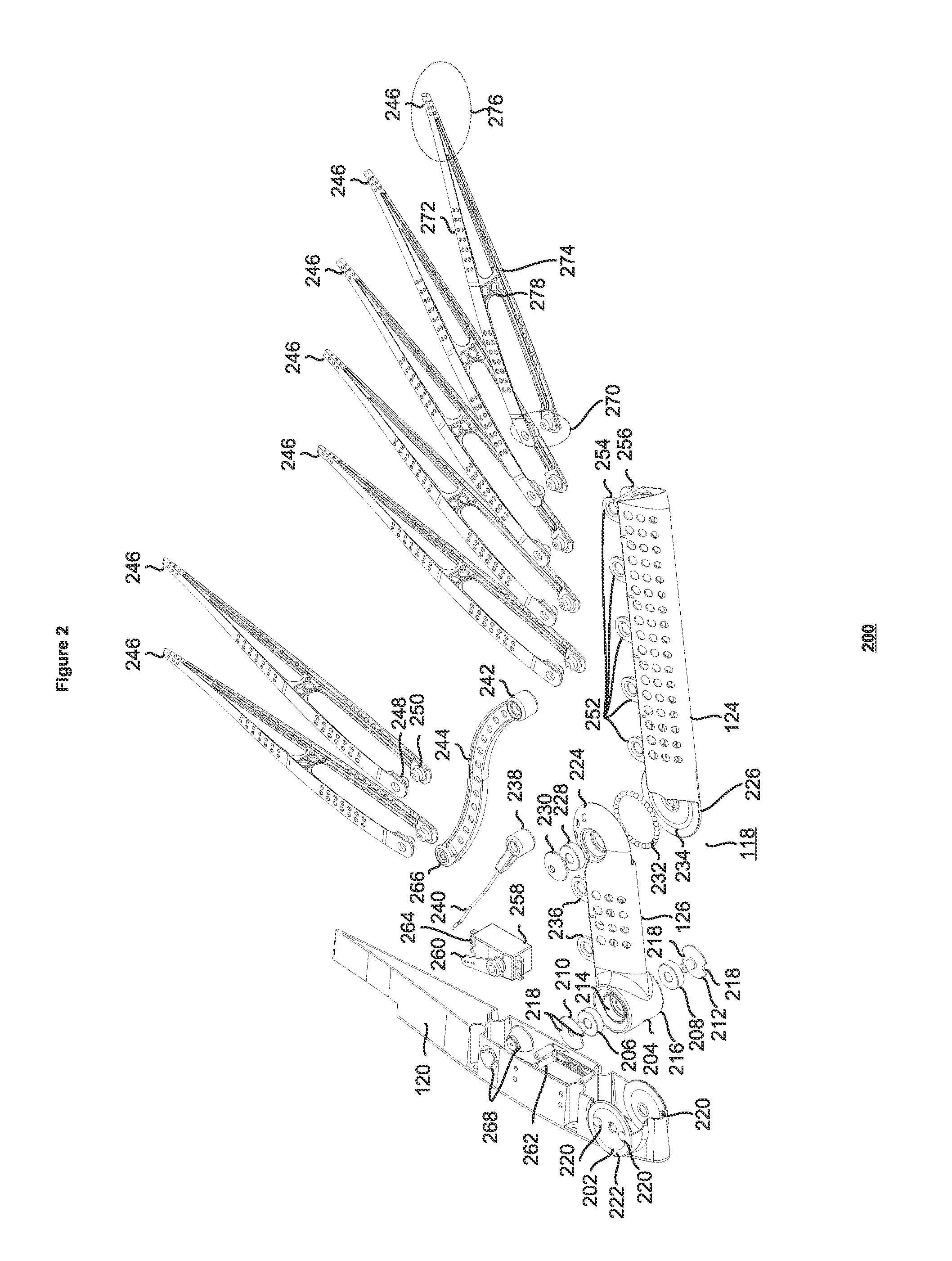
- A morphing wing with a jointed leading edge, main pivot, wrist joint, and reciprocally actuable wing sections between extended and tucked positions, allowing adaptive aerodynamic performance through servo linkage and biasing mechanisms.

Certification Standards for Morphing Aircraft Systems
The certification of morphing aircraft systems presents unprecedented challenges for aviation regulatory bodies worldwide. Traditional airworthiness standards, developed for conventional fixed-wing aircraft, are fundamentally inadequate for addressing the dynamic structural changes inherent in morphing wing technologies. Current certification frameworks such as FAR Part 23 and Part 25, along with EASA CS-23 and CS-25, lack specific provisions for continuously variable aerodynamic surfaces and adaptive structural elements.
The primary regulatory challenge lies in establishing safety criteria for systems that intentionally alter their fundamental aerodynamic and structural characteristics during flight. Unlike conventional aircraft where wing geometry remains constant, morphing systems must demonstrate safety across an infinite range of configurations. This requires new approaches to structural integrity assessment, including fatigue analysis of continuously flexing components and failure mode evaluation for adaptive materials.
Certification authorities are developing specialized testing protocols for morphing aircraft systems. These include accelerated fatigue testing for shape-memory alloys, durability assessment of flexible skin materials, and validation of control algorithms governing morphing transitions. The Federal Aviation Administration has initiated research programs to establish certification criteria for adaptive wing structures, focusing on demonstrating equivalent levels of safety to conventional designs.
International harmonization efforts are underway to create unified standards for morphing aircraft certification. The International Civil Aviation Organization is coordinating with national authorities to develop common technical specifications for adaptive flight systems. These standards must address unique aspects such as morphing envelope protection, transition failure modes, and pilot training requirements for variable-geometry aircraft.
The certification process for morphing systems requires extensive flight testing across all operational configurations. This includes demonstration of controllability during morphing transitions, verification of structural limits throughout the morphing envelope, and validation of emergency procedures for morphing system failures. Regulatory authorities are establishing new flight test protocols specifically designed to evaluate the safety of continuously variable aircraft configurations.
The primary regulatory challenge lies in establishing safety criteria for systems that intentionally alter their fundamental aerodynamic and structural characteristics during flight. Unlike conventional aircraft where wing geometry remains constant, morphing systems must demonstrate safety across an infinite range of configurations. This requires new approaches to structural integrity assessment, including fatigue analysis of continuously flexing components and failure mode evaluation for adaptive materials.
Certification authorities are developing specialized testing protocols for morphing aircraft systems. These include accelerated fatigue testing for shape-memory alloys, durability assessment of flexible skin materials, and validation of control algorithms governing morphing transitions. The Federal Aviation Administration has initiated research programs to establish certification criteria for adaptive wing structures, focusing on demonstrating equivalent levels of safety to conventional designs.
International harmonization efforts are underway to create unified standards for morphing aircraft certification. The International Civil Aviation Organization is coordinating with national authorities to develop common technical specifications for adaptive flight systems. These standards must address unique aspects such as morphing envelope protection, transition failure modes, and pilot training requirements for variable-geometry aircraft.
The certification process for morphing systems requires extensive flight testing across all operational configurations. This includes demonstration of controllability during morphing transitions, verification of structural limits throughout the morphing envelope, and validation of emergency procedures for morphing system failures. Regulatory authorities are establishing new flight test protocols specifically designed to evaluate the safety of continuously variable aircraft configurations.
Material Science Advances for Adaptive Wing Structures
The development of adaptive wing structures represents a convergence of advanced materials science and biomimetic engineering principles. Smart materials form the foundation of morphing wing technologies, with shape memory alloys (SMAs) leading the charge due to their ability to undergo reversible deformation when subjected to thermal or electrical stimuli. Nitinol, a nickel-titanium alloy, has emerged as the primary SMA for aerospace applications, offering exceptional fatigue resistance and precise actuation capabilities essential for wing morphing mechanisms.
Piezoelectric materials constitute another critical component in adaptive wing systems, providing both sensing and actuation functionalities. Advanced piezoelectric composites, including lead zirconate titanate (PZT) ceramics and newer lead-free alternatives, enable real-time wing shape monitoring and micro-adjustments. These materials can generate mechanical strain in response to electrical fields while simultaneously producing electrical signals when mechanically deformed, creating integrated sensor-actuator networks within wing structures.
Carbon fiber reinforced polymers (CFRP) with variable stiffness properties have revolutionized adaptive wing design. Through strategic fiber orientation and the incorporation of thermoplastic matrices, these composites can exhibit programmable mechanical properties. Recent advances in continuous fiber 3D printing and automated fiber placement techniques allow for the creation of wings with spatially varying stiffness distributions that mimic the hierarchical structure of bird wings.
Electroactive polymers (EAPs) represent an emerging class of materials particularly suited for bio-inspired wing applications. Dielectric elastomers and ionic polymer-metal composites can achieve large deformations under relatively low voltages, making them ideal for replicating the smooth, continuous shape changes observed in natural wing systems. These materials offer significant weight advantages over traditional actuators while providing the flexibility needed for complex morphing geometries.
The integration of these materials requires sophisticated manufacturing techniques, including multi-material additive manufacturing and hybrid composite processing. Advanced joining methods such as ultrasonic welding and thermoplastic fusion bonding enable the seamless integration of different material systems while maintaining structural integrity. Surface treatments and interface engineering ensure optimal load transfer between dissimilar materials, critical for maintaining aerodynamic performance during morphing operations.
Recent breakthroughs in self-healing materials and damage-tolerant composites address durability concerns inherent in adaptive structures. Microcapsule-based healing systems and reversible polymer networks provide autonomous repair capabilities, extending operational lifespans and reducing maintenance requirements for morphing wing systems.
Piezoelectric materials constitute another critical component in adaptive wing systems, providing both sensing and actuation functionalities. Advanced piezoelectric composites, including lead zirconate titanate (PZT) ceramics and newer lead-free alternatives, enable real-time wing shape monitoring and micro-adjustments. These materials can generate mechanical strain in response to electrical fields while simultaneously producing electrical signals when mechanically deformed, creating integrated sensor-actuator networks within wing structures.
Carbon fiber reinforced polymers (CFRP) with variable stiffness properties have revolutionized adaptive wing design. Through strategic fiber orientation and the incorporation of thermoplastic matrices, these composites can exhibit programmable mechanical properties. Recent advances in continuous fiber 3D printing and automated fiber placement techniques allow for the creation of wings with spatially varying stiffness distributions that mimic the hierarchical structure of bird wings.
Electroactive polymers (EAPs) represent an emerging class of materials particularly suited for bio-inspired wing applications. Dielectric elastomers and ionic polymer-metal composites can achieve large deformations under relatively low voltages, making them ideal for replicating the smooth, continuous shape changes observed in natural wing systems. These materials offer significant weight advantages over traditional actuators while providing the flexibility needed for complex morphing geometries.
The integration of these materials requires sophisticated manufacturing techniques, including multi-material additive manufacturing and hybrid composite processing. Advanced joining methods such as ultrasonic welding and thermoplastic fusion bonding enable the seamless integration of different material systems while maintaining structural integrity. Surface treatments and interface engineering ensure optimal load transfer between dissimilar materials, critical for maintaining aerodynamic performance during morphing operations.
Recent breakthroughs in self-healing materials and damage-tolerant composites address durability concerns inherent in adaptive structures. Microcapsule-based healing systems and reversible polymer networks provide autonomous repair capabilities, extending operational lifespans and reducing maintenance requirements for morphing wing systems.
Unlock deeper insights with PatSnap Eureka Quick Research — get a full tech report to explore trends and direct your research. Try now!
Generate Your Research Report Instantly with AI Agent
Supercharge your innovation with PatSnap Eureka AI Agent Platform!