

How to Integrate AI Algorithms into Morphing Wing Control Frameworks
MAY 18, 20269 MIN READ
Generate Your Research Report Instantly with AI Agent
PatSnap Eureka helps you evaluate technical feasibility & market potential.
AI-Driven Morphing Wing Technology Background and Objectives
Morphing wing technology represents a paradigm shift in aerospace engineering, drawing inspiration from natural flight mechanisms observed in birds and insects. This biomimetic approach enables aircraft wings to dynamically alter their shape, size, and configuration during flight operations, optimizing aerodynamic performance across diverse flight conditions. The integration of artificial intelligence algorithms into morphing wing control frameworks has emerged as a critical technological frontier, promising unprecedented levels of adaptive flight control and operational efficiency.
The historical development of morphing wing concepts traces back to early aviation pioneers who recognized the limitations of fixed-wing configurations. Traditional aircraft designs represent engineering compromises, optimized for specific flight regimes but inherently suboptimal across the entire flight envelope. The Wright brothers' initial designs incorporated basic wing warping mechanisms, establishing the foundational concept of variable wing geometry for flight control.
Modern morphing wing technology has evolved through several distinct phases, beginning with mechanical actuation systems in military applications during the mid-20th century. Variable-sweep wings in fighter aircraft demonstrated the practical benefits of adaptive wing geometry, though these systems remained relatively crude compared to contemporary morphing concepts. The advent of smart materials, including shape memory alloys and piezoelectric actuators, enabled more sophisticated morphing capabilities with reduced weight penalties and improved response characteristics.
The integration of AI algorithms into morphing wing control represents the convergence of multiple technological streams. Advanced computational capabilities, machine learning methodologies, and real-time sensor technologies have created opportunities for intelligent, autonomous wing adaptation. These systems can process complex aerodynamic data, environmental conditions, and mission parameters to optimize wing configurations continuously throughout flight operations.
Current technological objectives focus on developing robust AI-driven control frameworks capable of managing multiple morphing parameters simultaneously. These include span extension and retraction, camber modification, twist distribution adjustment, and surface texture variation. The primary challenge lies in creating control algorithms that can process multidimensional optimization problems in real-time while maintaining flight safety and structural integrity.
The strategic importance of AI-integrated morphing wing technology extends beyond performance optimization to encompass fuel efficiency improvements, noise reduction capabilities, and enhanced mission versatility. Military applications seek adaptive stealth characteristics and multi-role operational capabilities, while commercial aviation pursues significant fuel consumption reductions and expanded operational envelopes. The technology promises to revolutionize aircraft design philosophy, transitioning from static optimization approaches to dynamic, mission-adaptive configurations that continuously evolve to meet changing operational requirements.
The historical development of morphing wing concepts traces back to early aviation pioneers who recognized the limitations of fixed-wing configurations. Traditional aircraft designs represent engineering compromises, optimized for specific flight regimes but inherently suboptimal across the entire flight envelope. The Wright brothers' initial designs incorporated basic wing warping mechanisms, establishing the foundational concept of variable wing geometry for flight control.
Modern morphing wing technology has evolved through several distinct phases, beginning with mechanical actuation systems in military applications during the mid-20th century. Variable-sweep wings in fighter aircraft demonstrated the practical benefits of adaptive wing geometry, though these systems remained relatively crude compared to contemporary morphing concepts. The advent of smart materials, including shape memory alloys and piezoelectric actuators, enabled more sophisticated morphing capabilities with reduced weight penalties and improved response characteristics.
The integration of AI algorithms into morphing wing control represents the convergence of multiple technological streams. Advanced computational capabilities, machine learning methodologies, and real-time sensor technologies have created opportunities for intelligent, autonomous wing adaptation. These systems can process complex aerodynamic data, environmental conditions, and mission parameters to optimize wing configurations continuously throughout flight operations.
Current technological objectives focus on developing robust AI-driven control frameworks capable of managing multiple morphing parameters simultaneously. These include span extension and retraction, camber modification, twist distribution adjustment, and surface texture variation. The primary challenge lies in creating control algorithms that can process multidimensional optimization problems in real-time while maintaining flight safety and structural integrity.
The strategic importance of AI-integrated morphing wing technology extends beyond performance optimization to encompass fuel efficiency improvements, noise reduction capabilities, and enhanced mission versatility. Military applications seek adaptive stealth characteristics and multi-role operational capabilities, while commercial aviation pursues significant fuel consumption reductions and expanded operational envelopes. The technology promises to revolutionize aircraft design philosophy, transitioning from static optimization approaches to dynamic, mission-adaptive configurations that continuously evolve to meet changing operational requirements.
Market Demand for Adaptive Aircraft Control Systems
The aviation industry is experiencing unprecedented demand for adaptive aircraft control systems, driven by mounting pressures for fuel efficiency, environmental sustainability, and operational flexibility. Airlines worldwide are seeking technologies that can dynamically optimize aircraft performance across varying flight conditions, with morphing wing systems emerging as a critical solution to address these challenges.
Commercial aviation operators are particularly interested in adaptive control systems that can reduce fuel consumption during different flight phases. The ability to modify wing geometry in real-time presents significant opportunities for optimizing lift-to-drag ratios, potentially delivering substantial operational cost savings. This demand is intensified by increasingly stringent environmental regulations and carbon emission targets imposed by international aviation authorities.
Military and defense sectors represent another substantial market segment driving demand for adaptive aircraft control systems. Modern military aircraft require enhanced maneuverability, stealth capabilities, and mission adaptability that traditional fixed-wing designs cannot adequately provide. The integration of AI algorithms into morphing wing control frameworks offers unprecedented opportunities for autonomous flight optimization and tactical advantage.
The unmanned aerial vehicle market is experiencing explosive growth, creating additional demand for intelligent adaptive control systems. UAV applications ranging from cargo delivery to surveillance missions require aircraft that can autonomally adjust their aerodynamic characteristics based on payload variations, weather conditions, and mission requirements. This market segment particularly values AI-driven solutions that can operate with minimal human intervention.
Emerging urban air mobility and electric vertical takeoff and landing aircraft markets are generating new demand patterns for adaptive control technologies. These applications require sophisticated control systems capable of managing complex flight transitions and optimizing energy consumption for battery-powered operations. The integration of AI algorithms becomes essential for managing the intricate control requirements of these next-generation aircraft.
Research institutions and aerospace manufacturers are increasingly investing in adaptive control system development, recognizing the transformative potential of AI-integrated morphing wing technologies. This institutional demand is creating a robust ecosystem for technology development and commercialization, with significant funding allocated toward advancing these capabilities for future aircraft platforms.
Commercial aviation operators are particularly interested in adaptive control systems that can reduce fuel consumption during different flight phases. The ability to modify wing geometry in real-time presents significant opportunities for optimizing lift-to-drag ratios, potentially delivering substantial operational cost savings. This demand is intensified by increasingly stringent environmental regulations and carbon emission targets imposed by international aviation authorities.
Military and defense sectors represent another substantial market segment driving demand for adaptive aircraft control systems. Modern military aircraft require enhanced maneuverability, stealth capabilities, and mission adaptability that traditional fixed-wing designs cannot adequately provide. The integration of AI algorithms into morphing wing control frameworks offers unprecedented opportunities for autonomous flight optimization and tactical advantage.
The unmanned aerial vehicle market is experiencing explosive growth, creating additional demand for intelligent adaptive control systems. UAV applications ranging from cargo delivery to surveillance missions require aircraft that can autonomally adjust their aerodynamic characteristics based on payload variations, weather conditions, and mission requirements. This market segment particularly values AI-driven solutions that can operate with minimal human intervention.
Emerging urban air mobility and electric vertical takeoff and landing aircraft markets are generating new demand patterns for adaptive control technologies. These applications require sophisticated control systems capable of managing complex flight transitions and optimizing energy consumption for battery-powered operations. The integration of AI algorithms becomes essential for managing the intricate control requirements of these next-generation aircraft.
Research institutions and aerospace manufacturers are increasingly investing in adaptive control system development, recognizing the transformative potential of AI-integrated morphing wing technologies. This institutional demand is creating a robust ecosystem for technology development and commercialization, with significant funding allocated toward advancing these capabilities for future aircraft platforms.
Current State of AI Integration in Morphing Wing Frameworks
The integration of artificial intelligence algorithms into morphing wing control frameworks represents an emerging frontier in aerospace engineering, currently characterized by experimental implementations and proof-of-concept demonstrations rather than widespread operational deployment. Most existing systems rely on traditional control methodologies, with AI integration primarily occurring in research laboratories and advanced development programs.
Current AI integration efforts predominantly focus on machine learning algorithms for real-time shape optimization and adaptive control. Neural networks, particularly deep learning architectures, are being employed to process complex aerodynamic data and predict optimal wing configurations under varying flight conditions. Reinforcement learning algorithms show promise for autonomous decision-making in morphing wing systems, enabling continuous adaptation to environmental changes without human intervention.
The technological landscape reveals significant disparities between different approaches to AI integration. Some frameworks utilize centralized AI processing units that analyze global flight parameters and issue morphing commands, while others implement distributed intelligence with embedded AI chips controlling individual wing segments. Hybrid approaches combining both centralized and distributed processing are gaining traction, offering improved redundancy and response times.
Major technical challenges currently limiting widespread AI adoption include computational constraints, real-time processing requirements, and certification complexities. Existing morphing wing systems often struggle with the computational overhead required for sophisticated AI algorithms, particularly in resource-constrained aerospace environments. Latency issues remain problematic, as morphing wing responses must occur within milliseconds to maintain flight stability and performance.
Sensor integration represents another critical aspect of current AI implementations. Advanced sensor networks providing real-time feedback on wing deformation, aerodynamic loads, and environmental conditions are essential for effective AI-driven control. Current systems typically employ strain gauges, pressure sensors, and accelerometers, though integration of these diverse data streams into coherent AI input remains challenging.
The certification and validation landscape for AI-integrated morphing wing systems remains largely undeveloped. Regulatory frameworks have not yet established comprehensive standards for AI-driven flight control systems, creating uncertainty for commercial applications. Most current implementations remain confined to experimental aircraft and unmanned systems where certification requirements are less stringent.
Despite these challenges, recent advances in edge computing and specialized AI hardware are beginning to address computational limitations. Graphics processing units and field-programmable gate arrays are being adapted for aerospace applications, providing the processing power necessary for real-time AI operations while meeting weight and power consumption constraints typical of aircraft systems.
Current AI integration efforts predominantly focus on machine learning algorithms for real-time shape optimization and adaptive control. Neural networks, particularly deep learning architectures, are being employed to process complex aerodynamic data and predict optimal wing configurations under varying flight conditions. Reinforcement learning algorithms show promise for autonomous decision-making in morphing wing systems, enabling continuous adaptation to environmental changes without human intervention.
The technological landscape reveals significant disparities between different approaches to AI integration. Some frameworks utilize centralized AI processing units that analyze global flight parameters and issue morphing commands, while others implement distributed intelligence with embedded AI chips controlling individual wing segments. Hybrid approaches combining both centralized and distributed processing are gaining traction, offering improved redundancy and response times.
Major technical challenges currently limiting widespread AI adoption include computational constraints, real-time processing requirements, and certification complexities. Existing morphing wing systems often struggle with the computational overhead required for sophisticated AI algorithms, particularly in resource-constrained aerospace environments. Latency issues remain problematic, as morphing wing responses must occur within milliseconds to maintain flight stability and performance.
Sensor integration represents another critical aspect of current AI implementations. Advanced sensor networks providing real-time feedback on wing deformation, aerodynamic loads, and environmental conditions are essential for effective AI-driven control. Current systems typically employ strain gauges, pressure sensors, and accelerometers, though integration of these diverse data streams into coherent AI input remains challenging.
The certification and validation landscape for AI-integrated morphing wing systems remains largely undeveloped. Regulatory frameworks have not yet established comprehensive standards for AI-driven flight control systems, creating uncertainty for commercial applications. Most current implementations remain confined to experimental aircraft and unmanned systems where certification requirements are less stringent.
Despite these challenges, recent advances in edge computing and specialized AI hardware are beginning to address computational limitations. Graphics processing units and field-programmable gate arrays are being adapted for aerospace applications, providing the processing power necessary for real-time AI operations while meeting weight and power consumption constraints typical of aircraft systems.
Existing AI Algorithm Solutions for Wing Morphing Control
01 Machine Learning and Deep Learning Algorithms
Advanced computational methods that enable systems to learn from data without explicit programming. These algorithms include neural networks, convolutional networks, and reinforcement learning techniques that can identify patterns, make predictions, and improve performance through iterative training processes. Applications span across image recognition, natural language processing, and predictive analytics.- Machine Learning and Deep Learning Algorithms: Advanced computational methods that enable systems to learn from data without explicit programming. These algorithms include neural networks, convolutional networks, and reinforcement learning techniques that can identify patterns, make predictions, and improve performance through iterative training processes. Applications span across image recognition, natural language processing, and predictive analytics.
- Natural Language Processing and Text Analytics: Algorithms designed to understand, interpret, and generate human language in a meaningful way. These systems can perform tasks such as sentiment analysis, language translation, text summarization, and conversational interfaces. The technology enables machines to process unstructured text data and extract valuable insights for various applications.
- Computer Vision and Image Processing Algorithms: Computational techniques that enable machines to interpret and analyze visual information from digital images or videos. These algorithms can perform object detection, facial recognition, medical image analysis, and autonomous navigation. The technology combines traditional image processing methods with modern deep learning approaches for enhanced accuracy.
- Optimization and Decision-Making Algorithms: Mathematical and computational methods designed to find the best solution among multiple alternatives under given constraints. These include genetic algorithms, particle swarm optimization, and linear programming techniques. Applications range from resource allocation and scheduling to supply chain management and financial portfolio optimization.
- Predictive Analytics and Forecasting Algorithms: Statistical and machine learning methods that analyze historical data to predict future outcomes and trends. These algorithms can identify patterns in time series data, perform risk assessment, and support strategic planning across various industries. The technology combines traditional statistical methods with modern artificial intelligence approaches for improved accuracy.
02 Natural Language Processing and Text Analytics
Algorithms designed to understand, interpret, and generate human language in a meaningful way. These systems can perform tasks such as sentiment analysis, language translation, text summarization, and conversational interfaces. The technology enables machines to process unstructured text data and extract valuable insights for various applications.Expand Specific Solutions03 Computer Vision and Image Processing
Computational techniques that enable machines to interpret and analyze visual information from digital images or videos. These algorithms can perform object detection, facial recognition, medical image analysis, and autonomous navigation. The technology combines traditional image processing methods with modern deep learning approaches for enhanced accuracy.Expand Specific Solutions04 Optimization and Decision-Making Algorithms
Mathematical and computational methods designed to find the best solution among multiple alternatives under given constraints. These include genetic algorithms, particle swarm optimization, and linear programming techniques. Applications range from resource allocation and scheduling to financial portfolio management and supply chain optimization.Expand Specific Solutions05 Predictive Analytics and Forecasting Systems
Statistical and machine learning methods that analyze historical data to predict future outcomes and trends. These systems utilize time series analysis, regression models, and ensemble methods to forecast business metrics, market behavior, and system performance. The algorithms help organizations make data-driven decisions and anticipate future scenarios.Expand Specific Solutions
Key Players in AI-Enhanced Aerospace Control Systems
The integration of AI algorithms into morphing wing control frameworks represents an emerging technological frontier currently in its early development stage. The market remains nascent with limited commercial applications, primarily driven by research institutions and aerospace companies exploring adaptive flight control systems. Leading Chinese universities including Northwestern Polytechnical University, Beihang University, Harbin Institute of Technology, and Beijing Institute of Technology are advancing fundamental research in intelligent control systems. Major aerospace players like Boeing, Japan Aerospace Exploration Agency, and Pratt & Whitney Canada are developing practical implementations. Technology giants such as Huawei, Samsung Electronics, and IBM contribute AI computational capabilities and edge computing solutions. The technology maturity varies significantly across stakeholders, with academic institutions focusing on theoretical frameworks while industrial partners work toward prototype development and system integration for next-generation adaptive aircraft systems.
Northwestern Polytechnical University
Technical Solution: Northwestern Polytechnical University has developed comprehensive AI-integrated morphing wing control systems focusing on intelligent shape optimization and autonomous flight control. Their research encompasses deep learning algorithms for aerodynamic prediction, fuzzy logic controllers for wing morphing decisions, and adaptive neural networks for real-time system optimization. The university's framework utilizes genetic algorithms to optimize wing morphing parameters while employing machine learning techniques to predict aerodynamic performance under varying flight conditions. Their approach includes multi-objective optimization algorithms that balance fuel efficiency, structural loads, and flight performance through intelligent wing shape control.
Strengths: Leading research institution in aeronautics with strong theoretical foundation and comprehensive AI algorithm development. Weaknesses: Gap between academic research and practical industrial implementation, limited access to full-scale testing facilities.
Japan Aerospace Exploration Agency
Technical Solution: JAXA has been developing AI-enhanced morphing wing technologies as part of their advanced aircraft research programs, focusing on intelligent flight control and adaptive wing systems. Their approach integrates machine learning algorithms with traditional aerospace control systems to enable autonomous wing morphing capabilities. The agency's research includes developing neural network-based controllers that can process multiple sensor inputs including airspeed, altitude, weather conditions, and mission parameters to determine optimal wing configurations. Their framework employs evolutionary algorithms for wing shape optimization and incorporates AI-driven predictive maintenance systems to ensure morphing mechanism reliability. JAXA's system also features adaptive learning capabilities that improve performance through flight experience accumulation.
Strengths: Government-backed research with access to advanced testing facilities and comprehensive aerospace expertise. Weaknesses: Slower technology transfer to commercial applications due to bureaucratic processes and limited private sector collaboration.
Core AI Innovations in Adaptive Wing Control Patents
Variant aircraft control method based on composite intelligent learning
PatentActiveCN111665857A
Innovation
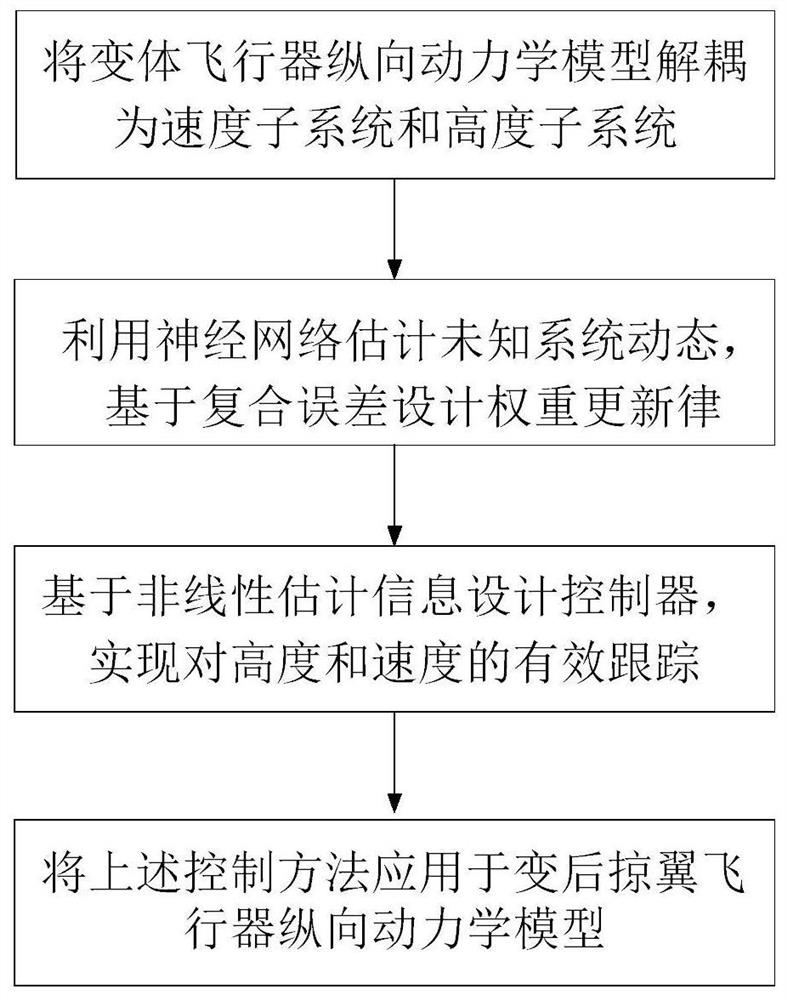
- A control method based on composite intelligent learning is used to decouple the longitudinal dynamics model of the morphing aircraft into a speed subsystem and a height subsystem, use neural networks to estimate unknown nonlinear functions, and improve the model through adaptive weight update laws and parallel estimation models. Approximating performance, designing dynamic inverse control and back-stepping control strategies.


Morphing wing, flight control device, flight control method, and program
PatentActiveGB2623227A
Innovation
- A morphing wing design featuring a link mechanism that deploys and retracts, with streamlined front wing covers and flight feathers that rotate and adjust to optimize aerodynamics, and a control system using deep reinforcement learning for efficient flight control.


Aviation Safety Regulations for AI-Controlled Aircraft
The integration of AI algorithms into morphing wing control systems presents unprecedented challenges for aviation safety regulations, requiring comprehensive regulatory frameworks that address the unique characteristics of adaptive aircraft structures. Current aviation authorities worldwide are grappling with establishing standards that can accommodate the dynamic nature of AI-controlled morphing wings while maintaining the stringent safety requirements essential for commercial aviation.
Existing regulatory frameworks, primarily designed for conventional fixed-wing aircraft, lack specific provisions for continuously adaptive wing geometries controlled by artificial intelligence systems. The Federal Aviation Administration (FAA) and European Union Aviation Safety Agency (EASA) are developing supplementary guidelines that address the certification challenges posed by morphing wing technologies, including requirements for real-time system monitoring, fail-safe mechanisms, and predictable degradation modes when AI systems encounter unexpected scenarios.
Certification processes for AI-controlled morphing wings must establish rigorous testing protocols that validate system behavior across the entire operational envelope. These protocols require demonstration of consistent performance under various flight conditions, including turbulence, system failures, and edge cases where AI algorithms may encounter scenarios outside their training parameters. Regulatory bodies are emphasizing the need for explainable AI systems that can provide clear reasoning for control decisions, enabling pilots and maintenance personnel to understand and verify system operations.
Safety standards for AI-integrated morphing wing systems mandate redundant control architectures with multiple independent AI processing units and conventional backup systems. Regulations require that morphing wing aircraft maintain safe flight characteristics even when AI systems are completely disabled, necessitating the implementation of fixed-geometry fallback modes that ensure continued airworthiness.
International harmonization of safety regulations remains a critical challenge, as different aviation authorities develop varying approaches to AI-controlled aircraft certification. The International Civil Aviation Organization (ICAO) is working to establish global standards that facilitate cross-border operations while maintaining consistent safety levels across different regulatory jurisdictions, ensuring that AI-controlled morphing wing aircraft can operate safely in international airspace.
Existing regulatory frameworks, primarily designed for conventional fixed-wing aircraft, lack specific provisions for continuously adaptive wing geometries controlled by artificial intelligence systems. The Federal Aviation Administration (FAA) and European Union Aviation Safety Agency (EASA) are developing supplementary guidelines that address the certification challenges posed by morphing wing technologies, including requirements for real-time system monitoring, fail-safe mechanisms, and predictable degradation modes when AI systems encounter unexpected scenarios.
Certification processes for AI-controlled morphing wings must establish rigorous testing protocols that validate system behavior across the entire operational envelope. These protocols require demonstration of consistent performance under various flight conditions, including turbulence, system failures, and edge cases where AI algorithms may encounter scenarios outside their training parameters. Regulatory bodies are emphasizing the need for explainable AI systems that can provide clear reasoning for control decisions, enabling pilots and maintenance personnel to understand and verify system operations.
Safety standards for AI-integrated morphing wing systems mandate redundant control architectures with multiple independent AI processing units and conventional backup systems. Regulations require that morphing wing aircraft maintain safe flight characteristics even when AI systems are completely disabled, necessitating the implementation of fixed-geometry fallback modes that ensure continued airworthiness.
International harmonization of safety regulations remains a critical challenge, as different aviation authorities develop varying approaches to AI-controlled aircraft certification. The International Civil Aviation Organization (ICAO) is working to establish global standards that facilitate cross-border operations while maintaining consistent safety levels across different regulatory jurisdictions, ensuring that AI-controlled morphing wing aircraft can operate safely in international airspace.
Real-Time Processing Requirements for Morphing Wing AI
Real-time processing requirements for morphing wing AI systems represent one of the most critical technical challenges in aerospace control engineering. The dynamic nature of morphing wing structures demands computational frameworks capable of processing sensor data, executing control algorithms, and implementing actuator commands within microsecond timeframes. Current aerospace standards typically require control loop execution frequencies between 1-10 kHz, translating to processing windows of 100-1000 microseconds per control cycle.
The computational complexity of AI algorithms poses significant challenges for real-time implementation. Neural networks used for morphing wing control often contain thousands of parameters requiring matrix operations and nonlinear activation functions. Traditional deep learning models may require several milliseconds for inference, which exceeds acceptable latency thresholds for flight-critical applications. This necessitates specialized optimization techniques including model quantization, pruning, and hardware acceleration to achieve sub-millisecond execution times.
Hardware architecture selection critically impacts real-time performance capabilities. Field-Programmable Gate Arrays (FPGAs) offer deterministic execution times and parallel processing capabilities essential for AI algorithm implementation. Graphics Processing Units (GPUs) provide high computational throughput but may introduce variable latency due to memory management overhead. Dedicated AI accelerators, such as neuromorphic processors, present emerging solutions for ultra-low latency neural network inference in aerospace applications.
Memory bandwidth and data throughput requirements significantly influence system design considerations. Morphing wing AI systems must simultaneously process multiple sensor streams including pressure sensors, strain gauges, accelerometers, and position encoders. High-resolution sensor arrays can generate data rates exceeding several megabytes per second, requiring efficient data pipeline architectures and memory hierarchies to prevent processing bottlenecks.
Deterministic timing guarantees remain paramount for safety-critical aerospace applications. Real-time operating systems with hard deadline scheduling capabilities ensure predictable AI algorithm execution. Worst-case execution time analysis becomes essential for certification compliance, requiring comprehensive timing validation across all operational scenarios and environmental conditions that morphing wing systems may encounter during flight operations.
The computational complexity of AI algorithms poses significant challenges for real-time implementation. Neural networks used for morphing wing control often contain thousands of parameters requiring matrix operations and nonlinear activation functions. Traditional deep learning models may require several milliseconds for inference, which exceeds acceptable latency thresholds for flight-critical applications. This necessitates specialized optimization techniques including model quantization, pruning, and hardware acceleration to achieve sub-millisecond execution times.
Hardware architecture selection critically impacts real-time performance capabilities. Field-Programmable Gate Arrays (FPGAs) offer deterministic execution times and parallel processing capabilities essential for AI algorithm implementation. Graphics Processing Units (GPUs) provide high computational throughput but may introduce variable latency due to memory management overhead. Dedicated AI accelerators, such as neuromorphic processors, present emerging solutions for ultra-low latency neural network inference in aerospace applications.
Memory bandwidth and data throughput requirements significantly influence system design considerations. Morphing wing AI systems must simultaneously process multiple sensor streams including pressure sensors, strain gauges, accelerometers, and position encoders. High-resolution sensor arrays can generate data rates exceeding several megabytes per second, requiring efficient data pipeline architectures and memory hierarchies to prevent processing bottlenecks.
Deterministic timing guarantees remain paramount for safety-critical aerospace applications. Real-time operating systems with hard deadline scheduling capabilities ensure predictable AI algorithm execution. Worst-case execution time analysis becomes essential for certification compliance, requiring comprehensive timing validation across all operational scenarios and environmental conditions that morphing wing systems may encounter during flight operations.
Unlock deeper insights with PatSnap Eureka Quick Research — get a full tech report to explore trends and direct your research. Try now!
Generate Your Research Report Instantly with AI Agent
Supercharge your innovation with PatSnap Eureka AI Agent Platform!