

How to Integrate Error Correction in Analog Signals Systems
MAR 31, 20269 MIN READ
Generate Your Research Report Instantly with AI Agent
PatSnap Eureka helps you evaluate technical feasibility & market potential.
Analog Error Correction Background and Objectives
Analog signal processing has been the cornerstone of electronic communication systems since the early 20th century, evolving from simple amplitude modulation techniques to sophisticated multi-carrier transmission schemes. The inherent vulnerability of analog signals to various forms of distortion, noise, and interference has driven continuous innovation in error correction methodologies. Unlike digital systems where error correction codes can be directly applied to discrete data streams, analog systems require fundamentally different approaches that account for the continuous nature of signal parameters.
The evolution of analog error correction has progressed through several distinct phases. Early systems relied primarily on redundancy techniques such as frequency diversity and spatial diversity in wireless communications. The introduction of feedback control systems in the 1940s marked a significant advancement, enabling real-time compensation for predictable distortions. Subsequently, the development of adaptive filtering techniques in the 1960s provided dynamic response capabilities to time-varying channel conditions.
Modern analog error correction encompasses a broad spectrum of techniques including pre-distortion, post-distortion compensation, and hybrid analog-digital approaches. The emergence of software-defined radio and cognitive radio technologies has further expanded the possibilities for intelligent error correction mechanisms that can adapt to changing environmental conditions and interference patterns.
The primary technical objectives for integrating error correction in analog signal systems center on maintaining signal integrity while minimizing computational complexity and power consumption. Key performance metrics include signal-to-noise ratio improvement, distortion reduction, and bandwidth efficiency preservation. The challenge lies in developing correction algorithms that can operate in real-time without introducing additional latency or requiring excessive processing resources.
Contemporary research focuses on leveraging machine learning algorithms for predictive error correction, implementing distributed correction mechanisms across multiple system components, and developing hybrid approaches that combine the best aspects of analog and digital correction techniques. The ultimate goal is achieving near-optimal error correction performance while maintaining the inherent advantages of analog processing, including lower power consumption and reduced quantization effects.
The integration challenge extends beyond pure technical considerations to encompass system-level optimization, where error correction mechanisms must be seamlessly embedded within existing analog architectures without compromising overall system performance or significantly increasing implementation costs.
The evolution of analog error correction has progressed through several distinct phases. Early systems relied primarily on redundancy techniques such as frequency diversity and spatial diversity in wireless communications. The introduction of feedback control systems in the 1940s marked a significant advancement, enabling real-time compensation for predictable distortions. Subsequently, the development of adaptive filtering techniques in the 1960s provided dynamic response capabilities to time-varying channel conditions.
Modern analog error correction encompasses a broad spectrum of techniques including pre-distortion, post-distortion compensation, and hybrid analog-digital approaches. The emergence of software-defined radio and cognitive radio technologies has further expanded the possibilities for intelligent error correction mechanisms that can adapt to changing environmental conditions and interference patterns.
The primary technical objectives for integrating error correction in analog signal systems center on maintaining signal integrity while minimizing computational complexity and power consumption. Key performance metrics include signal-to-noise ratio improvement, distortion reduction, and bandwidth efficiency preservation. The challenge lies in developing correction algorithms that can operate in real-time without introducing additional latency or requiring excessive processing resources.
Contemporary research focuses on leveraging machine learning algorithms for predictive error correction, implementing distributed correction mechanisms across multiple system components, and developing hybrid approaches that combine the best aspects of analog and digital correction techniques. The ultimate goal is achieving near-optimal error correction performance while maintaining the inherent advantages of analog processing, including lower power consumption and reduced quantization effects.
The integration challenge extends beyond pure technical considerations to encompass system-level optimization, where error correction mechanisms must be seamlessly embedded within existing analog architectures without compromising overall system performance or significantly increasing implementation costs.
Market Demand for Robust Analog Signal Processing
The global analog signal processing market is experiencing unprecedented growth driven by the proliferation of IoT devices, autonomous systems, and high-precision industrial applications. Traditional analog systems face increasing challenges from electromagnetic interference, thermal noise, and signal degradation, creating substantial demand for robust error correction capabilities. Industries ranging from telecommunications to medical devices require analog systems that maintain signal integrity across diverse operating conditions.
Telecommunications infrastructure represents one of the largest market segments demanding enhanced analog signal robustness. Base stations, fiber optic systems, and satellite communications require analog front-ends capable of maintaining signal quality despite environmental variations and interference. The transition to higher frequency bands and increased data throughput requirements amplify the need for sophisticated error correction mechanisms in analog processing chains.
Automotive electronics constitute another rapidly expanding market segment. Advanced driver assistance systems, electric vehicle powertrains, and autonomous driving platforms rely heavily on analog sensors and signal conditioning circuits. These applications demand exceptional reliability and fault tolerance, as signal errors can have critical safety implications. The automotive industry's push toward higher levels of automation directly correlates with increased requirements for robust analog signal processing solutions.
Industrial automation and process control systems represent significant market opportunities for error-corrected analog processing. Manufacturing environments expose analog circuits to harsh conditions including temperature extremes, vibration, and electromagnetic interference. Process control applications require precise analog measurements and control signals, where even minor errors can result in production inefficiencies or safety hazards.
Medical device applications drive demand for ultra-reliable analog signal processing, particularly in diagnostic equipment, patient monitoring systems, and implantable devices. Regulatory requirements and patient safety considerations necessitate analog systems with built-in error detection and correction capabilities. The growing trend toward portable and wearable medical devices further emphasizes the need for robust analog processing in challenging operating environments.
Emerging applications in quantum computing, advanced radar systems, and precision instrumentation are creating new market segments with stringent requirements for analog signal fidelity. These applications often operate at the limits of current technology capabilities, making error correction in analog domains increasingly critical for system performance and reliability.
Telecommunications infrastructure represents one of the largest market segments demanding enhanced analog signal robustness. Base stations, fiber optic systems, and satellite communications require analog front-ends capable of maintaining signal quality despite environmental variations and interference. The transition to higher frequency bands and increased data throughput requirements amplify the need for sophisticated error correction mechanisms in analog processing chains.
Automotive electronics constitute another rapidly expanding market segment. Advanced driver assistance systems, electric vehicle powertrains, and autonomous driving platforms rely heavily on analog sensors and signal conditioning circuits. These applications demand exceptional reliability and fault tolerance, as signal errors can have critical safety implications. The automotive industry's push toward higher levels of automation directly correlates with increased requirements for robust analog signal processing solutions.
Industrial automation and process control systems represent significant market opportunities for error-corrected analog processing. Manufacturing environments expose analog circuits to harsh conditions including temperature extremes, vibration, and electromagnetic interference. Process control applications require precise analog measurements and control signals, where even minor errors can result in production inefficiencies or safety hazards.
Medical device applications drive demand for ultra-reliable analog signal processing, particularly in diagnostic equipment, patient monitoring systems, and implantable devices. Regulatory requirements and patient safety considerations necessitate analog systems with built-in error detection and correction capabilities. The growing trend toward portable and wearable medical devices further emphasizes the need for robust analog processing in challenging operating environments.
Emerging applications in quantum computing, advanced radar systems, and precision instrumentation are creating new market segments with stringent requirements for analog signal fidelity. These applications often operate at the limits of current technology capabilities, making error correction in analog domains increasingly critical for system performance and reliability.
Current Challenges in Analog Signal Error Correction
Analog signal error correction faces fundamental challenges rooted in the continuous nature of analog systems, where traditional digital error correction techniques cannot be directly applied. Unlike digital systems that operate with discrete values, analog signals exist in a continuous domain where noise, distortion, and interference manifest as gradual degradations rather than clear bit errors. This continuous characteristic makes it extremely difficult to define precise error boundaries and implement conventional parity checks or redundancy-based correction mechanisms.
Noise accumulation represents one of the most persistent challenges in analog signal processing chains. As signals traverse through multiple amplification stages, transmission media, and processing components, various noise sources including thermal noise, shot noise, and flicker noise compound progressively. Each stage introduces additional noise components that cannot be easily separated from the original signal, creating a cumulative degradation effect that becomes increasingly difficult to reverse downstream.
Bandwidth limitations impose significant constraints on error correction implementation in analog systems. Traditional error correction approaches often require additional bandwidth for redundant information transmission, but analog systems frequently operate under strict bandwidth constraints. The challenge lies in developing correction mechanisms that can operate within existing bandwidth allocations without compromising signal quality or transmission efficiency.
Temperature variations and component aging present long-term stability challenges that are particularly pronounced in analog systems. Circuit parameters drift over time due to component aging, temperature fluctuations, and environmental factors, causing systematic errors that evolve dynamically. These time-varying characteristics make it difficult to implement static correction algorithms, requiring adaptive approaches that can track and compensate for changing system behaviors.
Linearity maintenance across the entire signal processing chain poses another critical challenge. Error correction circuits themselves can introduce nonlinear distortions, potentially creating new error sources while attempting to correct existing ones. The challenge involves designing correction mechanisms that maintain high linearity while providing effective error mitigation, often requiring careful trade-offs between correction capability and signal integrity.
Real-time processing requirements in many analog applications create computational constraints that limit the complexity of implementable error correction algorithms. Unlike digital systems where complex processing can be performed offline or with acceptable delays, analog systems often demand instantaneous correction responses, restricting the sophistication of correction techniques that can be practically deployed.
Noise accumulation represents one of the most persistent challenges in analog signal processing chains. As signals traverse through multiple amplification stages, transmission media, and processing components, various noise sources including thermal noise, shot noise, and flicker noise compound progressively. Each stage introduces additional noise components that cannot be easily separated from the original signal, creating a cumulative degradation effect that becomes increasingly difficult to reverse downstream.
Bandwidth limitations impose significant constraints on error correction implementation in analog systems. Traditional error correction approaches often require additional bandwidth for redundant information transmission, but analog systems frequently operate under strict bandwidth constraints. The challenge lies in developing correction mechanisms that can operate within existing bandwidth allocations without compromising signal quality or transmission efficiency.
Temperature variations and component aging present long-term stability challenges that are particularly pronounced in analog systems. Circuit parameters drift over time due to component aging, temperature fluctuations, and environmental factors, causing systematic errors that evolve dynamically. These time-varying characteristics make it difficult to implement static correction algorithms, requiring adaptive approaches that can track and compensate for changing system behaviors.
Linearity maintenance across the entire signal processing chain poses another critical challenge. Error correction circuits themselves can introduce nonlinear distortions, potentially creating new error sources while attempting to correct existing ones. The challenge involves designing correction mechanisms that maintain high linearity while providing effective error mitigation, often requiring careful trade-offs between correction capability and signal integrity.
Real-time processing requirements in many analog applications create computational constraints that limit the complexity of implementable error correction algorithms. Unlike digital systems where complex processing can be performed offline or with acceptable delays, analog systems often demand instantaneous correction responses, restricting the sophistication of correction techniques that can be practically deployed.
Existing Analog Error Correction Solutions
01 Error detection and correction coding techniques
Various error correction coding methods are employed to detect and correct errors in data transmission and storage systems. These techniques include forward error correction (FEC), convolutional codes, turbo codes, and low-density parity-check (LDPC) codes. The methods involve encoding data with redundant information that allows receivers to identify and correct errors without requiring retransmission. These coding schemes are particularly useful in communication systems, memory devices, and data storage applications where data integrity is critical.- Error detection and correction coding techniques: Various error correction coding methods are employed to detect and correct errors in data transmission and storage systems. These techniques include forward error correction (FEC), convolutional codes, turbo codes, and low-density parity-check (LDPC) codes. The methods involve encoding data with redundant information that allows receivers to identify and correct errors without requiring retransmission. These coding schemes are particularly useful in communication systems, memory devices, and data storage applications where data integrity is critical.
- Memory error correction mechanisms: Memory systems implement error correction mechanisms to ensure data reliability and integrity. These mechanisms include error correction code (ECC) memory that can detect and correct single-bit errors and detect multi-bit errors. The systems utilize parity bits, Hamming codes, and other error correction algorithms to protect stored data from corruption due to electrical interference, cosmic rays, or hardware failures. Advanced memory controllers incorporate real-time error detection and correction capabilities to maintain system stability.
- Communication channel error correction: Error correction techniques are applied in communication channels to improve signal quality and reduce data loss. These methods include automatic repeat request (ARQ) protocols, hybrid ARQ schemes, and adaptive error correction that adjusts to channel conditions. The systems employ interleaving, puncturing, and rate-matching techniques to optimize error correction performance across varying channel conditions. These approaches are essential for wireless communications, satellite links, and other transmission media prone to noise and interference.
- Quantum error correction methods: Quantum computing systems require specialized error correction methods to protect quantum information from decoherence and quantum noise. These techniques involve quantum error correction codes that encode logical qubits into multiple physical qubits, enabling the detection and correction of quantum errors without directly measuring the quantum state. The methods include surface codes, stabilizer codes, and topological error correction schemes that are essential for building fault-tolerant quantum computers.
- Iterative decoding and error correction algorithms: Iterative decoding algorithms provide powerful error correction capabilities through repeated refinement of decoded information. These algorithms include belief propagation, sum-product algorithms, and iterative soft-decision decoding that exchange information between decoder components to progressively improve error correction performance. The methods are particularly effective for modern coding schemes and can achieve near-optimal performance with manageable computational complexity. Applications include advanced wireless standards, optical communications, and high-density storage systems.
02 Memory error correction mechanisms
Error correction mechanisms specifically designed for memory systems utilize error correction codes (ECC) to detect and correct bit errors that occur during data storage and retrieval. These systems implement various algorithms including single-error correction and double-error detection (SEC-DED) codes, Reed-Solomon codes, and BCH codes. The error correction circuitry is integrated into memory controllers to automatically identify corrupted data and restore it to its original state, thereby improving system reliability and data integrity.Expand Specific Solutions03 Iterative decoding and error correction algorithms
Iterative decoding techniques employ repeated processing cycles to progressively improve error correction performance. These algorithms include iterative belief propagation, soft-decision decoding, and message-passing algorithms that exchange information between decoder components. The iterative approach allows for more powerful error correction capabilities compared to single-pass decoding methods, making them suitable for advanced communication systems and high-density storage devices where error rates may be higher.Expand Specific Solutions04 Adaptive error correction systems
Adaptive error correction systems dynamically adjust their correction strategies based on channel conditions, error rates, or system requirements. These systems monitor error patterns and modify coding parameters, correction strength, or decoding algorithms in real-time to optimize performance. The adaptive approach enables efficient resource utilization by applying stronger correction only when needed, thereby balancing error correction capability with processing overhead and power consumption.Expand Specific Solutions05 Multi-level error correction architectures
Multi-level error correction architectures implement hierarchical correction schemes that combine different error correction techniques at various stages of data processing. These systems may employ inner and outer codes, concatenated coding schemes, or multiple layers of error detection and correction. The multi-level approach provides enhanced error correction capability by catching errors that escape initial correction stages, thereby achieving higher reliability in demanding applications such as satellite communications and long-term data archival.Expand Specific Solutions
Key Players in Analog Signal Processing Industry
The analog signal error correction market is experiencing rapid growth driven by increasing demand for high-fidelity signal processing across automotive, telecommunications, and industrial applications. The industry is in an expansion phase with significant market opportunities, particularly in 5G infrastructure and autonomous systems. Technology maturity varies considerably among key players. Established semiconductor leaders like Analog Devices, Texas Instruments, and Samsung Electronics demonstrate advanced capabilities in integrated error correction solutions. Companies such as Skyworks Solutions and NXP Semiconductors are advancing RF-specific error correction technologies. Research institutions including University of California, Columbia University, and Beihang University are driving fundamental innovations in signal processing algorithms. Defense contractors like Raytheon and Thales are developing specialized solutions for mission-critical applications. The competitive landscape shows a mix of mature analog specialists, emerging digital signal processing innovators, and academic research centers pushing technological boundaries forward.
Analog Devices, Inc.
Technical Solution: ADI implements comprehensive error correction in analog signal systems through advanced sigma-delta modulation techniques combined with digital signal processing algorithms. Their approach utilizes oversampling and noise shaping to achieve high-resolution analog-to-digital conversion with inherent error correction capabilities. The company's integrated circuits feature built-in calibration mechanisms that continuously monitor and correct for offset, gain, and linearity errors in real-time. Their proprietary iPassives technology enables precise analog signal conditioning with automatic compensation for temperature drift and aging effects. ADI's error correction systems also incorporate machine learning algorithms for predictive error modeling and correction, significantly improving signal integrity in harsh industrial environments.
Strengths: Industry-leading expertise in precision analog circuits, comprehensive product portfolio, strong R&D capabilities. Weaknesses: Higher cost compared to competitors, complex implementation requiring specialized knowledge.
Samsung Electronics Co., Ltd.
Technical Solution: Samsung's error correction approach for analog signals focuses on advanced CMOS process technology and mixed-signal IC design. Their methodology incorporates on-chip calibration circuits that perform background error correction during normal operation. The company utilizes chopper stabilization techniques and correlated double sampling to minimize 1/f noise and offset errors in analog front-end circuits. Samsung's solutions feature adaptive filtering algorithms that dynamically adjust correction parameters based on signal characteristics and environmental conditions. Their error correction systems are particularly optimized for high-speed data converters and RF applications, employing digital post-processing techniques to compensate for analog imperfections and enhance overall system performance.
Strengths: Advanced semiconductor manufacturing capabilities, cost-effective solutions, strong integration capabilities. Weaknesses: Limited focus on specialized analog applications, less extensive analog expertise compared to dedicated analog companies.
Core Innovations in Analog Error Correction Methods
Digital background cancellation of digital to analog converter mismatch noise in analog to digital converters
PatentInactiveUS7006028B2
Innovation
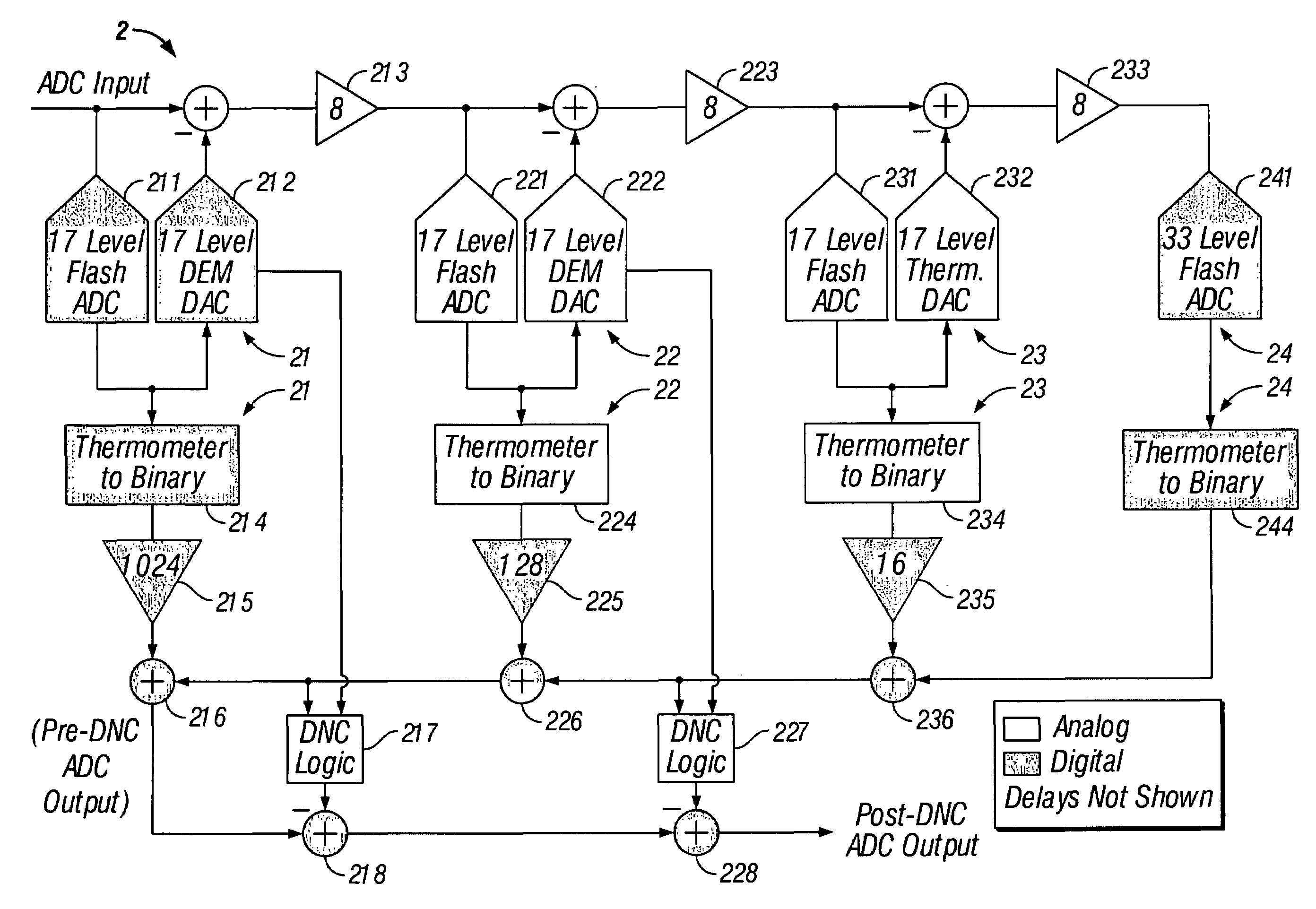
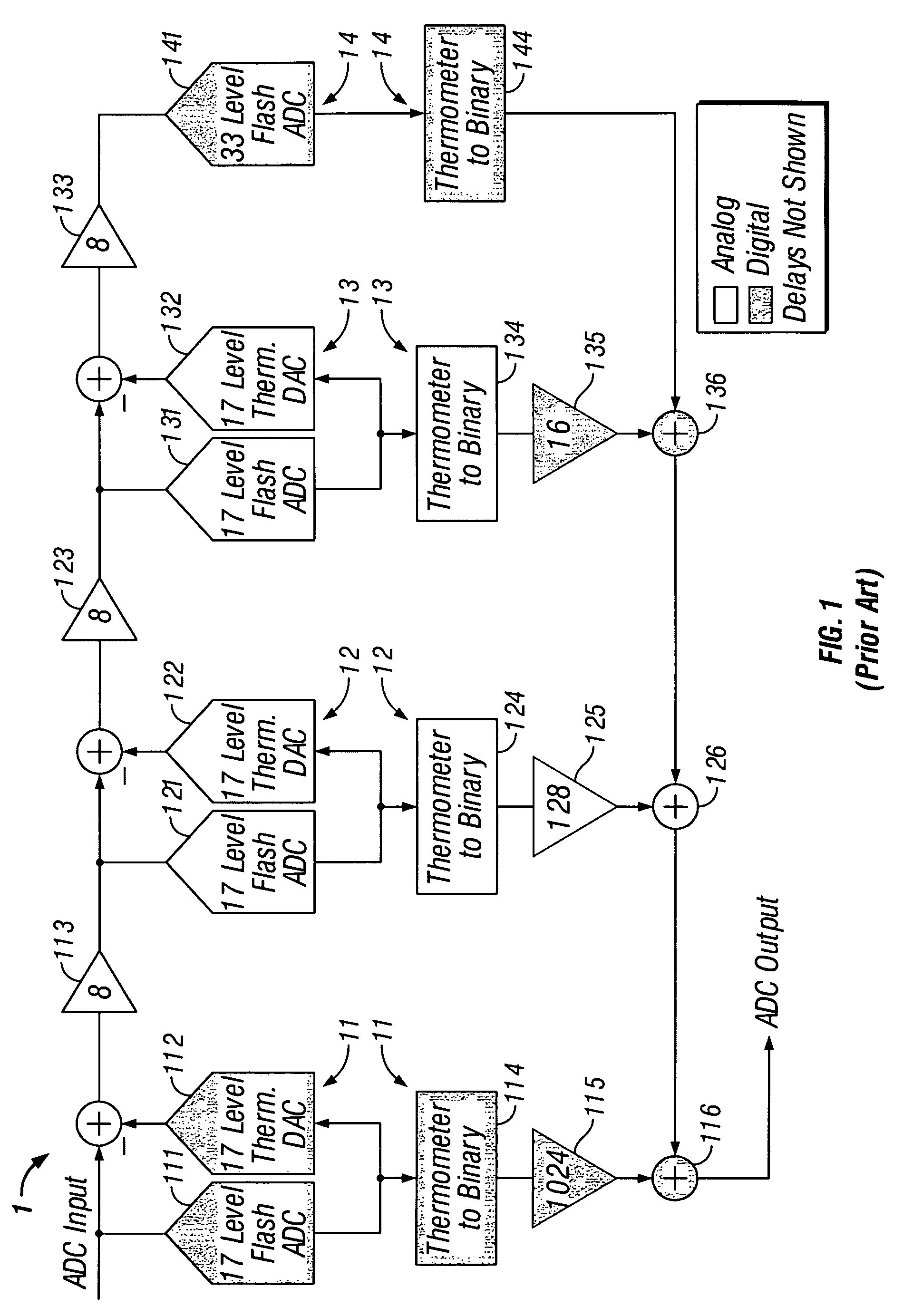
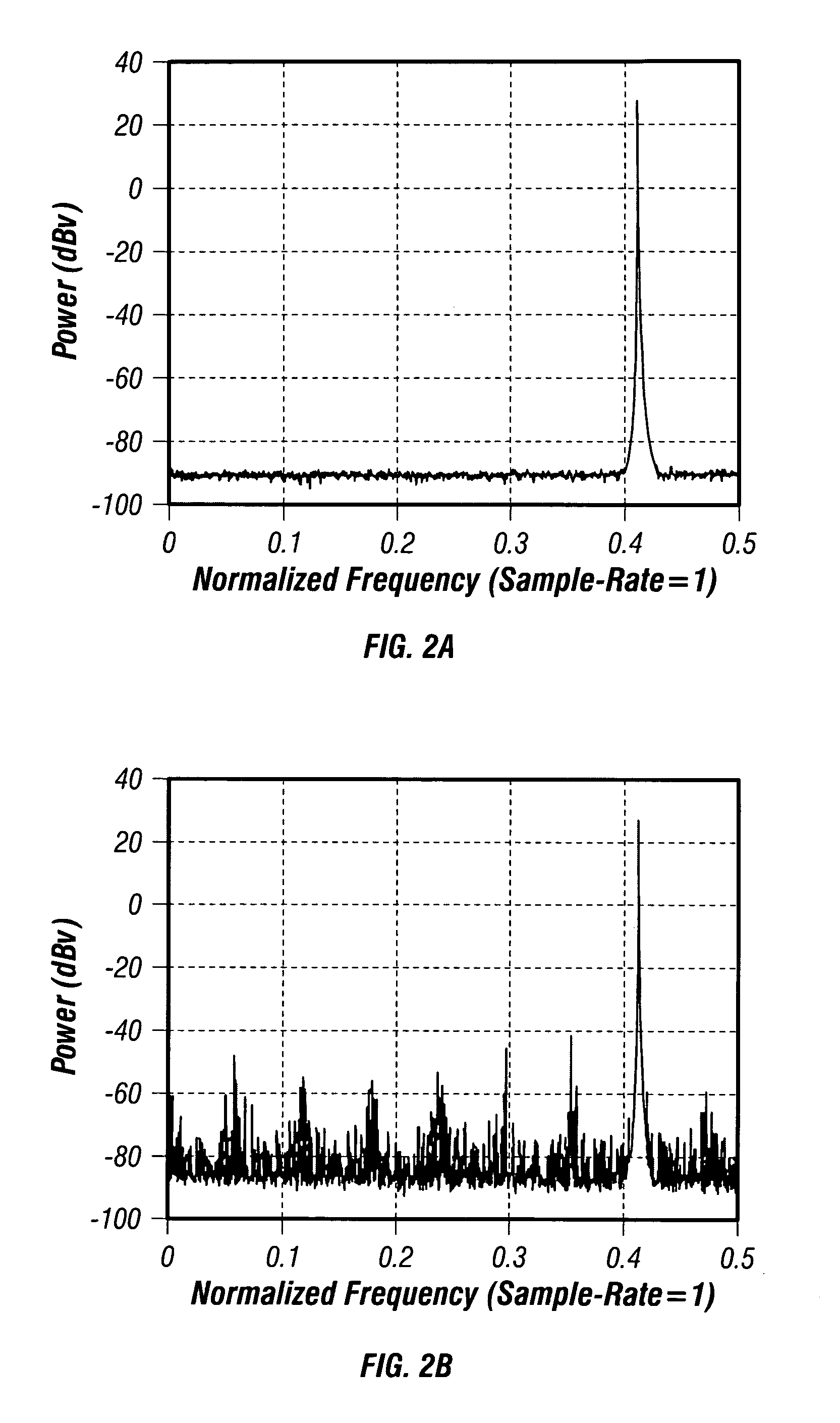
- An all-digital technique for continuous digital cancellation of DAC noise, referred to as Digital Noise Cancellation (DNC), which measures and cancels noise from static analog errors like capacitor mismatches during normal operation without requiring special calibration, using digital logic and enhancing each stage's flash DAC to produce random and parity bits for error estimation and correction.

Digital cancellation of D/A converter noise in pipelined A/D converters
PatentInactiveUS6734818B2
Innovation
- The implementation of a digital noise cancellation technique that continuously measures and cancels DAC noise using digital logic within each stage of the converter, producing random and parity bits to estimate and correct for errors, thereby enhancing ADC accuracy without requiring additional analog circuits.


Standards and Compliance for Analog Systems
The integration of error correction mechanisms in analog signal systems must adhere to a comprehensive framework of industry standards and regulatory compliance requirements. These standards ensure interoperability, safety, and performance consistency across different manufacturers and applications. Key international standards include IEEE 802.11 for wireless communications, ITU-T recommendations for telecommunications, and IEC standards for industrial automation systems.
Regulatory compliance varies significantly across different geographical regions and application domains. In the United States, the Federal Communications Commission (FCC) establishes stringent requirements for analog systems operating in licensed and unlicensed spectrum bands. European markets must comply with ETSI standards and CE marking requirements, while Asian markets follow region-specific regulations such as those established by Japan's Ministry of Internal Affairs and Communications.
Safety standards play a crucial role in analog error correction implementations, particularly in critical applications such as medical devices, automotive systems, and industrial control. IEC 61508 provides the foundational framework for functional safety in electrical systems, while ISO 26262 specifically addresses automotive applications. These standards mandate specific error detection and correction capabilities to achieve required Safety Integrity Levels (SIL).
Environmental compliance standards significantly impact the design and implementation of analog error correction systems. RoHS directives restrict the use of hazardous substances, while REACH regulations govern chemical safety. These requirements influence component selection and manufacturing processes for error correction circuits.
Testing and certification procedures represent critical compliance aspects that directly affect error correction system validation. Standards such as MIL-STD-810 for environmental testing and IEC 60068 for climatic and mechanical testing establish rigorous protocols for verifying system performance under adverse conditions. These testing requirements ensure that error correction mechanisms maintain effectiveness across specified operating ranges.
Quality management systems, particularly ISO 9001 and AS9100 for aerospace applications, establish documentation and process control requirements that govern the development and manufacturing of analog error correction systems. These standards mandate traceability, configuration management, and continuous improvement processes that directly impact system reliability and performance consistency.
Regulatory compliance varies significantly across different geographical regions and application domains. In the United States, the Federal Communications Commission (FCC) establishes stringent requirements for analog systems operating in licensed and unlicensed spectrum bands. European markets must comply with ETSI standards and CE marking requirements, while Asian markets follow region-specific regulations such as those established by Japan's Ministry of Internal Affairs and Communications.
Safety standards play a crucial role in analog error correction implementations, particularly in critical applications such as medical devices, automotive systems, and industrial control. IEC 61508 provides the foundational framework for functional safety in electrical systems, while ISO 26262 specifically addresses automotive applications. These standards mandate specific error detection and correction capabilities to achieve required Safety Integrity Levels (SIL).
Environmental compliance standards significantly impact the design and implementation of analog error correction systems. RoHS directives restrict the use of hazardous substances, while REACH regulations govern chemical safety. These requirements influence component selection and manufacturing processes for error correction circuits.
Testing and certification procedures represent critical compliance aspects that directly affect error correction system validation. Standards such as MIL-STD-810 for environmental testing and IEC 60068 for climatic and mechanical testing establish rigorous protocols for verifying system performance under adverse conditions. These testing requirements ensure that error correction mechanisms maintain effectiveness across specified operating ranges.
Quality management systems, particularly ISO 9001 and AS9100 for aerospace applications, establish documentation and process control requirements that govern the development and manufacturing of analog error correction systems. These standards mandate traceability, configuration management, and continuous improvement processes that directly impact system reliability and performance consistency.
Implementation Costs and ROI Analysis
The implementation of error correction systems in analog signal processing requires substantial upfront investment across multiple dimensions. Hardware costs typically represent the largest expense category, encompassing specialized analog-to-digital converters with enhanced precision, dedicated error correction processors, and redundant signal path components. These components can increase system costs by 25-40% compared to conventional analog systems without error correction capabilities.
Software development expenses constitute another significant cost factor, particularly for adaptive error correction algorithms and real-time processing frameworks. Custom firmware development for embedded error correction systems typically requires 6-12 months of specialized engineering effort, translating to development costs ranging from $200,000 to $500,000 depending on system complexity and performance requirements.
Operational expenditures include increased power consumption due to additional processing overhead, with error correction systems typically consuming 15-30% more power than baseline implementations. Training costs for technical personnel and ongoing maintenance of sophisticated error correction infrastructure add approximately 10-15% to annual operational budgets.
Return on investment analysis reveals compelling benefits across multiple performance metrics. Quality improvements through reduced signal degradation and enhanced reliability can decrease product return rates by 40-60%, directly impacting customer satisfaction and warranty costs. In telecommunications applications, improved signal integrity translates to higher data throughput and reduced retransmission requirements, potentially increasing revenue per customer by 8-12%.
Manufacturing yield improvements represent another significant ROI driver, particularly in high-precision analog systems where error correction enables relaxed component tolerances while maintaining performance specifications. This approach can reduce component costs by 20-25% while improving overall system reliability.
The payback period for error correction implementation typically ranges from 18-36 months, depending on application domain and performance requirements. Mission-critical applications such as medical devices and aerospace systems often justify shorter payback periods due to the high cost of system failures and regulatory compliance requirements.
Software development expenses constitute another significant cost factor, particularly for adaptive error correction algorithms and real-time processing frameworks. Custom firmware development for embedded error correction systems typically requires 6-12 months of specialized engineering effort, translating to development costs ranging from $200,000 to $500,000 depending on system complexity and performance requirements.
Operational expenditures include increased power consumption due to additional processing overhead, with error correction systems typically consuming 15-30% more power than baseline implementations. Training costs for technical personnel and ongoing maintenance of sophisticated error correction infrastructure add approximately 10-15% to annual operational budgets.
Return on investment analysis reveals compelling benefits across multiple performance metrics. Quality improvements through reduced signal degradation and enhanced reliability can decrease product return rates by 40-60%, directly impacting customer satisfaction and warranty costs. In telecommunications applications, improved signal integrity translates to higher data throughput and reduced retransmission requirements, potentially increasing revenue per customer by 8-12%.
Manufacturing yield improvements represent another significant ROI driver, particularly in high-precision analog systems where error correction enables relaxed component tolerances while maintaining performance specifications. This approach can reduce component costs by 20-25% while improving overall system reliability.
The payback period for error correction implementation typically ranges from 18-36 months, depending on application domain and performance requirements. Mission-critical applications such as medical devices and aerospace systems often justify shorter payback periods due to the high cost of system failures and regulatory compliance requirements.
Unlock deeper insights with PatSnap Eureka Quick Research — get a full tech report to explore trends and direct your research. Try now!
Generate Your Research Report Instantly with AI Agent
Supercharge your innovation with PatSnap Eureka AI Agent Platform!