

How to Integrate Machine Learning with Spiking Networks
APR 24, 20269 MIN READ
Generate Your Research Report Instantly with AI Agent
Patsnap Eureka helps you evaluate technical feasibility & market potential.
ML-SNN Integration Background and Objectives
The integration of machine learning with spiking neural networks represents a convergence of two distinct computational paradigms that has emerged as a critical frontier in neuromorphic computing. Traditional artificial neural networks, while highly successful in various applications, operate on continuous-valued activations and require substantial computational resources. In contrast, spiking neural networks more closely mimic biological neural systems by processing information through discrete spike events, offering potential advantages in energy efficiency and temporal processing capabilities.
The historical development of this integration began in the early 2000s when researchers recognized the limitations of conventional deep learning approaches in terms of power consumption and real-time processing requirements. The biological inspiration from the human brain, which operates on approximately 20 watts while performing complex cognitive tasks, drove the exploration of spike-based computation as an alternative to traditional neural network architectures.
Current technological evolution in this field is characterized by the development of hybrid architectures that combine the learning capabilities of machine learning algorithms with the event-driven processing of spiking networks. This evolution has been accelerated by advances in neuromorphic hardware platforms such as Intel's Loihi and IBM's TrueNorth chips, which provide specialized architectures for spike-based computation.
The primary technical objectives of ML-SNN integration focus on developing efficient conversion methods between artificial neural networks and spiking neural networks while preserving learned representations. Key goals include minimizing information loss during the conversion process, optimizing spike encoding schemes for different data types, and establishing training methodologies that can directly optimize spiking network parameters.
Another critical objective involves addressing the temporal dynamics inherent in spiking networks, which traditional machine learning models typically do not exploit. This includes developing algorithms that can leverage the precise timing of spikes for enhanced pattern recognition and sequential data processing capabilities.
The integration also aims to achieve significant reductions in computational energy consumption, particularly for inference tasks in edge computing scenarios. By exploiting the sparse, event-driven nature of spike-based processing, the objective is to realize orders of magnitude improvements in energy efficiency compared to conventional neural network implementations.
Furthermore, the field seeks to establish standardized frameworks and methodologies that enable seamless integration of existing machine learning models with spiking network architectures, facilitating broader adoption across various application domains including robotics, autonomous systems, and real-time signal processing.
The historical development of this integration began in the early 2000s when researchers recognized the limitations of conventional deep learning approaches in terms of power consumption and real-time processing requirements. The biological inspiration from the human brain, which operates on approximately 20 watts while performing complex cognitive tasks, drove the exploration of spike-based computation as an alternative to traditional neural network architectures.
Current technological evolution in this field is characterized by the development of hybrid architectures that combine the learning capabilities of machine learning algorithms with the event-driven processing of spiking networks. This evolution has been accelerated by advances in neuromorphic hardware platforms such as Intel's Loihi and IBM's TrueNorth chips, which provide specialized architectures for spike-based computation.
The primary technical objectives of ML-SNN integration focus on developing efficient conversion methods between artificial neural networks and spiking neural networks while preserving learned representations. Key goals include minimizing information loss during the conversion process, optimizing spike encoding schemes for different data types, and establishing training methodologies that can directly optimize spiking network parameters.
Another critical objective involves addressing the temporal dynamics inherent in spiking networks, which traditional machine learning models typically do not exploit. This includes developing algorithms that can leverage the precise timing of spikes for enhanced pattern recognition and sequential data processing capabilities.
The integration also aims to achieve significant reductions in computational energy consumption, particularly for inference tasks in edge computing scenarios. By exploiting the sparse, event-driven nature of spike-based processing, the objective is to realize orders of magnitude improvements in energy efficiency compared to conventional neural network implementations.
Furthermore, the field seeks to establish standardized frameworks and methodologies that enable seamless integration of existing machine learning models with spiking network architectures, facilitating broader adoption across various application domains including robotics, autonomous systems, and real-time signal processing.
Market Demand for Neuromorphic ML Solutions
The neuromorphic computing market is experiencing unprecedented growth driven by the increasing limitations of traditional von Neumann architectures in handling complex AI workloads. Organizations across industries are seeking energy-efficient alternatives to conventional deep learning systems, particularly for edge computing applications where power consumption and real-time processing capabilities are critical constraints.
Healthcare and biomedical sectors represent significant demand drivers for neuromorphic ML solutions. Medical device manufacturers are actively exploring spiking neural networks for real-time patient monitoring systems, prosthetic control interfaces, and neural signal processing applications. The temporal dynamics inherent in spiking networks align naturally with biological signal patterns, creating substantial market opportunities for companies developing brain-computer interfaces and implantable medical devices.
Autonomous vehicle manufacturers constitute another major market segment demanding neuromorphic ML integration. The automotive industry requires ultra-low latency sensor fusion and decision-making capabilities that traditional ML approaches struggle to deliver within acceptable power budgets. Spiking networks offer promising solutions for real-time object detection, collision avoidance, and adaptive cruise control systems, driving substantial investment in neuromorphic hardware and software development.
Industrial automation and robotics sectors are increasingly adopting neuromorphic approaches for adaptive manufacturing systems. Companies seek ML solutions capable of learning and adapting to dynamic production environments while maintaining energy efficiency. Spiking networks enable continuous learning capabilities that traditional batch-processing ML systems cannot provide, particularly valuable for predictive maintenance and quality control applications.
The Internet of Things ecosystem presents vast market potential for neuromorphic ML solutions. Edge devices require intelligent processing capabilities without compromising battery life or requiring constant cloud connectivity. Spiking networks address these constraints by providing event-driven processing that activates only when necessary, significantly reducing power consumption compared to conventional neural networks.
Defense and aerospace industries are investing heavily in neuromorphic technologies for autonomous systems, surveillance applications, and adaptive communication networks. These sectors demand robust ML solutions capable of operating in challenging environments with limited computational resources, making spiking network integration particularly attractive for mission-critical applications requiring real-time decision-making capabilities.
Healthcare and biomedical sectors represent significant demand drivers for neuromorphic ML solutions. Medical device manufacturers are actively exploring spiking neural networks for real-time patient monitoring systems, prosthetic control interfaces, and neural signal processing applications. The temporal dynamics inherent in spiking networks align naturally with biological signal patterns, creating substantial market opportunities for companies developing brain-computer interfaces and implantable medical devices.
Autonomous vehicle manufacturers constitute another major market segment demanding neuromorphic ML integration. The automotive industry requires ultra-low latency sensor fusion and decision-making capabilities that traditional ML approaches struggle to deliver within acceptable power budgets. Spiking networks offer promising solutions for real-time object detection, collision avoidance, and adaptive cruise control systems, driving substantial investment in neuromorphic hardware and software development.
Industrial automation and robotics sectors are increasingly adopting neuromorphic approaches for adaptive manufacturing systems. Companies seek ML solutions capable of learning and adapting to dynamic production environments while maintaining energy efficiency. Spiking networks enable continuous learning capabilities that traditional batch-processing ML systems cannot provide, particularly valuable for predictive maintenance and quality control applications.
The Internet of Things ecosystem presents vast market potential for neuromorphic ML solutions. Edge devices require intelligent processing capabilities without compromising battery life or requiring constant cloud connectivity. Spiking networks address these constraints by providing event-driven processing that activates only when necessary, significantly reducing power consumption compared to conventional neural networks.
Defense and aerospace industries are investing heavily in neuromorphic technologies for autonomous systems, surveillance applications, and adaptive communication networks. These sectors demand robust ML solutions capable of operating in challenging environments with limited computational resources, making spiking network integration particularly attractive for mission-critical applications requiring real-time decision-making capabilities.
Current State of ML-SNN Integration Challenges
The integration of machine learning with spiking neural networks represents a convergence of two distinct computational paradigms, each with inherent advantages and limitations. Current research efforts face significant challenges in bridging the gap between traditional artificial neural networks optimized for digital computation and biologically-inspired spiking networks that operate on temporal spike patterns.
One of the primary technical obstacles lies in the fundamental difference in information representation. Traditional machine learning algorithms process continuous-valued data through matrix operations, while spiking networks encode information in discrete temporal events. This disparity creates substantial difficulties in developing unified training algorithms that can effectively leverage both computational approaches simultaneously.
The temporal dynamics inherent in spiking networks introduce additional complexity layers that conventional backpropagation algorithms struggle to handle efficiently. The non-differentiable nature of spike generation functions poses mathematical challenges for gradient-based optimization methods, requiring specialized surrogate gradient techniques or alternative learning rules that often compromise training efficiency and convergence stability.
Hardware implementation constraints further complicate the integration process. While spiking networks promise energy-efficient neuromorphic computing, most existing machine learning frameworks are optimized for GPU-based parallel processing. This architectural mismatch creates bottlenecks when attempting to deploy hybrid ML-SNN systems, particularly in real-time applications where latency and power consumption are critical factors.
Scalability issues emerge when attempting to train large-scale hybrid networks. The computational overhead associated with simulating precise spike timing and synaptic dynamics significantly increases training time compared to conventional neural networks. Memory requirements for storing temporal state information across extended time windows present additional resource allocation challenges.
Current software ecosystems lack standardized frameworks for seamless ML-SNN integration. Existing tools typically focus on either traditional machine learning or pure spiking network simulation, creating fragmented development environments that hinder rapid prototyping and deployment of hybrid architectures.
The validation and benchmarking of integrated systems remain problematic due to the absence of established performance metrics that adequately capture both temporal processing capabilities and traditional accuracy measures. This evaluation gap impedes systematic comparison of different integration approaches and slows progress toward optimal hybrid architectures.
One of the primary technical obstacles lies in the fundamental difference in information representation. Traditional machine learning algorithms process continuous-valued data through matrix operations, while spiking networks encode information in discrete temporal events. This disparity creates substantial difficulties in developing unified training algorithms that can effectively leverage both computational approaches simultaneously.
The temporal dynamics inherent in spiking networks introduce additional complexity layers that conventional backpropagation algorithms struggle to handle efficiently. The non-differentiable nature of spike generation functions poses mathematical challenges for gradient-based optimization methods, requiring specialized surrogate gradient techniques or alternative learning rules that often compromise training efficiency and convergence stability.
Hardware implementation constraints further complicate the integration process. While spiking networks promise energy-efficient neuromorphic computing, most existing machine learning frameworks are optimized for GPU-based parallel processing. This architectural mismatch creates bottlenecks when attempting to deploy hybrid ML-SNN systems, particularly in real-time applications where latency and power consumption are critical factors.
Scalability issues emerge when attempting to train large-scale hybrid networks. The computational overhead associated with simulating precise spike timing and synaptic dynamics significantly increases training time compared to conventional neural networks. Memory requirements for storing temporal state information across extended time windows present additional resource allocation challenges.
Current software ecosystems lack standardized frameworks for seamless ML-SNN integration. Existing tools typically focus on either traditional machine learning or pure spiking network simulation, creating fragmented development environments that hinder rapid prototyping and deployment of hybrid architectures.
The validation and benchmarking of integrated systems remain problematic due to the absence of established performance metrics that adequately capture both temporal processing capabilities and traditional accuracy measures. This evaluation gap impedes systematic comparison of different integration approaches and slows progress toward optimal hybrid architectures.
Existing ML-SNN Integration Approaches
01 Spiking neural network architectures and neuron models
Spiking neural networks utilize biologically-inspired neuron models that communicate through discrete spikes or pulses, mimicking the behavior of biological neurons. These architectures implement various neuron models such as leaky integrate-and-fire neurons, which accumulate input signals over time and generate output spikes when a threshold is reached. The networks can be configured with different topologies and connection patterns to process temporal information efficiently. Advanced implementations include multi-layer spiking networks with recurrent connections that enable complex pattern recognition and temporal sequence learning.- Spiking neural network architectures and neuron models: Spiking neural networks utilize biologically-inspired neuron models that communicate through discrete spikes or pulses, mimicking the behavior of biological neurons. These architectures implement various neuron models such as leaky integrate-and-fire neurons, which accumulate input signals over time and generate output spikes when a threshold is reached. The networks can be configured with different topologies and connection patterns to process temporal information efficiently. These models enable energy-efficient computation by only activating neurons when spikes occur, making them suitable for neuromorphic hardware implementations.
- Training and learning algorithms for spiking networks: Specialized learning algorithms have been developed to train spiking neural networks, including spike-timing-dependent plasticity and supervised learning methods adapted for temporal spike patterns. These algorithms adjust synaptic weights based on the precise timing of pre-synaptic and post-synaptic spikes, enabling the network to learn complex temporal patterns. Training methods incorporate backpropagation techniques modified for discrete spike events, as well as unsupervised learning approaches that allow networks to self-organize based on input statistics. These learning mechanisms enable spiking networks to perform classification, pattern recognition, and prediction tasks.
- Hardware implementations and neuromorphic computing systems: Neuromorphic hardware platforms have been designed specifically to implement spiking neural networks efficiently, utilizing specialized circuits and architectures that exploit the event-driven nature of spike-based computation. These systems include custom integrated circuits, field-programmable gate arrays, and dedicated neuromorphic processors that can execute spiking network operations with significantly lower power consumption compared to traditional computing architectures. The hardware implementations support parallel processing of multiple neurons and synapses, enabling real-time operation for applications such as sensory processing and robotics.
- Encoding and decoding schemes for spike-based information processing: Various encoding schemes have been developed to convert continuous-valued input data into spike trains that can be processed by spiking neural networks, including rate coding, temporal coding, and population coding methods. These encoding techniques transform sensory inputs, images, or other data types into sequences of spikes that preserve relevant information while enabling efficient processing. Complementary decoding methods extract meaningful outputs from the spike patterns generated by the network, translating temporal spike sequences back into actionable results. These schemes are critical for interfacing spiking networks with real-world applications and conventional computing systems.
- Applications of spiking networks in pattern recognition and sensory processing: Spiking neural networks have been applied to various machine learning tasks including visual pattern recognition, auditory processing, and sensor data analysis, leveraging their ability to process temporal information naturally. These applications exploit the temporal dynamics of spiking networks to detect patterns in time-series data, recognize objects in visual scenes, and classify complex sensory inputs. The networks demonstrate advantages in processing event-based sensor data from neuromorphic cameras and cochlear sensors, where information is naturally represented as asynchronous events. Implementation in robotics and autonomous systems benefits from the low-latency and energy-efficient characteristics of spike-based processing.
02 Training and learning algorithms for spiking networks
Specialized learning algorithms have been developed to train spiking neural networks, including spike-timing-dependent plasticity and supervised learning methods adapted for temporal spike patterns. These algorithms adjust synaptic weights based on the precise timing of pre-synaptic and post-synaptic spikes, enabling the network to learn temporal correlations in input data. Training methods incorporate backpropagation techniques modified for discrete spike events, as well as unsupervised learning approaches that allow networks to discover patterns autonomously. The learning mechanisms can be implemented in both software simulations and neuromorphic hardware platforms.Expand Specific Solutions03 Hardware implementation and neuromorphic computing
Neuromorphic hardware platforms provide efficient physical implementations of spiking neural networks using specialized circuits and architectures. These systems utilize event-driven processing where computations occur only when spikes are generated, resulting in significant energy efficiency compared to traditional computing approaches. Hardware implementations may include analog circuits, digital circuits, or hybrid designs that emulate neural dynamics. The platforms support massively parallel processing with distributed memory architectures that closely mirror biological neural organization, enabling real-time processing of sensory data.Expand Specific Solutions04 Encoding and decoding of input/output data
Methods for converting conventional data formats into spike trains suitable for processing by spiking neural networks are essential for practical applications. Encoding schemes transform continuous-valued inputs into temporal patterns of spikes using techniques such as rate coding, temporal coding, or population coding. These approaches map input features to spike timing, frequency, or patterns across multiple neurons. Complementary decoding methods extract meaningful information from output spike patterns, converting neural activity back into actionable results. The encoding and decoding strategies significantly impact network performance and determine the types of problems that can be effectively addressed.Expand Specific Solutions05 Applications in pattern recognition and sensory processing
Spiking neural networks are particularly well-suited for processing temporal and sensory data in applications such as vision, audio processing, and robotics. These networks can efficiently handle event-based sensor data from neuromorphic cameras and cochlear sensors that naturally produce spike-based outputs. Applications include real-time object recognition, motion detection, speech recognition, and autonomous navigation. The temporal processing capabilities enable the networks to capture dynamic patterns and temporal correlations that are challenging for conventional neural networks. Integration with edge computing devices allows for low-power, real-time inference in resource-constrained environments.Expand Specific Solutions
Key Players in Neuromorphic Computing Industry
The integration of machine learning with spiking networks represents an emerging field in the early development stage, with significant growth potential driven by the increasing demand for energy-efficient AI processing. The market remains relatively small but is expanding rapidly as edge computing applications proliferate. Technology maturity varies considerably across players, with established tech giants like IBM, Intel, and ARM leveraging their extensive R&D capabilities to advance neuromorphic computing platforms. Specialized companies such as Innatera Nanosystems, BrainChip, and Applied Brain Research are pioneering dedicated spiking neural network processors, while academic institutions including Peking University, Zhejiang University, and research labs like Peng Cheng Laboratory contribute fundamental algorithmic innovations. The competitive landscape shows a mix of hardware-focused approaches and software-algorithm development, indicating the technology is still in its formative phase with multiple viable pathways being explored simultaneously.
International Business Machines Corp.
Technical Solution: IBM has developed TrueNorth neuromorphic chip architecture that integrates machine learning algorithms with spiking neural networks. Their approach uses event-driven computation where neurons only consume power when they spike, enabling real-time processing of sensory data. The system implements spike-timing-dependent plasticity (STDP) for online learning and supports various ML algorithms including convolutional neural networks adapted for spiking architectures. IBM's platform provides software tools for converting traditional deep learning models to spiking equivalents while maintaining computational efficiency. Their research focuses on temporal pattern recognition and unsupervised learning capabilities inherent in biological neural networks.
Strengths: Pioneer in neuromorphic computing with proven hardware implementation, ultra-low power consumption, real-time processing capabilities. Weaknesses: Limited scalability compared to traditional ML accelerators, complex programming model, reduced accuracy in some applications.
Innatera Nanosystems BV
Technical Solution: Innatera specializes in neuromorphic processors that seamlessly integrate machine learning with spiking neural networks for edge AI applications. Their Spiking Neural Processing Unit (SNPU) architecture enables direct implementation of temporal ML algorithms using event-based computation. The company's approach focuses on converting trained artificial neural networks into spiking equivalents while preserving learned features and maintaining energy efficiency. Their technology supports various learning paradigms including supervised learning through spike-rate coding and reinforcement learning through temporal difference methods. Innatera's platform provides development tools for ML practitioners to deploy models on neuromorphic hardware without extensive knowledge of spiking dynamics, bridging the gap between conventional ML and neuromorphic computing.
Strengths: Specialized neuromorphic expertise, efficient ANN-to-SNN conversion tools, optimized for edge deployment. Weaknesses: Limited market presence, smaller ecosystem compared to established players, dependency on emerging neuromorphic market adoption.
Core Innovations in Spike-Based Learning Algorithms
Methods and systems for training multi-bit spiking neural networks for efficient implementation on digital hardware
PatentActiveUS20210133568A1
Innovation
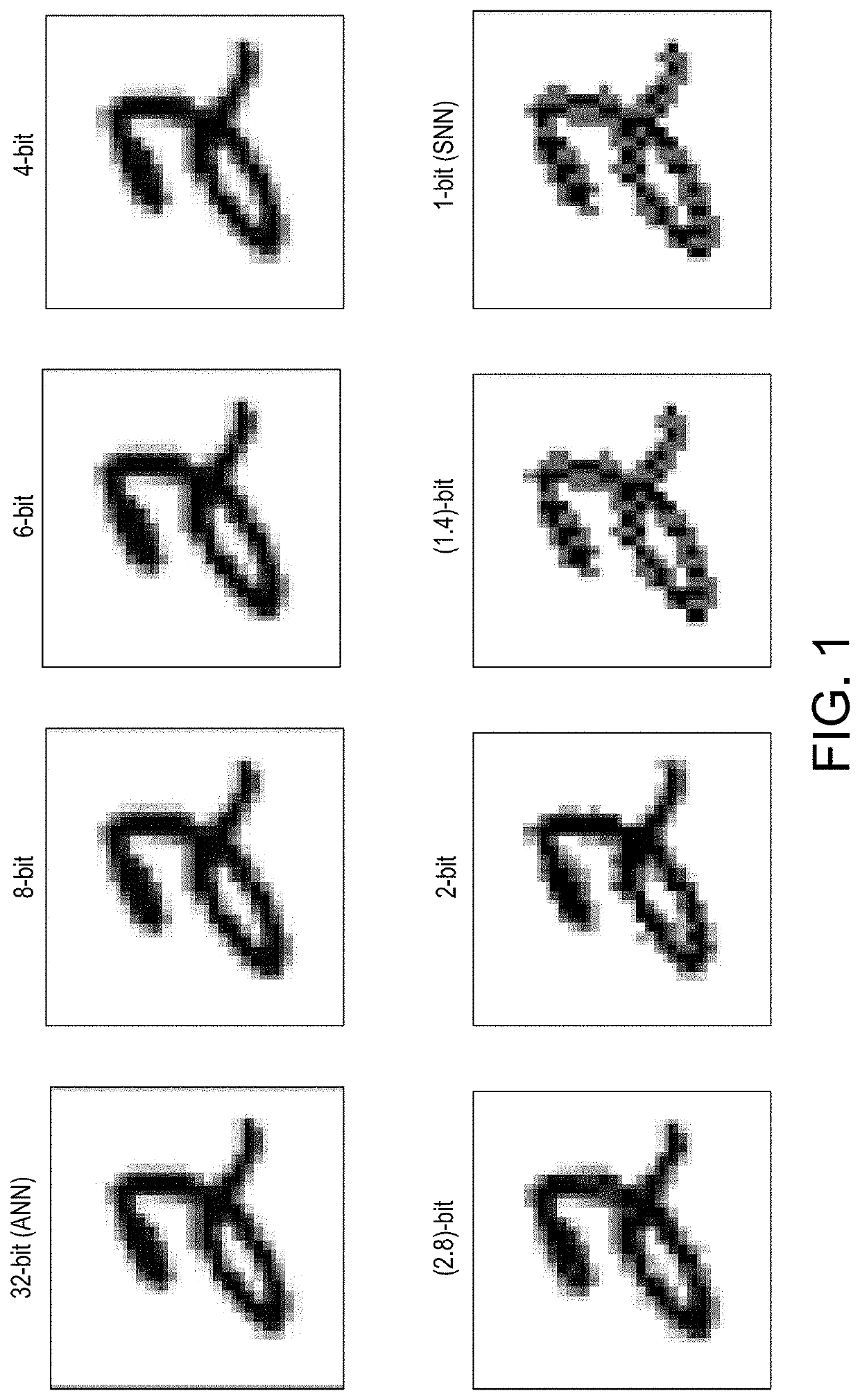
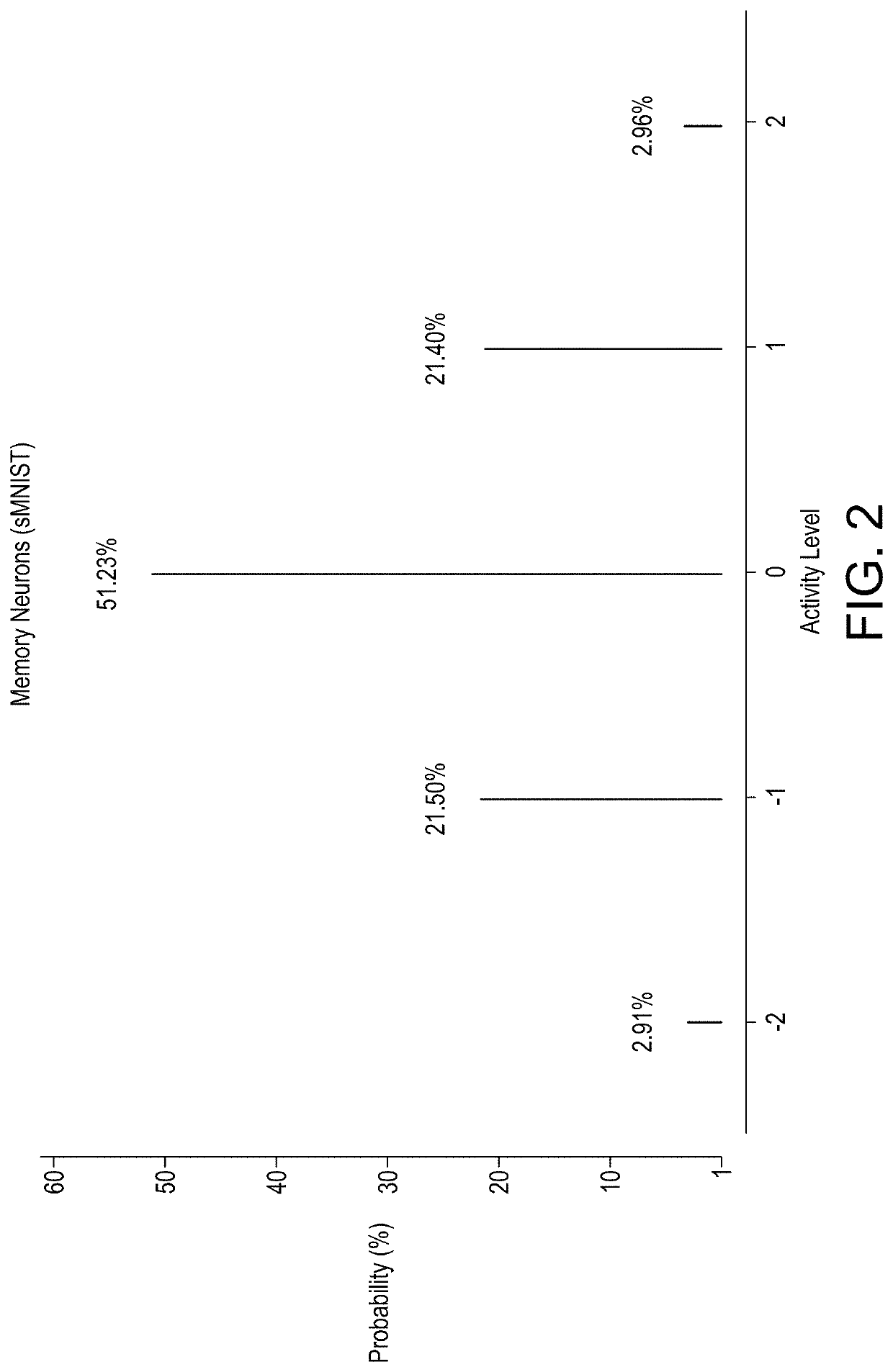
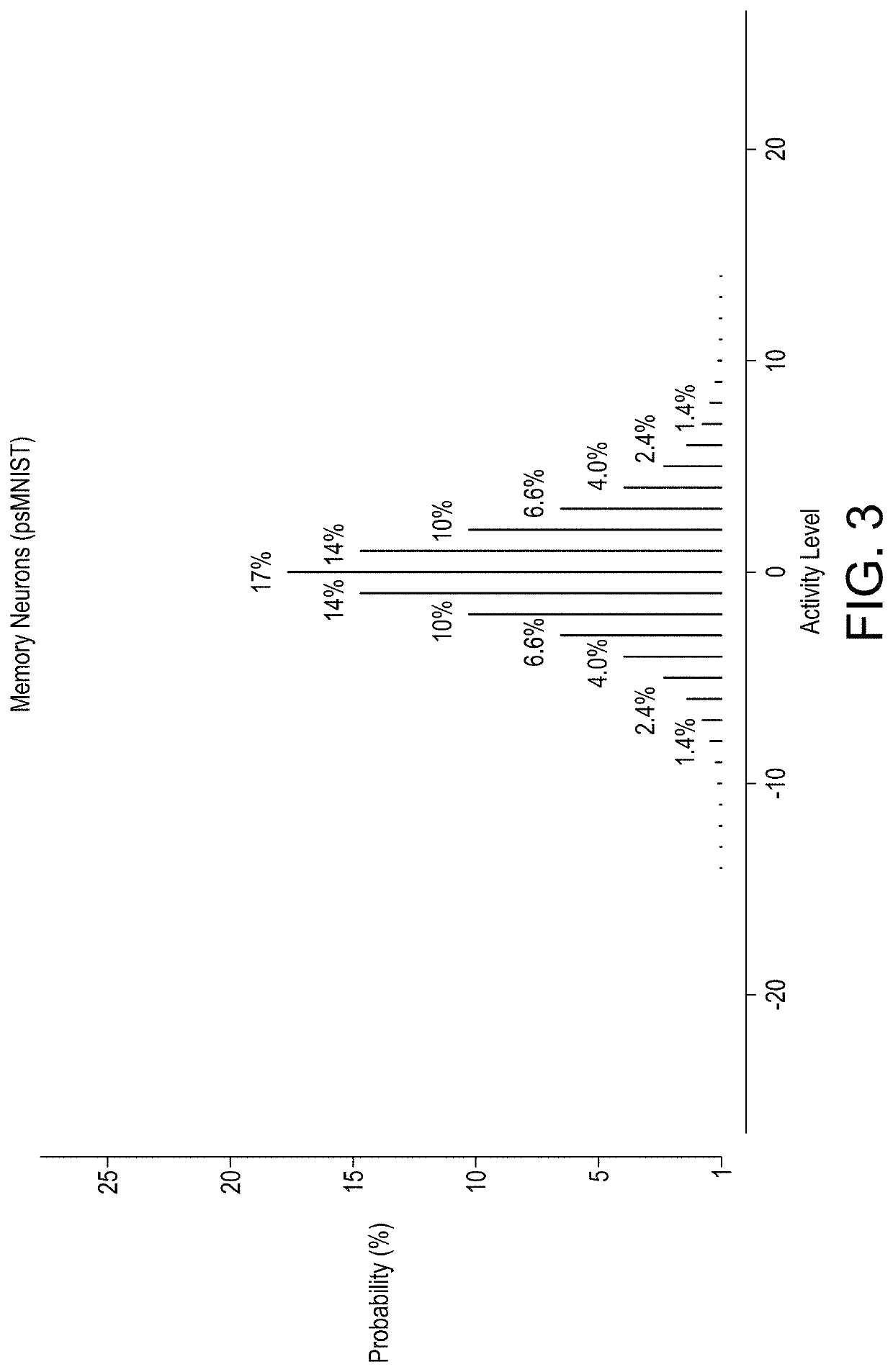
- The introduction of temporal dithering, which interprets spiking neurons as one-bit quantizers that diffuse quantization errors across time steps, allowing for the creation of hybrid-spiking neural networks (hSNNs) that interpolate between 1-bit SNNs and 32-bit ANNs, using algorithms like dithered quantization, stochastic rounding, poisson spiking, and time dilation to optimize spike precision and reduce energy consumption.

System and Method for Spontaneous Machine Learning and Feature Extraction
PatentActiveUS20180225562A1
Innovation
- A hierarchical system of two artificial neural networks using Spike Timing Dependent Plasticity (STDP) and lateral inhibition for spontaneous learning, where the first network recognizes repeating patterns and the second network labels these patterns, eliminating the need for lengthy training cycles and hand-crafted features.


Hardware Requirements for ML-SNN Systems
The integration of machine learning with spiking neural networks demands specialized hardware architectures that can efficiently handle the unique computational requirements of spike-based processing. Unlike traditional artificial neural networks that operate on continuous values, ML-SNN systems require hardware capable of processing discrete temporal events with precise timing characteristics.
Neuromorphic processors represent the most promising hardware solution for ML-SNN implementations. These specialized chips, such as Intel's Loihi and IBM's TrueNorth, are designed with event-driven architectures that naturally align with spiking network dynamics. They feature distributed memory architectures, asynchronous processing capabilities, and ultra-low power consumption profiles that can achieve energy efficiencies several orders of magnitude better than conventional processors.
Memory architecture constitutes a critical hardware consideration for ML-SNN systems. The temporal nature of spike processing requires high-bandwidth, low-latency memory systems capable of storing and retrieving synaptic weights, membrane potentials, and spike histories simultaneously. Emerging memory technologies like resistive RAM and phase-change memory offer promising solutions due to their ability to perform in-memory computing operations.
Processing unit specifications must accommodate the parallel nature of neural computation while maintaining temporal precision. Multi-core architectures with dedicated spike routing networks enable efficient inter-neuron communication. Hardware implementations typically require clock frequencies in the megahertz range rather than gigahertz, as biological neural processes operate on millisecond timescales.
Power management systems become particularly crucial given the energy-efficient nature of biological neural networks. ML-SNN hardware should incorporate dynamic voltage scaling, clock gating, and event-driven power management to minimize energy consumption during periods of low neural activity. Advanced power delivery networks must support the highly variable power demands characteristic of spike-based computation.
Connectivity infrastructure requires specialized routing mechanisms to handle the complex, sparse connectivity patterns typical in spiking networks. Hardware implementations need configurable interconnect fabrics that can efficiently route spikes between neurons while maintaining temporal accuracy and minimizing communication latency.
Neuromorphic processors represent the most promising hardware solution for ML-SNN implementations. These specialized chips, such as Intel's Loihi and IBM's TrueNorth, are designed with event-driven architectures that naturally align with spiking network dynamics. They feature distributed memory architectures, asynchronous processing capabilities, and ultra-low power consumption profiles that can achieve energy efficiencies several orders of magnitude better than conventional processors.
Memory architecture constitutes a critical hardware consideration for ML-SNN systems. The temporal nature of spike processing requires high-bandwidth, low-latency memory systems capable of storing and retrieving synaptic weights, membrane potentials, and spike histories simultaneously. Emerging memory technologies like resistive RAM and phase-change memory offer promising solutions due to their ability to perform in-memory computing operations.
Processing unit specifications must accommodate the parallel nature of neural computation while maintaining temporal precision. Multi-core architectures with dedicated spike routing networks enable efficient inter-neuron communication. Hardware implementations typically require clock frequencies in the megahertz range rather than gigahertz, as biological neural processes operate on millisecond timescales.
Power management systems become particularly crucial given the energy-efficient nature of biological neural networks. ML-SNN hardware should incorporate dynamic voltage scaling, clock gating, and event-driven power management to minimize energy consumption during periods of low neural activity. Advanced power delivery networks must support the highly variable power demands characteristic of spike-based computation.
Connectivity infrastructure requires specialized routing mechanisms to handle the complex, sparse connectivity patterns typical in spiking networks. Hardware implementations need configurable interconnect fabrics that can efficiently route spikes between neurons while maintaining temporal accuracy and minimizing communication latency.
Energy Efficiency Benefits of Neuromorphic ML
The integration of machine learning with spiking neural networks presents unprecedented opportunities for energy-efficient computation, fundamentally transforming the power consumption paradigm of artificial intelligence systems. Traditional artificial neural networks operating on von Neumann architectures consume substantial energy due to continuous floating-point operations and frequent memory access patterns. In contrast, neuromorphic systems leveraging spiking networks demonstrate remarkable energy efficiency through event-driven computation and sparse activation patterns.
Spiking neural networks inherently operate on temporal sparse coding, where information processing occurs only when spikes are generated and transmitted. This event-driven nature eliminates the need for continuous computation cycles, resulting in power consumption that scales directly with network activity rather than system capacity. Research indicates that neuromorphic processors can achieve energy efficiency improvements of 100-1000x compared to conventional GPU-based machine learning implementations for specific inference tasks.
The asynchronous communication protocol in spiking networks further enhances energy efficiency by eliminating clock-driven synchronization overhead. Unlike traditional neural networks that process entire layers simultaneously, spiking networks activate individual neurons only when receiving sufficient input stimulation. This selective activation mechanism dramatically reduces computational load and associated power consumption, particularly beneficial for sparse input patterns commonly encountered in sensory processing applications.
Memory access patterns in neuromorphic systems also contribute significantly to energy savings. The co-location of memory and processing elements in neuromorphic architectures minimizes data movement costs, which typically account for substantial energy consumption in conventional computing systems. Additionally, the binary nature of spike communications reduces bandwidth requirements and associated energy overhead compared to multi-bit weight transfers in traditional neural networks.
Emerging neuromorphic hardware platforms demonstrate practical energy efficiency gains across various machine learning applications. Intel's Loihi processor achieves sub-milliwatt power consumption for real-time adaptive learning tasks, while IBM's TrueNorth chip delivers exceptional energy efficiency for pattern recognition applications. These implementations validate the theoretical energy advantages of neuromorphic computing in practical deployment scenarios.
The scalability of energy benefits becomes particularly pronounced in large-scale deployments where cumulative power savings translate to significant operational cost reductions and environmental impact mitigation. As machine learning workloads continue expanding across edge computing and IoT applications, the energy efficiency advantages of neuromorphic approaches position spiking neural networks as crucial enablers for sustainable artificial intelligence infrastructure.
Spiking neural networks inherently operate on temporal sparse coding, where information processing occurs only when spikes are generated and transmitted. This event-driven nature eliminates the need for continuous computation cycles, resulting in power consumption that scales directly with network activity rather than system capacity. Research indicates that neuromorphic processors can achieve energy efficiency improvements of 100-1000x compared to conventional GPU-based machine learning implementations for specific inference tasks.
The asynchronous communication protocol in spiking networks further enhances energy efficiency by eliminating clock-driven synchronization overhead. Unlike traditional neural networks that process entire layers simultaneously, spiking networks activate individual neurons only when receiving sufficient input stimulation. This selective activation mechanism dramatically reduces computational load and associated power consumption, particularly beneficial for sparse input patterns commonly encountered in sensory processing applications.
Memory access patterns in neuromorphic systems also contribute significantly to energy savings. The co-location of memory and processing elements in neuromorphic architectures minimizes data movement costs, which typically account for substantial energy consumption in conventional computing systems. Additionally, the binary nature of spike communications reduces bandwidth requirements and associated energy overhead compared to multi-bit weight transfers in traditional neural networks.
Emerging neuromorphic hardware platforms demonstrate practical energy efficiency gains across various machine learning applications. Intel's Loihi processor achieves sub-milliwatt power consumption for real-time adaptive learning tasks, while IBM's TrueNorth chip delivers exceptional energy efficiency for pattern recognition applications. These implementations validate the theoretical energy advantages of neuromorphic computing in practical deployment scenarios.
The scalability of energy benefits becomes particularly pronounced in large-scale deployments where cumulative power savings translate to significant operational cost reductions and environmental impact mitigation. As machine learning workloads continue expanding across edge computing and IoT applications, the energy efficiency advantages of neuromorphic approaches position spiking neural networks as crucial enablers for sustainable artificial intelligence infrastructure.
Unlock deeper insights with Patsnap Eureka Quick Research — get a full tech report to explore trends and direct your research. Try now!
Generate Your Research Report Instantly with AI Agent
Supercharge your innovation with Patsnap Eureka AI Agent Platform!