How to Integrate Multimaterial Compositions in Laser Cladding
APR 8, 20269 MIN READ
Generate Your Research Report Instantly with AI Agent
Patsnap Eureka helps you evaluate technical feasibility & market potential.
Multimaterial Laser Cladding Background and Objectives
Laser cladding technology has emerged as a pivotal additive manufacturing and surface modification technique since its inception in the 1970s. Initially developed for single-material applications, the technology has evolved significantly to address the growing industrial demand for components with spatially varying properties. The integration of multimaterial compositions represents the next frontier in laser cladding evolution, driven by the need for functionally graded materials and components with tailored mechanical, thermal, and chemical properties across different regions.
The historical development of laser cladding began with simple overlay applications for wear resistance and corrosion protection. Early implementations focused on depositing homogeneous metallic layers onto substrate materials, primarily for repair and refurbishment purposes. As laser technology advanced and powder delivery systems became more sophisticated, researchers began exploring the possibility of combining different materials within single cladding operations.
The transition toward multimaterial laser cladding gained momentum in the 1990s with the advent of more precise powder feeding mechanisms and improved laser control systems. This period marked the beginning of systematic research into material compatibility, mixing ratios, and processing parameters for dissimilar material combinations. The automotive and aerospace industries became early adopters, seeking solutions for components requiring varying hardness, wear resistance, and thermal properties across different functional zones.
Current technological objectives in multimaterial laser cladding encompass several critical areas. Primary goals include achieving seamless material transitions without compromising structural integrity, developing predictive models for material interaction during processing, and establishing standardized protocols for quality control and repeatability. The technology aims to enable real-time composition control, allowing for precise material gradients and sharp transitions as required by specific applications.
Advanced objectives focus on expanding material compatibility matrices, particularly for challenging combinations such as ceramics with metals, polymers with metallic components, and reactive material systems. The development of intelligent processing systems capable of adaptive parameter adjustment based on real-time feedback represents another crucial objective, ensuring optimal bonding and minimal defect formation across material interfaces.
The ultimate vision for multimaterial laser cladding technology involves creating a comprehensive manufacturing platform capable of producing complex, multi-functional components in single-step processes. This includes the integration of sensors, actuators, and functional materials directly into structural components, enabling the production of smart materials and systems with embedded capabilities for monitoring, self-repair, and adaptive response to environmental conditions.
The historical development of laser cladding began with simple overlay applications for wear resistance and corrosion protection. Early implementations focused on depositing homogeneous metallic layers onto substrate materials, primarily for repair and refurbishment purposes. As laser technology advanced and powder delivery systems became more sophisticated, researchers began exploring the possibility of combining different materials within single cladding operations.
The transition toward multimaterial laser cladding gained momentum in the 1990s with the advent of more precise powder feeding mechanisms and improved laser control systems. This period marked the beginning of systematic research into material compatibility, mixing ratios, and processing parameters for dissimilar material combinations. The automotive and aerospace industries became early adopters, seeking solutions for components requiring varying hardness, wear resistance, and thermal properties across different functional zones.
Current technological objectives in multimaterial laser cladding encompass several critical areas. Primary goals include achieving seamless material transitions without compromising structural integrity, developing predictive models for material interaction during processing, and establishing standardized protocols for quality control and repeatability. The technology aims to enable real-time composition control, allowing for precise material gradients and sharp transitions as required by specific applications.
Advanced objectives focus on expanding material compatibility matrices, particularly for challenging combinations such as ceramics with metals, polymers with metallic components, and reactive material systems. The development of intelligent processing systems capable of adaptive parameter adjustment based on real-time feedback represents another crucial objective, ensuring optimal bonding and minimal defect formation across material interfaces.
The ultimate vision for multimaterial laser cladding technology involves creating a comprehensive manufacturing platform capable of producing complex, multi-functional components in single-step processes. This includes the integration of sensors, actuators, and functional materials directly into structural components, enabling the production of smart materials and systems with embedded capabilities for monitoring, self-repair, and adaptive response to environmental conditions.
Market Demand for Advanced Multimaterial Cladding Solutions
The global manufacturing landscape is experiencing unprecedented demand for advanced multimaterial cladding solutions, driven by industries seeking enhanced performance characteristics that single-material systems cannot deliver. Aerospace, automotive, energy, and medical device sectors are particularly driving this demand as they require components with tailored properties across different regions of the same part.
Aerospace manufacturers are increasingly seeking multimaterial cladding solutions to create components that combine lightweight substrates with wear-resistant or corrosion-resistant surface layers. The need for fuel efficiency improvements and performance optimization in aircraft engines and structural components has created substantial market pull for these technologies. Similarly, the space industry requires materials that can withstand extreme temperature variations and radiation exposure while maintaining structural integrity.
The automotive sector represents another significant demand driver, particularly with the transition toward electric vehicles and advanced powertrains. Manufacturers require cladding solutions that can integrate different material properties within single components, such as combining thermal management capabilities with mechanical strength or electrical conductivity with corrosion resistance.
Energy sector applications, including renewable energy infrastructure and traditional power generation, are creating substantial market opportunities. Wind turbine components, solar panel frameworks, and power plant equipment increasingly require multimaterial solutions that can withstand harsh environmental conditions while optimizing performance and extending service life.
Medical device manufacturing presents a rapidly growing market segment where multimaterial cladding enables the creation of implants and surgical instruments with biocompatible surfaces over high-strength cores. The ability to combine different material properties in precise configurations is becoming essential for next-generation medical technologies.
Industrial equipment manufacturers are driving demand for multimaterial cladding solutions that can extend component lifecycles and reduce maintenance requirements. Applications include cutting tools, dies, and machinery components where different surface properties are required for optimal performance.
The market demand is further amplified by sustainability considerations, as multimaterial cladding enables component repair and refurbishment rather than complete replacement, supporting circular economy principles and reducing material waste across industries.
Aerospace manufacturers are increasingly seeking multimaterial cladding solutions to create components that combine lightweight substrates with wear-resistant or corrosion-resistant surface layers. The need for fuel efficiency improvements and performance optimization in aircraft engines and structural components has created substantial market pull for these technologies. Similarly, the space industry requires materials that can withstand extreme temperature variations and radiation exposure while maintaining structural integrity.
The automotive sector represents another significant demand driver, particularly with the transition toward electric vehicles and advanced powertrains. Manufacturers require cladding solutions that can integrate different material properties within single components, such as combining thermal management capabilities with mechanical strength or electrical conductivity with corrosion resistance.
Energy sector applications, including renewable energy infrastructure and traditional power generation, are creating substantial market opportunities. Wind turbine components, solar panel frameworks, and power plant equipment increasingly require multimaterial solutions that can withstand harsh environmental conditions while optimizing performance and extending service life.
Medical device manufacturing presents a rapidly growing market segment where multimaterial cladding enables the creation of implants and surgical instruments with biocompatible surfaces over high-strength cores. The ability to combine different material properties in precise configurations is becoming essential for next-generation medical technologies.
Industrial equipment manufacturers are driving demand for multimaterial cladding solutions that can extend component lifecycles and reduce maintenance requirements. Applications include cutting tools, dies, and machinery components where different surface properties are required for optimal performance.
The market demand is further amplified by sustainability considerations, as multimaterial cladding enables component repair and refurbishment rather than complete replacement, supporting circular economy principles and reducing material waste across industries.
Current Challenges in Multimaterial Laser Cladding Integration
The integration of multimaterial compositions in laser cladding faces several fundamental challenges that significantly impact process reliability and coating quality. Material compatibility represents the most critical obstacle, as different materials exhibit varying thermal expansion coefficients, melting points, and chemical reactivity. When dissimilar materials are combined during the cladding process, thermal stress concentrations often develop at interfaces, leading to crack formation and delamination.
Powder feeding consistency poses another major challenge in multimaterial laser cladding operations. Achieving uniform distribution of different powder materials requires precise control of feeding rates, particle size distributions, and flow dynamics. Variations in powder characteristics such as density, flowability, and morphology can result in compositional gradients and heterogeneous microstructures within the clad layer.
Process parameter optimization becomes exponentially complex when dealing with multiple materials simultaneously. Each material component requires specific laser power, scanning speed, and powder feed rate combinations for optimal processing. The interdependence of these parameters makes it difficult to establish processing windows that accommodate all materials effectively, often resulting in compromised properties for individual components.
Metallurgical bonding between dissimilar materials presents significant technical hurdles. Differences in wettability, surface tension, and chemical affinity can prevent proper fusion and create weak interfacial bonds. Formation of brittle intermetallic compounds at material interfaces further compromises mechanical properties and long-term durability of the clad layer.
Real-time process monitoring and control systems struggle to accommodate the dynamic nature of multimaterial processing. Current sensing technologies have limited capability to distinguish between different material phases during deposition, making it challenging to implement adaptive control strategies. This limitation results in reduced process repeatability and quality consistency.
Residual stress management becomes increasingly complex with multimaterial compositions due to differential thermal behavior during cooling. The mismatch in thermal properties creates internal stress fields that can exceed material yield strengths, leading to distortion, cracking, and premature failure of the clad components.
Powder feeding consistency poses another major challenge in multimaterial laser cladding operations. Achieving uniform distribution of different powder materials requires precise control of feeding rates, particle size distributions, and flow dynamics. Variations in powder characteristics such as density, flowability, and morphology can result in compositional gradients and heterogeneous microstructures within the clad layer.
Process parameter optimization becomes exponentially complex when dealing with multiple materials simultaneously. Each material component requires specific laser power, scanning speed, and powder feed rate combinations for optimal processing. The interdependence of these parameters makes it difficult to establish processing windows that accommodate all materials effectively, often resulting in compromised properties for individual components.
Metallurgical bonding between dissimilar materials presents significant technical hurdles. Differences in wettability, surface tension, and chemical affinity can prevent proper fusion and create weak interfacial bonds. Formation of brittle intermetallic compounds at material interfaces further compromises mechanical properties and long-term durability of the clad layer.
Real-time process monitoring and control systems struggle to accommodate the dynamic nature of multimaterial processing. Current sensing technologies have limited capability to distinguish between different material phases during deposition, making it challenging to implement adaptive control strategies. This limitation results in reduced process repeatability and quality consistency.
Residual stress management becomes increasingly complex with multimaterial compositions due to differential thermal behavior during cooling. The mismatch in thermal properties creates internal stress fields that can exceed material yield strengths, leading to distortion, cracking, and premature failure of the clad components.
Existing Multimaterial Integration Solutions in Laser Cladding
01 Laser cladding powder composition and material selection
Various powder compositions and materials are used in laser cladding processes to achieve desired surface properties. These include metal alloys, ceramic materials, and composite powders that are selected based on the substrate material and intended application. The powder composition significantly affects the quality of the cladded layer, including its hardness, wear resistance, and bonding strength with the substrate.- Laser cladding powder composition and material selection: Various powder compositions and materials are used in laser cladding processes to achieve desired surface properties. These include metal alloys, ceramic materials, and composite powders that are selected based on the substrate material and intended application. The powder composition significantly affects the quality of the cladded layer, including its hardness, wear resistance, and bonding strength with the substrate.
- Laser cladding apparatus and equipment design: Specialized apparatus and equipment designs have been developed to improve the laser cladding process. These include powder feeding systems, laser beam delivery mechanisms, and substrate positioning devices. The equipment design focuses on ensuring uniform powder distribution, precise control of laser parameters, and proper alignment between the laser beam and powder stream to achieve consistent cladding quality.
- Process parameter control and optimization methods: Controlling and optimizing process parameters is crucial for successful laser cladding. Key parameters include laser power, scanning speed, powder feed rate, and beam spot size. Advanced control methods and monitoring systems have been developed to adjust these parameters in real-time, ensuring optimal cladding quality and minimizing defects such as porosity, cracking, and poor adhesion.
- Surface treatment and preparation techniques: Pre-treatment and preparation of substrate surfaces before laser cladding significantly impacts the final result. Various techniques are employed to clean, roughen, or modify the substrate surface to enhance bonding between the cladded layer and the base material. These preparation methods help reduce defects and improve the mechanical properties and durability of the cladded components.
- Applications in component repair and remanufacturing: Laser cladding technology is widely applied in repairing and remanufacturing worn or damaged components. This includes restoration of mechanical parts, tooling, and industrial equipment by depositing new material onto degraded surfaces. The process enables extension of component service life, reduction of replacement costs, and recovery of dimensional accuracy, making it valuable for various industrial sectors.
02 Laser cladding apparatus and equipment design
Specialized apparatus and equipment designs are developed for laser cladding operations, including powder feeding systems, laser beam delivery mechanisms, and substrate positioning devices. These systems are engineered to ensure precise control of powder flow, laser parameters, and relative movement between the laser and workpiece. Advanced designs incorporate features for improved powder utilization efficiency and cladding quality.Expand Specific Solutions03 Process parameters and control methods
Optimal process parameters and control methods are critical for successful laser cladding. Key parameters include laser power, scanning speed, powder feed rate, and beam focus position. Advanced control systems monitor and adjust these parameters in real-time to maintain consistent cladding quality. Process optimization techniques are employed to minimize defects such as porosity, cracking, and poor adhesion.Expand Specific Solutions04 Surface treatment and coating applications
Laser cladding is applied for surface treatment and protective coating applications across various industries. The technology enables the creation of wear-resistant, corrosion-resistant, and heat-resistant surfaces on components. Applications include repair and refurbishment of worn parts, enhancement of component lifespan, and modification of surface properties for specific functional requirements.Expand Specific Solutions05 Multi-layer cladding and hybrid processes
Advanced laser cladding techniques involve multi-layer deposition strategies and hybrid processes that combine laser cladding with other manufacturing methods. Multi-layer approaches allow for gradient material compositions and complex coating structures. Hybrid processes integrate laser cladding with machining, heat treatment, or other surface modification techniques to achieve enhanced performance characteristics and dimensional accuracy.Expand Specific Solutions
Key Players in Laser Cladding and Multimaterial Industry
The laser cladding multimaterial integration field represents a rapidly evolving technology sector currently in its growth phase, driven by increasing demand for advanced manufacturing solutions across aerospace, automotive, and energy industries. The market demonstrates significant expansion potential, with applications spanning from component repair to additive manufacturing. Technology maturity varies considerably among key players, with established industrial giants like Siemens Energy AG, Caterpillar Inc., and Nissan Motor Co. leading commercial applications, while materials specialists such as BASF Corp., SCHOTT AG, and Kobe Steel Ltd. advance substrate and powder technologies. Research institutions including Shandong University, University of Minho, and Fraunhofer-Gesellschaft eV drive fundamental innovations in process optimization and material compatibility. Specialized laser technology companies like Shenyang Continental Laser Engineering Technology Co. focus on equipment development, while chemical manufacturers including SABIC Global Technologies BV and DSM IP Assets BV contribute advanced material formulations, creating a diverse ecosystem supporting multimaterial integration advancement.
BASF Corp.
Technical Solution: BASF has developed specialized powder materials and binder systems for multi-material laser cladding applications, focusing on polymer-metal composites and hybrid material systems. Their technology includes development of compatible material formulations that can be processed together in laser cladding operations, with emphasis on thermal compatibility and adhesion properties. They provide engineered powder blends and surface treatment solutions that enable successful integration of organic and inorganic materials in additive manufacturing and surface coating applications.
Strengths: Extensive materials science expertise and chemical formulation capabilities. Weaknesses: Limited direct laser cladding equipment experience, focus primarily on material supply rather than process development.
Siemens Energy AG
Technical Solution: Siemens Energy has developed advanced laser cladding systems that utilize multi-material powder feeding mechanisms for turbine blade repair and enhancement. Their technology incorporates real-time process monitoring and adaptive control systems to manage the deposition of different material compositions including nickel-based superalloys, cobalt alloys, and ceramic-metal composites. The system features synchronized powder delivery systems that can switch between materials during the cladding process, enabling gradient material structures and functionally graded materials for improved component performance in high-temperature applications.
Strengths: Advanced process control and monitoring capabilities, extensive experience in turbine applications. Weaknesses: High system complexity and cost, limited to specific industrial applications.
Core Patents in Multimaterial Laser Cladding Technologies
Laser additive manufacture of three-dimensional components containing multiple materials formed as integrated systems
PatentActiveUS20150034604A1
Innovation
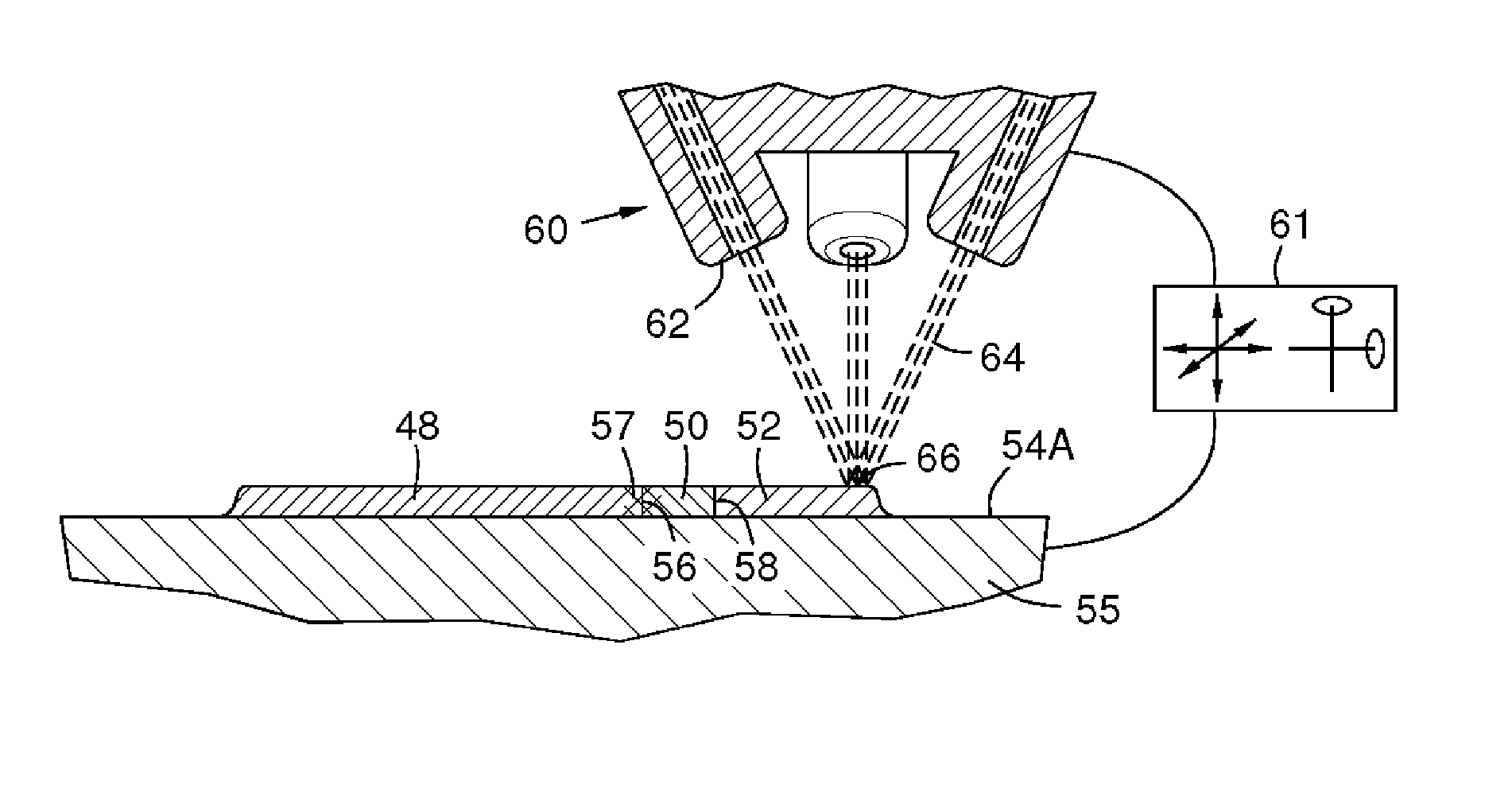
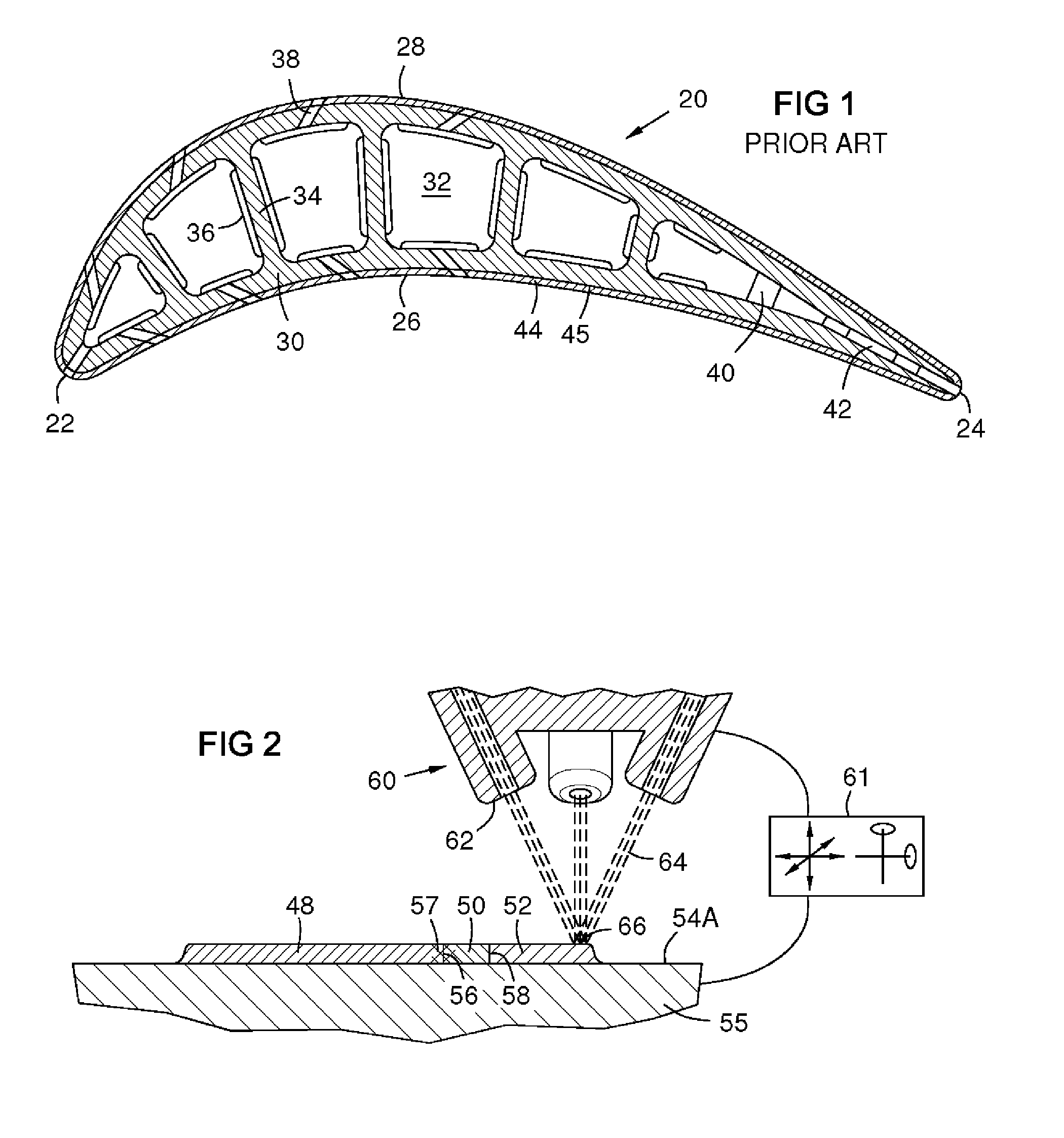
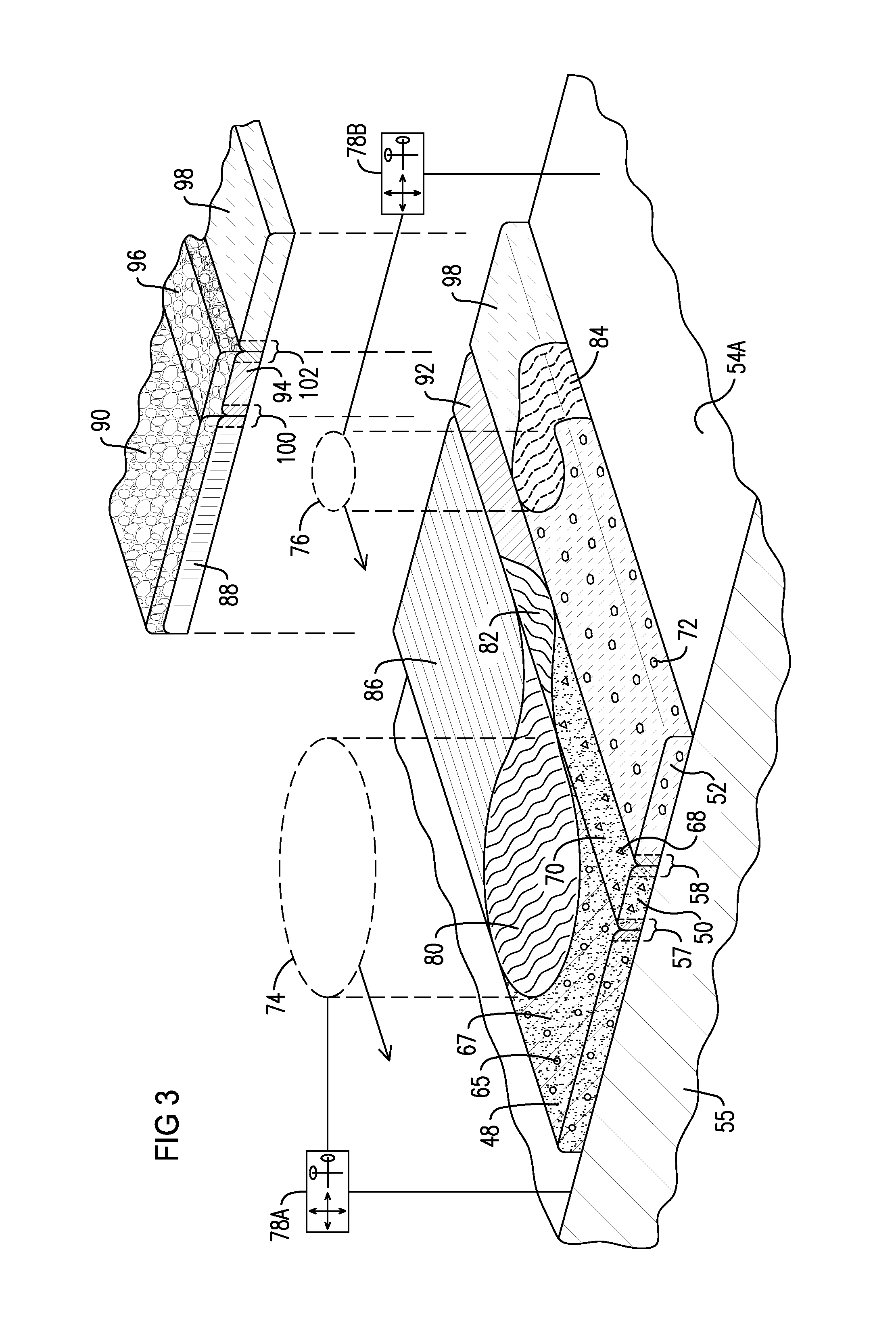
- The method involves selectively placing and processing different powdered materials using laser powder deposition, with precise control over the shape, intensity, and trajectory of laser energy, and the use of flux compositions to minimize chemical and mechanical imperfections, allowing for the fabrication of dimensionally complex multi-material components without the need for air-free conditions.

Integrated Cladding Materials (ICM)
PatentInactiveSG10201606350SA
Innovation
- Laser-based additive manufacturing techniques using integrated cladding materials (ICM) for improved thermal conductivity, pressure measurement, and enhanced physical, mechanical, and chemical properties, allowing for the creation of composite materials with varied properties suitable for specific functions and applications.


Process Control and Quality Standards for Multimaterial Cladding
Process control in multimaterial laser cladding requires sophisticated monitoring systems to manage the complex interactions between different material compositions during deposition. Real-time feedback mechanisms must track critical parameters including laser power distribution, powder feed rates for each material, substrate temperature, and melt pool dynamics. Advanced pyrometry and spectroscopic monitoring enable precise control of thermal gradients and chemical composition uniformity across the clad layer.
The establishment of standardized quality metrics represents a fundamental challenge in multimaterial cladding applications. Unlike single-material processes, quality assessment must account for compositional gradients, interfacial bonding strength between dissimilar materials, and potential formation of intermetallic compounds. Dimensional accuracy standards must accommodate the varying thermal expansion coefficients and shrinkage behaviors of different materials within the same clad structure.
Defect detection protocols require multi-modal inspection approaches combining ultrasonic testing, X-ray computed tomography, and metallographic analysis. Critical defects include delamination at material interfaces, porosity variations across compositional zones, and crack formation due to thermal stress concentrations. Statistical process control methods must be adapted to handle the increased variability inherent in multimaterial systems.
Quality standards for multimaterial cladding applications demand material-specific acceptance criteria while maintaining overall structural integrity requirements. Hardness mapping across compositional transitions, residual stress measurements, and fatigue performance evaluation become essential quality indicators. The development of standardized test specimens that accurately represent the multimaterial interface characteristics remains an ongoing challenge.
Process optimization strategies must balance competing requirements between different materials, such as optimal processing temperatures and cooling rates. Adaptive control algorithms incorporating machine learning approaches show promise for managing the complex parameter interactions. Documentation standards require comprehensive material traceability and process parameter recording to ensure reproducibility and quality assurance in production environments.
The establishment of standardized quality metrics represents a fundamental challenge in multimaterial cladding applications. Unlike single-material processes, quality assessment must account for compositional gradients, interfacial bonding strength between dissimilar materials, and potential formation of intermetallic compounds. Dimensional accuracy standards must accommodate the varying thermal expansion coefficients and shrinkage behaviors of different materials within the same clad structure.
Defect detection protocols require multi-modal inspection approaches combining ultrasonic testing, X-ray computed tomography, and metallographic analysis. Critical defects include delamination at material interfaces, porosity variations across compositional zones, and crack formation due to thermal stress concentrations. Statistical process control methods must be adapted to handle the increased variability inherent in multimaterial systems.
Quality standards for multimaterial cladding applications demand material-specific acceptance criteria while maintaining overall structural integrity requirements. Hardness mapping across compositional transitions, residual stress measurements, and fatigue performance evaluation become essential quality indicators. The development of standardized test specimens that accurately represent the multimaterial interface characteristics remains an ongoing challenge.
Process optimization strategies must balance competing requirements between different materials, such as optimal processing temperatures and cooling rates. Adaptive control algorithms incorporating machine learning approaches show promise for managing the complex parameter interactions. Documentation standards require comprehensive material traceability and process parameter recording to ensure reproducibility and quality assurance in production environments.
Material Compatibility and Interface Engineering Considerations
Material compatibility represents the fundamental prerequisite for successful multimaterial laser cladding operations. The thermophysical properties of constituent materials, including melting points, thermal expansion coefficients, and thermal conductivity, must be carefully evaluated to prevent processing defects. Materials with significantly different melting temperatures require precise laser parameter optimization to achieve simultaneous melting without overheating lower-melting-point components. Thermal expansion mismatch can generate residual stresses at interfaces, potentially leading to cracking or delamination during cooling cycles.
Chemical compatibility assessment involves analyzing potential intermetallic compound formation and elemental diffusion behaviors at material interfaces. Certain material combinations may form brittle intermetallic phases that compromise mechanical properties, while others exhibit beneficial solid solution strengthening effects. The solubility limits and phase diagrams of material pairs provide critical guidance for composition selection and processing parameter determination.
Interface engineering strategies focus on controlling the microstructural evolution and bonding characteristics between dissimilar materials. Gradient composition approaches can minimize abrupt property transitions by creating intermediate zones with progressively varying compositions. This technique reduces stress concentrations and improves overall structural integrity. Alternative strategies include incorporating buffer layers or transition materials that exhibit compatible properties with both primary constituents.
Wettability considerations significantly influence interface quality and bonding strength. Surface energy differences between materials affect molten pool dynamics and solidification behavior. Poor wettability can result in incomplete fusion, porosity, or weak interfacial bonding. Surface preparation techniques, including cleaning protocols and surface modification treatments, play crucial roles in optimizing interfacial interactions.
Processing parameter optimization becomes more complex when dealing with multimaterial systems due to the need to accommodate different material responses to laser energy input. Laser power, scanning speed, and powder feed rates must be carefully balanced to achieve uniform melting and proper dilution ratios. Advanced process control strategies, including real-time monitoring and adaptive parameter adjustment, are increasingly important for maintaining consistent interface quality across varying material combinations.
Microstructural characterization techniques, including electron microscopy and X-ray analysis, provide essential feedback for interface quality assessment and process optimization. Understanding the relationship between processing conditions, material properties, and resulting interface characteristics enables the development of robust multimaterial cladding protocols for specific application requirements.
Chemical compatibility assessment involves analyzing potential intermetallic compound formation and elemental diffusion behaviors at material interfaces. Certain material combinations may form brittle intermetallic phases that compromise mechanical properties, while others exhibit beneficial solid solution strengthening effects. The solubility limits and phase diagrams of material pairs provide critical guidance for composition selection and processing parameter determination.
Interface engineering strategies focus on controlling the microstructural evolution and bonding characteristics between dissimilar materials. Gradient composition approaches can minimize abrupt property transitions by creating intermediate zones with progressively varying compositions. This technique reduces stress concentrations and improves overall structural integrity. Alternative strategies include incorporating buffer layers or transition materials that exhibit compatible properties with both primary constituents.
Wettability considerations significantly influence interface quality and bonding strength. Surface energy differences between materials affect molten pool dynamics and solidification behavior. Poor wettability can result in incomplete fusion, porosity, or weak interfacial bonding. Surface preparation techniques, including cleaning protocols and surface modification treatments, play crucial roles in optimizing interfacial interactions.
Processing parameter optimization becomes more complex when dealing with multimaterial systems due to the need to accommodate different material responses to laser energy input. Laser power, scanning speed, and powder feed rates must be carefully balanced to achieve uniform melting and proper dilution ratios. Advanced process control strategies, including real-time monitoring and adaptive parameter adjustment, are increasingly important for maintaining consistent interface quality across varying material combinations.
Microstructural characterization techniques, including electron microscopy and X-ray analysis, provide essential feedback for interface quality assessment and process optimization. Understanding the relationship between processing conditions, material properties, and resulting interface characteristics enables the development of robust multimaterial cladding protocols for specific application requirements.
Unlock deeper insights with Patsnap Eureka Quick Research — get a full tech report to explore trends and direct your research. Try now!
Generate Your Research Report Instantly with AI Agent
Supercharge your innovation with Patsnap Eureka AI Agent Platform!