

How to Isolate COFs with Improved Thermal Stability
APR 16, 20269 MIN READ
Generate Your Research Report Instantly with AI Agent
Patsnap Eureka helps you evaluate technical feasibility & market potential.
COF Thermal Stability Enhancement Background and Objectives
Covalent Organic Frameworks (COFs) represent a revolutionary class of crystalline porous materials that have emerged as one of the most promising areas in materials science since their first successful synthesis in 2005. These materials are constructed through the formation of strong covalent bonds between organic building blocks, creating highly ordered, periodic structures with permanent porosity. The unique combination of crystallinity, porosity, and structural predictability has positioned COFs at the forefront of advanced materials research.
The development trajectory of COFs has been marked by rapid expansion from initial proof-of-concept materials to sophisticated frameworks with tailored properties. Early COF synthesis focused primarily on achieving crystallinity and porosity, with thermal stability often being a secondary consideration. However, as applications have evolved toward more demanding environments, the limitations imposed by thermal instability have become increasingly apparent, driving the need for enhanced thermal performance.
Current market demands across multiple sectors are creating unprecedented pressure for thermally stable porous materials. In gas separation and storage applications, COFs must withstand elevated temperatures during regeneration cycles and operational conditions. The catalysis industry requires frameworks that maintain structural integrity under reaction temperatures often exceeding 200°C. Energy storage applications, particularly in battery and supercapacitor technologies, demand materials capable of operating reliably across wide temperature ranges without degradation.
The primary objective of enhancing COF thermal stability centers on developing isolation and synthesis methodologies that produce frameworks capable of maintaining structural integrity and functional properties at elevated temperatures. This involves understanding the fundamental relationship between molecular design, synthesis conditions, and thermal performance. Key targets include achieving operational stability above 300°C while preserving porosity and crystallinity, developing scalable synthesis routes that consistently produce thermally robust materials, and establishing structure-property relationships that enable predictive design of stable frameworks.
Strategic goals encompass both immediate practical applications and long-term technological advancement. Short-term objectives focus on optimizing existing linkage chemistries and synthesis protocols to maximize thermal stability without compromising other desirable properties. Long-term vision involves developing entirely new synthetic approaches and molecular architectures that inherently possess superior thermal characteristics, ultimately enabling COF deployment in high-temperature industrial processes and extreme environment applications where current materials fail to perform adequately.
The development trajectory of COFs has been marked by rapid expansion from initial proof-of-concept materials to sophisticated frameworks with tailored properties. Early COF synthesis focused primarily on achieving crystallinity and porosity, with thermal stability often being a secondary consideration. However, as applications have evolved toward more demanding environments, the limitations imposed by thermal instability have become increasingly apparent, driving the need for enhanced thermal performance.
Current market demands across multiple sectors are creating unprecedented pressure for thermally stable porous materials. In gas separation and storage applications, COFs must withstand elevated temperatures during regeneration cycles and operational conditions. The catalysis industry requires frameworks that maintain structural integrity under reaction temperatures often exceeding 200°C. Energy storage applications, particularly in battery and supercapacitor technologies, demand materials capable of operating reliably across wide temperature ranges without degradation.
The primary objective of enhancing COF thermal stability centers on developing isolation and synthesis methodologies that produce frameworks capable of maintaining structural integrity and functional properties at elevated temperatures. This involves understanding the fundamental relationship between molecular design, synthesis conditions, and thermal performance. Key targets include achieving operational stability above 300°C while preserving porosity and crystallinity, developing scalable synthesis routes that consistently produce thermally robust materials, and establishing structure-property relationships that enable predictive design of stable frameworks.
Strategic goals encompass both immediate practical applications and long-term technological advancement. Short-term objectives focus on optimizing existing linkage chemistries and synthesis protocols to maximize thermal stability without compromising other desirable properties. Long-term vision involves developing entirely new synthetic approaches and molecular architectures that inherently possess superior thermal characteristics, ultimately enabling COF deployment in high-temperature industrial processes and extreme environment applications where current materials fail to perform adequately.
Market Demand for Thermally Stable COF Materials
The global market for thermally stable covalent organic frameworks (COFs) is experiencing unprecedented growth driven by increasing demands across multiple high-performance applications. Electronic device manufacturers are seeking advanced materials capable of withstanding elevated operating temperatures while maintaining structural integrity and functional properties. The semiconductor industry particularly requires COF materials that can endure thermal cycling processes and high-temperature packaging operations without degradation.
Energy storage applications represent another significant market driver, where COF materials must demonstrate exceptional thermal stability for battery separators, supercapacitor electrodes, and thermal management systems. The automotive sector's transition toward electric vehicles has intensified the need for thermally robust materials that can operate safely under extreme temperature conditions while maintaining electrochemical performance.
Industrial catalysis markets are demanding COF materials with enhanced thermal stability to enable high-temperature chemical processes and improve catalyst longevity. Petrochemical refineries and chemical manufacturing facilities require materials that can withstand harsh thermal environments while maintaining selective permeability and catalytic activity. These applications often involve continuous exposure to temperatures exceeding traditional COF operational limits.
The aerospace and defense sectors present emerging opportunities for thermally stable COFs in lightweight structural composites, thermal barrier coatings, and high-temperature filtration systems. Space applications particularly require materials capable of surviving extreme temperature fluctuations and prolonged thermal exposure without structural compromise.
Gas separation and purification markets are increasingly focused on COF materials that maintain selectivity and permeability under elevated temperatures. Industrial gas processing, carbon capture technologies, and membrane-based separation systems require materials that can operate efficiently at higher temperatures to improve process economics and energy efficiency.
The growing emphasis on sustainable manufacturing processes and energy-efficient technologies is driving demand for COF materials that can enable higher operating temperatures, thereby reducing energy consumption and improving process yields. This trend is particularly evident in chemical processing industries where thermal stability directly correlates with operational efficiency and cost reduction.
Market growth is further supported by increasing research investments in developing COF materials for next-generation applications including flexible electronics, wearable devices, and advanced energy storage systems, all requiring enhanced thermal performance characteristics.
Energy storage applications represent another significant market driver, where COF materials must demonstrate exceptional thermal stability for battery separators, supercapacitor electrodes, and thermal management systems. The automotive sector's transition toward electric vehicles has intensified the need for thermally robust materials that can operate safely under extreme temperature conditions while maintaining electrochemical performance.
Industrial catalysis markets are demanding COF materials with enhanced thermal stability to enable high-temperature chemical processes and improve catalyst longevity. Petrochemical refineries and chemical manufacturing facilities require materials that can withstand harsh thermal environments while maintaining selective permeability and catalytic activity. These applications often involve continuous exposure to temperatures exceeding traditional COF operational limits.
The aerospace and defense sectors present emerging opportunities for thermally stable COFs in lightweight structural composites, thermal barrier coatings, and high-temperature filtration systems. Space applications particularly require materials capable of surviving extreme temperature fluctuations and prolonged thermal exposure without structural compromise.
Gas separation and purification markets are increasingly focused on COF materials that maintain selectivity and permeability under elevated temperatures. Industrial gas processing, carbon capture technologies, and membrane-based separation systems require materials that can operate efficiently at higher temperatures to improve process economics and energy efficiency.
The growing emphasis on sustainable manufacturing processes and energy-efficient technologies is driving demand for COF materials that can enable higher operating temperatures, thereby reducing energy consumption and improving process yields. This trend is particularly evident in chemical processing industries where thermal stability directly correlates with operational efficiency and cost reduction.
Market growth is further supported by increasing research investments in developing COF materials for next-generation applications including flexible electronics, wearable devices, and advanced energy storage systems, all requiring enhanced thermal performance characteristics.
Current COF Thermal Limitations and Synthesis Challenges
Covalent Organic Frameworks face significant thermal stability limitations that constrain their practical applications in high-temperature environments. Most COFs exhibit thermal decomposition temperatures ranging from 300-450°C, which is substantially lower than their inorganic counterparts such as metal-organic frameworks or zeolites. This thermal instability primarily stems from the reversible nature of covalent bonds used in COF construction, including imine, boronate ester, and triazine linkages, which undergo hydrolysis or bond cleavage under elevated temperatures.
The synthesis challenges associated with achieving enhanced thermal stability are multifaceted and interconnected. Traditional solvothermal synthesis methods often require prolonged reaction times at moderate temperatures, leading to kinetic control rather than thermodynamic optimization of framework structures. This results in COFs with inherent structural defects, including incomplete condensation reactions, dangling functional groups, and irregular pore architectures that serve as thermal degradation initiation sites.
Crystallinity control represents another critical synthesis challenge affecting thermal performance. The balance between reaction kinetics and thermodynamic stability during COF formation significantly influences the final framework's thermal resistance. Rapid precipitation often yields amorphous or poorly crystalline materials with compromised thermal stability, while overly slow crystallization can lead to competing side reactions that introduce structural weaknesses.
Linker chemistry limitations further compound thermal stability issues. Conventional dynamic covalent chemistry approaches, while enabling error correction during synthesis, inherently create thermally labile bonds. The reversibility that facilitates self-assembly simultaneously introduces thermal vulnerability, as these bonds can readily break under thermal stress, leading to framework collapse and loss of porosity.
Solvent selection and removal processes present additional synthesis challenges. Residual solvents trapped within COF pores can catalyze thermal degradation through hydrolysis or oxidation reactions. Moreover, harsh activation conditions required for complete solvent removal may inadvertently damage the framework structure, creating defect sites that compromise thermal stability.
Scale-up synthesis challenges also impact thermal stability optimization. Laboratory-scale synthesis conditions that produce thermally stable COFs often prove difficult to replicate at larger scales due to heat and mass transfer limitations, leading to heterogeneous reaction conditions and inconsistent product quality. This scalability issue hampers the development of industrially viable COFs with enhanced thermal properties.
The synthesis challenges associated with achieving enhanced thermal stability are multifaceted and interconnected. Traditional solvothermal synthesis methods often require prolonged reaction times at moderate temperatures, leading to kinetic control rather than thermodynamic optimization of framework structures. This results in COFs with inherent structural defects, including incomplete condensation reactions, dangling functional groups, and irregular pore architectures that serve as thermal degradation initiation sites.
Crystallinity control represents another critical synthesis challenge affecting thermal performance. The balance between reaction kinetics and thermodynamic stability during COF formation significantly influences the final framework's thermal resistance. Rapid precipitation often yields amorphous or poorly crystalline materials with compromised thermal stability, while overly slow crystallization can lead to competing side reactions that introduce structural weaknesses.
Linker chemistry limitations further compound thermal stability issues. Conventional dynamic covalent chemistry approaches, while enabling error correction during synthesis, inherently create thermally labile bonds. The reversibility that facilitates self-assembly simultaneously introduces thermal vulnerability, as these bonds can readily break under thermal stress, leading to framework collapse and loss of porosity.
Solvent selection and removal processes present additional synthesis challenges. Residual solvents trapped within COF pores can catalyze thermal degradation through hydrolysis or oxidation reactions. Moreover, harsh activation conditions required for complete solvent removal may inadvertently damage the framework structure, creating defect sites that compromise thermal stability.
Scale-up synthesis challenges also impact thermal stability optimization. Laboratory-scale synthesis conditions that produce thermally stable COFs often prove difficult to replicate at larger scales due to heat and mass transfer limitations, leading to heterogeneous reaction conditions and inconsistent product quality. This scalability issue hampers the development of industrially viable COFs with enhanced thermal properties.
Existing COF Thermal Stability Improvement Approaches
01 Structural design and synthesis methods for enhanced COF thermal stability
The thermal stability of covalent organic frameworks can be significantly improved through careful selection of building blocks and synthesis conditions. Strong covalent bonds such as imine, boronate ester, and triazine linkages contribute to higher decomposition temperatures. Optimized synthesis parameters including temperature, time, and solvent selection play crucial roles in forming robust crystalline structures with enhanced thermal resistance.- Structural design and linkage chemistry for enhanced thermal stability: The thermal stability of covalent organic frameworks can be significantly improved through careful selection of building blocks and linkage types. Strong covalent bonds such as imine, boronate ester, and triazine linkages contribute to higher decomposition temperatures. The framework topology and crystallinity also play crucial roles in determining thermal resistance. Strategic molecular design incorporating rigid aromatic units and optimized pore structures can enhance the overall thermal stability of the material.
- Incorporation of thermally stable functional groups and monomers: The integration of heat-resistant functional groups and monomers into the framework structure can substantially improve thermal stability. Aromatic compounds, heterocyclic structures, and conjugated systems provide enhanced resistance to thermal degradation. The selection of appropriate organic linkers with high bond dissociation energies contributes to maintaining structural integrity at elevated temperatures. This approach allows for the development of frameworks that can withstand harsh thermal conditions while maintaining their functional properties.
- Post-synthetic modification and stabilization techniques: Post-synthetic treatments can be employed to enhance the thermal stability of existing frameworks. These modifications may include cross-linking reactions, introduction of additional stabilizing groups, or thermal annealing processes. Surface functionalization and pore wall reinforcement through chemical treatments can prevent structural collapse at high temperatures. Such strategies enable the optimization of thermal properties without completely redesigning the framework structure.
- Composite formation and hybrid material strategies: The formation of composites by combining frameworks with thermally stable materials can improve overall thermal resistance. Hybrid materials incorporating inorganic components, carbon-based materials, or polymer matrices can provide synergistic effects for enhanced thermal stability. The interface between different components can be engineered to prevent thermal degradation pathways. This approach offers flexibility in tailoring thermal properties for specific applications requiring high-temperature operation.
- Characterization methods and thermal stability assessment: Various analytical techniques are employed to evaluate and monitor the thermal stability of frameworks. Thermogravimetric analysis, differential scanning calorimetry, and variable-temperature powder X-ray diffraction provide insights into decomposition temperatures and structural changes. In-situ spectroscopic methods can track chemical transformations during heating. Comprehensive thermal characterization enables the correlation between structural features and thermal performance, guiding the design of more stable materials.
02 Incorporation of rigid aromatic units and conjugated systems
Integration of rigid aromatic building blocks and extended conjugated systems into the COF framework enhances thermal stability by restricting molecular motion and increasing intermolecular interactions. Polycyclic aromatic hydrocarbons and rigid linkers create more thermally stable frameworks that can withstand higher temperatures without structural degradation. These design strategies result in materials with decomposition temperatures exceeding standard organic polymers.Expand Specific Solutions03 Post-synthetic modification and crosslinking strategies
Post-synthetic treatments including thermal annealing, chemical crosslinking, and surface functionalization can significantly enhance the thermal stability of COF materials. These modifications strengthen the framework through additional bonding interactions and reduce defect sites that may serve as degradation initiation points. Controlled post-treatment conditions optimize the balance between maintaining porosity and improving thermal resistance.Expand Specific Solutions04 Composite formation with inorganic materials
Combining COFs with thermally stable inorganic materials such as metal oxides, carbon materials, or ceramic components creates hybrid composites with superior thermal stability. The inorganic phase provides thermal buffering and structural reinforcement while maintaining the functional properties of the organic framework. These composites demonstrate enhanced resistance to thermal degradation and extended operational temperature ranges.Expand Specific Solutions05 Characterization and testing methods for thermal stability assessment
Comprehensive evaluation of COF thermal stability requires multiple analytical techniques including thermogravimetric analysis, differential scanning calorimetry, and variable-temperature powder X-ray diffraction. These methods provide insights into decomposition temperatures, phase transitions, and structural integrity under thermal stress. Standardized testing protocols enable comparison of thermal performance across different COF materials and guide optimization of synthesis strategies.Expand Specific Solutions
Leading COF Research Institutions and Material Companies
The COF thermal stability enhancement field represents an emerging research area in the early development stage, characterized by significant academic-industrial collaboration. The market remains nascent with substantial growth potential as thermal stability is crucial for practical COF applications in energy storage, catalysis, and separation technologies. Technology maturity varies considerably across different approaches, with leading Chinese universities like Central South University, Beijing Institute of Technology, and Shandong University driving fundamental research breakthroughs. Industrial players including DAIKIN INDUSTRIES and PetroChina are exploring commercial applications, while research institutions such as Dalian Institute of Chemical Physics and Council of Scientific & Industrial Research contribute specialized expertise. The competitive landscape shows strong concentration in Asia, particularly China, with emerging contributions from specialized materials companies like NGK Corp. and semiconductor-related firms such as Himax Technologies, indicating cross-industry interest in thermally stable COF materials.
Central South University
Technical Solution: Central South University has developed comprehensive COF isolation strategies focusing on thermal stability enhancement through innovative synthesis and purification approaches. Their methodology incorporates high-temperature stable building blocks and employs controlled atmosphere isolation techniques to prevent degradation during processing. The university's research emphasizes understanding thermal decomposition mechanisms and developing isolation protocols that preserve structural integrity at elevated temperatures. Their approach includes specialized washing procedures, controlled drying methods, and post-synthetic treatments that enhance thermal stability. Research results demonstrate successful isolation of COF materials with improved thermal performance, maintaining structural stability above 350°C through optimized isolation conditions and careful parameter control.
Strengths: Strong materials science expertise, comprehensive research infrastructure, focus on practical applications. Weaknesses: Limited industrial partnerships, scaling challenges for commercial production.
DAIKIN INDUSTRIES Ltd.
Technical Solution: DAIKIN has developed advanced fluorinated polymer-based COF synthesis methods that significantly enhance thermal stability through strategic fluorine incorporation into the framework structure. Their approach involves using perfluorinated building blocks and specialized polymerization techniques that create stronger intermolecular interactions and reduced thermal motion at elevated temperatures. The company's proprietary fluorine chemistry expertise enables the creation of COFs with decomposition temperatures exceeding 400°C, representing substantial improvements over conventional organic frameworks. Their isolation methods include controlled crystallization under inert atmospheres and specialized purification protocols that maintain structural integrity during processing.
Strengths: Extensive fluorine chemistry expertise, proven industrial scalability, strong thermal performance results. Weaknesses: Higher material costs due to fluorinated precursors, complex synthesis procedures requiring specialized equipment.
Key Innovations in COF Structure Design and Synthesis
Compositions and Methods for the modification of imine covalent organic frameworks (COFs)
PatentActiveUS20190161623A1
Innovation
- A method is developed to transform imine-based COFs into quinoline-linked COFs through an aza-Diels-Alder reaction, which kinetically fixes the reversible imine linkages, enhancing chemical stability and preserving porosity and crystallinity.


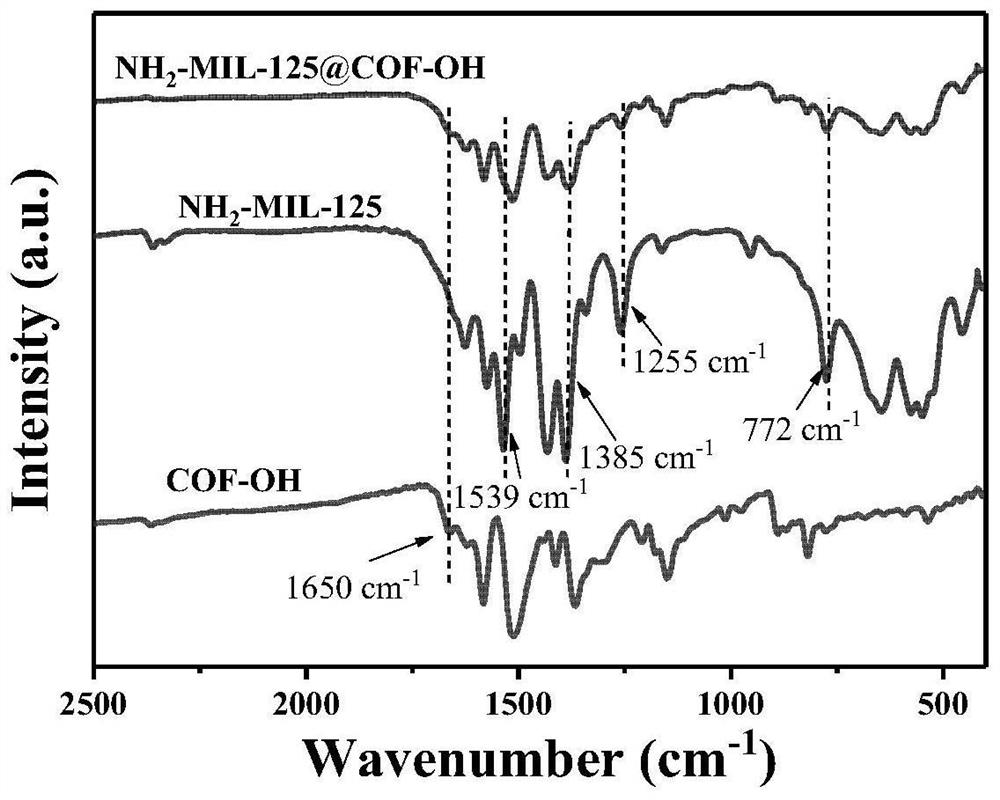
Ti-MOFs (at) COFs hybrid material with stable core-shell structure as well as preparation method and application of Ti-MOFs (at) COFs hybrid material
PatentActiveCN114713286A
Innovation
- Ti-MOFs and COFs are perfectly combined by coating to form a Ti-MOFs@COFs hybrid material with a stable core-shell structure. Schiff base reaction is used to build a COFs coating layer on the surface of Ti-MOFs to achieve covalent bonding. connection to improve catalytic performance.



Environmental Impact Assessment of COF Production Processes
The environmental implications of COF production processes have become increasingly critical as these materials transition from laboratory-scale synthesis to potential industrial applications. Traditional COF synthesis methods, particularly those aimed at achieving enhanced thermal stability, often involve energy-intensive procedures and potentially hazardous chemical reagents that raise significant environmental concerns.
Solvothermal synthesis, the most common approach for producing thermally stable COFs, typically requires elevated temperatures ranging from 120°C to 200°C for extended periods, resulting in substantial energy consumption. The process frequently employs organic solvents such as N,N-diethylformamide (DEF), dimethylformamide (DMF), and 1,4-dioxane, many of which are classified as volatile organic compounds (VOCs) with potential carcinogenic properties. The disposal and treatment of these solvent wastes present considerable environmental challenges.
Microwave-assisted synthesis, while reducing reaction times and potentially improving thermal stability outcomes, introduces concerns regarding electromagnetic energy consumption and the need for specialized equipment with higher carbon footprints during manufacturing. The rapid heating profiles characteristic of this method may also generate thermal stress on reaction vessels, potentially leading to increased equipment replacement cycles.
Mechanochemical synthesis approaches, emerging as greener alternatives, significantly reduce solvent usage and energy requirements. However, the mechanical grinding processes may generate fine particulate matter that requires careful containment and filtration systems to prevent atmospheric release. The durability of grinding equipment under continuous operation also presents material waste considerations.
The purification and isolation steps following COF synthesis contribute substantially to the overall environmental footprint. Multiple washing cycles with organic solvents, followed by activation procedures involving supercritical CO2 or high-temperature vacuum treatments, compound the environmental burden. Supercritical fluid processing, while avoiding toxic solvents, requires high-pressure equipment with significant energy demands.
Life cycle assessments indicate that scaling up thermally stable COF production would necessitate comprehensive waste management strategies, including solvent recovery systems, emission control technologies, and sustainable disposal methods for spent catalysts and unreacted precursors. The development of closed-loop synthesis processes and the implementation of green chemistry principles represent essential pathways for minimizing the environmental impact of COF production while maintaining the thermal stability requirements critical for practical applications.
Solvothermal synthesis, the most common approach for producing thermally stable COFs, typically requires elevated temperatures ranging from 120°C to 200°C for extended periods, resulting in substantial energy consumption. The process frequently employs organic solvents such as N,N-diethylformamide (DEF), dimethylformamide (DMF), and 1,4-dioxane, many of which are classified as volatile organic compounds (VOCs) with potential carcinogenic properties. The disposal and treatment of these solvent wastes present considerable environmental challenges.
Microwave-assisted synthesis, while reducing reaction times and potentially improving thermal stability outcomes, introduces concerns regarding electromagnetic energy consumption and the need for specialized equipment with higher carbon footprints during manufacturing. The rapid heating profiles characteristic of this method may also generate thermal stress on reaction vessels, potentially leading to increased equipment replacement cycles.
Mechanochemical synthesis approaches, emerging as greener alternatives, significantly reduce solvent usage and energy requirements. However, the mechanical grinding processes may generate fine particulate matter that requires careful containment and filtration systems to prevent atmospheric release. The durability of grinding equipment under continuous operation also presents material waste considerations.
The purification and isolation steps following COF synthesis contribute substantially to the overall environmental footprint. Multiple washing cycles with organic solvents, followed by activation procedures involving supercritical CO2 or high-temperature vacuum treatments, compound the environmental burden. Supercritical fluid processing, while avoiding toxic solvents, requires high-pressure equipment with significant energy demands.
Life cycle assessments indicate that scaling up thermally stable COF production would necessitate comprehensive waste management strategies, including solvent recovery systems, emission control technologies, and sustainable disposal methods for spent catalysts and unreacted precursors. The development of closed-loop synthesis processes and the implementation of green chemistry principles represent essential pathways for minimizing the environmental impact of COF production while maintaining the thermal stability requirements critical for practical applications.
Industrial Scalability Challenges for Stable COF Manufacturing
The transition from laboratory-scale COF synthesis to industrial manufacturing presents significant challenges that directly impact the thermal stability of the final products. Current laboratory methods typically produce COFs in milligram to gram quantities under carefully controlled conditions, but scaling these processes to kilogram or ton levels introduces numerous variables that can compromise structural integrity and thermal performance.
One of the primary scalability challenges lies in maintaining uniform reaction conditions across larger reaction volumes. In laboratory settings, precise temperature control, mixing efficiency, and reagent distribution are relatively straightforward to achieve. However, industrial reactors face heat and mass transfer limitations that can create temperature gradients and concentration variations, leading to defects in the COF framework that reduce thermal stability. These non-uniform conditions often result in incomplete crystallization, structural irregularities, and the formation of amorphous regions that serve as weak points under thermal stress.
The synthesis time requirements pose another significant obstacle for industrial implementation. Many thermally stable COFs require extended reaction times, sometimes spanning several days, to achieve optimal crystallinity and framework perfection. Industrial processes demand shorter cycle times for economic viability, creating pressure to accelerate synthesis through higher temperatures or modified reaction conditions. However, these modifications often compromise the careful balance needed for forming robust, thermally stable frameworks.
Solvent management and recovery systems present additional complexity in large-scale operations. The solvents used in COF synthesis are often expensive and require careful handling due to environmental and safety considerations. Industrial facilities must implement sophisticated solvent recovery and purification systems to maintain economic feasibility, but these systems can introduce impurities that affect COF quality and thermal performance.
Quality control and characterization at industrial scale represent another critical challenge. Laboratory-scale synthesis allows for comprehensive characterization of each batch, but industrial production requires rapid, inline monitoring techniques that can assess thermal stability and structural quality in real-time. Current analytical methods are often too slow or require specialized equipment that is difficult to integrate into continuous manufacturing processes.
The economic pressures of industrial manufacturing also drive the need for cost-effective raw materials and simplified synthetic routes. However, the precursors and reaction conditions that yield the most thermally stable COFs are often the most expensive and complex, creating tension between product performance and manufacturing economics that must be carefully balanced through process optimization and material selection strategies.
One of the primary scalability challenges lies in maintaining uniform reaction conditions across larger reaction volumes. In laboratory settings, precise temperature control, mixing efficiency, and reagent distribution are relatively straightforward to achieve. However, industrial reactors face heat and mass transfer limitations that can create temperature gradients and concentration variations, leading to defects in the COF framework that reduce thermal stability. These non-uniform conditions often result in incomplete crystallization, structural irregularities, and the formation of amorphous regions that serve as weak points under thermal stress.
The synthesis time requirements pose another significant obstacle for industrial implementation. Many thermally stable COFs require extended reaction times, sometimes spanning several days, to achieve optimal crystallinity and framework perfection. Industrial processes demand shorter cycle times for economic viability, creating pressure to accelerate synthesis through higher temperatures or modified reaction conditions. However, these modifications often compromise the careful balance needed for forming robust, thermally stable frameworks.
Solvent management and recovery systems present additional complexity in large-scale operations. The solvents used in COF synthesis are often expensive and require careful handling due to environmental and safety considerations. Industrial facilities must implement sophisticated solvent recovery and purification systems to maintain economic feasibility, but these systems can introduce impurities that affect COF quality and thermal performance.
Quality control and characterization at industrial scale represent another critical challenge. Laboratory-scale synthesis allows for comprehensive characterization of each batch, but industrial production requires rapid, inline monitoring techniques that can assess thermal stability and structural quality in real-time. Current analytical methods are often too slow or require specialized equipment that is difficult to integrate into continuous manufacturing processes.
The economic pressures of industrial manufacturing also drive the need for cost-effective raw materials and simplified synthetic routes. However, the precursors and reaction conditions that yield the most thermally stable COFs are often the most expensive and complex, creating tension between product performance and manufacturing economics that must be carefully balanced through process optimization and material selection strategies.
Unlock deeper insights with Patsnap Eureka Quick Research — get a full tech report to explore trends and direct your research. Try now!
Generate Your Research Report Instantly with AI Agent
Supercharge your innovation with Patsnap Eureka AI Agent Platform!