

How to Mitigate COF Decomposition under UV Exposure
APR 16, 20269 MIN READ
Generate Your Research Report Instantly with AI Agent
Patsnap Eureka helps you evaluate technical feasibility & market potential.
COF UV Stability Challenges and Research Goals
Covalent Organic Frameworks (COFs) represent a revolutionary class of crystalline porous materials that have garnered significant attention since their first synthesis in 2005. These materials are constructed through the formation of covalent bonds between organic building blocks, creating highly ordered, porous structures with exceptional surface areas and tunable properties. The unique combination of crystallinity, porosity, and chemical versatility has positioned COFs as promising candidates for diverse applications including gas storage, separation, catalysis, and optoelectronics.
The evolution of COF technology has progressed through several distinct phases, beginning with the initial development of boronate ester-linked frameworks and subsequently expanding to include imine-linked, triazine-based, and other covalent linkage chemistries. Each generation has brought improvements in stability, functionality, and synthetic accessibility, driving the field toward practical applications.
However, the widespread implementation of COFs faces a critical challenge: photochemical instability under ultraviolet radiation exposure. UV-induced decomposition represents one of the most significant barriers limiting the practical deployment of COFs in real-world environments where sunlight exposure is inevitable. This degradation mechanism not only compromises the structural integrity of the frameworks but also leads to loss of porosity, reduced functionality, and ultimately, material failure.
The primary research goal in addressing COF UV stability centers on developing comprehensive strategies to mitigate photochemical decomposition while preserving the inherent advantages of these materials. This objective encompasses multiple interconnected targets: understanding the fundamental mechanisms of UV-induced degradation at the molecular level, identifying structural modifications that enhance photostability without compromising desired properties, and developing protective strategies that can be implemented during synthesis or post-processing.
Current research efforts are focused on elucidating the relationship between COF structure and UV stability, with particular attention to how different linkage chemistries, aromatic building blocks, and framework topologies influence photochemical behavior. The ultimate goal is to establish design principles that enable the rational development of UV-stable COFs suitable for long-term outdoor applications, thereby unlocking the full potential of these materials in practical technologies.
The evolution of COF technology has progressed through several distinct phases, beginning with the initial development of boronate ester-linked frameworks and subsequently expanding to include imine-linked, triazine-based, and other covalent linkage chemistries. Each generation has brought improvements in stability, functionality, and synthetic accessibility, driving the field toward practical applications.
However, the widespread implementation of COFs faces a critical challenge: photochemical instability under ultraviolet radiation exposure. UV-induced decomposition represents one of the most significant barriers limiting the practical deployment of COFs in real-world environments where sunlight exposure is inevitable. This degradation mechanism not only compromises the structural integrity of the frameworks but also leads to loss of porosity, reduced functionality, and ultimately, material failure.
The primary research goal in addressing COF UV stability centers on developing comprehensive strategies to mitigate photochemical decomposition while preserving the inherent advantages of these materials. This objective encompasses multiple interconnected targets: understanding the fundamental mechanisms of UV-induced degradation at the molecular level, identifying structural modifications that enhance photostability without compromising desired properties, and developing protective strategies that can be implemented during synthesis or post-processing.
Current research efforts are focused on elucidating the relationship between COF structure and UV stability, with particular attention to how different linkage chemistries, aromatic building blocks, and framework topologies influence photochemical behavior. The ultimate goal is to establish design principles that enable the rational development of UV-stable COFs suitable for long-term outdoor applications, thereby unlocking the full potential of these materials in practical technologies.
Market Demand for UV-Resistant COF Applications
The market demand for UV-resistant COF applications is experiencing significant growth across multiple industrial sectors, driven by the increasing recognition of COF materials' unique properties and the critical need for photostability in real-world applications. This demand surge reflects the broader trend toward advanced porous materials that can maintain structural integrity and functional performance under harsh environmental conditions.
Electronic and optoelectronic industries represent the most prominent market segment for UV-resistant COFs. The semiconductor packaging sector requires materials that can withstand prolonged UV exposure during manufacturing processes and operational lifetimes. COFs with enhanced photostability are increasingly sought after for applications in flexible electronics, where traditional materials often fail under combined mechanical stress and UV radiation. The growing adoption of outdoor electronic displays and solar panel components further amplifies this demand.
The coatings and surface protection market constitutes another major application area. Industries ranging from automotive to aerospace are exploring UV-resistant COF-based coatings that offer superior barrier properties while maintaining transparency and mechanical flexibility. These applications particularly value COFs' tunable pore structures, which enable selective permeability control even after extended UV exposure.
Membrane separation technologies represent a rapidly expanding market segment. Water treatment facilities and industrial gas separation processes require membranes that maintain selectivity and permeability under outdoor conditions. UV-resistant COFs address the critical limitation of conventional organic membranes, which often degrade rapidly when exposed to sunlight, leading to costly replacements and system downtime.
The pharmaceutical and biotechnology sectors are emerging as significant consumers of UV-resistant COF materials. Drug delivery systems and biosensors require materials that remain stable during sterilization processes and storage under various lighting conditions. The ability to maintain precise molecular recognition capabilities after UV exposure makes these materials particularly valuable for diagnostic applications.
Market growth is further accelerated by stringent regulatory requirements across industries demanding longer material lifespans and reduced environmental impact. The push toward sustainable manufacturing processes has created demand for COF materials that can withstand sterilization and cleaning procedures involving UV radiation without compromising performance or releasing degradation products.
Regional market dynamics show particularly strong demand in Asia-Pacific regions, where rapid industrialization and electronics manufacturing drive the need for advanced materials. North American and European markets focus more on high-performance applications in aerospace and renewable energy sectors, where material reliability under UV exposure is critical for safety and economic viability.
Electronic and optoelectronic industries represent the most prominent market segment for UV-resistant COFs. The semiconductor packaging sector requires materials that can withstand prolonged UV exposure during manufacturing processes and operational lifetimes. COFs with enhanced photostability are increasingly sought after for applications in flexible electronics, where traditional materials often fail under combined mechanical stress and UV radiation. The growing adoption of outdoor electronic displays and solar panel components further amplifies this demand.
The coatings and surface protection market constitutes another major application area. Industries ranging from automotive to aerospace are exploring UV-resistant COF-based coatings that offer superior barrier properties while maintaining transparency and mechanical flexibility. These applications particularly value COFs' tunable pore structures, which enable selective permeability control even after extended UV exposure.
Membrane separation technologies represent a rapidly expanding market segment. Water treatment facilities and industrial gas separation processes require membranes that maintain selectivity and permeability under outdoor conditions. UV-resistant COFs address the critical limitation of conventional organic membranes, which often degrade rapidly when exposed to sunlight, leading to costly replacements and system downtime.
The pharmaceutical and biotechnology sectors are emerging as significant consumers of UV-resistant COF materials. Drug delivery systems and biosensors require materials that remain stable during sterilization processes and storage under various lighting conditions. The ability to maintain precise molecular recognition capabilities after UV exposure makes these materials particularly valuable for diagnostic applications.
Market growth is further accelerated by stringent regulatory requirements across industries demanding longer material lifespans and reduced environmental impact. The push toward sustainable manufacturing processes has created demand for COF materials that can withstand sterilization and cleaning procedures involving UV radiation without compromising performance or releasing degradation products.
Regional market dynamics show particularly strong demand in Asia-Pacific regions, where rapid industrialization and electronics manufacturing drive the need for advanced materials. North American and European markets focus more on high-performance applications in aerospace and renewable energy sectors, where material reliability under UV exposure is critical for safety and economic viability.
Current COF Decomposition Issues Under UV Exposure
Covalent Organic Frameworks (COFs) face significant stability challenges when exposed to ultraviolet radiation, which fundamentally limits their practical applications in photocatalysis, solar energy conversion, and outdoor sensing devices. The primary decomposition mechanism involves the photolytic cleavage of covalent bonds within the framework structure, particularly affecting the organic linkers that maintain the crystalline architecture.
The most vulnerable components in COFs under UV exposure are the imine bonds (C=N), boronate ester linkages (B-O), and triazine rings commonly used in framework construction. These bonds exhibit varying degrees of photosensitivity, with imine linkages being particularly susceptible to hydrolysis when combined with UV-induced radical formation. The decomposition process typically initiates at defect sites and grain boundaries, where structural irregularities create preferential pathways for photodegradation.
Experimental observations reveal that COF decomposition under UV exposure follows a multi-stage process. Initial exposure leads to partial framework amorphization, evidenced by decreased crystallinity in powder X-ray diffraction patterns. Prolonged exposure results in complete structural collapse, accompanied by significant changes in surface area and pore volume. The degradation rate varies substantially depending on the specific linkage chemistry, with β-ketoenamine-linked COFs showing superior UV stability compared to their imine-linked counterparts.
Environmental factors significantly amplify UV-induced decomposition. The presence of moisture accelerates hydrolytic processes, while oxygen exposure promotes radical-mediated degradation pathways. Temperature elevation further exacerbates these effects, creating a synergistic degradation environment that rapidly compromises framework integrity.
Current characterization methods for assessing UV-induced decomposition include time-resolved spectroscopy, electron paramagnetic resonance for radical detection, and in-situ monitoring techniques. These approaches have revealed that decomposition products often include fragmented organic molecules and reactive intermediates that can catalyze further degradation, creating an autocatalytic decomposition cycle.
The economic implications of UV instability are substantial, as it necessitates protective measures or limits COF applications to indoor or shielded environments. This constraint significantly reduces the market potential for COF-based technologies in outdoor applications, where UV resistance is paramount for long-term performance and commercial viability.
The most vulnerable components in COFs under UV exposure are the imine bonds (C=N), boronate ester linkages (B-O), and triazine rings commonly used in framework construction. These bonds exhibit varying degrees of photosensitivity, with imine linkages being particularly susceptible to hydrolysis when combined with UV-induced radical formation. The decomposition process typically initiates at defect sites and grain boundaries, where structural irregularities create preferential pathways for photodegradation.
Experimental observations reveal that COF decomposition under UV exposure follows a multi-stage process. Initial exposure leads to partial framework amorphization, evidenced by decreased crystallinity in powder X-ray diffraction patterns. Prolonged exposure results in complete structural collapse, accompanied by significant changes in surface area and pore volume. The degradation rate varies substantially depending on the specific linkage chemistry, with β-ketoenamine-linked COFs showing superior UV stability compared to their imine-linked counterparts.
Environmental factors significantly amplify UV-induced decomposition. The presence of moisture accelerates hydrolytic processes, while oxygen exposure promotes radical-mediated degradation pathways. Temperature elevation further exacerbates these effects, creating a synergistic degradation environment that rapidly compromises framework integrity.
Current characterization methods for assessing UV-induced decomposition include time-resolved spectroscopy, electron paramagnetic resonance for radical detection, and in-situ monitoring techniques. These approaches have revealed that decomposition products often include fragmented organic molecules and reactive intermediates that can catalyze further degradation, creating an autocatalytic decomposition cycle.
The economic implications of UV instability are substantial, as it necessitates protective measures or limits COF applications to indoor or shielded environments. This constraint significantly reduces the market potential for COF-based technologies in outdoor applications, where UV resistance is paramount for long-term performance and commercial viability.
Existing COF UV Protection Strategies
01 Thermal decomposition methods for COF materials
Covalent Organic Frameworks (COFs) can be decomposed through controlled thermal treatment processes. This involves heating the COF materials at specific temperatures to break down the covalent bonds within the framework structure. The thermal decomposition can be performed under various atmospheric conditions including inert gas, air, or vacuum environments. This method is useful for recycling COF materials, recovering building blocks, or studying the thermal stability of different COF structures.- Thermal decomposition methods for COF materials: Covalent Organic Frameworks (COFs) can be decomposed through controlled thermal treatment processes. This involves heating the COF materials at specific temperatures to break down the covalent bonds within the framework structure. The thermal decomposition process can be used to study the stability of COFs, recover building blocks, or transform the materials into other useful forms such as porous carbons. Temperature control and atmospheric conditions are critical factors in determining the decomposition pathway and final products.
- Chemical degradation and hydrolysis of COF structures: COFs can undergo decomposition through chemical methods including acid or base-catalyzed hydrolysis, oxidative degradation, or solvolysis. These chemical processes target the reversible covalent bonds that form the framework, such as imine, boronate ester, or other linkages. Chemical decomposition allows for controlled breakdown of the framework and potential recovery of organic linkers and building blocks. This approach is particularly useful for recycling COF materials or studying their chemical stability under various conditions.
- Photocatalytic decomposition of COF-based materials: COF materials can be decomposed or degraded through photocatalytic processes where light irradiation triggers the breakdown of the framework structure. This method utilizes the photosensitive properties of certain COF linkages or incorporates photocatalytic components within the framework. The photodecomposition process can be controlled by adjusting wavelength, intensity, and duration of light exposure. This approach has applications in controlled release systems and environmental remediation where light-triggered decomposition is desired.
- Mechanochemical decomposition techniques for COFs: Mechanical forces such as grinding, milling, or ultrasonication can induce decomposition of COF structures by breaking the covalent bonds through physical stress. This mechanochemical approach provides a solvent-free or low-solvent method for COF decomposition. The process parameters including force intensity, duration, and frequency can be optimized to achieve controlled decomposition. This method is advantageous for large-scale processing and can be combined with other decomposition techniques for enhanced efficiency.
- Enzymatic and biological decomposition of COF materials: Certain COF structures can be decomposed through enzymatic or biological processes, particularly those containing biodegradable linkages or functional groups susceptible to enzymatic attack. This approach offers an environmentally friendly decomposition method with high selectivity. Biological decomposition can be controlled by selecting appropriate enzymes, adjusting pH, temperature, and reaction time. This method is particularly relevant for biomedical applications where biocompatibility and controlled degradation are essential requirements.
02 Chemical degradation and solvolysis of COF structures
COF materials can be decomposed through chemical methods involving the use of acids, bases, or organic solvents. Solvolysis techniques break down the covalent linkages in the framework by attacking specific functional groups or bonds. This approach allows for controlled decomposition and potential recovery of organic building blocks. The chemical decomposition process can be optimized by adjusting parameters such as solvent type, concentration, temperature, and reaction time.Expand Specific Solutions03 Catalytic decomposition processes for COF materials
Catalytic methods can be employed to facilitate the decomposition of COF structures. This involves using metal catalysts or enzymatic systems to selectively break specific bonds within the framework. Catalytic decomposition offers advantages such as lower energy requirements and higher selectivity compared to purely thermal methods. The process can be designed to target specific linkages while preserving certain functional groups for material recovery or transformation.Expand Specific Solutions04 Photochemical and radiation-induced COF decomposition
COF materials can undergo decomposition through exposure to electromagnetic radiation including UV light, visible light, or other forms of radiation. Photochemical decomposition involves the absorption of photons that provide energy to break covalent bonds within the framework. This method can be particularly useful for controlled degradation or modification of COF structures. The decomposition rate and selectivity can be controlled by adjusting radiation wavelength, intensity, and exposure time.Expand Specific Solutions05 Mechanochemical decomposition and grinding methods
Mechanical force can be applied to induce decomposition of COF materials through grinding, milling, or other mechanochemical processes. This approach involves applying physical stress to break the covalent bonds within the framework structure. Mechanochemical decomposition can be performed with or without the addition of chemical reagents. This method is advantageous for its simplicity, scalability, and potential for solvent-free processing of COF materials.Expand Specific Solutions
Key Players in COF Research and UV Protection
The COF decomposition under UV exposure mitigation field represents an emerging technology area in the early development stage, with significant growth potential driven by increasing demand for stable organic framework materials in electronics and photonic applications. The market remains relatively nascent but shows promising expansion as industries seek UV-resistant materials for advanced manufacturing processes. Technology maturity varies considerably across market participants, with established industrial giants like Applied Materials, Canon, BASF, and 3M Innovative Properties leveraging their extensive R&D capabilities and manufacturing expertise to develop sophisticated solutions. Meanwhile, specialized materials companies such as Cytec Industries and Versum Materials focus on targeted chemical formulations, while academic institutions including University of Michigan, Bar-Ilan University, and Hebei University of Technology contribute fundamental research breakthroughs. The competitive landscape features a mix of semiconductor equipment manufacturers, chemical producers, and research organizations, indicating the interdisciplinary nature of this technology challenge requiring both materials science innovation and industrial-scale implementation capabilities.
BASF Corp.
Technical Solution: BASF has developed advanced UV-stable COF materials through incorporation of UV-absorbing additives and photostabilizers into the COF framework. Their approach involves using benzotriazole and hindered amine light stabilizers (HALS) that can be integrated during COF synthesis or post-synthetically grafted onto the framework. The company has also pioneered encapsulation techniques where COF particles are coated with UV-protective polymer shells, significantly reducing photodegradation rates. Additionally, BASF has developed hybrid COF-inorganic composites where metal oxide nanoparticles act as UV shields while maintaining the porosity and functionality of the original COF structure.
Strengths: Extensive experience in chemical stabilizers and protective coatings, strong industrial manufacturing capabilities. Weaknesses: Solutions may compromise COF porosity and add manufacturing complexity.
FUJIFILM Corp.
Technical Solution: FUJIFILM leverages its extensive photographic and imaging expertise to develop UV-protective solutions for COFs, particularly focusing on photostable organic compounds and UV-filtering materials. Their approach involves incorporating proprietary UV-absorbing dyes and optical brightening agents that have been optimized for photographic applications into COF structures. The company has developed specialized polymer matrices that can host COF materials while providing UV protection through selective wavelength filtering. FUJIFILM's technology also includes development of photostable COF variants using their knowledge of silver halide chemistry and organic photochemistry, creating hybrid materials that maintain functionality under UV exposure while incorporating light-management technologies originally developed for photographic films.
Strengths: Deep expertise in photochemistry and UV-stable materials, advanced optical technologies. Weaknesses: Solutions may be specialized for specific applications and potentially costly to scale.
Core Innovations in COF UV Stabilization Methods
Compositions and methods for the modification of imine covalent organic frameworks (COFs)
PatentActiveUS10982098B2
Innovation
- A method is developed to transform imine-based COFs into quinoline-linked COFs through an aza-Diels-Alder reaction, which kinetically fixes the reversible imine linkages, enhancing chemical stability and preserving porosity and crystallinity.
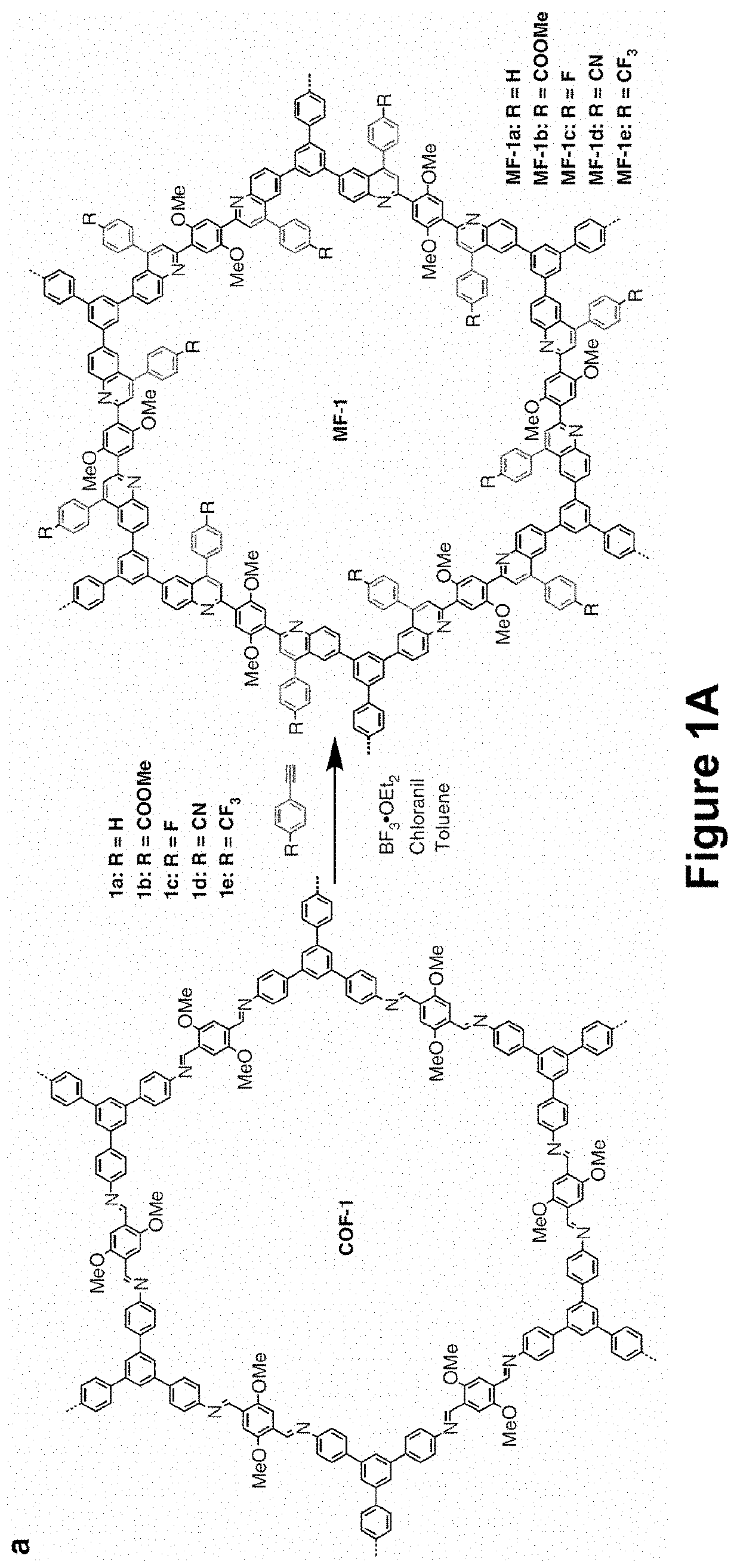
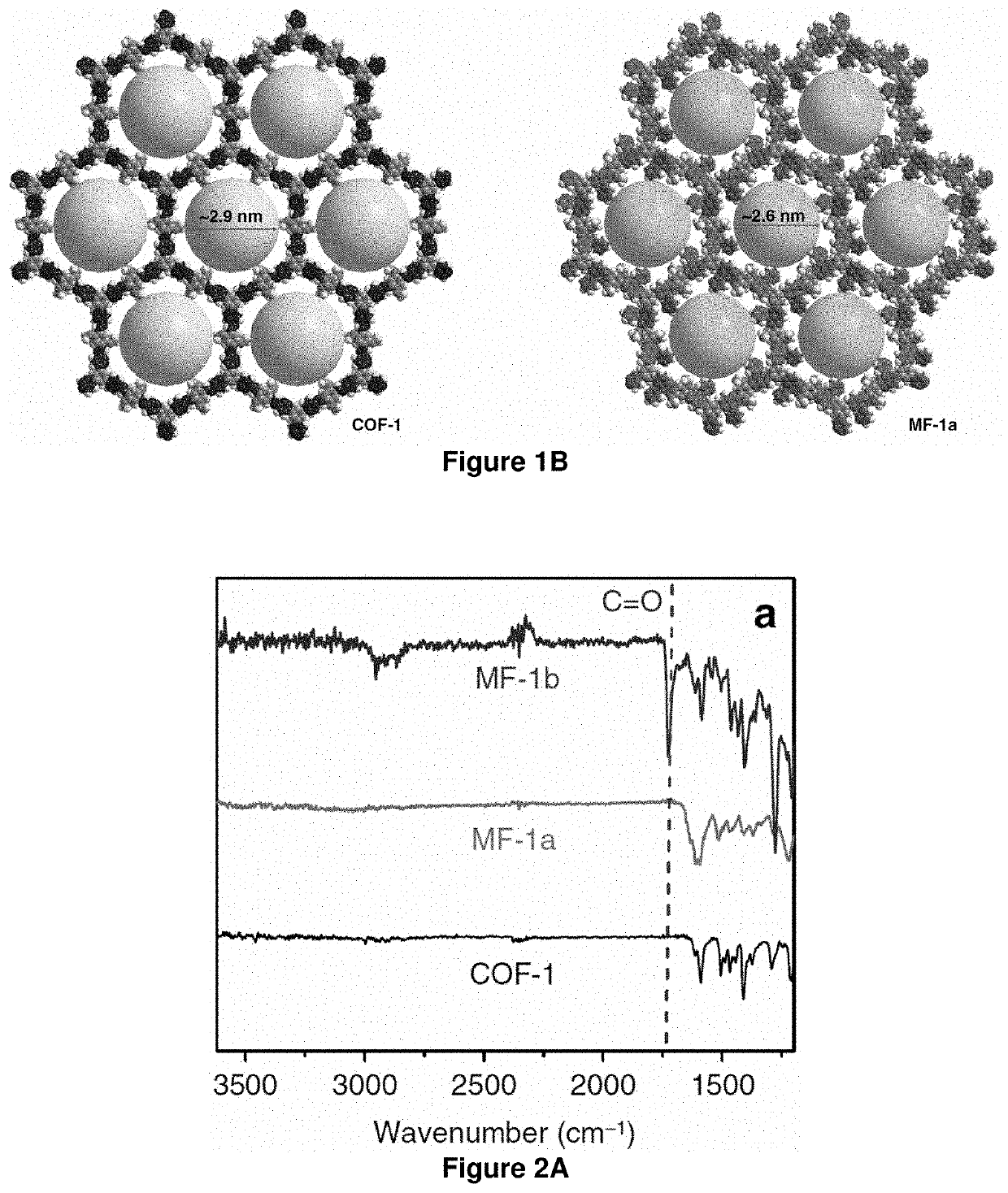
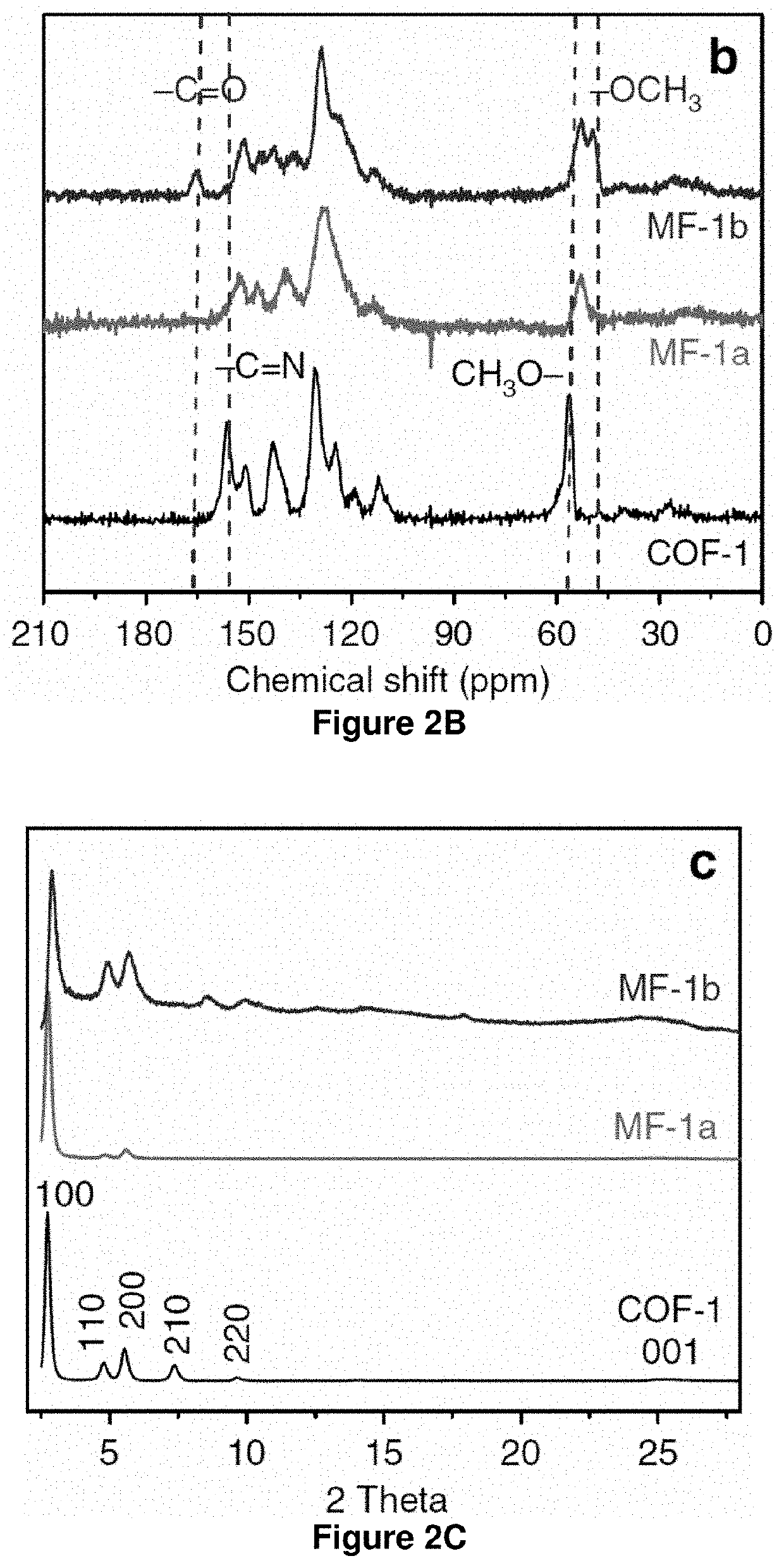

Photo triggered covalent organic frameworks and methods of using
PatentActiveUS20220041437A1
Innovation
- The development of covalent organic frameworks (COFs) that desorb hydrogen gas when exposed to light, specifically using Cu(I) or Pd moieties, allowing for photoactivation and rapid release at near ambient temperatures, and the use of colloidal solutions for enhanced light exposure and stability.


Environmental Impact of COF UV Degradation
The environmental implications of COF degradation under UV exposure extend far beyond material performance concerns, encompassing ecosystem health, waste management challenges, and sustainability considerations. When COFs undergo photodegradation, they release various decomposition products into the environment, including organic fragments, metal ions from potential catalytic sites, and intermediate compounds that may exhibit different toxicity profiles compared to the parent materials.
Aquatic ecosystems face particular vulnerability to COF degradation products. Released organic compounds can alter water chemistry, affecting pH levels and dissolved oxygen content. These changes create cascading effects throughout aquatic food chains, potentially impacting microbial communities, algae growth patterns, and higher-order organisms. Metal-containing COFs pose additional risks, as degraded metal ions may bioaccumulate in aquatic organisms, leading to long-term ecological disruption.
Soil contamination represents another critical environmental concern. COF fragments deposited in terrestrial environments can persist for extended periods, altering soil microbiome composition and nutrient cycling processes. The porous nature of COF materials, while beneficial for applications, may facilitate the adsorption and transport of other environmental contaminants, creating complex pollution scenarios that are difficult to remediate.
Atmospheric release of volatile degradation products during UV exposure contributes to air quality concerns. These emissions may include low molecular weight organic compounds that can participate in photochemical reactions, potentially forming secondary pollutants or contributing to ground-level ozone formation in urban environments.
The cumulative environmental burden of widespread COF deployment without adequate degradation mitigation strategies could result in significant ecological costs. Current environmental monitoring systems lack specific protocols for detecting and quantifying COF degradation products, creating gaps in our understanding of real-world environmental impacts. This knowledge deficit hampers the development of appropriate regulatory frameworks and remediation strategies.
Lifecycle assessment studies indicate that environmental costs associated with COF degradation may offset some of the sustainability benefits these materials offer in their intended applications, highlighting the critical importance of developing effective UV protection strategies.
Aquatic ecosystems face particular vulnerability to COF degradation products. Released organic compounds can alter water chemistry, affecting pH levels and dissolved oxygen content. These changes create cascading effects throughout aquatic food chains, potentially impacting microbial communities, algae growth patterns, and higher-order organisms. Metal-containing COFs pose additional risks, as degraded metal ions may bioaccumulate in aquatic organisms, leading to long-term ecological disruption.
Soil contamination represents another critical environmental concern. COF fragments deposited in terrestrial environments can persist for extended periods, altering soil microbiome composition and nutrient cycling processes. The porous nature of COF materials, while beneficial for applications, may facilitate the adsorption and transport of other environmental contaminants, creating complex pollution scenarios that are difficult to remediate.
Atmospheric release of volatile degradation products during UV exposure contributes to air quality concerns. These emissions may include low molecular weight organic compounds that can participate in photochemical reactions, potentially forming secondary pollutants or contributing to ground-level ozone formation in urban environments.
The cumulative environmental burden of widespread COF deployment without adequate degradation mitigation strategies could result in significant ecological costs. Current environmental monitoring systems lack specific protocols for detecting and quantifying COF degradation products, creating gaps in our understanding of real-world environmental impacts. This knowledge deficit hampers the development of appropriate regulatory frameworks and remediation strategies.
Lifecycle assessment studies indicate that environmental costs associated with COF degradation may offset some of the sustainability benefits these materials offer in their intended applications, highlighting the critical importance of developing effective UV protection strategies.
Safety Standards for UV-Exposed COF Materials
The establishment of comprehensive safety standards for UV-exposed COF materials represents a critical regulatory framework essential for ensuring safe deployment across various applications. Current international standards primarily draw from existing polymer and semiconductor material guidelines, yet lack specific provisions addressing the unique photochemical behavior of COF structures under ultraviolet radiation.
Existing safety protocols predominantly focus on traditional material degradation pathways, including thermal decomposition and mechanical failure modes. However, COF materials exhibit distinct UV-induced degradation mechanisms involving framework collapse, linker bond scission, and potential release of organic fragments. These phenomena necessitate specialized testing methodologies and exposure limits that conventional standards inadequately address.
The International Organization for Standardization (ISO) and American Society for Testing and Materials (ASTM) have initiated preliminary discussions regarding COF-specific safety protocols. Proposed standards encompass accelerated UV aging tests, toxicity assessments of degradation products, and workplace exposure limits for airborne COF particles. These emerging guidelines emphasize the need for material-specific photostability testing under controlled UV conditions.
Critical safety parameters under development include maximum allowable UV dose limits, mandatory protective coating requirements, and environmental release thresholds. The standards also address proper handling procedures during manufacturing, installation, and disposal phases, recognizing that UV-degraded COF materials may exhibit altered chemical properties and potential health risks.
Regulatory bodies are particularly focused on establishing standardized testing protocols that simulate real-world UV exposure conditions. These include continuous and intermittent UV irradiation scenarios, temperature cycling effects, and humidity influence on photodegradation rates. The standards aim to provide manufacturers with clear guidelines for material qualification and end-users with confidence in long-term safety performance.
Implementation challenges include the vast diversity of COF structures and their varying UV sensitivities, requiring flexible yet comprehensive regulatory frameworks. Industry stakeholders emphasize the need for harmonized international standards to facilitate global market adoption while maintaining rigorous safety requirements for UV-exposed applications.
Existing safety protocols predominantly focus on traditional material degradation pathways, including thermal decomposition and mechanical failure modes. However, COF materials exhibit distinct UV-induced degradation mechanisms involving framework collapse, linker bond scission, and potential release of organic fragments. These phenomena necessitate specialized testing methodologies and exposure limits that conventional standards inadequately address.
The International Organization for Standardization (ISO) and American Society for Testing and Materials (ASTM) have initiated preliminary discussions regarding COF-specific safety protocols. Proposed standards encompass accelerated UV aging tests, toxicity assessments of degradation products, and workplace exposure limits for airborne COF particles. These emerging guidelines emphasize the need for material-specific photostability testing under controlled UV conditions.
Critical safety parameters under development include maximum allowable UV dose limits, mandatory protective coating requirements, and environmental release thresholds. The standards also address proper handling procedures during manufacturing, installation, and disposal phases, recognizing that UV-degraded COF materials may exhibit altered chemical properties and potential health risks.
Regulatory bodies are particularly focused on establishing standardized testing protocols that simulate real-world UV exposure conditions. These include continuous and intermittent UV irradiation scenarios, temperature cycling effects, and humidity influence on photodegradation rates. The standards aim to provide manufacturers with clear guidelines for material qualification and end-users with confidence in long-term safety performance.
Implementation challenges include the vast diversity of COF structures and their varying UV sensitivities, requiring flexible yet comprehensive regulatory frameworks. Industry stakeholders emphasize the need for harmonized international standards to facilitate global market adoption while maintaining rigorous safety requirements for UV-exposed applications.
Unlock deeper insights with Patsnap Eureka Quick Research — get a full tech report to explore trends and direct your research. Try now!
Generate Your Research Report Instantly with AI Agent
Supercharge your innovation with Patsnap Eureka AI Agent Platform!