How to Leverage Magnetic Materials for Climate-Friendly Solutions
FEB 28, 20269 MIN READ
Generate Your Research Report Instantly with AI Agent
PatSnap Eureka helps you evaluate technical feasibility & market potential.
Magnetic Materials Climate Tech Background and Objectives
Magnetic materials have emerged as a cornerstone technology in the global transition toward sustainable energy systems and climate mitigation strategies. These materials, characterized by their ability to interact with magnetic fields through various mechanisms including ferromagnetism, ferrimagnetism, and paramagnetism, have found increasingly critical applications in renewable energy generation, energy storage, and environmental remediation technologies. The growing urgency of climate change has accelerated research and development efforts to harness the unique properties of magnetic materials for carbon reduction and environmental protection.
The historical development of magnetic materials for climate applications traces back to early wind turbine generators in the 1980s, where permanent magnets began replacing traditional electromagnetic systems to improve efficiency. This evolution has accelerated dramatically over the past two decades, driven by advances in rare earth magnet technology and the exponential growth of renewable energy markets. Modern applications now span from high-efficiency electric vehicle motors to advanced magnetic refrigeration systems that eliminate harmful refrigerants.
Current technological trends indicate a shift toward developing magnetic materials with enhanced performance characteristics while reducing dependence on critical raw materials. The industry is witnessing significant progress in developing high-temperature superconducting magnets for energy storage applications, magnetic heat pumps for building climate control, and novel magnetic separation technologies for carbon capture and water purification. These developments are supported by advances in computational materials science and nanotechnology fabrication techniques.
The primary technical objectives driving magnetic materials research for climate solutions center on achieving higher energy conversion efficiencies, reducing material costs, and improving operational durability under extreme environmental conditions. Specific targets include developing permanent magnets that maintain performance at elevated temperatures exceeding 200°C, creating magnetic refrigeration systems with coefficient of performance values above 6, and establishing magnetic separation processes capable of capturing CO2 with energy requirements below 100 kWh per ton.
Strategic objectives encompass establishing sustainable supply chains for critical magnetic materials, particularly rare earth elements, through recycling technologies and alternative material development. The field aims to achieve cost parity with conventional technologies while delivering superior environmental performance, ultimately enabling widespread adoption of magnetic material-based climate solutions across industrial, transportation, and residential sectors.
The historical development of magnetic materials for climate applications traces back to early wind turbine generators in the 1980s, where permanent magnets began replacing traditional electromagnetic systems to improve efficiency. This evolution has accelerated dramatically over the past two decades, driven by advances in rare earth magnet technology and the exponential growth of renewable energy markets. Modern applications now span from high-efficiency electric vehicle motors to advanced magnetic refrigeration systems that eliminate harmful refrigerants.
Current technological trends indicate a shift toward developing magnetic materials with enhanced performance characteristics while reducing dependence on critical raw materials. The industry is witnessing significant progress in developing high-temperature superconducting magnets for energy storage applications, magnetic heat pumps for building climate control, and novel magnetic separation technologies for carbon capture and water purification. These developments are supported by advances in computational materials science and nanotechnology fabrication techniques.
The primary technical objectives driving magnetic materials research for climate solutions center on achieving higher energy conversion efficiencies, reducing material costs, and improving operational durability under extreme environmental conditions. Specific targets include developing permanent magnets that maintain performance at elevated temperatures exceeding 200°C, creating magnetic refrigeration systems with coefficient of performance values above 6, and establishing magnetic separation processes capable of capturing CO2 with energy requirements below 100 kWh per ton.
Strategic objectives encompass establishing sustainable supply chains for critical magnetic materials, particularly rare earth elements, through recycling technologies and alternative material development. The field aims to achieve cost parity with conventional technologies while delivering superior environmental performance, ultimately enabling widespread adoption of magnetic material-based climate solutions across industrial, transportation, and residential sectors.
Market Demand for Green Magnetic Solutions
The global transition toward sustainable energy systems has created unprecedented demand for green magnetic solutions across multiple industrial sectors. Renewable energy infrastructure, particularly wind turbines and electric vehicles, represents the largest growth driver for advanced magnetic materials. Wind power generation requires high-performance permanent magnets for direct-drive generators, while the electric vehicle revolution demands efficient magnetic components for motors, charging systems, and energy storage applications.
Energy storage systems constitute another rapidly expanding market segment for magnetic materials. Grid-scale energy storage solutions rely on magnetic components for power conversion and management systems, enabling better integration of intermittent renewable energy sources. The growing deployment of battery energy storage systems worldwide has intensified demand for magnetic materials that can operate efficiently under varying load conditions while maintaining long-term stability.
Industrial decarbonization initiatives are driving substantial demand for magnetic cooling technologies and energy-efficient magnetic separation systems. Manufacturing sectors are increasingly adopting magnetic refrigeration as an alternative to conventional vapor-compression cooling, particularly in applications where environmental regulations restrict traditional refrigerants. Mining and waste processing industries require advanced magnetic separation technologies to improve resource recovery rates and reduce environmental impact.
The electronics industry's push toward energy efficiency has created significant opportunities for soft magnetic materials in power electronics applications. Data centers, telecommunications infrastructure, and consumer electronics manufacturers are seeking magnetic components that minimize energy losses while maintaining compact form factors. This trend aligns with global energy efficiency standards and corporate sustainability commitments.
Emerging applications in carbon capture and environmental remediation are generating new market segments for specialized magnetic materials. Magnetic nanoparticles show promise in atmospheric carbon dioxide capture systems, while magnetic adsorbents are being developed for water treatment and pollution control applications. These nascent markets represent significant long-term growth potential as environmental regulations become more stringent.
Regional market dynamics vary considerably, with Asia-Pacific leading in manufacturing capacity and Europe driving innovation in sustainable magnetic technologies. Supply chain considerations, particularly regarding rare earth elements, are influencing market demand patterns and accelerating development of alternative magnetic material compositions that reduce dependence on critical raw materials.
Energy storage systems constitute another rapidly expanding market segment for magnetic materials. Grid-scale energy storage solutions rely on magnetic components for power conversion and management systems, enabling better integration of intermittent renewable energy sources. The growing deployment of battery energy storage systems worldwide has intensified demand for magnetic materials that can operate efficiently under varying load conditions while maintaining long-term stability.
Industrial decarbonization initiatives are driving substantial demand for magnetic cooling technologies and energy-efficient magnetic separation systems. Manufacturing sectors are increasingly adopting magnetic refrigeration as an alternative to conventional vapor-compression cooling, particularly in applications where environmental regulations restrict traditional refrigerants. Mining and waste processing industries require advanced magnetic separation technologies to improve resource recovery rates and reduce environmental impact.
The electronics industry's push toward energy efficiency has created significant opportunities for soft magnetic materials in power electronics applications. Data centers, telecommunications infrastructure, and consumer electronics manufacturers are seeking magnetic components that minimize energy losses while maintaining compact form factors. This trend aligns with global energy efficiency standards and corporate sustainability commitments.
Emerging applications in carbon capture and environmental remediation are generating new market segments for specialized magnetic materials. Magnetic nanoparticles show promise in atmospheric carbon dioxide capture systems, while magnetic adsorbents are being developed for water treatment and pollution control applications. These nascent markets represent significant long-term growth potential as environmental regulations become more stringent.
Regional market dynamics vary considerably, with Asia-Pacific leading in manufacturing capacity and Europe driving innovation in sustainable magnetic technologies. Supply chain considerations, particularly regarding rare earth elements, are influencing market demand patterns and accelerating development of alternative magnetic material compositions that reduce dependence on critical raw materials.
Current State of Climate-Friendly Magnetic Technologies
The current landscape of climate-friendly magnetic technologies demonstrates significant progress across multiple application domains, with permanent magnet technologies leading the charge in renewable energy systems. Rare earth-based permanent magnets, particularly neodymium-iron-boron (NdFeB) and samarium-cobalt (SmCo) compositions, dominate wind turbine generators and electric vehicle motors due to their exceptional magnetic strength and energy density. However, supply chain vulnerabilities and environmental concerns associated with rare earth mining have intensified research into alternative magnetic materials.
Ferrite-based magnetic materials represent a mature technology segment that continues to evolve for climate applications. These cost-effective materials find extensive use in energy-efficient transformers, inductors, and motor cores for various green technologies. Recent developments in nanocrystalline and amorphous magnetic alloys have achieved superior performance characteristics, enabling more efficient power conversion systems and reducing energy losses in electrical infrastructure.
Magnetic refrigeration technology has emerged as a promising alternative to conventional vapor-compression cooling systems. Current prototypes utilizing gadolinium-based magnetocaloric materials demonstrate energy efficiency improvements of 20-30% compared to traditional refrigeration methods. Several companies have developed commercial-scale magnetic cooling systems for specific applications, though widespread adoption remains limited by material costs and system complexity.
Energy storage applications represent another significant domain where magnetic materials contribute to climate solutions. Superconducting magnetic energy storage (SMES) systems, while still in early commercial stages, offer rapid response times and high efficiency for grid stabilization applications. Advanced magnetic materials in flywheel energy storage systems provide mechanical energy storage solutions with minimal environmental impact and extended operational lifespans.
The integration of magnetic materials in carbon capture and utilization technologies shows promising developments. Magnetic separation techniques using functionalized magnetic nanoparticles enable efficient CO2 capture from industrial emissions and atmospheric sources. These systems demonstrate scalability potential and lower energy requirements compared to conventional chemical absorption methods.
Current technological limitations include temperature stability challenges in high-performance applications, material degradation under extreme operating conditions, and manufacturing scalability for emerging magnetic compositions. Research institutions and industry leaders are actively addressing these constraints through advanced material engineering and processing innovations.
Ferrite-based magnetic materials represent a mature technology segment that continues to evolve for climate applications. These cost-effective materials find extensive use in energy-efficient transformers, inductors, and motor cores for various green technologies. Recent developments in nanocrystalline and amorphous magnetic alloys have achieved superior performance characteristics, enabling more efficient power conversion systems and reducing energy losses in electrical infrastructure.
Magnetic refrigeration technology has emerged as a promising alternative to conventional vapor-compression cooling systems. Current prototypes utilizing gadolinium-based magnetocaloric materials demonstrate energy efficiency improvements of 20-30% compared to traditional refrigeration methods. Several companies have developed commercial-scale magnetic cooling systems for specific applications, though widespread adoption remains limited by material costs and system complexity.
Energy storage applications represent another significant domain where magnetic materials contribute to climate solutions. Superconducting magnetic energy storage (SMES) systems, while still in early commercial stages, offer rapid response times and high efficiency for grid stabilization applications. Advanced magnetic materials in flywheel energy storage systems provide mechanical energy storage solutions with minimal environmental impact and extended operational lifespans.
The integration of magnetic materials in carbon capture and utilization technologies shows promising developments. Magnetic separation techniques using functionalized magnetic nanoparticles enable efficient CO2 capture from industrial emissions and atmospheric sources. These systems demonstrate scalability potential and lower energy requirements compared to conventional chemical absorption methods.
Current technological limitations include temperature stability challenges in high-performance applications, material degradation under extreme operating conditions, and manufacturing scalability for emerging magnetic compositions. Research institutions and industry leaders are actively addressing these constraints through advanced material engineering and processing innovations.
Existing Climate-Friendly Magnetic Solutions
01 Soft magnetic materials and alloys
Soft magnetic materials are characterized by their ability to be easily magnetized and demagnetized, making them suitable for applications requiring frequent magnetic field changes. These materials typically include iron-based alloys, ferrites, and amorphous metals. They exhibit low coercivity and high permeability, which are essential properties for transformers, inductors, and electromagnetic cores. The composition and processing methods are optimized to minimize energy losses during magnetization cycles.- Soft magnetic materials and alloys: Soft magnetic materials exhibit high magnetic permeability and low coercivity, making them suitable for applications requiring easy magnetization and demagnetization. These materials typically include iron-based alloys, ferrites, and amorphous metals. They are commonly used in transformers, inductors, and electromagnetic cores where efficient magnetic flux transfer is essential. The composition and processing methods significantly influence their magnetic properties and performance characteristics.
- Hard magnetic materials and permanent magnets: Hard magnetic materials possess high coercivity and remanence, enabling them to maintain magnetization after removal of external magnetic fields. These materials are essential for permanent magnet applications in motors, generators, and magnetic storage devices. Various compositions including rare-earth magnets, ferrites, and alnico alloys provide different performance levels. Manufacturing processes and heat treatments are critical for optimizing magnetic properties and stability.
- Magnetic composite materials and powder metallurgy: Magnetic composite materials combine magnetic particles with non-magnetic binders or matrices to achieve specific properties. Powder metallurgy techniques enable the production of complex shapes with controlled magnetic characteristics. These materials offer advantages in weight reduction, cost effectiveness, and design flexibility. Applications include electromagnetic interference shielding, magnetic sensors, and specialized electronic components.
- Magnetic thin films and coatings: Magnetic thin films and coatings are deposited layers with thicknesses ranging from nanometers to micrometers, exhibiting unique magnetic properties. These materials are crucial for data storage media, magnetic recording heads, and spintronic devices. Deposition techniques such as sputtering, evaporation, and electroplating control film structure and magnetic anisotropy. Surface treatments and multilayer structures enhance performance in high-density storage and sensor applications.
- Magnetic material processing and heat treatment: Processing methods and heat treatment procedures are fundamental to achieving desired magnetic properties in materials. Techniques include annealing, quenching, and controlled cooling cycles that modify microstructure and domain alignment. Mechanical processing such as rolling, forging, and sintering affects grain structure and magnetic behavior. Optimization of these processes enables tailoring of coercivity, permeability, and saturation magnetization for specific applications.
02 Hard magnetic materials and permanent magnets
Hard magnetic materials are designed to maintain their magnetization after being magnetized, making them ideal for permanent magnet applications. These materials possess high coercivity and remanence, allowing them to generate stable magnetic fields without continuous power input. Common compositions include rare earth magnets, ferrites, and alnico alloys. Applications range from electric motors and generators to magnetic sensors and data storage devices.Expand Specific Solutions03 Magnetic composite materials and powder metallurgy
Magnetic composite materials combine magnetic particles with non-magnetic binders or matrices to create materials with tailored magnetic properties. Powder metallurgy techniques are employed to fabricate these composites, allowing for precise control over particle size, distribution, and orientation. These materials offer advantages such as reduced eddy current losses, improved mechanical properties, and the ability to form complex shapes. They are particularly useful in high-frequency applications and miniaturized magnetic components.Expand Specific Solutions04 Magnetic thin films and coatings
Magnetic thin films and coatings are deposited layers of magnetic materials with thicknesses ranging from nanometers to micrometers. These films are produced using various deposition techniques and exhibit unique magnetic properties due to their reduced dimensionality and interface effects. Applications include magnetic recording media, spintronic devices, magnetic sensors, and electromagnetic shielding. The properties can be engineered through control of composition, thickness, and microstructure.Expand Specific Solutions05 Nanostructured and advanced magnetic materials
Nanostructured magnetic materials feature grain sizes or structural features in the nanometer range, resulting in enhanced or novel magnetic properties. These materials include nanocrystalline alloys, magnetic nanoparticles, and nanocomposites. The reduced dimensions lead to effects such as superparamagnetism, enhanced coercivity, and improved soft magnetic properties. Applications span biomedical uses, high-density data storage, advanced sensors, and energy conversion devices. Processing methods focus on controlling nanostructure formation and stability.Expand Specific Solutions
Key Players in Green Magnetic Materials Industry
The magnetic materials sector for climate-friendly solutions is experiencing rapid growth, driven by increasing demand for energy-efficient technologies and sustainable cooling systems. The market demonstrates significant expansion potential as governments worldwide implement stricter environmental regulations and carbon reduction targets. Technology maturity varies considerably across applications, with established players like BASF Corp., Toshiba Corp., and ABB Ltd. leading in traditional magnetic material development, while specialized companies such as Cooltech Applications SAS, Camfridge Ltd., and Magneto BV are pioneering advanced magnetocaloric cooling technologies. Research institutions including Beijing University of Technology, University of Science & Technology Beijing, and Peking University are driving fundamental breakthroughs in magnetic material science. The competitive landscape shows a clear division between mature industrial applications dominated by multinational corporations like Robert Bosch GmbH, NEC Corp., and LG Chem Ltd., and emerging climate-specific applications where innovative startups are challenging conventional approaches with novel magnetic refrigeration and energy conversion solutions.
BASF Corp.
Technical Solution: BASF has developed advanced magnetic materials for energy-efficient applications, including magnetocaloric materials for solid-state cooling systems that can reduce energy consumption by 20-30% compared to conventional vapor-compression refrigeration[1]. Their portfolio includes rare-earth-free permanent magnets for electric vehicle motors and wind turbines, utilizing iron-nitride and manganese-based compounds to reduce dependency on critical materials[2]. The company also produces magnetic nanoparticles for environmental remediation applications, capable of removing heavy metals and organic pollutants from water with efficiency rates exceeding 95%[3]. Their magnetic heat pump technology operates with significantly lower global warming potential refrigerants.
Strengths: Strong chemical expertise and scalable manufacturing capabilities, comprehensive material portfolio covering multiple climate applications. Weaknesses: High development costs for novel magnetic materials, competition from established rare-earth magnet suppliers.
Toshiba Corp.
Technical Solution: Toshiba has pioneered magnetocaloric cooling technology through their development of gadolinium-based and La-Fe-Si alloy systems for residential and commercial refrigeration applications[4]. Their magnetic refrigeration prototypes demonstrate coefficient of performance improvements of 40-60% over traditional compressor-based systems[5]. The company integrates permanent magnet synchronous motors in their heat pump systems, achieving seasonal energy efficiency ratios exceeding 20 SEER through advanced magnetic field optimization[6]. Toshiba's magnetic levitation technology for HVAC systems eliminates mechanical friction, reducing maintenance requirements and extending operational lifespans to over 25 years[7]. Their research focuses on room-temperature magnetocaloric materials to eliminate the need for expensive rare-earth elements.
Strengths: Extensive experience in consumer appliances and HVAC systems, strong R&D capabilities in magnetic cooling. Weaknesses: Limited market penetration of magnetocaloric cooling technology, high initial investment costs for commercialization.
Core Innovations in Sustainable Magnetic Technologies
La(fe,si)13-based magnetic refrigeration material prepared from industrial-pure mischmetal as the raw material and preparation and use thereof
PatentInactiveUS20140166159A1
Innovation
- A La(Fe,Si)13-based magnetic refrigeration material is prepared using industrial-pure mischmetal, specifically impurity-containing and naturally proportionated La-Ce-Pr-Nd mischmetal or LaCe alloy extracted from light rare earth ores, reducing dependency on high-purity rare earth elements and lowering production costs.


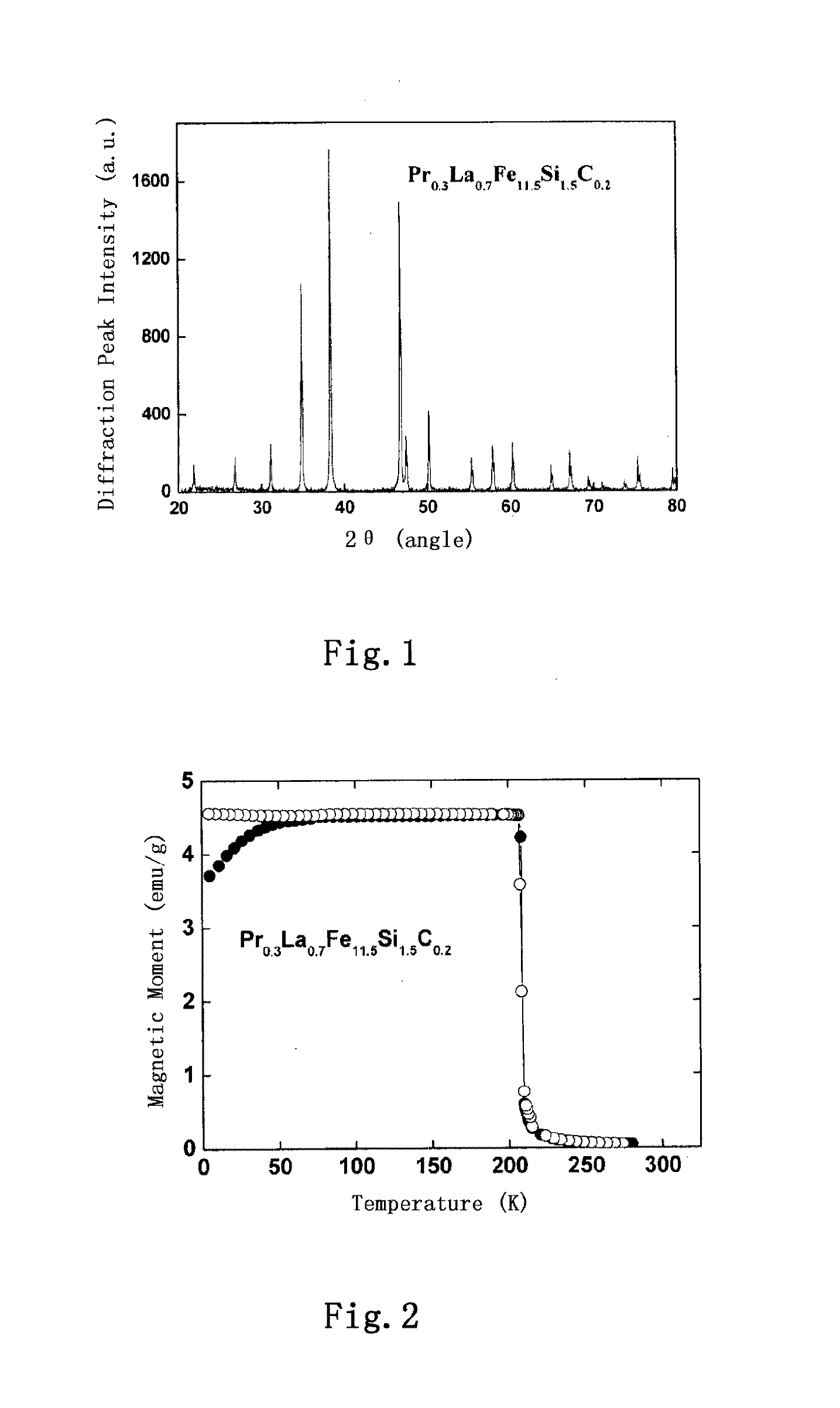
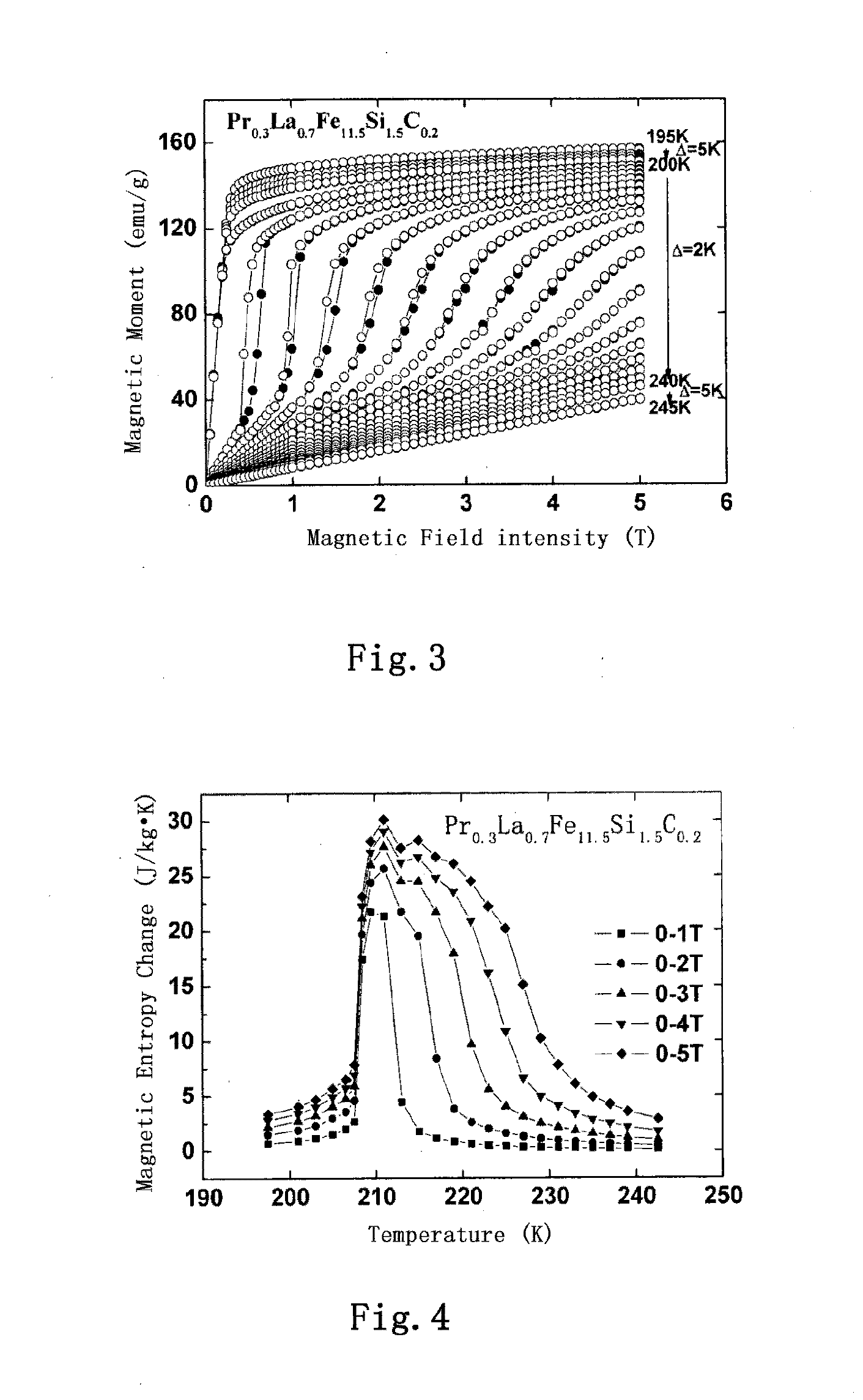
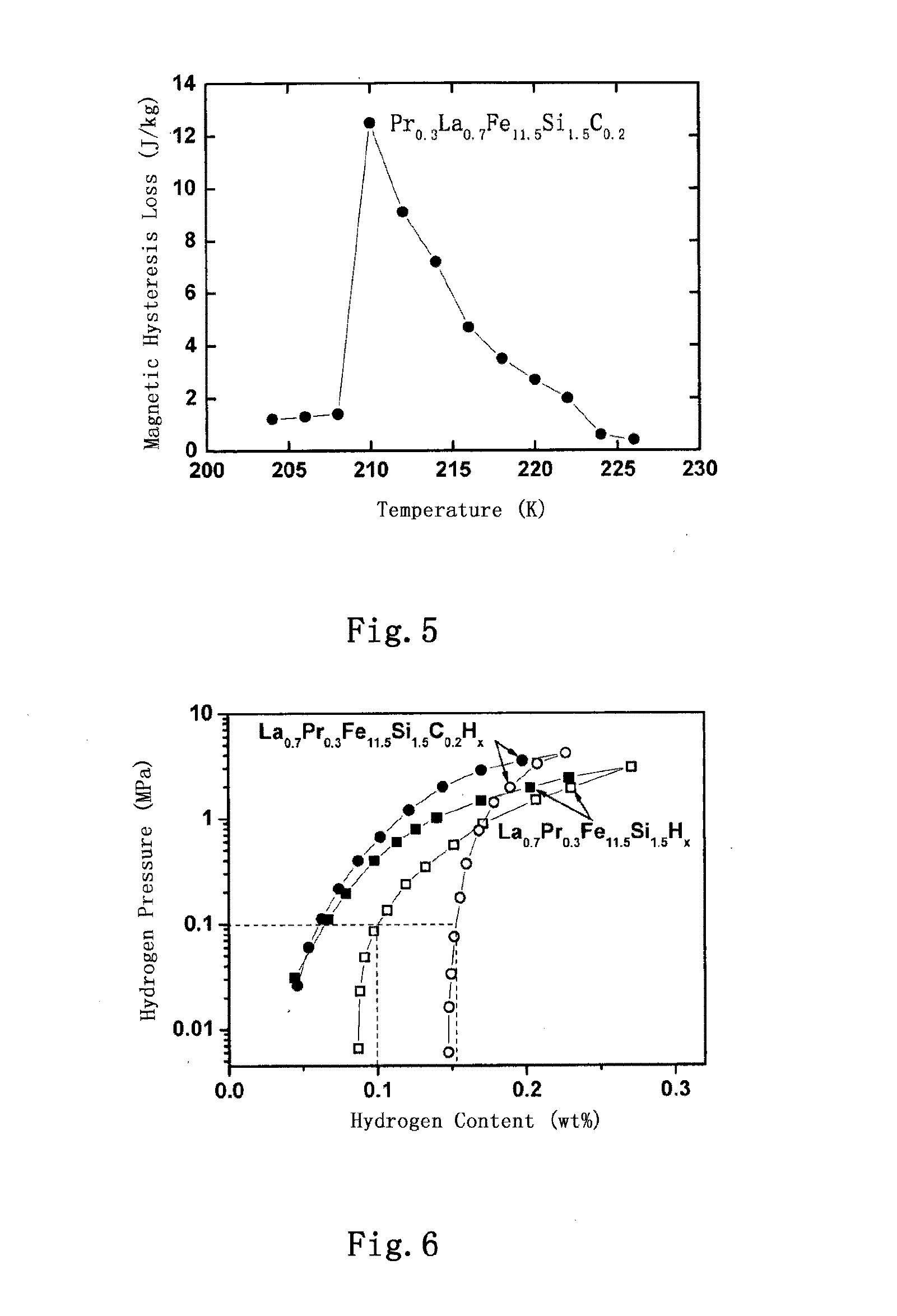
La(fe,si)13-based multi-interstitial atom hydride magnetic refrigeration material with high temperature stability and large magnetic entropy change and preparation method thereof
PatentInactiveUS20130200293A1
Innovation
- A La(Fe,Si)13-based hydride magnetic refrigeration material with multiple interstitial atoms is developed, featuring a cubic NaZn13-type structure, where hydrogen is introduced into a La1-aRaFe13-bSibXc master alloy to control hydrogen content and maintain stability, allowing for adjustable Curie temperature and reduced hysteresis loss.

Environmental Policy Impact on Magnetic Material Development
Environmental policies worldwide have emerged as critical drivers shaping the development trajectory of magnetic materials, fundamentally altering research priorities and commercial strategies. The Paris Climate Agreement and subsequent national commitments have established stringent carbon reduction targets, compelling governments to implement comprehensive policy frameworks that directly influence magnetic material innovation pathways.
Regulatory mandates for renewable energy adoption have created unprecedented demand for high-performance permanent magnets used in wind turbines and electric vehicle motors. The European Green Deal's ambitious 2050 carbon neutrality target has accelerated funding for rare earth element recycling technologies and alternative magnetic material research. Similarly, China's dual carbon goals have prompted substantial investments in magnetic material supply chain sustainability initiatives.
Critical material security policies have profoundly impacted magnetic material development strategies. The U.S. Critical Materials Strategy and similar initiatives in Japan and Europe have prioritized reducing dependence on rare earth imports through domestic mining, recycling infrastructure, and substitute material development. These policies have catalyzed research into rare earth-free permanent magnets and enhanced recycling processes for neodymium-iron-boron magnets.
Environmental regulations governing mining and processing operations have intensified pressure for cleaner production methods. Stricter environmental impact assessments for rare earth extraction have driven innovation in sustainable mining technologies and closed-loop manufacturing processes. The EU's Restriction of Hazardous Substances directive has further influenced material selection criteria, promoting development of environmentally benign magnetic materials.
Carbon pricing mechanisms and emissions trading systems have created economic incentives for magnetic material efficiency improvements. These market-based policies have accelerated development of high-energy-density magnets that enable smaller, more efficient devices, ultimately reducing overall carbon footprints across applications.
Government research funding allocation reflects policy priorities, with substantial increases in grants for sustainable magnetic material technologies. National science foundations have redirected resources toward projects addressing critical material substitution, recycling innovation, and lifecycle assessment methodologies, fundamentally reshaping the research landscape and accelerating breakthrough discoveries in environmentally sustainable magnetic solutions.
Regulatory mandates for renewable energy adoption have created unprecedented demand for high-performance permanent magnets used in wind turbines and electric vehicle motors. The European Green Deal's ambitious 2050 carbon neutrality target has accelerated funding for rare earth element recycling technologies and alternative magnetic material research. Similarly, China's dual carbon goals have prompted substantial investments in magnetic material supply chain sustainability initiatives.
Critical material security policies have profoundly impacted magnetic material development strategies. The U.S. Critical Materials Strategy and similar initiatives in Japan and Europe have prioritized reducing dependence on rare earth imports through domestic mining, recycling infrastructure, and substitute material development. These policies have catalyzed research into rare earth-free permanent magnets and enhanced recycling processes for neodymium-iron-boron magnets.
Environmental regulations governing mining and processing operations have intensified pressure for cleaner production methods. Stricter environmental impact assessments for rare earth extraction have driven innovation in sustainable mining technologies and closed-loop manufacturing processes. The EU's Restriction of Hazardous Substances directive has further influenced material selection criteria, promoting development of environmentally benign magnetic materials.
Carbon pricing mechanisms and emissions trading systems have created economic incentives for magnetic material efficiency improvements. These market-based policies have accelerated development of high-energy-density magnets that enable smaller, more efficient devices, ultimately reducing overall carbon footprints across applications.
Government research funding allocation reflects policy priorities, with substantial increases in grants for sustainable magnetic material technologies. National science foundations have redirected resources toward projects addressing critical material substitution, recycling innovation, and lifecycle assessment methodologies, fundamentally reshaping the research landscape and accelerating breakthrough discoveries in environmentally sustainable magnetic solutions.
Carbon Footprint Assessment of Magnetic Material Production
The carbon footprint assessment of magnetic material production represents a critical evaluation framework for understanding the environmental impact of manufacturing processes essential to climate-friendly technologies. This assessment encompasses the entire lifecycle of magnetic materials, from raw material extraction through processing, manufacturing, and end-of-life disposal, providing quantitative metrics for greenhouse gas emissions at each stage.
Raw material extraction constitutes the most carbon-intensive phase of magnetic material production, particularly for rare earth elements used in permanent magnets. Mining operations for neodymium, dysprosium, and other critical elements generate substantial CO2 emissions through energy-intensive extraction processes, chemical separation procedures, and transportation of materials across global supply chains. Current assessments indicate that rare earth mining can produce 15-25 kg CO2 equivalent per kilogram of refined material.
Manufacturing processes contribute significantly to the overall carbon footprint through high-temperature sintering, melting, and forming operations. Conventional production of ferrite magnets generates approximately 2-4 kg CO2 per kilogram of finished product, while rare earth permanent magnets can produce 20-40 kg CO2 per kilogram due to complex processing requirements and energy-intensive purification steps.
Transportation and logistics add another layer of carbon emissions, as magnetic materials often traverse multiple continents during production. Raw materials extracted in one region undergo processing in another, with final manufacturing occurring in different locations, creating extended supply chains that amplify transportation-related emissions.
Assessment methodologies employ lifecycle analysis frameworks following ISO 14040 standards, incorporating direct emissions from manufacturing facilities, indirect emissions from electricity consumption, and upstream emissions from material suppliers. Advanced assessment tools now integrate real-time energy monitoring, renewable energy utilization rates, and process optimization metrics to provide more accurate carbon footprint calculations.
Emerging assessment approaches focus on circular economy principles, evaluating recycling potential and material recovery rates to offset initial production emissions. These comprehensive evaluations reveal that while magnetic material production carries significant upfront carbon costs, their enabling role in renewable energy systems and electric vehicles creates substantial net positive climate impacts over operational lifetimes.
Raw material extraction constitutes the most carbon-intensive phase of magnetic material production, particularly for rare earth elements used in permanent magnets. Mining operations for neodymium, dysprosium, and other critical elements generate substantial CO2 emissions through energy-intensive extraction processes, chemical separation procedures, and transportation of materials across global supply chains. Current assessments indicate that rare earth mining can produce 15-25 kg CO2 equivalent per kilogram of refined material.
Manufacturing processes contribute significantly to the overall carbon footprint through high-temperature sintering, melting, and forming operations. Conventional production of ferrite magnets generates approximately 2-4 kg CO2 per kilogram of finished product, while rare earth permanent magnets can produce 20-40 kg CO2 per kilogram due to complex processing requirements and energy-intensive purification steps.
Transportation and logistics add another layer of carbon emissions, as magnetic materials often traverse multiple continents during production. Raw materials extracted in one region undergo processing in another, with final manufacturing occurring in different locations, creating extended supply chains that amplify transportation-related emissions.
Assessment methodologies employ lifecycle analysis frameworks following ISO 14040 standards, incorporating direct emissions from manufacturing facilities, indirect emissions from electricity consumption, and upstream emissions from material suppliers. Advanced assessment tools now integrate real-time energy monitoring, renewable energy utilization rates, and process optimization metrics to provide more accurate carbon footprint calculations.
Emerging assessment approaches focus on circular economy principles, evaluating recycling potential and material recovery rates to offset initial production emissions. These comprehensive evaluations reveal that while magnetic material production carries significant upfront carbon costs, their enabling role in renewable energy systems and electric vehicles creates substantial net positive climate impacts over operational lifetimes.
Unlock deeper insights with PatSnap Eureka Quick Research — get a full tech report to explore trends and direct your research. Try now!
Generate Your Research Report Instantly with AI Agent
Supercharge your innovation with PatSnap Eureka AI Agent Platform!