
How to Reduce Electromagnetic Interference With Magnetic Materials
FEB 28, 20269 MIN READ
Generate Your Research Report Instantly with AI Agent
Patsnap Eureka helps you evaluate technical feasibility & market potential.
Magnetic EMI Shielding Background and Objectives
Electromagnetic interference (EMI) has emerged as one of the most critical challenges in modern electronic systems, fundamentally altering how engineers approach device design and system integration. The proliferation of electronic devices across industries, from consumer electronics to aerospace applications, has created an increasingly complex electromagnetic environment where multiple devices must coexist without mutual interference.
The historical evolution of EMI challenges traces back to the early days of radio communications, but has accelerated dramatically with the digital revolution. Initially, EMI concerns were primarily focused on radio frequency interference in communication systems. However, the miniaturization of electronic components, increased switching frequencies, and higher power densities in modern devices have exponentially amplified the complexity of electromagnetic compatibility requirements.
Magnetic materials have gained prominence as a sophisticated solution for EMI mitigation due to their unique ability to manipulate electromagnetic fields through both absorption and reflection mechanisms. Unlike traditional conductive shielding materials that primarily rely on reflection, magnetic materials offer the advantage of absorbing electromagnetic energy and converting it to heat, thereby reducing secondary reflections that can cause interference in adjacent circuits.
The technological landscape has witnessed significant advancement in magnetic EMI shielding materials, evolving from simple ferrite cores to complex nanocomposite materials with tailored electromagnetic properties. Modern magnetic shielding solutions encompass soft magnetic alloys, ferrite-based composites, and engineered metamaterials that can be precisely tuned for specific frequency ranges and application requirements.
Current market demands are driving the development of magnetic EMI shielding solutions that can operate effectively across broader frequency spectrums while maintaining compact form factors. The automotive industry's transition to electric vehicles, the deployment of 5G networks, and the increasing integration of high-frequency switching power supplies have created unprecedented requirements for EMI suppression performance.
The primary objective of advancing magnetic EMI shielding technology centers on achieving superior interference reduction while addressing practical implementation challenges such as material cost, processing complexity, and integration compatibility. This involves developing materials with optimized permeability and loss characteristics, improving manufacturing scalability, and establishing standardized testing methodologies for performance validation across diverse application environments.
The historical evolution of EMI challenges traces back to the early days of radio communications, but has accelerated dramatically with the digital revolution. Initially, EMI concerns were primarily focused on radio frequency interference in communication systems. However, the miniaturization of electronic components, increased switching frequencies, and higher power densities in modern devices have exponentially amplified the complexity of electromagnetic compatibility requirements.
Magnetic materials have gained prominence as a sophisticated solution for EMI mitigation due to their unique ability to manipulate electromagnetic fields through both absorption and reflection mechanisms. Unlike traditional conductive shielding materials that primarily rely on reflection, magnetic materials offer the advantage of absorbing electromagnetic energy and converting it to heat, thereby reducing secondary reflections that can cause interference in adjacent circuits.
The technological landscape has witnessed significant advancement in magnetic EMI shielding materials, evolving from simple ferrite cores to complex nanocomposite materials with tailored electromagnetic properties. Modern magnetic shielding solutions encompass soft magnetic alloys, ferrite-based composites, and engineered metamaterials that can be precisely tuned for specific frequency ranges and application requirements.
Current market demands are driving the development of magnetic EMI shielding solutions that can operate effectively across broader frequency spectrums while maintaining compact form factors. The automotive industry's transition to electric vehicles, the deployment of 5G networks, and the increasing integration of high-frequency switching power supplies have created unprecedented requirements for EMI suppression performance.
The primary objective of advancing magnetic EMI shielding technology centers on achieving superior interference reduction while addressing practical implementation challenges such as material cost, processing complexity, and integration compatibility. This involves developing materials with optimized permeability and loss characteristics, improving manufacturing scalability, and establishing standardized testing methodologies for performance validation across diverse application environments.
Market Demand for EMI Reduction Solutions
The global market for electromagnetic interference (EMI) reduction solutions has experienced substantial growth driven by the proliferation of electronic devices across multiple industries. Consumer electronics, automotive systems, telecommunications infrastructure, and medical devices all require effective EMI mitigation to ensure proper functionality and regulatory compliance. The increasing density of electronic components in modern products has intensified the need for advanced shielding and filtering technologies.
Automotive industry represents one of the fastest-growing segments for EMI reduction solutions, particularly with the rise of electric vehicles and autonomous driving systems. These applications demand sophisticated electromagnetic compatibility solutions to prevent interference between critical safety systems, battery management units, and communication modules. The integration of advanced driver assistance systems and infotainment technologies has further amplified the requirement for effective EMI control measures.
Telecommunications sector continues to drive significant demand as 5G networks expand globally. Base stations, small cells, and network infrastructure equipment require robust EMI shielding to maintain signal integrity and prevent cross-channel interference. The higher frequencies associated with 5G technology present unique challenges that traditional shielding materials struggle to address effectively.
Medical device manufacturers face increasingly stringent regulatory requirements for electromagnetic compatibility, particularly for implantable devices and critical care equipment. The growing adoption of wireless medical technologies and Internet of Medical Things devices has created new challenges for EMI management in healthcare environments where device reliability is paramount.
Industrial automation and Industry 4.0 initiatives have generated substantial demand for EMI solutions in manufacturing environments. Smart factories with interconnected sensors, robotics, and control systems require comprehensive electromagnetic compatibility strategies to prevent operational disruptions and ensure reliable data transmission.
The market demonstrates strong regional variations, with Asia-Pacific leading in manufacturing volume while North America and Europe focus on high-performance applications. Regulatory frameworks such as FCC Part 15, CE marking requirements, and industry-specific standards continue to shape market demand patterns and drive innovation in EMI reduction technologies.
Automotive industry represents one of the fastest-growing segments for EMI reduction solutions, particularly with the rise of electric vehicles and autonomous driving systems. These applications demand sophisticated electromagnetic compatibility solutions to prevent interference between critical safety systems, battery management units, and communication modules. The integration of advanced driver assistance systems and infotainment technologies has further amplified the requirement for effective EMI control measures.
Telecommunications sector continues to drive significant demand as 5G networks expand globally. Base stations, small cells, and network infrastructure equipment require robust EMI shielding to maintain signal integrity and prevent cross-channel interference. The higher frequencies associated with 5G technology present unique challenges that traditional shielding materials struggle to address effectively.
Medical device manufacturers face increasingly stringent regulatory requirements for electromagnetic compatibility, particularly for implantable devices and critical care equipment. The growing adoption of wireless medical technologies and Internet of Medical Things devices has created new challenges for EMI management in healthcare environments where device reliability is paramount.
Industrial automation and Industry 4.0 initiatives have generated substantial demand for EMI solutions in manufacturing environments. Smart factories with interconnected sensors, robotics, and control systems require comprehensive electromagnetic compatibility strategies to prevent operational disruptions and ensure reliable data transmission.
The market demonstrates strong regional variations, with Asia-Pacific leading in manufacturing volume while North America and Europe focus on high-performance applications. Regulatory frameworks such as FCC Part 15, CE marking requirements, and industry-specific standards continue to shape market demand patterns and drive innovation in EMI reduction technologies.
Current EMI Challenges and Magnetic Material Limitations
Electromagnetic interference (EMI) has become increasingly problematic as electronic devices proliferate and operate at higher frequencies. Traditional EMI shielding approaches face significant limitations when dealing with complex electromagnetic environments where both electric and magnetic field components require mitigation. Conventional metallic shields, while effective against electric fields, often struggle with low-frequency magnetic interference, creating gaps in protection that compromise system performance.
The fundamental challenge lies in the dual nature of electromagnetic fields. Electric field shielding relies primarily on conductive materials that provide charge redistribution, while magnetic field attenuation requires materials with high permeability to redirect magnetic flux lines. This dichotomy forces engineers to implement hybrid solutions that often result in increased weight, cost, and design complexity.
Current magnetic materials used for EMI suppression exhibit several critical limitations. Ferrite-based materials, though widely adopted, suffer from frequency-dependent performance degradation and temperature sensitivity. Their effectiveness diminishes significantly at higher frequencies due to increased core losses and reduced permeability. Additionally, ferrites are inherently brittle, limiting their application in flexible or mechanically stressed environments.
Soft magnetic alloys present another category of challenges. While offering superior permeability at low frequencies, these materials often exhibit saturation effects under high-field conditions, leading to nonlinear behavior and potential signal distortion. Manufacturing costs remain prohibitively high for many applications, particularly when complex geometries or thin-film configurations are required.
The emergence of high-speed digital systems operating in the gigahertz range has exposed additional weaknesses in traditional magnetic shielding approaches. Skin effect phenomena become dominant at these frequencies, reducing the effective penetration depth of magnetic fields into shielding materials. This necessitates increasingly thin material layers, which conflicts with mechanical robustness requirements.
Thermal management presents another significant constraint. Many magnetic materials experience substantial permeability reduction at elevated temperatures, compromising their EMI suppression effectiveness precisely when electronic systems generate maximum heat. This thermal dependency creates reliability concerns in automotive, aerospace, and industrial applications where temperature variations are substantial.
Integration challenges further complicate magnetic material deployment. Modern electronic packaging demands materials that can be processed using standard manufacturing techniques while maintaining electromagnetic properties. Many advanced magnetic materials require specialized processing conditions or post-treatment procedures that are incompatible with existing production workflows, limiting their practical adoption despite superior theoretical performance characteristics.
The fundamental challenge lies in the dual nature of electromagnetic fields. Electric field shielding relies primarily on conductive materials that provide charge redistribution, while magnetic field attenuation requires materials with high permeability to redirect magnetic flux lines. This dichotomy forces engineers to implement hybrid solutions that often result in increased weight, cost, and design complexity.
Current magnetic materials used for EMI suppression exhibit several critical limitations. Ferrite-based materials, though widely adopted, suffer from frequency-dependent performance degradation and temperature sensitivity. Their effectiveness diminishes significantly at higher frequencies due to increased core losses and reduced permeability. Additionally, ferrites are inherently brittle, limiting their application in flexible or mechanically stressed environments.
Soft magnetic alloys present another category of challenges. While offering superior permeability at low frequencies, these materials often exhibit saturation effects under high-field conditions, leading to nonlinear behavior and potential signal distortion. Manufacturing costs remain prohibitively high for many applications, particularly when complex geometries or thin-film configurations are required.
The emergence of high-speed digital systems operating in the gigahertz range has exposed additional weaknesses in traditional magnetic shielding approaches. Skin effect phenomena become dominant at these frequencies, reducing the effective penetration depth of magnetic fields into shielding materials. This necessitates increasingly thin material layers, which conflicts with mechanical robustness requirements.
Thermal management presents another significant constraint. Many magnetic materials experience substantial permeability reduction at elevated temperatures, compromising their EMI suppression effectiveness precisely when electronic systems generate maximum heat. This thermal dependency creates reliability concerns in automotive, aerospace, and industrial applications where temperature variations are substantial.
Integration challenges further complicate magnetic material deployment. Modern electronic packaging demands materials that can be processed using standard manufacturing techniques while maintaining electromagnetic properties. Many advanced magnetic materials require specialized processing conditions or post-treatment procedures that are incompatible with existing production workflows, limiting their practical adoption despite superior theoretical performance characteristics.
Existing Magnetic EMI Reduction Solutions
01 Magnetic shielding materials and structures
Specialized magnetic materials and structural designs can be employed to provide electromagnetic shielding. These materials are engineered to redirect or absorb electromagnetic fields, preventing interference with sensitive electronic components. The shielding structures may include layered configurations, specific geometries, or composite materials that enhance magnetic permeability and reduce electromagnetic penetration. Such solutions are particularly effective in protecting devices from external electromagnetic interference while maintaining functionality.- Magnetic shielding materials and structures: Specialized magnetic materials and structural designs are employed to create effective electromagnetic shielding. These solutions utilize specific material compositions and geometric configurations to redirect or absorb electromagnetic interference, preventing it from affecting sensitive electronic components. The shielding structures can be integrated into device housings, enclosures, or as standalone protective barriers.
- Soft magnetic composite materials for EMI suppression: Soft magnetic composite materials with specific permeability and loss characteristics are developed to suppress electromagnetic interference across various frequency ranges. These materials combine magnetic particles with insulating matrices to achieve optimal electromagnetic absorption properties while maintaining mechanical integrity. The composites can be tailored for specific frequency bands and application requirements.
- Magnetic core designs for interference reduction: Advanced magnetic core geometries and configurations are designed to minimize electromagnetic interference in power conversion and signal processing applications. These designs optimize magnetic flux paths and reduce parasitic effects that contribute to EMI generation. The cores incorporate specific material selections and structural features to enhance electromagnetic compatibility.
- Nanostructured magnetic materials for EMI applications: Nanostructured magnetic materials with enhanced electromagnetic properties are developed for interference mitigation. These materials exploit nanoscale effects to achieve superior permeability, higher frequency response, and improved absorption characteristics compared to conventional materials. The nanostructures can be engineered to target specific interference frequencies and provide broadband protection.
- Multilayer magnetic film structures for EMI control: Multilayer thin film structures incorporating magnetic materials are designed to provide electromagnetic interference control in compact form factors. These layered architectures combine materials with complementary electromagnetic properties to achieve enhanced shielding effectiveness and frequency selectivity. The films can be integrated directly into electronic devices and circuit boards for localized EMI suppression.
02 Soft magnetic composite materials
Soft magnetic composite materials combine magnetic particles with insulating matrices to achieve both magnetic properties and electromagnetic interference suppression. These composites offer advantages such as reduced eddy current losses, improved frequency response, and enhanced electromagnetic compatibility. The materials can be tailored for specific applications by adjusting particle size, composition, and distribution within the matrix, making them suitable for various electromagnetic interference mitigation scenarios.Expand Specific Solutions03 Electromagnetic interference filters and suppressors
Electromagnetic interference can be mitigated through the use of specialized filters and suppression devices that incorporate magnetic materials. These components are designed to attenuate unwanted electromagnetic signals while allowing desired signals to pass through. The filters may utilize ferrite cores, inductors, or other magnetic elements configured to target specific frequency ranges. Such devices are essential in maintaining signal integrity and preventing cross-talk in electronic systems.Expand Specific Solutions04 Magnetic material coatings and films
Thin magnetic coatings and films can be applied to surfaces to provide electromagnetic interference protection. These coatings utilize magnetic materials with specific properties to absorb or reflect electromagnetic waves, reducing interference effects. The films can be deposited through various techniques and can be engineered to have controlled thickness, composition, and magnetic characteristics. This approach offers flexibility in application and can be integrated into existing structures without significant design modifications.Expand Specific Solutions05 Nanostructured magnetic materials for EMI suppression
Nanostructured magnetic materials offer enhanced electromagnetic interference suppression capabilities due to their unique physical and magnetic properties at the nanoscale. These materials exhibit improved magnetic permeability, higher resistivity, and better frequency-dependent characteristics compared to conventional bulk materials. The nanostructures can be engineered in various forms including nanoparticles, nanowires, or nanocomposites, providing versatile solutions for electromagnetic interference mitigation in modern electronic devices and communication systems.Expand Specific Solutions
Key Players in Magnetic Shielding Industry
The electromagnetic interference reduction using magnetic materials field represents a mature technology sector experiencing steady growth driven by increasing electronic device proliferation and stringent EMI regulations. The market demonstrates significant scale with established players spanning consumer electronics, automotive, telecommunications, and industrial applications. Technology maturity varies across segments, with companies like Sony Group Corp., Kyocera Corp., and Sumitomo Electric Industries leading in advanced material integration for consumer and automotive applications. Specialized firms including Laird Technologies, Nitto Denko Corp., and Dexerials Corp. have developed sophisticated EMI shielding solutions with proven commercial deployment. Research institutions such as Tohoku University, Zhejiang University, and Huazhong University of Science & Technology continue advancing fundamental magnetic material properties. Chinese manufacturers like Hengdian Group DMEGC Magnetics and Toda Kogyo Corp. provide cost-effective solutions for volume applications. The competitive landscape shows consolidation around key material suppliers and system integrators, with technology differentiation focusing on miniaturization, thermal management, and multi-functional magnetic composites for next-generation electronic systems.
TOKIN CORPORATION
Technical Solution: TOKIN Corporation specializes in advanced magnetic materials for EMI suppression, particularly focusing on amorphous and nanocrystalline magnetic alloys. Their technology utilizes high-permeability magnetic materials with excellent frequency response characteristics for electromagnetic interference reduction. The company develops magnetic cores, EMI filters, and absorbing materials that leverage magnetic loss mechanisms to suppress conducted and radiated emissions. Their solutions include common-mode chokes, differential-mode inductors, and magnetic shielding materials optimized for power electronics and high-frequency applications. TOKIN's approach emphasizes material engineering at the atomic level to achieve superior magnetic properties including high saturation flux density and low core losses.
Strengths: Advanced expertise in amorphous and nanocrystalline magnetic materials with excellent high-frequency performance and low power losses. Weaknesses: Higher material costs compared to conventional ferrite solutions and limited availability of large-scale manufacturing for certain specialized alloy compositions.
Sumitomo Electric Industries Ltd.
Technical Solution: Sumitomo Electric develops sophisticated magnetic materials for EMI suppression including soft magnetic composites and advanced ferrite materials. Their technology focuses on powder metallurgy techniques to create magnetic materials with tailored electromagnetic properties for interference reduction applications. The company's approach includes developing iron-based soft magnetic composites with insulated particle structures that provide high magnetic permeability while maintaining electrical isolation to minimize eddy current losses. Their EMI suppression solutions encompass magnetic cores for inductors and transformers, absorbing sheets for electronic devices, and specialized magnetic alloys for high-frequency applications. The materials are designed to provide effective electromagnetic absorption across broad frequency spectrums while maintaining mechanical durability and thermal stability.
Strengths: Strong materials engineering capabilities with expertise in powder metallurgy and advanced magnetic alloy development, plus established industrial manufacturing infrastructure. Weaknesses: Focus primarily on traditional applications with slower adaptation to emerging high-frequency wireless communication requirements and relatively conservative approach to novel magnetic material compositions.
Core Innovations in Magnetic EMI Suppression
Composite magnetic material and electromagnetic interference suppressor member using the same
PatentInactiveUS6972097B2
Innovation
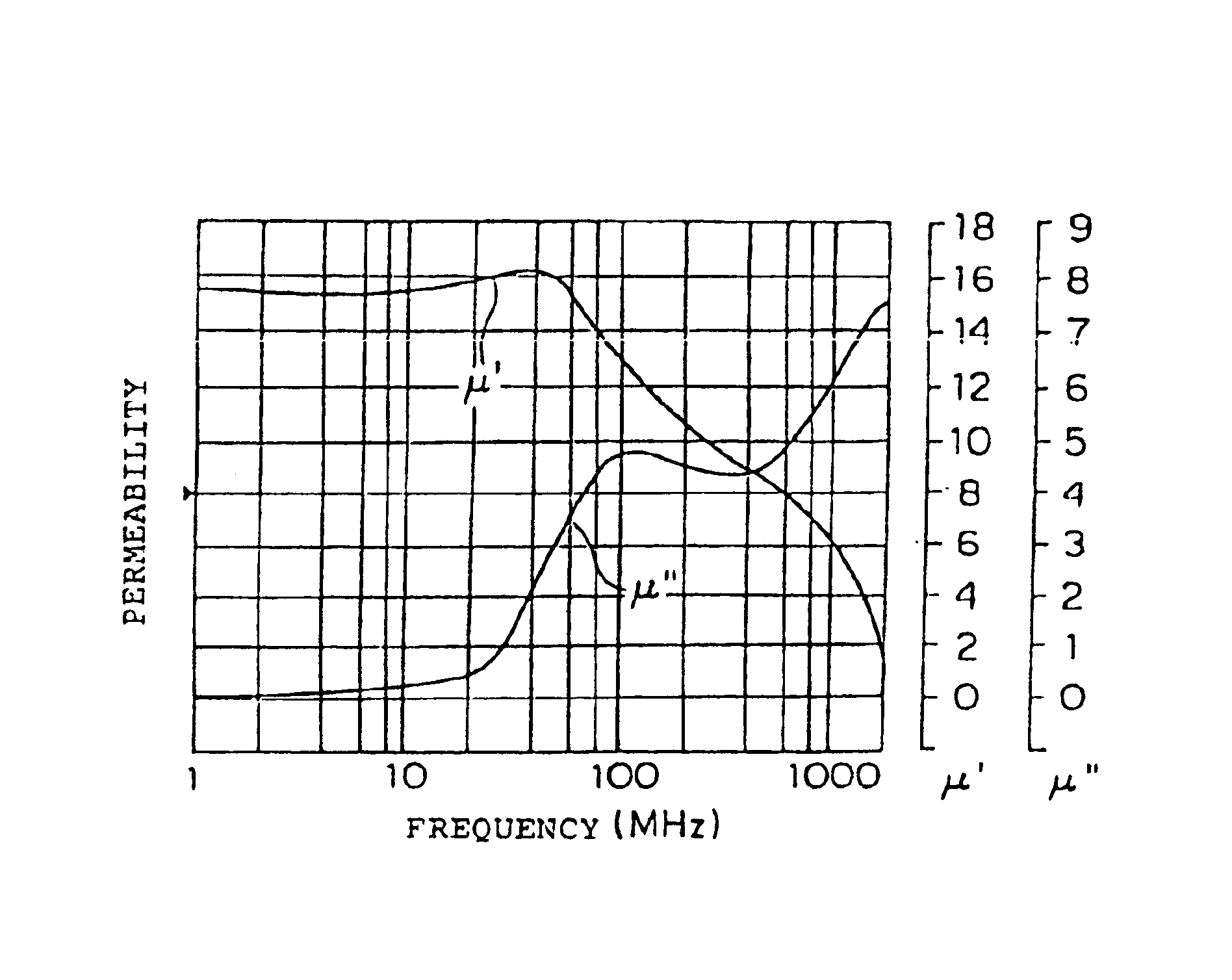
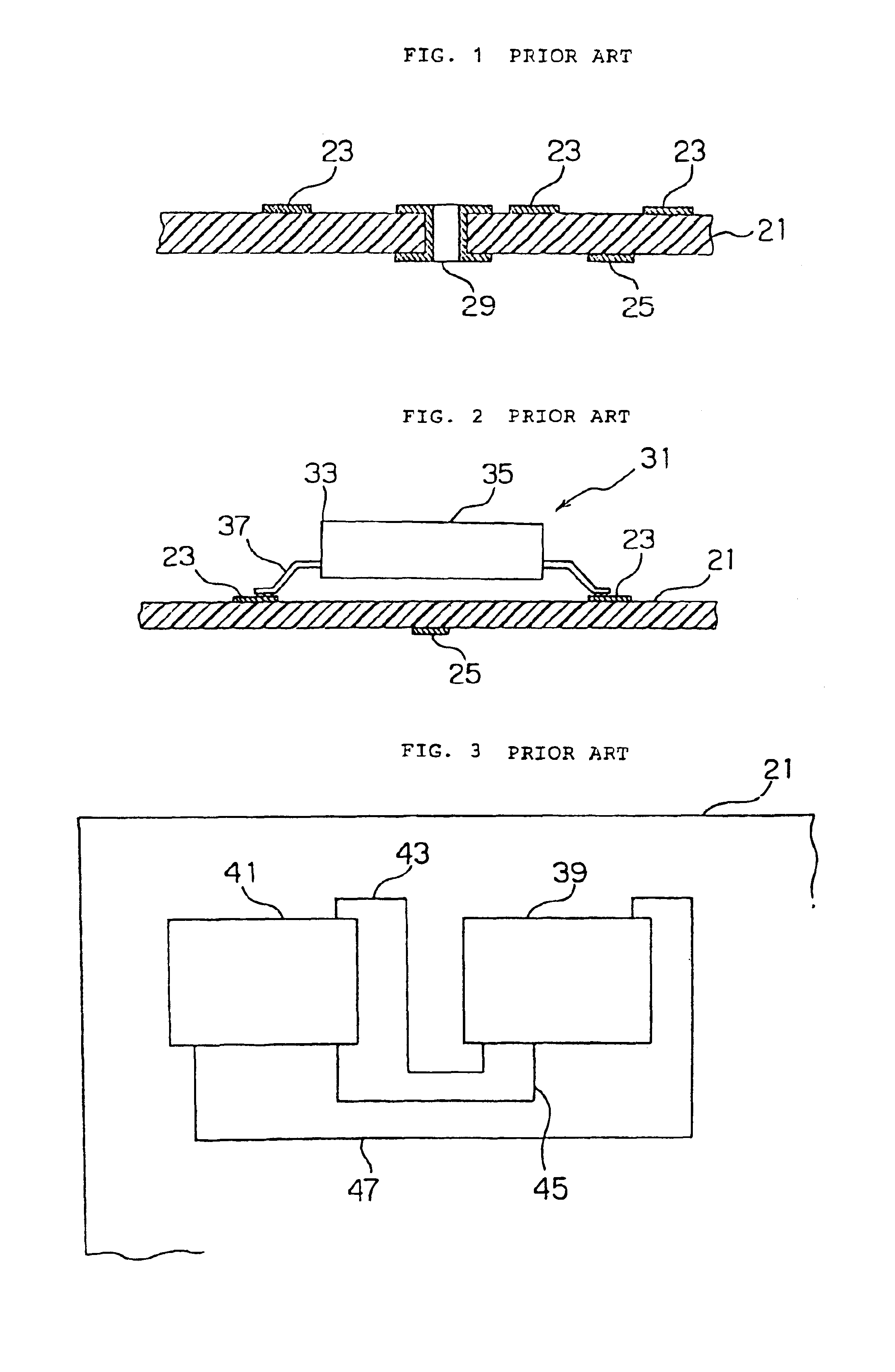
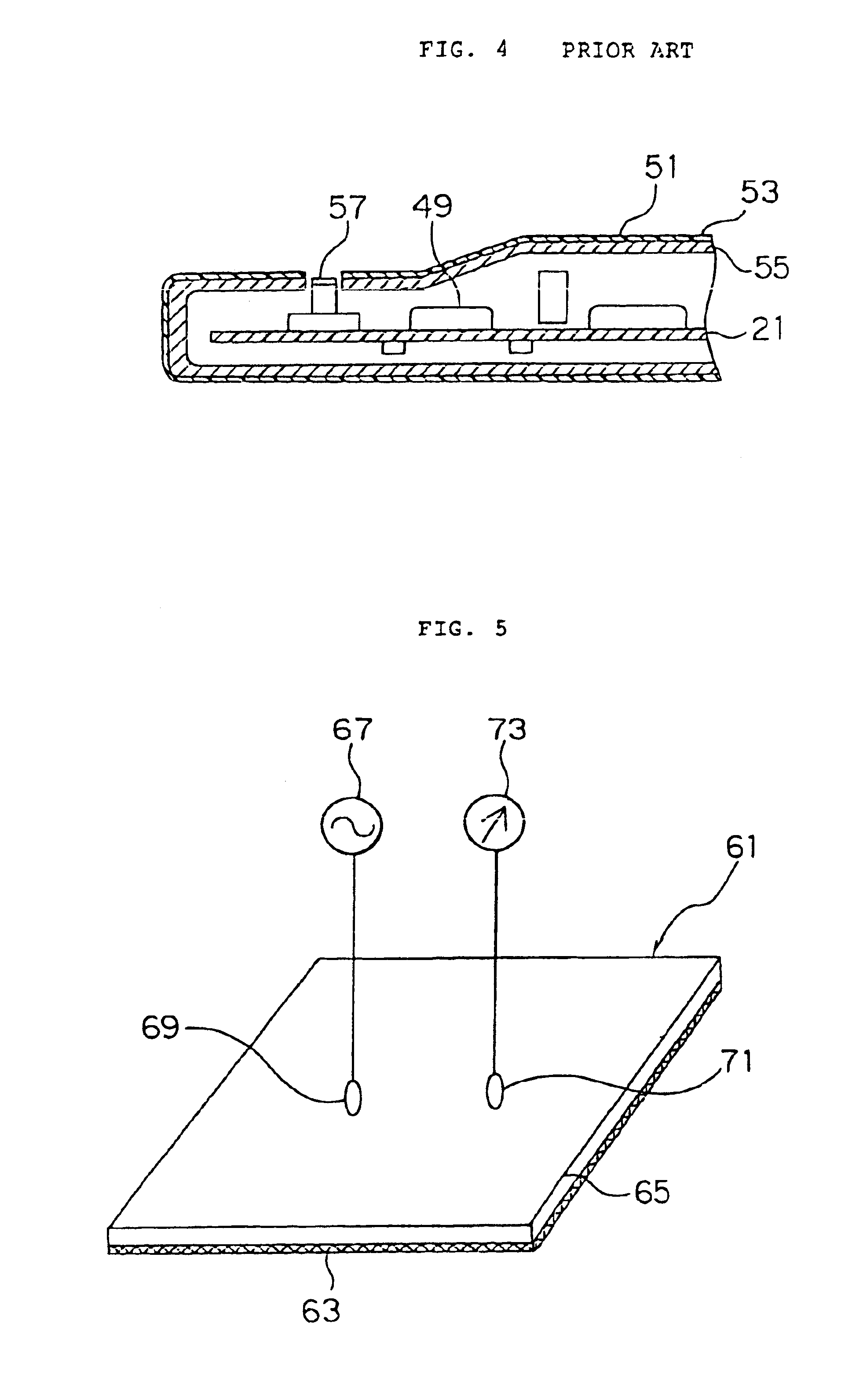
- A composite magnetic material comprising soft-magnetic powders with specific surface areas over 0.3 m2/g, mixed to create anisotropic magnetic fields with multiple resonances, which are dispersed in an organic binder to form a non-conductive layer that effectively suppresses electromagnetic interference across a wide frequency range.

Conductive magnetic filler, resin composition containing the filler, electromagnetic interference suppressing sheet using the resin composition and applications thereof, and process for producing the electromagnetic interference suppressing sheet
PatentInactiveUS20110203835A1
Innovation
- A conductive magnetic filler comprising a mixture of conductive carbon and soft magnetic particles at a specific volume ratio, blended in a resin composition, is used to produce a sheet with enhanced electromagnetic absorption and reduced reflection, suitable for high-density electronic component mounting.
EMC Standards and Regulatory Requirements
The electromagnetic compatibility (EMC) regulatory landscape for magnetic materials used in interference reduction applications is governed by a comprehensive framework of international, regional, and national standards. The International Electrotechnical Commission (IEC) serves as the primary global standardization body, with IEC 61000 series forming the cornerstone of EMC requirements. This series encompasses emission limits, immunity requirements, testing methodologies, and installation guidelines that directly impact the selection and implementation of magnetic materials for EMI suppression.
Regional regulatory bodies have established specific compliance frameworks that manufacturers must navigate. The European Union enforces the EMC Directive 2014/30/EU, which mandates conformity assessment procedures and CE marking requirements for products incorporating magnetic EMI suppression components. The Federal Communications Commission (FCC) in the United States maintains Part 15 regulations governing unintentional radiators, while similar frameworks exist in other major markets including Japan's VCCI standards and China's CCC certification requirements.
Industry-specific standards add additional layers of complexity to the regulatory environment. Automotive applications must comply with CISPR 25 for vehicle EMC requirements, while aerospace and defense sectors adhere to DO-160 and MIL-STD-461 respectively. Medical device manufacturers must satisfy IEC 60601-1-2 standards, and information technology equipment falls under CISPR 32 regulations. Each sector imposes unique testing protocols and performance criteria that influence magnetic material selection and design optimization.
Testing and measurement standards play a crucial role in validating magnetic material performance for EMI reduction applications. CISPR 16 series defines measurement equipment specifications and test site requirements, while IEC 61000-4 series establishes immunity testing procedures. These standards specify measurement methodologies for evaluating magnetic material effectiveness, including insertion loss measurements, impedance characterization, and frequency response analysis across relevant operational bandwidths.
Compliance demonstration requires comprehensive documentation and testing protocols that validate magnetic material performance under specified operating conditions. Manufacturers must maintain detailed technical files documenting material properties, test results, and conformity assessment procedures. The regulatory framework continues evolving to address emerging technologies and frequency bands, necessitating ongoing monitoring of standard updates and regulatory changes that may impact magnetic material applications in EMI suppression systems.
Regional regulatory bodies have established specific compliance frameworks that manufacturers must navigate. The European Union enforces the EMC Directive 2014/30/EU, which mandates conformity assessment procedures and CE marking requirements for products incorporating magnetic EMI suppression components. The Federal Communications Commission (FCC) in the United States maintains Part 15 regulations governing unintentional radiators, while similar frameworks exist in other major markets including Japan's VCCI standards and China's CCC certification requirements.
Industry-specific standards add additional layers of complexity to the regulatory environment. Automotive applications must comply with CISPR 25 for vehicle EMC requirements, while aerospace and defense sectors adhere to DO-160 and MIL-STD-461 respectively. Medical device manufacturers must satisfy IEC 60601-1-2 standards, and information technology equipment falls under CISPR 32 regulations. Each sector imposes unique testing protocols and performance criteria that influence magnetic material selection and design optimization.
Testing and measurement standards play a crucial role in validating magnetic material performance for EMI reduction applications. CISPR 16 series defines measurement equipment specifications and test site requirements, while IEC 61000-4 series establishes immunity testing procedures. These standards specify measurement methodologies for evaluating magnetic material effectiveness, including insertion loss measurements, impedance characterization, and frequency response analysis across relevant operational bandwidths.
Compliance demonstration requires comprehensive documentation and testing protocols that validate magnetic material performance under specified operating conditions. Manufacturers must maintain detailed technical files documenting material properties, test results, and conformity assessment procedures. The regulatory framework continues evolving to address emerging technologies and frequency bands, necessitating ongoing monitoring of standard updates and regulatory changes that may impact magnetic material applications in EMI suppression systems.
Material Selection and Design Optimization
Material selection represents the foundational step in developing effective electromagnetic interference mitigation solutions using magnetic materials. The choice of magnetic material directly influences the shielding effectiveness, frequency response characteristics, and overall system performance. Ferrite materials, particularly nickel-zinc and manganese-zinc ferrites, demonstrate exceptional performance in high-frequency applications due to their high permeability and resistivity properties. These materials exhibit optimal absorption characteristics in the MHz to GHz frequency ranges, making them ideal for consumer electronics and telecommunications applications.
Soft magnetic alloys, including permalloy and nanocrystalline materials, offer superior performance in low-frequency applications where high permeability and low coercivity are critical. The selection process must consider the specific frequency spectrum of the interference source, as material performance varies significantly across different frequency bands. Temperature stability, mechanical properties, and cost considerations further influence material selection decisions.
Design optimization encompasses both geometric configuration and material property enhancement to maximize electromagnetic interference suppression. The thickness optimization of magnetic shielding materials follows specific mathematical relationships, where effectiveness increases logarithmically with thickness up to a saturation point. Beyond this threshold, additional material provides diminishing returns while increasing system weight and cost.
Geometric design parameters significantly impact shielding performance. The aspect ratio of shielding enclosures, aperture dimensions, and seam configurations require careful optimization to prevent electromagnetic leakage. Tapered designs and gradient material compositions can enhance broadband performance by providing impedance matching across multiple frequency ranges.
Surface treatment and coating technologies represent advanced optimization strategies. Nanostructured magnetic coatings enable precise control over magnetic properties while maintaining mechanical flexibility. These treatments can enhance permeability, reduce eddy current losses, and improve frequency response characteristics. Multi-layer configurations combining different magnetic materials create synergistic effects, where each layer targets specific frequency ranges or interference mechanisms.
Computational modeling and simulation tools enable iterative design optimization without extensive physical prototyping. Finite element analysis allows engineers to predict electromagnetic field distributions, identify potential leakage paths, and optimize material placement for maximum effectiveness. These tools facilitate the exploration of complex geometries and material combinations that would be impractical to evaluate through experimental methods alone.
Soft magnetic alloys, including permalloy and nanocrystalline materials, offer superior performance in low-frequency applications where high permeability and low coercivity are critical. The selection process must consider the specific frequency spectrum of the interference source, as material performance varies significantly across different frequency bands. Temperature stability, mechanical properties, and cost considerations further influence material selection decisions.
Design optimization encompasses both geometric configuration and material property enhancement to maximize electromagnetic interference suppression. The thickness optimization of magnetic shielding materials follows specific mathematical relationships, where effectiveness increases logarithmically with thickness up to a saturation point. Beyond this threshold, additional material provides diminishing returns while increasing system weight and cost.
Geometric design parameters significantly impact shielding performance. The aspect ratio of shielding enclosures, aperture dimensions, and seam configurations require careful optimization to prevent electromagnetic leakage. Tapered designs and gradient material compositions can enhance broadband performance by providing impedance matching across multiple frequency ranges.
Surface treatment and coating technologies represent advanced optimization strategies. Nanostructured magnetic coatings enable precise control over magnetic properties while maintaining mechanical flexibility. These treatments can enhance permeability, reduce eddy current losses, and improve frequency response characteristics. Multi-layer configurations combining different magnetic materials create synergistic effects, where each layer targets specific frequency ranges or interference mechanisms.
Computational modeling and simulation tools enable iterative design optimization without extensive physical prototyping. Finite element analysis allows engineers to predict electromagnetic field distributions, identify potential leakage paths, and optimize material placement for maximum effectiveness. These tools facilitate the exploration of complex geometries and material combinations that would be impractical to evaluate through experimental methods alone.
Unlock deeper insights with Patsnap Eureka Quick Research — get a full tech report to explore trends and direct your research. Try now!
Generate Your Research Report Instantly with AI Agent
Supercharge your innovation with Patsnap Eureka AI Agent Platform!