

How to Leverage SCADA System Data for Predictive Maintenance
MAR 13, 20269 MIN READ
Generate Your Research Report Instantly with AI Agent
PatSnap Eureka helps you evaluate technical feasibility & market potential.
SCADA Predictive Maintenance Background and Objectives
SCADA (Supervisory Control and Data Acquisition) systems have evolved from simple monitoring tools into sophisticated data collection platforms that form the backbone of modern industrial operations. Originally developed in the 1960s for utility companies to monitor electrical grids, SCADA technology has expanded across manufacturing, oil and gas, water treatment, and transportation sectors. The integration of digital sensors, advanced communication protocols, and cloud computing has transformed these systems into comprehensive data ecosystems capable of capturing real-time operational parameters with unprecedented granularity.
The convergence of SCADA systems with predictive maintenance represents a paradigm shift from reactive and scheduled maintenance approaches toward data-driven, condition-based strategies. Traditional maintenance practices often result in unnecessary downtime, excessive costs, and unexpected equipment failures. The abundance of data generated by modern SCADA systems presents an opportunity to revolutionize maintenance practices through advanced analytics and machine learning algorithms.
Current technological trends indicate a rapid evolution toward intelligent maintenance systems. The proliferation of Industrial Internet of Things (IIoT) devices has exponentially increased data availability, while edge computing capabilities enable real-time processing and decision-making. Artificial intelligence and machine learning algorithms have matured to handle complex pattern recognition in industrial datasets, making predictive maintenance more accurate and reliable than ever before.
The primary objective of leveraging SCADA data for predictive maintenance is to establish a proactive maintenance framework that maximizes equipment reliability while minimizing operational costs. This involves developing sophisticated algorithms capable of analyzing historical and real-time data to identify patterns indicative of impending equipment failures. The goal extends beyond simple fault detection to encompass comprehensive asset health monitoring, remaining useful life estimation, and optimal maintenance scheduling.
Secondary objectives include reducing unplanned downtime by up to 50%, extending equipment lifespan through optimized maintenance intervals, and improving overall equipment effectiveness. The integration aims to create a self-learning system that continuously refines its predictive capabilities based on operational feedback and maintenance outcomes. Additionally, the objective encompasses developing standardized data models and analytics frameworks that can be scaled across different industrial applications and equipment types.
The ultimate vision involves creating autonomous maintenance ecosystems where SCADA systems not only predict failures but also automatically trigger maintenance workflows, order replacement parts, and schedule technician interventions. This comprehensive approach promises to transform industrial maintenance from a cost center into a strategic advantage that enhances operational efficiency and competitive positioning.
The convergence of SCADA systems with predictive maintenance represents a paradigm shift from reactive and scheduled maintenance approaches toward data-driven, condition-based strategies. Traditional maintenance practices often result in unnecessary downtime, excessive costs, and unexpected equipment failures. The abundance of data generated by modern SCADA systems presents an opportunity to revolutionize maintenance practices through advanced analytics and machine learning algorithms.
Current technological trends indicate a rapid evolution toward intelligent maintenance systems. The proliferation of Industrial Internet of Things (IIoT) devices has exponentially increased data availability, while edge computing capabilities enable real-time processing and decision-making. Artificial intelligence and machine learning algorithms have matured to handle complex pattern recognition in industrial datasets, making predictive maintenance more accurate and reliable than ever before.
The primary objective of leveraging SCADA data for predictive maintenance is to establish a proactive maintenance framework that maximizes equipment reliability while minimizing operational costs. This involves developing sophisticated algorithms capable of analyzing historical and real-time data to identify patterns indicative of impending equipment failures. The goal extends beyond simple fault detection to encompass comprehensive asset health monitoring, remaining useful life estimation, and optimal maintenance scheduling.
Secondary objectives include reducing unplanned downtime by up to 50%, extending equipment lifespan through optimized maintenance intervals, and improving overall equipment effectiveness. The integration aims to create a self-learning system that continuously refines its predictive capabilities based on operational feedback and maintenance outcomes. Additionally, the objective encompasses developing standardized data models and analytics frameworks that can be scaled across different industrial applications and equipment types.
The ultimate vision involves creating autonomous maintenance ecosystems where SCADA systems not only predict failures but also automatically trigger maintenance workflows, order replacement parts, and schedule technician interventions. This comprehensive approach promises to transform industrial maintenance from a cost center into a strategic advantage that enhances operational efficiency and competitive positioning.
Industrial Market Demand for SCADA-Based Predictive Solutions
The industrial market demonstrates substantial appetite for SCADA-based predictive maintenance solutions, driven by the critical need to minimize unplanned downtime and optimize operational efficiency across manufacturing sectors. Traditional reactive maintenance approaches have proven inadequate in meeting the demands of modern industrial operations, where equipment failures can result in significant production losses and safety risks.
Manufacturing industries, particularly those with continuous production processes such as oil and gas, chemical processing, power generation, and water treatment facilities, represent the primary demand drivers for these solutions. These sectors rely heavily on SCADA systems for operational control and generate vast amounts of real-time data that can be leveraged for predictive insights. The integration of predictive maintenance capabilities with existing SCADA infrastructure offers a compelling value proposition by utilizing already-deployed monitoring systems.
The automotive manufacturing sector shows particularly strong demand for SCADA-based predictive solutions, where production line efficiency directly impacts profitability. Assembly line equipment, robotic systems, and conveyor mechanisms generate continuous operational data through SCADA networks, making them ideal candidates for predictive maintenance applications. Similarly, the pharmaceutical industry requires stringent equipment reliability to maintain regulatory compliance and product quality standards.
Energy sector demand spans both traditional power generation facilities and renewable energy installations. Wind farms, solar installations, and conventional power plants utilize SCADA systems extensively for monitoring and control, creating natural opportunities for predictive maintenance integration. The critical nature of energy infrastructure amplifies the value proposition of preventing unexpected equipment failures.
Water and wastewater treatment facilities represent another significant market segment, where SCADA systems monitor pumps, valves, and treatment equipment across distributed networks. The public utility nature of these operations creates strong incentives for reliability improvements and cost optimization through predictive maintenance strategies.
Market demand is further accelerated by the increasing availability of cloud computing resources and advanced analytics platforms that can process SCADA data streams in real-time. Industrial operators seek solutions that can seamlessly integrate with their existing SCADA infrastructure while providing actionable maintenance insights without requiring extensive system overhauls or operational disruptions.
Manufacturing industries, particularly those with continuous production processes such as oil and gas, chemical processing, power generation, and water treatment facilities, represent the primary demand drivers for these solutions. These sectors rely heavily on SCADA systems for operational control and generate vast amounts of real-time data that can be leveraged for predictive insights. The integration of predictive maintenance capabilities with existing SCADA infrastructure offers a compelling value proposition by utilizing already-deployed monitoring systems.
The automotive manufacturing sector shows particularly strong demand for SCADA-based predictive solutions, where production line efficiency directly impacts profitability. Assembly line equipment, robotic systems, and conveyor mechanisms generate continuous operational data through SCADA networks, making them ideal candidates for predictive maintenance applications. Similarly, the pharmaceutical industry requires stringent equipment reliability to maintain regulatory compliance and product quality standards.
Energy sector demand spans both traditional power generation facilities and renewable energy installations. Wind farms, solar installations, and conventional power plants utilize SCADA systems extensively for monitoring and control, creating natural opportunities for predictive maintenance integration. The critical nature of energy infrastructure amplifies the value proposition of preventing unexpected equipment failures.
Water and wastewater treatment facilities represent another significant market segment, where SCADA systems monitor pumps, valves, and treatment equipment across distributed networks. The public utility nature of these operations creates strong incentives for reliability improvements and cost optimization through predictive maintenance strategies.
Market demand is further accelerated by the increasing availability of cloud computing resources and advanced analytics platforms that can process SCADA data streams in real-time. Industrial operators seek solutions that can seamlessly integrate with their existing SCADA infrastructure while providing actionable maintenance insights without requiring extensive system overhauls or operational disruptions.
Current SCADA Data Analytics Challenges and Limitations
SCADA systems generate massive volumes of data from sensors, controllers, and monitoring devices across industrial operations, yet organizations face significant obstacles in effectively utilizing this information for predictive maintenance applications. The sheer volume and velocity of data streams often overwhelm traditional analytical frameworks, creating bottlenecks that prevent real-time decision-making capabilities essential for proactive maintenance strategies.
Data quality represents a fundamental challenge, as SCADA systems frequently produce inconsistent, incomplete, or corrupted datasets due to sensor malfunctions, communication interruptions, or environmental interference. These quality issues compromise the reliability of predictive models, leading to false alarms or missed critical maintenance windows that can result in unexpected equipment failures and costly downtime.
Integration complexity poses another substantial barrier, particularly in legacy industrial environments where multiple SCADA platforms from different vendors operate simultaneously. The lack of standardized data formats and communication protocols creates silos that prevent comprehensive analysis across interconnected systems, limiting the holistic view necessary for effective predictive maintenance programs.
Real-time processing limitations constrain the ability to detect rapidly developing fault conditions that require immediate intervention. Many existing SCADA data analytics solutions rely on batch processing methods that introduce delays between data collection and actionable insights, reducing their effectiveness for time-sensitive maintenance decisions in dynamic industrial environments.
Scalability challenges emerge as organizations attempt to expand predictive maintenance programs across multiple facilities or production lines. Current analytical infrastructures often struggle to accommodate the exponential growth in data volumes while maintaining processing performance, forcing companies to make trade-offs between analytical depth and system responsiveness.
The shortage of specialized expertise compounds these technical challenges, as effective SCADA data analytics for predictive maintenance requires deep understanding of both industrial processes and advanced analytical techniques. Many organizations lack personnel with the necessary cross-disciplinary knowledge to bridge the gap between operational technology and data science methodologies.
Security and compliance constraints further limit analytical capabilities, as industrial control systems require stringent cybersecurity measures that can restrict data access and sharing. These protective measures, while essential for operational safety, often create barriers to implementing comprehensive predictive maintenance analytics that require broad data visibility and integration across organizational boundaries.
Data quality represents a fundamental challenge, as SCADA systems frequently produce inconsistent, incomplete, or corrupted datasets due to sensor malfunctions, communication interruptions, or environmental interference. These quality issues compromise the reliability of predictive models, leading to false alarms or missed critical maintenance windows that can result in unexpected equipment failures and costly downtime.
Integration complexity poses another substantial barrier, particularly in legacy industrial environments where multiple SCADA platforms from different vendors operate simultaneously. The lack of standardized data formats and communication protocols creates silos that prevent comprehensive analysis across interconnected systems, limiting the holistic view necessary for effective predictive maintenance programs.
Real-time processing limitations constrain the ability to detect rapidly developing fault conditions that require immediate intervention. Many existing SCADA data analytics solutions rely on batch processing methods that introduce delays between data collection and actionable insights, reducing their effectiveness for time-sensitive maintenance decisions in dynamic industrial environments.
Scalability challenges emerge as organizations attempt to expand predictive maintenance programs across multiple facilities or production lines. Current analytical infrastructures often struggle to accommodate the exponential growth in data volumes while maintaining processing performance, forcing companies to make trade-offs between analytical depth and system responsiveness.
The shortage of specialized expertise compounds these technical challenges, as effective SCADA data analytics for predictive maintenance requires deep understanding of both industrial processes and advanced analytical techniques. Many organizations lack personnel with the necessary cross-disciplinary knowledge to bridge the gap between operational technology and data science methodologies.
Security and compliance constraints further limit analytical capabilities, as industrial control systems require stringent cybersecurity measures that can restrict data access and sharing. These protective measures, while essential for operational safety, often create barriers to implementing comprehensive predictive maintenance analytics that require broad data visibility and integration across organizational boundaries.
Existing SCADA Data Processing Solutions
01 Machine learning-based predictive maintenance systems for SCADA
Implementation of machine learning algorithms and artificial intelligence techniques to analyze SCADA system data for predictive maintenance purposes. These systems can identify patterns and anomalies in operational data to predict equipment failures before they occur. The approach enables proactive maintenance scheduling by processing historical and real-time data from industrial control systems, reducing downtime and maintenance costs.- Machine learning-based predictive maintenance systems for SCADA: Advanced machine learning algorithms and artificial intelligence techniques are employed to analyze SCADA system data for predictive maintenance. These systems utilize historical operational data, sensor readings, and performance metrics to identify patterns and anomalies that indicate potential equipment failures. By training models on large datasets, the systems can predict maintenance needs before failures occur, reducing downtime and optimizing maintenance schedules. The predictive models continuously learn and adapt to changing operational conditions, improving accuracy over time.
- Real-time data monitoring and anomaly detection: Real-time monitoring systems continuously collect and analyze data from SCADA networks to detect anomalies and deviations from normal operating parameters. These systems employ statistical analysis, threshold-based detection, and pattern recognition techniques to identify unusual behavior in equipment performance. The monitoring infrastructure processes streaming data from multiple sensors and control points, enabling immediate detection of potential issues. Alert mechanisms notify operators when anomalies are detected, allowing for prompt investigation and preventive action.
- Integration of IoT sensors and data acquisition systems: Internet of Things sensors and advanced data acquisition systems are integrated with SCADA infrastructure to enhance predictive maintenance capabilities. These sensors collect diverse operational parameters including temperature, vibration, pressure, and electrical characteristics from critical equipment. The data acquisition systems ensure reliable transmission and storage of sensor data for analysis. Integration frameworks enable seamless communication between legacy SCADA systems and modern IoT devices, creating comprehensive monitoring ecosystems.
- Cloud-based analytics and data processing platforms: Cloud computing platforms provide scalable infrastructure for processing and analyzing large volumes of SCADA data for predictive maintenance applications. These platforms offer distributed computing resources that handle complex analytical workloads and support advanced modeling techniques. Data from multiple facilities and systems can be aggregated and analyzed centrally, enabling cross-site comparisons and insights. Cloud-based solutions facilitate remote access to maintenance analytics and support collaborative decision-making across organizations.
- Condition-based maintenance scheduling and optimization: Condition-based maintenance strategies utilize SCADA data analysis to optimize maintenance scheduling based on actual equipment condition rather than fixed time intervals. These systems assess equipment health status using multiple indicators and prioritize maintenance activities according to criticality and predicted failure probability. Optimization algorithms balance maintenance costs, equipment availability, and operational risks to determine optimal intervention timing. The approach reduces unnecessary maintenance while preventing unexpected failures, improving overall system reliability and cost-effectiveness.
02 Real-time data monitoring and anomaly detection in SCADA systems
Systems and methods for continuous monitoring of SCADA data streams to detect anomalies and deviations from normal operating conditions. These solutions employ statistical analysis and pattern recognition techniques to identify potential equipment degradation or failure indicators. The real-time monitoring capabilities allow for immediate alerts and notifications when abnormal conditions are detected, enabling timely intervention.Expand Specific Solutions03 Data integration and preprocessing for predictive maintenance analytics
Techniques for collecting, integrating, and preprocessing data from multiple SCADA sources to create comprehensive datasets for predictive maintenance analysis. These methods handle data normalization, cleaning, and feature extraction to prepare information for advanced analytics. The integration approaches ensure data quality and consistency across different sensors and control systems within the industrial infrastructure.Expand Specific Solutions04 Condition-based maintenance scheduling using SCADA data
Systems that utilize SCADA data to implement condition-based maintenance strategies, where maintenance activities are scheduled based on actual equipment condition rather than fixed time intervals. These solutions analyze performance metrics, operational parameters, and degradation indicators to optimize maintenance timing. The approach maximizes equipment availability while minimizing unnecessary maintenance interventions.Expand Specific Solutions05 Cloud-based predictive maintenance platforms for SCADA systems
Cloud computing infrastructure and platforms designed to support predictive maintenance applications for SCADA systems. These solutions provide scalable data storage, processing capabilities, and analytics tools accessible through cloud services. The platforms enable remote monitoring, collaborative maintenance planning, and integration with enterprise asset management systems for comprehensive maintenance optimization.Expand Specific Solutions
Key Players in SCADA and Industrial IoT Analytics
The SCADA-based predictive maintenance landscape represents a rapidly evolving sector transitioning from reactive to proactive maintenance strategies. The market demonstrates significant growth potential driven by increasing industrial digitization and IoT adoption across critical infrastructure sectors. Technology maturity varies considerably among market participants, with established industrial giants like Siemens AG, ABB Ltd., and Hitachi Ltd. leading in comprehensive SCADA integration capabilities, while specialized firms such as Sentient Science Corp. and Beijing Tianze Zhiyun Technology focus on advanced predictive analytics and AI-driven solutions. Traditional technology providers like IBM and Hewlett Packard Enterprise bring robust data processing and cloud infrastructure expertise, whereas energy sector leaders including Saudi Arabian Oil Co. and Eversource Energy drive practical implementation requirements. The competitive landscape shows a convergence of industrial automation expertise with advanced analytics capabilities, indicating the sector's evolution toward sophisticated, AI-enhanced predictive maintenance ecosystems that leverage comprehensive SCADA data integration.
Hitachi Energy Ltd.
Technical Solution: Hitachi Energy implements SCADA data-driven predictive maintenance through their Asset Suite platform, which specializes in power grid and energy infrastructure applications. The solution extracts operational data from SCADA systems including voltage levels, current flows, transformer temperatures, and switching operations to build predictive models for electrical equipment health assessment. Their approach combines traditional condition monitoring with AI-powered analytics to predict transformer failures, circuit breaker degradation, and transmission line issues. The system processes historical SCADA data to establish baseline performance patterns and uses real-time monitoring to detect deviations that indicate potential equipment problems, enabling utilities to schedule maintenance during planned outages and avoid costly emergency repairs.
Strengths: Deep expertise in power systems, specialized algorithms for electrical equipment, strong utility industry relationships. Weaknesses: Limited to energy sector applications, requires specialized domain knowledge, high dependency on data quality and completeness.
Siemens AG
Technical Solution: Siemens leverages its MindSphere IoT platform to integrate SCADA system data for predictive maintenance applications. The platform collects real-time operational data from SCADA systems including temperature, pressure, vibration, and flow measurements, then applies advanced analytics and machine learning algorithms to identify patterns indicative of equipment degradation. Their solution incorporates digital twin technology to create virtual replicas of physical assets, enabling simulation-based predictive modeling. The system uses condition monitoring algorithms that continuously analyze SCADA data streams to detect anomalies and predict potential failures before they occur, typically providing 2-4 weeks advance warning for critical equipment maintenance needs.
Strengths: Comprehensive IoT platform integration, strong digital twin capabilities, extensive industrial automation experience. Weaknesses: High implementation costs, complex system integration requirements, dependency on proprietary platforms.
Core Innovations in SCADA Predictive Analytics
Method of operating an electric power system, predictive system, supervisory control and data acquisition system, and electric power system
PatentWO2025061250A1
Innovation
- The implementation of a method that utilizes a Supervisory Control and Data Acquisition (SCADA) system with redundant control and protection subsystems, allowing for seamless operation during maintenance by switching to a backup subsystem, combined with a predictive system that performs asset health assessments to proactively schedule maintenance.


Systems and methods for predictive maintenance using computational models
PatentWO2025043195A1
Innovation
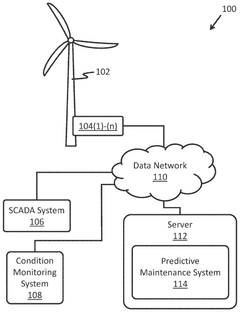
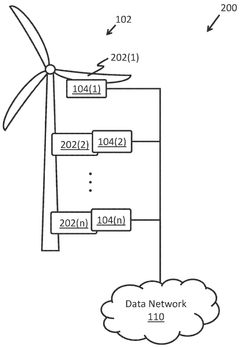
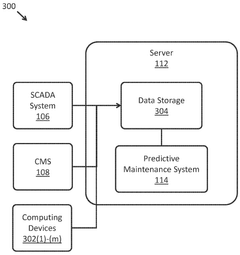
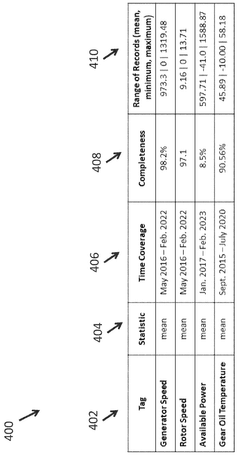
- The system employs a processor configured to receive data from SCADA and CMS systems, generate anomaly scores using anomaly detectors, and utilize an augmented data fusion model to predict the health state of machinery, incorporating an ETL module for data extraction and transformation, and a feedback module for diagnostic data compatibility.
Industrial Safety Standards for SCADA Systems
Industrial safety standards for SCADA systems represent a critical framework that governs the secure and reliable operation of supervisory control and data acquisition systems in industrial environments. These standards have evolved significantly over the past two decades, driven by increasing cybersecurity threats and the growing interconnectedness of industrial control systems with enterprise networks and cloud platforms.
The International Electrotechnical Commission (IEC) 62443 series stands as the cornerstone of industrial cybersecurity standards, specifically addressing SCADA system security across multiple layers. This comprehensive framework defines security requirements for industrial automation and control systems, establishing guidelines for network segmentation, access control, and incident response procedures. The standard emphasizes the importance of implementing defense-in-depth strategies that protect SCADA systems from both external cyber threats and internal vulnerabilities.
NIST Cybersecurity Framework provides additional guidance specifically tailored for critical infrastructure protection, offering a risk-based approach to securing SCADA systems. This framework emphasizes continuous monitoring, threat detection, and response capabilities that are essential for maintaining operational integrity while enabling predictive maintenance data collection and analysis.
The ISA/IEC 62443 standard series further elaborates on security lifecycle management for industrial control systems, mandating regular security assessments, vulnerability management, and patch management procedures. These requirements directly impact how organizations can leverage SCADA data for predictive maintenance, as they establish protocols for data integrity verification and secure data transmission channels.
Compliance with these safety standards requires implementing robust authentication mechanisms, encrypted communication protocols, and comprehensive audit logging systems. Organizations must establish clear data governance policies that define how SCADA data can be accessed, processed, and stored for predictive maintenance applications while maintaining compliance with industrial safety requirements.
The integration of predictive maintenance capabilities within SCADA systems must adhere to functional safety standards such as IEC 61508 and IEC 61511, which define safety integrity levels and risk assessment methodologies. These standards ensure that predictive maintenance algorithms do not compromise the primary safety functions of industrial control systems, maintaining operational safety while enabling advanced analytics capabilities.
The International Electrotechnical Commission (IEC) 62443 series stands as the cornerstone of industrial cybersecurity standards, specifically addressing SCADA system security across multiple layers. This comprehensive framework defines security requirements for industrial automation and control systems, establishing guidelines for network segmentation, access control, and incident response procedures. The standard emphasizes the importance of implementing defense-in-depth strategies that protect SCADA systems from both external cyber threats and internal vulnerabilities.
NIST Cybersecurity Framework provides additional guidance specifically tailored for critical infrastructure protection, offering a risk-based approach to securing SCADA systems. This framework emphasizes continuous monitoring, threat detection, and response capabilities that are essential for maintaining operational integrity while enabling predictive maintenance data collection and analysis.
The ISA/IEC 62443 standard series further elaborates on security lifecycle management for industrial control systems, mandating regular security assessments, vulnerability management, and patch management procedures. These requirements directly impact how organizations can leverage SCADA data for predictive maintenance, as they establish protocols for data integrity verification and secure data transmission channels.
Compliance with these safety standards requires implementing robust authentication mechanisms, encrypted communication protocols, and comprehensive audit logging systems. Organizations must establish clear data governance policies that define how SCADA data can be accessed, processed, and stored for predictive maintenance applications while maintaining compliance with industrial safety requirements.
The integration of predictive maintenance capabilities within SCADA systems must adhere to functional safety standards such as IEC 61508 and IEC 61511, which define safety integrity levels and risk assessment methodologies. These standards ensure that predictive maintenance algorithms do not compromise the primary safety functions of industrial control systems, maintaining operational safety while enabling advanced analytics capabilities.
Data Security Framework for SCADA Networks
The integration of SCADA systems with predictive maintenance capabilities necessitates a robust data security framework to protect critical industrial infrastructure from cyber threats. As SCADA networks become increasingly connected to enterprise systems and cloud platforms for advanced analytics, the attack surface expands significantly, requiring comprehensive security measures that balance operational efficiency with protection requirements.
A multi-layered security architecture forms the foundation of effective SCADA data protection. This approach implements security controls at network perimeters, communication channels, and endpoint devices. Network segmentation isolates SCADA operations from corporate networks through industrial demilitarized zones (DMZs) and firewalls configured with strict access control policies. Deep packet inspection capabilities monitor data flows for anomalous patterns that could indicate security breaches or unauthorized access attempts.
Authentication and authorization mechanisms ensure only legitimate users and systems access predictive maintenance data. Multi-factor authentication protocols verify user identities, while role-based access controls limit data exposure based on operational responsibilities. Certificate-based authentication secures machine-to-machine communications between SCADA devices and predictive analytics platforms, preventing unauthorized data interception or manipulation.
Data encryption protects information both in transit and at rest throughout the predictive maintenance workflow. Advanced Encryption Standard (AES) protocols secure data transmission between field devices and central systems, while encrypted storage solutions protect historical datasets used for machine learning model training. Key management systems ensure cryptographic keys are regularly rotated and securely distributed across the network infrastructure.
Real-time security monitoring employs artificial intelligence and machine learning algorithms to detect potential threats and anomalous behaviors within SCADA networks. Security information and event management (SIEM) systems correlate data from multiple sources to identify sophisticated attack patterns that traditional signature-based detection methods might miss. Automated incident response capabilities enable rapid containment of security breaches to minimize operational disruption.
Compliance frameworks such as NIST Cybersecurity Framework and IEC 62443 provide structured approaches for implementing and maintaining SCADA security programs. Regular security assessments and penetration testing validate the effectiveness of implemented controls, while continuous monitoring ensures ongoing protection against evolving cyber threats targeting industrial control systems.
A multi-layered security architecture forms the foundation of effective SCADA data protection. This approach implements security controls at network perimeters, communication channels, and endpoint devices. Network segmentation isolates SCADA operations from corporate networks through industrial demilitarized zones (DMZs) and firewalls configured with strict access control policies. Deep packet inspection capabilities monitor data flows for anomalous patterns that could indicate security breaches or unauthorized access attempts.
Authentication and authorization mechanisms ensure only legitimate users and systems access predictive maintenance data. Multi-factor authentication protocols verify user identities, while role-based access controls limit data exposure based on operational responsibilities. Certificate-based authentication secures machine-to-machine communications between SCADA devices and predictive analytics platforms, preventing unauthorized data interception or manipulation.
Data encryption protects information both in transit and at rest throughout the predictive maintenance workflow. Advanced Encryption Standard (AES) protocols secure data transmission between field devices and central systems, while encrypted storage solutions protect historical datasets used for machine learning model training. Key management systems ensure cryptographic keys are regularly rotated and securely distributed across the network infrastructure.
Real-time security monitoring employs artificial intelligence and machine learning algorithms to detect potential threats and anomalous behaviors within SCADA networks. Security information and event management (SIEM) systems correlate data from multiple sources to identify sophisticated attack patterns that traditional signature-based detection methods might miss. Automated incident response capabilities enable rapid containment of security breaches to minimize operational disruption.
Compliance frameworks such as NIST Cybersecurity Framework and IEC 62443 provide structured approaches for implementing and maintaining SCADA security programs. Regular security assessments and penetration testing validate the effectiveness of implemented controls, while continuous monitoring ensures ongoing protection against evolving cyber threats targeting industrial control systems.
Unlock deeper insights with PatSnap Eureka Quick Research — get a full tech report to explore trends and direct your research. Try now!
Generate Your Research Report Instantly with AI Agent
Supercharge your innovation with PatSnap Eureka AI Agent Platform!