

How to Manage Increased Data Volumes Using Active Memory
MAR 7, 20269 MIN READ
Generate Your Research Report Instantly with AI Agent
PatSnap Eureka helps you evaluate technical feasibility & market potential.
Active Memory Data Management Background and Objectives
The exponential growth of data volumes across industries has fundamentally transformed the landscape of data management and processing. Traditional storage and processing architectures, primarily reliant on disk-based systems and conventional memory hierarchies, are increasingly inadequate for handling the velocity, volume, and variety of modern data workloads. This paradigm shift has necessitated the exploration of innovative memory technologies and management strategies that can bridge the performance gap between volatile memory and persistent storage.
Active memory represents a revolutionary approach to data management that transcends the limitations of passive storage systems. Unlike traditional memory architectures where data remains static until explicitly accessed, active memory incorporates computational capabilities directly within the memory subsystem. This technology enables data processing, filtering, and transformation operations to occur at the memory level, significantly reducing data movement overhead and improving overall system performance.
The evolution of active memory technologies has been driven by several converging factors. The emergence of processing-in-memory architectures, near-data computing paradigms, and advanced memory technologies such as persistent memory modules have created new opportunities for reimagining data management strategies. These developments have been further accelerated by the increasing demands of artificial intelligence, machine learning, and real-time analytics applications that require immediate access to vast datasets.
The primary objective of implementing active memory for data volume management centers on achieving substantial improvements in data processing efficiency while reducing system-level bottlenecks. By enabling computational operations within the memory layer, organizations can minimize the traditional data movement penalties associated with transferring large datasets between storage, memory, and processing units. This approach aims to deliver enhanced throughput, reduced latency, and improved energy efficiency compared to conventional architectures.
Furthermore, active memory solutions seek to address the growing complexity of data management in heterogeneous computing environments. The technology aims to provide seamless integration capabilities across different memory types, storage tiers, and processing elements, creating a unified data management framework that can dynamically adapt to varying workload requirements and data access patterns.
Active memory represents a revolutionary approach to data management that transcends the limitations of passive storage systems. Unlike traditional memory architectures where data remains static until explicitly accessed, active memory incorporates computational capabilities directly within the memory subsystem. This technology enables data processing, filtering, and transformation operations to occur at the memory level, significantly reducing data movement overhead and improving overall system performance.
The evolution of active memory technologies has been driven by several converging factors. The emergence of processing-in-memory architectures, near-data computing paradigms, and advanced memory technologies such as persistent memory modules have created new opportunities for reimagining data management strategies. These developments have been further accelerated by the increasing demands of artificial intelligence, machine learning, and real-time analytics applications that require immediate access to vast datasets.
The primary objective of implementing active memory for data volume management centers on achieving substantial improvements in data processing efficiency while reducing system-level bottlenecks. By enabling computational operations within the memory layer, organizations can minimize the traditional data movement penalties associated with transferring large datasets between storage, memory, and processing units. This approach aims to deliver enhanced throughput, reduced latency, and improved energy efficiency compared to conventional architectures.
Furthermore, active memory solutions seek to address the growing complexity of data management in heterogeneous computing environments. The technology aims to provide seamless integration capabilities across different memory types, storage tiers, and processing elements, creating a unified data management framework that can dynamically adapt to varying workload requirements and data access patterns.
Market Demand for High-Volume Data Processing Solutions
The global data landscape is experiencing unprecedented growth, with organizations across industries grappling with exponentially increasing data volumes that traditional storage and processing systems struggle to handle efficiently. This surge in data generation stems from multiple sources including IoT devices, real-time analytics, artificial intelligence workloads, and digital transformation initiatives that demand immediate data accessibility and processing capabilities.
Enterprise demand for high-volume data processing solutions has intensified significantly as businesses recognize that competitive advantage increasingly depends on their ability to process and analyze massive datasets in real-time. Organizations are seeking solutions that can eliminate the traditional bottlenecks between storage and compute layers, where data movement costs and latency have become critical performance constraints.
The financial services sector represents one of the most demanding markets for active memory solutions, where millisecond delays in processing trading data or fraud detection algorithms can result in substantial financial losses. High-frequency trading firms and risk management systems require immediate access to vast historical datasets while simultaneously processing real-time market feeds, creating intense demand for memory-centric architectures.
Healthcare and life sciences industries are driving substantial market demand as genomic sequencing, medical imaging, and drug discovery processes generate massive datasets requiring immediate analysis. The ability to process patient data in real-time for diagnostic purposes and research applications has become a critical requirement, particularly with the advancement of personalized medicine approaches.
Cloud service providers and hyperscale data centers are experiencing growing pressure from customers demanding faster data processing capabilities for machine learning workloads, real-time analytics, and content delivery networks. These providers are actively seeking active memory technologies to reduce infrastructure costs while improving service performance and customer satisfaction.
The telecommunications industry faces increasing data processing demands from 5G network deployments, edge computing requirements, and network function virtualization initiatives. Service providers need solutions capable of processing massive volumes of network traffic data in real-time to ensure optimal network performance and enable new service offerings.
Manufacturing and industrial sectors are embracing Industry 4.0 initiatives that generate continuous streams of sensor data requiring immediate processing for predictive maintenance, quality control, and operational optimization. The demand for active memory solutions in these sectors is driven by the need to process industrial IoT data without the delays associated with traditional storage hierarchies.
Market research indicates strong growth trajectories for in-memory computing and active memory technologies, with organizations increasingly willing to invest in solutions that can demonstrate clear performance improvements and operational cost reductions. The market demand is particularly strong for solutions that can seamlessly integrate with existing infrastructure while providing scalable performance improvements for data-intensive applications.
Enterprise demand for high-volume data processing solutions has intensified significantly as businesses recognize that competitive advantage increasingly depends on their ability to process and analyze massive datasets in real-time. Organizations are seeking solutions that can eliminate the traditional bottlenecks between storage and compute layers, where data movement costs and latency have become critical performance constraints.
The financial services sector represents one of the most demanding markets for active memory solutions, where millisecond delays in processing trading data or fraud detection algorithms can result in substantial financial losses. High-frequency trading firms and risk management systems require immediate access to vast historical datasets while simultaneously processing real-time market feeds, creating intense demand for memory-centric architectures.
Healthcare and life sciences industries are driving substantial market demand as genomic sequencing, medical imaging, and drug discovery processes generate massive datasets requiring immediate analysis. The ability to process patient data in real-time for diagnostic purposes and research applications has become a critical requirement, particularly with the advancement of personalized medicine approaches.
Cloud service providers and hyperscale data centers are experiencing growing pressure from customers demanding faster data processing capabilities for machine learning workloads, real-time analytics, and content delivery networks. These providers are actively seeking active memory technologies to reduce infrastructure costs while improving service performance and customer satisfaction.
The telecommunications industry faces increasing data processing demands from 5G network deployments, edge computing requirements, and network function virtualization initiatives. Service providers need solutions capable of processing massive volumes of network traffic data in real-time to ensure optimal network performance and enable new service offerings.
Manufacturing and industrial sectors are embracing Industry 4.0 initiatives that generate continuous streams of sensor data requiring immediate processing for predictive maintenance, quality control, and operational optimization. The demand for active memory solutions in these sectors is driven by the need to process industrial IoT data without the delays associated with traditional storage hierarchies.
Market research indicates strong growth trajectories for in-memory computing and active memory technologies, with organizations increasingly willing to invest in solutions that can demonstrate clear performance improvements and operational cost reductions. The market demand is particularly strong for solutions that can seamlessly integrate with existing infrastructure while providing scalable performance improvements for data-intensive applications.
Current State and Challenges of Active Memory Technologies
Active memory technologies have emerged as a critical component in modern computing architectures, representing a paradigm shift from traditional passive memory systems. These technologies encompass processing-in-memory (PIM), near-data computing, and computational storage solutions that integrate processing capabilities directly within or adjacent to memory units. The current landscape includes various implementations such as DRAM-based processing units, resistive RAM with computational features, and specialized memory controllers with embedded processing logic.
The global development of active memory technologies shows significant regional variations in focus and implementation approaches. North American companies primarily concentrate on high-performance computing applications and data center solutions, while Asian manufacturers emphasize mobile and consumer electronics integration. European research institutions lead in theoretical foundations and energy-efficient designs. This geographical distribution reflects different market priorities and technological strengths across regions.
Several fundamental technical challenges currently limit the widespread adoption of active memory technologies. Thermal management represents a primary concern, as integrating processing elements within memory arrays generates additional heat that can affect data integrity and system reliability. The limited computational complexity achievable within memory constraints poses another significant hurdle, restricting the types of operations that can be efficiently performed in-memory.
Programming model complexity presents substantial barriers to developer adoption. Traditional software development paradigms require fundamental restructuring to effectively utilize active memory capabilities. The lack of standardized programming interfaces and development tools further complicates implementation efforts across different platforms and applications.
Manufacturing constraints significantly impact the scalability and cost-effectiveness of active memory solutions. The integration of logic circuits within memory fabrication processes requires specialized manufacturing techniques that increase production complexity and costs. Yield optimization becomes particularly challenging when combining memory and logic elements on the same die.
Data consistency and coherency management emerge as critical technical obstacles, especially in multi-core and distributed computing environments. Ensuring synchronized access to actively processed data while maintaining system performance requires sophisticated coordination mechanisms that add complexity to both hardware and software layers.
Power consumption optimization remains a persistent challenge despite the potential energy benefits of reducing data movement. The additional processing elements consume power that may offset the savings from decreased data transfer, requiring careful balance in system design and workload optimization.
The global development of active memory technologies shows significant regional variations in focus and implementation approaches. North American companies primarily concentrate on high-performance computing applications and data center solutions, while Asian manufacturers emphasize mobile and consumer electronics integration. European research institutions lead in theoretical foundations and energy-efficient designs. This geographical distribution reflects different market priorities and technological strengths across regions.
Several fundamental technical challenges currently limit the widespread adoption of active memory technologies. Thermal management represents a primary concern, as integrating processing elements within memory arrays generates additional heat that can affect data integrity and system reliability. The limited computational complexity achievable within memory constraints poses another significant hurdle, restricting the types of operations that can be efficiently performed in-memory.
Programming model complexity presents substantial barriers to developer adoption. Traditional software development paradigms require fundamental restructuring to effectively utilize active memory capabilities. The lack of standardized programming interfaces and development tools further complicates implementation efforts across different platforms and applications.
Manufacturing constraints significantly impact the scalability and cost-effectiveness of active memory solutions. The integration of logic circuits within memory fabrication processes requires specialized manufacturing techniques that increase production complexity and costs. Yield optimization becomes particularly challenging when combining memory and logic elements on the same die.
Data consistency and coherency management emerge as critical technical obstacles, especially in multi-core and distributed computing environments. Ensuring synchronized access to actively processed data while maintaining system performance requires sophisticated coordination mechanisms that add complexity to both hardware and software layers.
Power consumption optimization remains a persistent challenge despite the potential energy benefits of reducing data movement. The additional processing elements consume power that may offset the savings from decreased data transfer, requiring careful balance in system design and workload optimization.
Existing Active Memory Solutions for Data Volume Management
01 Active memory volume management and migration techniques
Technologies for managing active memory data volumes through migration and reallocation strategies. These techniques enable dynamic movement of data between different storage tiers based on access patterns and usage frequency. The system monitors active data volumes and automatically migrates them to optimize performance and resource utilization. Advanced algorithms determine optimal placement of active memory volumes across available storage resources.- Active memory management with volume-based data organization: Technologies for organizing and managing data in active memory systems using volume-based structures. These approaches enable efficient data storage and retrieval by creating logical volumes that can be dynamically allocated and managed. The volume-based organization allows for better resource utilization and improved performance in active memory environments by providing structured access patterns and optimized data placement strategies.
- Data migration and tiering between active memory volumes: Methods for migrating and tiering data across different active memory volumes based on access patterns and performance requirements. These techniques involve monitoring data usage and automatically moving data between different memory tiers to optimize performance and cost. The migration processes can be performed transparently to applications while maintaining data consistency and availability across multiple volume types.
- Volume snapshot and replication for active memory systems: Techniques for creating snapshots and replicas of active memory volumes to ensure data protection and availability. These methods enable point-in-time copies of memory volumes that can be used for backup, recovery, or testing purposes. The snapshot and replication mechanisms are designed to minimize performance impact on active workloads while providing consistent data copies across distributed memory systems.
- Active memory volume provisioning and allocation: Systems and methods for provisioning and allocating active memory volumes dynamically based on application requirements. These approaches include thin provisioning techniques that allow for efficient memory utilization by allocating physical memory resources on-demand. The provisioning mechanisms support flexible capacity management and enable rapid deployment of memory volumes with configurable performance characteristics and quality of service guarantees.
- Active memory volume monitoring and performance optimization: Technologies for monitoring active memory volume performance and implementing optimization strategies. These solutions collect metrics related to memory access patterns, latency, throughput, and resource utilization to identify performance bottlenecks. The monitoring data is used to dynamically adjust memory volume configurations, implement caching strategies, and optimize data placement to improve overall system performance and efficiency.
02 Snapshot and backup mechanisms for active memory volumes
Methods for creating and managing snapshots of active memory data volumes to ensure data protection and recovery capabilities. These mechanisms allow point-in-time copies of active volumes without disrupting ongoing operations. The technology supports incremental and differential backup strategies for efficient storage utilization. Recovery procedures enable rapid restoration of active memory volumes from snapshot data.Expand Specific Solutions03 Virtualization and abstraction of active memory volumes
Techniques for virtualizing active memory data volumes to provide abstraction layers between physical storage and logical volumes. These methods enable flexible allocation and management of memory resources across distributed systems. The virtualization layer supports dynamic resizing and reconfiguration of active volumes without service interruption. Multiple virtual volumes can be mapped to underlying physical storage resources efficiently.Expand Specific Solutions04 Caching and tiering strategies for active memory data
Systems implementing intelligent caching and tiering mechanisms to optimize access to frequently used active memory volumes. These strategies automatically identify hot data and place it in faster storage tiers for improved performance. Multi-level caching hierarchies ensure optimal balance between speed and capacity. Predictive algorithms anticipate data access patterns to proactively manage cache contents.Expand Specific Solutions05 Replication and synchronization of active memory volumes
Technologies for replicating active memory data volumes across multiple locations to ensure high availability and disaster recovery. Synchronization mechanisms maintain consistency between primary and replica volumes in real-time or near-real-time. The system supports both synchronous and asynchronous replication modes based on performance and consistency requirements. Automated failover capabilities enable seamless transition to replica volumes during primary system failures.Expand Specific Solutions
Key Players in Active Memory and Big Data Industry
The active memory technology market for managing increased data volumes is experiencing rapid growth, driven by the exponential expansion of data generation across industries. The market is currently in a mature development stage with significant investment from major technology players. Leading companies like Samsung Electronics, SK Hynix, and Huawei Technologies dominate the hardware infrastructure segment, providing advanced memory solutions and storage systems. Technology giants including IBM, Fujitsu, and Hewlett Packard Enterprise focus on enterprise-level active memory management platforms, while Chinese companies such as Inspur, Lenovo, and Tencent Technology contribute innovative cloud-based and AI-driven data processing solutions. The technology maturity varies across segments, with established memory hardware reaching high maturity levels, while emerging active memory management software and AI-integrated solutions remain in accelerated development phases, creating a competitive landscape characterized by both technological innovation and market consolidation.
Huawei Technologies Co., Ltd.
Technical Solution: Huawei's active memory solution leverages their distributed computing expertise and AI acceleration technologies to manage increased data volumes. Their approach integrates intelligent memory management with cloud-native architectures, providing dynamic resource allocation and automated data lifecycle management. The platform includes advanced caching mechanisms, real-time data streaming capabilities, and machine learning-based predictive analytics for optimal data placement. Huawei's active memory architecture supports multi-tier storage systems with automated data migration between different storage classes based on access patterns and business policies. Their solution incorporates edge computing capabilities that enable distributed data processing and includes comprehensive APIs for seamless integration with existing enterprise applications and big data frameworks.
Strengths: Comprehensive cloud and edge computing integration, strong telecommunications and networking expertise. Weaknesses: Limited market access in certain regions due to regulatory restrictions, dependency on proprietary hardware platforms.
SK hynix, Inc.
Technical Solution: SK Hynix has developed next-generation active memory solutions focusing on computational memory and near-data computing architectures. Their technology integrates processing elements directly into memory chips, enabling parallel data processing capabilities that can handle massive data volumes without traditional memory-processor bottlenecks. The company's active memory platform includes intelligent data management algorithms that automatically optimize memory allocation, implement predictive caching strategies, and provide real-time data compression. Their solution supports dynamic memory scaling and includes specialized memory controllers that can adapt to varying workload patterns. SK Hynix's approach emphasizes energy-efficient processing-in-memory capabilities designed for data-intensive applications requiring high-throughput data processing and analysis.
Strengths: Advanced memory technology with integrated processing capabilities, energy-efficient designs for large-scale deployments. Weaknesses: Limited software ecosystem compared to traditional computing platforms, challenges in programming complexity.
Core Innovations in Active Memory Data Processing Patents
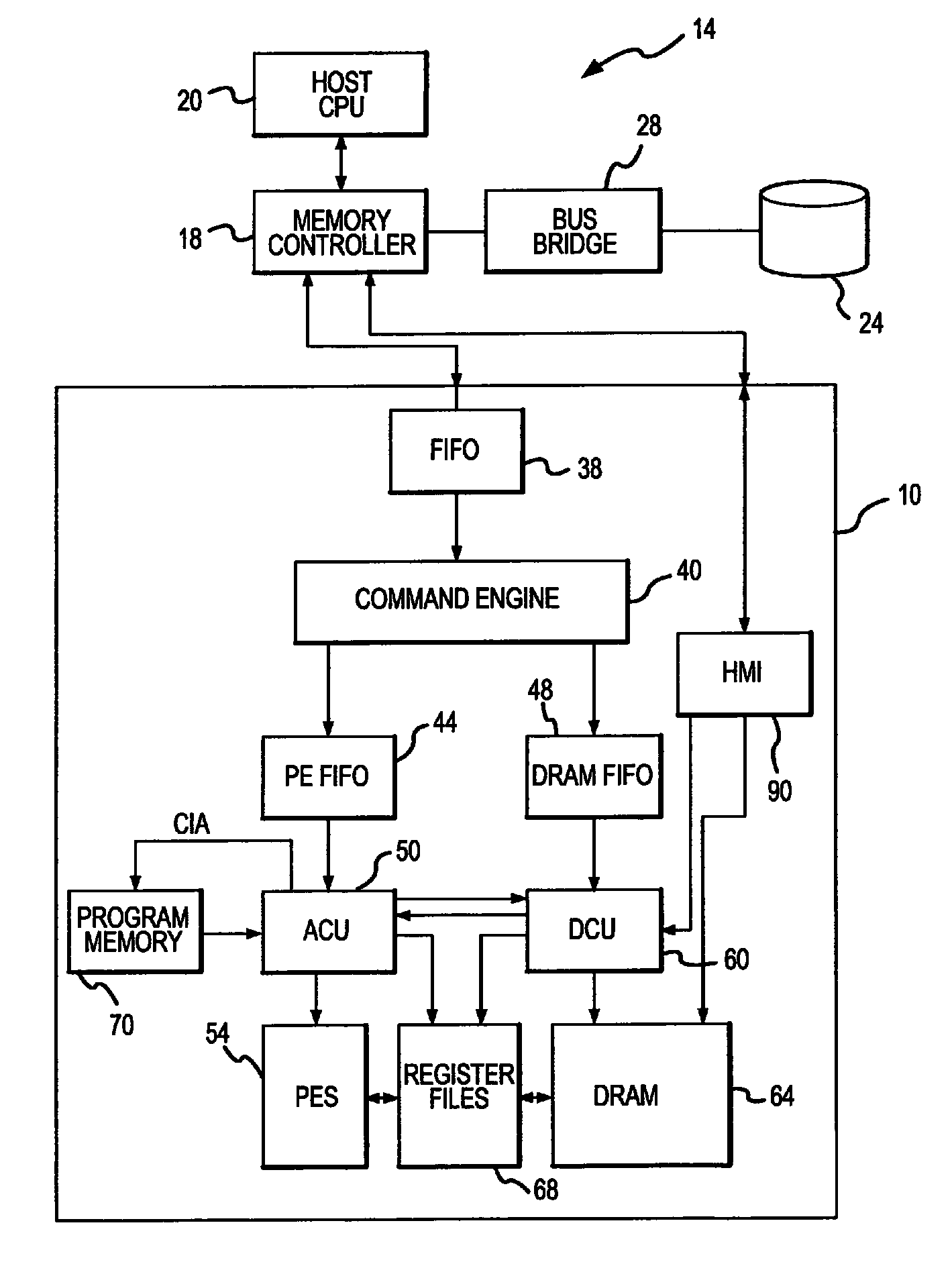
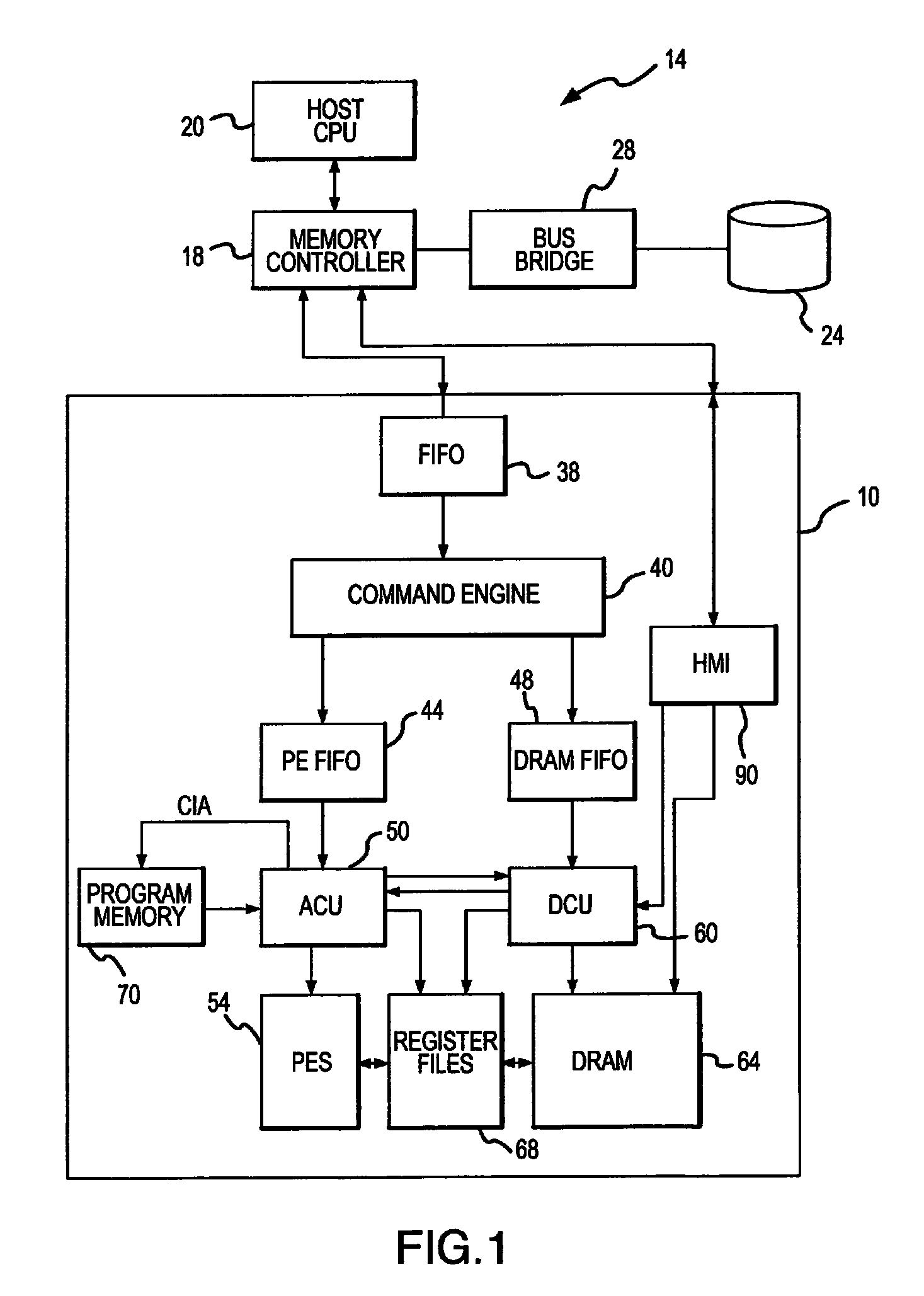
Data reordering processor and method for use in an active memory device
PatentInactiveUS7584343B2
Innovation
- An integrated circuit active memory device with a vector processing and re-ordering system that reorders irregularly stored data into contiguous vectors for efficient processing, using vector registers and a vector processor to manage data transfer and reordering, allowing for efficient processing and subsequent reordering of results before storage.


Active memory data compression system and method
PatentActiveUS9015390B2
Innovation
- An integrated circuit active memory device with an array of processing elements, such as SIMD or MIMD processors, compresses and decompresses data through a host/memory interface port, enhancing data bandwidth by executing compression and decompression algorithms stored in program memory, thereby increasing data transfer efficiency.

Data Privacy and Security Regulations for Memory Systems
The implementation of active memory systems for managing increased data volumes operates within a complex regulatory landscape that varies significantly across global jurisdictions. In the United States, the Federal Trade Commission enforces privacy regulations that directly impact memory system design, requiring organizations to implement reasonable security measures for data protection. The California Consumer Privacy Act (CCPA) and its amendment, the California Privacy Rights Act (CPRA), establish specific requirements for data handling in memory systems, including the right to deletion and data portability, which directly affects how active memory architectures must be designed to support real-time data erasure and transfer capabilities.
European regulations present even more stringent requirements under the General Data Protection Regulation (GDPR), which mandates data protection by design and by default. This regulation requires active memory systems to incorporate privacy-enhancing technologies from the initial design phase, including encryption, pseudonymization, and access controls. The GDPR's data minimization principle particularly challenges active memory implementations, as systems must balance performance optimization with storing only necessary data for specified purposes.
Sector-specific regulations add additional complexity layers. Healthcare organizations implementing active memory solutions must comply with HIPAA requirements, which mandate specific technical safeguards including access controls, audit logs, and encryption for protected health information. Financial institutions face similar constraints under regulations like PCI DSS for payment card data and various banking regulations that require strict data residency and access controls.
Emerging regulations in Asia-Pacific regions, including China's Personal Information Protection Law (PIPL) and India's proposed Data Protection Bill, introduce data localization requirements that significantly impact active memory system architecture. These regulations often mandate that certain categories of data must be stored and processed within national boundaries, requiring active memory systems to implement geographic data segregation capabilities.
The regulatory landscape also addresses cross-border data transfers, with mechanisms like Standard Contractual Clauses (SCCs) and adequacy decisions affecting how active memory systems can distribute and synchronize data across international locations. Organizations must implement technical measures to ensure compliance with transfer restrictions while maintaining system performance and availability.
European regulations present even more stringent requirements under the General Data Protection Regulation (GDPR), which mandates data protection by design and by default. This regulation requires active memory systems to incorporate privacy-enhancing technologies from the initial design phase, including encryption, pseudonymization, and access controls. The GDPR's data minimization principle particularly challenges active memory implementations, as systems must balance performance optimization with storing only necessary data for specified purposes.
Sector-specific regulations add additional complexity layers. Healthcare organizations implementing active memory solutions must comply with HIPAA requirements, which mandate specific technical safeguards including access controls, audit logs, and encryption for protected health information. Financial institutions face similar constraints under regulations like PCI DSS for payment card data and various banking regulations that require strict data residency and access controls.
Emerging regulations in Asia-Pacific regions, including China's Personal Information Protection Law (PIPL) and India's proposed Data Protection Bill, introduce data localization requirements that significantly impact active memory system architecture. These regulations often mandate that certain categories of data must be stored and processed within national boundaries, requiring active memory systems to implement geographic data segregation capabilities.
The regulatory landscape also addresses cross-border data transfers, with mechanisms like Standard Contractual Clauses (SCCs) and adequacy decisions affecting how active memory systems can distribute and synchronize data across international locations. Organizations must implement technical measures to ensure compliance with transfer restrictions while maintaining system performance and availability.
Energy Efficiency Considerations in Active Memory Design
Energy efficiency represents a critical design consideration in active memory systems, particularly as data volumes continue to expand exponentially. The fundamental challenge lies in balancing computational performance with power consumption while maintaining the responsiveness required for real-time data processing applications.
Active memory architectures inherently consume more power than traditional passive storage systems due to their integrated processing capabilities. The energy overhead stems from multiple sources including embedded processors, cache hierarchies, and continuous data movement between processing elements and storage arrays. As data volumes increase, these systems must handle more frequent read-write operations and maintain larger working datasets in active states, directly correlating with higher energy consumption patterns.
Dynamic voltage and frequency scaling techniques have emerged as primary strategies for optimizing energy efficiency in active memory designs. These approaches allow processing elements to adjust their operational parameters based on workload characteristics and performance requirements. When handling large datasets with varying computational intensity, systems can reduce voltage levels during less demanding operations while scaling up during peak processing periods.
Memory hierarchy optimization plays a crucial role in energy management for high-volume data scenarios. Multi-tier caching strategies help minimize energy-intensive data transfers by keeping frequently accessed information in low-power, high-speed cache layers. Advanced prefetching algorithms can predict data access patterns and proactively move relevant datasets to appropriate memory tiers, reducing the energy cost of on-demand data retrieval operations.
Power gating and clock gating technologies provide additional energy savings by selectively disabling unused processing elements and memory banks. In active memory systems managing large datasets, workload distribution algorithms can concentrate processing activities in specific regions while powering down idle components. This approach becomes particularly effective when combined with data locality optimization techniques that cluster related information within the same memory modules.
Emerging non-volatile memory technologies offer promising solutions for energy-efficient active memory designs. These technologies eliminate the continuous power requirements for data retention while providing near-DRAM performance characteristics. Integration of such technologies enables active memory systems to maintain large working datasets with significantly reduced standby power consumption, addressing one of the primary energy challenges in high-volume data management scenarios.
Active memory architectures inherently consume more power than traditional passive storage systems due to their integrated processing capabilities. The energy overhead stems from multiple sources including embedded processors, cache hierarchies, and continuous data movement between processing elements and storage arrays. As data volumes increase, these systems must handle more frequent read-write operations and maintain larger working datasets in active states, directly correlating with higher energy consumption patterns.
Dynamic voltage and frequency scaling techniques have emerged as primary strategies for optimizing energy efficiency in active memory designs. These approaches allow processing elements to adjust their operational parameters based on workload characteristics and performance requirements. When handling large datasets with varying computational intensity, systems can reduce voltage levels during less demanding operations while scaling up during peak processing periods.
Memory hierarchy optimization plays a crucial role in energy management for high-volume data scenarios. Multi-tier caching strategies help minimize energy-intensive data transfers by keeping frequently accessed information in low-power, high-speed cache layers. Advanced prefetching algorithms can predict data access patterns and proactively move relevant datasets to appropriate memory tiers, reducing the energy cost of on-demand data retrieval operations.
Power gating and clock gating technologies provide additional energy savings by selectively disabling unused processing elements and memory banks. In active memory systems managing large datasets, workload distribution algorithms can concentrate processing activities in specific regions while powering down idle components. This approach becomes particularly effective when combined with data locality optimization techniques that cluster related information within the same memory modules.
Emerging non-volatile memory technologies offer promising solutions for energy-efficient active memory designs. These technologies eliminate the continuous power requirements for data retention while providing near-DRAM performance characteristics. Integration of such technologies enables active memory systems to maintain large working datasets with significantly reduced standby power consumption, addressing one of the primary energy challenges in high-volume data management scenarios.
Unlock deeper insights with PatSnap Eureka Quick Research — get a full tech report to explore trends and direct your research. Try now!
Generate Your Research Report Instantly with AI Agent
Supercharge your innovation with PatSnap Eureka AI Agent Platform!