
How to Maximize Efficiency in Electromagnetic Induction Systems
MAR 6, 20269 MIN READ
Generate Your Research Report Instantly with AI Agent
Patsnap Eureka helps you evaluate technical feasibility & market potential.
Electromagnetic Induction Background and Efficiency Goals
Electromagnetic induction, discovered by Michael Faraday in 1831, represents one of the fundamental principles governing modern electrical technology. This phenomenon occurs when a changing magnetic field generates an electric field, creating the foundation for countless applications including electric generators, transformers, induction motors, and wireless power transfer systems. The principle has evolved from a scientific curiosity to the backbone of global electrical infrastructure, enabling the conversion between mechanical and electrical energy that powers modern civilization.
The historical development of electromagnetic induction systems has been marked by continuous efforts to improve efficiency. Early induction devices suffered from significant energy losses due to material limitations and design constraints. The introduction of laminated cores in the late 19th century reduced eddy current losses, while advances in magnetic materials, particularly the development of silicon steel and later ferrite cores, dramatically improved magnetic permeability and reduced hysteresis losses.
Contemporary electromagnetic induction systems face mounting pressure to achieve maximum efficiency due to environmental concerns, energy costs, and regulatory requirements. In power generation applications, even marginal efficiency improvements translate to substantial energy savings and reduced carbon emissions. For electric vehicles, induction motor efficiency directly impacts driving range and battery life. In industrial applications, high-efficiency induction systems reduce operational costs and heat generation, improving overall system reliability.
The efficiency goals for modern electromagnetic induction systems vary by application but consistently target the highest possible energy conversion rates. Power transformers in electrical grids aim for efficiencies exceeding 99%, while induction motors target efficiency levels above 95% under rated conditions. Wireless power transfer systems, though inherently less efficient due to air gaps, strive for efficiency improvements through optimized coil designs and advanced control algorithms.
Current efficiency targets are driven by international standards such as IEC 60034-30-1 for electric motors and IEEE standards for transformers. These regulations establish minimum efficiency requirements and promote the adoption of premium efficiency technologies. The pursuit of maximum efficiency encompasses multiple technical domains, including advanced magnetic materials, optimized electromagnetic field distributions, reduced resistive losses through improved conductor designs, and sophisticated control systems that maintain optimal operating conditions across varying load conditions.
The technological evolution continues toward smart induction systems that adapt their operation in real-time to maximize efficiency under dynamic conditions, representing the next frontier in electromagnetic induction system optimization.
The historical development of electromagnetic induction systems has been marked by continuous efforts to improve efficiency. Early induction devices suffered from significant energy losses due to material limitations and design constraints. The introduction of laminated cores in the late 19th century reduced eddy current losses, while advances in magnetic materials, particularly the development of silicon steel and later ferrite cores, dramatically improved magnetic permeability and reduced hysteresis losses.
Contemporary electromagnetic induction systems face mounting pressure to achieve maximum efficiency due to environmental concerns, energy costs, and regulatory requirements. In power generation applications, even marginal efficiency improvements translate to substantial energy savings and reduced carbon emissions. For electric vehicles, induction motor efficiency directly impacts driving range and battery life. In industrial applications, high-efficiency induction systems reduce operational costs and heat generation, improving overall system reliability.
The efficiency goals for modern electromagnetic induction systems vary by application but consistently target the highest possible energy conversion rates. Power transformers in electrical grids aim for efficiencies exceeding 99%, while induction motors target efficiency levels above 95% under rated conditions. Wireless power transfer systems, though inherently less efficient due to air gaps, strive for efficiency improvements through optimized coil designs and advanced control algorithms.
Current efficiency targets are driven by international standards such as IEC 60034-30-1 for electric motors and IEEE standards for transformers. These regulations establish minimum efficiency requirements and promote the adoption of premium efficiency technologies. The pursuit of maximum efficiency encompasses multiple technical domains, including advanced magnetic materials, optimized electromagnetic field distributions, reduced resistive losses through improved conductor designs, and sophisticated control systems that maintain optimal operating conditions across varying load conditions.
The technological evolution continues toward smart induction systems that adapt their operation in real-time to maximize efficiency under dynamic conditions, representing the next frontier in electromagnetic induction system optimization.
Market Demand for High-Efficiency Induction Systems
The global market for high-efficiency electromagnetic induction systems is experiencing unprecedented growth driven by multiple converging factors. Industrial automation and manufacturing sectors are increasingly demanding energy-efficient solutions to reduce operational costs and meet stringent environmental regulations. The automotive industry's transition toward electric vehicles has created substantial demand for advanced induction systems in wireless charging infrastructure, motor control applications, and power conversion systems.
Energy sector transformation represents another significant driver, with renewable energy integration requiring sophisticated induction-based power management systems. Wind turbines, solar inverters, and grid-scale energy storage systems all rely heavily on high-efficiency electromagnetic induction technologies. The growing emphasis on smart grid infrastructure further amplifies this demand, as utilities seek to minimize transmission losses and improve power quality through advanced induction-based components.
Consumer electronics markets continue expanding their appetite for wireless charging solutions, from smartphones and wearables to electric appliances. The proliferation of Internet of Things devices has created new market segments requiring compact, efficient induction systems for power transfer and sensor applications. Healthcare equipment manufacturers increasingly specify high-efficiency induction systems for medical imaging devices, surgical instruments, and patient monitoring equipment where reliability and energy efficiency are paramount.
Industrial heating applications represent a mature yet evolving market segment, with manufacturers seeking more precise temperature control and energy savings. Induction heating systems for metal processing, food production, and chemical manufacturing are experiencing renewed interest as companies prioritize sustainability initiatives and operational efficiency improvements.
Geographically, Asia-Pacific regions demonstrate the strongest market growth, driven by rapid industrialization and electric vehicle adoption. European markets emphasize regulatory compliance and environmental standards, creating demand for premium efficiency solutions. North American markets focus on infrastructure modernization and industrial productivity enhancement.
Market capacity expansion is further supported by emerging applications in aerospace, defense, and telecommunications sectors. Satellite systems, radar equipment, and communication infrastructure increasingly require specialized high-efficiency induction components capable of operating in demanding environments while maintaining optimal performance characteristics.
Energy sector transformation represents another significant driver, with renewable energy integration requiring sophisticated induction-based power management systems. Wind turbines, solar inverters, and grid-scale energy storage systems all rely heavily on high-efficiency electromagnetic induction technologies. The growing emphasis on smart grid infrastructure further amplifies this demand, as utilities seek to minimize transmission losses and improve power quality through advanced induction-based components.
Consumer electronics markets continue expanding their appetite for wireless charging solutions, from smartphones and wearables to electric appliances. The proliferation of Internet of Things devices has created new market segments requiring compact, efficient induction systems for power transfer and sensor applications. Healthcare equipment manufacturers increasingly specify high-efficiency induction systems for medical imaging devices, surgical instruments, and patient monitoring equipment where reliability and energy efficiency are paramount.
Industrial heating applications represent a mature yet evolving market segment, with manufacturers seeking more precise temperature control and energy savings. Induction heating systems for metal processing, food production, and chemical manufacturing are experiencing renewed interest as companies prioritize sustainability initiatives and operational efficiency improvements.
Geographically, Asia-Pacific regions demonstrate the strongest market growth, driven by rapid industrialization and electric vehicle adoption. European markets emphasize regulatory compliance and environmental standards, creating demand for premium efficiency solutions. North American markets focus on infrastructure modernization and industrial productivity enhancement.
Market capacity expansion is further supported by emerging applications in aerospace, defense, and telecommunications sectors. Satellite systems, radar equipment, and communication infrastructure increasingly require specialized high-efficiency induction components capable of operating in demanding environments while maintaining optimal performance characteristics.
Current State and Efficiency Challenges in EM Induction
Electromagnetic induction systems currently operate at efficiency levels ranging from 70% to 95%, depending on the application and design implementation. Wireless power transfer systems typically achieve 80-90% efficiency in optimal conditions, while induction heating applications can reach up to 95% efficiency. However, these peak performance figures are often achieved under controlled laboratory conditions with minimal real-world constraints.
The primary efficiency challenge stems from energy losses occurring at multiple stages of the induction process. Resistive losses in copper windings represent the most significant source of energy dissipation, accounting for 30-40% of total system losses. These losses increase quadratically with current magnitude and are exacerbated by skin effect and proximity effect phenomena at higher frequencies.
Core losses constitute another major efficiency bottleneck, particularly in high-frequency applications. Hysteresis losses and eddy current losses in ferromagnetic materials can consume 15-25% of input energy. The selection of core materials with appropriate permeability and low loss characteristics remains a critical design challenge, especially when balancing cost considerations with performance requirements.
Coupling efficiency presents significant challenges in wireless power transfer applications. Misalignment between transmitter and receiver coils can reduce efficiency by 20-30%, while air gap variations dramatically impact power transfer capability. Current systems struggle to maintain consistent efficiency across varying spatial relationships and load conditions.
Frequency optimization represents a complex trade-off scenario. Higher frequencies enable smaller component sizes and improved power density but increase switching losses and electromagnetic interference. Lower frequencies reduce switching losses but require larger magnetic components and may suffer from reduced coupling efficiency.
Thermal management issues compound efficiency challenges by creating positive feedback loops where increased losses generate heat, which further reduces component efficiency. Power electronics components, particularly MOSFETs and IGBTs, experience significant efficiency degradation at elevated temperatures, while magnetic materials exhibit reduced permeability and increased losses.
Load variation sensitivity affects many induction systems, where efficiency drops significantly under light load conditions. This challenge is particularly pronounced in wireless charging applications where the load profile varies dynamically throughout the charging cycle.
Current technological limitations include the lack of real-time adaptive control systems capable of optimizing multiple parameters simultaneously, insufficient standardization across different applications, and the absence of cost-effective high-performance materials that can operate efficiently across wide frequency ranges while maintaining thermal stability.
The primary efficiency challenge stems from energy losses occurring at multiple stages of the induction process. Resistive losses in copper windings represent the most significant source of energy dissipation, accounting for 30-40% of total system losses. These losses increase quadratically with current magnitude and are exacerbated by skin effect and proximity effect phenomena at higher frequencies.
Core losses constitute another major efficiency bottleneck, particularly in high-frequency applications. Hysteresis losses and eddy current losses in ferromagnetic materials can consume 15-25% of input energy. The selection of core materials with appropriate permeability and low loss characteristics remains a critical design challenge, especially when balancing cost considerations with performance requirements.
Coupling efficiency presents significant challenges in wireless power transfer applications. Misalignment between transmitter and receiver coils can reduce efficiency by 20-30%, while air gap variations dramatically impact power transfer capability. Current systems struggle to maintain consistent efficiency across varying spatial relationships and load conditions.
Frequency optimization represents a complex trade-off scenario. Higher frequencies enable smaller component sizes and improved power density but increase switching losses and electromagnetic interference. Lower frequencies reduce switching losses but require larger magnetic components and may suffer from reduced coupling efficiency.
Thermal management issues compound efficiency challenges by creating positive feedback loops where increased losses generate heat, which further reduces component efficiency. Power electronics components, particularly MOSFETs and IGBTs, experience significant efficiency degradation at elevated temperatures, while magnetic materials exhibit reduced permeability and increased losses.
Load variation sensitivity affects many induction systems, where efficiency drops significantly under light load conditions. This challenge is particularly pronounced in wireless charging applications where the load profile varies dynamically throughout the charging cycle.
Current technological limitations include the lack of real-time adaptive control systems capable of optimizing multiple parameters simultaneously, insufficient standardization across different applications, and the absence of cost-effective high-performance materials that can operate efficiently across wide frequency ranges while maintaining thermal stability.
Current Solutions for Maximizing Induction Efficiency
01 Coil design optimization for improved coupling efficiency
Optimizing the design and configuration of electromagnetic induction coils can significantly enhance coupling efficiency between transmitter and receiver coils. This includes modifications to coil geometry, winding patterns, core materials, and spatial arrangements to maximize magnetic flux linkage and minimize losses. Advanced coil structures with specific shapes, layering techniques, and positioning methods can improve power transfer efficiency in electromagnetic induction systems.- Coil design and configuration optimization: Optimizing the design and configuration of electromagnetic induction coils is crucial for improving system efficiency. This includes adjusting coil geometry, winding patterns, core materials, and spatial arrangements to minimize energy losses and maximize magnetic coupling. Advanced coil structures such as multi-layer windings, optimized pitch configurations, and specialized core materials can significantly enhance power transfer efficiency and reduce heat generation in electromagnetic induction systems.
- Power control and regulation circuits: Implementing advanced power control and regulation circuits helps maintain optimal operating conditions and improve overall system efficiency. These circuits monitor and adjust parameters such as frequency, voltage, and current to ensure maximum power transfer while minimizing losses. Feedback control mechanisms, resonant frequency tracking, and adaptive impedance matching techniques enable the system to operate at peak efficiency across varying load conditions and environmental factors.
- Magnetic shielding and flux management: Effective magnetic shielding and flux management techniques reduce electromagnetic interference and improve energy transfer efficiency. This involves using specialized shielding materials, flux concentrators, and magnetic field guiding structures to direct magnetic flux along desired paths while minimizing leakage and interference. Proper shielding design also enhances safety by containing electromagnetic fields within the operating area and preventing unwanted coupling with nearby objects or systems.
- Resonant frequency optimization and tuning: Achieving and maintaining resonant frequency conditions between transmitter and receiver coils maximizes power transfer efficiency in electromagnetic induction systems. This involves precise tuning of capacitive and inductive components to match resonant frequencies, as well as implementing dynamic tuning mechanisms that adapt to changing operating conditions. Resonant operation significantly reduces reactive power losses and enables efficient energy transfer over greater distances or through various media.
- Thermal management and loss reduction: Effective thermal management strategies and loss reduction techniques are essential for maintaining high efficiency in electromagnetic induction systems. This includes implementing cooling systems, using low-loss materials, optimizing switching frequencies, and minimizing eddy current and hysteresis losses. Advanced thermal dissipation structures, heat sinks, and temperature monitoring systems help maintain optimal operating temperatures, preventing efficiency degradation due to thermal effects and extending system lifespan.
02 Resonant frequency tuning and impedance matching
Implementing resonant frequency tuning and impedance matching techniques can maximize power transfer efficiency in electromagnetic induction systems. By adjusting the resonant frequency of the transmitter and receiver circuits to match and optimizing impedance characteristics, energy losses can be minimized and power transmission efficiency can be significantly improved. This approach involves the use of capacitive and inductive components to create resonant circuits that operate at optimal frequencies.Expand Specific Solutions03 Magnetic shielding and flux concentration structures
Incorporating magnetic shielding materials and flux concentration structures can enhance electromagnetic induction system efficiency by directing magnetic fields more effectively and reducing interference. These structures help concentrate magnetic flux in desired areas while preventing flux leakage and minimizing eddy current losses. The use of ferrite materials, magnetic cores, and specially designed shielding configurations can improve overall system performance and reduce energy waste.Expand Specific Solutions04 Active control and feedback regulation systems
Implementing active control systems with real-time feedback mechanisms can dynamically optimize electromagnetic induction efficiency under varying operating conditions. These systems monitor parameters such as coupling coefficient, load conditions, and power transfer rates, then adjust operating parameters accordingly to maintain optimal efficiency. Advanced control algorithms and sensing technologies enable adaptive operation that compensates for changes in distance, alignment, and load characteristics.Expand Specific Solutions05 Multi-coil and array configurations for enhanced coverage
Utilizing multi-coil arrangements and array configurations can improve electromagnetic induction system efficiency by providing better spatial coverage and flexibility in power transfer. These configurations allow for selective activation of coil elements, improved tolerance to misalignment, and enhanced power distribution across multiple receivers. Array-based systems can dynamically adjust power delivery patterns to optimize efficiency based on receiver positions and power requirements.Expand Specific Solutions
Key Players in Electromagnetic Induction Industry
The electromagnetic induction systems efficiency optimization market is experiencing rapid growth driven by increasing demand for energy-efficient solutions across automotive, industrial, and consumer electronics sectors. The industry is in a mature development stage with established players like Robert Bosch GmbH, Samsung Electronics, and Intel Corp leading technological advancement alongside specialized firms such as Electricfil Automotive and AVL List GmbH. Technology maturity varies significantly across applications, with automotive induction systems showing high sophistication through companies like Continental Automotive and ZF Friedrichshafen, while emerging applications in renewable energy demonstrate growth potential via firms like Tangshan Haitai New Energy Technology. Academic institutions including Huazhong University of Science & Technology and Tohoku University contribute fundamental research, while industrial giants like Thales SA, Panasonic Holdings, and Schneider Electric drive commercial implementation. The competitive landscape reflects a multi-billion dollar market with diverse technological approaches ranging from traditional electromagnetic solutions to advanced digital integration and AI-optimized systems.
Robert Bosch GmbH
Technical Solution: Bosch has developed advanced electromagnetic induction systems for automotive applications, particularly in electric vehicle charging and motor control systems. Their technology focuses on optimizing magnetic field distribution through innovative coil designs and ferrite core configurations. The company employs sophisticated control algorithms that dynamically adjust switching frequencies and phase relationships to minimize eddy current losses and maximize power transfer efficiency. Their induction systems incorporate real-time monitoring of temperature, current, and magnetic flux density to maintain optimal operating conditions. Bosch's approach includes the use of high-frequency switching power electronics combined with advanced materials like nanocrystalline cores to achieve efficiency rates exceeding 95% in their wireless charging systems.
Strengths: Extensive automotive industry experience, proven reliability in harsh environments, strong integration capabilities with vehicle systems. Weaknesses: Higher cost compared to competitors, complex system architecture requiring specialized maintenance.
Samsung Electronics Co., Ltd.
Technical Solution: Samsung has developed cutting-edge electromagnetic induction technology primarily for wireless charging applications in consumer electronics and electric vehicles. Their approach utilizes resonant inductive coupling with optimized coil geometries and advanced power management integrated circuits. The company's technology incorporates adaptive frequency tuning mechanisms that automatically adjust operating parameters based on load conditions and coupling coefficients. Samsung's systems feature multi-coil arrays with intelligent switching capabilities to maximize spatial freedom while maintaining high efficiency. Their proprietary algorithms monitor real-time impedance matching and employ dynamic load modulation to achieve power transfer efficiencies above 90% across varying distances and alignments.
Strengths: Strong consumer electronics market presence, advanced semiconductor integration, cost-effective mass production capabilities. Weaknesses: Limited experience in industrial applications, focus primarily on lower power applications compared to automotive requirements.
Core Patents in High-Efficiency EM Induction Systems
Electromagnetic induction apparatus for power transfer
PatentInactiveUS20170179728A1
Innovation
- The apparatus comprises a central magnetic core with a primary coil and a toroidal magnetic core with a secondary coil, where the toroidal coil is located around the outside periphery of the central coil, maximizing the coupling coefficient and maintaining it as a relative constant, independent of magnetic flux and permeability, with magnetic sleeves and rings to prevent magnetic leakage and enhance magnetic coupling.


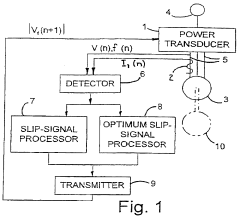
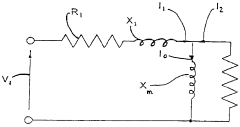
Efficiency control system for an induction motor
PatentInactiveUS5796237A
Innovation
- An efficiency control system that calculates actual and optimum slip values based on voltage, current, and frequency signals from the induction motor, using these calculations to generate a voltage command signal that adjusts the electrical power supplied to maintain optimal slip and maximize efficiency.
Energy Efficiency Standards and Regulations
The regulatory landscape for electromagnetic induction systems has evolved significantly over the past decade, driven by global commitments to carbon neutrality and energy conservation. International standards organizations, including the International Electrotechnical Commission (IEC) and Institute of Electrical and Electronics Engineers (IEEE), have established comprehensive frameworks that define minimum efficiency thresholds for inductive power transfer systems. These standards typically mandate efficiency levels ranging from 85% to 95% depending on power ratings and application categories.
Regional regulatory bodies have implemented distinct approaches to efficiency mandates. The European Union's Ecodesign Directive sets stringent requirements for wireless charging systems, establishing mandatory efficiency benchmarks that manufacturers must meet by 2025. Similarly, the U.S. Department of Energy has introduced voluntary efficiency guidelines through the ENERGY STAR program, while China's National Standards (GB) have established mandatory efficiency criteria for industrial induction heating systems exceeding 50kW capacity.
Compliance testing protocols represent a critical component of these regulatory frameworks. Standard test procedures, such as IEC 61980 series for wireless power transfer systems, define specific measurement methodologies including ambient temperature conditions, load characteristics, and alignment tolerances. These protocols ensure consistent evaluation across different manufacturers and geographic regions, facilitating international trade and technology transfer.
Emerging regulatory trends indicate a shift toward lifecycle efficiency assessments rather than purely operational metrics. Proposed amendments to existing standards are incorporating standby power consumption limits, typically restricting no-load losses to less than 0.5% of rated power output. Additionally, new regulations are addressing electromagnetic compatibility requirements to minimize interference with adjacent electronic systems while maintaining optimal efficiency performance.
The regulatory compliance burden has catalyzed innovation in efficiency optimization technologies. Manufacturers are increasingly investing in adaptive control algorithms, advanced magnetic materials, and resonant frequency tuning mechanisms to exceed mandatory thresholds. This regulatory-driven innovation cycle continues to push the boundaries of electromagnetic induction system performance across diverse industrial applications.
Regional regulatory bodies have implemented distinct approaches to efficiency mandates. The European Union's Ecodesign Directive sets stringent requirements for wireless charging systems, establishing mandatory efficiency benchmarks that manufacturers must meet by 2025. Similarly, the U.S. Department of Energy has introduced voluntary efficiency guidelines through the ENERGY STAR program, while China's National Standards (GB) have established mandatory efficiency criteria for industrial induction heating systems exceeding 50kW capacity.
Compliance testing protocols represent a critical component of these regulatory frameworks. Standard test procedures, such as IEC 61980 series for wireless power transfer systems, define specific measurement methodologies including ambient temperature conditions, load characteristics, and alignment tolerances. These protocols ensure consistent evaluation across different manufacturers and geographic regions, facilitating international trade and technology transfer.
Emerging regulatory trends indicate a shift toward lifecycle efficiency assessments rather than purely operational metrics. Proposed amendments to existing standards are incorporating standby power consumption limits, typically restricting no-load losses to less than 0.5% of rated power output. Additionally, new regulations are addressing electromagnetic compatibility requirements to minimize interference with adjacent electronic systems while maintaining optimal efficiency performance.
The regulatory compliance burden has catalyzed innovation in efficiency optimization technologies. Manufacturers are increasingly investing in adaptive control algorithms, advanced magnetic materials, and resonant frequency tuning mechanisms to exceed mandatory thresholds. This regulatory-driven innovation cycle continues to push the boundaries of electromagnetic induction system performance across diverse industrial applications.
Environmental Impact of High-Efficiency Induction Systems
High-efficiency electromagnetic induction systems present significant environmental advantages compared to traditional energy conversion technologies. These systems demonstrate substantially reduced carbon footprints through improved energy conversion ratios, typically achieving efficiency rates exceeding 95% in optimized configurations. The enhanced efficiency directly translates to lower energy consumption for equivalent output, resulting in decreased greenhouse gas emissions from power generation sources.
The manufacturing phase of high-efficiency induction systems requires careful consideration of material selection and production processes. Advanced magnetic materials, including rare earth elements and specialized alloys, contribute to superior performance but raise concerns regarding mining impacts and supply chain sustainability. However, the extended operational lifespan of these systems, often exceeding 25 years, significantly offsets the initial environmental investment through prolonged service periods and reduced replacement frequency.
Waste heat generation represents a critical environmental consideration in induction system design. High-efficiency systems produce minimal thermal waste, reducing the need for extensive cooling infrastructure and associated energy consumption. This characteristic proves particularly beneficial in industrial applications where waste heat management traditionally requires substantial auxiliary systems and energy expenditure.
The recyclability of electromagnetic induction components presents both opportunities and challenges. Copper windings and steel cores demonstrate excellent recyclability rates, supporting circular economy principles. However, specialized magnetic materials and electronic control components require dedicated recycling processes to recover valuable materials and prevent environmental contamination.
Electromagnetic field emissions from high-efficiency induction systems generally remain within established safety standards due to improved shielding and optimized field containment designs. Advanced control algorithms minimize electromagnetic interference while maintaining peak performance, reducing potential impacts on surrounding electronic systems and biological environments.
Life cycle assessments consistently demonstrate that high-efficiency electromagnetic induction systems provide net positive environmental benefits. The combination of reduced operational energy consumption, extended service life, and improved material utilization creates favorable environmental profiles compared to conventional alternatives, supporting sustainable technology adoption across industrial and commercial applications.
The manufacturing phase of high-efficiency induction systems requires careful consideration of material selection and production processes. Advanced magnetic materials, including rare earth elements and specialized alloys, contribute to superior performance but raise concerns regarding mining impacts and supply chain sustainability. However, the extended operational lifespan of these systems, often exceeding 25 years, significantly offsets the initial environmental investment through prolonged service periods and reduced replacement frequency.
Waste heat generation represents a critical environmental consideration in induction system design. High-efficiency systems produce minimal thermal waste, reducing the need for extensive cooling infrastructure and associated energy consumption. This characteristic proves particularly beneficial in industrial applications where waste heat management traditionally requires substantial auxiliary systems and energy expenditure.
The recyclability of electromagnetic induction components presents both opportunities and challenges. Copper windings and steel cores demonstrate excellent recyclability rates, supporting circular economy principles. However, specialized magnetic materials and electronic control components require dedicated recycling processes to recover valuable materials and prevent environmental contamination.
Electromagnetic field emissions from high-efficiency induction systems generally remain within established safety standards due to improved shielding and optimized field containment designs. Advanced control algorithms minimize electromagnetic interference while maintaining peak performance, reducing potential impacts on surrounding electronic systems and biological environments.
Life cycle assessments consistently demonstrate that high-efficiency electromagnetic induction systems provide net positive environmental benefits. The combination of reduced operational energy consumption, extended service life, and improved material utilization creates favorable environmental profiles compared to conventional alternatives, supporting sustainable technology adoption across industrial and commercial applications.
Unlock deeper insights with Patsnap Eureka Quick Research — get a full tech report to explore trends and direct your research. Try now!
Generate Your Research Report Instantly with AI Agent
Supercharge your innovation with Patsnap Eureka AI Agent Platform!