
How to Compare Electromagnetic Shielding Methods Effectively
MAR 6, 20269 MIN READ
Generate Your Research Report Instantly with AI Agent
Patsnap Eureka helps you evaluate technical feasibility & market potential.
Electromagnetic Shielding Background and Objectives
Electromagnetic interference (EMI) has emerged as one of the most critical challenges in modern electronic systems, driven by the exponential growth of wireless communications, high-frequency digital circuits, and densely packed electronic components. The proliferation of electronic devices operating across diverse frequency spectrums has created an increasingly complex electromagnetic environment where uncontrolled emissions can severely compromise system performance, reliability, and regulatory compliance.
The evolution of electromagnetic shielding technology traces back to the early days of radio communications in the 1920s, when simple metallic enclosures were first employed to contain electromagnetic emissions. As electronic systems became more sophisticated through the decades, shielding requirements evolved from basic containment to precise attenuation across specific frequency ranges, ultimately developing into today's multi-layered, frequency-selective solutions.
Contemporary electromagnetic shielding encompasses a broad spectrum of methodologies, ranging from traditional conductive materials like copper and aluminum to advanced composite materials incorporating carbon nanotubes, conductive polymers, and metamaterial structures. Each approach offers distinct advantages in terms of shielding effectiveness, weight, cost, and manufacturing complexity, creating a need for systematic comparison methodologies.
The primary objective of effective electromagnetic shielding comparison lies in establishing standardized evaluation criteria that account for multiple performance parameters simultaneously. These parameters include shielding effectiveness across different frequency ranges, material properties such as conductivity and permeability, mechanical characteristics including flexibility and durability, and practical considerations such as cost-effectiveness and manufacturing scalability.
Current industry challenges center on the lack of unified comparison frameworks that can adequately assess shielding performance across diverse application scenarios. Traditional evaluation methods often focus on single-parameter assessments, failing to capture the complex interactions between material properties, geometric configurations, and real-world operating conditions. This limitation becomes particularly pronounced when comparing emerging technologies like active shielding systems against conventional passive approaches.
The strategic importance of developing robust comparison methodologies extends beyond technical performance evaluation to encompass regulatory compliance, cost optimization, and future-proofing against evolving electromagnetic environments. As 5G networks, Internet of Things devices, and electric vehicles continue to reshape the electromagnetic landscape, the ability to systematically evaluate and select optimal shielding solutions becomes increasingly critical for maintaining competitive advantage and ensuring long-term system reliability.
The evolution of electromagnetic shielding technology traces back to the early days of radio communications in the 1920s, when simple metallic enclosures were first employed to contain electromagnetic emissions. As electronic systems became more sophisticated through the decades, shielding requirements evolved from basic containment to precise attenuation across specific frequency ranges, ultimately developing into today's multi-layered, frequency-selective solutions.
Contemporary electromagnetic shielding encompasses a broad spectrum of methodologies, ranging from traditional conductive materials like copper and aluminum to advanced composite materials incorporating carbon nanotubes, conductive polymers, and metamaterial structures. Each approach offers distinct advantages in terms of shielding effectiveness, weight, cost, and manufacturing complexity, creating a need for systematic comparison methodologies.
The primary objective of effective electromagnetic shielding comparison lies in establishing standardized evaluation criteria that account for multiple performance parameters simultaneously. These parameters include shielding effectiveness across different frequency ranges, material properties such as conductivity and permeability, mechanical characteristics including flexibility and durability, and practical considerations such as cost-effectiveness and manufacturing scalability.
Current industry challenges center on the lack of unified comparison frameworks that can adequately assess shielding performance across diverse application scenarios. Traditional evaluation methods often focus on single-parameter assessments, failing to capture the complex interactions between material properties, geometric configurations, and real-world operating conditions. This limitation becomes particularly pronounced when comparing emerging technologies like active shielding systems against conventional passive approaches.
The strategic importance of developing robust comparison methodologies extends beyond technical performance evaluation to encompass regulatory compliance, cost optimization, and future-proofing against evolving electromagnetic environments. As 5G networks, Internet of Things devices, and electric vehicles continue to reshape the electromagnetic landscape, the ability to systematically evaluate and select optimal shielding solutions becomes increasingly critical for maintaining competitive advantage and ensuring long-term system reliability.
Market Demand for EMI Shielding Solutions
The global electromagnetic interference (EMI) shielding market has experienced substantial growth driven by the proliferation of electronic devices across multiple industries. Consumer electronics represent the largest demand segment, with smartphones, tablets, laptops, and wearable devices requiring sophisticated shielding solutions to ensure regulatory compliance and optimal performance. The automotive sector has emerged as a rapidly expanding market segment, particularly with the rise of electric vehicles and advanced driver assistance systems that incorporate numerous electronic components susceptible to electromagnetic interference.
Healthcare and medical device manufacturing constitutes another critical demand driver, where EMI shielding ensures patient safety and device reliability in environments with multiple electronic systems. Medical imaging equipment, patient monitoring devices, and implantable medical devices require stringent electromagnetic compatibility standards, creating sustained demand for high-performance shielding materials and methods.
The aerospace and defense industries maintain consistent demand for EMI shielding solutions, driven by mission-critical applications where electromagnetic interference can compromise system functionality and safety. Military communications equipment, radar systems, and avionics require robust shielding capabilities to operate effectively in electromagnetically challenging environments.
Telecommunications infrastructure expansion, particularly with 5G network deployment, has generated significant demand for EMI shielding solutions. Base stations, network equipment, and data centers require comprehensive electromagnetic protection to maintain signal integrity and prevent interference between adjacent systems.
Industrial automation and Internet of Things applications have created new market opportunities as manufacturing facilities integrate increasing numbers of connected devices and sensors. These environments require effective EMI management to ensure reliable operation of automated systems and prevent production disruptions caused by electromagnetic interference.
The market demand is further intensified by increasingly stringent regulatory requirements across regions, with organizations such as the Federal Communications Commission and European Telecommunications Standards Institute implementing stricter electromagnetic compatibility standards. These regulations drive manufacturers to invest in more effective shielding solutions and comparison methodologies to ensure compliance while optimizing cost and performance parameters.
Healthcare and medical device manufacturing constitutes another critical demand driver, where EMI shielding ensures patient safety and device reliability in environments with multiple electronic systems. Medical imaging equipment, patient monitoring devices, and implantable medical devices require stringent electromagnetic compatibility standards, creating sustained demand for high-performance shielding materials and methods.
The aerospace and defense industries maintain consistent demand for EMI shielding solutions, driven by mission-critical applications where electromagnetic interference can compromise system functionality and safety. Military communications equipment, radar systems, and avionics require robust shielding capabilities to operate effectively in electromagnetically challenging environments.
Telecommunications infrastructure expansion, particularly with 5G network deployment, has generated significant demand for EMI shielding solutions. Base stations, network equipment, and data centers require comprehensive electromagnetic protection to maintain signal integrity and prevent interference between adjacent systems.
Industrial automation and Internet of Things applications have created new market opportunities as manufacturing facilities integrate increasing numbers of connected devices and sensors. These environments require effective EMI management to ensure reliable operation of automated systems and prevent production disruptions caused by electromagnetic interference.
The market demand is further intensified by increasingly stringent regulatory requirements across regions, with organizations such as the Federal Communications Commission and European Telecommunications Standards Institute implementing stricter electromagnetic compatibility standards. These regulations drive manufacturers to invest in more effective shielding solutions and comparison methodologies to ensure compliance while optimizing cost and performance parameters.
Current EMI Shielding Status and Challenges
The current electromagnetic interference (EMI) shielding landscape presents a complex array of technologies and materials, each with distinct performance characteristics and application domains. Traditional metallic shielding solutions, including copper, aluminum, and steel enclosures, continue to dominate industrial applications due to their proven effectiveness and established manufacturing processes. However, these conventional approaches face increasing scrutiny regarding weight constraints, corrosion resistance, and manufacturing complexity in modern electronic systems.
Conductive polymer composites have emerged as significant alternatives, offering reduced weight and enhanced processability compared to metallic solutions. These materials typically incorporate carbon-based fillers, metallic particles, or conductive fibers within polymer matrices. Despite their advantages, achieving consistent shielding effectiveness across broad frequency ranges remains challenging, particularly in high-frequency applications where skin depth effects become pronounced.
The proliferation of wireless communication technologies and the advent of 5G networks have intensified EMI challenges across multiple frequency bands simultaneously. Modern electronic devices must now address interference spanning from low-frequency switching noise to millimeter-wave communications, requiring shielding solutions that maintain effectiveness across unprecedented bandwidth ranges. This multi-frequency requirement has exposed limitations in traditional single-material approaches.
Manufacturing scalability represents another critical challenge in current EMI shielding implementations. While laboratory demonstrations often showcase impressive shielding performance, translating these results to mass production frequently encounters issues related to material uniformity, processing consistency, and cost optimization. The gap between prototype performance and commercial viability continues to hinder the adoption of innovative shielding technologies.
Measurement standardization and comparison methodologies present ongoing difficulties in the field. Different testing standards, frequency ranges, and sample preparation techniques often yield incomparable results across research institutions and manufacturers. This lack of standardization complicates the objective evaluation of emerging shielding technologies and impedes informed decision-making in material selection processes.
Environmental considerations have become increasingly important in shielding material development. Traditional solutions often involve materials with limited recyclability or environmental impact concerns. The industry faces pressure to develop sustainable alternatives while maintaining or improving shielding performance, creating additional constraints on material selection and processing approaches.
Cost-performance optimization remains a persistent challenge, particularly for consumer electronics applications where price sensitivity is paramount. High-performance shielding materials often carry significant cost premiums, limiting their adoption in price-competitive markets and driving the need for innovative approaches that balance effectiveness with economic viability.
Conductive polymer composites have emerged as significant alternatives, offering reduced weight and enhanced processability compared to metallic solutions. These materials typically incorporate carbon-based fillers, metallic particles, or conductive fibers within polymer matrices. Despite their advantages, achieving consistent shielding effectiveness across broad frequency ranges remains challenging, particularly in high-frequency applications where skin depth effects become pronounced.
The proliferation of wireless communication technologies and the advent of 5G networks have intensified EMI challenges across multiple frequency bands simultaneously. Modern electronic devices must now address interference spanning from low-frequency switching noise to millimeter-wave communications, requiring shielding solutions that maintain effectiveness across unprecedented bandwidth ranges. This multi-frequency requirement has exposed limitations in traditional single-material approaches.
Manufacturing scalability represents another critical challenge in current EMI shielding implementations. While laboratory demonstrations often showcase impressive shielding performance, translating these results to mass production frequently encounters issues related to material uniformity, processing consistency, and cost optimization. The gap between prototype performance and commercial viability continues to hinder the adoption of innovative shielding technologies.
Measurement standardization and comparison methodologies present ongoing difficulties in the field. Different testing standards, frequency ranges, and sample preparation techniques often yield incomparable results across research institutions and manufacturers. This lack of standardization complicates the objective evaluation of emerging shielding technologies and impedes informed decision-making in material selection processes.
Environmental considerations have become increasingly important in shielding material development. Traditional solutions often involve materials with limited recyclability or environmental impact concerns. The industry faces pressure to develop sustainable alternatives while maintaining or improving shielding performance, creating additional constraints on material selection and processing approaches.
Cost-performance optimization remains a persistent challenge, particularly for consumer electronics applications where price sensitivity is paramount. High-performance shielding materials often carry significant cost premiums, limiting their adoption in price-competitive markets and driving the need for innovative approaches that balance effectiveness with economic viability.
Current EMI Shielding Comparison Methods
01 Conductive coating materials for electromagnetic shielding
Electromagnetic shielding effectiveness can be enhanced through the application of conductive coating materials on surfaces or substrates. These coatings typically incorporate metallic particles, conductive polymers, or carbon-based materials that provide a conductive pathway to reflect or absorb electromagnetic radiation. The coating thickness, conductivity, and uniformity are critical factors affecting the shielding performance across different frequency ranges.- Conductive coating materials for electromagnetic shielding: Electromagnetic shielding effectiveness can be enhanced through the application of conductive coating materials on surfaces or substrates. These coatings typically incorporate metallic particles, conductive polymers, or carbon-based materials that provide a conductive pathway to reflect or absorb electromagnetic radiation. The coating thickness, conductivity, and uniformity are critical factors in determining the overall shielding performance. Various application methods including spraying, dipping, and electroplating can be employed to achieve optimal coverage and adhesion.
- Multi-layer composite shielding structures: Multi-layer composite structures combine different materials with complementary electromagnetic properties to achieve superior shielding effectiveness. These structures typically consist of alternating layers of conductive and dielectric materials, creating multiple interfaces for electromagnetic wave reflection and absorption. The layer thickness, material selection, and interface design can be optimized to target specific frequency ranges. This approach provides enhanced shielding performance across broader frequency spectrums compared to single-layer solutions.
- Metallic mesh and perforated sheet shielding: Metallic mesh and perforated sheet structures offer effective electromagnetic shielding while maintaining ventilation and weight reduction benefits. The shielding effectiveness depends on the aperture size, wire diameter, mesh density, and material conductivity. These structures work by reflecting electromagnetic waves at the metal surface while allowing air flow through the openings. The aperture dimensions must be significantly smaller than the wavelength of the electromagnetic radiation to be shielded for optimal performance.
- Conductive fabric and textile-based shielding: Conductive fabrics and textile-based materials provide flexible electromagnetic shielding solutions suitable for wearable applications and irregular surfaces. These materials incorporate conductive fibers, metallic threads, or conductive coatings integrated into textile structures. The shielding effectiveness is influenced by the fabric weave pattern, conductive fiber content, and surface resistivity. This approach offers advantages in terms of flexibility, breathability, and conformability while maintaining adequate shielding performance.
- Magnetic absorbing materials for shielding enhancement: Magnetic absorbing materials enhance electromagnetic shielding effectiveness through absorption mechanisms rather than solely relying on reflection. These materials typically contain ferrite particles, magnetic nanoparticles, or other magnetic compounds that convert electromagnetic energy into heat. The absorption characteristics can be tuned by adjusting the material composition, particle size, and loading concentration. Combining magnetic absorbing materials with conductive shielding layers creates hybrid structures that provide both reflection and absorption capabilities for improved overall shielding performance.
02 Multi-layer composite shielding structures
Multi-layer composite structures combine different materials with complementary electromagnetic properties to achieve superior shielding effectiveness. These structures typically consist of alternating layers of conductive and dielectric materials, which work synergistically to attenuate electromagnetic waves through reflection, absorption, and multiple internal reflections. The layer thickness, material selection, and interface design are optimized to provide broadband shielding performance.Expand Specific Solutions03 Metallic mesh and perforated shield designs
Metallic mesh structures and perforated shields provide electromagnetic shielding while maintaining ventilation, visibility, or weight reduction requirements. The shielding effectiveness depends on the aperture size, mesh density, wire diameter, and the relationship between these parameters and the wavelength of incident electromagnetic radiation. Proper design ensures that apertures are significantly smaller than the wavelength to prevent electromagnetic wave penetration.Expand Specific Solutions04 Conductive fabric and textile-based shielding
Conductive fabrics and textile-based materials offer flexible electromagnetic shielding solutions suitable for wearable applications, flexible enclosures, and conformable shields. These materials incorporate conductive fibers, metallic threads, or conductive coatings integrated into textile structures. The shielding effectiveness is influenced by the fabric weave pattern, conductive fiber content, surface resistivity, and the ability to maintain conductivity under mechanical deformation.Expand Specific Solutions05 Ferromagnetic and magnetic absorbing materials
Ferromagnetic materials and magnetic absorbers enhance electromagnetic shielding through magnetic loss mechanisms and impedance matching. These materials convert electromagnetic energy into heat through magnetic hysteresis, eddy currents, and magnetic resonance phenomena. The incorporation of ferrites, magnetic nanoparticles, or carbonyl iron into shielding composites provides effective attenuation particularly in the lower frequency ranges and improves overall shielding performance through absorption rather than reflection.Expand Specific Solutions
Major Players in EMI Shielding Industry
The electromagnetic shielding methods comparison field represents a mature technology sector experiencing steady growth driven by increasing electronic device proliferation and stringent EMI regulations. The market demonstrates significant scale with diverse applications spanning consumer electronics, automotive, aerospace, and industrial sectors. Technology maturity varies considerably across market participants, with established giants like Microsoft Technology Licensing LLC, IBM, Siemens AG, and DuPont de Nemours leading through comprehensive patent portfolios and advanced material sciences capabilities. Asian manufacturers including Guangzhou Fangbang Electronics, Advanced Technology & Materials, and JCET Group contribute specialized manufacturing expertise and cost-effective solutions. European players like Safran Electrical & Power and AGC Glass Europe provide aerospace-grade and specialized glass shielding technologies. The competitive landscape reflects a consolidating industry where traditional material science companies collaborate with electronics manufacturers, while emerging players focus on niche applications and novel materials, creating a multi-tiered ecosystem balancing innovation with established manufacturing capabilities.
DuPont de Nemours, Inc.
Technical Solution: DuPont develops advanced conductive polymer composites and metallized films for electromagnetic shielding applications. Their Kapton polyimide films with copper cladding provide excellent EMI shielding effectiveness of 60-80 dB across frequency ranges from 1 MHz to 10 GHz. The company's comparative methodology focuses on standardized testing protocols including ASTM D4935 and IEEE 299 standards, utilizing vector network analyzers and shielded enclosures for accurate measurement. Their multi-layered approach combines different materials like carbon nanotubes, metallic particles, and conductive fabrics to optimize shielding performance while maintaining flexibility and weight considerations for aerospace and automotive applications.
Strengths: Comprehensive material portfolio, established testing standards, proven performance data. Weaknesses: Higher material costs, limited customization for specific frequency ranges.
FUJIFILM Corp.
Technical Solution: FUJIFILM develops innovative electromagnetic shielding materials using their expertise in thin-film technologies and nanotechnology. Their comparative methodology focuses on transparent conductive films and flexible shielding solutions, utilizing silver nanowire networks and graphene-based composites. The company's testing approach emphasizes optical transparency maintenance while achieving effective EMI shielding, measuring both electromagnetic performance and optical properties simultaneously. FUJIFILM's evaluation framework includes accelerated aging tests, bend testing for flexible applications, and multi-frequency analysis from DC to millimeter-wave ranges. Their methodology is particularly valuable for display applications, touch panels, and flexible electronics where traditional metallic shielding solutions are not suitable due to transparency or flexibility requirements.
Strengths: Transparent shielding expertise, flexible material solutions, advanced nanotechnology capabilities. Weaknesses: Limited to specific application areas, higher material costs for specialized solutions.
Core Technologies in Shielding Effectiveness Testing
Electromagnetic energy shielding systems, apparatuses, and methods
PatentActiveUS10439292B2
Innovation
- The development of engineered metamaterials, including surface wave attenuating metamaterials with via springs and free-space absorber metamaterials, which use air as a dielectric and a conductive backplane to attenuate and absorb electromagnetic waves, reducing weight and size while improving shielding effectiveness.


Electromagnetic interference shielding panels and associated methods
PatentActiveUS10856455B1
Innovation
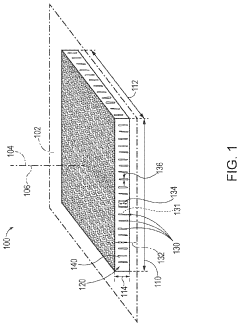
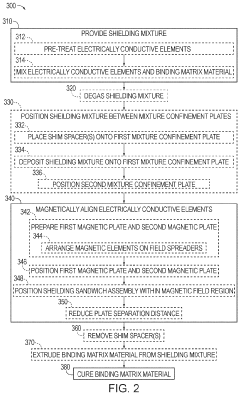
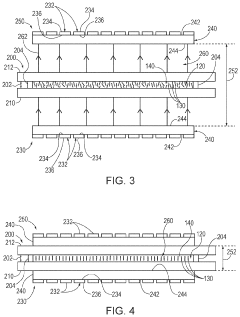
- The development of EMI shielding panels comprising a binding matrix material with electrically conductive elements aligned parallel to a shielding axis, formed by magnetically aligning conductive elements within the matrix before curing, allowing for flexible and efficient attenuation of electromagnetic waves.
EMC Standards and Regulatory Requirements
Electromagnetic compatibility (EMC) standards serve as the foundation for evaluating and comparing electromagnetic shielding methods across different industries and applications. The International Electrotechnical Commission (IEC) provides comprehensive guidelines through standards such as IEC 61000 series, which establishes measurement procedures, test environments, and performance criteria for electromagnetic shielding effectiveness. These standards define specific frequency ranges, field strengths, and testing methodologies that enable consistent comparison between different shielding approaches.
Regional regulatory frameworks significantly influence how electromagnetic shielding methods are assessed and implemented. The Federal Communications Commission (FCC) in the United States enforces strict EMC requirements for electronic devices, particularly focusing on radiated and conducted emissions limits. European Union's EMC Directive 2014/30/EU mandates compliance with harmonized standards like EN 55032 and EN 55035, which specify testing procedures for both immunity and emission characteristics of shielded systems.
Military and aerospace applications operate under specialized standards such as MIL-STD-461 and DO-160, which impose more stringent requirements for electromagnetic shielding performance. These standards define specific test methods including bulk current injection, radiated susceptibility testing, and conducted emissions measurements that provide standardized metrics for comparing shielding effectiveness across different materials and configurations.
Industry-specific regulatory requirements create additional layers of complexity when comparing electromagnetic shielding methods. Medical device regulations under FDA 21 CFR Part 820 and ISO 14971 require comprehensive electromagnetic compatibility assessments, while automotive standards like ISO 11452 series focus on immunity testing for vehicle electronic systems. These sector-specific requirements often necessitate tailored shielding solutions that must be evaluated against distinct performance benchmarks.
Certification processes and compliance testing protocols establish standardized frameworks for validating electromagnetic shielding performance claims. Accredited testing laboratories follow prescribed measurement procedures using calibrated equipment and controlled environments, ensuring that comparative assessments between different shielding methods remain objective and reproducible. These regulatory frameworks ultimately provide the essential reference points for making informed decisions about electromagnetic shielding technology selection and implementation strategies.
Regional regulatory frameworks significantly influence how electromagnetic shielding methods are assessed and implemented. The Federal Communications Commission (FCC) in the United States enforces strict EMC requirements for electronic devices, particularly focusing on radiated and conducted emissions limits. European Union's EMC Directive 2014/30/EU mandates compliance with harmonized standards like EN 55032 and EN 55035, which specify testing procedures for both immunity and emission characteristics of shielded systems.
Military and aerospace applications operate under specialized standards such as MIL-STD-461 and DO-160, which impose more stringent requirements for electromagnetic shielding performance. These standards define specific test methods including bulk current injection, radiated susceptibility testing, and conducted emissions measurements that provide standardized metrics for comparing shielding effectiveness across different materials and configurations.
Industry-specific regulatory requirements create additional layers of complexity when comparing electromagnetic shielding methods. Medical device regulations under FDA 21 CFR Part 820 and ISO 14971 require comprehensive electromagnetic compatibility assessments, while automotive standards like ISO 11452 series focus on immunity testing for vehicle electronic systems. These sector-specific requirements often necessitate tailored shielding solutions that must be evaluated against distinct performance benchmarks.
Certification processes and compliance testing protocols establish standardized frameworks for validating electromagnetic shielding performance claims. Accredited testing laboratories follow prescribed measurement procedures using calibrated equipment and controlled environments, ensuring that comparative assessments between different shielding methods remain objective and reproducible. These regulatory frameworks ultimately provide the essential reference points for making informed decisions about electromagnetic shielding technology selection and implementation strategies.
Cost-Performance Analysis Framework for Shielding
Establishing a comprehensive cost-performance analysis framework for electromagnetic shielding requires a systematic approach that balances economic considerations with technical effectiveness. This framework serves as a critical decision-making tool for organizations seeking optimal shielding solutions while maintaining budget constraints and performance requirements.
The foundation of any cost-performance framework begins with defining standardized metrics for both cost components and performance indicators. Cost elements encompass initial material expenses, manufacturing complexity, installation requirements, maintenance needs, and lifecycle operational costs. Performance metrics include shielding effectiveness across frequency ranges, durability under environmental stress, weight considerations, and compatibility with existing systems.
A weighted scoring methodology provides the most practical approach for comparing diverse shielding technologies. This system assigns relative importance factors to different performance criteria based on specific application requirements. For instance, aerospace applications might prioritize weight reduction over cost, while consumer electronics focus heavily on manufacturing scalability and material costs.
The framework should incorporate total cost of ownership calculations that extend beyond initial procurement expenses. This includes installation complexity, required specialized tools, training costs for personnel, expected maintenance intervals, and potential replacement schedules. Performance degradation over time must also be factored into long-term cost projections.
Benchmarking against industry standards enables meaningful comparisons across different shielding approaches. Reference materials and standardized test conditions ensure consistent evaluation criteria. The framework should accommodate both laboratory-measured performance data and real-world application scenarios that may present additional variables.
Risk assessment integration adds another crucial dimension to the analysis framework. This includes supply chain stability, technology maturity levels, regulatory compliance requirements, and potential obsolescence risks. Higher-risk solutions may require premium adjustments in the cost-performance calculations.
Implementation flexibility represents a key framework consideration, allowing customization for specific industry sectors or application domains. The framework should support sensitivity analysis to understand how changes in key parameters affect overall rankings and recommendations.
The foundation of any cost-performance framework begins with defining standardized metrics for both cost components and performance indicators. Cost elements encompass initial material expenses, manufacturing complexity, installation requirements, maintenance needs, and lifecycle operational costs. Performance metrics include shielding effectiveness across frequency ranges, durability under environmental stress, weight considerations, and compatibility with existing systems.
A weighted scoring methodology provides the most practical approach for comparing diverse shielding technologies. This system assigns relative importance factors to different performance criteria based on specific application requirements. For instance, aerospace applications might prioritize weight reduction over cost, while consumer electronics focus heavily on manufacturing scalability and material costs.
The framework should incorporate total cost of ownership calculations that extend beyond initial procurement expenses. This includes installation complexity, required specialized tools, training costs for personnel, expected maintenance intervals, and potential replacement schedules. Performance degradation over time must also be factored into long-term cost projections.
Benchmarking against industry standards enables meaningful comparisons across different shielding approaches. Reference materials and standardized test conditions ensure consistent evaluation criteria. The framework should accommodate both laboratory-measured performance data and real-world application scenarios that may present additional variables.
Risk assessment integration adds another crucial dimension to the analysis framework. This includes supply chain stability, technology maturity levels, regulatory compliance requirements, and potential obsolescence risks. Higher-risk solutions may require premium adjustments in the cost-performance calculations.
Implementation flexibility represents a key framework consideration, allowing customization for specific industry sectors or application domains. The framework should support sensitivity analysis to understand how changes in key parameters affect overall rankings and recommendations.
Unlock deeper insights with Patsnap Eureka Quick Research — get a full tech report to explore trends and direct your research. Try now!
Generate Your Research Report Instantly with AI Agent
Supercharge your innovation with Patsnap Eureka AI Agent Platform!