

Electromagnetic Absorption Metrics vs Reflective Techniques
MAR 6, 202610 MIN READ
Generate Your Research Report Instantly with AI Agent
PatSnap Eureka helps you evaluate technical feasibility & market potential.
Electromagnetic Absorption Research Background and Objectives
Electromagnetic absorption and reflection represent two fundamental mechanisms governing electromagnetic wave interaction with materials, forming the cornerstone of modern electromagnetic compatibility, stealth technology, and wireless communication systems. The distinction between these phenomena has become increasingly critical as electronic devices proliferate and electromagnetic interference challenges intensify across military, aerospace, and consumer electronics sectors.
The historical development of electromagnetic absorption research traces back to the early 20th century when scientists first recognized the potential for materials to attenuate electromagnetic waves through energy conversion rather than simple reflection. This understanding evolved significantly during World War II, driven by radar stealth requirements, and has since expanded into diverse applications including electromagnetic shielding, wireless power transfer, and biomedical imaging systems.
Current technological evolution demonstrates a clear shift from traditional reflective approaches toward sophisticated absorption-based solutions. While reflective techniques redirect electromagnetic energy, potentially causing interference in adjacent systems, absorption methods convert electromagnetic energy into heat or other forms, providing superior electromagnetic compatibility. This fundamental difference has profound implications for system design and performance optimization.
The primary objective of contemporary electromagnetic absorption research centers on developing comprehensive metrics that accurately quantify absorption efficiency while establishing clear comparative frameworks against reflective techniques. These metrics must address frequency-dependent behavior, angular sensitivity, polarization effects, and environmental stability to enable reliable performance prediction across diverse operating conditions.
Advanced research goals encompass the development of metamaterial-based absorbers, frequency-selective surfaces, and hybrid absorption-reflection systems that can dynamically adapt to changing electromagnetic environments. The integration of artificial intelligence and machine learning algorithms into absorption material design represents an emerging frontier, promising unprecedented optimization capabilities for complex electromagnetic scenarios.
The strategic importance of this research extends beyond traditional applications, encompassing emerging technologies such as 5G communications, Internet of Things devices, autonomous vehicles, and space-based systems. As electromagnetic spectrum utilization intensifies, the ability to precisely control electromagnetic wave interaction through optimized absorption techniques becomes essential for maintaining system reliability and regulatory compliance.
Future research directions emphasize the development of broadband absorption materials, temperature-stable formulations, and cost-effective manufacturing processes that can support large-scale deployment across multiple industries while maintaining superior performance characteristics compared to conventional reflective approaches.
The historical development of electromagnetic absorption research traces back to the early 20th century when scientists first recognized the potential for materials to attenuate electromagnetic waves through energy conversion rather than simple reflection. This understanding evolved significantly during World War II, driven by radar stealth requirements, and has since expanded into diverse applications including electromagnetic shielding, wireless power transfer, and biomedical imaging systems.
Current technological evolution demonstrates a clear shift from traditional reflective approaches toward sophisticated absorption-based solutions. While reflective techniques redirect electromagnetic energy, potentially causing interference in adjacent systems, absorption methods convert electromagnetic energy into heat or other forms, providing superior electromagnetic compatibility. This fundamental difference has profound implications for system design and performance optimization.
The primary objective of contemporary electromagnetic absorption research centers on developing comprehensive metrics that accurately quantify absorption efficiency while establishing clear comparative frameworks against reflective techniques. These metrics must address frequency-dependent behavior, angular sensitivity, polarization effects, and environmental stability to enable reliable performance prediction across diverse operating conditions.
Advanced research goals encompass the development of metamaterial-based absorbers, frequency-selective surfaces, and hybrid absorption-reflection systems that can dynamically adapt to changing electromagnetic environments. The integration of artificial intelligence and machine learning algorithms into absorption material design represents an emerging frontier, promising unprecedented optimization capabilities for complex electromagnetic scenarios.
The strategic importance of this research extends beyond traditional applications, encompassing emerging technologies such as 5G communications, Internet of Things devices, autonomous vehicles, and space-based systems. As electromagnetic spectrum utilization intensifies, the ability to precisely control electromagnetic wave interaction through optimized absorption techniques becomes essential for maintaining system reliability and regulatory compliance.
Future research directions emphasize the development of broadband absorption materials, temperature-stable formulations, and cost-effective manufacturing processes that can support large-scale deployment across multiple industries while maintaining superior performance characteristics compared to conventional reflective approaches.
Market Demand for Advanced EM Absorption Solutions
The global electromagnetic interference (EMI) shielding market continues to experience robust growth driven by the proliferation of electronic devices across multiple industries. Consumer electronics, automotive systems, telecommunications infrastructure, and aerospace applications generate substantial demand for advanced electromagnetic absorption solutions. The increasing complexity of electronic systems and higher operating frequencies necessitate more sophisticated approaches to electromagnetic compatibility management.
Defense and military sectors represent particularly lucrative market segments for advanced EM absorption technologies. Modern warfare systems, radar installations, and stealth applications require materials and solutions that can effectively absorb electromagnetic energy across broad frequency spectrums. The growing emphasis on electronic warfare capabilities and signature reduction technologies creates sustained demand for innovative absorption materials and techniques.
Telecommunications infrastructure expansion, particularly with 5G network deployment, drives significant market opportunities for EM absorption solutions. Base stations, data centers, and network equipment require effective electromagnetic management to ensure signal integrity and regulatory compliance. The transition to higher frequency bands in 5G systems demands more sophisticated absorption materials capable of operating efficiently across millimeter-wave frequencies.
Automotive industry transformation toward electric and autonomous vehicles creates emerging market demands for advanced EM absorption solutions. Electric vehicle powertrains generate substantial electromagnetic emissions requiring effective mitigation strategies. Advanced driver assistance systems and autonomous driving technologies incorporate numerous sensors and communication systems that must coexist without electromagnetic interference, driving demand for precision absorption materials.
Medical device manufacturing represents another growing market segment requiring specialized EM absorption solutions. Magnetic resonance imaging systems, surgical equipment, and implantable devices demand materials that provide effective electromagnetic shielding while maintaining biocompatibility and safety standards. The increasing sophistication of medical electronics creates opportunities for advanced absorption technologies.
Industrial automation and Internet of Things applications generate substantial market demand for cost-effective EM absorption solutions. Manufacturing facilities incorporating wireless sensor networks, robotic systems, and automated control equipment require electromagnetic compatibility solutions that ensure reliable operation in electromagnetically dense environments. The growing adoption of Industry 4.0 technologies amplifies these market requirements across diverse industrial sectors.
Defense and military sectors represent particularly lucrative market segments for advanced EM absorption technologies. Modern warfare systems, radar installations, and stealth applications require materials and solutions that can effectively absorb electromagnetic energy across broad frequency spectrums. The growing emphasis on electronic warfare capabilities and signature reduction technologies creates sustained demand for innovative absorption materials and techniques.
Telecommunications infrastructure expansion, particularly with 5G network deployment, drives significant market opportunities for EM absorption solutions. Base stations, data centers, and network equipment require effective electromagnetic management to ensure signal integrity and regulatory compliance. The transition to higher frequency bands in 5G systems demands more sophisticated absorption materials capable of operating efficiently across millimeter-wave frequencies.
Automotive industry transformation toward electric and autonomous vehicles creates emerging market demands for advanced EM absorption solutions. Electric vehicle powertrains generate substantial electromagnetic emissions requiring effective mitigation strategies. Advanced driver assistance systems and autonomous driving technologies incorporate numerous sensors and communication systems that must coexist without electromagnetic interference, driving demand for precision absorption materials.
Medical device manufacturing represents another growing market segment requiring specialized EM absorption solutions. Magnetic resonance imaging systems, surgical equipment, and implantable devices demand materials that provide effective electromagnetic shielding while maintaining biocompatibility and safety standards. The increasing sophistication of medical electronics creates opportunities for advanced absorption technologies.
Industrial automation and Internet of Things applications generate substantial market demand for cost-effective EM absorption solutions. Manufacturing facilities incorporating wireless sensor networks, robotic systems, and automated control equipment require electromagnetic compatibility solutions that ensure reliable operation in electromagnetically dense environments. The growing adoption of Industry 4.0 technologies amplifies these market requirements across diverse industrial sectors.
Current State of EM Absorption vs Reflection Technologies
The electromagnetic absorption and reflection technology landscape has evolved significantly over the past decade, driven by increasing demands for electromagnetic interference (EMI) shielding, stealth applications, and wireless communication optimization. Current technologies primarily focus on two fundamental approaches: absorption-based solutions that convert electromagnetic energy into heat, and reflection-based techniques that redirect electromagnetic waves away from protected areas.
Absorption technologies have gained substantial traction in commercial and military applications. Radar absorbing materials (RAM) represent the most mature segment, utilizing carbon-based composites, ferrite materials, and metamaterial structures. These materials typically achieve absorption effectiveness ranging from 10-40 dB across various frequency bands. Modern implementations incorporate multi-layer designs combining dielectric and magnetic loss mechanisms to broaden operational bandwidth.
Reflection-based approaches continue to dominate traditional shielding applications, particularly in consumer electronics and industrial equipment. Metallic enclosures, conductive coatings, and mesh structures provide reliable performance with reflection effectiveness often exceeding 60 dB. However, these solutions face limitations in weight-sensitive applications and scenarios requiring minimal electromagnetic signature.
Hybrid technologies are emerging as a significant trend, combining absorption and reflection mechanisms within single material systems. Frequency-selective surfaces (FSS) and active metamaterials demonstrate promising capabilities for adaptive electromagnetic management. These solutions can dynamically switch between absorption and reflection modes based on operational requirements or incoming signal characteristics.
Current technical challenges include bandwidth limitations, temperature stability, and manufacturing scalability. Absorption materials often exhibit narrow-band performance, while broadband solutions typically require increased thickness or complexity. Environmental factors such as humidity, temperature cycling, and mechanical stress significantly impact long-term performance stability.
The integration of nanotechnology has opened new possibilities for both absorption and reflection enhancement. Carbon nanotube composites, graphene-based materials, and nanostructured surfaces demonstrate superior performance-to-weight ratios compared to conventional solutions. However, manufacturing consistency and cost-effectiveness remain significant barriers to widespread adoption.
Measurement and characterization methodologies have standardized around techniques such as free-space transmission, waveguide methods, and near-field scanning. Industry standards including ASTM D5568 and IEEE 299 provide frameworks for performance evaluation, though emerging applications often require customized testing protocols to address specific operational scenarios.
Absorption technologies have gained substantial traction in commercial and military applications. Radar absorbing materials (RAM) represent the most mature segment, utilizing carbon-based composites, ferrite materials, and metamaterial structures. These materials typically achieve absorption effectiveness ranging from 10-40 dB across various frequency bands. Modern implementations incorporate multi-layer designs combining dielectric and magnetic loss mechanisms to broaden operational bandwidth.
Reflection-based approaches continue to dominate traditional shielding applications, particularly in consumer electronics and industrial equipment. Metallic enclosures, conductive coatings, and mesh structures provide reliable performance with reflection effectiveness often exceeding 60 dB. However, these solutions face limitations in weight-sensitive applications and scenarios requiring minimal electromagnetic signature.
Hybrid technologies are emerging as a significant trend, combining absorption and reflection mechanisms within single material systems. Frequency-selective surfaces (FSS) and active metamaterials demonstrate promising capabilities for adaptive electromagnetic management. These solutions can dynamically switch between absorption and reflection modes based on operational requirements or incoming signal characteristics.
Current technical challenges include bandwidth limitations, temperature stability, and manufacturing scalability. Absorption materials often exhibit narrow-band performance, while broadband solutions typically require increased thickness or complexity. Environmental factors such as humidity, temperature cycling, and mechanical stress significantly impact long-term performance stability.
The integration of nanotechnology has opened new possibilities for both absorption and reflection enhancement. Carbon nanotube composites, graphene-based materials, and nanostructured surfaces demonstrate superior performance-to-weight ratios compared to conventional solutions. However, manufacturing consistency and cost-effectiveness remain significant barriers to widespread adoption.
Measurement and characterization methodologies have standardized around techniques such as free-space transmission, waveguide methods, and near-field scanning. Industry standards including ASTM D5568 and IEEE 299 provide frameworks for performance evaluation, though emerging applications often require customized testing protocols to address specific operational scenarios.
Current EM Absorption Measurement Techniques
01 Electromagnetic wave absorption measurement methods and systems
Various methods and systems are employed to measure electromagnetic wave absorption characteristics of materials. These techniques involve using specialized equipment to quantify how much electromagnetic energy is absorbed by a material across different frequencies. The measurement systems can include network analyzers, test chambers, and calibrated sensors to accurately determine absorption coefficients and related metrics. These methods are essential for characterizing materials used in electromagnetic shielding and absorption applications.- Electromagnetic wave absorption measurement methods and metrics: Various techniques and systems are employed to measure electromagnetic absorption characteristics of materials. These methods involve determining absorption coefficients, measuring electromagnetic wave attenuation, and quantifying the ability of materials to absorb electromagnetic energy across different frequency ranges. Measurement systems typically include signal generators, receivers, and analysis equipment to evaluate absorption performance through standardized metrics and testing protocols.
- Reflective electromagnetic shielding structures and materials: Reflective techniques utilize conductive materials and specially designed structures to reflect electromagnetic waves away from protected areas. These solutions incorporate metallic layers, conductive coatings, or mesh structures that create barriers to electromagnetic propagation through reflection mechanisms. The effectiveness is determined by surface conductivity, layer thickness, and geometric configuration of the reflective elements.
- Composite absorbing materials with enhanced absorption properties: Advanced composite materials are developed by combining multiple components to achieve superior electromagnetic absorption capabilities. These materials integrate absorbing fillers, magnetic particles, or carbon-based materials within polymer or ceramic matrices. The composition and structure are optimized to maximize absorption efficiency while minimizing reflection across target frequency bands.
- Hybrid absorption-reflection electromagnetic interference solutions: Hybrid approaches combine both absorptive and reflective mechanisms to provide comprehensive electromagnetic interference mitigation. These systems employ multilayer structures where outer layers provide reflection while inner layers absorb transmitted energy. The integration of different mechanisms allows for broadband performance and improved overall shielding effectiveness compared to single-mechanism approaches.
- Testing and characterization systems for absorption versus reflection performance: Specialized testing equipment and methodologies are designed to separately evaluate and compare absorption and reflection characteristics of electromagnetic shielding materials. These systems enable measurement of reflection coefficients, absorption rates, and transmission losses through controlled testing environments. Comparative analysis tools help determine the dominant mechanism and optimize material selection for specific applications.
02 Reflective electromagnetic shielding structures and materials
Reflective techniques for electromagnetic interference management utilize materials and structures designed to reflect electromagnetic waves away from sensitive components or areas. These solutions often incorporate metallic layers, conductive coatings, or specially designed geometric patterns that maximize reflection while minimizing absorption. The reflective approach is particularly useful in applications where heat dissipation from absorption would be problematic or where redirection of electromagnetic energy is desired.Expand Specific Solutions03 Composite materials with combined absorption and reflection properties
Advanced composite materials are developed to provide both electromagnetic absorption and reflection capabilities in a single structure. These materials typically feature multiple layers or gradient compositions that can selectively absorb certain frequencies while reflecting others. The design allows for optimized electromagnetic interference management across broad frequency ranges, combining the benefits of both absorption and reflection mechanisms to achieve superior shielding effectiveness.Expand Specific Solutions04 Testing and evaluation systems for electromagnetic properties
Specialized testing systems and evaluation methods are designed to assess both absorption and reflection characteristics of electromagnetic shielding materials. These systems enable comparative analysis between different materials and techniques, measuring parameters such as shielding effectiveness, reflection loss, and absorption efficiency. The testing apparatus often includes controlled environments, calibrated measurement equipment, and standardized protocols to ensure accurate and reproducible results for material characterization.Expand Specific Solutions05 Frequency-selective electromagnetic management structures
Frequency-selective structures are engineered to exhibit different absorption and reflection behaviors at specific electromagnetic frequency bands. These designs utilize resonant elements, periodic structures, or metamaterial concepts to achieve selective electromagnetic response. The technology enables precise control over which frequencies are absorbed versus reflected, making it valuable for applications requiring targeted electromagnetic management such as radar systems, wireless communications, and electromagnetic compatibility solutions.Expand Specific Solutions
Key Players in EM Absorption and Shielding Industry
The electromagnetic absorption versus reflective techniques field represents a mature yet evolving technology sector driven by increasing demand for electromagnetic interference (EMI) shielding and stealth applications across defense, electronics, and telecommunications industries. The market demonstrates significant scale with established players spanning from specialized materials companies like Nitto Denko Corp. and LINTEC Corp. developing advanced adhesive and composite solutions, to precision equipment manufacturers such as DISCO Corp. and Nova Ltd. providing metrology tools for electromagnetic characterization. Technology maturity varies across segments, with traditional absorption materials reaching commercial maturity while advanced metamaterials and adaptive systems remain in development phases. Research institutions including MIT, University of California, and Korea Research Institute of Standards & Science continue pushing technological boundaries, while companies like TangiTek LLC and e-Chromic Technologies represent emerging players developing next-generation solutions. The competitive landscape shows convergence between materials science, precision manufacturing, and measurement technologies, indicating a consolidating market with opportunities for breakthrough innovations.
The Regents of the University of California
Technical Solution: UC system has developed advanced metamaterial-based electromagnetic absorption structures using frequency-selective surfaces and periodic arrays. Their research focuses on broadband absorption techniques utilizing multi-layer designs with varying permittivity and permeability values. They have demonstrated absorption efficiencies exceeding 95% across X-band frequencies through optimized geometric parameters and material compositions. The university's approach combines theoretical modeling with experimental validation using anechoic chamber measurements and network analyzer characterization.
Strengths: Strong theoretical foundation and extensive research capabilities in metamaterials. Weaknesses: Limited commercial scalability and manufacturing constraints for complex geometries.
QinetiQ Ltd.
Technical Solution: QinetiQ specializes in defense-oriented electromagnetic absorption and stealth technologies, developing radar-absorbing materials (RAM) and frequency-selective surfaces for military applications. Their solutions include multi-layer absorbers with controlled impedance matching and broadband performance from 2-40 GHz. The company has extensive experience in comparing absorption effectiveness versus reflective countermeasures, utilizing specialized measurement facilities including compact antenna test ranges. Their technology portfolio includes both passive absorption materials and active cancellation systems with real-time adaptation capabilities.
Strengths: Extensive practical experience in defense applications and comprehensive testing facilities. Weaknesses: Limited civilian market focus and restricted technology transfer due to defense applications.
Core Patents in Absorption vs Reflection Metrics
Method for measuring materials electromagnetic reflection coefficient
PatentUndeterminedRO200800145A8
Innovation
- Uses rotating perfect electric conductor elements to create a variable modulation screen that periodically obturates and exposes the test sample, enabling electromagnetic reflection measurements in non-controlled environments.
- Implements a compensating method that controls emission modulation index synchronized with screen rotation to achieve constant amplitude reflected field, effectively eliminating interference from other electromagnetic sources.
- Enables in-situ electromagnetic characterization of materials with various dimensions across broad frequency ranges without requiring electromagnetically controlled environments.
Quantitative broadband absorption and scattering spectroscopy in turbid media by combined frequency-domain and steady state methodologies
PatentInactiveUS7428434B2
Innovation
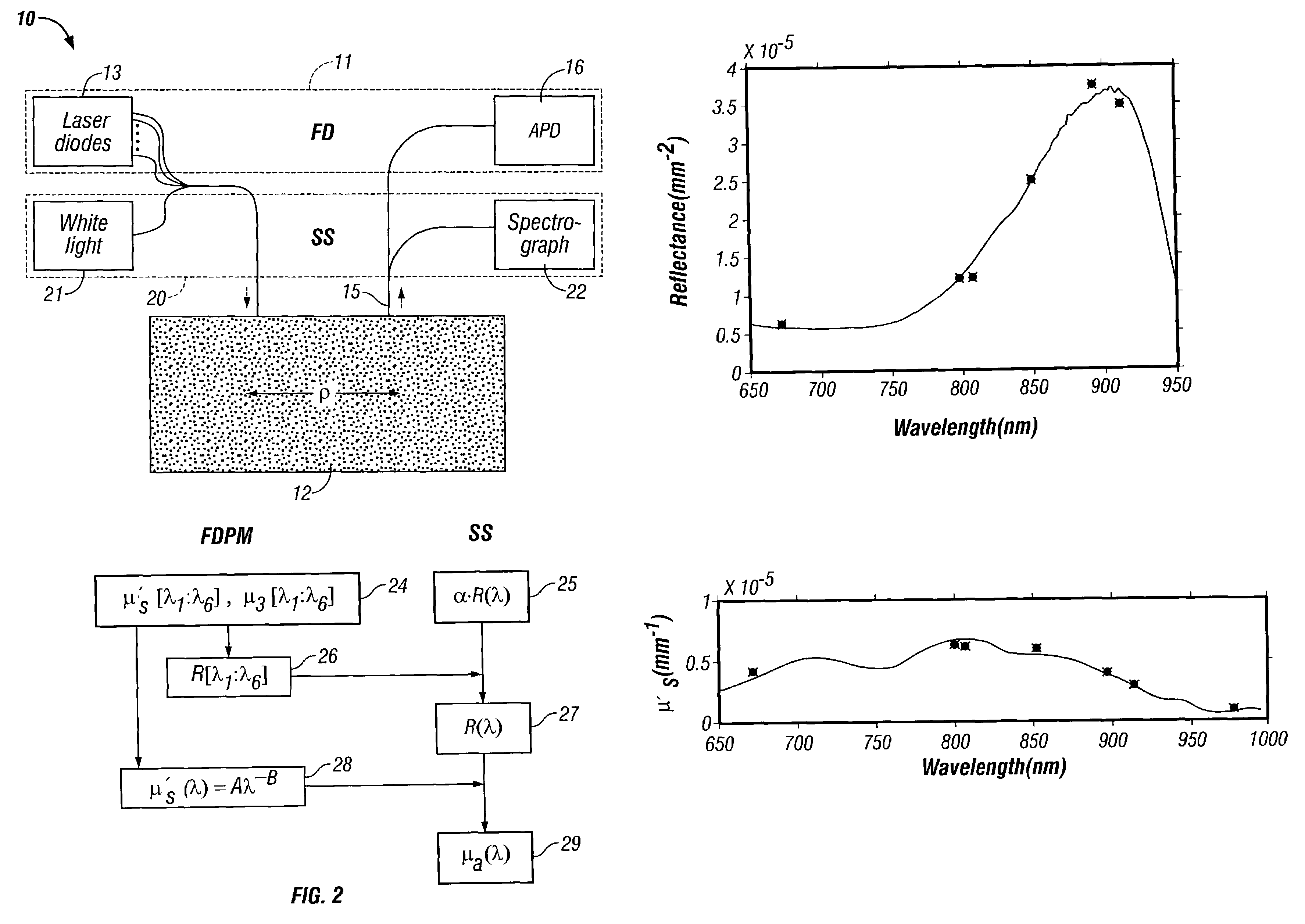
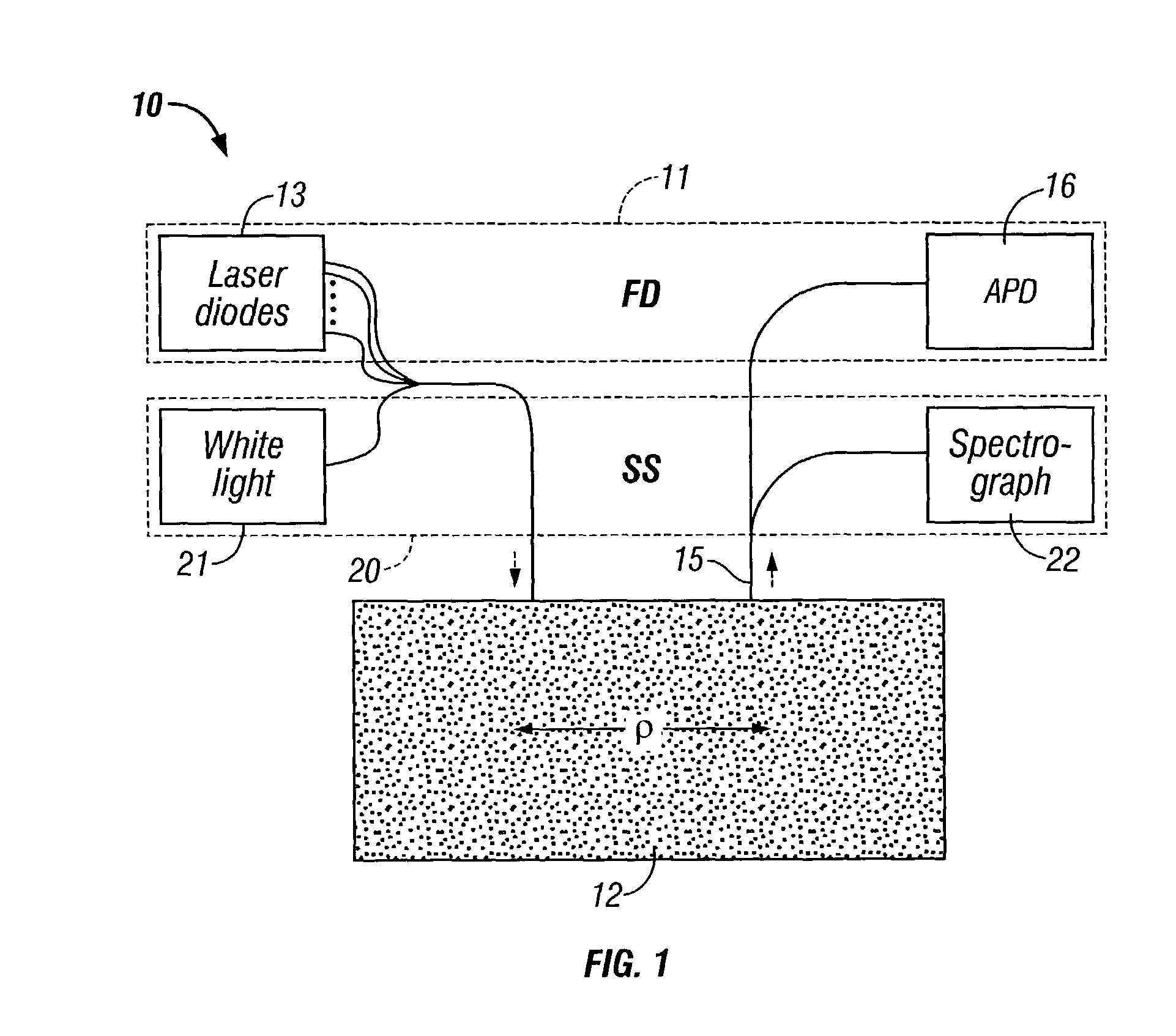
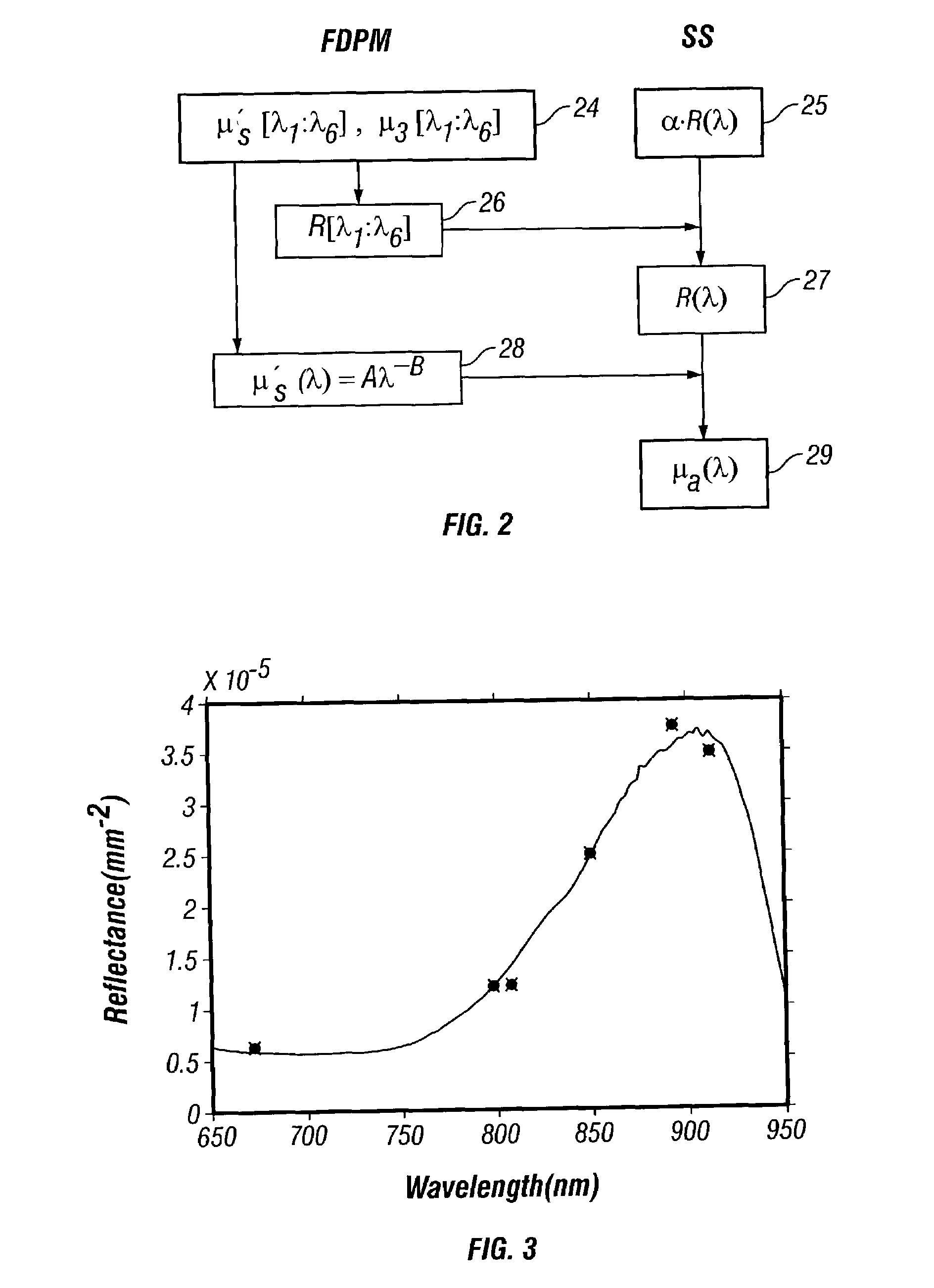
- Combining frequency-domain photon migration measurements with steady-state reflectance measurements to obtain a unique spectrum for turbid media, using a system with multiple laser diodes for frequency-domain measurements and a white light source for steady-state measurements, allowing for broad wavelength coverage and increased penetration depth.

EMC Standards and Regulatory Framework
The electromagnetic compatibility (EMC) regulatory landscape establishes comprehensive frameworks governing both absorption and reflection measurement methodologies for electromagnetic interference mitigation. International standards organizations, including the International Electrotechnical Commission (IEC), Federal Communications Commission (FCC), and European Telecommunications Standards Institute (ETSI), have developed specific protocols that differentiate between absorptive and reflective electromagnetic management techniques.
IEC 61000 series standards provide fundamental guidelines for electromagnetic absorption measurements, particularly focusing on specific absorption rate (SAR) testing protocols and material characterization procedures. These standards mandate precise measurement environments, including anechoic chamber specifications and calibrated field probe requirements. The regulatory framework emphasizes quantitative metrics such as absorption cross-section values and material loss tangent measurements, establishing minimum performance thresholds for electromagnetic absorbing materials.
Reflective technique regulations operate under different parametric frameworks, primarily governed by IEEE 299 and ASTM D4935 standards. These regulations focus on shielding effectiveness measurements, reflection loss coefficients, and surface impedance characteristics. The regulatory approach for reflective techniques emphasizes frequency-dependent performance metrics and requires standardized measurement distances and incident angle specifications.
Regional regulatory variations significantly impact implementation strategies for both absorption and reflection techniques. European CE marking requirements under EMC Directive 2014/30/EU establish specific testing protocols that favor absorption-based solutions in certain frequency ranges, while FCC Part 15 regulations in North America provide more flexibility in choosing between absorptive and reflective approaches based on application-specific requirements.
Compliance testing procedures differ substantially between absorption and reflection methodologies. Absorption testing requires specialized equipment including network analyzers, waveguide systems, and temperature-controlled environments, while reflection testing typically employs simpler setup configurations with emphasis on far-field measurement accuracy. These regulatory distinctions directly influence design decisions and cost considerations for electromagnetic compatibility solutions.
Emerging regulatory trends indicate increasing standardization of hybrid approaches that combine both absorption and reflection techniques, reflecting the industry's movement toward more sophisticated electromagnetic management strategies that optimize performance across broader frequency spectrums while maintaining compliance with evolving international standards.
IEC 61000 series standards provide fundamental guidelines for electromagnetic absorption measurements, particularly focusing on specific absorption rate (SAR) testing protocols and material characterization procedures. These standards mandate precise measurement environments, including anechoic chamber specifications and calibrated field probe requirements. The regulatory framework emphasizes quantitative metrics such as absorption cross-section values and material loss tangent measurements, establishing minimum performance thresholds for electromagnetic absorbing materials.
Reflective technique regulations operate under different parametric frameworks, primarily governed by IEEE 299 and ASTM D4935 standards. These regulations focus on shielding effectiveness measurements, reflection loss coefficients, and surface impedance characteristics. The regulatory approach for reflective techniques emphasizes frequency-dependent performance metrics and requires standardized measurement distances and incident angle specifications.
Regional regulatory variations significantly impact implementation strategies for both absorption and reflection techniques. European CE marking requirements under EMC Directive 2014/30/EU establish specific testing protocols that favor absorption-based solutions in certain frequency ranges, while FCC Part 15 regulations in North America provide more flexibility in choosing between absorptive and reflective approaches based on application-specific requirements.
Compliance testing procedures differ substantially between absorption and reflection methodologies. Absorption testing requires specialized equipment including network analyzers, waveguide systems, and temperature-controlled environments, while reflection testing typically employs simpler setup configurations with emphasis on far-field measurement accuracy. These regulatory distinctions directly influence design decisions and cost considerations for electromagnetic compatibility solutions.
Emerging regulatory trends indicate increasing standardization of hybrid approaches that combine both absorption and reflection techniques, reflecting the industry's movement toward more sophisticated electromagnetic management strategies that optimize performance across broader frequency spectrums while maintaining compliance with evolving international standards.
Environmental Impact of EM Absorbing Materials
The environmental implications of electromagnetic absorbing materials represent a critical consideration in the development and deployment of EM absorption technologies. Unlike reflective techniques that primarily redirect electromagnetic energy, absorbing materials convert EM energy into heat through various loss mechanisms, creating distinct environmental challenges throughout their lifecycle.
Manufacturing processes for EM absorbing materials typically involve complex chemical synthesis and high-energy production methods. Carbon-based absorbers, such as carbon nanotubes and graphene composites, require energy-intensive fabrication processes that generate significant carbon footprints. Ferrite-based materials necessitate mining of rare earth elements, contributing to habitat disruption and soil contamination. The production of polymer matrix composites releases volatile organic compounds and requires careful waste management protocols.
Material composition directly influences environmental impact profiles. Traditional absorbing materials often incorporate heavy metals, magnetic particles, and synthetic polymers that pose disposal challenges. Carbonyl iron powders, commonly used in broadband absorbers, can oxidize and release iron compounds into soil and water systems. Conductive polymer composites may leach additives and plasticizers over extended periods, potentially affecting local ecosystems.
End-of-life considerations present significant environmental challenges for EM absorbing materials. The complex multi-component nature of these materials complicates recycling processes, often requiring specialized separation techniques. Thermal decomposition of polymer-based absorbers can release toxic gases, while incineration of metal-filled composites may concentrate heavy metals in ash residues. Current recycling infrastructure lacks adequate capabilities for processing advanced electromagnetic materials.
Emerging bio-based and sustainable alternatives are gaining attention as environmentally conscious solutions. Natural fiber composites incorporating conductive fillers offer biodegradable options with reduced environmental impact. Research into recyclable thermoplastic matrices and water-based processing methods shows promise for minimizing ecological footprints. However, these sustainable alternatives often exhibit performance trade-offs compared to conventional materials.
Regulatory frameworks increasingly address environmental concerns related to EM absorbing materials. Restrictions on hazardous substances drive innovation toward greener formulations, while lifecycle assessment requirements promote comprehensive environmental impact evaluation. Industry adoption of circular economy principles encourages material recovery and reuse strategies, though implementation remains challenging due to technical and economic constraints.
Manufacturing processes for EM absorbing materials typically involve complex chemical synthesis and high-energy production methods. Carbon-based absorbers, such as carbon nanotubes and graphene composites, require energy-intensive fabrication processes that generate significant carbon footprints. Ferrite-based materials necessitate mining of rare earth elements, contributing to habitat disruption and soil contamination. The production of polymer matrix composites releases volatile organic compounds and requires careful waste management protocols.
Material composition directly influences environmental impact profiles. Traditional absorbing materials often incorporate heavy metals, magnetic particles, and synthetic polymers that pose disposal challenges. Carbonyl iron powders, commonly used in broadband absorbers, can oxidize and release iron compounds into soil and water systems. Conductive polymer composites may leach additives and plasticizers over extended periods, potentially affecting local ecosystems.
End-of-life considerations present significant environmental challenges for EM absorbing materials. The complex multi-component nature of these materials complicates recycling processes, often requiring specialized separation techniques. Thermal decomposition of polymer-based absorbers can release toxic gases, while incineration of metal-filled composites may concentrate heavy metals in ash residues. Current recycling infrastructure lacks adequate capabilities for processing advanced electromagnetic materials.
Emerging bio-based and sustainable alternatives are gaining attention as environmentally conscious solutions. Natural fiber composites incorporating conductive fillers offer biodegradable options with reduced environmental impact. Research into recyclable thermoplastic matrices and water-based processing methods shows promise for minimizing ecological footprints. However, these sustainable alternatives often exhibit performance trade-offs compared to conventional materials.
Regulatory frameworks increasingly address environmental concerns related to EM absorbing materials. Restrictions on hazardous substances drive innovation toward greener formulations, while lifecycle assessment requirements promote comprehensive environmental impact evaluation. Industry adoption of circular economy principles encourages material recovery and reuse strategies, though implementation remains challenging due to technical and economic constraints.
Unlock deeper insights with PatSnap Eureka Quick Research — get a full tech report to explore trends and direct your research. Try now!
Generate Your Research Report Instantly with AI Agent
Supercharge your innovation with PatSnap Eureka AI Agent Platform!