

How to Measure Nitrogenous Base Pairing Kinetics
MAR 5, 20268 MIN READ
Generate Your Research Report Instantly with AI Agent
PatSnap Eureka helps you evaluate technical feasibility & market potential.
Nitrogenous Base Pairing Background and Research Objectives
Nitrogenous base pairing represents one of the most fundamental molecular recognition processes in biological systems, serving as the cornerstone of DNA double helix stability and RNA secondary structure formation. The complementary hydrogen bonding between adenine-thymine (A-T) and guanine-cytosine (G-C) pairs in DNA, along with adenine-uracil (A-U) pairing in RNA, governs critical cellular processes including DNA replication, transcription, and translation. Understanding the kinetic parameters of these interactions has evolved from early thermodynamic studies in the 1960s to sophisticated real-time monitoring techniques today.
The historical development of base pairing kinetics research began with melting temperature studies and equilibrium binding assays, which provided initial insights into the stability of nucleic acid duplexes. However, these approaches offered limited information about the dynamic aspects of base pair formation and dissociation. The advent of stopped-flow spectroscopy and temperature-jump relaxation methods in the 1970s marked the first successful attempts to measure association and dissociation rate constants directly.
Modern technological advances have revolutionized the field through the introduction of single-molecule techniques, surface plasmon resonance, and fluorescence-based real-time monitoring systems. These developments have enabled researchers to observe base pairing events with unprecedented temporal resolution, revealing the complex multi-step nature of nucleic acid hybridization processes that were previously masked in ensemble measurements.
The primary research objectives in measuring nitrogenous base pairing kinetics center on quantifying the fundamental rate constants governing association (kon) and dissociation (koff) processes under physiologically relevant conditions. These measurements aim to elucidate how factors such as ionic strength, temperature, pH, and sequence context influence the kinetic pathways of duplex formation and melting.
Contemporary research goals extend beyond simple bimolecular association kinetics to encompass the measurement of intermediate states, cooperative effects in longer sequences, and the role of secondary structure elements in modulating pairing rates. Understanding these kinetic parameters is essential for advancing applications in molecular diagnostics, therapeutic oligonucleotide design, and the development of nucleic acid-based nanotechnology platforms where precise control over hybridization kinetics is crucial for optimal performance.
The historical development of base pairing kinetics research began with melting temperature studies and equilibrium binding assays, which provided initial insights into the stability of nucleic acid duplexes. However, these approaches offered limited information about the dynamic aspects of base pair formation and dissociation. The advent of stopped-flow spectroscopy and temperature-jump relaxation methods in the 1970s marked the first successful attempts to measure association and dissociation rate constants directly.
Modern technological advances have revolutionized the field through the introduction of single-molecule techniques, surface plasmon resonance, and fluorescence-based real-time monitoring systems. These developments have enabled researchers to observe base pairing events with unprecedented temporal resolution, revealing the complex multi-step nature of nucleic acid hybridization processes that were previously masked in ensemble measurements.
The primary research objectives in measuring nitrogenous base pairing kinetics center on quantifying the fundamental rate constants governing association (kon) and dissociation (koff) processes under physiologically relevant conditions. These measurements aim to elucidate how factors such as ionic strength, temperature, pH, and sequence context influence the kinetic pathways of duplex formation and melting.
Contemporary research goals extend beyond simple bimolecular association kinetics to encompass the measurement of intermediate states, cooperative effects in longer sequences, and the role of secondary structure elements in modulating pairing rates. Understanding these kinetic parameters is essential for advancing applications in molecular diagnostics, therapeutic oligonucleotide design, and the development of nucleic acid-based nanotechnology platforms where precise control over hybridization kinetics is crucial for optimal performance.
Market Demand for Base Pairing Kinetics Measurement
The pharmaceutical and biotechnology industries represent the primary drivers of market demand for nitrogenous base pairing kinetics measurement technologies. Drug discovery processes increasingly rely on understanding nucleic acid interactions, particularly in the development of antisense oligonucleotides, siRNA therapeutics, and CRISPR-based gene editing tools. These applications require precise kinetic measurements to optimize therapeutic efficacy and minimize off-target effects.
Academic research institutions constitute another significant market segment, with molecular biology, biochemistry, and biophysics laboratories requiring advanced instrumentation for fundamental research. The growing emphasis on personalized medicine and genomics research has amplified demand for high-throughput screening capabilities that can measure base pairing kinetics across multiple targets simultaneously.
The diagnostics sector presents substantial growth opportunities, particularly in the development of rapid nucleic acid detection systems. Point-of-care diagnostic devices increasingly incorporate kinetic measurements to improve specificity and reduce false positive rates. The recent expansion of molecular diagnostics, accelerated by pandemic-driven testing requirements, has created sustained demand for more sophisticated measurement technologies.
Emerging applications in synthetic biology and DNA nanotechnology are generating new market segments. Companies developing DNA-based data storage systems, molecular computing platforms, and programmable biological circuits require precise kinetic characterization tools to ensure reliable performance of their engineered systems.
The market exhibits strong geographic concentration in North America and Europe, driven by established pharmaceutical industries and well-funded research institutions. However, rapid growth is occurring in Asia-Pacific regions, particularly in China and South Korea, where significant investments in biotechnology infrastructure are creating new demand centers.
Current market trends indicate increasing preference for real-time measurement capabilities, multiplexed analysis platforms, and integration with automated laboratory systems. The demand for portable and cost-effective solutions is growing, particularly for field applications and resource-limited settings. Additionally, there is rising interest in single-molecule measurement techniques that can provide unprecedented insights into individual base pairing events.
Academic research institutions constitute another significant market segment, with molecular biology, biochemistry, and biophysics laboratories requiring advanced instrumentation for fundamental research. The growing emphasis on personalized medicine and genomics research has amplified demand for high-throughput screening capabilities that can measure base pairing kinetics across multiple targets simultaneously.
The diagnostics sector presents substantial growth opportunities, particularly in the development of rapid nucleic acid detection systems. Point-of-care diagnostic devices increasingly incorporate kinetic measurements to improve specificity and reduce false positive rates. The recent expansion of molecular diagnostics, accelerated by pandemic-driven testing requirements, has created sustained demand for more sophisticated measurement technologies.
Emerging applications in synthetic biology and DNA nanotechnology are generating new market segments. Companies developing DNA-based data storage systems, molecular computing platforms, and programmable biological circuits require precise kinetic characterization tools to ensure reliable performance of their engineered systems.
The market exhibits strong geographic concentration in North America and Europe, driven by established pharmaceutical industries and well-funded research institutions. However, rapid growth is occurring in Asia-Pacific regions, particularly in China and South Korea, where significant investments in biotechnology infrastructure are creating new demand centers.
Current market trends indicate increasing preference for real-time measurement capabilities, multiplexed analysis platforms, and integration with automated laboratory systems. The demand for portable and cost-effective solutions is growing, particularly for field applications and resource-limited settings. Additionally, there is rising interest in single-molecule measurement techniques that can provide unprecedented insights into individual base pairing events.
Current State and Challenges in Base Pairing Kinetics
The measurement of nitrogenous base pairing kinetics has emerged as a critical frontier in molecular biology, yet significant technological and methodological barriers continue to impede comprehensive understanding of these fundamental processes. Current experimental approaches face substantial limitations in temporal resolution, with conventional techniques struggling to capture the rapid association and dissociation events that occur on microsecond to millisecond timescales.
Single-molecule fluorescence spectroscopy represents the most advanced current methodology, utilizing FRET-based detection systems to monitor individual base pairing events. However, these systems are constrained by photobleaching effects, limited observation windows, and the requirement for fluorophore labeling that may alter natural binding kinetics. The spatial resolution remains insufficient to distinguish between different binding conformations, particularly for transient intermediate states.
Temperature-jump relaxation techniques, while providing excellent temporal resolution, suffer from ensemble averaging effects that mask the heterogeneity inherent in biological systems. The method requires high concentrations of nucleic acids, potentially introducing artifacts from intermolecular interactions and secondary structure formation that do not reflect physiological conditions.
Surface plasmon resonance and isothermal titration calorimetry offer thermodynamic insights but lack the kinetic resolution necessary for capturing fast binding events. These techniques also require relatively large sample volumes and cannot easily distinguish between specific base pairing and non-specific interactions, particularly in complex sequence contexts.
A major challenge lies in the environmental sensitivity of base pairing kinetics. Ionic strength, pH, temperature, and the presence of proteins or other cellular components dramatically influence binding rates, yet most current measurement systems cannot adequately control or replicate physiological conditions while maintaining measurement precision.
The interpretation of kinetic data presents additional complications. Existing analytical frameworks often assume simple two-state binding models, which inadequately describe the multi-step processes involving conformational changes, hydration effects, and cooperative binding phenomena. The lack of standardized protocols across different measurement platforms further complicates cross-study comparisons and limits the development of comprehensive kinetic databases.
Computational limitations also constrain progress, as molecular dynamics simulations capable of capturing base pairing events require extensive computational resources and often rely on simplified force fields that may not accurately represent the complex electrostatic and van der Waals interactions governing base pair stability and formation kinetics.
Single-molecule fluorescence spectroscopy represents the most advanced current methodology, utilizing FRET-based detection systems to monitor individual base pairing events. However, these systems are constrained by photobleaching effects, limited observation windows, and the requirement for fluorophore labeling that may alter natural binding kinetics. The spatial resolution remains insufficient to distinguish between different binding conformations, particularly for transient intermediate states.
Temperature-jump relaxation techniques, while providing excellent temporal resolution, suffer from ensemble averaging effects that mask the heterogeneity inherent in biological systems. The method requires high concentrations of nucleic acids, potentially introducing artifacts from intermolecular interactions and secondary structure formation that do not reflect physiological conditions.
Surface plasmon resonance and isothermal titration calorimetry offer thermodynamic insights but lack the kinetic resolution necessary for capturing fast binding events. These techniques also require relatively large sample volumes and cannot easily distinguish between specific base pairing and non-specific interactions, particularly in complex sequence contexts.
A major challenge lies in the environmental sensitivity of base pairing kinetics. Ionic strength, pH, temperature, and the presence of proteins or other cellular components dramatically influence binding rates, yet most current measurement systems cannot adequately control or replicate physiological conditions while maintaining measurement precision.
The interpretation of kinetic data presents additional complications. Existing analytical frameworks often assume simple two-state binding models, which inadequately describe the multi-step processes involving conformational changes, hydration effects, and cooperative binding phenomena. The lack of standardized protocols across different measurement platforms further complicates cross-study comparisons and limits the development of comprehensive kinetic databases.
Computational limitations also constrain progress, as molecular dynamics simulations capable of capturing base pairing events require extensive computational resources and often rely on simplified force fields that may not accurately represent the complex electrostatic and van der Waals interactions governing base pair stability and formation kinetics.
Existing Methods for Base Pairing Kinetics Analysis
01 Methods for measuring nucleic acid hybridization kinetics
Techniques and apparatus for monitoring the kinetics of nitrogenous base pairing through real-time detection of hybridization events. These methods involve measuring the rate at which complementary nucleic acid strands associate and dissociate, providing quantitative data on binding affinity and specificity. Various detection systems including optical, electrochemical, and fluorescence-based approaches are employed to track the temporal dynamics of base pairing interactions.- Methods for measuring nucleic acid hybridization kinetics: Techniques and apparatus for monitoring the kinetics of nitrogenous base pairing through real-time detection of hybridization events. These methods involve measuring the rate at which complementary nucleic acid strands associate and dissociate, providing quantitative data on binding affinity and specificity. Various detection systems including optical, electrochemical, and fluorescence-based approaches are employed to track the temporal dynamics of base pairing interactions.
- Modified nucleotides with altered pairing kinetics: Development of synthetic nucleotide analogs and modified bases that exhibit different hybridization rates compared to natural nucleotides. These modifications can include chemical alterations to the sugar-phosphate backbone or base structures that affect the thermodynamics and kinetics of base pairing. Such modifications are designed to enhance or reduce the rate of strand association and dissociation for specific applications in diagnostics and therapeutics.
- Kinetic analysis for nucleic acid detection and sequencing: Application of base pairing kinetics in nucleic acid detection platforms and sequencing technologies. These approaches utilize the differential rates of hybridization to distinguish between perfectly matched and mismatched sequences, enabling high-specificity detection. Kinetic measurements provide additional discrimination power beyond equilibrium-based methods, improving accuracy in identifying target sequences and detecting single nucleotide variations.
- Temperature-dependent base pairing dynamics: Investigation of how temperature influences the kinetics of nitrogenous base pairing, including melting and annealing rates. Studies focus on the thermal stability of different base pair combinations and how temperature cycling affects the rate constants for association and dissociation. This knowledge is applied in optimizing polymerase chain reaction conditions, probe design, and thermal denaturation analysis for characterizing nucleic acid structures.
- Computational modeling of base pairing kinetics: Development of theoretical models and simulation tools to predict the kinetic behavior of nucleic acid hybridization. These computational approaches incorporate thermodynamic parameters, structural constraints, and environmental factors to estimate rate constants for base pairing reactions. Modeling efforts support the design of oligonucleotides with desired kinetic properties and help interpret experimental kinetic data in complex biological systems.
02 Modified nucleotides with altered pairing kinetics
Development of synthetic nucleotide analogs and modified bases that exhibit different hybridization rates compared to natural bases. These modifications can include chemical alterations to the base structure, sugar moiety, or backbone that affect the thermodynamics and kinetics of base pairing. Such modifications are designed to enhance or reduce binding rates for specific applications in diagnostics and therapeutics.Expand Specific Solutions03 Kinetic discrimination in nucleic acid detection
Approaches that exploit differences in base pairing kinetics to distinguish between perfectly matched and mismatched sequences. These methods utilize the differential association and dissociation rates of complementary versus non-complementary sequences to achieve high specificity in nucleic acid detection. Applications include single nucleotide polymorphism detection and mutation analysis where kinetic parameters serve as discriminating factors.Expand Specific Solutions04 Temperature-dependent base pairing kinetics
Investigation of how temperature affects the rates of nucleic acid hybridization and dissociation. These studies characterize the thermal dependence of base pairing kinetics to optimize conditions for various molecular biology applications. Understanding temperature effects on kinetic parameters enables improved design of amplification reactions, hybridization assays, and melting curve analyses.Expand Specific Solutions05 Computational modeling of base pairing dynamics
Theoretical and computational approaches to predict and simulate the kinetics of nitrogenous base pairing interactions. These models incorporate thermodynamic parameters, structural constraints, and environmental factors to calculate association and dissociation rate constants. Such predictive tools aid in the design of oligonucleotides with desired kinetic properties for research and clinical applications.Expand Specific Solutions
Key Players in Molecular Biology Instrumentation Industry
The nitrogenous base pairing kinetics measurement field represents an emerging biotechnology sector experiencing rapid growth driven by advances in molecular diagnostics and genomic research. The market demonstrates significant expansion potential, particularly in pharmaceutical development and personalized medicine applications. Technology maturity varies considerably across different measurement approaches, with established players like QIAGEN GmbH and Cytiva Sweden AB offering mature commercial solutions, while specialized companies such as InSilixa and Silicon Kinetics are developing innovative semiconductor-based and label-free detection platforms. Academic institutions including Boston University, Indian Institute of Science, and Tongji University contribute fundamental research advancing measurement methodologies. The competitive landscape features a mix of large biotechnology corporations, specialized instrumentation companies, and research institutions, indicating a dynamic ecosystem where traditional biochemical approaches coexist with emerging nanotechnology and microfluidics solutions, suggesting the field is transitioning from early development to commercial maturity.
MENON BIOSENSORS, INC.
Technical Solution: MENON BIOSENSORS has developed electrochemical biosensor technology specifically designed for measuring nucleic acid base pairing kinetics in real-time. Their platform utilizes modified electrodes with immobilized DNA probes to detect complementary strand binding through changes in electrical conductivity and impedance. The system measures association and dissociation kinetics of base pairing events with high temporal resolution, enabling analysis of binding rates, stability constants, and thermodynamic parameters. Their technology supports analysis of various nucleotide sequences, including detection of single nucleotide polymorphisms and measurement of mismatch effects on pairing kinetics, providing valuable insights for genetic analysis and diagnostic applications.
Strengths: Electrochemical detection offers high sensitivity, cost-effective platform, suitable for point-of-care applications. Weaknesses: Limited to surface-based measurements, potential interference from solution conditions, requires electrode functionalization expertise.
InSilixa, Inc.
Technical Solution: InSilixa has developed innovative single-molecule sequencing technology that enables real-time measurement of DNA base pairing kinetics. Their platform utilizes advanced optical detection systems combined with proprietary enzymes to monitor individual nucleotide incorporation events during DNA synthesis. The technology captures kinetic parameters including association rates, dissociation rates, and binding affinities of complementary base pairs through high-resolution temporal analysis. Their system provides millisecond-level resolution for measuring Watson-Crick base pairing dynamics, allowing researchers to study both canonical and non-canonical base pair formations under various environmental conditions.
Strengths: High temporal resolution, single-molecule sensitivity, real-time monitoring capabilities. Weaknesses: Limited throughput compared to ensemble methods, requires specialized equipment and expertise.
Core Technologies in Real-time Base Pairing Detection
Detection of nucleic acids using a cantilever sensor
PatentInactiveUS20140045178A1
Innovation
- The use of cantilever sensors, specifically piezoelectric cantilever sensors, which detect target nucleic acids via binding to immobilized probe materials on their surface, allowing for sensitive detection without labeling or purification, and can identify pathogens directly in complex solutions like bodily fluids or food preparations.


Method for producing improved nucleic acid oligomer functional homogeneity and functional characteristic information and results and oligomer application results
PatentInactiveUS20070072201A1
Innovation
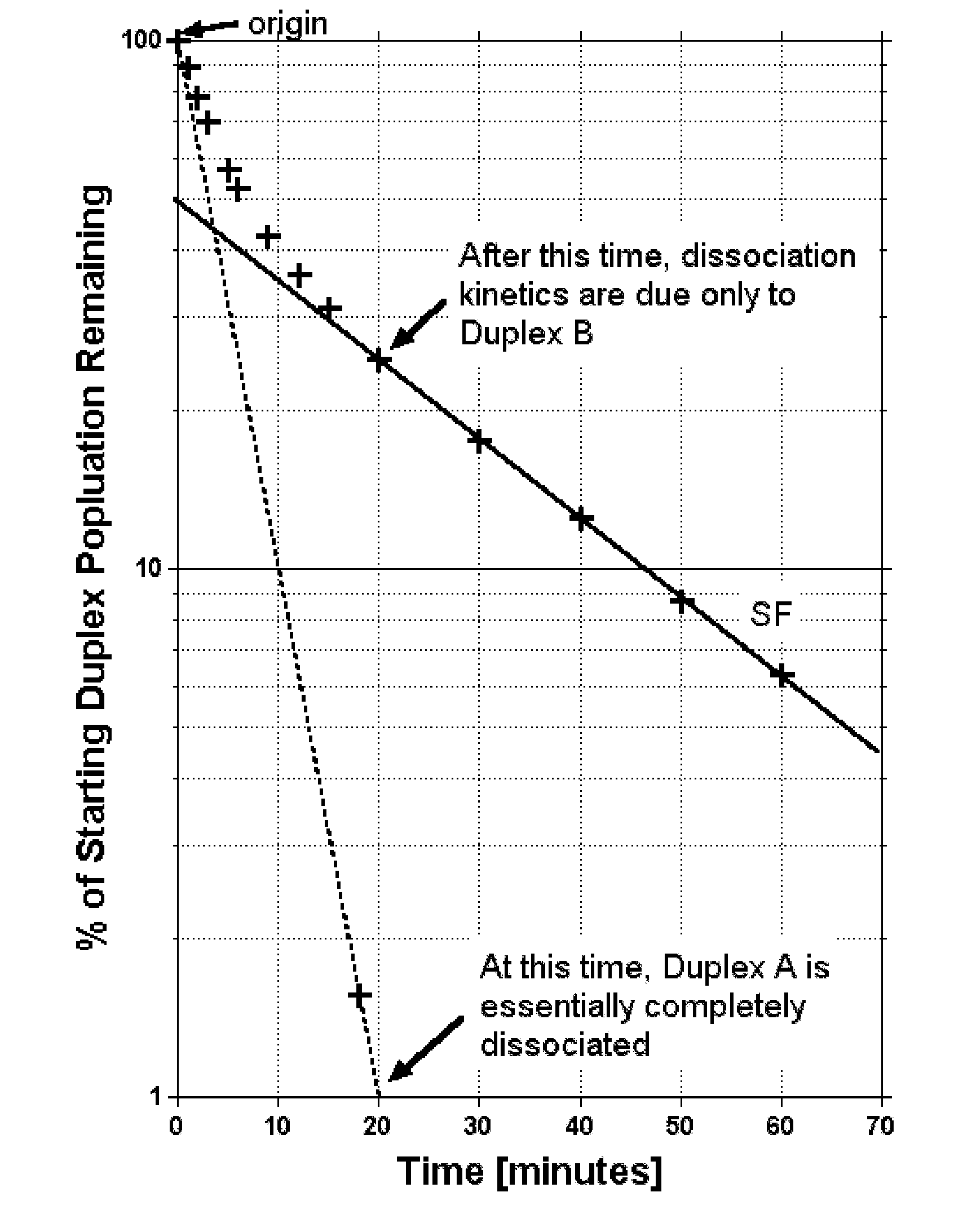
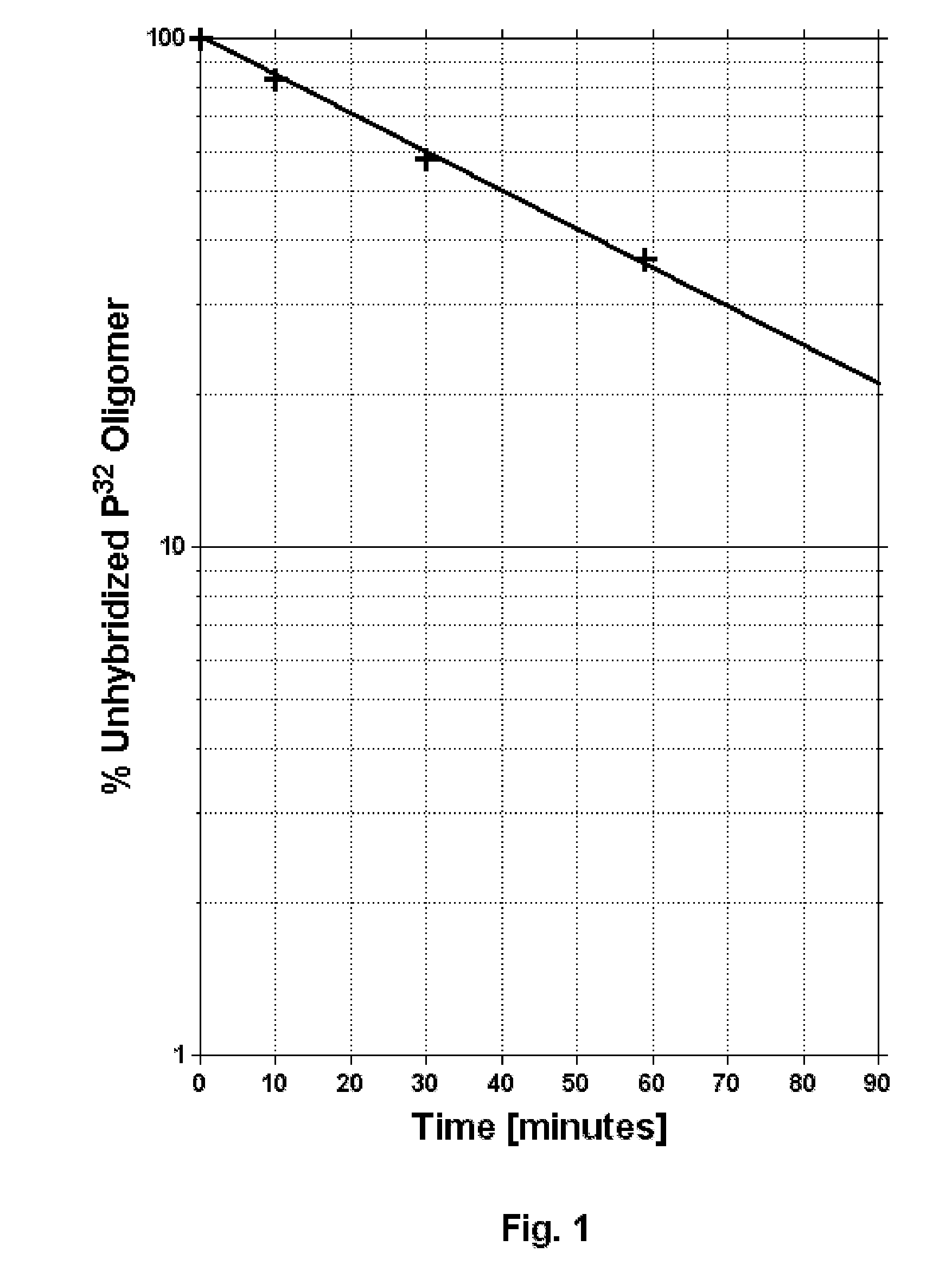
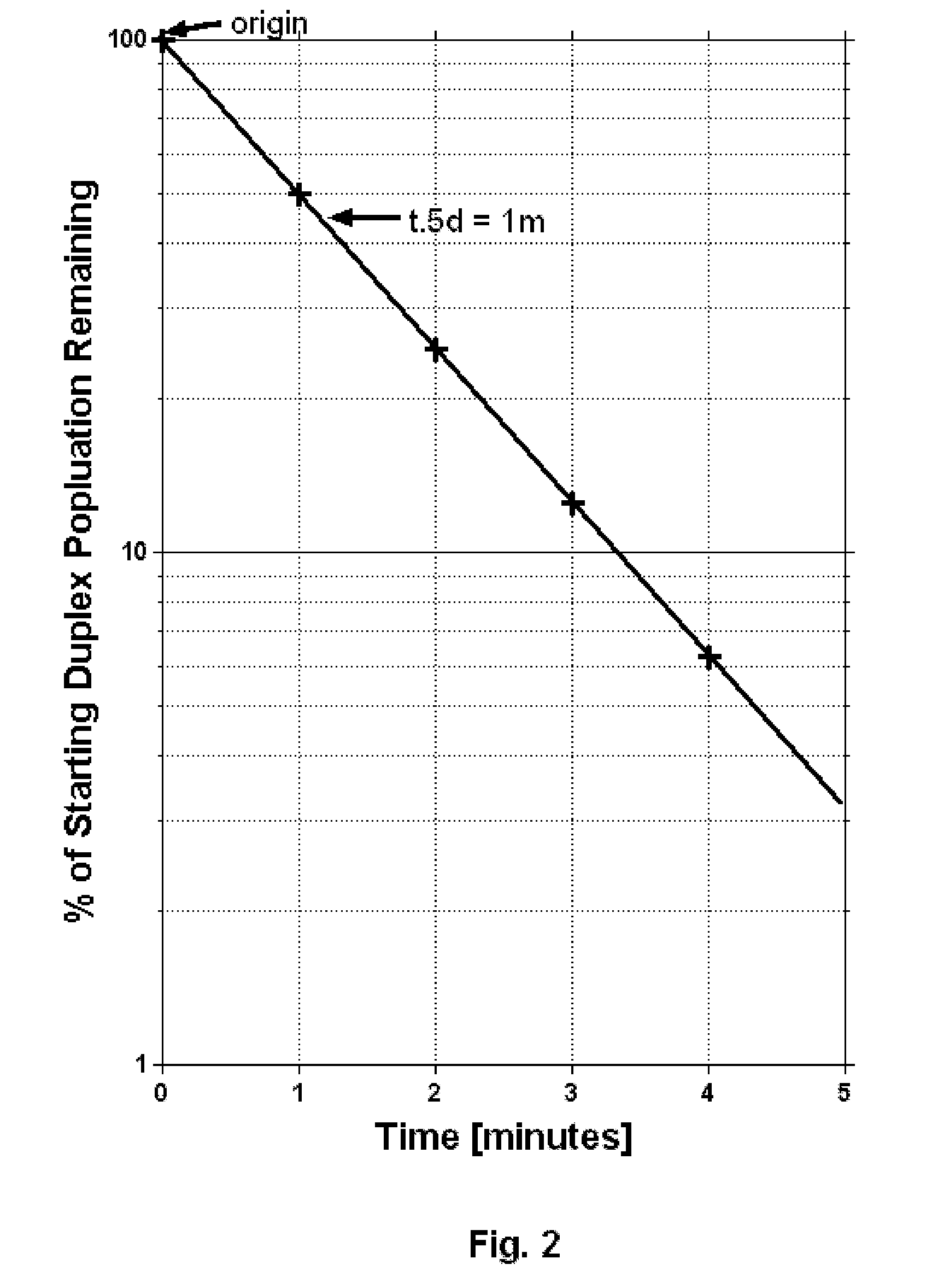
- Developing methods to determine and improve the functional homogeneity and characteristics of oligomer preparations by assessing parameters such as hybridization kinetics, dissociation profiles, and nucleotide sequence damage, allowing for the production of oligomers with enhanced specificity and stability for targeted applications.

Standardization Requirements for Kinetics Measurement
The establishment of standardized protocols for measuring nitrogenous base pairing kinetics represents a critical requirement for advancing research reproducibility and enabling meaningful cross-laboratory comparisons. Current measurement approaches exhibit significant variability in experimental conditions, data collection methods, and analysis protocols, leading to inconsistent results that hinder scientific progress and technology development.
Standardization efforts must address fundamental measurement parameters including temperature control precision, buffer composition specifications, and ionic strength requirements. Temperature regulation within ±0.1°C is essential given the exponential relationship between temperature and kinetic rate constants. Buffer systems require standardized pH ranges and ionic compositions to ensure consistent electrostatic environments that directly influence base pairing dynamics.
Instrumentation standardization encompasses calibration procedures, detection sensitivity thresholds, and temporal resolution requirements. Spectroscopic methods demand standardized wavelength selections, optical path lengths, and baseline correction protocols. Single-molecule techniques require consistent force calibration standards and drift correction methodologies to ensure measurement accuracy across different experimental setups.
Data acquisition protocols must specify minimum sampling rates, signal-to-noise ratio requirements, and statistical significance thresholds. Standardized data formats and metadata requirements facilitate automated analysis and cross-platform compatibility. Quality control metrics including control experiments, reference standards, and validation procedures ensure measurement reliability and traceability.
International coordination through organizations such as the International Union of Pure and Applied Chemistry and the International Organization for Standardization provides frameworks for developing consensus standards. These standards must accommodate emerging measurement technologies while maintaining backward compatibility with established methodologies.
Implementation challenges include cost considerations for upgrading existing equipment, training requirements for personnel, and validation timelines for new protocols. Successful standardization requires phased implementation approaches that balance scientific rigor with practical feasibility constraints across diverse research environments.
Standardization efforts must address fundamental measurement parameters including temperature control precision, buffer composition specifications, and ionic strength requirements. Temperature regulation within ±0.1°C is essential given the exponential relationship between temperature and kinetic rate constants. Buffer systems require standardized pH ranges and ionic compositions to ensure consistent electrostatic environments that directly influence base pairing dynamics.
Instrumentation standardization encompasses calibration procedures, detection sensitivity thresholds, and temporal resolution requirements. Spectroscopic methods demand standardized wavelength selections, optical path lengths, and baseline correction protocols. Single-molecule techniques require consistent force calibration standards and drift correction methodologies to ensure measurement accuracy across different experimental setups.
Data acquisition protocols must specify minimum sampling rates, signal-to-noise ratio requirements, and statistical significance thresholds. Standardized data formats and metadata requirements facilitate automated analysis and cross-platform compatibility. Quality control metrics including control experiments, reference standards, and validation procedures ensure measurement reliability and traceability.
International coordination through organizations such as the International Union of Pure and Applied Chemistry and the International Organization for Standardization provides frameworks for developing consensus standards. These standards must accommodate emerging measurement technologies while maintaining backward compatibility with established methodologies.
Implementation challenges include cost considerations for upgrading existing equipment, training requirements for personnel, and validation timelines for new protocols. Successful standardization requires phased implementation approaches that balance scientific rigor with practical feasibility constraints across diverse research environments.
Applications in Drug Discovery and Genetic Research
The measurement of nitrogenous base pairing kinetics has emerged as a transformative tool in drug discovery, fundamentally altering how pharmaceutical researchers approach target identification and therapeutic development. By quantifying the dynamic interactions between complementary DNA and RNA bases, scientists can now evaluate drug-target binding affinities with unprecedented precision. This capability enables the development of antisense oligonucleotides, small interfering RNAs, and other nucleic acid-based therapeutics that rely on specific base pairing interactions to modulate gene expression.
In oncology drug development, base pairing kinetics measurements facilitate the design of targeted therapies that can selectively bind to mutated DNA sequences or aberrantly expressed RNA transcripts. Researchers utilize these kinetic parameters to optimize the binding strength and specificity of therapeutic oligonucleotides, ensuring they effectively silence oncogenes while minimizing off-target effects. The ability to measure association and dissociation rates has proven particularly valuable in developing personalized cancer treatments tailored to specific genetic mutations.
Genetic research applications have been revolutionized through precise kinetic measurements that enable deeper understanding of fundamental biological processes. Researchers can now quantify the stability of DNA double helices under various physiological conditions, providing insights into genetic stability, mutation rates, and evolutionary mechanisms. This information proves crucial for understanding hereditary diseases and developing gene therapy approaches.
The technology has significantly advanced CRISPR-Cas9 system optimization by allowing researchers to measure guide RNA-target DNA binding kinetics. These measurements help predict and improve the accuracy of gene editing procedures, reducing unwanted off-target modifications. Additionally, base pairing kinetics data supports the development of more efficient delivery systems for genetic therapies.
In pharmacogenomics, kinetic measurements enable researchers to understand how genetic variations affect drug metabolism and efficacy. By analyzing the binding kinetics between drug molecules and their genetic targets, pharmaceutical companies can develop more effective dosing strategies and identify patient populations most likely to benefit from specific treatments, ultimately advancing the field of precision medicine.
In oncology drug development, base pairing kinetics measurements facilitate the design of targeted therapies that can selectively bind to mutated DNA sequences or aberrantly expressed RNA transcripts. Researchers utilize these kinetic parameters to optimize the binding strength and specificity of therapeutic oligonucleotides, ensuring they effectively silence oncogenes while minimizing off-target effects. The ability to measure association and dissociation rates has proven particularly valuable in developing personalized cancer treatments tailored to specific genetic mutations.
Genetic research applications have been revolutionized through precise kinetic measurements that enable deeper understanding of fundamental biological processes. Researchers can now quantify the stability of DNA double helices under various physiological conditions, providing insights into genetic stability, mutation rates, and evolutionary mechanisms. This information proves crucial for understanding hereditary diseases and developing gene therapy approaches.
The technology has significantly advanced CRISPR-Cas9 system optimization by allowing researchers to measure guide RNA-target DNA binding kinetics. These measurements help predict and improve the accuracy of gene editing procedures, reducing unwanted off-target modifications. Additionally, base pairing kinetics data supports the development of more efficient delivery systems for genetic therapies.
In pharmacogenomics, kinetic measurements enable researchers to understand how genetic variations affect drug metabolism and efficacy. By analyzing the binding kinetics between drug molecules and their genetic targets, pharmaceutical companies can develop more effective dosing strategies and identify patient populations most likely to benefit from specific treatments, ultimately advancing the field of precision medicine.
Unlock deeper insights with PatSnap Eureka Quick Research — get a full tech report to explore trends and direct your research. Try now!
Generate Your Research Report Instantly with AI Agent
Supercharge your innovation with PatSnap Eureka AI Agent Platform!