

How to Optimize Resource Allocation in Disaggregated Memory Networks
MAY 12, 20269 MIN READ
Generate Your Research Report Instantly with AI Agent
Patsnap Eureka helps you evaluate technical feasibility & market potential.
Disaggregated Memory Evolution and Optimization Goals
Disaggregated memory architecture represents a fundamental paradigm shift from traditional server-centric computing models to resource-centric designs. This evolution began in the early 2010s when data centers faced increasing challenges with memory utilization inefficiencies, where individual servers often experienced memory stranding while others suffered from memory shortages. The concept emerged from the recognition that tightly coupled compute and memory resources in conventional architectures led to suboptimal resource utilization and limited scalability.
The historical development of disaggregated memory can be traced through several key phases. Initially, virtualization technologies provided basic resource abstraction, followed by the introduction of memory pooling concepts in high-performance computing environments. The advent of high-speed interconnects such as InfiniBand and later RDMA-enabled Ethernet created the technical foundation for practical memory disaggregation implementations.
Modern disaggregated memory networks aim to achieve several critical optimization objectives. Resource utilization efficiency stands as the primary goal, targeting memory utilization rates exceeding 85% compared to traditional architectures that typically achieve only 50-60% efficiency. This improvement directly translates to significant cost reductions in large-scale deployments where memory represents a substantial portion of infrastructure investment.
Performance optimization constitutes another fundamental objective, focusing on minimizing access latency while maintaining bandwidth scalability. Current targets include achieving sub-microsecond access times for remote memory operations and supporting aggregate bandwidths that scale linearly with network capacity. These performance goals must be balanced against the inherent trade-offs introduced by network-based memory access patterns.
Elasticity and dynamic resource allocation represent increasingly important objectives as workloads become more diverse and unpredictable. The system must support real-time memory provisioning and de-provisioning without service interruption, enabling automatic scaling based on application demands. This capability is particularly crucial for cloud environments where resource requirements fluctuate significantly.
Fault tolerance and reliability objectives ensure that memory disaggregation does not compromise system availability. The architecture must provide transparent failover mechanisms and maintain data consistency across distributed memory pools, achieving availability levels comparable to or exceeding traditional systems while operating in a more complex distributed environment.
The historical development of disaggregated memory can be traced through several key phases. Initially, virtualization technologies provided basic resource abstraction, followed by the introduction of memory pooling concepts in high-performance computing environments. The advent of high-speed interconnects such as InfiniBand and later RDMA-enabled Ethernet created the technical foundation for practical memory disaggregation implementations.
Modern disaggregated memory networks aim to achieve several critical optimization objectives. Resource utilization efficiency stands as the primary goal, targeting memory utilization rates exceeding 85% compared to traditional architectures that typically achieve only 50-60% efficiency. This improvement directly translates to significant cost reductions in large-scale deployments where memory represents a substantial portion of infrastructure investment.
Performance optimization constitutes another fundamental objective, focusing on minimizing access latency while maintaining bandwidth scalability. Current targets include achieving sub-microsecond access times for remote memory operations and supporting aggregate bandwidths that scale linearly with network capacity. These performance goals must be balanced against the inherent trade-offs introduced by network-based memory access patterns.
Elasticity and dynamic resource allocation represent increasingly important objectives as workloads become more diverse and unpredictable. The system must support real-time memory provisioning and de-provisioning without service interruption, enabling automatic scaling based on application demands. This capability is particularly crucial for cloud environments where resource requirements fluctuate significantly.
Fault tolerance and reliability objectives ensure that memory disaggregation does not compromise system availability. The architecture must provide transparent failover mechanisms and maintain data consistency across distributed memory pools, achieving availability levels comparable to or exceeding traditional systems while operating in a more complex distributed environment.
Market Demand for Disaggregated Memory Solutions
The global data center infrastructure market is experiencing unprecedented growth driven by the exponential increase in data generation, cloud computing adoption, and artificial intelligence workloads. Traditional server architectures with tightly coupled compute and memory resources are increasingly unable to meet the dynamic and diverse requirements of modern applications, creating substantial market demand for disaggregated memory solutions.
Enterprise organizations are facing significant challenges with memory utilization inefficiencies in conventional server deployments. Studies indicate that memory resources in typical data centers operate at suboptimal utilization rates, with some servers experiencing memory shortages while others have excess capacity that cannot be shared. This inefficiency translates to substantial capital expenditure waste and operational overhead, driving organizations to seek more flexible memory allocation solutions.
Cloud service providers represent the primary market segment demanding disaggregated memory technologies. These providers require the ability to dynamically allocate memory resources across diverse workloads, from memory-intensive analytics applications to compute-heavy machine learning tasks. The ability to independently scale memory and compute resources enables more efficient resource utilization and improved service delivery capabilities.
The artificial intelligence and machine learning sector constitutes another significant demand driver for disaggregated memory solutions. AI workloads often exhibit highly variable memory requirements during different phases of model training and inference, making traditional fixed memory configurations inefficient. Disaggregated memory architectures enable dynamic memory provisioning that can adapt to changing computational demands in real-time.
High-performance computing environments, including scientific research institutions and financial services organizations, are increasingly adopting disaggregated memory solutions to support memory-intensive applications such as large-scale simulations, real-time analytics, and complex modeling tasks. These environments benefit from the ability to create memory pools that can be shared across multiple compute nodes as needed.
The edge computing market is emerging as a new demand source for disaggregated memory solutions. Edge deployments require efficient resource utilization due to space and power constraints, making the flexibility of disaggregated architectures particularly valuable for optimizing performance within limited infrastructure footprints.
Market demand is further accelerated by the growing adoption of containerized applications and microservices architectures, which require more granular and flexible resource allocation capabilities than traditional monolithic applications can provide through conventional server configurations.
Enterprise organizations are facing significant challenges with memory utilization inefficiencies in conventional server deployments. Studies indicate that memory resources in typical data centers operate at suboptimal utilization rates, with some servers experiencing memory shortages while others have excess capacity that cannot be shared. This inefficiency translates to substantial capital expenditure waste and operational overhead, driving organizations to seek more flexible memory allocation solutions.
Cloud service providers represent the primary market segment demanding disaggregated memory technologies. These providers require the ability to dynamically allocate memory resources across diverse workloads, from memory-intensive analytics applications to compute-heavy machine learning tasks. The ability to independently scale memory and compute resources enables more efficient resource utilization and improved service delivery capabilities.
The artificial intelligence and machine learning sector constitutes another significant demand driver for disaggregated memory solutions. AI workloads often exhibit highly variable memory requirements during different phases of model training and inference, making traditional fixed memory configurations inefficient. Disaggregated memory architectures enable dynamic memory provisioning that can adapt to changing computational demands in real-time.
High-performance computing environments, including scientific research institutions and financial services organizations, are increasingly adopting disaggregated memory solutions to support memory-intensive applications such as large-scale simulations, real-time analytics, and complex modeling tasks. These environments benefit from the ability to create memory pools that can be shared across multiple compute nodes as needed.
The edge computing market is emerging as a new demand source for disaggregated memory solutions. Edge deployments require efficient resource utilization due to space and power constraints, making the flexibility of disaggregated architectures particularly valuable for optimizing performance within limited infrastructure footprints.
Market demand is further accelerated by the growing adoption of containerized applications and microservices architectures, which require more granular and flexible resource allocation capabilities than traditional monolithic applications can provide through conventional server configurations.
Current State of Resource Allocation in Memory Networks
Disaggregated memory networks represent a paradigm shift from traditional server architectures, where memory resources are physically separated from compute nodes and accessed over high-speed interconnects. Current implementations primarily rely on RDMA-enabled fabrics such as InfiniBand and RoCE, with emerging technologies like CXL (Compute Express Link) gaining traction for cache-coherent memory disaggregation. Major cloud providers including Microsoft Azure, Google Cloud, and Amazon Web Services have deployed various forms of memory disaggregation in their data centers, though specific implementation details remain largely proprietary.
The existing resource allocation mechanisms in disaggregated memory systems predominantly employ centralized management approaches. These systems typically utilize dedicated resource managers that maintain global views of memory availability and application demands. The allocation decisions are often based on simple heuristics such as first-fit or best-fit algorithms, with limited consideration for dynamic workload characteristics or network topology constraints.
Current allocation strategies face significant performance bottlenecks due to the inherent latency overhead of remote memory access. While local DRAM access latencies remain in the range of 50-100 nanoseconds, disaggregated memory access can introduce additional latencies of 1-10 microseconds depending on the network fabric and distance. This performance gap creates challenges in determining optimal allocation policies that balance resource utilization efficiency with application performance requirements.
Memory pooling technologies have emerged as a key enablement for resource sharing across multiple compute nodes. Intel's Memory Drive Technology, Samsung's CXL-based memory expanders, and various software-defined memory solutions provide the foundational infrastructure for disaggregated architectures. However, these solutions often lack sophisticated allocation algorithms that can adapt to varying workload patterns and network conditions.
The current state reveals a significant gap between the theoretical potential of disaggregated memory and practical deployment challenges. Most existing systems operate with static allocation policies that cannot dynamically respond to changing application demands or network congestion. Quality of Service guarantees remain limited, and there is insufficient integration between memory allocation decisions and network-aware scheduling mechanisms.
Research initiatives from academic institutions and industry labs are exploring machine learning-based allocation strategies, predictive caching mechanisms, and distributed consensus protocols for resource management. However, these approaches are still in early development phases and have not yet achieved widespread commercial adoption in production disaggregated memory systems.
The existing resource allocation mechanisms in disaggregated memory systems predominantly employ centralized management approaches. These systems typically utilize dedicated resource managers that maintain global views of memory availability and application demands. The allocation decisions are often based on simple heuristics such as first-fit or best-fit algorithms, with limited consideration for dynamic workload characteristics or network topology constraints.
Current allocation strategies face significant performance bottlenecks due to the inherent latency overhead of remote memory access. While local DRAM access latencies remain in the range of 50-100 nanoseconds, disaggregated memory access can introduce additional latencies of 1-10 microseconds depending on the network fabric and distance. This performance gap creates challenges in determining optimal allocation policies that balance resource utilization efficiency with application performance requirements.
Memory pooling technologies have emerged as a key enablement for resource sharing across multiple compute nodes. Intel's Memory Drive Technology, Samsung's CXL-based memory expanders, and various software-defined memory solutions provide the foundational infrastructure for disaggregated architectures. However, these solutions often lack sophisticated allocation algorithms that can adapt to varying workload patterns and network conditions.
The current state reveals a significant gap between the theoretical potential of disaggregated memory and practical deployment challenges. Most existing systems operate with static allocation policies that cannot dynamically respond to changing application demands or network congestion. Quality of Service guarantees remain limited, and there is insufficient integration between memory allocation decisions and network-aware scheduling mechanisms.
Research initiatives from academic institutions and industry labs are exploring machine learning-based allocation strategies, predictive caching mechanisms, and distributed consensus protocols for resource management. However, these approaches are still in early development phases and have not yet achieved widespread commercial adoption in production disaggregated memory systems.
Existing Resource Allocation Optimization Solutions
01 Memory pooling and virtualization techniques
Technologies for creating virtualized memory pools that can be dynamically allocated across distributed computing nodes. These techniques enable efficient sharing of memory resources by abstracting physical memory locations and providing unified access interfaces. The approach allows for better utilization of available memory capacity across the network while maintaining performance isolation between different workloads.- Memory pooling and virtualization techniques: Technologies for creating virtualized memory pools that can be dynamically allocated across distributed computing nodes. These techniques enable efficient sharing of memory resources by abstracting physical memory locations and providing unified access interfaces. The approach allows for better utilization of available memory capacity across the network while maintaining performance isolation between different workloads.
- Dynamic memory allocation algorithms: Advanced algorithms for intelligently distributing memory resources based on real-time demand patterns and application requirements. These methods incorporate predictive analytics and machine learning to optimize allocation decisions, considering factors such as latency requirements, bandwidth constraints, and workload characteristics. The algorithms can adapt to changing conditions and automatically rebalance resources to maintain optimal performance.
- Network fabric optimization for memory access: Specialized network architectures and protocols designed to minimize latency and maximize throughput for remote memory operations. These solutions include custom switching fabrics, optimized routing protocols, and hardware acceleration techniques that enable efficient data movement between compute and memory nodes. The technologies focus on reducing the performance gap between local and remote memory access.
- Quality of service and resource management: Comprehensive frameworks for managing service levels and ensuring fair resource distribution in disaggregated memory environments. These systems implement priority-based scheduling, bandwidth throttling, and isolation mechanisms to guarantee performance requirements for critical applications while maximizing overall system utilization. The approaches include monitoring capabilities and automated policy enforcement.
- Fault tolerance and reliability mechanisms: Robust error handling and recovery systems designed to maintain service availability in the presence of hardware failures or network disruptions. These mechanisms include redundancy strategies, checkpoint and recovery protocols, and distributed consensus algorithms that ensure data consistency and system resilience. The solutions provide transparent failover capabilities while minimizing impact on running applications.
02 Dynamic resource allocation algorithms
Advanced algorithms for intelligently distributing memory resources based on real-time demand patterns and system performance metrics. These methods incorporate machine learning and predictive analytics to optimize allocation decisions, considering factors such as latency requirements, bandwidth constraints, and application priorities. The algorithms can adapt to changing workload conditions and automatically rebalance resources to maintain optimal system performance.Expand Specific Solutions03 Network-attached memory architectures
Hardware and software architectures that enable memory resources to be accessed over high-speed networks as if they were local components. These systems implement specialized protocols and interfaces to minimize access latency while providing scalable memory expansion capabilities. The architectures support various memory types and can integrate with existing computing infrastructures through standardized interfaces.Expand Specific Solutions04 Quality of service and performance optimization
Methods for ensuring consistent performance levels and meeting service level agreements in disaggregated memory environments. These techniques include bandwidth management, priority-based scheduling, and latency optimization strategies. The approaches monitor system performance in real-time and implement adaptive mechanisms to maintain desired performance characteristics while maximizing resource utilization efficiency.Expand Specific Solutions05 Fault tolerance and reliability mechanisms
Comprehensive strategies for maintaining system reliability and data integrity in distributed memory networks. These mechanisms include redundancy management, error detection and correction, and automatic failover capabilities. The systems implement various backup and recovery procedures to ensure continuous operation even when individual memory nodes or network components experience failures.Expand Specific Solutions
Key Players in Disaggregated Memory Industry
The disaggregated memory networks market is in its early growth stage, driven by increasing demand for flexible, scalable data center architectures that can dynamically allocate memory resources across distributed computing environments. The market shows significant potential as cloud computing and AI workloads require more efficient resource utilization. Technology maturity varies considerably across players, with established semiconductor giants like Intel, Samsung Electronics, and Micron Technology leading in foundational memory technologies, while companies like Rambus and Mellanox (now part of NVIDIA) advance interconnect solutions. Chinese firms including Huawei, China Mobile, and Montage Technology are rapidly developing competitive capabilities, particularly in memory interface chips and networking infrastructure. Research institutions like ETRI and emerging players such as NeuReality are pushing innovation boundaries with AI-optimized memory architectures, indicating a competitive landscape where traditional memory manufacturers, networking specialists, and AI-focused startups are converging to solve complex resource allocation challenges in next-generation computing infrastructures.
Intel Corp.
Technical Solution: Intel develops comprehensive disaggregated memory solutions through their Optane DC Persistent Memory and CXL (Compute Express Link) technology. Their approach focuses on memory pooling architectures that enable dynamic resource allocation across compute nodes. Intel's CXL-based memory expansion allows for flexible memory sharing between processors, supporting both volatile and persistent memory types. The company implements intelligent memory controllers with machine learning algorithms to predict memory access patterns and optimize allocation decisions. Their solution includes hardware-software co-design with memory management units that can dynamically adjust memory bandwidth and capacity allocation based on workload characteristics. Intel also provides development tools and APIs for application-level optimization in disaggregated memory environments.
Strengths: Industry-leading CXL technology, comprehensive hardware-software integration, strong ecosystem support. Weaknesses: Higher cost compared to traditional memory solutions, complexity in deployment and management.
Huawei Technologies Co., Ltd.
Technical Solution: Huawei's disaggregated memory optimization strategy centers on their intelligent memory management system integrated with AI-driven resource allocation algorithms. Their solution leverages distributed memory architectures with smart memory controllers that can predict and pre-allocate resources based on application behavior patterns. Huawei implements a hierarchical memory management approach combining high-bandwidth memory (HBM), DDR, and storage-class memory in a unified pool. Their system uses real-time analytics to monitor memory utilization patterns and automatically adjusts allocation policies. The company's approach includes network-attached memory solutions with low-latency interconnects and supports both synchronous and asynchronous memory access patterns for different application requirements.
Strengths: Advanced AI-driven optimization, comprehensive memory hierarchy management, strong performance in telecommunications applications. Weaknesses: Limited ecosystem compatibility outside Huawei infrastructure, regulatory restrictions in some markets.
Core Algorithms for Memory Resource Management
Apparatus for managing disaggregated memory and method thereof
PatentInactiveUS20190114079A1
Innovation
- A method and apparatus that assign memory pages between local and remote memory, using LRU distance-based performance prediction to reassess and reassign memory resources, ensuring that the target performance ratio is met by dynamically adjusting the local memory size based on access patterns.


Method and system for memory allocation in a disaggregated memory architecture
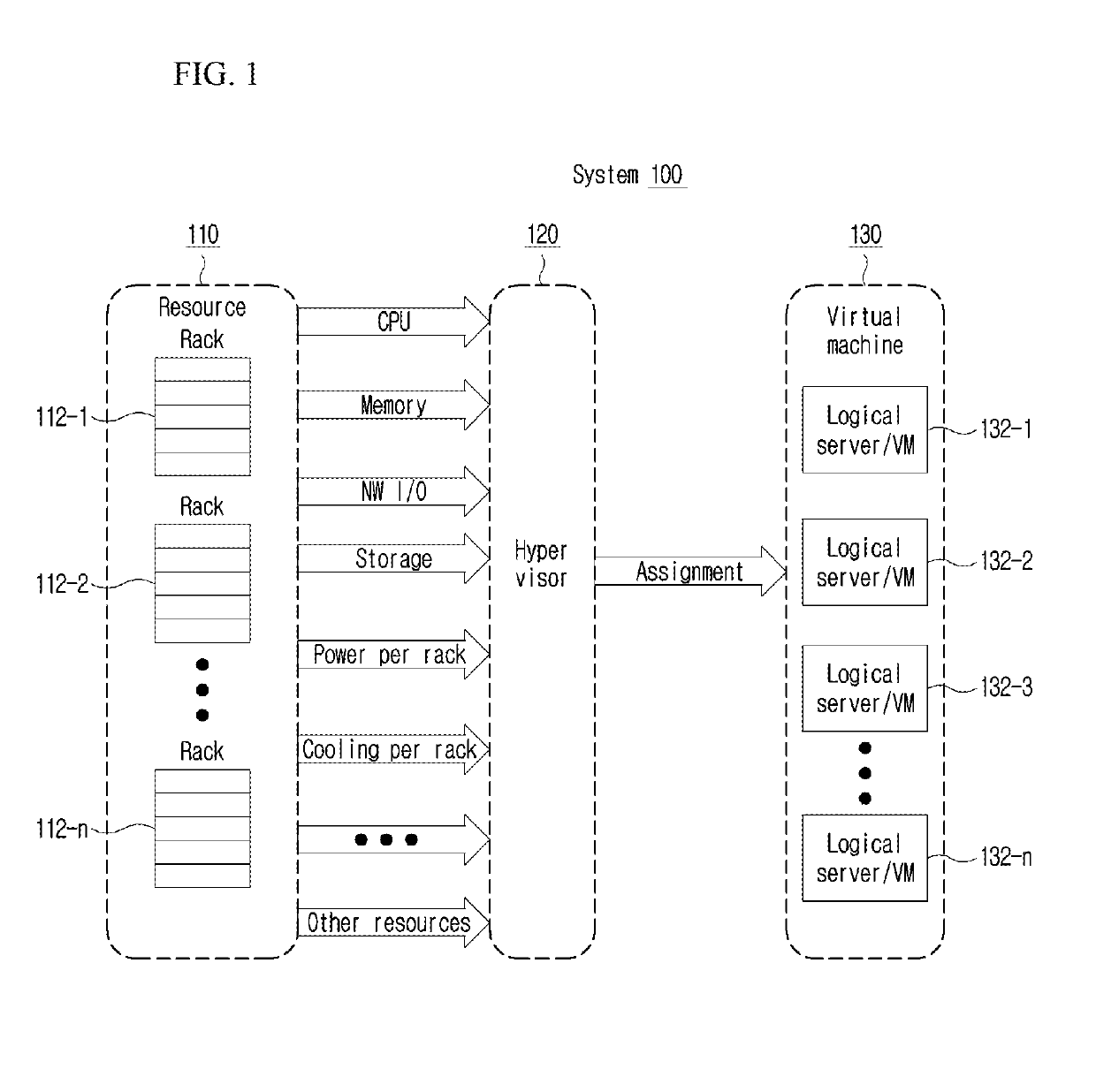
PatentActiveUS20180253246A1
Innovation
- A system that allocates memory across multiple servers, server racks, and clusters using multiplexers and memory expansion cards, with a memory policy database to determine allocation levels and reallocate memory based on policy rules, allowing for efficient memory sharing and utilization.


Performance Benchmarking Standards
Establishing comprehensive performance benchmarking standards for disaggregated memory networks requires a multi-dimensional framework that addresses the unique characteristics of distributed memory architectures. Unlike traditional monolithic systems, disaggregated memory introduces network latency, bandwidth constraints, and resource contention factors that necessitate specialized measurement methodologies.
The foundation of effective benchmarking lies in defining standardized metrics that capture both system-level and application-level performance indicators. Key metrics include memory access latency distribution, network bandwidth utilization, cache hit ratios across distributed nodes, and resource allocation efficiency ratios. These metrics must account for the heterogeneous nature of disaggregated environments where memory pools may have varying performance characteristics and access patterns.
Workload characterization represents a critical component of benchmarking standards, requiring representative test suites that reflect real-world application behaviors. Standard benchmarks should encompass diverse memory access patterns including sequential, random, and mixed workloads with varying data locality characteristics. The benchmarking framework must also incorporate multi-tenant scenarios to evaluate resource isolation and interference effects between concurrent applications.
Measurement infrastructure standardization ensures reproducibility and comparability across different implementations. This includes defining consistent network topologies, hardware configurations, and software stack specifications for benchmark execution. The standards should specify minimum requirements for instrumentation granularity, measurement intervals, and statistical significance thresholds to ensure reliable performance assessment.
Dynamic benchmarking scenarios must address the adaptive nature of resource allocation algorithms in disaggregated memory systems. This involves establishing protocols for measuring performance under varying load conditions, resource availability changes, and failure scenarios. The benchmarking standards should define methodologies for evaluating allocation algorithm responsiveness, convergence time, and stability under different operational conditions.
Comparative analysis frameworks enable objective evaluation of different optimization approaches and system configurations. These frameworks should provide standardized reporting formats, statistical analysis methods, and visualization techniques that facilitate meaningful performance comparisons across diverse disaggregated memory implementations and optimization strategies.
The foundation of effective benchmarking lies in defining standardized metrics that capture both system-level and application-level performance indicators. Key metrics include memory access latency distribution, network bandwidth utilization, cache hit ratios across distributed nodes, and resource allocation efficiency ratios. These metrics must account for the heterogeneous nature of disaggregated environments where memory pools may have varying performance characteristics and access patterns.
Workload characterization represents a critical component of benchmarking standards, requiring representative test suites that reflect real-world application behaviors. Standard benchmarks should encompass diverse memory access patterns including sequential, random, and mixed workloads with varying data locality characteristics. The benchmarking framework must also incorporate multi-tenant scenarios to evaluate resource isolation and interference effects between concurrent applications.
Measurement infrastructure standardization ensures reproducibility and comparability across different implementations. This includes defining consistent network topologies, hardware configurations, and software stack specifications for benchmark execution. The standards should specify minimum requirements for instrumentation granularity, measurement intervals, and statistical significance thresholds to ensure reliable performance assessment.
Dynamic benchmarking scenarios must address the adaptive nature of resource allocation algorithms in disaggregated memory systems. This involves establishing protocols for measuring performance under varying load conditions, resource availability changes, and failure scenarios. The benchmarking standards should define methodologies for evaluating allocation algorithm responsiveness, convergence time, and stability under different operational conditions.
Comparative analysis frameworks enable objective evaluation of different optimization approaches and system configurations. These frameworks should provide standardized reporting formats, statistical analysis methods, and visualization techniques that facilitate meaningful performance comparisons across diverse disaggregated memory implementations and optimization strategies.
Energy Efficiency Considerations
Energy efficiency has emerged as a critical design consideration in disaggregated memory networks, driven by the exponential growth in data center power consumption and increasing environmental sustainability requirements. Traditional monolithic server architectures often exhibit suboptimal energy utilization patterns, with memory resources frequently underutilized while compute resources remain active, leading to significant energy waste. Disaggregated memory architectures present both opportunities and challenges for improving overall system energy efficiency through more granular resource management and dynamic power scaling capabilities.
The primary energy consumption components in disaggregated memory systems include memory device power, network fabric energy overhead, and compute node consumption. Memory devices themselves consume power through refresh operations, read/write activities, and standby states, with different memory technologies exhibiting varying power profiles. High-bandwidth memory technologies like HBM consume significantly more power per bit than traditional DDR memory, while emerging non-volatile memory technologies offer potential energy savings through reduced refresh requirements and improved idle power characteristics.
Network fabric energy consumption represents a substantial overhead in disaggregated architectures, as data movement between compute and memory nodes requires additional network hops compared to local memory access. High-speed interconnects such as InfiniBand, Ethernet, and emerging technologies like CXL introduce latency and energy penalties that must be carefully balanced against the benefits of resource disaggregation. The energy cost per bit transferred varies significantly across different network technologies and distances, making network topology and routing optimization crucial for energy efficiency.
Dynamic power management strategies play a vital role in optimizing energy consumption across disaggregated memory networks. These include memory node power gating during idle periods, adaptive voltage and frequency scaling based on workload demands, and intelligent memory page migration to minimize network energy overhead. Advanced power management requires sophisticated coordination between compute nodes, memory controllers, and network switches to ensure optimal energy utilization without compromising performance or data availability requirements.
Workload-aware energy optimization techniques leverage application characteristics and access patterns to minimize energy consumption through predictive resource allocation and proactive power state transitions. Machine learning algorithms can analyze historical usage patterns to predict future memory demands and preemptively adjust power states across the disaggregated infrastructure, reducing both response latency and energy waste.
The primary energy consumption components in disaggregated memory systems include memory device power, network fabric energy overhead, and compute node consumption. Memory devices themselves consume power through refresh operations, read/write activities, and standby states, with different memory technologies exhibiting varying power profiles. High-bandwidth memory technologies like HBM consume significantly more power per bit than traditional DDR memory, while emerging non-volatile memory technologies offer potential energy savings through reduced refresh requirements and improved idle power characteristics.
Network fabric energy consumption represents a substantial overhead in disaggregated architectures, as data movement between compute and memory nodes requires additional network hops compared to local memory access. High-speed interconnects such as InfiniBand, Ethernet, and emerging technologies like CXL introduce latency and energy penalties that must be carefully balanced against the benefits of resource disaggregation. The energy cost per bit transferred varies significantly across different network technologies and distances, making network topology and routing optimization crucial for energy efficiency.
Dynamic power management strategies play a vital role in optimizing energy consumption across disaggregated memory networks. These include memory node power gating during idle periods, adaptive voltage and frequency scaling based on workload demands, and intelligent memory page migration to minimize network energy overhead. Advanced power management requires sophisticated coordination between compute nodes, memory controllers, and network switches to ensure optimal energy utilization without compromising performance or data availability requirements.
Workload-aware energy optimization techniques leverage application characteristics and access patterns to minimize energy consumption through predictive resource allocation and proactive power state transitions. Machine learning algorithms can analyze historical usage patterns to predict future memory demands and preemptively adjust power states across the disaggregated infrastructure, reducing both response latency and energy waste.
Unlock deeper insights with Patsnap Eureka Quick Research — get a full tech report to explore trends and direct your research. Try now!
Generate Your Research Report Instantly with AI Agent
Supercharge your innovation with Patsnap Eureka AI Agent Platform!