How to Optimize Soft Robotics Production for Cost Efficiency
APR 14, 20269 MIN READ
Generate Your Research Report Instantly with AI Agent
Patsnap Eureka helps you evaluate technical feasibility & market potential.
Soft Robotics Production Background and Cost Targets
Soft robotics represents a paradigm shift from traditional rigid robotic systems, utilizing compliant materials and bio-inspired designs to create machines capable of safe human interaction and adaptive manipulation. This emerging field has evolved from academic research laboratories to commercial applications across healthcare, manufacturing, and service industries. The technology leverages materials such as silicones, hydrogels, and shape memory alloys to create actuators and structures that can deform, bend, and adapt to their environment.
The historical development of soft robotics traces back to biomimetic studies in the 1990s, gaining significant momentum in the 2000s with advances in material science and fabrication techniques. Early prototypes focused on demonstrating fundamental principles of soft actuation and control, while recent developments have emphasized scalable manufacturing processes and commercial viability. The field has progressed from laboratory curiosities to functional prototypes addressing real-world challenges.
Current production methodologies predominantly rely on manual fabrication processes, including hand-casting of silicone components, manual assembly of pneumatic systems, and individual calibration of control parameters. These artisanal approaches result in high labor costs, inconsistent quality, and limited scalability. Manufacturing costs typically range from $500 to $5,000 per unit for research-grade soft robots, making commercial deployment economically challenging for many applications.
The primary cost drivers in soft robotics production include specialized materials, complex fabrication processes, and extensive quality control requirements. Material costs account for approximately 30-40% of total production expenses, while labor-intensive assembly processes contribute 40-50% of manufacturing costs. The remaining expenses stem from testing, calibration, and quality assurance procedures necessary to ensure consistent performance across production batches.
Industry analysis reveals that achieving cost parity with traditional robotic systems requires reducing manufacturing costs by 60-80% while maintaining performance standards. Target cost objectives for commercial soft robotics applications range from $50-200 per unit for consumer applications to $500-1,500 for industrial implementations. These targets necessitate fundamental changes in design philosophy, material selection, and manufacturing processes.
The technological evolution pathway indicates a transition from prototype-focused fabrication to industrial-scale production systems. Key milestones include the development of automated casting systems, standardized component libraries, and integrated quality control mechanisms. Future production targets emphasize achieving economies of scale through modular design approaches and automated assembly processes, ultimately enabling cost-effective deployment across diverse application domains.
The historical development of soft robotics traces back to biomimetic studies in the 1990s, gaining significant momentum in the 2000s with advances in material science and fabrication techniques. Early prototypes focused on demonstrating fundamental principles of soft actuation and control, while recent developments have emphasized scalable manufacturing processes and commercial viability. The field has progressed from laboratory curiosities to functional prototypes addressing real-world challenges.
Current production methodologies predominantly rely on manual fabrication processes, including hand-casting of silicone components, manual assembly of pneumatic systems, and individual calibration of control parameters. These artisanal approaches result in high labor costs, inconsistent quality, and limited scalability. Manufacturing costs typically range from $500 to $5,000 per unit for research-grade soft robots, making commercial deployment economically challenging for many applications.
The primary cost drivers in soft robotics production include specialized materials, complex fabrication processes, and extensive quality control requirements. Material costs account for approximately 30-40% of total production expenses, while labor-intensive assembly processes contribute 40-50% of manufacturing costs. The remaining expenses stem from testing, calibration, and quality assurance procedures necessary to ensure consistent performance across production batches.
Industry analysis reveals that achieving cost parity with traditional robotic systems requires reducing manufacturing costs by 60-80% while maintaining performance standards. Target cost objectives for commercial soft robotics applications range from $50-200 per unit for consumer applications to $500-1,500 for industrial implementations. These targets necessitate fundamental changes in design philosophy, material selection, and manufacturing processes.
The technological evolution pathway indicates a transition from prototype-focused fabrication to industrial-scale production systems. Key milestones include the development of automated casting systems, standardized component libraries, and integrated quality control mechanisms. Future production targets emphasize achieving economies of scale through modular design approaches and automated assembly processes, ultimately enabling cost-effective deployment across diverse application domains.
Market Demand for Cost-Effective Soft Robotics
The global soft robotics market is experiencing unprecedented growth driven by increasing demand for safer human-robot interaction across multiple industries. Healthcare applications represent the largest segment, where soft robots offer significant advantages in surgical procedures, rehabilitation therapy, and patient care due to their inherent compliance and biocompatibility. The aging population worldwide is creating substantial demand for assistive robotics solutions that can safely interact with elderly patients in home care and medical facility environments.
Manufacturing industries are increasingly adopting soft robotic systems for delicate handling operations, particularly in food processing, electronics assembly, and pharmaceutical packaging. Traditional rigid robots often damage fragile products or require expensive safety barriers, making cost-effective soft alternatives highly attractive. The automotive sector shows growing interest in soft robotics for collaborative assembly tasks where human workers and robots share workspace safely.
Agricultural applications present emerging opportunities for soft robotics in fruit harvesting, crop monitoring, and livestock management. The ability of soft robots to handle delicate produce without damage while operating in unstructured outdoor environments addresses critical labor shortages and operational efficiency challenges facing modern agriculture.
Consumer markets are beginning to embrace soft robotics in household applications, educational toys, and personal assistance devices. The COVID-19 pandemic accelerated interest in contactless service robots for cleaning, delivery, and customer interaction, creating new market segments that prioritize safety and approachability over traditional robotic capabilities.
However, widespread adoption remains constrained by high production costs associated with specialized materials, complex manufacturing processes, and limited economies of scale. Current soft robotic systems typically cost significantly more than conventional alternatives, limiting market penetration to high-value applications where safety benefits justify premium pricing.
The market increasingly demands standardized, modular soft robotic components that can reduce development costs and accelerate deployment across diverse applications. End users seek plug-and-play solutions with simplified programming interfaces and reduced maintenance requirements to lower total cost of ownership.
Supply chain considerations are becoming critical as organizations evaluate soft robotics investments. The availability of cost-effective materials, reliable manufacturing partners, and technical support infrastructure directly influences adoption decisions across all market segments.
Manufacturing industries are increasingly adopting soft robotic systems for delicate handling operations, particularly in food processing, electronics assembly, and pharmaceutical packaging. Traditional rigid robots often damage fragile products or require expensive safety barriers, making cost-effective soft alternatives highly attractive. The automotive sector shows growing interest in soft robotics for collaborative assembly tasks where human workers and robots share workspace safely.
Agricultural applications present emerging opportunities for soft robotics in fruit harvesting, crop monitoring, and livestock management. The ability of soft robots to handle delicate produce without damage while operating in unstructured outdoor environments addresses critical labor shortages and operational efficiency challenges facing modern agriculture.
Consumer markets are beginning to embrace soft robotics in household applications, educational toys, and personal assistance devices. The COVID-19 pandemic accelerated interest in contactless service robots for cleaning, delivery, and customer interaction, creating new market segments that prioritize safety and approachability over traditional robotic capabilities.
However, widespread adoption remains constrained by high production costs associated with specialized materials, complex manufacturing processes, and limited economies of scale. Current soft robotic systems typically cost significantly more than conventional alternatives, limiting market penetration to high-value applications where safety benefits justify premium pricing.
The market increasingly demands standardized, modular soft robotic components that can reduce development costs and accelerate deployment across diverse applications. End users seek plug-and-play solutions with simplified programming interfaces and reduced maintenance requirements to lower total cost of ownership.
Supply chain considerations are becoming critical as organizations evaluate soft robotics investments. The availability of cost-effective materials, reliable manufacturing partners, and technical support infrastructure directly influences adoption decisions across all market segments.
Current Manufacturing Challenges in Soft Robotics
Soft robotics manufacturing faces significant material-related challenges that directly impact production costs and scalability. Traditional silicone elastomers, while offering excellent flexibility and biocompatibility, require complex multi-step curing processes that can take several hours to complete. The temperature and humidity sensitivity of these materials demands controlled environmental conditions, increasing facility overhead costs. Additionally, the limited shelf life of uncured materials leads to inventory waste and supply chain complications.
Manufacturing precision represents another critical bottleneck in soft robotics production. Unlike rigid components that can be machined to tight tolerances, soft materials exhibit inherent variability during fabrication processes. Molding techniques often result in dimensional inconsistencies, particularly in thin-walled structures and complex geometries. This variability necessitates extensive quality control measures and frequently leads to higher rejection rates, significantly impacting overall production efficiency.
The integration of functional elements into soft robotic systems presents substantial manufacturing complexity. Embedding sensors, actuators, and conductive pathways within elastomeric matrices requires specialized techniques such as multi-material 3D printing or sequential assembly processes. These approaches often involve manual intervention, creating production bottlenecks and increasing labor costs. The challenge is further compounded by the need to maintain electrical connectivity and mechanical integrity throughout the manufacturing process.
Scalability issues plague current soft robotics manufacturing approaches. Most production methods, including casting and additive manufacturing, are inherently batch-oriented rather than continuous processes. This limitation restricts throughput and makes it difficult to achieve economies of scale. The lack of standardized manufacturing equipment specifically designed for soft robotics further exacerbates these scalability challenges.
Quality assurance in soft robotics manufacturing presents unique difficulties due to the dynamic nature of these systems. Traditional inspection methods designed for rigid components are often inadequate for evaluating soft material properties and performance characteristics. The development of appropriate testing protocols and measurement techniques requires significant investment in specialized equipment and expertise.
Supply chain constraints also contribute to manufacturing challenges. The specialized nature of soft robotics materials and components limits supplier options, often resulting in longer lead times and higher material costs. This dependency on niche suppliers creates vulnerability to supply disruptions and reduces manufacturers' negotiating power for cost optimization.
Manufacturing precision represents another critical bottleneck in soft robotics production. Unlike rigid components that can be machined to tight tolerances, soft materials exhibit inherent variability during fabrication processes. Molding techniques often result in dimensional inconsistencies, particularly in thin-walled structures and complex geometries. This variability necessitates extensive quality control measures and frequently leads to higher rejection rates, significantly impacting overall production efficiency.
The integration of functional elements into soft robotic systems presents substantial manufacturing complexity. Embedding sensors, actuators, and conductive pathways within elastomeric matrices requires specialized techniques such as multi-material 3D printing or sequential assembly processes. These approaches often involve manual intervention, creating production bottlenecks and increasing labor costs. The challenge is further compounded by the need to maintain electrical connectivity and mechanical integrity throughout the manufacturing process.
Scalability issues plague current soft robotics manufacturing approaches. Most production methods, including casting and additive manufacturing, are inherently batch-oriented rather than continuous processes. This limitation restricts throughput and makes it difficult to achieve economies of scale. The lack of standardized manufacturing equipment specifically designed for soft robotics further exacerbates these scalability challenges.
Quality assurance in soft robotics manufacturing presents unique difficulties due to the dynamic nature of these systems. Traditional inspection methods designed for rigid components are often inadequate for evaluating soft material properties and performance characteristics. The development of appropriate testing protocols and measurement techniques requires significant investment in specialized equipment and expertise.
Supply chain constraints also contribute to manufacturing challenges. The specialized nature of soft robotics materials and components limits supplier options, often resulting in longer lead times and higher material costs. This dependency on niche suppliers creates vulnerability to supply disruptions and reduces manufacturers' negotiating power for cost optimization.
Existing Cost Optimization Solutions for Soft Robotics
01 Low-cost manufacturing methods for soft robotic actuators
Cost efficiency in soft robotics can be achieved through simplified manufacturing processes that reduce production complexity and material costs. Techniques such as molding, 3D printing, and modular design approaches enable mass production of soft robotic components at lower costs. These methods eliminate the need for expensive precision machining and assembly processes traditionally required in rigid robotics, making soft robotic systems more economically viable for commercial applications.- Low-cost manufacturing methods for soft robotic actuators: Cost efficiency in soft robotics can be achieved through simplified manufacturing processes that reduce production complexity and material costs. Techniques such as molding, 3D printing, and modular design approaches enable mass production of soft robotic components at lower costs. These methods eliminate the need for expensive precision machining and assembly processes traditionally required in rigid robotics, making soft robotic systems more economically viable for commercial applications.
- Material selection for cost-effective soft robotics: The choice of materials significantly impacts the overall cost efficiency of soft robotic systems. Utilizing readily available, inexpensive elastomers and polymers instead of specialized materials can substantially reduce manufacturing costs while maintaining functional performance. Common materials such as silicone rubber, thermoplastic elastomers, and other commodity polymers provide adequate flexibility and durability for many soft robotic applications at a fraction of the cost of advanced materials.
- Simplified actuation systems for reduced costs: Cost efficiency can be improved by implementing simplified actuation mechanisms that require fewer components and less complex control systems. Pneumatic and hydraulic actuation systems using standard off-the-shelf components, rather than custom-designed actuators, significantly reduce both initial investment and maintenance costs. These simplified systems maintain adequate performance for many applications while dramatically lowering the barrier to entry for soft robotics adoption.
- Modular and scalable soft robotic designs: Modular design approaches enable cost efficiency through standardization and reusability of components across different soft robotic applications. By creating interchangeable modules that can be combined in various configurations, manufacturers can achieve economies of scale and reduce development costs for new applications. This approach also simplifies maintenance and repair, as individual modules can be replaced rather than entire systems, reducing long-term operational costs.
- Integration and automation for cost reduction: Cost efficiency in soft robotics can be enhanced through integrated system designs that combine multiple functions into single components and automated manufacturing processes. By reducing the number of discrete parts and assembly steps, overall production costs decrease while reliability improves. Automated quality control and testing procedures further reduce labor costs and ensure consistent product quality, making soft robotic systems more competitive with traditional automation solutions.
02 Use of affordable materials in soft robotic construction
Implementing cost-effective materials such as silicone elastomers, thermoplastic polymers, and fabric-based composites significantly reduces the overall cost of soft robotic systems. These materials provide the necessary flexibility and compliance while being substantially cheaper than specialized smart materials. The selection of readily available commercial materials rather than custom-synthesized compounds further enhances cost efficiency without compromising performance in many applications.Expand Specific Solutions03 Energy-efficient actuation systems
Reducing operational costs through energy-efficient actuation mechanisms represents a key approach to improving cost efficiency. Pneumatic and hydraulic systems designed with optimized pressure requirements, along with novel actuation principles that minimize energy consumption, contribute to lower operating expenses. These systems reduce the need for expensive power supplies and decrease long-term energy costs, making soft robotics more economically sustainable for continuous operation.Expand Specific Solutions04 Simplified control systems and electronics
Cost reduction can be achieved by implementing streamlined control architectures that require fewer sensors and less complex processing units. Utilizing open-source control platforms, reducing the number of electronic components, and employing passive mechanical intelligence instead of active sensing reduces both initial investment and maintenance costs. These simplified systems maintain adequate functionality while significantly lowering the technological barrier and associated expenses.Expand Specific Solutions05 Modular and scalable design approaches
Implementing modular design principles allows for standardization of components, which reduces manufacturing costs through economies of scale and simplifies maintenance by enabling component replacement rather than full system replacement. Scalable architectures permit customization for different applications using common base modules, spreading development costs across multiple product lines. This approach also facilitates easier upgrades and repairs, reducing long-term ownership costs.Expand Specific Solutions
Key Players in Soft Robotics Manufacturing Industry
The soft robotics production optimization landscape represents an emerging market in the early growth stage, with significant cost efficiency challenges stemming from complex manufacturing processes and specialized materials. The industry shows moderate technological maturity, evidenced by established players like Festo SE & Co. KG advancing pneumatic automation solutions and Beijing Soft Robot Technology Co., Ltd. developing specialized soft grippers and flexible end effectors. Academic institutions including Harvard College, National University of Singapore, and Zhejiang University are driving fundamental research breakthroughs. Industrial giants such as BMW, Kawasaki Heavy Industries, and Solvay SA are integrating soft robotics into automotive and chemical applications. The competitive environment features a mix of specialized startups, automation technology providers like Dürr Systems AG and IBG Automation GmbH, and research-focused entities, indicating a fragmented but rapidly evolving market with substantial opportunities for production cost reduction through advanced manufacturing techniques and material innovations.
President & Fellows of Harvard College
Technical Solution: Harvard's Wyss Institute has pioneered cost-effective soft robotics manufacturing through bio-inspired design principles and novel fabrication techniques. Their research focuses on reducing material costs through the development of low-cost elastomers and 3D printing methodologies that can produce complex soft robotic structures in single manufacturing steps. The institute has demonstrated production cost reductions of up to 60% through innovative molding techniques and the use of readily available materials like silicone rubber and fabric composites.
Strengths: Cutting-edge research capabilities and innovative bio-inspired design approaches. Weaknesses: Limited commercial manufacturing experience and scalability challenges for mass production.
Zhejiang University
Technical Solution: Zhejiang University has developed innovative cost optimization approaches for soft robotics production through advanced materials research and manufacturing process innovation. Their research focuses on developing low-cost smart materials and efficient fabrication techniques including multi-material 3D printing and automated casting processes. The university has demonstrated significant cost reductions through the development of novel polymer compositions that reduce material costs by up to 45% while maintaining performance characteristics required for soft robotic applications.
Strengths: Strong materials science research capabilities and innovative manufacturing process development. Weaknesses: Academic focus limits immediate commercial application and lacks large-scale production experience.
Core Innovations in Efficient Soft Robotics Production
Method for determining an operation to be performed by a robot, method for determining and checking an operation to be performed by a system, device for data processing, computer programme, and computer-readable medium
PatentWO2024061602A2
Innovation
- A method that uses an electronic computing device to determine and optimize robot work processes by generating a simulation model based on product, system, and process data, minimizing cycle time by selecting the most efficient combinations of sub-steps and trajectories, and automatically updating robot programs to ensure timely and cost-effective production.


Manufacturing Soft Devices Out of Sheet Materials
PatentActiveUS20190024679A1
Innovation
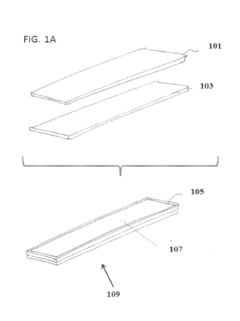
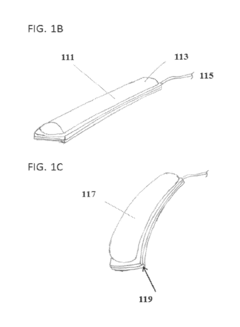
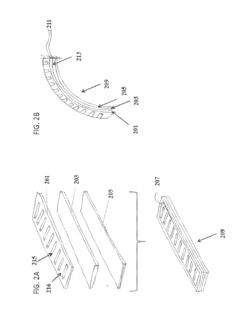
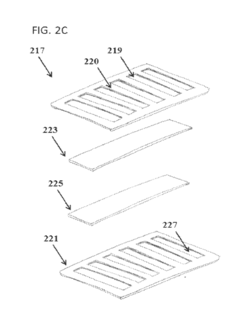
- Soft composite actuators are manufactured by bonding multiple material layers, including elastomeric, strain limiting, and radially constraining layers, to form bladders that can be actuated by pressurized fluid, allowing for efficient bending, linear extension, and twisting motions without the need for molding.
Material Supply Chain Optimization Strategies
The material supply chain represents a critical bottleneck in soft robotics production cost optimization, where traditional procurement models often fail to address the unique requirements of elastomeric polymers, conductive materials, and specialized actuator components. Current supply chains are characterized by fragmented supplier networks, limited economies of scale, and high material waste ratios that can reach 15-20% in prototype-to-production transitions.
Strategic supplier consolidation emerges as a primary optimization approach, focusing on establishing long-term partnerships with vertically integrated material providers who can supply multiple component categories. This consolidation strategy reduces procurement overhead costs by approximately 12-18% while improving quality consistency across material batches. Key implementation involves negotiating volume-based pricing tiers and establishing dedicated production lines for soft robotics applications.
Just-in-time inventory management specifically tailored for soft robotics materials addresses the challenge of material degradation and storage costs. Silicone-based elastomers and conductive polymers require controlled environmental conditions, making traditional bulk purchasing economically inefficient. Advanced demand forecasting algorithms integrated with production scheduling systems enable optimal inventory levels, reducing carrying costs by 25-30% while maintaining production continuity.
Raw material standardization across product lines significantly impacts supply chain efficiency. Developing a core material palette that serves multiple soft robotics applications reduces supplier complexity and enables bulk purchasing advantages. This approach involves engineering teams working closely with procurement to identify cross-platform material opportunities, potentially reducing material costs by 20-35% through increased volume commitments.
Regional supply chain localization strategies address both cost and supply security concerns. Establishing regional material hubs near manufacturing facilities reduces transportation costs and lead times while providing supply chain resilience. This geographic optimization particularly benefits high-volume, low-margin soft robotics applications where material costs represent 40-60% of total production expenses.
Digital supply chain integration through blockchain-based tracking and AI-powered demand prediction creates transparency and efficiency gains. These technologies enable real-time material quality verification, automated reordering systems, and predictive maintenance of supply relationships, collectively reducing supply chain operational costs by 15-25% while improving material traceability and quality assurance.
Strategic supplier consolidation emerges as a primary optimization approach, focusing on establishing long-term partnerships with vertically integrated material providers who can supply multiple component categories. This consolidation strategy reduces procurement overhead costs by approximately 12-18% while improving quality consistency across material batches. Key implementation involves negotiating volume-based pricing tiers and establishing dedicated production lines for soft robotics applications.
Just-in-time inventory management specifically tailored for soft robotics materials addresses the challenge of material degradation and storage costs. Silicone-based elastomers and conductive polymers require controlled environmental conditions, making traditional bulk purchasing economically inefficient. Advanced demand forecasting algorithms integrated with production scheduling systems enable optimal inventory levels, reducing carrying costs by 25-30% while maintaining production continuity.
Raw material standardization across product lines significantly impacts supply chain efficiency. Developing a core material palette that serves multiple soft robotics applications reduces supplier complexity and enables bulk purchasing advantages. This approach involves engineering teams working closely with procurement to identify cross-platform material opportunities, potentially reducing material costs by 20-35% through increased volume commitments.
Regional supply chain localization strategies address both cost and supply security concerns. Establishing regional material hubs near manufacturing facilities reduces transportation costs and lead times while providing supply chain resilience. This geographic optimization particularly benefits high-volume, low-margin soft robotics applications where material costs represent 40-60% of total production expenses.
Digital supply chain integration through blockchain-based tracking and AI-powered demand prediction creates transparency and efficiency gains. These technologies enable real-time material quality verification, automated reordering systems, and predictive maintenance of supply relationships, collectively reducing supply chain operational costs by 15-25% while improving material traceability and quality assurance.
Scalable Production Process Design Methodologies
Scalable production process design for soft robotics requires a fundamental shift from traditional manufacturing paradigms to accommodate the unique properties of flexible materials and complex geometries. The methodology begins with modular design principles that enable standardization of core components while maintaining customization capabilities. This approach allows manufacturers to achieve economies of scale by producing standardized actuators, sensors, and control units that can be assembled into various configurations based on specific application requirements.
Process automation represents a critical component of scalable soft robotics manufacturing. Advanced molding techniques, including multi-shot injection molding and automated casting systems, enable high-volume production of silicone-based components with consistent quality parameters. Integration of robotic assembly systems specifically designed for handling delicate soft materials ensures repeatability while minimizing material waste and production defects.
Material flow optimization forms another cornerstone of scalable production methodology. Implementation of lean manufacturing principles, combined with just-in-time inventory management, reduces storage costs for temperature-sensitive materials like liquid silicones and thermoplastic elastomers. Continuous material preparation systems eliminate batch processing bottlenecks and ensure consistent material properties throughout production runs.
Quality control integration throughout the production process enables real-time monitoring and adjustment of critical parameters. Automated inspection systems utilizing machine vision and tactile sensing technologies can detect dimensional variations, material defects, and assembly errors without disrupting production flow. Statistical process control methodologies adapted for soft robotics manufacturing help maintain consistent product performance while identifying optimization opportunities.
Flexible manufacturing cell design allows rapid reconfiguration for different product variants without significant downtime. Modular tooling systems and programmable automation equipment enable manufacturers to switch between product lines efficiently, maximizing equipment utilization and responding quickly to market demands. This adaptability is essential for cost-effective production in the diverse soft robotics market.
Digital twin integration provides comprehensive process optimization capabilities by simulating production scenarios and identifying potential bottlenecks before implementation. Real-time data collection from production equipment enables continuous improvement through machine learning algorithms that optimize process parameters for maximum efficiency and minimum waste generation.
Process automation represents a critical component of scalable soft robotics manufacturing. Advanced molding techniques, including multi-shot injection molding and automated casting systems, enable high-volume production of silicone-based components with consistent quality parameters. Integration of robotic assembly systems specifically designed for handling delicate soft materials ensures repeatability while minimizing material waste and production defects.
Material flow optimization forms another cornerstone of scalable production methodology. Implementation of lean manufacturing principles, combined with just-in-time inventory management, reduces storage costs for temperature-sensitive materials like liquid silicones and thermoplastic elastomers. Continuous material preparation systems eliminate batch processing bottlenecks and ensure consistent material properties throughout production runs.
Quality control integration throughout the production process enables real-time monitoring and adjustment of critical parameters. Automated inspection systems utilizing machine vision and tactile sensing technologies can detect dimensional variations, material defects, and assembly errors without disrupting production flow. Statistical process control methodologies adapted for soft robotics manufacturing help maintain consistent product performance while identifying optimization opportunities.
Flexible manufacturing cell design allows rapid reconfiguration for different product variants without significant downtime. Modular tooling systems and programmable automation equipment enable manufacturers to switch between product lines efficiently, maximizing equipment utilization and responding quickly to market demands. This adaptability is essential for cost-effective production in the diverse soft robotics market.
Digital twin integration provides comprehensive process optimization capabilities by simulating production scenarios and identifying potential bottlenecks before implementation. Real-time data collection from production equipment enables continuous improvement through machine learning algorithms that optimize process parameters for maximum efficiency and minimum waste generation.
Unlock deeper insights with Patsnap Eureka Quick Research — get a full tech report to explore trends and direct your research. Try now!
Generate Your Research Report Instantly with AI Agent
Supercharge your innovation with Patsnap Eureka AI Agent Platform!