
How to Schedule Gradient Descent Learning Rates Dynamically
OCT 9, 20268 MIN READ
Generate Your Research Report Instantly with AI Agent
Patsnap Eureka helps you evaluate technical feasibility & market potential.
Dynamic Learning Rate Scheduling Background and Objectives
The optimization of neural networks fundamentally relies on gradient descent algorithms, where the learning rate serves as a critical hyperparameter governing the magnitude of parameter updates during training. Traditional approaches employed fixed learning rates throughout the entire training process, which often led to suboptimal convergence behavior. Fixed rates that are too large may cause the optimization to overshoot minima and diverge, while excessively small rates result in prohibitively slow convergence and potential entrapment in local minima. This inherent limitation has driven the evolution toward dynamic learning rate scheduling strategies.
Dynamic learning rate scheduling emerged as a response to the need for adaptive optimization strategies that can automatically adjust training dynamics based on the learning progress. The fundamental principle involves modifying the learning rate during training according to predefined rules or adaptive mechanisms, enabling more efficient navigation of complex loss landscapes. This approach has become increasingly vital as deep learning models have grown in complexity and scale, demanding more sophisticated optimization techniques to achieve state-of-the-art performance within reasonable computational budgets.
The primary objective of dynamic learning rate scheduling is to accelerate convergence while maintaining training stability and achieving superior generalization performance. Early training phases typically benefit from larger learning rates to enable rapid exploration of the parameter space, while later stages require smaller rates for fine-grained refinement near optimal solutions. Effective scheduling strategies aim to balance exploration and exploitation throughout the training trajectory, adapting to the changing characteristics of the loss surface as optimization progresses.
Contemporary research objectives focus on developing intelligent scheduling mechanisms that can automatically determine optimal rate adjustments without extensive manual tuning. This includes creating methods that respond to training dynamics such as gradient magnitudes, loss plateaus, and validation performance trends. The ultimate goal is to establish robust, generalizable scheduling frameworks that enhance training efficiency across diverse architectures and application domains while reducing the computational overhead and expertise required for hyperparameter optimization.
Dynamic learning rate scheduling emerged as a response to the need for adaptive optimization strategies that can automatically adjust training dynamics based on the learning progress. The fundamental principle involves modifying the learning rate during training according to predefined rules or adaptive mechanisms, enabling more efficient navigation of complex loss landscapes. This approach has become increasingly vital as deep learning models have grown in complexity and scale, demanding more sophisticated optimization techniques to achieve state-of-the-art performance within reasonable computational budgets.
The primary objective of dynamic learning rate scheduling is to accelerate convergence while maintaining training stability and achieving superior generalization performance. Early training phases typically benefit from larger learning rates to enable rapid exploration of the parameter space, while later stages require smaller rates for fine-grained refinement near optimal solutions. Effective scheduling strategies aim to balance exploration and exploitation throughout the training trajectory, adapting to the changing characteristics of the loss surface as optimization progresses.
Contemporary research objectives focus on developing intelligent scheduling mechanisms that can automatically determine optimal rate adjustments without extensive manual tuning. This includes creating methods that respond to training dynamics such as gradient magnitudes, loss plateaus, and validation performance trends. The ultimate goal is to establish robust, generalizable scheduling frameworks that enhance training efficiency across diverse architectures and application domains while reducing the computational overhead and expertise required for hyperparameter optimization.
Market Demand for Adaptive Training Optimization
The demand for adaptive training optimization has surged dramatically across multiple sectors as deep learning models continue to grow in scale and complexity. Organizations deploying machine learning systems face mounting pressure to reduce training costs while maintaining or improving model performance. Dynamic learning rate scheduling addresses a critical bottleneck in this process by enabling more efficient convergence and reducing the computational resources required for model training. This capability has become essential for enterprises managing large-scale neural networks where even marginal improvements in training efficiency translate to substantial cost savings and faster time-to-market.
Cloud service providers and AI infrastructure companies represent a primary market segment driving demand for adaptive optimization techniques. These entities operate massive training clusters where inefficient hyperparameter configurations directly impact operational expenses and service delivery timelines. The ability to automatically adjust learning rates during training reduces the need for extensive manual tuning and multiple experimental runs, thereby optimizing resource utilization across distributed computing environments.
Research institutions and academic organizations constitute another significant demand source, particularly those working with limited computational budgets. Dynamic scheduling methods enable these groups to achieve competitive results without access to extensive hyperparameter search infrastructure. The democratization of effective training techniques through adaptive approaches has expanded the accessibility of state-of-the-art model development beyond well-funded laboratories.
The enterprise AI application market shows increasing adoption of adaptive optimization as organizations deploy models for production use cases spanning computer vision, natural language processing, and recommendation systems. Industries including healthcare, autonomous vehicles, financial services, and e-commerce require robust training pipelines that can handle diverse data distributions and model architectures. Dynamic learning rate scheduling provides the flexibility needed to accommodate varying dataset characteristics and model complexities without requiring specialized expertise for each deployment scenario.
Emerging trends in edge computing and federated learning further amplify market demand, as these paradigms introduce additional constraints around communication efficiency and heterogeneous computing environments. Adaptive optimization techniques that can respond to varying computational capabilities and data availability patterns are becoming increasingly valuable in these distributed training contexts.
Cloud service providers and AI infrastructure companies represent a primary market segment driving demand for adaptive optimization techniques. These entities operate massive training clusters where inefficient hyperparameter configurations directly impact operational expenses and service delivery timelines. The ability to automatically adjust learning rates during training reduces the need for extensive manual tuning and multiple experimental runs, thereby optimizing resource utilization across distributed computing environments.
Research institutions and academic organizations constitute another significant demand source, particularly those working with limited computational budgets. Dynamic scheduling methods enable these groups to achieve competitive results without access to extensive hyperparameter search infrastructure. The democratization of effective training techniques through adaptive approaches has expanded the accessibility of state-of-the-art model development beyond well-funded laboratories.
The enterprise AI application market shows increasing adoption of adaptive optimization as organizations deploy models for production use cases spanning computer vision, natural language processing, and recommendation systems. Industries including healthcare, autonomous vehicles, financial services, and e-commerce require robust training pipelines that can handle diverse data distributions and model architectures. Dynamic learning rate scheduling provides the flexibility needed to accommodate varying dataset characteristics and model complexities without requiring specialized expertise for each deployment scenario.
Emerging trends in edge computing and federated learning further amplify market demand, as these paradigms introduce additional constraints around communication efficiency and heterogeneous computing environments. Adaptive optimization techniques that can respond to varying computational capabilities and data availability patterns are becoming increasingly valuable in these distributed training contexts.
Current Challenges in Learning Rate Scheduling Methods
Despite significant advances in learning rate scheduling methods, several fundamental challenges continue to impede their widespread adoption and effectiveness in deep learning applications. The primary obstacle lies in the inherent trade-off between exploration and exploitation during training. Aggressive learning rate reduction may lead to premature convergence in suboptimal local minima, while maintaining high learning rates risks oscillation around optimal solutions without achieving convergence. This delicate balance becomes particularly problematic in non-convex optimization landscapes characteristic of deep neural networks.
The computational overhead associated with adaptive scheduling methods presents another significant constraint. Techniques requiring extensive hyperparameter searches or meta-learning approaches demand substantial computational resources, often necessitating multiple training runs to identify optimal scheduling strategies. This computational burden becomes prohibitive for large-scale models and resource-constrained environments, limiting practical deployment scenarios.
Generalization across diverse architectures and datasets remains a persistent challenge. Learning rate schedules optimized for specific model architectures or problem domains frequently fail to transfer effectively to different contexts. The lack of universal scheduling principles necessitates task-specific tuning, undermining the goal of developing broadly applicable solutions. This limitation is exacerbated by the sensitivity of scheduling methods to initial hyperparameter configurations and training dynamics.
The interaction between learning rate schedules and other optimization components introduces additional complexity. Modern training pipelines incorporate various techniques including batch normalization, dropout, and gradient clipping, each influencing the optimal learning rate trajectory. Understanding and accounting for these interdependencies requires sophisticated coordination mechanisms that current scheduling methods inadequately address.
Furthermore, theoretical understanding of dynamic scheduling remains incomplete. While empirical evidence demonstrates the effectiveness of certain approaches, rigorous theoretical frameworks explaining why specific scheduling strategies succeed in particular contexts are lacking. This theoretical gap hinders the development of principled design guidelines and limits predictive capabilities regarding schedule performance across different scenarios.
The computational overhead associated with adaptive scheduling methods presents another significant constraint. Techniques requiring extensive hyperparameter searches or meta-learning approaches demand substantial computational resources, often necessitating multiple training runs to identify optimal scheduling strategies. This computational burden becomes prohibitive for large-scale models and resource-constrained environments, limiting practical deployment scenarios.
Generalization across diverse architectures and datasets remains a persistent challenge. Learning rate schedules optimized for specific model architectures or problem domains frequently fail to transfer effectively to different contexts. The lack of universal scheduling principles necessitates task-specific tuning, undermining the goal of developing broadly applicable solutions. This limitation is exacerbated by the sensitivity of scheduling methods to initial hyperparameter configurations and training dynamics.
The interaction between learning rate schedules and other optimization components introduces additional complexity. Modern training pipelines incorporate various techniques including batch normalization, dropout, and gradient clipping, each influencing the optimal learning rate trajectory. Understanding and accounting for these interdependencies requires sophisticated coordination mechanisms that current scheduling methods inadequately address.
Furthermore, theoretical understanding of dynamic scheduling remains incomplete. While empirical evidence demonstrates the effectiveness of certain approaches, rigorous theoretical frameworks explaining why specific scheduling strategies succeed in particular contexts are lacking. This theoretical gap hinders the development of principled design guidelines and limits predictive capabilities regarding schedule performance across different scenarios.
Existing Dynamic Learning Rate Scheduling Solutions
01 Adaptive and Dynamic Learning Rate Control Techniques
Systems and methods are provided for dynamically adjusting or controlling the learning rate during gradient descent optimization. By utilizing variance-based metrics, dynamic step sizes, or multi-model batch strategies, these techniques optimize model convergence and stability during machine learning training.- Adaptive and Dynamic Learning Rate Control Techniques: Systems and methods are provided for dynamically controlling, adjusting, or varying the learning rate step sizes during machine learning model training. These techniques utilize variance-based controls, dynamic step sizes, or iterative optimization algorithms to find optimal loss function stationary points and prevent convergence issues.
- Batch and Multi-Model Learning Rate Adjustment: Apparatus and methods are designed to adjust the learning rate specifically for batch gradient descent frameworks. By utilizing multi-model architectures, gradual batching, or batch-specific rate modifications, these systems improve convergence stability and optimize resource usage across diverse learning tasks.
- Stochastic and Parallelized Gradient Descent Implementations: Gradient descent variants such as stochastic gradient descent (SGD), asynchronous SGD, and parallelized SGD are used to train machine learning models efficiently. These approaches incorporate verification, secure computation, and quantum computing enhancements to speed up learning across distributed networks.
- Targeted, Transfer, and Federated Gradient Learning Methods: Gradient descent mechanisms are adapted for specialized neural network training paradigms such as convolutional neural network fine-tuning, online learning, federated privacy learning, and transfer learning. These techniques optimize gradient updates tailored to specific distributed or multi-task learning models.
- Mathematical Optimization and Derivative Precision in Gradient Descent: Methodologies focus on refining the mathematical parameters of gradient descent, including partial derivative precision, index expressions, semi-discrete calculus, and sequential iterative optimizations. These techniques improve formal verification, prevent loss function increases, and mitigate network regression performance degradation.
02 Stochastic and Parallelized Gradient Descent Variants
Methods for scaling and accelerating gradient descent through stochastic, asynchronous, or parallelized computations. These approaches distribute computation across hardware or run stochastic passes to handle large-scale data and improve training efficiency.Expand Specific Solutions03 Quantum and Secure Gradient Descent Optimization
Advanced paradigms incorporating quantum mechanics and privacy-preserving constraints into gradient descent processes. These technologies enable hybrid quantum-classical optimization and secure, privacy-focused federated machine learning execution.Expand Specific Solutions04 Iterative and Sequential Optimization Strategies
Algorithms designed to refine the gradient descent procedure using targeted steps, variable gain control, or sequential iterations. These methods enhance parameter updates, preventing performance degradation and accelerating convergence in specialized network architectures.Expand Specific Solutions05 Application-Specific Gradient Descent Implementations
Customized gradient descent approaches applied to specific domain problems such as sequence alignment, tone mapping, and parasitic parameter estimation in circuit analysis. These solutions adapt gradient estimation to satisfy domain-specific constraints and loss functions.Expand Specific Solutions
Key Players in Deep Learning Optimization Frameworks
The dynamic scheduling of gradient descent learning rates represents a mature optimization technique within the rapidly evolving deep learning landscape. This field has transitioned from academic research to widespread industrial deployment, with major technology companies and research institutions driving innovation. The market demonstrates substantial growth potential as AI applications expand across sectors, creating demand for more efficient training methodologies. Leading players including Google, DeepMind, IBM, Alibaba, Baidu, and Samsung have developed sophisticated adaptive learning rate algorithms, while Huawei, Hikvision, and NTT contribute domain-specific implementations. Academic institutions like Sun Yat-sen University and Hanyang University ERICA advance theoretical foundations, and specialized entities such as Shanghai AI Laboratory and WeBank explore novel applications in finance and cloud computing, collectively establishing a competitive ecosystem spanning research, development, and commercial deployment.
Google LLC
Technical Solution: Google has developed advanced adaptive learning rate scheduling methods integrated into TensorFlow and JAX frameworks. Their approach includes the Adafactor optimizer which dynamically adjusts learning rates based on parameter-wise second moment estimates without storing full momentum vectors[2][5]. They implement cosine annealing schedules with warm restarts, allowing the learning rate to periodically reset and explore different regions of the loss landscape[3][7]. Google's research emphasizes layer-wise adaptive rate scaling (LARS) for large-batch training, enabling stable convergence when scaling to thousands of processing units[5][8]. Their systems automatically tune hyperparameters using Bayesian optimization and population-based training methods[10][12].
Strengths: Highly scalable solutions for distributed training, excellent integration with popular frameworks, strong theoretical foundations. Weaknesses: Requires significant computational resources, complexity may be excessive for smaller models, limited documentation for advanced features.
International Business Machines Corp.
Technical Solution: IBM has developed learning rate scheduling solutions within their Watson Studio and PowerAI platforms, focusing on enterprise-scale deep learning applications[2][6][11]. Their approach implements adaptive learning rate methods including Lookahead optimizer combined with RAdam (Rectified Adam) for improved convergence stability in early training phases[4][9]. IBM's research emphasizes automated hyperparameter tuning through their Neural Network Modeler, which uses reinforcement learning to dynamically adjust learning rates based on validation metrics[6][13]. They provide gradient accumulation techniques synchronized with learning rate warm-up for memory-constrained environments[8][14]. IBM's solutions include learning rate finder algorithms that automatically determine optimal initial rates and scheduling policies through short exploratory training runs[11][15]. Their enterprise focus includes robust monitoring and logging capabilities for learning rate trajectories.
Strengths: Enterprise-grade reliability and support, strong focus on interpretability and monitoring, good integration with existing IT infrastructure. Weaknesses: Less agile than pure AI companies, higher licensing costs, innovation pace slower than specialized AI firms.
Core Innovations in Adaptive Learning Rate Algorithms
Apparatus and method for adjusting learning rate of batch gradient descent
PatentActiveKR102610185B1
Innovation
- A learning rate adjustment device and method that automatically searches for an appropriate learning rate by applying weights before and after updates to machine learning models, using loss reduction ratios to adjust the learning rate for each batch, and performs scheduling based on average loss reduction ratios across epochs.


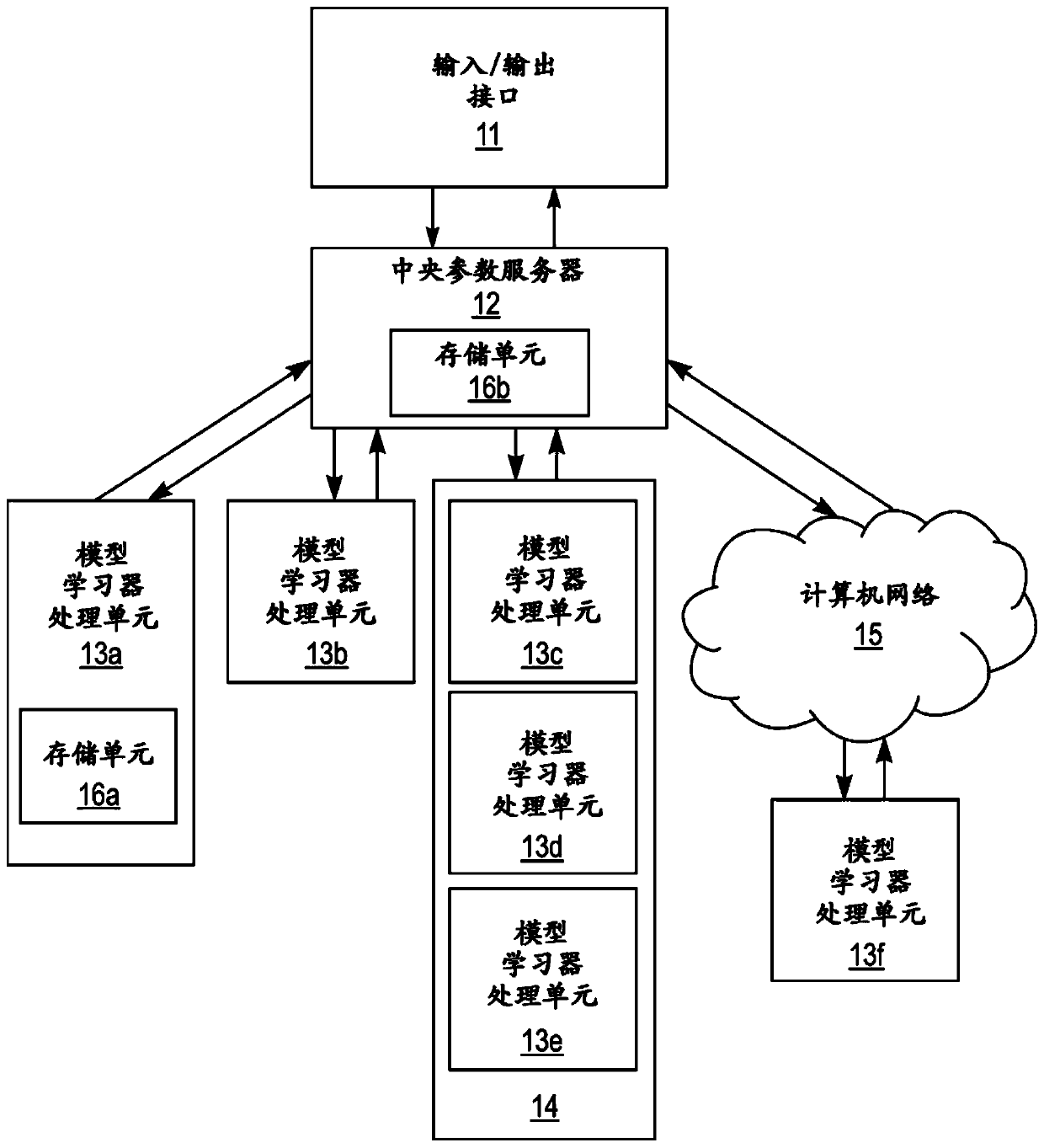
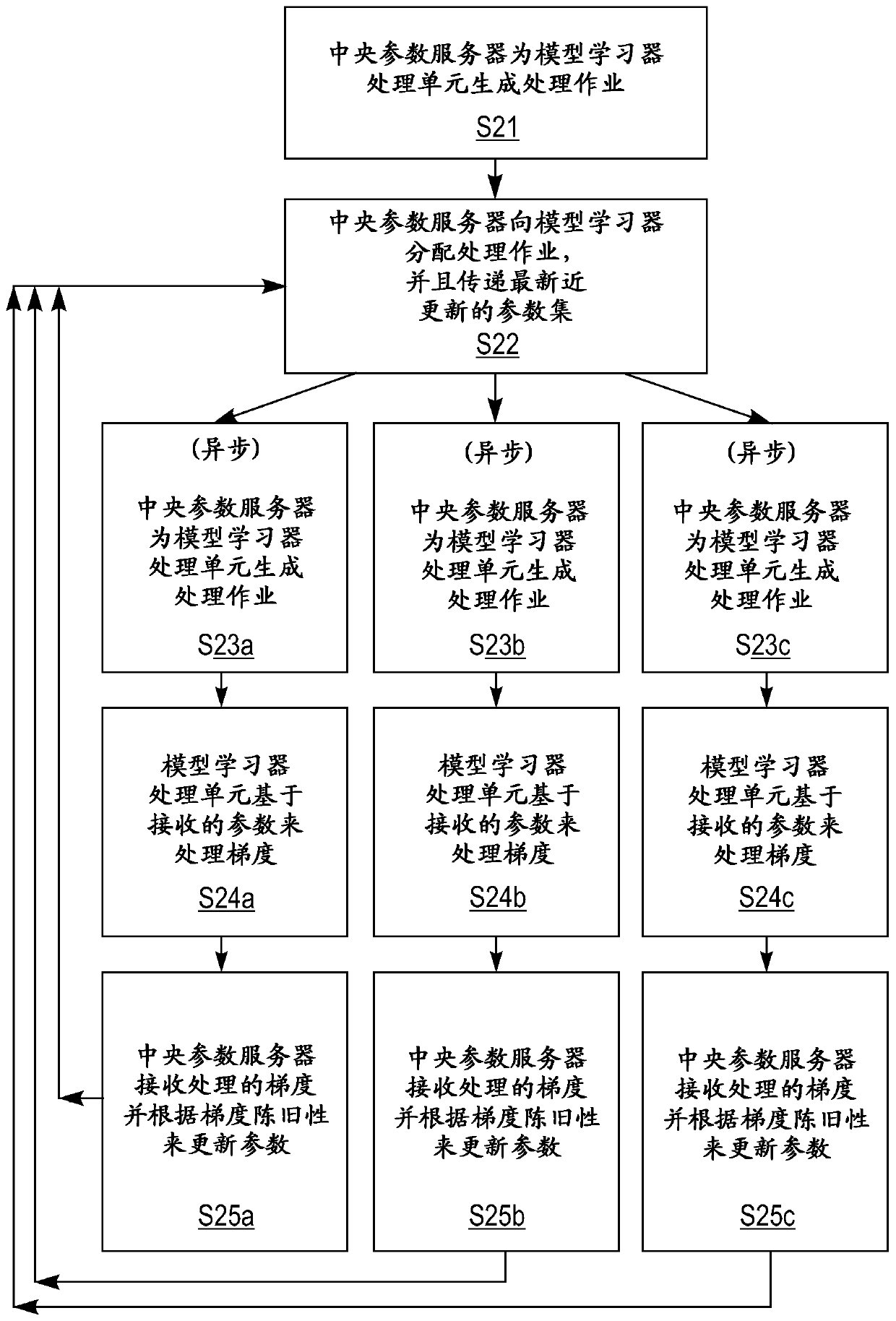
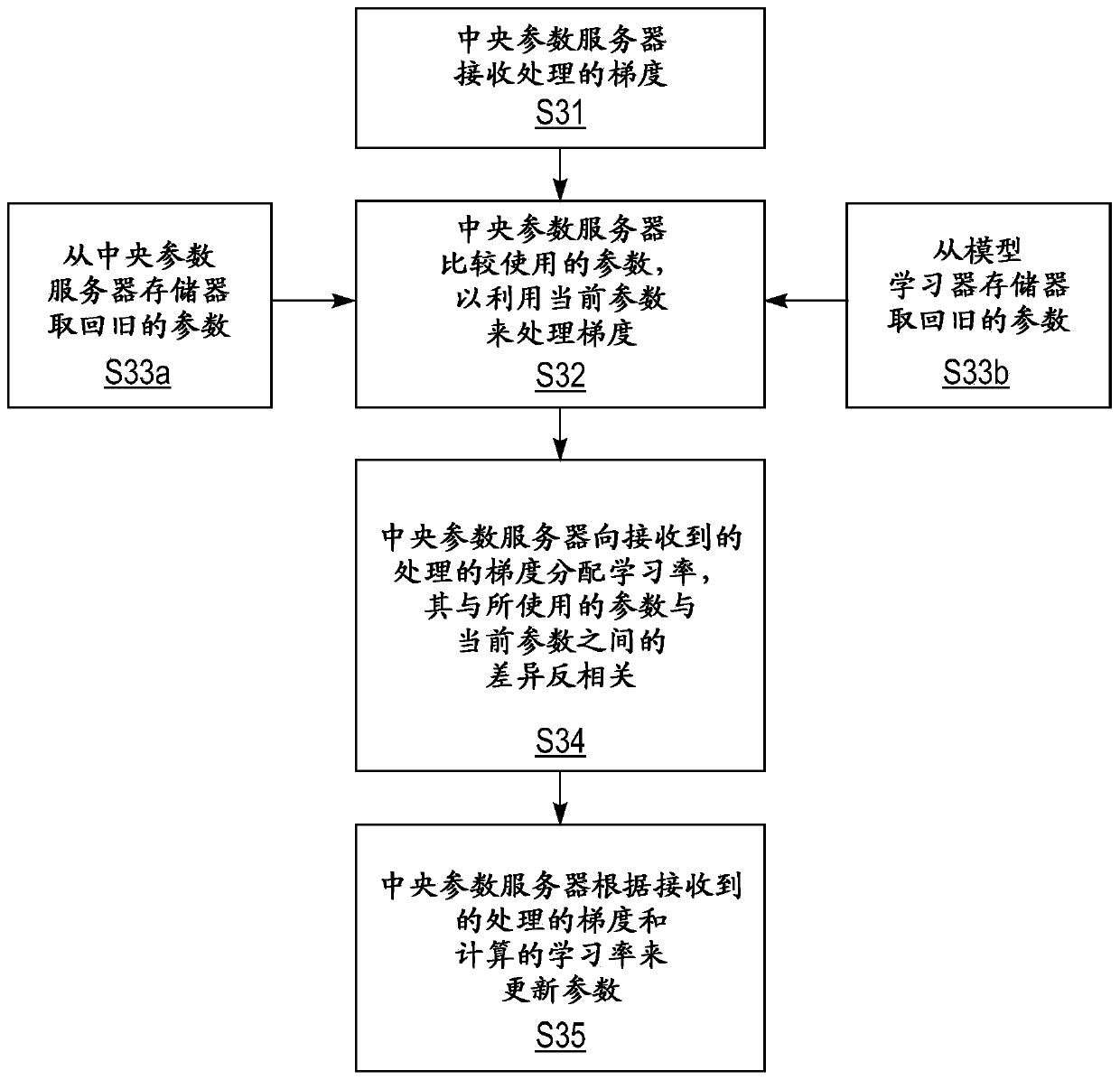
Adaptive learning rate schedule in distributed stochastic gradient descent
PatentActiveCN110322020A
Innovation
- By evaluating the staleness of each gradient, a sliding scaling mechanism is used so that stale gradients still contribute to parameter updates, but with less weight than less stale gradients. This reduces the influence of stale gradients and increases the influence of stale gradients in parameter updates.

Computational Cost and Energy Efficiency Considerations
Dynamic learning rate scheduling in gradient descent introduces varying degrees of computational overhead and energy consumption that must be carefully evaluated for practical deployment. The computational cost primarily stems from two sources: the scheduling algorithm itself and the additional operations required for learning rate adjustment. Simple schedules like step decay or exponential decay impose minimal overhead, typically requiring only basic arithmetic operations at predetermined intervals. However, adaptive methods such as those based on gradient statistics or loss landscape analysis can introduce substantial computational burdens, particularly when they involve second-order derivative calculations or extensive validation set evaluations at each iteration.
The energy efficiency implications become particularly critical in resource-constrained environments such as edge devices, mobile platforms, and large-scale distributed training systems. Adaptive scheduling methods that require frequent model evaluations or gradient computations can significantly increase power consumption, potentially offsetting the benefits gained from faster convergence. For instance, line search methods and methods requiring periodic validation passes may double or triple the energy expenditure per epoch compared to fixed learning rate approaches, despite potentially reducing total training epochs.
Modern implementations must balance the trade-off between scheduling sophistication and resource utilization. Lightweight adaptive methods that leverage already-computed gradients, such as momentum-based or moving average techniques, offer favorable energy profiles while maintaining effectiveness. Additionally, the frequency of learning rate updates presents another optimization dimension—updating every epoch rather than every mini-batch can substantially reduce overhead while preserving most convergence benefits.
In distributed training scenarios, communication costs associated with synchronizing learning rate decisions across nodes add another layer of complexity. Centralized scheduling approaches may create bottlenecks, while decentralized methods require careful coordination protocols. Energy-efficient implementations increasingly employ hardware-aware optimizations, utilizing specialized accelerators and mixed-precision arithmetic to minimize the computational footprint of scheduling operations without compromising numerical stability or convergence quality.
The energy efficiency implications become particularly critical in resource-constrained environments such as edge devices, mobile platforms, and large-scale distributed training systems. Adaptive scheduling methods that require frequent model evaluations or gradient computations can significantly increase power consumption, potentially offsetting the benefits gained from faster convergence. For instance, line search methods and methods requiring periodic validation passes may double or triple the energy expenditure per epoch compared to fixed learning rate approaches, despite potentially reducing total training epochs.
Modern implementations must balance the trade-off between scheduling sophistication and resource utilization. Lightweight adaptive methods that leverage already-computed gradients, such as momentum-based or moving average techniques, offer favorable energy profiles while maintaining effectiveness. Additionally, the frequency of learning rate updates presents another optimization dimension—updating every epoch rather than every mini-batch can substantially reduce overhead while preserving most convergence benefits.
In distributed training scenarios, communication costs associated with synchronizing learning rate decisions across nodes add another layer of complexity. Centralized scheduling approaches may create bottlenecks, while decentralized methods require careful coordination protocols. Energy-efficient implementations increasingly employ hardware-aware optimizations, utilizing specialized accelerators and mixed-precision arithmetic to minimize the computational footprint of scheduling operations without compromising numerical stability or convergence quality.
Generalization and Robustness Across Model Architectures
Dynamic learning rate scheduling demonstrates varying degrees of effectiveness across different neural network architectures, raising important questions about generalization capabilities and robustness. Convolutional Neural Networks (CNNs), Recurrent Neural Networks (RNNs), Transformers, and Graph Neural Networks (GNNs) each exhibit distinct sensitivity patterns to learning rate adjustments due to their inherent structural characteristics and optimization landscapes. Understanding these architectural dependencies is crucial for developing scheduling strategies that maintain consistent performance across diverse model families.
CNNs typically benefit from aggressive learning rate decay schedules, particularly in deeper architectures where gradient flow becomes increasingly complex. The hierarchical feature extraction nature of CNNs allows for relatively stable responses to step-wise or exponential decay patterns. In contrast, Transformer architectures demonstrate heightened sensitivity to initial learning rate values and warmup periods, with their attention mechanisms requiring careful calibration to prevent training instabilities. Research indicates that linear warmup followed by inverse square root decay generalizes well across various Transformer scales, from base to large configurations.
RNN architectures, especially LSTMs and GRUs, present unique challenges due to temporal dependencies and vanishing gradient issues. Dynamic scheduling methods that incorporate gradient norm monitoring prove more robust for these sequential models, as they can adapt to the varying gradient magnitudes encountered during backpropagation through time. Cyclical learning rate approaches have shown promising generalization properties across different RNN depths and sequence lengths.
The robustness of scheduling strategies becomes particularly evident when models face distribution shifts or are transferred to new domains. Adaptive methods like AdaGrad, RMSprop, and Adam variants demonstrate superior cross-architecture robustness compared to fixed schedules, as they automatically adjust to the local geometry of different parameter spaces. However, recent studies reveal that combining adaptive optimizers with carefully tuned cosine annealing schedules can achieve better generalization on held-out test sets across multiple architectures.
Emerging research suggests that architecture-aware scheduling, which considers model depth, width, and connectivity patterns, represents a promising direction for achieving universal robustness. Meta-learning approaches that automatically discover optimal scheduling policies for specific architecture families show potential for bridging the generalization gap across diverse neural network designs.
CNNs typically benefit from aggressive learning rate decay schedules, particularly in deeper architectures where gradient flow becomes increasingly complex. The hierarchical feature extraction nature of CNNs allows for relatively stable responses to step-wise or exponential decay patterns. In contrast, Transformer architectures demonstrate heightened sensitivity to initial learning rate values and warmup periods, with their attention mechanisms requiring careful calibration to prevent training instabilities. Research indicates that linear warmup followed by inverse square root decay generalizes well across various Transformer scales, from base to large configurations.
RNN architectures, especially LSTMs and GRUs, present unique challenges due to temporal dependencies and vanishing gradient issues. Dynamic scheduling methods that incorporate gradient norm monitoring prove more robust for these sequential models, as they can adapt to the varying gradient magnitudes encountered during backpropagation through time. Cyclical learning rate approaches have shown promising generalization properties across different RNN depths and sequence lengths.
The robustness of scheduling strategies becomes particularly evident when models face distribution shifts or are transferred to new domains. Adaptive methods like AdaGrad, RMSprop, and Adam variants demonstrate superior cross-architecture robustness compared to fixed schedules, as they automatically adjust to the local geometry of different parameter spaces. However, recent studies reveal that combining adaptive optimizers with carefully tuned cosine annealing schedules can achieve better generalization on held-out test sets across multiple architectures.
Emerging research suggests that architecture-aware scheduling, which considers model depth, width, and connectivity patterns, represents a promising direction for achieving universal robustness. Meta-learning approaches that automatically discover optimal scheduling policies for specific architecture families show potential for bridging the generalization gap across diverse neural network designs.
Unlock deeper insights with Patsnap Eureka Quick Research — get a full tech report to explore trends and direct your research. Try now!
Generate Your Research Report Instantly with AI Agent
Supercharge your innovation with Patsnap Eureka AI Agent Platform!