How to Select Harmonic Drives for High-Precision Tasks
APR 27, 20269 MIN READ
Generate Your Research Report Instantly with AI Agent
PatSnap Eureka helps you evaluate technical feasibility & market potential.
Harmonic Drive Technology Background and Precision Goals
Harmonic drives, also known as strain wave gears, represent a revolutionary advancement in precision motion control technology that emerged in the 1950s through the pioneering work of C.W. Musser at United Shoe Machinery Corporation. This innovative gear reduction mechanism fundamentally transformed the landscape of high-precision mechanical systems by introducing a unique operating principle that eliminates backlash while achieving exceptional reduction ratios in compact form factors.
The technology's evolution has been driven by the increasing demands of industries requiring ultra-precise positioning and motion control capabilities. From early applications in aerospace and defense systems to modern implementations in robotics, semiconductor manufacturing, and medical devices, harmonic drives have consistently pushed the boundaries of mechanical precision. The development trajectory has witnessed continuous improvements in materials science, manufacturing processes, and design optimization techniques.
Contemporary harmonic drive systems are engineered to meet stringent precision requirements that traditional gear systems cannot achieve. The fundamental design incorporates three primary components: a wave generator, a flexible spline, and a circular spline. This configuration enables the technology to deliver positioning accuracies within arc-seconds while maintaining zero backlash characteristics essential for high-precision applications.
The precision goals for modern harmonic drives encompass multiple performance parameters that directly impact application success. Positioning accuracy targets typically range from 10 to 30 arc-seconds, with premium variants achieving sub-10 arc-second precision. Repeatability specifications often demand performance within 5 arc-seconds, ensuring consistent positioning across millions of operational cycles.
Torque density objectives focus on maximizing output torque relative to system weight and volume, with current technologies achieving ratios exceeding 100 Nm/kg in compact configurations. Reduction ratio capabilities span from 30:1 to 320:1 in single-stage implementations, providing designers with flexible options for various speed and torque requirements.
Operational longevity represents another critical precision goal, with modern harmonic drives designed for service lives exceeding 10,000 hours under rated conditions. This durability requirement necessitates advanced materials engineering, including specialized steel alloys for flexible splines and precision-manufactured wave generators with optimized surface treatments.
The technology continues evolving toward enhanced precision through innovations in manufacturing tolerances, bearing systems, and lubrication technologies, positioning harmonic drives as indispensable components in next-generation precision machinery applications.
The technology's evolution has been driven by the increasing demands of industries requiring ultra-precise positioning and motion control capabilities. From early applications in aerospace and defense systems to modern implementations in robotics, semiconductor manufacturing, and medical devices, harmonic drives have consistently pushed the boundaries of mechanical precision. The development trajectory has witnessed continuous improvements in materials science, manufacturing processes, and design optimization techniques.
Contemporary harmonic drive systems are engineered to meet stringent precision requirements that traditional gear systems cannot achieve. The fundamental design incorporates three primary components: a wave generator, a flexible spline, and a circular spline. This configuration enables the technology to deliver positioning accuracies within arc-seconds while maintaining zero backlash characteristics essential for high-precision applications.
The precision goals for modern harmonic drives encompass multiple performance parameters that directly impact application success. Positioning accuracy targets typically range from 10 to 30 arc-seconds, with premium variants achieving sub-10 arc-second precision. Repeatability specifications often demand performance within 5 arc-seconds, ensuring consistent positioning across millions of operational cycles.
Torque density objectives focus on maximizing output torque relative to system weight and volume, with current technologies achieving ratios exceeding 100 Nm/kg in compact configurations. Reduction ratio capabilities span from 30:1 to 320:1 in single-stage implementations, providing designers with flexible options for various speed and torque requirements.
Operational longevity represents another critical precision goal, with modern harmonic drives designed for service lives exceeding 10,000 hours under rated conditions. This durability requirement necessitates advanced materials engineering, including specialized steel alloys for flexible splines and precision-manufactured wave generators with optimized surface treatments.
The technology continues evolving toward enhanced precision through innovations in manufacturing tolerances, bearing systems, and lubrication technologies, positioning harmonic drives as indispensable components in next-generation precision machinery applications.
Market Demand for High-Precision Motion Control Systems
The global market for high-precision motion control systems has experienced substantial growth driven by increasing automation demands across multiple industries. Manufacturing sectors, particularly semiconductor fabrication, precision machining, and electronics assembly, represent the largest consumer segments for these systems. The semiconductor industry alone has become a critical driver, as chip manufacturing processes require positioning accuracies measured in nanometers, creating substantial demand for harmonic drives capable of delivering exceptional precision and repeatability.
Robotics applications constitute another major market segment, with collaborative robots and surgical robotics demanding increasingly sophisticated motion control capabilities. Industrial robots performing assembly operations, welding, and material handling require harmonic drives that can maintain precise positioning while handling varying loads. The medical robotics sector has emerged as a particularly lucrative niche, where surgical robots and diagnostic equipment demand ultra-precise motion control with zero backlash characteristics.
Aerospace and defense applications continue to drive demand for specialized harmonic drive solutions. Satellite positioning systems, radar arrays, and telescope mounts require motion control systems that can operate reliably in extreme environments while maintaining exceptional accuracy. These applications often justify premium pricing due to stringent performance requirements and qualification standards.
The automotive industry has become an increasingly important market segment, particularly with the rise of electric vehicles and advanced manufacturing techniques. Precision assembly lines for battery systems, electric motor production, and autonomous vehicle sensor calibration equipment all require high-precision motion control systems. Additionally, the growing adoption of additive manufacturing technologies has created new demand for precise multi-axis positioning systems.
Market growth is further accelerated by the Industry 4.0 initiative and smart manufacturing trends. Factory automation systems increasingly require integrated motion control solutions that can communicate with broader manufacturing execution systems while maintaining precise positioning capabilities. This trend has created demand for harmonic drives with enhanced connectivity features and real-time feedback capabilities.
Emerging applications in renewable energy, particularly solar tracking systems and wind turbine positioning mechanisms, represent growing market opportunities. These applications require motion control systems that can operate reliably outdoors while maintaining positioning accuracy over extended periods.
Robotics applications constitute another major market segment, with collaborative robots and surgical robotics demanding increasingly sophisticated motion control capabilities. Industrial robots performing assembly operations, welding, and material handling require harmonic drives that can maintain precise positioning while handling varying loads. The medical robotics sector has emerged as a particularly lucrative niche, where surgical robots and diagnostic equipment demand ultra-precise motion control with zero backlash characteristics.
Aerospace and defense applications continue to drive demand for specialized harmonic drive solutions. Satellite positioning systems, radar arrays, and telescope mounts require motion control systems that can operate reliably in extreme environments while maintaining exceptional accuracy. These applications often justify premium pricing due to stringent performance requirements and qualification standards.
The automotive industry has become an increasingly important market segment, particularly with the rise of electric vehicles and advanced manufacturing techniques. Precision assembly lines for battery systems, electric motor production, and autonomous vehicle sensor calibration equipment all require high-precision motion control systems. Additionally, the growing adoption of additive manufacturing technologies has created new demand for precise multi-axis positioning systems.
Market growth is further accelerated by the Industry 4.0 initiative and smart manufacturing trends. Factory automation systems increasingly require integrated motion control solutions that can communicate with broader manufacturing execution systems while maintaining precise positioning capabilities. This trend has created demand for harmonic drives with enhanced connectivity features and real-time feedback capabilities.
Emerging applications in renewable energy, particularly solar tracking systems and wind turbine positioning mechanisms, represent growing market opportunities. These applications require motion control systems that can operate reliably outdoors while maintaining positioning accuracy over extended periods.
Current State and Challenges in Harmonic Drive Selection
The current landscape of harmonic drive selection for high-precision applications reveals a complex ecosystem where technological advancement coexists with significant implementation challenges. Modern harmonic drives have achieved remarkable precision levels, with some units delivering positioning accuracies within arc-seconds and repeatability tolerances below 10 arc-seconds. However, the selection process remains intricate due to the multitude of variables that must be simultaneously optimized.
Contemporary harmonic drive technology has evolved to offer diverse configurations including cup-type, hat-type, and pancake-type designs, each optimized for specific application requirements. Leading manufacturers now provide drives with gear ratios ranging from 30:1 to 320:1, torque capacities from fractional Newton-meters to several thousand Newton-meters, and operational speeds extending beyond 8,000 RPM input velocity. Despite these advances, engineers face substantial difficulties in matching drive characteristics to application demands.
The primary challenge lies in the interdependency of performance parameters. Achieving higher precision often requires trade-offs in speed capability, while maximizing torque density may compromise positioning accuracy. Current selection methodologies frequently rely on simplified vendor specifications that inadequately represent real-world performance under varying load conditions, temperature fluctuations, and operational duty cycles.
Thermal management presents another critical challenge in contemporary harmonic drive applications. High-precision tasks often demand continuous operation with minimal thermal drift, yet current drives generate heat through friction losses that can significantly impact accuracy. The lack of standardized thermal characterization across manufacturers complicates the selection process, particularly for applications requiring sub-micron positioning stability.
Manufacturing tolerances and quality consistency represent ongoing obstacles in the current market. While premium-grade harmonic drives demonstrate exceptional performance, the variability between individual units can be substantial, making it difficult to predict actual system performance based solely on catalog specifications. This uncertainty is particularly problematic for high-volume applications where consistent performance across multiple units is essential.
The integration complexity with modern servo systems adds another layer of difficulty. Current harmonic drives must interface with increasingly sophisticated control algorithms, yet the dynamic characteristics of these drives are often inadequately documented. Parameters such as torsional stiffness variation, hysteresis behavior, and frequency response characteristics are frequently unavailable or inconsistently specified, hampering optimal controller tuning and system integration.
Contemporary harmonic drive technology has evolved to offer diverse configurations including cup-type, hat-type, and pancake-type designs, each optimized for specific application requirements. Leading manufacturers now provide drives with gear ratios ranging from 30:1 to 320:1, torque capacities from fractional Newton-meters to several thousand Newton-meters, and operational speeds extending beyond 8,000 RPM input velocity. Despite these advances, engineers face substantial difficulties in matching drive characteristics to application demands.
The primary challenge lies in the interdependency of performance parameters. Achieving higher precision often requires trade-offs in speed capability, while maximizing torque density may compromise positioning accuracy. Current selection methodologies frequently rely on simplified vendor specifications that inadequately represent real-world performance under varying load conditions, temperature fluctuations, and operational duty cycles.
Thermal management presents another critical challenge in contemporary harmonic drive applications. High-precision tasks often demand continuous operation with minimal thermal drift, yet current drives generate heat through friction losses that can significantly impact accuracy. The lack of standardized thermal characterization across manufacturers complicates the selection process, particularly for applications requiring sub-micron positioning stability.
Manufacturing tolerances and quality consistency represent ongoing obstacles in the current market. While premium-grade harmonic drives demonstrate exceptional performance, the variability between individual units can be substantial, making it difficult to predict actual system performance based solely on catalog specifications. This uncertainty is particularly problematic for high-volume applications where consistent performance across multiple units is essential.
The integration complexity with modern servo systems adds another layer of difficulty. Current harmonic drives must interface with increasingly sophisticated control algorithms, yet the dynamic characteristics of these drives are often inadequately documented. Parameters such as torsional stiffness variation, hysteresis behavior, and frequency response characteristics are frequently unavailable or inconsistently specified, hampering optimal controller tuning and system integration.
Existing Selection Methods for High-Precision Applications
01 Advanced gear tooth profile design for high-precision harmonic drives
Innovative tooth profile geometries and manufacturing techniques are employed to minimize backlash and improve transmission accuracy in harmonic drive systems. These designs focus on optimizing the engagement between the flexspline and circular spline to achieve superior positioning precision and reduce angular transmission errors.- Gear tooth profile optimization for high precision: Advanced gear tooth profile designs and manufacturing techniques are employed to minimize backlash and improve transmission accuracy in harmonic drives. These optimizations include precise tooth geometry calculations, surface finishing methods, and material selection to achieve superior positioning accuracy and reduce mechanical play in the transmission system.
- Flexspline design and material improvements: Enhanced flexspline construction utilizing specialized materials and structural designs to improve fatigue resistance and maintain precise deformation characteristics. These improvements focus on optimizing the flexible cup structure to ensure consistent elliptical deformation while maintaining long-term durability and precision under cyclic loading conditions.
- Wave generator bearing and cam optimization: Advanced wave generator designs incorporating precision bearings and optimized cam profiles to ensure smooth and accurate elliptical motion generation. These systems focus on minimizing friction, reducing wear, and maintaining consistent wave generation patterns to achieve high-precision motion transmission with minimal positioning errors.
- Circular spline manufacturing precision: High-precision manufacturing techniques for circular spline components including advanced machining processes, quality control methods, and dimensional accuracy improvements. These approaches ensure optimal engagement between the flexspline and circular spline teeth, resulting in improved transmission accuracy and reduced mechanical vibrations.
- Integrated control and feedback systems: Sophisticated control systems and feedback mechanisms designed to enhance the precision performance of harmonic drives through real-time monitoring and compensation. These systems incorporate advanced sensors, control algorithms, and adaptive compensation techniques to maintain high positioning accuracy and repeatability in various operating conditions.
02 Strain wave generator optimization for enhanced precision
Specialized wave generator designs and elliptical cam configurations are developed to provide more uniform strain distribution and controlled deformation of the flexspline. These improvements result in better repeatability and reduced hysteresis in high-precision applications requiring accurate positioning control.Expand Specific Solutions03 Material engineering and heat treatment for precision components
Advanced metallurgical processes and specialized alloy compositions are utilized to enhance the mechanical properties of harmonic drive components. These material improvements focus on increasing fatigue resistance, dimensional stability, and wear characteristics to maintain long-term precision performance.Expand Specific Solutions04 Bearing and support structure enhancements
Precision bearing systems and optimized support structures are integrated to minimize radial and axial runout in harmonic drive assemblies. These design improvements include specialized bearing arrangements, preload mechanisms, and housing configurations that contribute to overall system accuracy and stability.Expand Specific Solutions05 Manufacturing process control and quality assurance
Sophisticated manufacturing techniques including precision machining, assembly procedures, and quality control methods are implemented to achieve tight tolerances in harmonic drive production. These processes ensure consistent performance characteristics and maintain the high-precision requirements across production batches.Expand Specific Solutions
Key Players in Harmonic Drive Manufacturing Industry
The harmonic drive industry for high-precision applications is experiencing rapid growth, driven by increasing demand from robotics, aerospace, and industrial automation sectors. The market demonstrates significant expansion potential, particularly in Asia-Pacific regions where companies like Zhejiang Laifu Harmonic Drive, Leader Harmonious Drive Systems, and Wuxi JuXie Intelligent Drive Technology are establishing strong positions alongside established players. Technology maturity varies considerably across the competitive landscape, with German industrial giants like Siemens AG, Robert Bosch GmbH, and Schaeffler Technologies leveraging decades of precision engineering expertise, while aerospace leaders including Boeing and Northrop Grumman Systems drive advanced applications. Chinese manufacturers are rapidly advancing their technological capabilities, supported by research institutions like Harbin Institute of Technology, creating a dynamic competitive environment where traditional Western dominance faces increasing challenge from emerging Asian players focused on cost-effective, high-performance solutions for next-generation robotic and automation applications.
Zhejiang Laifu Harmonic Drive Co. Ltd.
Technical Solution: Specializes in developing high-precision harmonic drive systems with advanced gear ratio optimization algorithms and proprietary strain wave gear technology. Their selection methodology focuses on torque capacity matching, backlash minimization through precision manufacturing tolerances within 0.1 arcmin, and thermal stability analysis for continuous operation. The company implements multi-stage selection criteria including load analysis, speed requirements, and environmental factors to ensure optimal performance in robotic joints, CNC machines, and aerospace applications.
Strengths: Specialized expertise in harmonic drives with proven track record in high-precision applications. Weaknesses: Limited global market presence compared to Japanese competitors.
Leader Harmonious Drive Systems Co., Ltd.
Technical Solution: Develops comprehensive harmonic drive selection frameworks incorporating dynamic load analysis, fatigue life prediction models, and precision matching algorithms. Their approach emphasizes material science optimization using advanced steel alloys and heat treatment processes to achieve superior torque density and repeatability. The selection process includes detailed finite element analysis for stress distribution, vibration characteristics evaluation, and customized gear ratio configurations for specific high-precision applications in semiconductor manufacturing and medical robotics.
Strengths: Advanced material science capabilities and customization options for specialized applications. Weaknesses: Higher costs due to premium materials and manufacturing processes.
Core Selection Criteria and Performance Parameters
Harmonic drive gear assembly with asymmetrical wave generator and associated flexspline
PatentInactiveUS20070101820A1
Innovation
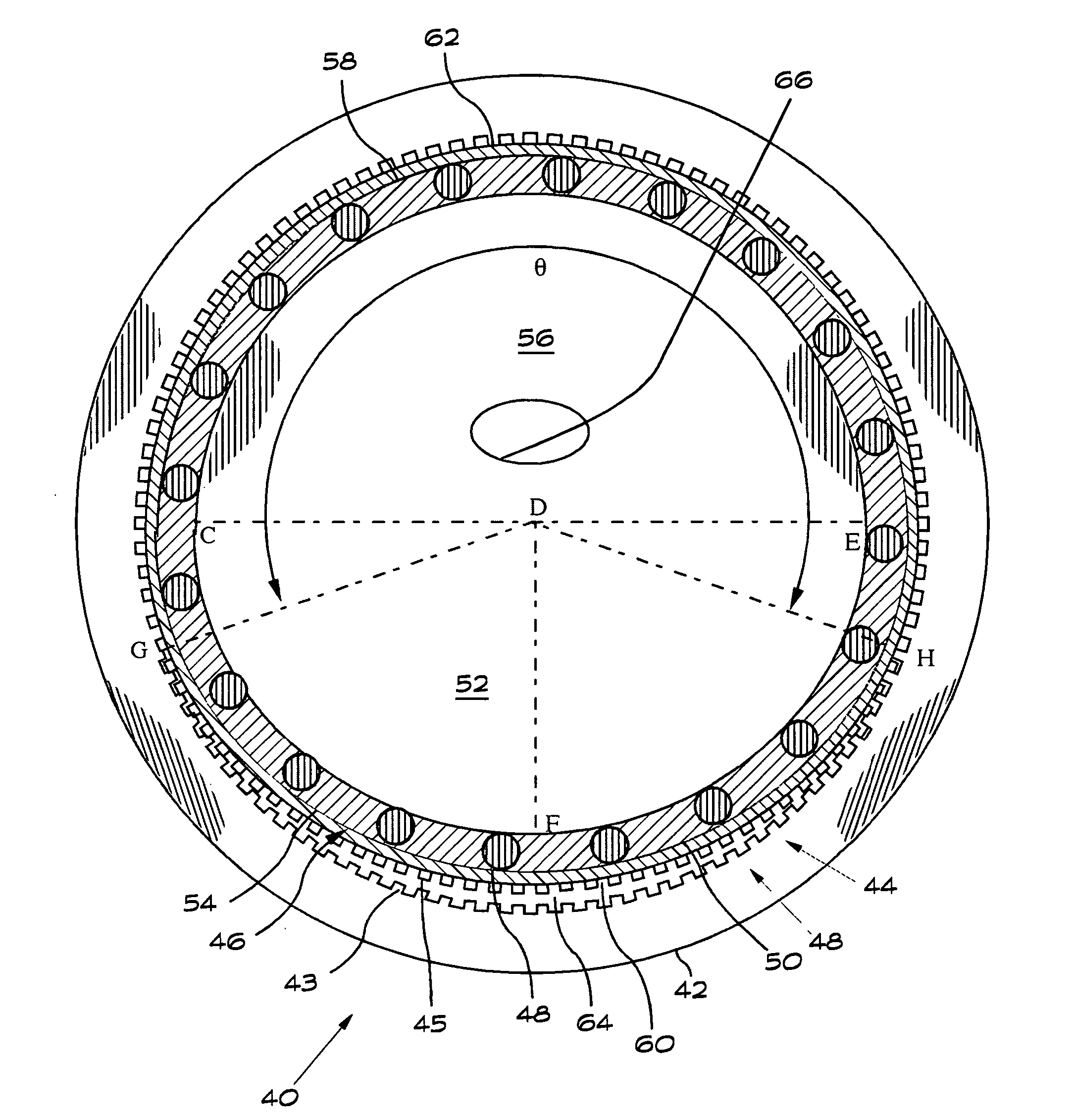
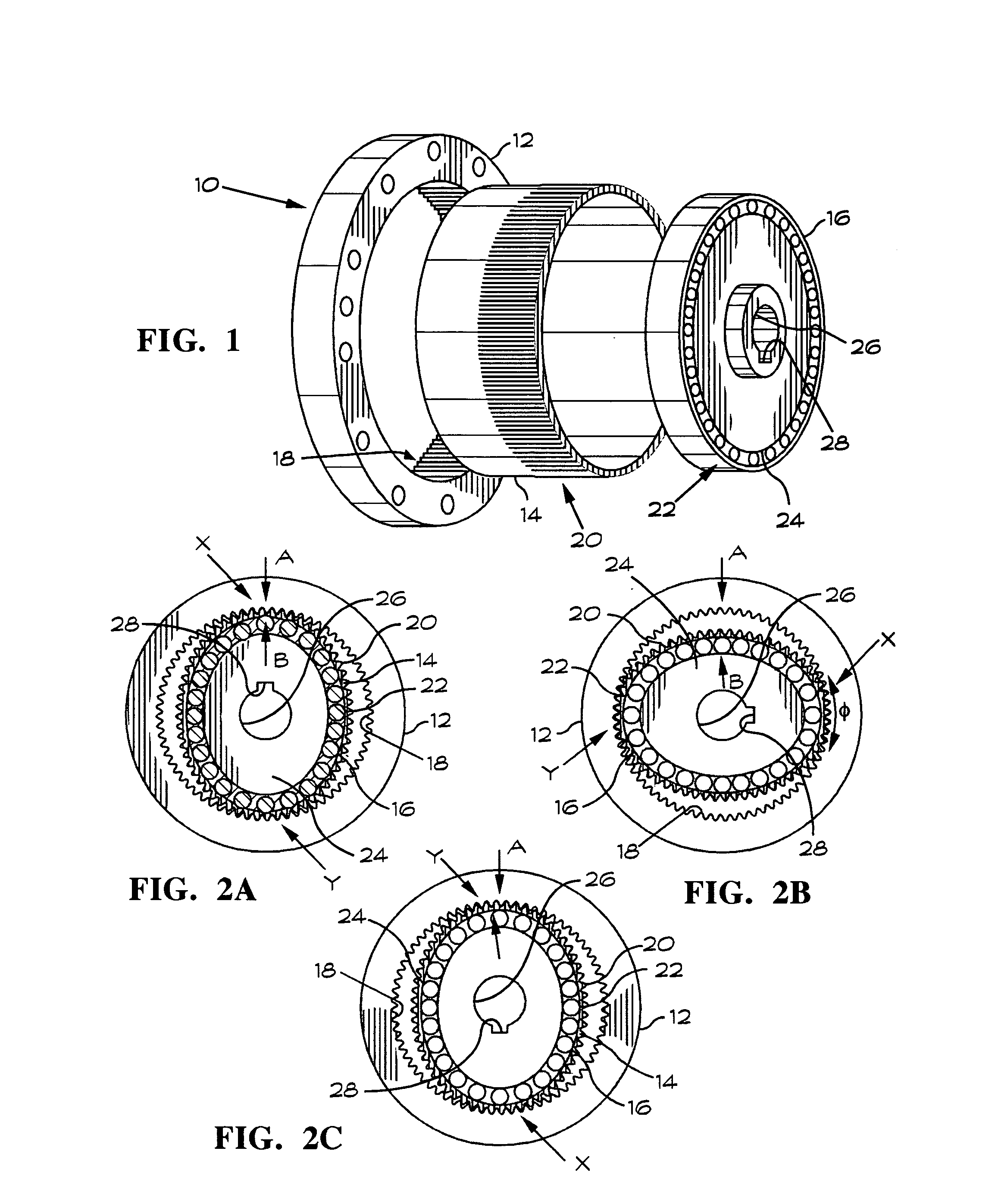
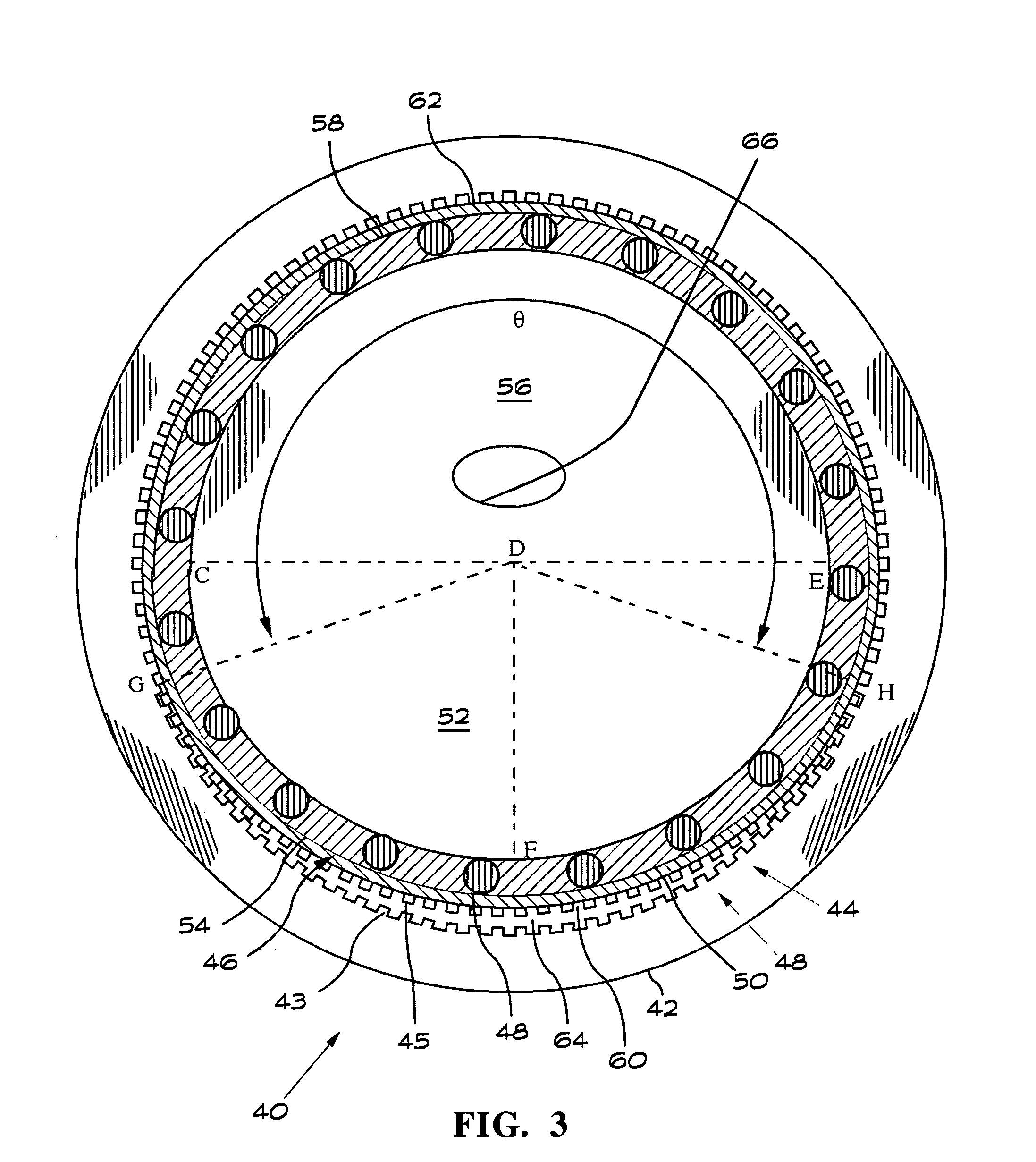
- A modified wave generator with a semi-ellipsoidal and semi-cylindrical design and a flexspline with one tooth fewer than the circular spline, featuring an asymmetrical cutout to maintain the center of gravity aligned with the circular spline's axis, reducing unwanted vibrations and enhancing torque capacity.

Closed-loop compensation for kinematic error in harmonic driver for precision control applications
PatentInactiveUS6459940B1
Innovation
- Development of nonlinear control algorithms that use both load side and motor side feedback to compensate for kinematic error in harmonic drives, based on a mathematical model representing dynamic effects, ensuring complete compensation in set-point and trajectory tracking without prior information about the error form, employing Lyapunov theory for stability analysis.


Industry Standards for High-Precision Drive Systems
The selection of harmonic drives for high-precision applications is governed by a comprehensive framework of industry standards that ensure consistent performance, reliability, and interoperability across different manufacturers and applications. These standards establish critical benchmarks for precision, repeatability, and operational characteristics that directly impact the effectiveness of harmonic drive systems in demanding environments.
ISO 9409 series standards define the mechanical interfaces for robotic applications, establishing mounting dimensions and connection specifications that are crucial for harmonic drive integration. These standards ensure compatibility between harmonic drives and robotic joints, facilitating seamless integration across different manufacturers. The ISO 9409-1 standard specifically addresses circular flanges, while ISO 9409-2 covers square flanges, both commonly used in high-precision robotic applications.
The IEC 61800 series provides comprehensive guidelines for adjustable speed electrical power drive systems, encompassing safety requirements, electromagnetic compatibility, and functional safety aspects. These standards are particularly relevant for harmonic drives integrated with servo motors, establishing performance criteria for dynamic response, positioning accuracy, and system stability under varying load conditions.
AGMA 2101-D04 standard addresses fundamental rating factors and calculation methods for involute spur and helical gear teeth, which applies to the gear components within harmonic drive systems. This standard establishes load capacity calculations, stress analysis methodologies, and durability assessment criteria that are essential for high-precision applications requiring extended operational life.
The ISO 230 series, specifically ISO 230-2, defines test procedures for determining positioning accuracy and repeatability of numerically controlled machine tools. While primarily focused on machine tools, these standards provide measurement methodologies and acceptance criteria that are directly applicable to harmonic drive performance evaluation in precision positioning systems.
RIA R15.06 safety standard for industrial robots incorporates requirements for drive system performance, including specifications for emergency stopping, speed monitoring, and position feedback accuracy. These safety-related performance requirements significantly influence harmonic drive selection criteria, particularly in collaborative robotics and human-machine interaction scenarios.
NEMA standards, particularly NEMA MG-1 for motors and generators, establish electrical and mechanical performance criteria for motor-drive combinations. These standards define torque ripple limits, speed regulation accuracy, and thermal performance requirements that directly impact harmonic drive selection for servo applications requiring exceptional smoothness and precision.
ISO 9409 series standards define the mechanical interfaces for robotic applications, establishing mounting dimensions and connection specifications that are crucial for harmonic drive integration. These standards ensure compatibility between harmonic drives and robotic joints, facilitating seamless integration across different manufacturers. The ISO 9409-1 standard specifically addresses circular flanges, while ISO 9409-2 covers square flanges, both commonly used in high-precision robotic applications.
The IEC 61800 series provides comprehensive guidelines for adjustable speed electrical power drive systems, encompassing safety requirements, electromagnetic compatibility, and functional safety aspects. These standards are particularly relevant for harmonic drives integrated with servo motors, establishing performance criteria for dynamic response, positioning accuracy, and system stability under varying load conditions.
AGMA 2101-D04 standard addresses fundamental rating factors and calculation methods for involute spur and helical gear teeth, which applies to the gear components within harmonic drive systems. This standard establishes load capacity calculations, stress analysis methodologies, and durability assessment criteria that are essential for high-precision applications requiring extended operational life.
The ISO 230 series, specifically ISO 230-2, defines test procedures for determining positioning accuracy and repeatability of numerically controlled machine tools. While primarily focused on machine tools, these standards provide measurement methodologies and acceptance criteria that are directly applicable to harmonic drive performance evaluation in precision positioning systems.
RIA R15.06 safety standard for industrial robots incorporates requirements for drive system performance, including specifications for emergency stopping, speed monitoring, and position feedback accuracy. These safety-related performance requirements significantly influence harmonic drive selection criteria, particularly in collaborative robotics and human-machine interaction scenarios.
NEMA standards, particularly NEMA MG-1 for motors and generators, establish electrical and mechanical performance criteria for motor-drive combinations. These standards define torque ripple limits, speed regulation accuracy, and thermal performance requirements that directly impact harmonic drive selection for servo applications requiring exceptional smoothness and precision.
Cost-Performance Optimization in Drive Selection
Cost-performance optimization in harmonic drive selection requires a systematic evaluation framework that balances technical specifications with economic constraints. The optimization process begins with establishing performance thresholds that define the minimum acceptable parameters for precision, torque capacity, and operational lifespan. These baseline requirements serve as filters to eliminate unsuitable options early in the selection process, preventing costly over-specification while ensuring mission-critical performance standards are maintained.
Total cost of ownership analysis extends beyond initial procurement costs to encompass maintenance intervals, replacement part availability, and operational energy consumption. Premium harmonic drives often demonstrate superior long-term value through extended service life and reduced maintenance requirements, despite higher upfront investment. The analysis should incorporate failure rate statistics and mean time between failures data to accurately project lifecycle costs across different manufacturer offerings.
Performance scaling considerations become critical when evaluating drives across different precision tiers. The relationship between cost and precision improvement typically follows a non-linear curve, where incremental gains in accuracy demand exponentially higher investment. Understanding this scaling relationship enables engineers to identify the optimal precision level that satisfies application requirements without unnecessary cost burden.
Vendor ecosystem evaluation plays a significant role in cost-performance optimization, as manufacturers with comprehensive support networks often provide better long-term value through readily available technical assistance and spare parts inventory. Regional availability of service centers and local technical expertise can substantially impact operational costs, particularly for mission-critical applications requiring rapid response times.
Application-specific customization options present both opportunities and risks in cost optimization. While standard catalog products offer predictable pricing and proven reliability, customized solutions may provide superior performance-to-cost ratios for specialized applications. The decision framework should weigh customization benefits against increased lead times, higher minimum order quantities, and potential supply chain vulnerabilities.
Volume procurement strategies can significantly influence unit costs, particularly when planning multi-phase projects or standardizing across product lines. Establishing preferred vendor relationships and leveraging bulk purchasing agreements often yields substantial cost reductions while ensuring consistent performance characteristics across installations.
Total cost of ownership analysis extends beyond initial procurement costs to encompass maintenance intervals, replacement part availability, and operational energy consumption. Premium harmonic drives often demonstrate superior long-term value through extended service life and reduced maintenance requirements, despite higher upfront investment. The analysis should incorporate failure rate statistics and mean time between failures data to accurately project lifecycle costs across different manufacturer offerings.
Performance scaling considerations become critical when evaluating drives across different precision tiers. The relationship between cost and precision improvement typically follows a non-linear curve, where incremental gains in accuracy demand exponentially higher investment. Understanding this scaling relationship enables engineers to identify the optimal precision level that satisfies application requirements without unnecessary cost burden.
Vendor ecosystem evaluation plays a significant role in cost-performance optimization, as manufacturers with comprehensive support networks often provide better long-term value through readily available technical assistance and spare parts inventory. Regional availability of service centers and local technical expertise can substantially impact operational costs, particularly for mission-critical applications requiring rapid response times.
Application-specific customization options present both opportunities and risks in cost optimization. While standard catalog products offer predictable pricing and proven reliability, customized solutions may provide superior performance-to-cost ratios for specialized applications. The decision framework should weigh customization benefits against increased lead times, higher minimum order quantities, and potential supply chain vulnerabilities.
Volume procurement strategies can significantly influence unit costs, particularly when planning multi-phase projects or standardizing across product lines. Establishing preferred vendor relationships and leveraging bulk purchasing agreements often yields substantial cost reductions while ensuring consistent performance characteristics across installations.
Unlock deeper insights with PatSnap Eureka Quick Research — get a full tech report to explore trends and direct your research. Try now!
Generate Your Research Report Instantly with AI Agent
Supercharge your innovation with PatSnap Eureka AI Agent Platform!