How to Synchronize Data Transfers Using Coherent Optics
APR 22, 20269 MIN READ
Generate Your Research Report Instantly with AI Agent
PatSnap Eureka helps you evaluate technical feasibility & market potential.
Coherent Optics Data Sync Background and Objectives
Coherent optical communication has emerged as a cornerstone technology for modern high-speed data transmission systems, fundamentally transforming how information is transmitted across fiber optic networks. This technology leverages the phase, amplitude, and polarization properties of light to encode and transmit data, enabling unprecedented bandwidth efficiency and transmission distances. The evolution from direct detection systems to coherent detection has marked a paradigm shift in optical communications, allowing for advanced modulation formats and sophisticated digital signal processing techniques.
The historical development of coherent optics traces back to the 1980s when initial research focused on overcoming the limitations of intensity modulation and direct detection systems. Early coherent systems faced significant challenges including laser phase noise, polarization fluctuations, and complex analog processing requirements. However, the advent of digital signal processing in the 2000s revolutionized the field, enabling practical implementation of coherent detection systems that could compensate for transmission impairments in the digital domain.
Data synchronization in coherent optical systems represents a critical challenge that directly impacts system performance, reliability, and scalability. As network architectures evolve toward higher data rates and more complex topologies, the need for precise timing and phase alignment becomes increasingly crucial. Traditional synchronization methods often prove inadequate for the stringent requirements of coherent systems, where phase coherence must be maintained across multiple channels and network nodes.
The primary objective of developing advanced data synchronization techniques for coherent optics is to achieve seamless, real-time coordination of data transfers while maintaining signal integrity and minimizing latency. This involves establishing robust timing recovery mechanisms, implementing effective phase tracking algorithms, and ensuring stable carrier recovery across varying channel conditions. The synchronization framework must accommodate the unique characteristics of coherent detection, including the need for local oscillator alignment and compensation of fiber nonlinearities.
Furthermore, the integration of coherent optics with emerging network architectures such as software-defined networking and network function virtualization demands flexible synchronization solutions that can adapt to dynamic network conditions. The ultimate goal is to create a comprehensive synchronization ecosystem that enables coherent optical systems to operate at their theoretical limits while providing the reliability and performance required for next-generation communication networks.
The historical development of coherent optics traces back to the 1980s when initial research focused on overcoming the limitations of intensity modulation and direct detection systems. Early coherent systems faced significant challenges including laser phase noise, polarization fluctuations, and complex analog processing requirements. However, the advent of digital signal processing in the 2000s revolutionized the field, enabling practical implementation of coherent detection systems that could compensate for transmission impairments in the digital domain.
Data synchronization in coherent optical systems represents a critical challenge that directly impacts system performance, reliability, and scalability. As network architectures evolve toward higher data rates and more complex topologies, the need for precise timing and phase alignment becomes increasingly crucial. Traditional synchronization methods often prove inadequate for the stringent requirements of coherent systems, where phase coherence must be maintained across multiple channels and network nodes.
The primary objective of developing advanced data synchronization techniques for coherent optics is to achieve seamless, real-time coordination of data transfers while maintaining signal integrity and minimizing latency. This involves establishing robust timing recovery mechanisms, implementing effective phase tracking algorithms, and ensuring stable carrier recovery across varying channel conditions. The synchronization framework must accommodate the unique characteristics of coherent detection, including the need for local oscillator alignment and compensation of fiber nonlinearities.
Furthermore, the integration of coherent optics with emerging network architectures such as software-defined networking and network function virtualization demands flexible synchronization solutions that can adapt to dynamic network conditions. The ultimate goal is to create a comprehensive synchronization ecosystem that enables coherent optical systems to operate at their theoretical limits while providing the reliability and performance required for next-generation communication networks.
Market Demand for High-Speed Coherent Data Transfer
The global telecommunications infrastructure is experiencing unprecedented demand for high-speed data transmission capabilities, driven by the exponential growth of cloud computing, artificial intelligence applications, and real-time data analytics. Modern data centers require synchronous data transfer solutions that can handle massive volumes of information while maintaining signal integrity across long distances. Coherent optical communication systems have emerged as the primary technology to address these requirements, offering superior performance compared to traditional intensity-modulated direct-detection systems.
Enterprise customers across various sectors are increasingly demanding ultra-low latency communication solutions for mission-critical applications. Financial trading platforms require microsecond-level synchronization for high-frequency trading operations, while autonomous vehicle networks need real-time data coordination between distributed processing units. The healthcare industry is driving demand for synchronized medical imaging data transfers, particularly in telemedicine and remote surgical procedures where timing precision is paramount.
The proliferation of 5G networks and edge computing architectures has created substantial market pressure for coherent optical solutions capable of supporting distributed processing environments. Network operators are seeking technologies that can synchronize data streams across multiple geographic locations while maintaining phase coherence and minimizing jitter. This requirement extends beyond traditional telecommunications to include industrial IoT applications, smart city infrastructure, and distributed scientific computing networks.
Hyperscale cloud service providers represent a significant market segment demanding advanced coherent optical synchronization capabilities. These organizations require solutions that can coordinate data transfers across geographically distributed data centers while ensuring consistent performance metrics. The growing adoption of hybrid cloud architectures further amplifies the need for reliable synchronization mechanisms that can maintain data integrity across heterogeneous network environments.
The market demand is also being shaped by emerging applications in quantum computing and advanced scientific research, where coherent optical systems must maintain precise phase relationships over extended periods. Research institutions and technology companies are investing heavily in coherent optical infrastructure to support quantum communication networks and distributed quantum computing systems, creating new market opportunities for specialized synchronization solutions.
Enterprise customers across various sectors are increasingly demanding ultra-low latency communication solutions for mission-critical applications. Financial trading platforms require microsecond-level synchronization for high-frequency trading operations, while autonomous vehicle networks need real-time data coordination between distributed processing units. The healthcare industry is driving demand for synchronized medical imaging data transfers, particularly in telemedicine and remote surgical procedures where timing precision is paramount.
The proliferation of 5G networks and edge computing architectures has created substantial market pressure for coherent optical solutions capable of supporting distributed processing environments. Network operators are seeking technologies that can synchronize data streams across multiple geographic locations while maintaining phase coherence and minimizing jitter. This requirement extends beyond traditional telecommunications to include industrial IoT applications, smart city infrastructure, and distributed scientific computing networks.
Hyperscale cloud service providers represent a significant market segment demanding advanced coherent optical synchronization capabilities. These organizations require solutions that can coordinate data transfers across geographically distributed data centers while ensuring consistent performance metrics. The growing adoption of hybrid cloud architectures further amplifies the need for reliable synchronization mechanisms that can maintain data integrity across heterogeneous network environments.
The market demand is also being shaped by emerging applications in quantum computing and advanced scientific research, where coherent optical systems must maintain precise phase relationships over extended periods. Research institutions and technology companies are investing heavily in coherent optical infrastructure to support quantum communication networks and distributed quantum computing systems, creating new market opportunities for specialized synchronization solutions.
Current State of Coherent Optical Synchronization Tech
Coherent optical synchronization technology has reached a mature stage in commercial deployment, with widespread adoption across high-capacity fiber optic networks globally. Current implementations primarily utilize digital signal processing (DSP) algorithms combined with advanced phase-locked loop (PLL) systems to achieve precise timing synchronization between optical transmitters and receivers. The technology leverages the inherent phase information in coherent optical signals to maintain synchronization accuracy within nanosecond tolerances.
Modern coherent optical systems employ sophisticated clock recovery mechanisms that extract timing information directly from the received optical signal. These systems utilize carrier phase estimation algorithms, such as the Viterbi-Viterbi algorithm and blind phase search methods, to maintain phase coherence across multiple wavelength channels. The integration of forward error correction (FEC) with synchronization protocols has significantly improved system reliability and reduced bit error rates in high-speed data transmission scenarios.
Leading telecommunications equipment manufacturers have developed proprietary synchronization solutions that combine hardware-based timing circuits with software-defined networking capabilities. These solutions typically incorporate IEEE 1588 Precision Time Protocol (PTP) standards adapted for optical networks, enabling sub-microsecond synchronization accuracy across distributed network architectures. The current generation of coherent optical transceivers supports data rates up to 800 Gbps per wavelength while maintaining robust synchronization performance.
Recent technological advances have introduced machine learning-enhanced synchronization algorithms that can adaptively compensate for network impairments and environmental variations. These intelligent systems continuously monitor signal quality parameters and automatically adjust synchronization parameters to optimize performance. The implementation of software-defined optical networking (SDON) has further enhanced synchronization capabilities by enabling centralized control and coordination of timing across multiple network nodes.
Current challenges in coherent optical synchronization include managing timing drift in long-haul networks, addressing synchronization requirements for emerging 5G and edge computing applications, and developing cost-effective solutions for metro and access networks. Industry efforts are focused on standardizing synchronization protocols and developing interoperable solutions that can seamlessly integrate with existing network infrastructure while supporting future bandwidth demands.
Modern coherent optical systems employ sophisticated clock recovery mechanisms that extract timing information directly from the received optical signal. These systems utilize carrier phase estimation algorithms, such as the Viterbi-Viterbi algorithm and blind phase search methods, to maintain phase coherence across multiple wavelength channels. The integration of forward error correction (FEC) with synchronization protocols has significantly improved system reliability and reduced bit error rates in high-speed data transmission scenarios.
Leading telecommunications equipment manufacturers have developed proprietary synchronization solutions that combine hardware-based timing circuits with software-defined networking capabilities. These solutions typically incorporate IEEE 1588 Precision Time Protocol (PTP) standards adapted for optical networks, enabling sub-microsecond synchronization accuracy across distributed network architectures. The current generation of coherent optical transceivers supports data rates up to 800 Gbps per wavelength while maintaining robust synchronization performance.
Recent technological advances have introduced machine learning-enhanced synchronization algorithms that can adaptively compensate for network impairments and environmental variations. These intelligent systems continuously monitor signal quality parameters and automatically adjust synchronization parameters to optimize performance. The implementation of software-defined optical networking (SDON) has further enhanced synchronization capabilities by enabling centralized control and coordination of timing across multiple network nodes.
Current challenges in coherent optical synchronization include managing timing drift in long-haul networks, addressing synchronization requirements for emerging 5G and edge computing applications, and developing cost-effective solutions for metro and access networks. Industry efforts are focused on standardizing synchronization protocols and developing interoperable solutions that can seamlessly integrate with existing network infrastructure while supporting future bandwidth demands.
Existing Coherent Optical Data Synchronization Solutions
01 Clock recovery and synchronization in coherent optical receivers
Coherent optical communication systems require precise clock recovery and synchronization mechanisms to accurately detect and process received optical signals. These systems employ digital signal processing techniques to extract timing information from the received signal, compensating for frequency offsets and phase noise. Advanced algorithms are used to synchronize the local oscillator with the incoming optical carrier, enabling reliable data recovery in high-speed optical transmission systems.- Clock recovery and synchronization in coherent optical receivers: Coherent optical communication systems require precise clock recovery and synchronization mechanisms to accurately detect and decode transmitted data. These systems employ digital signal processing techniques to extract timing information from received optical signals, compensating for frequency offsets and phase noise. Advanced algorithms enable synchronization of local oscillators with incoming data streams, ensuring optimal symbol timing and carrier phase alignment for high-speed data transmission.
- Frame synchronization and alignment in optical networks: Optical communication systems utilize frame synchronization techniques to identify data boundaries and maintain proper alignment of transmitted information. These methods involve detecting specific synchronization patterns or markers within the data stream, enabling receivers to correctly interpret frame structures. Synchronization mechanisms handle various frame formats and protocols, supporting efficient data recovery even in the presence of transmission impairments or timing variations.
- Phase-locked loop systems for optical data synchronization: Phase-locked loop architectures are employed in coherent optical systems to maintain synchronization between transmitter and receiver. These systems continuously track and adjust phase relationships, compensating for frequency drift and jitter in optical carriers. Digital and analog implementations provide robust synchronization capabilities, enabling stable data recovery across varying channel conditions and supporting high-bandwidth optical communication links.
- Digital signal processing for coherent detection synchronization: Modern coherent optical receivers incorporate sophisticated digital signal processing algorithms to achieve and maintain synchronization. These techniques process in-phase and quadrature components of received signals, performing equalization, carrier recovery, and timing synchronization in the digital domain. Adaptive algorithms continuously optimize synchronization parameters, enabling robust performance in dynamic optical channels and supporting advanced modulation formats for increased data rates.
- Multi-channel and wavelength division multiplexed synchronization: Wavelength division multiplexed optical systems require coordinated synchronization across multiple channels to maintain system-wide timing alignment. These approaches handle independent data streams on different wavelengths while ensuring coherent detection and proper timing relationships. Synchronization schemes account for differential delays, chromatic dispersion, and inter-channel effects, enabling scalable high-capacity optical networks with multiple simultaneous data channels.
02 Frame synchronization and alignment in optical networks
Optical communication systems implement frame synchronization techniques to properly align and identify data frames within the transmitted signal. These methods involve detecting specific synchronization patterns or markers embedded in the data stream, allowing receivers to establish correct frame boundaries. The synchronization process ensures accurate data extraction and minimizes bit errors by maintaining proper timing relationships between transmitter and receiver components.Expand Specific Solutions03 Phase synchronization and carrier recovery in coherent detection
Coherent optical systems utilize sophisticated phase synchronization methods to track and compensate for phase variations in the optical carrier signal. These techniques employ feedback loops and digital signal processing algorithms to maintain phase coherence between the transmitted and received signals. The carrier recovery process is essential for demodulating phase-modulated optical signals and achieving optimal system performance in long-haul transmission applications.Expand Specific Solutions04 Symbol timing synchronization and equalization
Symbol timing synchronization is critical for accurately sampling received optical signals at optimal decision points. These systems implement adaptive timing recovery algorithms that continuously adjust sampling phases to compensate for timing drift and jitter. Combined with equalization techniques, symbol synchronization ensures maximum signal quality and minimizes intersymbol interference in high-speed coherent optical transmission systems.Expand Specific Solutions05 Multi-channel synchronization in wavelength division multiplexed systems
Wavelength division multiplexed coherent optical systems require coordinated synchronization across multiple optical channels to maintain system-wide timing alignment. These architectures implement centralized or distributed synchronization schemes that ensure all channels operate with consistent timing references. The synchronization mechanisms account for differential delays and enable seamless data transmission across multiple wavelengths in dense optical networks.Expand Specific Solutions
Key Players in Coherent Optics and Data Sync Industry
The coherent optics data synchronization market represents a rapidly evolving sector within the telecommunications infrastructure industry, currently in its growth phase as 5G networks and high-bandwidth applications drive demand. The market demonstrates significant expansion potential, with increasing investments in optical networking infrastructure globally. Technology maturity varies considerably across market participants, with established telecommunications equipment manufacturers like Huawei Technologies, Ericsson, and Cisco Technology leading in commercial deployment capabilities. Research-focused entities including Max Planck Gesellschaft, Beijing University of Posts & Telecommunications, and Centre National de la Recherche Scientifique contribute fundamental innovations, while specialized optical networking companies such as Infinera Corp. and component manufacturers like Mellanox Technologies (now part of NVIDIA) provide targeted solutions. The competitive landscape features a mix of integrated system providers, component specialists, and research institutions, indicating a maturing but still fragmented market with opportunities for both incremental improvements and breakthrough innovations in coherent optical synchronization technologies.
Huawei Technologies Co., Ltd.
Technical Solution: Huawei's coherent optical synchronization approach leverages their OptiX series platforms with integrated timing distribution systems. Their solution combines IEEE 1588v2 Precision Time Protocol (PTP) with coherent optical transport to achieve sub-microsecond synchronization accuracy. The technology utilizes advanced digital signal processing algorithms that compensate for fiber dispersion and nonlinear effects while maintaining precise timing references. Huawei's coherent transceivers incorporate hardware-based timestamp generation and distributed clock synchronization mechanisms that enable coordinated data transfers across multiple wavelengths. Their solution supports both frequency and phase synchronization with automatic compensation for temperature variations and aging effects in optical components.
Strengths: Comprehensive end-to-end optical networking solutions with strong R&D capabilities. Weaknesses: Limited market access in some regions due to geopolitical restrictions.
Telefonaktiebolaget LM Ericsson
Technical Solution: Ericsson's coherent optical synchronization solution focuses on mobile fronthaul and backhaul applications where precise timing is critical for 5G networks. Their technology combines coherent optical transport with Synchronous Ethernet and IEEE 1588 PTP to deliver carrier-grade synchronization performance. The system employs advanced jitter and wander filtering techniques within the coherent receiver to maintain timing accuracy below 1.5 microseconds. Ericsson's approach utilizes distributed synchronization nodes that can operate independently while maintaining network-wide coherence through redundant timing references. Their solution includes automatic protection switching and hitless synchronization transfer capabilities to ensure continuous operation during network maintenance or failures.
Strengths: Deep telecommunications expertise with focus on carrier-grade reliability and 5G integration. Weaknesses: Primarily focused on telecom applications with limited enterprise market presence.
Core Patents in Coherent Optical Sync Technologies
Optical data synchronization scheme
PatentActiveUS7835649B2
Innovation
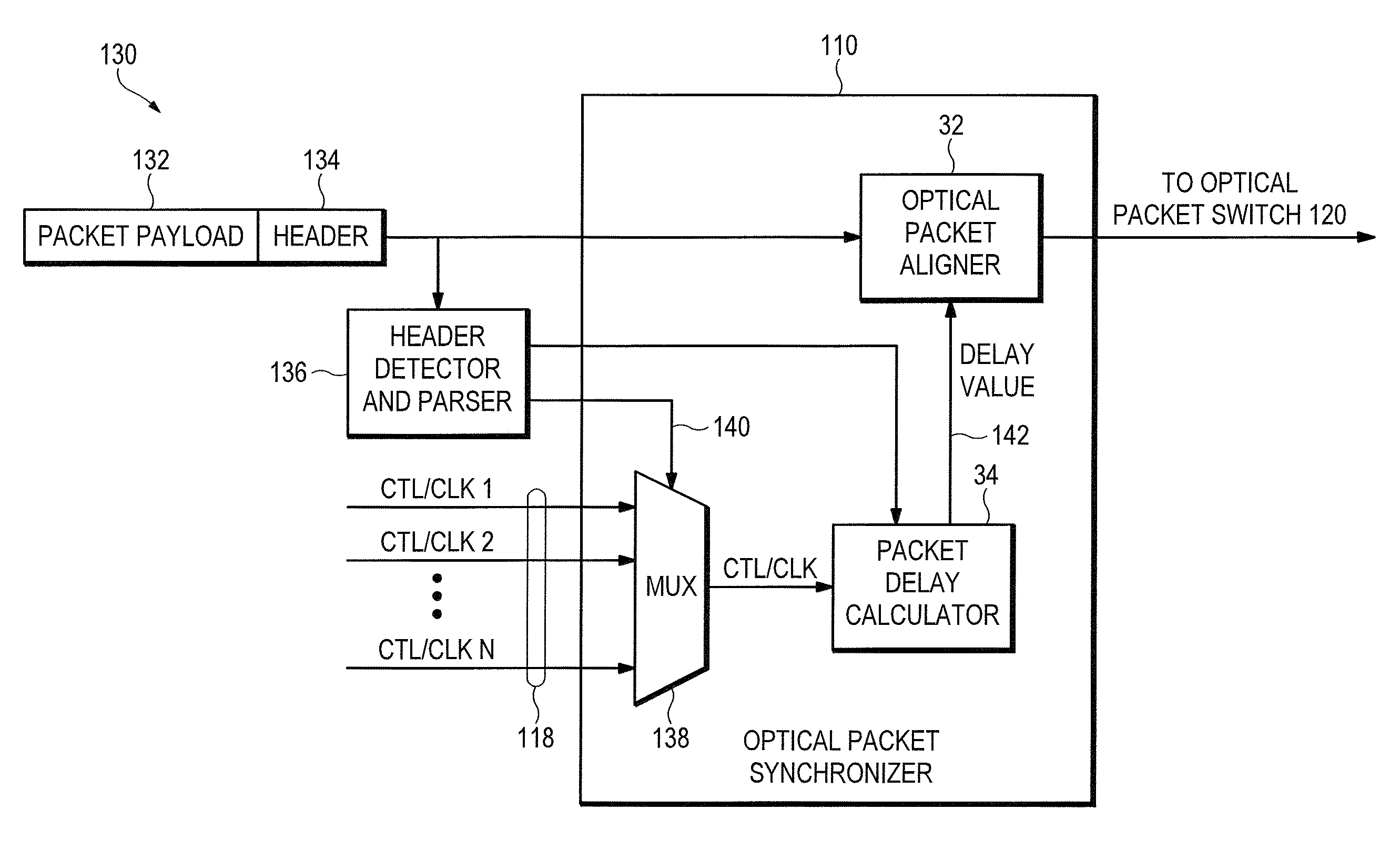
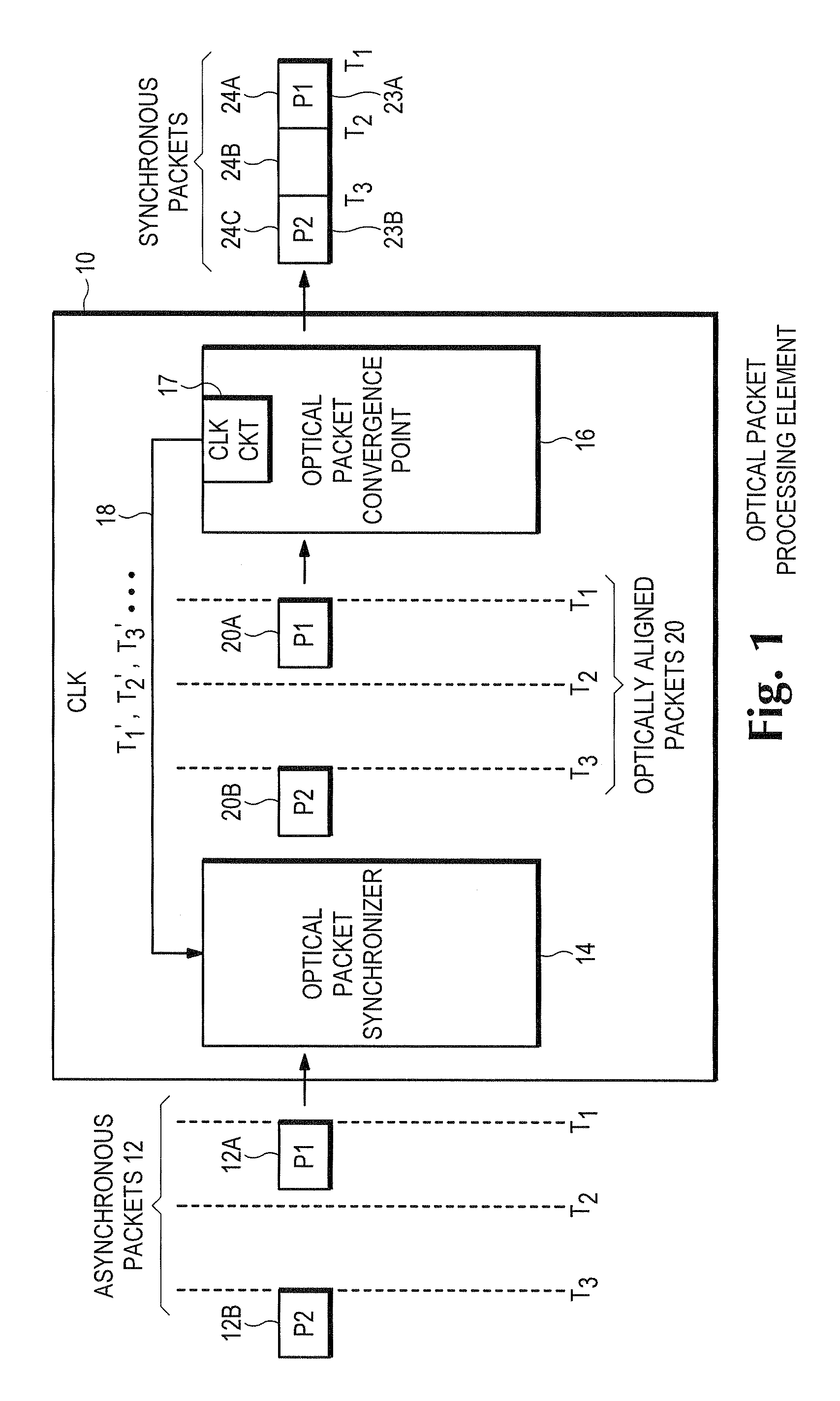
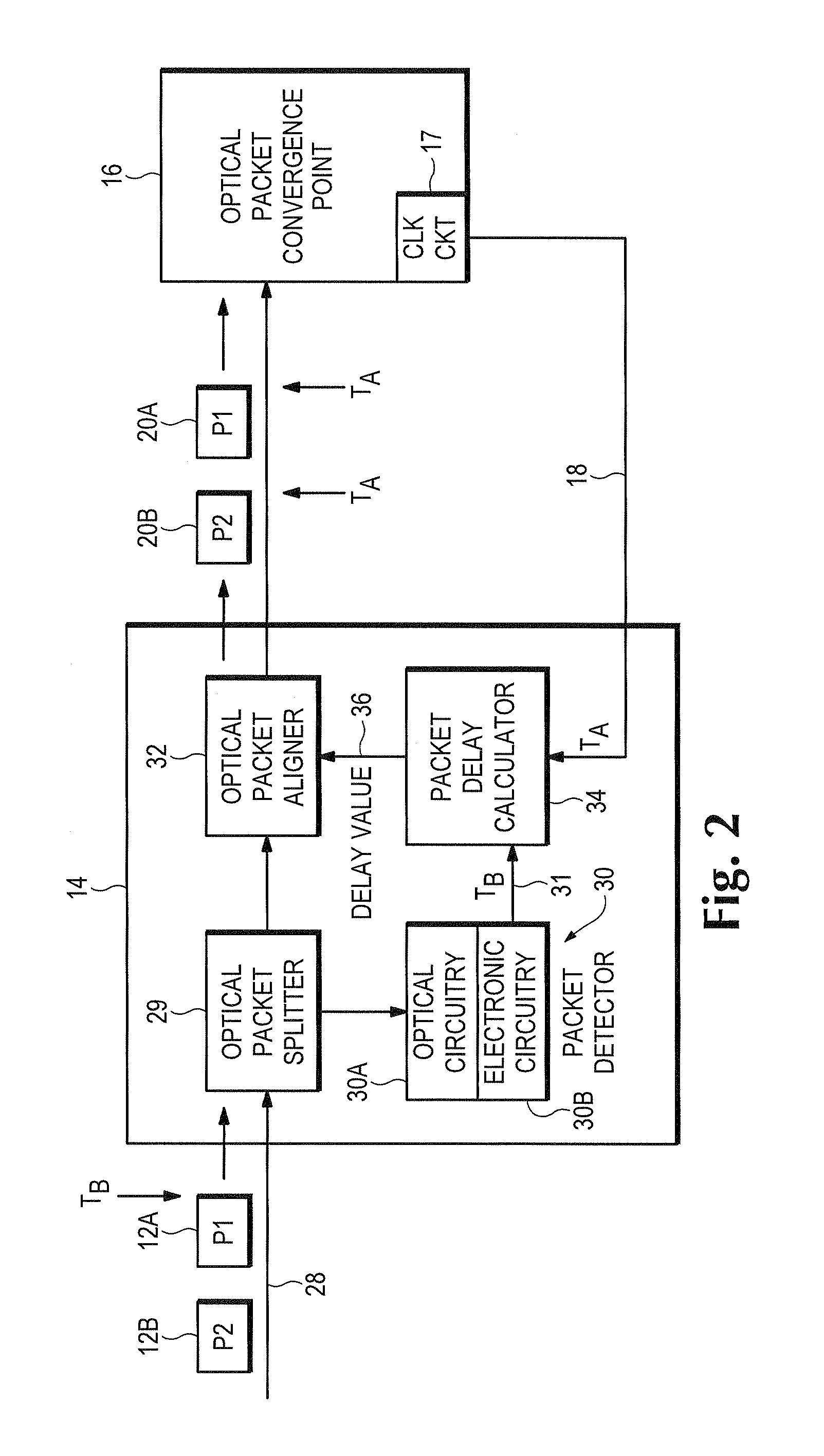
- An optical packet synchronizer aligns asynchronous data with synchronous convergence points by comparing arrival times with a reference signal, deriving control information to adjust an optical data aligner, ensuring packets are synchronized with the convergence point.

Method and system for data synchronization in passive optical networks
PatentActiveUS8208809B2
Innovation
- The implementation of optimized Start of Data (SOD) delimiter sequences with a Hamming distance of 32 between the SOD delimiter and False Synchronization Candidates, reducing false locking probability and enhancing synchronization reliability with minimal modifications to existing systems.


Standards and Protocols for Coherent Optical Networks
The standardization landscape for coherent optical networks has evolved significantly to address the complex requirements of data synchronization across high-capacity transmission systems. The International Telecommunication Union (ITU-T) has established fundamental frameworks through recommendations such as G.698.2 for multichannel DWDM applications and G.959.1 for optical transport network physical layer interfaces. These standards define critical parameters including modulation formats, forward error correction schemes, and timing recovery mechanisms essential for maintaining synchronous data transfers.
The Optical Internetworking Forum (OIF) has contributed substantially through implementation agreements that bridge theoretical standards with practical deployment scenarios. OIF-400ZR and OIF-OpenZR+ specifications have become particularly influential in defining interoperability requirements for 400G and beyond coherent transceivers. These protocols establish standardized approaches to digital signal processing algorithms, carrier recovery techniques, and phase noise compensation methods that ensure reliable synchronization across diverse vendor equipment.
IEEE 802.3 Ethernet standards have been extended to accommodate coherent optical interfaces, with amendments like 802.3cu addressing 100G and 400G applications over single-mode fiber. These specifications incorporate adaptive equalization protocols and clock data recovery mechanisms specifically designed for coherent detection systems. The standards mandate precise timing alignment procedures and jitter tolerance specifications that are crucial for maintaining data integrity during high-speed transfers.
OpenROADM Multi-Source Agreement represents a significant advancement in standardizing disaggregated optical networks. This protocol suite defines comprehensive APIs and YANG data models for managing coherent optical devices, including real-time monitoring of synchronization parameters such as symbol timing offset and carrier frequency deviation. The standardized telemetry interfaces enable automated optimization of synchronization performance across network segments.
Recent developments in software-defined networking have prompted the creation of OpenConfig models specifically tailored for coherent optical systems. These standardized configuration and operational state models provide unified interfaces for managing synchronization-related parameters across multi-vendor environments. The protocols incorporate machine-readable schemas for performance monitoring metrics including bit error rates, signal-to-noise ratios, and timing recovery lock status, facilitating automated network optimization and fault detection in coherent optical infrastructures.
The Optical Internetworking Forum (OIF) has contributed substantially through implementation agreements that bridge theoretical standards with practical deployment scenarios. OIF-400ZR and OIF-OpenZR+ specifications have become particularly influential in defining interoperability requirements for 400G and beyond coherent transceivers. These protocols establish standardized approaches to digital signal processing algorithms, carrier recovery techniques, and phase noise compensation methods that ensure reliable synchronization across diverse vendor equipment.
IEEE 802.3 Ethernet standards have been extended to accommodate coherent optical interfaces, with amendments like 802.3cu addressing 100G and 400G applications over single-mode fiber. These specifications incorporate adaptive equalization protocols and clock data recovery mechanisms specifically designed for coherent detection systems. The standards mandate precise timing alignment procedures and jitter tolerance specifications that are crucial for maintaining data integrity during high-speed transfers.
OpenROADM Multi-Source Agreement represents a significant advancement in standardizing disaggregated optical networks. This protocol suite defines comprehensive APIs and YANG data models for managing coherent optical devices, including real-time monitoring of synchronization parameters such as symbol timing offset and carrier frequency deviation. The standardized telemetry interfaces enable automated optimization of synchronization performance across network segments.
Recent developments in software-defined networking have prompted the creation of OpenConfig models specifically tailored for coherent optical systems. These standardized configuration and operational state models provide unified interfaces for managing synchronization-related parameters across multi-vendor environments. The protocols incorporate machine-readable schemas for performance monitoring metrics including bit error rates, signal-to-noise ratios, and timing recovery lock status, facilitating automated network optimization and fault detection in coherent optical infrastructures.
Signal Processing Algorithms for Coherent Sync Systems
Signal processing algorithms form the backbone of coherent synchronization systems, enabling precise timing alignment and data integrity across optical communication networks. These algorithms must handle the complex nature of coherent optical signals while maintaining synchronization accuracy under varying channel conditions and system parameters.
Digital signal processing techniques for coherent synchronization primarily focus on phase recovery and timing estimation algorithms. Carrier phase estimation algorithms, such as the Viterbi-Viterbi algorithm and blind phase search methods, extract phase information from received coherent signals to establish reference timing. These algorithms process in-phase and quadrature components of the optical signal to determine phase drift and compensate for laser linewidth effects that can disrupt synchronization.
Adaptive filtering algorithms play a crucial role in maintaining synchronization stability. Least mean squares and recursive least squares algorithms continuously adjust filter coefficients to track channel variations and maintain optimal synchronization performance. These algorithms process real-time feedback from the coherent detection system to minimize timing errors and phase noise impacts on data transfer synchronization.
Clock recovery algorithms specifically designed for coherent optical systems utilize Gardner timing error detectors and Mueller-Muller algorithms adapted for complex-valued signals. These algorithms extract timing information from the received signal constellation to generate synchronized clock signals for data sampling and processing. The algorithms must account for chromatic dispersion effects and polarization mode dispersion that can affect timing accuracy.
Machine learning-enhanced signal processing algorithms are emerging as powerful tools for coherent synchronization systems. Neural network-based algorithms can learn complex channel characteristics and predict optimal synchronization parameters under dynamic conditions. These algorithms demonstrate superior performance in handling nonlinear channel effects and multi-path interference that traditional algorithms struggle to address effectively.
Forward error correction integration within signal processing algorithms provides additional synchronization robustness. Low-density parity-check codes and turbo codes are processed alongside synchronization algorithms to detect and correct timing-related errors while maintaining data transfer integrity across coherent optical links.
Digital signal processing techniques for coherent synchronization primarily focus on phase recovery and timing estimation algorithms. Carrier phase estimation algorithms, such as the Viterbi-Viterbi algorithm and blind phase search methods, extract phase information from received coherent signals to establish reference timing. These algorithms process in-phase and quadrature components of the optical signal to determine phase drift and compensate for laser linewidth effects that can disrupt synchronization.
Adaptive filtering algorithms play a crucial role in maintaining synchronization stability. Least mean squares and recursive least squares algorithms continuously adjust filter coefficients to track channel variations and maintain optimal synchronization performance. These algorithms process real-time feedback from the coherent detection system to minimize timing errors and phase noise impacts on data transfer synchronization.
Clock recovery algorithms specifically designed for coherent optical systems utilize Gardner timing error detectors and Mueller-Muller algorithms adapted for complex-valued signals. These algorithms extract timing information from the received signal constellation to generate synchronized clock signals for data sampling and processing. The algorithms must account for chromatic dispersion effects and polarization mode dispersion that can affect timing accuracy.
Machine learning-enhanced signal processing algorithms are emerging as powerful tools for coherent synchronization systems. Neural network-based algorithms can learn complex channel characteristics and predict optimal synchronization parameters under dynamic conditions. These algorithms demonstrate superior performance in handling nonlinear channel effects and multi-path interference that traditional algorithms struggle to address effectively.
Forward error correction integration within signal processing algorithms provides additional synchronization robustness. Low-density parity-check codes and turbo codes are processed alongside synchronization algorithms to detect and correct timing-related errors while maintaining data transfer integrity across coherent optical links.
Unlock deeper insights with PatSnap Eureka Quick Research — get a full tech report to explore trends and direct your research. Try now!
Generate Your Research Report Instantly with AI Agent
Supercharge your innovation with PatSnap Eureka AI Agent Platform!