Optimize Fail-Safe Solutions with Adaptive Coherent Optics
APR 22, 20269 MIN READ
Generate Your Research Report Instantly with AI Agent
PatSnap Eureka helps you evaluate technical feasibility & market potential.
Adaptive Coherent Optics Fail-Safe Background and Objectives
Adaptive coherent optics technology has emerged from decades of evolution in optical communication systems, initially developed to address the growing demands for high-capacity, long-distance data transmission. The foundational principles trace back to early coherent detection methods in the 1980s, which were later enhanced through digital signal processing advancements and sophisticated modulation techniques. This technological progression has been driven by the exponential growth in global data traffic and the need for more efficient spectrum utilization in optical networks.
The integration of adaptive mechanisms into coherent optical systems represents a significant leap forward in addressing dynamic network conditions and varying transmission impairments. Traditional fixed-parameter systems often struggle with changing environmental factors, fiber characteristics, and network load variations. Adaptive coherent optics introduces real-time optimization capabilities that can dynamically adjust transmission parameters, modulation formats, and error correction schemes based on current channel conditions and performance requirements.
Current technological trends indicate a strong movement toward intelligent, self-optimizing optical networks that can maintain optimal performance while minimizing human intervention. The convergence of machine learning algorithms, advanced digital signal processing, and photonic integration has created unprecedented opportunities for developing sophisticated fail-safe mechanisms. These systems can predict potential failures, implement preventive measures, and execute rapid recovery procedures when disruptions occur.
The primary objective of optimizing fail-safe solutions with adaptive coherent optics centers on achieving unprecedented network reliability and resilience. This involves developing comprehensive protection mechanisms that can detect, isolate, and recover from various failure scenarios while maintaining service continuity. The technology aims to minimize service disruption time, reduce operational costs associated with network maintenance, and enhance overall system availability to meet stringent service level agreements.
Secondary objectives include establishing standardized protocols for adaptive behavior across different vendor platforms, ensuring interoperability between legacy and next-generation systems, and creating scalable architectures that can accommodate future capacity growth. The ultimate goal is to realize autonomous optical networks capable of self-healing and continuous optimization without compromising performance or introducing additional complexity for network operators.
The integration of adaptive mechanisms into coherent optical systems represents a significant leap forward in addressing dynamic network conditions and varying transmission impairments. Traditional fixed-parameter systems often struggle with changing environmental factors, fiber characteristics, and network load variations. Adaptive coherent optics introduces real-time optimization capabilities that can dynamically adjust transmission parameters, modulation formats, and error correction schemes based on current channel conditions and performance requirements.
Current technological trends indicate a strong movement toward intelligent, self-optimizing optical networks that can maintain optimal performance while minimizing human intervention. The convergence of machine learning algorithms, advanced digital signal processing, and photonic integration has created unprecedented opportunities for developing sophisticated fail-safe mechanisms. These systems can predict potential failures, implement preventive measures, and execute rapid recovery procedures when disruptions occur.
The primary objective of optimizing fail-safe solutions with adaptive coherent optics centers on achieving unprecedented network reliability and resilience. This involves developing comprehensive protection mechanisms that can detect, isolate, and recover from various failure scenarios while maintaining service continuity. The technology aims to minimize service disruption time, reduce operational costs associated with network maintenance, and enhance overall system availability to meet stringent service level agreements.
Secondary objectives include establishing standardized protocols for adaptive behavior across different vendor platforms, ensuring interoperability between legacy and next-generation systems, and creating scalable architectures that can accommodate future capacity growth. The ultimate goal is to realize autonomous optical networks capable of self-healing and continuous optimization without compromising performance or introducing additional complexity for network operators.
Market Demand for Reliable Optical Communication Systems
The global optical communication systems market is experiencing unprecedented growth driven by the exponential increase in data traffic and the critical need for ultra-reliable network infrastructure. Telecommunications service providers, data center operators, and enterprise networks are demanding optical solutions that can maintain continuous operation even under adverse conditions, making fail-safe capabilities a fundamental requirement rather than an optional feature.
The surge in cloud computing, 5G network deployments, and Internet of Things applications has created an insatiable appetite for bandwidth and network reliability. Modern optical communication systems must handle massive data volumes while ensuring zero-tolerance for service interruptions, particularly in mission-critical applications such as financial trading networks, healthcare systems, and industrial automation. This demand has intensified the focus on adaptive coherent optics that can automatically adjust to changing network conditions and maintain optimal performance.
Submarine cable networks represent a particularly demanding segment where fail-safe optical solutions are essential. These systems operate in harsh underwater environments for decades without physical access for maintenance, making adaptive coherent optics crucial for long-term reliability. The market requires solutions that can compensate for fiber degradation, environmental fluctuations, and component aging through intelligent adaptation mechanisms.
Data center interconnects constitute another high-growth market segment driving demand for reliable optical communication systems. Hyperscale data centers require optical links that can dynamically optimize performance while providing redundancy and fault tolerance. The increasing adoption of artificial intelligence and machine learning workloads has further amplified the need for optical systems that can maintain consistent performance under varying traffic patterns and system loads.
Enterprise networks are increasingly adopting coherent optical technologies for metro and regional applications, creating new market opportunities for adaptive fail-safe solutions. These deployments require cost-effective systems that can provide carrier-grade reliability while offering simplified operation and maintenance. The market demands solutions that combine advanced coherent detection with intelligent monitoring and self-healing capabilities.
The telecommunications industry's transition toward software-defined networking and network function virtualization has created additional requirements for optical systems that can integrate seamlessly with automated network management platforms. Service providers seek optical solutions that can provide real-time performance monitoring, predictive maintenance capabilities, and automated fault recovery to minimize operational expenses and maximize network availability.
Emerging applications in quantum communications and high-frequency trading are establishing new performance benchmarks for optical communication systems, requiring unprecedented levels of reliability and precision. These specialized markets demand adaptive coherent optics that can maintain stable operation under the most stringent requirements while providing comprehensive fail-safe mechanisms to protect against any potential service disruption.
The surge in cloud computing, 5G network deployments, and Internet of Things applications has created an insatiable appetite for bandwidth and network reliability. Modern optical communication systems must handle massive data volumes while ensuring zero-tolerance for service interruptions, particularly in mission-critical applications such as financial trading networks, healthcare systems, and industrial automation. This demand has intensified the focus on adaptive coherent optics that can automatically adjust to changing network conditions and maintain optimal performance.
Submarine cable networks represent a particularly demanding segment where fail-safe optical solutions are essential. These systems operate in harsh underwater environments for decades without physical access for maintenance, making adaptive coherent optics crucial for long-term reliability. The market requires solutions that can compensate for fiber degradation, environmental fluctuations, and component aging through intelligent adaptation mechanisms.
Data center interconnects constitute another high-growth market segment driving demand for reliable optical communication systems. Hyperscale data centers require optical links that can dynamically optimize performance while providing redundancy and fault tolerance. The increasing adoption of artificial intelligence and machine learning workloads has further amplified the need for optical systems that can maintain consistent performance under varying traffic patterns and system loads.
Enterprise networks are increasingly adopting coherent optical technologies for metro and regional applications, creating new market opportunities for adaptive fail-safe solutions. These deployments require cost-effective systems that can provide carrier-grade reliability while offering simplified operation and maintenance. The market demands solutions that combine advanced coherent detection with intelligent monitoring and self-healing capabilities.
The telecommunications industry's transition toward software-defined networking and network function virtualization has created additional requirements for optical systems that can integrate seamlessly with automated network management platforms. Service providers seek optical solutions that can provide real-time performance monitoring, predictive maintenance capabilities, and automated fault recovery to minimize operational expenses and maximize network availability.
Emerging applications in quantum communications and high-frequency trading are establishing new performance benchmarks for optical communication systems, requiring unprecedented levels of reliability and precision. These specialized markets demand adaptive coherent optics that can maintain stable operation under the most stringent requirements while providing comprehensive fail-safe mechanisms to protect against any potential service disruption.
Current Challenges in Coherent Optics Fail-Safe Mechanisms
Coherent optical systems face significant reliability challenges that compromise their fail-safe capabilities in mission-critical applications. The primary obstacle stems from the inherent sensitivity of coherent detection mechanisms to environmental fluctuations, including temperature variations, mechanical vibrations, and electromagnetic interference. These factors can cause phase drift and amplitude instability, leading to signal degradation that traditional fail-safe mechanisms struggle to compensate for effectively.
Current fail-safe implementations in coherent optics rely heavily on static redundancy approaches, which involve deploying multiple parallel optical paths or backup systems. However, these solutions suffer from substantial hardware overhead and limited adaptability to dynamic network conditions. The static nature of these mechanisms prevents real-time optimization based on changing signal quality metrics, resulting in suboptimal performance during partial system failures or degraded operating conditions.
Signal processing complexity presents another critical challenge in developing robust fail-safe mechanisms. Coherent optical systems require sophisticated digital signal processing algorithms for carrier recovery, dispersion compensation, and nonlinear impairment mitigation. When primary processing chains fail, backup systems must maintain equivalent computational capabilities while ensuring seamless transition without service interruption. The computational burden of maintaining multiple processing pipelines simultaneously creates resource allocation conflicts and increases system latency.
Network-level coordination difficulties further complicate fail-safe implementation in coherent optical networks. Modern optical systems operate within complex mesh topologies where failure in one node can cascade throughout the network. Existing fail-safe protocols lack the intelligence to predict failure propagation patterns or proactively reconfigure network resources to maintain service continuity. The absence of adaptive mechanisms that can learn from historical failure patterns limits the effectiveness of current protection schemes.
Hardware aging and component drift represent long-term challenges that current fail-safe solutions inadequately address. Optical components experience gradual performance degradation over time, affecting laser stability, modulator efficiency, and detector sensitivity. Traditional fail-safe mechanisms operate on binary failure detection models that cannot accommodate gradual performance decline, leading to either premature component replacement or unexpected system failures when degradation exceeds operational thresholds.
Integration complexity with legacy systems poses additional implementation barriers. Many existing optical networks incorporate mixed-generation equipment with varying fail-safe capabilities and communication protocols. Developing unified fail-safe mechanisms that can seamlessly integrate across different technology generations while maintaining backward compatibility requires sophisticated abstraction layers and standardized interfaces that are currently underdeveloped in the industry.
Current fail-safe implementations in coherent optics rely heavily on static redundancy approaches, which involve deploying multiple parallel optical paths or backup systems. However, these solutions suffer from substantial hardware overhead and limited adaptability to dynamic network conditions. The static nature of these mechanisms prevents real-time optimization based on changing signal quality metrics, resulting in suboptimal performance during partial system failures or degraded operating conditions.
Signal processing complexity presents another critical challenge in developing robust fail-safe mechanisms. Coherent optical systems require sophisticated digital signal processing algorithms for carrier recovery, dispersion compensation, and nonlinear impairment mitigation. When primary processing chains fail, backup systems must maintain equivalent computational capabilities while ensuring seamless transition without service interruption. The computational burden of maintaining multiple processing pipelines simultaneously creates resource allocation conflicts and increases system latency.
Network-level coordination difficulties further complicate fail-safe implementation in coherent optical networks. Modern optical systems operate within complex mesh topologies where failure in one node can cascade throughout the network. Existing fail-safe protocols lack the intelligence to predict failure propagation patterns or proactively reconfigure network resources to maintain service continuity. The absence of adaptive mechanisms that can learn from historical failure patterns limits the effectiveness of current protection schemes.
Hardware aging and component drift represent long-term challenges that current fail-safe solutions inadequately address. Optical components experience gradual performance degradation over time, affecting laser stability, modulator efficiency, and detector sensitivity. Traditional fail-safe mechanisms operate on binary failure detection models that cannot accommodate gradual performance decline, leading to either premature component replacement or unexpected system failures when degradation exceeds operational thresholds.
Integration complexity with legacy systems poses additional implementation barriers. Many existing optical networks incorporate mixed-generation equipment with varying fail-safe capabilities and communication protocols. Developing unified fail-safe mechanisms that can seamlessly integrate across different technology generations while maintaining backward compatibility requires sophisticated abstraction layers and standardized interfaces that are currently underdeveloped in the industry.
Existing Fail-Safe Approaches in Coherent Optical Systems
01 Redundant optical path switching mechanisms
Fail-safe solutions incorporate redundant optical paths with automatic switching capabilities to maintain signal transmission when primary paths fail. These systems utilize optical switches, splitters, and monitoring circuits to detect failures and redirect signals through backup paths. The switching mechanisms can be implemented using mechanical, electro-optical, or all-optical components to ensure continuous operation during component failures or signal degradation.- Redundant optical path switching mechanisms: Fail-safe solutions in coherent optical systems can be achieved through redundant optical path configurations that allow automatic switching between primary and backup optical paths. When a failure is detected in the main optical transmission path, the system can rapidly switch to an alternative path to maintain signal integrity and system availability. This approach includes protection switching architectures with monitoring capabilities that detect degradation or failure conditions and trigger path changes without service interruption.
- Adaptive signal quality monitoring and compensation: Coherent optical systems employ continuous monitoring of signal quality parameters such as bit error rate, signal-to-noise ratio, and phase stability to detect potential failures before they cause service disruption. Adaptive compensation techniques adjust system parameters in real-time based on monitored conditions, including dynamic equalization, phase correction, and power level adjustments. These monitoring and compensation mechanisms enable the system to maintain optimal performance under varying conditions and provide early warning of component degradation.
- Fault detection and isolation in optical networks: Advanced fault detection mechanisms identify specific failure points within coherent optical systems through systematic testing and diagnostic protocols. Isolation techniques localize faults to specific components or subsystems, enabling targeted recovery actions while maintaining service on unaffected portions of the network. These systems incorporate automated diagnostic routines that can distinguish between different types of failures and initiate appropriate recovery procedures based on the nature and location of the detected fault.
- Protection switching and restoration protocols: Coherent optical systems implement standardized protection switching protocols that define procedures for detecting failures and restoring service through alternative routes or backup equipment. These protocols specify timing requirements, signaling mechanisms, and coordination procedures between network elements to ensure rapid and reliable service restoration. The protection architectures may include various configurations such as one-plus-one protection, one-to-n protection, and mesh restoration schemes that provide different levels of redundancy and recovery speed based on service requirements.
- Self-healing and autonomous recovery systems: Advanced coherent optical systems incorporate self-healing capabilities that enable autonomous detection, diagnosis, and recovery from failures without manual intervention. These systems use intelligent algorithms and machine learning techniques to predict potential failures, optimize recovery strategies, and adapt to changing network conditions. Autonomous recovery mechanisms can reconfigure network resources, reroute traffic, and adjust system parameters to maintain service continuity while minimizing performance degradation during fault conditions.
02 Adaptive signal monitoring and fault detection
Advanced monitoring systems continuously assess signal quality parameters including bit error rates, signal-to-noise ratios, and optical power levels in coherent optical systems. These monitoring solutions employ real-time analysis algorithms to detect degradation or failures before complete signal loss occurs. The systems can trigger protective actions or alerts when predetermined thresholds are exceeded, enabling proactive maintenance and preventing catastrophic failures.Expand Specific Solutions03 Protection switching protocols for coherent networks
Specialized protection switching protocols are designed for coherent optical networks to ensure rapid recovery from failures. These protocols define procedures for detecting faults, coordinating between network elements, and executing switchovers to backup resources. The solutions support various protection architectures including linear protection, ring protection, and mesh protection, with switching times optimized to minimize service disruption.Expand Specific Solutions04 Self-healing optical network architectures
Self-healing network designs incorporate distributed intelligence and automated recovery mechanisms that enable coherent optical systems to autonomously respond to failures. These architectures utilize mesh topologies, dynamic routing algorithms, and distributed control planes to automatically reroute traffic around failed components. The systems can restore services without manual intervention by leveraging spare capacity and alternative paths within the network infrastructure.Expand Specific Solutions05 Power supply and environmental protection systems
Comprehensive fail-safe solutions include robust power supply protection and environmental safeguards for coherent optical equipment. These systems incorporate uninterruptible power supplies, voltage regulation, surge protection, and thermal management to protect sensitive optical components from power fluctuations and environmental stresses. Additional protection mechanisms address electromagnetic interference, vibration, and other external factors that could compromise system reliability.Expand Specific Solutions
Key Players in Coherent Optics and Fail-Safe Solutions
The adaptive coherent optics market for fail-safe solutions is in an emerging growth phase, driven by increasing demand for reliable optical communication systems across telecommunications, aerospace, and industrial applications. The market demonstrates significant potential with estimated valuations reaching billions globally, fueled by 5G deployment and autonomous system requirements. Technology maturity varies considerably across key players, with established telecommunications giants like Telefonaktiebolaget LM Ericsson, NEC Corp., and Thales SA leading in commercial implementations, while research institutions including Beijing University of Posts & Telecommunications, Zhejiang University, and McMaster University drive fundamental innovations. Industrial leaders such as Siemens AG, Lockheed Martin Corp., and Canon Inc. focus on specialized applications, whereas component manufacturers like Furukawa Electric and SCHOTT AG provide critical infrastructure. The competitive landscape shows a hybrid ecosystem where academic research institutions collaborate with established technology corporations to advance adaptive coherent optics capabilities, indicating a technology transitioning from research-intensive development toward commercial maturity with substantial growth opportunities.
Telefonaktiebolaget LM Ericsson
Technical Solution: Ericsson has developed advanced coherent optical solutions featuring adaptive digital signal processing (DSP) algorithms that automatically adjust modulation formats and transmission parameters based on real-time channel conditions. Their fail-safe architecture incorporates redundant optical paths with seamless switching capabilities, utilizing machine learning algorithms to predict potential failures and proactively reroute traffic. The system supports multiple coherent modulation schemes including QPSK, 16-QAM, and 64-QAM with dynamic adaptation based on signal quality metrics. Advanced forward error correction (FEC) codes are implemented to maintain signal integrity even under degraded conditions, while integrated optical performance monitoring provides continuous assessment of link quality and automatic compensation for fiber impairments.
Strengths: Industry-leading DSP technology, comprehensive network management capabilities, proven scalability in carrier networks. Weaknesses: High implementation costs, complex integration requirements for legacy systems.
Thales SA
Technical Solution: Thales has engineered robust coherent optical systems specifically designed for mission-critical applications requiring exceptional reliability. Their adaptive coherent optics platform features advanced polarization management, chromatic dispersion compensation, and real-time optimization of transmission parameters. The fail-safe architecture includes redundant transceivers, automatic protection switching within 50ms, and intelligent fault detection algorithms that can identify potential issues before they impact service. The system employs sophisticated coherent detection techniques with adaptive equalization to maintain optimal performance across varying environmental conditions and fiber characteristics. Multi-layer protection schemes ensure continuous operation even during component failures or network disruptions.
Strengths: Military-grade reliability, excellent environmental tolerance, strong security features. Weaknesses: Limited commercial market presence, higher costs compared to commercial solutions.
Core Patents in Adaptive Coherent Optics Protection
Systems and methods for coherent optics in an access network
PatentPendingEP4633092A2
Innovation
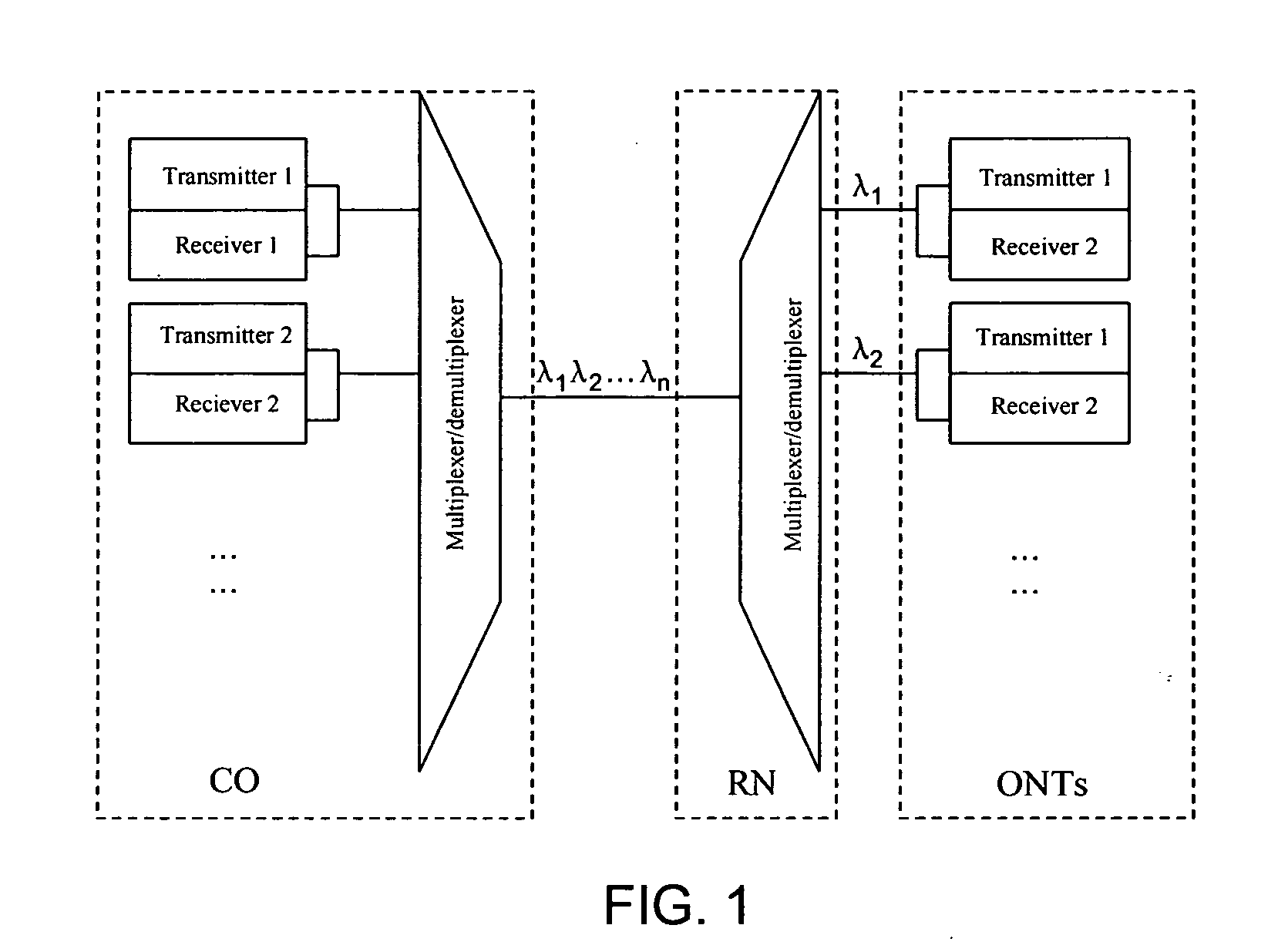
- Adapt coherent optics technology to access networks using point-to-point systems with wavelength division multiplexing, incorporating simplified modules for distortion compensation and error correction, and utilizing fixed-wavelength optical passives to enhance signal-to-noise ratios and reduce component costs.


System and method for providing failure protection in optical networks
PatentActiveUS20080063405A1
Innovation
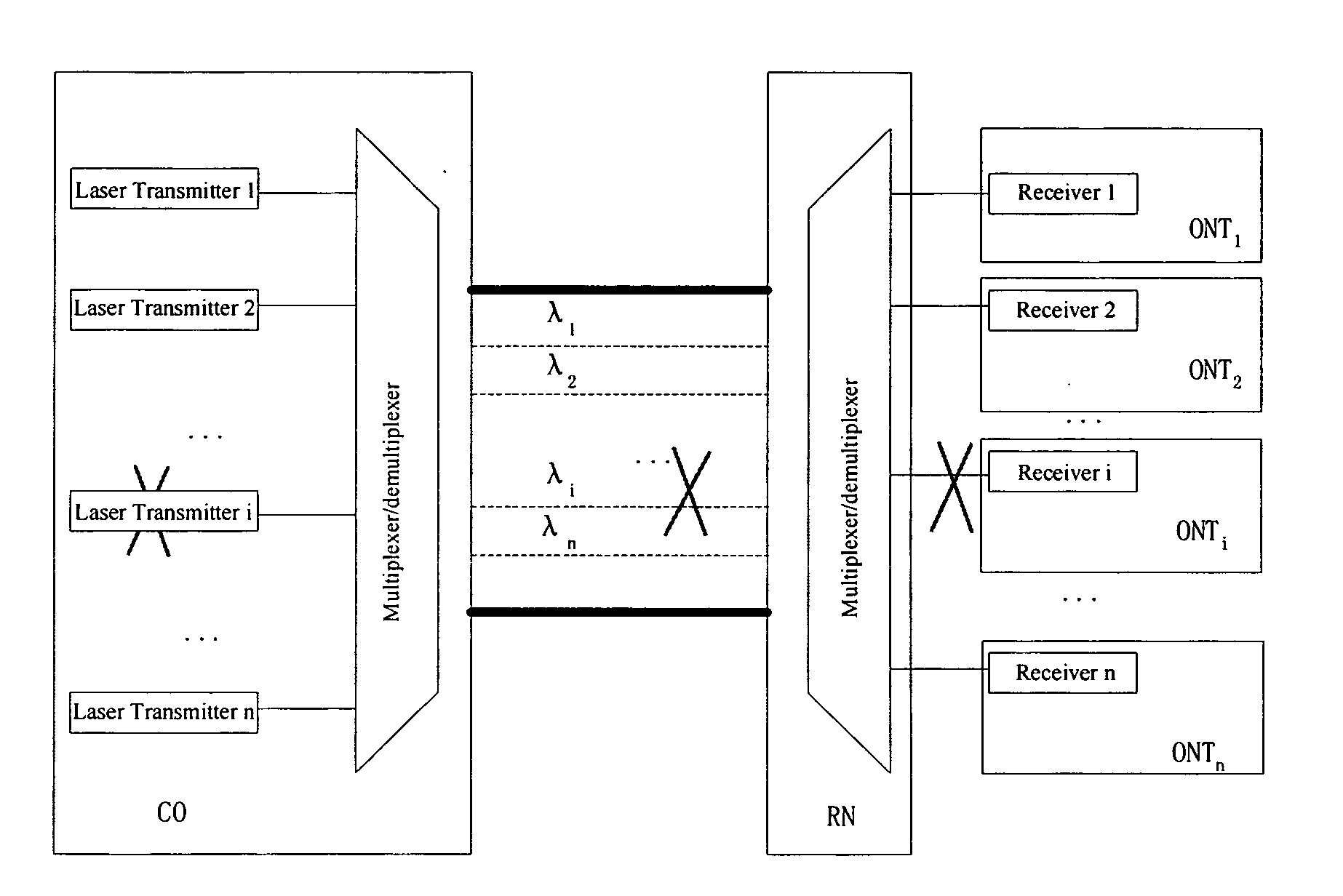
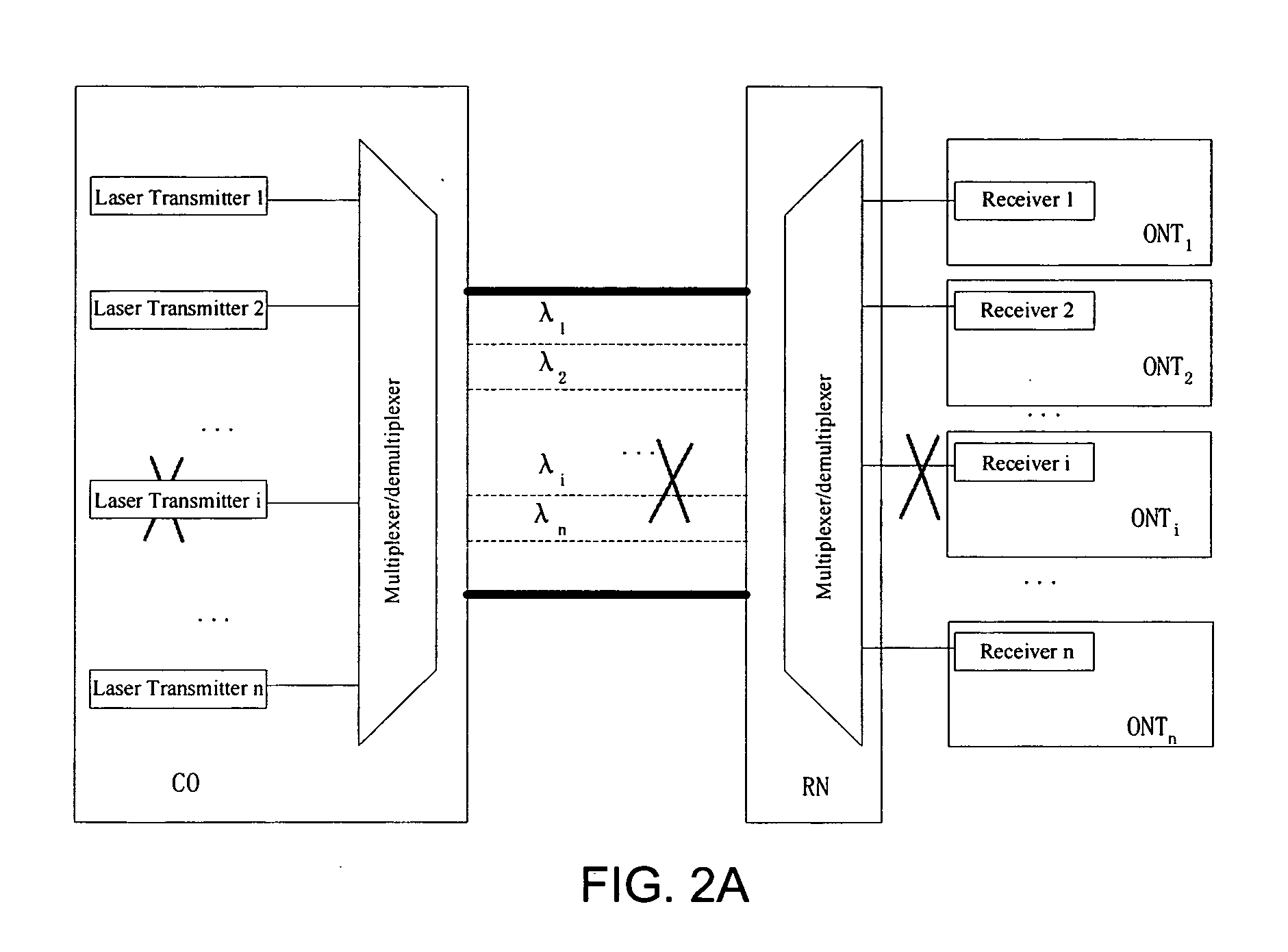
- A system and method that utilize a tunable optical transmitter and receiver capable of switching wavelengths to maintain data transmission and reception by using a detection component to determine failed channels and switching to standby transmitters or receivers, eliminating the need for additional protection modules and changeover requests.

Safety Standards for Critical Optical Infrastructure
The establishment of comprehensive safety standards for critical optical infrastructure represents a fundamental requirement for deploying adaptive coherent optics in fail-safe applications. Current regulatory frameworks primarily focus on traditional optical systems, creating significant gaps when addressing the dynamic nature of adaptive coherent technologies. These standards must encompass both hardware reliability metrics and software-defined network behaviors that characterize modern coherent optical systems.
International standardization bodies including ITU-T, IEEE, and IEC have initiated preliminary work on coherent optical safety protocols, yet comprehensive frameworks remain fragmented. The challenge lies in defining measurable safety parameters for systems that continuously adapt their operational characteristics based on real-time network conditions. Traditional static safety thresholds prove inadequate for coherent systems that dynamically adjust modulation formats, power levels, and routing decisions.
Critical infrastructure applications demand multi-layered safety architectures incorporating both preventive and reactive measures. Primary safety standards must address optical power management, ensuring that adaptive systems cannot exceed safe exposure limits during reconfiguration events. Secondary standards focus on data integrity preservation during fail-safe transitions, requiring coherent systems to maintain error-free transmission even when switching between operational modes.
Emerging safety protocols emphasize the importance of predictive failure detection capabilities within coherent optical networks. These standards mandate continuous monitoring of signal quality parameters, including error vector magnitude, optical signal-to-noise ratio, and chromatic dispersion characteristics. When degradation patterns indicate potential failures, safety standards require automated initiation of protective measures before service disruption occurs.
Cybersecurity considerations form an integral component of safety standards for adaptive coherent infrastructure. The software-defined nature of these systems introduces vulnerabilities that traditional optical networks did not face. Safety standards must therefore incorporate authentication protocols, encryption requirements, and intrusion detection mechanisms specifically designed for coherent optical control planes.
Compliance verification presents unique challenges for adaptive coherent systems due to their dynamic operational characteristics. Safety standards must define testing methodologies that can validate system behavior across the full range of possible adaptive configurations. This includes stress testing scenarios where systems must demonstrate safe operation during rapid reconfiguration events and unexpected network topology changes.
International standardization bodies including ITU-T, IEEE, and IEC have initiated preliminary work on coherent optical safety protocols, yet comprehensive frameworks remain fragmented. The challenge lies in defining measurable safety parameters for systems that continuously adapt their operational characteristics based on real-time network conditions. Traditional static safety thresholds prove inadequate for coherent systems that dynamically adjust modulation formats, power levels, and routing decisions.
Critical infrastructure applications demand multi-layered safety architectures incorporating both preventive and reactive measures. Primary safety standards must address optical power management, ensuring that adaptive systems cannot exceed safe exposure limits during reconfiguration events. Secondary standards focus on data integrity preservation during fail-safe transitions, requiring coherent systems to maintain error-free transmission even when switching between operational modes.
Emerging safety protocols emphasize the importance of predictive failure detection capabilities within coherent optical networks. These standards mandate continuous monitoring of signal quality parameters, including error vector magnitude, optical signal-to-noise ratio, and chromatic dispersion characteristics. When degradation patterns indicate potential failures, safety standards require automated initiation of protective measures before service disruption occurs.
Cybersecurity considerations form an integral component of safety standards for adaptive coherent infrastructure. The software-defined nature of these systems introduces vulnerabilities that traditional optical networks did not face. Safety standards must therefore incorporate authentication protocols, encryption requirements, and intrusion detection mechanisms specifically designed for coherent optical control planes.
Compliance verification presents unique challenges for adaptive coherent systems due to their dynamic operational characteristics. Safety standards must define testing methodologies that can validate system behavior across the full range of possible adaptive configurations. This includes stress testing scenarios where systems must demonstrate safe operation during rapid reconfiguration events and unexpected network topology changes.
Risk Assessment Framework for Optical System Failures
The development of a comprehensive risk assessment framework for optical system failures represents a critical component in optimizing fail-safe solutions with adaptive coherent optics. This framework must systematically identify, quantify, and prioritize potential failure modes that could compromise system performance or safety in mission-critical applications.
A robust risk assessment methodology begins with failure mode identification through systematic analysis of component-level vulnerabilities. Coherent optical systems face unique risks including laser source instability, fiber degradation, photodetector saturation, and environmental interference. Each failure mode requires probabilistic modeling to determine occurrence likelihood and impact severity on overall system functionality.
The framework incorporates real-time monitoring capabilities to enable dynamic risk evaluation. Advanced diagnostic algorithms continuously assess system health parameters such as optical power levels, signal-to-noise ratios, bit error rates, and environmental conditions. Machine learning techniques enhance predictive accuracy by identifying subtle patterns that precede system degradation or failure events.
Quantitative risk metrics form the foundation for automated decision-making processes. The framework establishes threshold values for acceptable risk levels across different operational scenarios, enabling adaptive systems to implement appropriate mitigation strategies. Risk scoring algorithms weight multiple factors including mission criticality, redundancy availability, and recovery time requirements.
Integration with adaptive control systems enables proactive risk mitigation through dynamic parameter adjustment. When elevated risk conditions are detected, the framework triggers appropriate responses such as power level modifications, wavelength switching, or activation of backup optical paths. This closed-loop approach minimizes the probability of catastrophic failures while maintaining optimal system performance.
The framework also addresses cascading failure scenarios where initial component failures propagate throughout the optical network. Dependency mapping techniques identify critical failure paths and enable the development of targeted protection strategies. Regular framework validation through simulation and field testing ensures continued effectiveness as system complexity increases and new failure modes emerge.
A robust risk assessment methodology begins with failure mode identification through systematic analysis of component-level vulnerabilities. Coherent optical systems face unique risks including laser source instability, fiber degradation, photodetector saturation, and environmental interference. Each failure mode requires probabilistic modeling to determine occurrence likelihood and impact severity on overall system functionality.
The framework incorporates real-time monitoring capabilities to enable dynamic risk evaluation. Advanced diagnostic algorithms continuously assess system health parameters such as optical power levels, signal-to-noise ratios, bit error rates, and environmental conditions. Machine learning techniques enhance predictive accuracy by identifying subtle patterns that precede system degradation or failure events.
Quantitative risk metrics form the foundation for automated decision-making processes. The framework establishes threshold values for acceptable risk levels across different operational scenarios, enabling adaptive systems to implement appropriate mitigation strategies. Risk scoring algorithms weight multiple factors including mission criticality, redundancy availability, and recovery time requirements.
Integration with adaptive control systems enables proactive risk mitigation through dynamic parameter adjustment. When elevated risk conditions are detected, the framework triggers appropriate responses such as power level modifications, wavelength switching, or activation of backup optical paths. This closed-loop approach minimizes the probability of catastrophic failures while maintaining optimal system performance.
The framework also addresses cascading failure scenarios where initial component failures propagate throughout the optical network. Dependency mapping techniques identify critical failure paths and enable the development of targeted protection strategies. Regular framework validation through simulation and field testing ensures continued effectiveness as system complexity increases and new failure modes emerge.
Unlock deeper insights with PatSnap Eureka Quick Research — get a full tech report to explore trends and direct your research. Try now!
Generate Your Research Report Instantly with AI Agent
Supercharge your innovation with PatSnap Eureka AI Agent Platform!