Optimize Latency Management with Integrated Coherent Optics
APR 22, 20269 MIN READ
Generate Your Research Report Instantly with AI Agent
PatSnap Eureka helps you evaluate technical feasibility & market potential.
Coherent Optics Latency Background and Objectives
Coherent optical communication systems have emerged as the backbone of modern high-capacity data transmission networks, enabling unprecedented bandwidth capabilities across long-haul, metro, and increasingly data center interconnect applications. The evolution from direct detection to coherent detection has revolutionized optical communications by enabling advanced modulation formats, digital signal processing capabilities, and enhanced spectral efficiency. However, as network architectures become more complex and application requirements more stringent, latency management has become a critical performance parameter that directly impacts user experience and system efficiency.
The historical development of coherent optics began in the 1980s with early research into heterodyne and homodyne detection techniques. Initial implementations faced significant challenges related to laser phase noise, local oscillator stability, and the complexity of analog signal processing. The breakthrough came in the early 2000s with the advent of high-speed analog-to-digital converters and powerful digital signal processors, enabling practical coherent systems that could compensate for transmission impairments in the digital domain.
Traditional coherent optical systems introduced inherent latency through multiple processing stages including analog-to-digital conversion, digital signal processing for dispersion compensation, carrier recovery, and forward error correction. While these processing steps enabled superior transmission performance, they also contributed cumulative delays that became increasingly problematic for latency-sensitive applications such as high-frequency trading, real-time communications, and emerging edge computing scenarios.
The integration of coherent optics represents a paradigm shift toward consolidating multiple optical and electronic functions into unified platforms, reducing component count, power consumption, and importantly, processing delays. This integration encompasses photonic integrated circuits that combine modulators, detectors, and local oscillators on single substrates, as well as electronic integration that co-locates digital signal processing with optical components to minimize interconnect delays.
Current technological objectives focus on achieving sub-microsecond end-to-end latency while maintaining the superior performance characteristics of coherent systems. This requires fundamental reimagining of system architectures, from hardware-accelerated signal processing to novel modulation schemes that reduce computational complexity. The ultimate goal is developing integrated coherent optical solutions that deliver both the capacity advantages of coherent detection and the low-latency performance demanded by next-generation applications, establishing a new standard for high-performance optical communication systems.
The historical development of coherent optics began in the 1980s with early research into heterodyne and homodyne detection techniques. Initial implementations faced significant challenges related to laser phase noise, local oscillator stability, and the complexity of analog signal processing. The breakthrough came in the early 2000s with the advent of high-speed analog-to-digital converters and powerful digital signal processors, enabling practical coherent systems that could compensate for transmission impairments in the digital domain.
Traditional coherent optical systems introduced inherent latency through multiple processing stages including analog-to-digital conversion, digital signal processing for dispersion compensation, carrier recovery, and forward error correction. While these processing steps enabled superior transmission performance, they also contributed cumulative delays that became increasingly problematic for latency-sensitive applications such as high-frequency trading, real-time communications, and emerging edge computing scenarios.
The integration of coherent optics represents a paradigm shift toward consolidating multiple optical and electronic functions into unified platforms, reducing component count, power consumption, and importantly, processing delays. This integration encompasses photonic integrated circuits that combine modulators, detectors, and local oscillators on single substrates, as well as electronic integration that co-locates digital signal processing with optical components to minimize interconnect delays.
Current technological objectives focus on achieving sub-microsecond end-to-end latency while maintaining the superior performance characteristics of coherent systems. This requires fundamental reimagining of system architectures, from hardware-accelerated signal processing to novel modulation schemes that reduce computational complexity. The ultimate goal is developing integrated coherent optical solutions that deliver both the capacity advantages of coherent detection and the low-latency performance demanded by next-generation applications, establishing a new standard for high-performance optical communication systems.
Market Demand for Low-Latency Optical Networks
The telecommunications industry is experiencing unprecedented demand for ultra-low latency optical networks, driven by the exponential growth of latency-sensitive applications across multiple sectors. Financial trading platforms require sub-millisecond response times for high-frequency trading operations, where even microsecond delays can result in significant financial losses. Cloud gaming services demand consistent low-latency connections to deliver seamless real-time gaming experiences, while autonomous vehicle systems rely on instantaneous data transmission for critical safety decisions.
Data centers and cloud service providers represent the largest segment driving this market demand, as they struggle to meet stringent service level agreements for enterprise customers. The proliferation of edge computing architectures has intensified requirements for low-latency interconnects between distributed computing nodes. Content delivery networks are increasingly prioritizing latency optimization to enhance user experience for streaming services and interactive applications.
The emergence of 5G networks has created substantial demand for low-latency optical backhaul solutions. Network operators require coherent optical systems that can support ultra-reliable low-latency communications for industrial IoT applications, remote surgery, and augmented reality services. These applications cannot tolerate the latency variations inherent in traditional optical transport systems.
Enterprise customers are driving demand through digital transformation initiatives that rely on real-time data analytics and artificial intelligence applications. Manufacturing industries implementing Industry 4.0 concepts require deterministic low-latency networks for machine-to-machine communications and predictive maintenance systems. The financial services sector continues to invest heavily in latency reduction technologies to maintain competitive advantages in algorithmic trading.
Hyperscale cloud providers are establishing new performance benchmarks that traditional optical equipment cannot meet without significant architectural improvements. The market is responding with increased investment in integrated coherent optics solutions that can deliver predictable, ultra-low latency performance while maintaining the scalability and cost-effectiveness required for large-scale deployments.
Geographic expansion of latency-sensitive services is creating demand for optimized long-haul optical networks that can maintain consistent performance across continental distances. This trend is particularly pronounced in regions with emerging digital economies seeking to attract cloud service investments.
Data centers and cloud service providers represent the largest segment driving this market demand, as they struggle to meet stringent service level agreements for enterprise customers. The proliferation of edge computing architectures has intensified requirements for low-latency interconnects between distributed computing nodes. Content delivery networks are increasingly prioritizing latency optimization to enhance user experience for streaming services and interactive applications.
The emergence of 5G networks has created substantial demand for low-latency optical backhaul solutions. Network operators require coherent optical systems that can support ultra-reliable low-latency communications for industrial IoT applications, remote surgery, and augmented reality services. These applications cannot tolerate the latency variations inherent in traditional optical transport systems.
Enterprise customers are driving demand through digital transformation initiatives that rely on real-time data analytics and artificial intelligence applications. Manufacturing industries implementing Industry 4.0 concepts require deterministic low-latency networks for machine-to-machine communications and predictive maintenance systems. The financial services sector continues to invest heavily in latency reduction technologies to maintain competitive advantages in algorithmic trading.
Hyperscale cloud providers are establishing new performance benchmarks that traditional optical equipment cannot meet without significant architectural improvements. The market is responding with increased investment in integrated coherent optics solutions that can deliver predictable, ultra-low latency performance while maintaining the scalability and cost-effectiveness required for large-scale deployments.
Geographic expansion of latency-sensitive services is creating demand for optimized long-haul optical networks that can maintain consistent performance across continental distances. This trend is particularly pronounced in regions with emerging digital economies seeking to attract cloud service investments.
Current Latency Challenges in Integrated Coherent Systems
Integrated coherent optical systems face significant latency challenges that stem from the complex interplay between optical signal processing, digital signal processing, and network protocol handling. The fundamental issue lies in the multi-stage processing pipeline where optical signals undergo conversion, amplification, and digital reconstruction, each introducing cumulative delays that can severely impact real-time applications and high-frequency trading systems.
Signal processing latency represents one of the most critical bottlenecks in current integrated coherent systems. The analog-to-digital conversion process, combined with forward error correction algorithms and digital signal processing for phase recovery and equalization, typically introduces delays ranging from microseconds to milliseconds. These delays are particularly problematic in applications requiring ultra-low latency, such as financial trading networks where even nanosecond improvements can provide competitive advantages.
Coherent detection mechanisms introduce additional complexity through their reliance on local oscillators and phase-locked loops for carrier recovery. The synchronization process between transmitted and received signals requires sophisticated algorithms that inherently add processing time. Current systems struggle with maintaining phase coherence while minimizing the computational overhead associated with real-time phase tracking and compensation.
Buffer management and queuing delays present another significant challenge in integrated coherent systems. Network traffic variations and burst handling require sophisticated buffering strategies, but these mechanisms often conflict with latency optimization goals. The trade-off between maintaining signal integrity and minimizing storage delays creates operational constraints that limit overall system performance.
Thermal management issues compound latency challenges by introducing temperature-dependent variations in optical component behavior. Wavelength drift, phase noise, and power fluctuations caused by thermal effects require continuous monitoring and compensation, adding control loop delays that further impact system responsiveness.
Protocol overhead and network stack processing contribute substantial latency in integrated systems where coherent optics interface with traditional networking equipment. The encapsulation and de-encapsulation processes, combined with routing decisions and quality-of-service implementations, create additional processing stages that accumulate significant delays in end-to-end communications.
Current integrated coherent systems also face challenges related to clock domain crossing and synchronization between different subsystems operating at varying frequencies. The coordination between optical transceivers, digital processors, and network interfaces requires careful timing management that often prioritizes reliability over speed, resulting in conservative latency margins that limit optimal performance.
Signal processing latency represents one of the most critical bottlenecks in current integrated coherent systems. The analog-to-digital conversion process, combined with forward error correction algorithms and digital signal processing for phase recovery and equalization, typically introduces delays ranging from microseconds to milliseconds. These delays are particularly problematic in applications requiring ultra-low latency, such as financial trading networks where even nanosecond improvements can provide competitive advantages.
Coherent detection mechanisms introduce additional complexity through their reliance on local oscillators and phase-locked loops for carrier recovery. The synchronization process between transmitted and received signals requires sophisticated algorithms that inherently add processing time. Current systems struggle with maintaining phase coherence while minimizing the computational overhead associated with real-time phase tracking and compensation.
Buffer management and queuing delays present another significant challenge in integrated coherent systems. Network traffic variations and burst handling require sophisticated buffering strategies, but these mechanisms often conflict with latency optimization goals. The trade-off between maintaining signal integrity and minimizing storage delays creates operational constraints that limit overall system performance.
Thermal management issues compound latency challenges by introducing temperature-dependent variations in optical component behavior. Wavelength drift, phase noise, and power fluctuations caused by thermal effects require continuous monitoring and compensation, adding control loop delays that further impact system responsiveness.
Protocol overhead and network stack processing contribute substantial latency in integrated systems where coherent optics interface with traditional networking equipment. The encapsulation and de-encapsulation processes, combined with routing decisions and quality-of-service implementations, create additional processing stages that accumulate significant delays in end-to-end communications.
Current integrated coherent systems also face challenges related to clock domain crossing and synchronization between different subsystems operating at varying frequencies. The coordination between optical transceivers, digital processors, and network interfaces requires careful timing management that often prioritizes reliability over speed, resulting in conservative latency margins that limit optimal performance.
Existing Latency Optimization Solutions
01 Digital signal processing techniques for latency reduction in coherent optical systems
Advanced digital signal processing (DSP) algorithms can be implemented to minimize latency in integrated coherent optical transceivers. These techniques include optimized equalization methods, reduced-complexity algorithms, and parallel processing architectures that enable faster signal recovery and demodulation. By streamlining the computational pipeline and reducing processing steps, the overall system latency can be significantly decreased while maintaining signal quality and performance.- Digital signal processing for latency reduction in coherent optical systems: Advanced digital signal processing techniques are employed to minimize latency in integrated coherent optical systems. These methods include optimized algorithms for signal detection, equalization, and error correction that reduce computational delays. Hardware acceleration and parallel processing architectures enable faster data throughput while maintaining signal integrity in coherent detection systems.
- Integrated photonic circuits for reduced propagation delay: Monolithic integration of optical components on a single substrate reduces physical path lengths and minimizes propagation delays in coherent optical systems. Silicon photonics and other integrated photonic platforms enable compact designs with shorter interconnects between modulators, detectors, and processing elements. This integration approach significantly decreases overall system latency compared to discrete component implementations.
- Low-latency coherent detection architectures: Novel receiver architectures are designed specifically to minimize detection and processing delays in coherent optical systems. These include simplified homodyne and heterodyne detection schemes with reduced component counts and optimized signal paths. Fast analog-to-digital converters and streamlined front-end circuits enable rapid signal acquisition with minimal latency overhead.
- Clock distribution and synchronization for latency management: Precise clock distribution networks and synchronization mechanisms ensure coordinated operation of integrated coherent optical components with minimal timing uncertainties. Phase-locked loops, clock recovery circuits, and timing alignment techniques reduce jitter and skew that contribute to system latency. These synchronization methods enable deterministic latency characteristics in high-speed coherent optical links.
- Modulation formats and coding schemes for latency optimization: Selection of appropriate modulation formats and forward error correction codes balances performance requirements with latency constraints in coherent optical systems. Low-complexity modulation schemes and reduced-latency coding algorithms minimize processing delays while maintaining acceptable error rates. Adaptive coding and modulation techniques dynamically adjust parameters to optimize latency under varying channel conditions.
02 Integrated photonic circuit design for minimizing propagation delays
The physical layout and architecture of integrated photonic circuits directly impact signal propagation time. Optimized chip designs featuring shorter optical paths, reduced waveguide lengths, and strategic component placement can minimize latency. Integration of multiple optical functions on a single substrate reduces the need for external connections and associated delays. Advanced fabrication techniques enable compact designs that maintain signal integrity while achieving lower latency through reduced physical distances.Expand Specific Solutions03 Clock recovery and synchronization methods for coherent detection
Efficient clock recovery and timing synchronization mechanisms are critical for reducing latency in coherent optical receivers. Fast-locking phase-locked loops, feed-forward timing recovery algorithms, and adaptive synchronization techniques enable rapid signal acquisition and processing. These methods reduce the time required for system initialization and maintain tight synchronization with minimal overhead, contributing to overall latency reduction in the optical communication link.Expand Specific Solutions04 Low-latency modulation and demodulation schemes
Selection of appropriate modulation formats and corresponding demodulation techniques significantly affects system latency. Simplified modulation schemes with reduced symbol processing requirements, direct detection methods, and optimized constellation designs enable faster signal encoding and decoding. These approaches balance spectral efficiency with processing complexity to achieve lower end-to-end latency while maintaining adequate transmission performance for high-speed optical networks.Expand Specific Solutions05 Hardware acceleration and parallel processing architectures
Dedicated hardware accelerators and parallel processing structures can dramatically reduce computational latency in coherent optical systems. Field-programmable gate arrays, application-specific integrated circuits, and multi-core processing platforms enable concurrent execution of signal processing tasks. Pipeline architectures and distributed processing approaches allow different stages of signal recovery to operate simultaneously, reducing the overall time from signal reception to data output.Expand Specific Solutions
Key Players in Coherent Optics and Network Equipment
The integrated coherent optics market for latency optimization is in a growth phase, driven by increasing demand for high-speed data transmission and edge computing applications. The market demonstrates significant scale potential, with established telecommunications giants like Huawei, Ericsson, and Intel leading infrastructure development alongside specialized optical companies such as Excelitas Technologies and Carl Zeiss Meditec. Technology maturity varies across segments, with companies like Google and Apple driving consumer applications while research institutions including Shanghai Jiao Tong University and California Institute of Technology advance fundamental coherent optics research. The competitive landscape shows convergence between traditional networking providers, optical specialists, and technology innovators, indicating a maturing ecosystem where latency management solutions are becoming critical differentiators for next-generation optical networks and data center interconnects.
Huawei Technologies Co., Ltd.
Technical Solution: Huawei has developed comprehensive coherent optical solutions integrating advanced DSP (Digital Signal Processing) technology with silicon photonics platforms to optimize latency management. Their approach combines high-speed coherent transceivers operating at 400G/800G rates with intelligent network slicing capabilities, enabling sub-millisecond latency performance for 5G and cloud applications. The company's integrated coherent optics leverage proprietary algorithms for real-time signal processing and adaptive modulation formats, significantly reducing processing delays while maintaining signal integrity across long-haul and metro networks.
Strengths: Market-leading DSP technology, comprehensive end-to-end solutions, strong R&D capabilities. Weaknesses: Geopolitical restrictions limiting market access, dependency on external component suppliers.
Intel Corp.
Technical Solution: Intel's coherent optics strategy focuses on silicon photonics integration with their advanced semiconductor manufacturing processes. Their approach combines monolithic integration of optical components with electronic circuits on the same chip, enabling ultra-low latency communication for data center interconnects. Intel's solution utilizes their 300mm wafer fabrication capabilities to produce coherent optical engines with integrated modulators, detectors, and control electronics, achieving latency reductions of up to 50% compared to discrete implementations while supporting 400G and beyond data rates for high-performance computing applications.
Strengths: Advanced semiconductor manufacturing, silicon photonics expertise, strong ecosystem partnerships. Weaknesses: Limited optical networking market presence, competition from specialized optical vendors.
Core Patents in Coherent Optics Latency Management
Systems and methods for compensating coherent optics delay asymmetry in a packet optical network
PatentActiveUS20200028585A1
Innovation
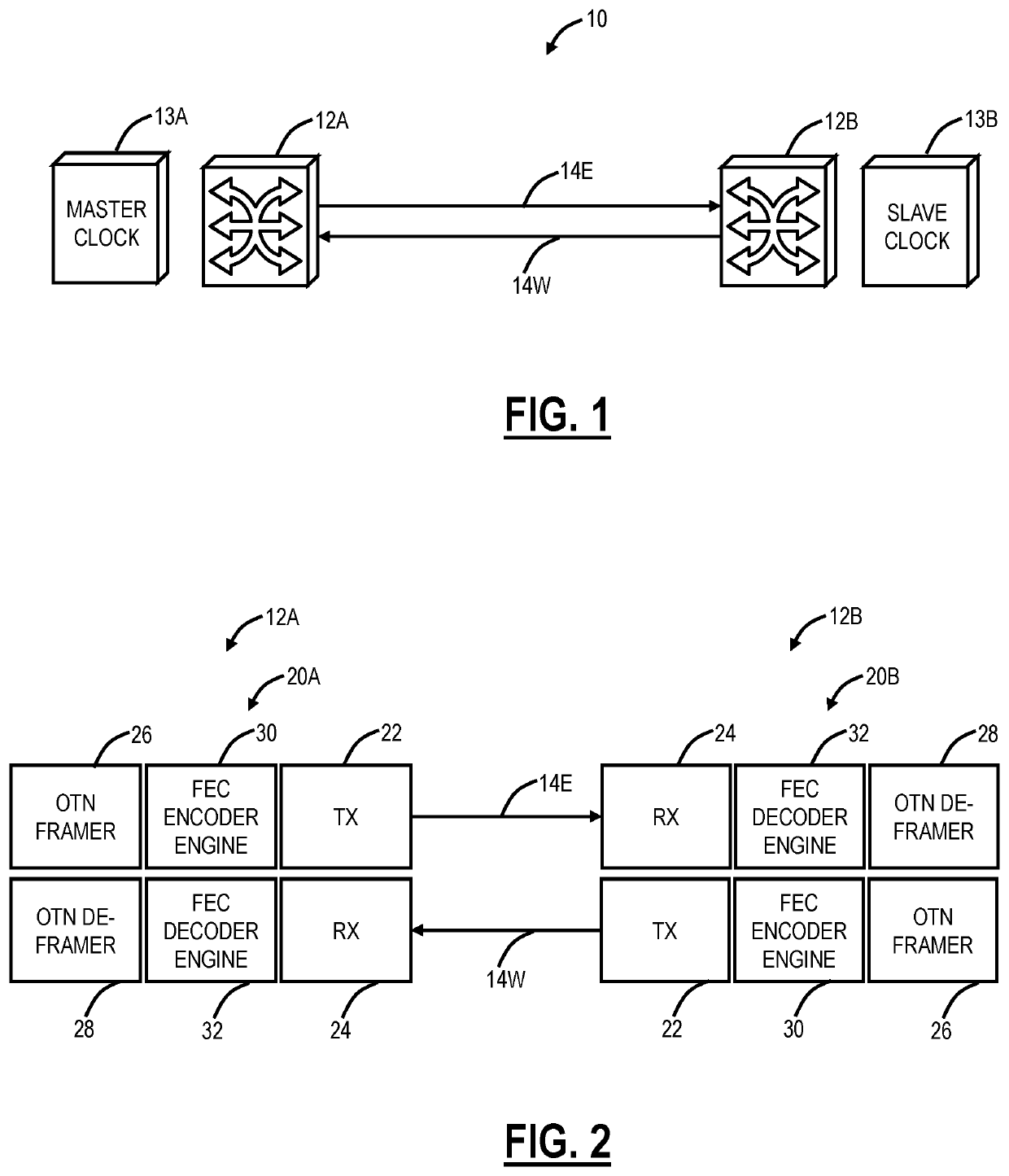
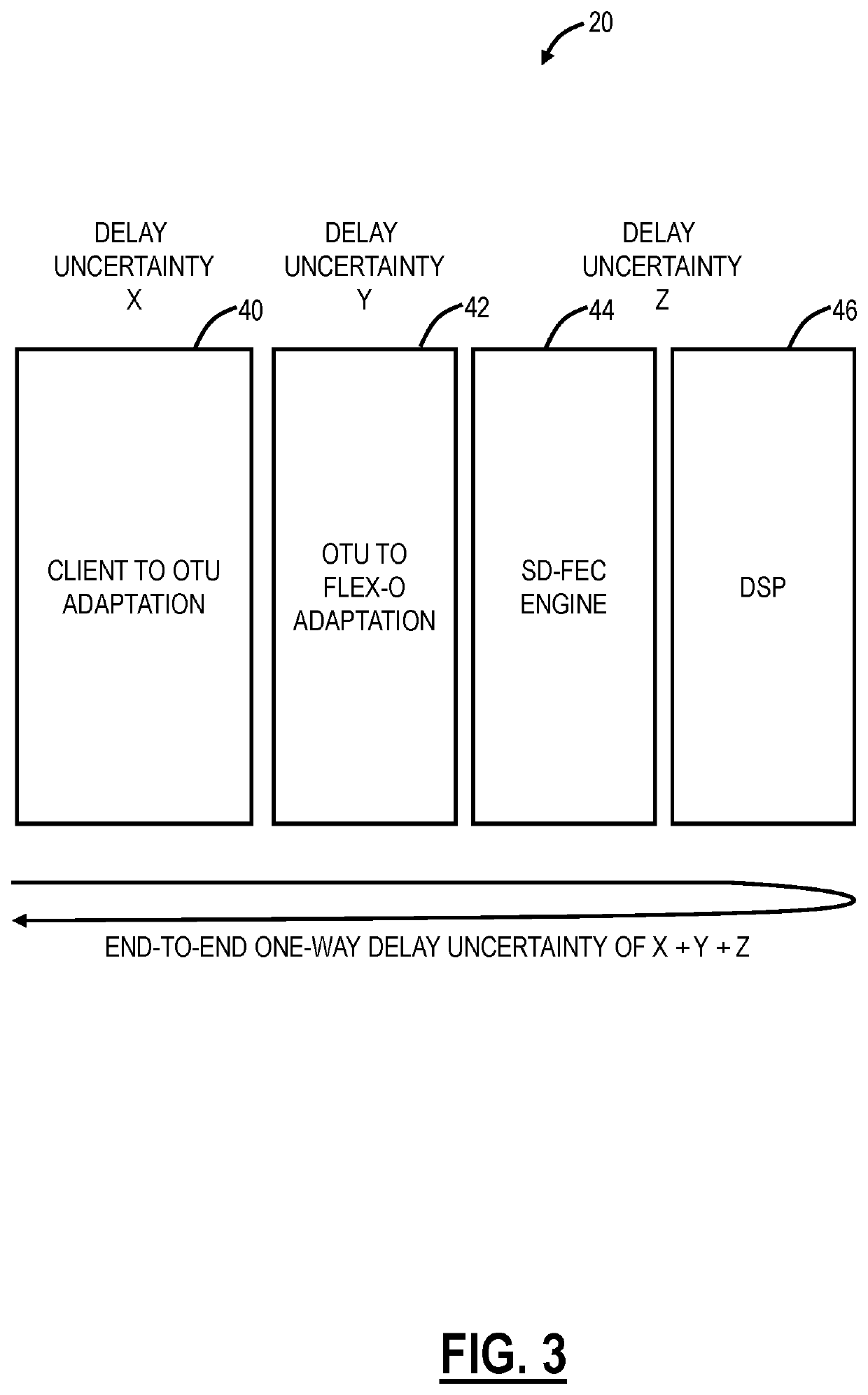
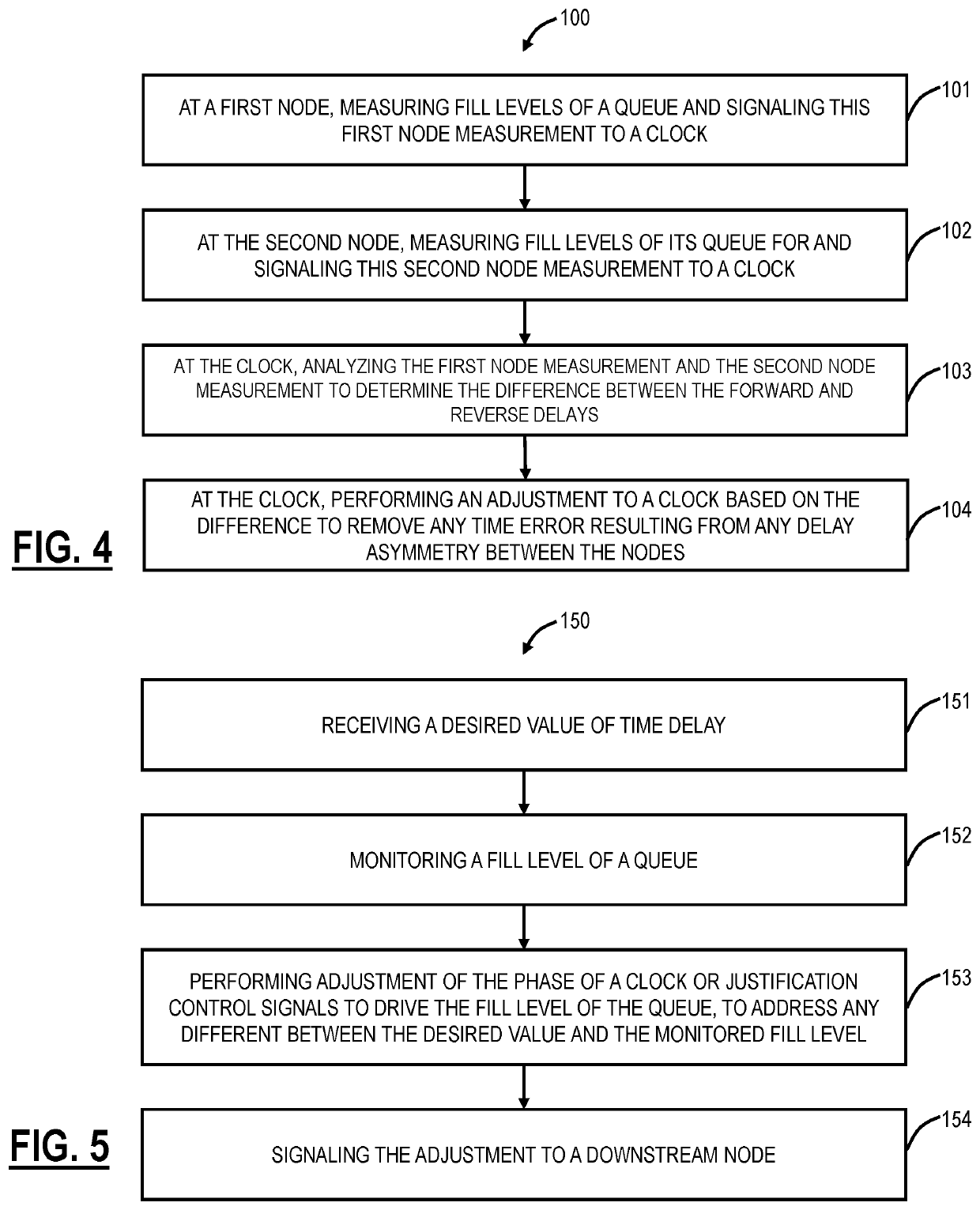
- A software implementation that measures fill levels of elastic FIFO queues in optical modems and DSP devices, adjusting clocks to compensate for delay asymmetry by signaling measured fill levels between nodes, using in-band or out-of-band signaling, and implementing adjustments in phase and justification control signals to reduce time errors.

Optical delay calibration of optical modules
PatentActiveUS12107629B2
Innovation
- The method involves calibrating and storing transmitter and receiver optical assembly delays during manufacturing, using integrated circuitry and hooks to measure and report optical latency contributions, allowing for accurate module-level latency reporting and synchronization.


Standards and Protocols for Coherent Optical Networks
The standardization landscape for coherent optical networks has evolved significantly to address the complex requirements of latency-sensitive applications. The International Telecommunication Union (ITU-T) has established fundamental standards including G.698.2 for multichannel DWDM applications and G.959.1 for optical transport network physical layer interfaces. These standards provide the foundation for coherent optical systems but require extensions to address specific latency management requirements.
The Optical Internetworking Forum (OIF) has developed complementary specifications that focus on implementation agreements for coherent optical interfaces. OIF-400G-VSR-01.0 and OIF-C-FEC-01.0 define forward error correction mechanisms that directly impact latency performance. These specifications establish baseline latency budgets and define acceptable delay variations for different service classes, enabling network operators to implement predictable latency management strategies.
IEEE 802.3 standards have incorporated coherent optics considerations through amendments addressing 400 Gigabit Ethernet and beyond. The 802.3cu amendment specifically addresses latency requirements for coherent optical transceivers, establishing maximum allowable delays for different operational modes. These standards mandate latency measurement capabilities and define standardized reporting mechanisms that enable network-wide latency optimization.
OpenROADM specifications have emerged as critical industry standards for disaggregated optical networks utilizing coherent technology. The OpenROADM white box approach requires standardized interfaces between optical line systems and coherent transceivers, with specific provisions for latency monitoring and control. Version 7.1 of the OpenROADM specification introduces enhanced latency management features including real-time latency reporting and adaptive compensation mechanisms.
Protocol developments have focused on enabling dynamic latency optimization across coherent optical networks. The NETCONF and YANG data models specified in RFC 8345 and related documents provide standardized interfaces for configuring and monitoring latency-sensitive parameters in coherent optical systems. These protocols enable centralized network controllers to implement coordinated latency management strategies across multiple network elements.
Emerging standards initiatives are addressing next-generation requirements for ultra-low latency applications. The ITU-T Study Group 15 is developing new recommendations for latency-optimized coherent optical systems, including provisions for hardware-based latency compensation and predictive latency management algorithms. These evolving standards will establish the framework for future coherent optical networks capable of supporting microsecond-level latency requirements across continental distances.
The Optical Internetworking Forum (OIF) has developed complementary specifications that focus on implementation agreements for coherent optical interfaces. OIF-400G-VSR-01.0 and OIF-C-FEC-01.0 define forward error correction mechanisms that directly impact latency performance. These specifications establish baseline latency budgets and define acceptable delay variations for different service classes, enabling network operators to implement predictable latency management strategies.
IEEE 802.3 standards have incorporated coherent optics considerations through amendments addressing 400 Gigabit Ethernet and beyond. The 802.3cu amendment specifically addresses latency requirements for coherent optical transceivers, establishing maximum allowable delays for different operational modes. These standards mandate latency measurement capabilities and define standardized reporting mechanisms that enable network-wide latency optimization.
OpenROADM specifications have emerged as critical industry standards for disaggregated optical networks utilizing coherent technology. The OpenROADM white box approach requires standardized interfaces between optical line systems and coherent transceivers, with specific provisions for latency monitoring and control. Version 7.1 of the OpenROADM specification introduces enhanced latency management features including real-time latency reporting and adaptive compensation mechanisms.
Protocol developments have focused on enabling dynamic latency optimization across coherent optical networks. The NETCONF and YANG data models specified in RFC 8345 and related documents provide standardized interfaces for configuring and monitoring latency-sensitive parameters in coherent optical systems. These protocols enable centralized network controllers to implement coordinated latency management strategies across multiple network elements.
Emerging standards initiatives are addressing next-generation requirements for ultra-low latency applications. The ITU-T Study Group 15 is developing new recommendations for latency-optimized coherent optical systems, including provisions for hardware-based latency compensation and predictive latency management algorithms. These evolving standards will establish the framework for future coherent optical networks capable of supporting microsecond-level latency requirements across continental distances.
Cost-Performance Trade-offs in Latency Optimization
The optimization of latency management through integrated coherent optics presents a complex landscape of cost-performance considerations that organizations must carefully navigate. The fundamental trade-off lies between achieving ultra-low latency requirements and managing the substantial capital expenditures associated with advanced coherent optical systems. While integrated coherent optics can deliver latency reductions of 20-40% compared to traditional optical transport solutions, the initial investment costs can be 2-3 times higher than conventional systems.
Performance scaling demonstrates non-linear cost implications across different deployment scenarios. High-frequency trading applications, which demand sub-microsecond latency improvements, justify premium pricing for specialized coherent optical modules that can cost $50,000-$100,000 per unit. However, enterprise applications with more moderate latency requirements may achieve acceptable performance improvements using mid-tier solutions at 30-50% lower costs, suggesting that performance requirements should drive technology selection rather than pursuing maximum capabilities universally.
Operational expenditure considerations reveal additional complexity in the cost-performance equation. Integrated coherent optics systems typically consume 15-25% more power than traditional solutions, translating to higher ongoing operational costs. However, these systems often enable network simplification by reducing the number of intermediate amplification and regeneration points, potentially offsetting power consumption increases through reduced infrastructure complexity and maintenance requirements.
The temporal aspect of cost-performance optimization presents strategic considerations for deployment timing. Early adoption of cutting-edge coherent optical technologies commands premium pricing but provides competitive advantages in latency-sensitive applications. Organizations must evaluate whether immediate performance gains justify higher costs or if waiting for technology maturation and price reduction better aligns with their strategic objectives.
Return on investment calculations must incorporate both direct performance benefits and indirect advantages such as improved system reliability and reduced network complexity. While integrated coherent optics may require 18-24 months longer payback periods compared to conventional solutions, the enhanced performance capabilities often enable new revenue opportunities that can accelerate ROI realization in appropriate market contexts.
Performance scaling demonstrates non-linear cost implications across different deployment scenarios. High-frequency trading applications, which demand sub-microsecond latency improvements, justify premium pricing for specialized coherent optical modules that can cost $50,000-$100,000 per unit. However, enterprise applications with more moderate latency requirements may achieve acceptable performance improvements using mid-tier solutions at 30-50% lower costs, suggesting that performance requirements should drive technology selection rather than pursuing maximum capabilities universally.
Operational expenditure considerations reveal additional complexity in the cost-performance equation. Integrated coherent optics systems typically consume 15-25% more power than traditional solutions, translating to higher ongoing operational costs. However, these systems often enable network simplification by reducing the number of intermediate amplification and regeneration points, potentially offsetting power consumption increases through reduced infrastructure complexity and maintenance requirements.
The temporal aspect of cost-performance optimization presents strategic considerations for deployment timing. Early adoption of cutting-edge coherent optical technologies commands premium pricing but provides competitive advantages in latency-sensitive applications. Organizations must evaluate whether immediate performance gains justify higher costs or if waiting for technology maturation and price reduction better aligns with their strategic objectives.
Return on investment calculations must incorporate both direct performance benefits and indirect advantages such as improved system reliability and reduced network complexity. While integrated coherent optics may require 18-24 months longer payback periods compared to conventional solutions, the enhanced performance capabilities often enable new revenue opportunities that can accelerate ROI realization in appropriate market contexts.
Unlock deeper insights with PatSnap Eureka Quick Research — get a full tech report to explore trends and direct your research. Try now!
Generate Your Research Report Instantly with AI Agent
Supercharge your innovation with PatSnap Eureka AI Agent Platform!