

Hydrogen-Induced Cracking vs Fatigue Cracking Under Cyclic Loads
JUN 10, 20269 MIN READ
Generate Your Research Report Instantly with AI Agent
PatSnap Eureka helps you evaluate technical feasibility & market potential.
Hydrogen Cracking vs Fatigue Background and Objectives
The phenomenon of material degradation under cyclic loading conditions has been a critical concern in engineering applications for over a century. Traditional fatigue cracking, first systematically studied in the 1860s following railway axle failures, represents mechanical damage accumulation due to repeated stress cycles. However, the introduction of hydrogen into this equation has fundamentally altered our understanding of material failure mechanisms, creating a complex interplay between environmental and mechanical factors.
Hydrogen-induced cracking emerged as a distinct failure mode in the early 20th century, initially observed in steel structures exposed to hydrogen-rich environments. The evolution of this field accelerated significantly during the 1940s and 1950s with the expansion of petrochemical industries, where high-pressure hydrogen environments became commonplace. The convergence of hydrogen embrittlement and cyclic loading represents a particularly challenging scenario that has gained prominence with the development of hydrogen energy systems and advanced high-strength materials.
The technological landscape has evolved from simple mechanical fatigue considerations to sophisticated multi-physics problems involving hydrogen diffusion, trapping, and accumulation at critical microstructural features. Modern applications in hydrogen fuel cells, pressure vessels, pipelines, and automotive components have intensified the need for comprehensive understanding of these coupled failure mechanisms. The transition toward hydrogen-based energy systems has elevated this from an academic curiosity to a mission-critical engineering challenge.
Current technological objectives center on developing predictive models that can accurately forecast material behavior under combined hydrogen exposure and cyclic loading conditions. The primary goal involves establishing reliable design methodologies that account for the synergistic effects between hydrogen-assisted degradation and traditional fatigue mechanisms. This includes understanding threshold conditions where hydrogen significantly accelerates crack initiation and propagation compared to purely mechanical fatigue.
The ultimate technological target encompasses creating materials and design strategies that can withstand decades of service in hydrogen-rich environments under variable loading conditions, ensuring both safety and economic viability of hydrogen infrastructure systems.
Hydrogen-induced cracking emerged as a distinct failure mode in the early 20th century, initially observed in steel structures exposed to hydrogen-rich environments. The evolution of this field accelerated significantly during the 1940s and 1950s with the expansion of petrochemical industries, where high-pressure hydrogen environments became commonplace. The convergence of hydrogen embrittlement and cyclic loading represents a particularly challenging scenario that has gained prominence with the development of hydrogen energy systems and advanced high-strength materials.
The technological landscape has evolved from simple mechanical fatigue considerations to sophisticated multi-physics problems involving hydrogen diffusion, trapping, and accumulation at critical microstructural features. Modern applications in hydrogen fuel cells, pressure vessels, pipelines, and automotive components have intensified the need for comprehensive understanding of these coupled failure mechanisms. The transition toward hydrogen-based energy systems has elevated this from an academic curiosity to a mission-critical engineering challenge.
Current technological objectives center on developing predictive models that can accurately forecast material behavior under combined hydrogen exposure and cyclic loading conditions. The primary goal involves establishing reliable design methodologies that account for the synergistic effects between hydrogen-assisted degradation and traditional fatigue mechanisms. This includes understanding threshold conditions where hydrogen significantly accelerates crack initiation and propagation compared to purely mechanical fatigue.
The ultimate technological target encompasses creating materials and design strategies that can withstand decades of service in hydrogen-rich environments under variable loading conditions, ensuring both safety and economic viability of hydrogen infrastructure systems.
Market Demand for HIC-Resistant Materials Analysis
The global demand for hydrogen-induced cracking (HIC) resistant materials has experienced substantial growth driven by the expanding hydrogen economy and increasing adoption of hydrogen technologies across multiple industrial sectors. Oil and gas industries represent the largest consumer segment, where pipelines, pressure vessels, and processing equipment require materials capable of withstanding hydrogen exposure under high-pressure conditions. The petrochemical sector follows closely, with refineries and chemical plants demanding HIC-resistant alloys for hydrogenation processes and hydrogen sulfide environments.
Renewable energy infrastructure development has emerged as a significant growth driver, particularly in hydrogen production, storage, and transportation systems. Electrolysis equipment manufacturers require specialized materials for electrodes, membranes, and structural components that can operate reliably in hydrogen-rich environments. Similarly, fuel cell applications in automotive, stationary power, and portable electronics sectors are creating new market opportunities for advanced HIC-resistant materials.
The steel and metallurgy industry shows increasing demand for high-strength, low-alloy steels with enhanced resistance to hydrogen embrittlement. Pipeline operators are particularly focused on materials that can maintain structural integrity under cyclic loading conditions while exposed to hydrogen, as traditional carbon steels often prove inadequate for these applications. Advanced stainless steels, nickel-based superalloys, and specialized coatings are gaining traction as preferred solutions.
Geographically, North America and Europe lead market demand due to aggressive hydrogen infrastructure development policies and established industrial bases. Asia-Pacific regions, particularly Japan, South Korea, and China, demonstrate rapidly growing demand driven by national hydrogen strategies and large-scale industrial projects. The Middle East shows emerging interest as oil-producing nations diversify their energy portfolios toward hydrogen production.
Market drivers include stringent safety regulations, increasing awareness of hydrogen embrittlement risks, and the need for extended equipment lifecycles in harsh operating environments. The convergence of hydrogen economy expansion with industrial digitalization is creating demand for smart materials with integrated monitoring capabilities to detect early signs of hydrogen-induced degradation.
Renewable energy infrastructure development has emerged as a significant growth driver, particularly in hydrogen production, storage, and transportation systems. Electrolysis equipment manufacturers require specialized materials for electrodes, membranes, and structural components that can operate reliably in hydrogen-rich environments. Similarly, fuel cell applications in automotive, stationary power, and portable electronics sectors are creating new market opportunities for advanced HIC-resistant materials.
The steel and metallurgy industry shows increasing demand for high-strength, low-alloy steels with enhanced resistance to hydrogen embrittlement. Pipeline operators are particularly focused on materials that can maintain structural integrity under cyclic loading conditions while exposed to hydrogen, as traditional carbon steels often prove inadequate for these applications. Advanced stainless steels, nickel-based superalloys, and specialized coatings are gaining traction as preferred solutions.
Geographically, North America and Europe lead market demand due to aggressive hydrogen infrastructure development policies and established industrial bases. Asia-Pacific regions, particularly Japan, South Korea, and China, demonstrate rapidly growing demand driven by national hydrogen strategies and large-scale industrial projects. The Middle East shows emerging interest as oil-producing nations diversify their energy portfolios toward hydrogen production.
Market drivers include stringent safety regulations, increasing awareness of hydrogen embrittlement risks, and the need for extended equipment lifecycles in harsh operating environments. The convergence of hydrogen economy expansion with industrial digitalization is creating demand for smart materials with integrated monitoring capabilities to detect early signs of hydrogen-induced degradation.
Current HIC and Fatigue Cracking Challenges
Hydrogen-induced cracking and fatigue cracking under cyclic loading conditions present significant challenges across multiple industrial sectors, particularly in oil and gas, petrochemical, and renewable energy infrastructure. The complexity arises from the intricate interaction mechanisms between hydrogen diffusion, material microstructure, and mechanical stress cycles, making accurate prediction and prevention extremely difficult.
One of the primary challenges lies in the detection and characterization of early-stage crack initiation. Traditional non-destructive testing methods often fail to identify hydrogen-induced microcracks before they reach critical dimensions. The subcritical nature of hydrogen-assisted crack growth means that damage accumulation occurs gradually and often remains undetectable until catastrophic failure becomes imminent.
The synergistic effects between hydrogen embrittlement and cyclic fatigue create unpredictable crack propagation behaviors. Under combined loading conditions, the crack growth rates can exceed those predicted by either mechanism alone, leading to premature failure of critical components. This phenomenon is particularly problematic in high-pressure hydrogen storage systems and subsea pipeline applications where both hydrogen exposure and cyclic loading are unavoidable.
Material selection presents another significant challenge, as conventional high-strength steels exhibit increased susceptibility to both hydrogen embrittlement and fatigue crack propagation. The development of hydrogen-resistant alloys often involves trade-offs between mechanical properties, cost, and manufacturing feasibility, limiting their widespread adoption in existing infrastructure.
Environmental factors further complicate the challenge landscape. Temperature variations, pressure fluctuations, and corrosive environments can accelerate both hydrogen uptake and fatigue damage accumulation. The lack of standardized testing protocols for combined hydrogen-fatigue conditions makes it difficult to establish reliable design criteria and safety factors.
Current predictive models struggle to accurately capture the complex interactions between hydrogen diffusion kinetics, stress field evolution, and microstructural damage mechanisms. This limitation hampers the development of effective maintenance strategies and remaining life assessment methodologies for hydrogen-exposed components under cyclic loading conditions.
One of the primary challenges lies in the detection and characterization of early-stage crack initiation. Traditional non-destructive testing methods often fail to identify hydrogen-induced microcracks before they reach critical dimensions. The subcritical nature of hydrogen-assisted crack growth means that damage accumulation occurs gradually and often remains undetectable until catastrophic failure becomes imminent.
The synergistic effects between hydrogen embrittlement and cyclic fatigue create unpredictable crack propagation behaviors. Under combined loading conditions, the crack growth rates can exceed those predicted by either mechanism alone, leading to premature failure of critical components. This phenomenon is particularly problematic in high-pressure hydrogen storage systems and subsea pipeline applications where both hydrogen exposure and cyclic loading are unavoidable.
Material selection presents another significant challenge, as conventional high-strength steels exhibit increased susceptibility to both hydrogen embrittlement and fatigue crack propagation. The development of hydrogen-resistant alloys often involves trade-offs between mechanical properties, cost, and manufacturing feasibility, limiting their widespread adoption in existing infrastructure.
Environmental factors further complicate the challenge landscape. Temperature variations, pressure fluctuations, and corrosive environments can accelerate both hydrogen uptake and fatigue damage accumulation. The lack of standardized testing protocols for combined hydrogen-fatigue conditions makes it difficult to establish reliable design criteria and safety factors.
Current predictive models struggle to accurately capture the complex interactions between hydrogen diffusion kinetics, stress field evolution, and microstructural damage mechanisms. This limitation hampers the development of effective maintenance strategies and remaining life assessment methodologies for hydrogen-exposed components under cyclic loading conditions.
Existing Solutions for Cyclic Load Crack Prevention
01 Steel composition optimization for hydrogen resistance
Specific steel compositions and alloying elements can be optimized to improve resistance to hydrogen-induced cracking. This involves controlling the content of carbon, sulfur, phosphorus, and other elements, as well as adding specific alloying elements that enhance the material's ability to resist hydrogen embrittlement. The microstructure and grain boundaries are also modified to prevent hydrogen diffusion and accumulation.- Steel composition optimization for hydrogen resistance: Specific steel compositions and alloying elements can be optimized to enhance resistance to hydrogen-induced cracking. The addition of certain elements and control of impurities helps reduce hydrogen diffusion and accumulation at grain boundaries, thereby improving the material's resistance to hydrogen embrittlement and cracking.
- Heat treatment processes for crack resistance: Various heat treatment methods including tempering, annealing, and controlled cooling processes can be employed to improve the microstructure and reduce susceptibility to both hydrogen-induced cracking and fatigue cracking. These processes help relieve internal stresses and create more favorable grain structures.
- Surface treatment and coating technologies: Surface modification techniques including protective coatings, surface hardening, and barrier layers can effectively prevent hydrogen penetration and reduce crack initiation sites. These treatments create protective barriers that limit hydrogen absorption while maintaining mechanical properties.
- Microstructural control and grain refinement: Control of microstructural features such as grain size, phase distribution, and inclusion content plays a crucial role in enhancing crack resistance. Fine-grained structures and optimized phase compositions help distribute stresses more uniformly and reduce crack propagation rates.
- Testing and evaluation methods for crack resistance: Specialized testing methodologies and evaluation techniques are developed to assess hydrogen-induced cracking and fatigue cracking resistance. These methods include accelerated testing procedures, monitoring systems, and predictive models to evaluate material performance under various environmental and loading conditions.
02 Heat treatment processes for crack resistance enhancement
Various heat treatment methods including tempering, normalizing, and controlled cooling processes can be employed to improve the resistance to both hydrogen-induced cracking and fatigue cracking. These processes modify the microstructure to reduce residual stresses and create more favorable grain structures that resist crack initiation and propagation.Expand Specific Solutions03 Surface treatment and coating technologies
Surface modification techniques including specialized coatings, surface hardening, and protective layers can significantly improve resistance to hydrogen penetration and fatigue crack initiation. These treatments create barriers that prevent hydrogen ingress while also improving the surface properties to resist cyclic loading conditions.Expand Specific Solutions04 Welding and joining techniques for crack prevention
Specialized welding procedures, filler materials, and post-weld treatments are developed to minimize susceptibility to hydrogen cracking in welded joints. These techniques control hydrogen content during welding, optimize cooling rates, and may include pre-heating and post-weld heat treatment to prevent crack formation in the heat-affected zones.Expand Specific Solutions05 Testing and evaluation methods for crack resistance
Various testing methodologies and evaluation techniques are employed to assess the resistance of materials to hydrogen-induced cracking and fatigue cracking. These include standardized test procedures, monitoring systems, and analytical methods to predict and measure crack susceptibility under different environmental and loading conditions.Expand Specific Solutions
Key Players in HIC Prevention and Materials Industry
The hydrogen-induced cracking versus fatigue cracking under cyclic loads field represents a mature research area within materials science and engineering, driven by critical infrastructure safety concerns across energy, aerospace, and industrial sectors. The market demonstrates substantial growth potential, particularly in oil and gas applications where pipeline integrity and equipment reliability are paramount. Technology maturity varies significantly among key players, with established energy giants like Saudi Arabian Oil Co., China National Petroleum Corp., and ExxonMobil Chemical Patents leading in practical applications and field experience. Research institutions including Zhejiang University, Tianjin University, and Louisiana State University contribute fundamental understanding and advanced analytical methods. Industrial technology providers such as General Electric Company, Siemens Energy AG, and Boeing Co. focus on developing predictive models and mitigation strategies. Specialized companies like StressWave Inc. and FRACTURELAB LLC offer niche expertise in fatigue analysis and testing services, while research institutes like Advanced Industrial Science & Technology and IFP Energies Nouvelles bridge academic research with industrial implementation, creating a comprehensive ecosystem addressing this critical materials challenge.
Saudi Arabian Oil Co.
Technical Solution: Saudi Aramco has developed comprehensive hydrogen-induced cracking (HIC) assessment methodologies for oil and gas infrastructure, focusing on wet H2S environments. Their approach combines electrochemical hydrogen charging techniques with cyclic loading protocols to differentiate between HIC and fatigue mechanisms. The company employs advanced metallurgical analysis including scanning electron microscopy and fractography to identify crack initiation sites and propagation patterns. Their testing protocols incorporate NACE standards with modified cyclic loading conditions to simulate real-world operational stresses. The methodology includes hydrogen permeation measurements and stress intensity factor calculations to establish critical thresholds for crack growth under combined hydrogen exposure and mechanical cycling.
Strengths: Extensive field experience in harsh environments, comprehensive testing facilities, strong integration of electrochemical and mechanical testing. Weaknesses: Limited public disclosure of proprietary methodologies, focus primarily on oil and gas applications.
China Petroleum & Chemical Corp.
Technical Solution: Sinopec has developed integrated assessment frameworks for distinguishing hydrogen-induced cracking from fatigue cracking in petrochemical equipment. Their approach utilizes multi-scale modeling combining molecular dynamics simulations of hydrogen diffusion with finite element analysis of stress distributions under cyclic loading. The company employs specialized testing equipment including environmental fatigue testing machines capable of simultaneous hydrogen charging and cyclic loading. Their methodology incorporates real-time acoustic emission monitoring to detect crack initiation and growth patterns characteristic of each failure mode. Advanced fractographic analysis using high-resolution SEM and EBSD techniques enables identification of microstructural features specific to hydrogen-assisted cracking versus mechanical fatigue. The testing protocols include variable amplitude loading to simulate service conditions.
Strengths: Advanced multi-scale modeling capabilities, comprehensive testing infrastructure, strong research collaboration with universities. Weaknesses: Limited international standardization of methodologies, focus mainly on specific petrochemical applications.
Core Innovations in Hydrogen Cracking Mechanisms
Method for testing fatigue in hydrogen gas
PatentInactiveUS20110005329A1
Innovation
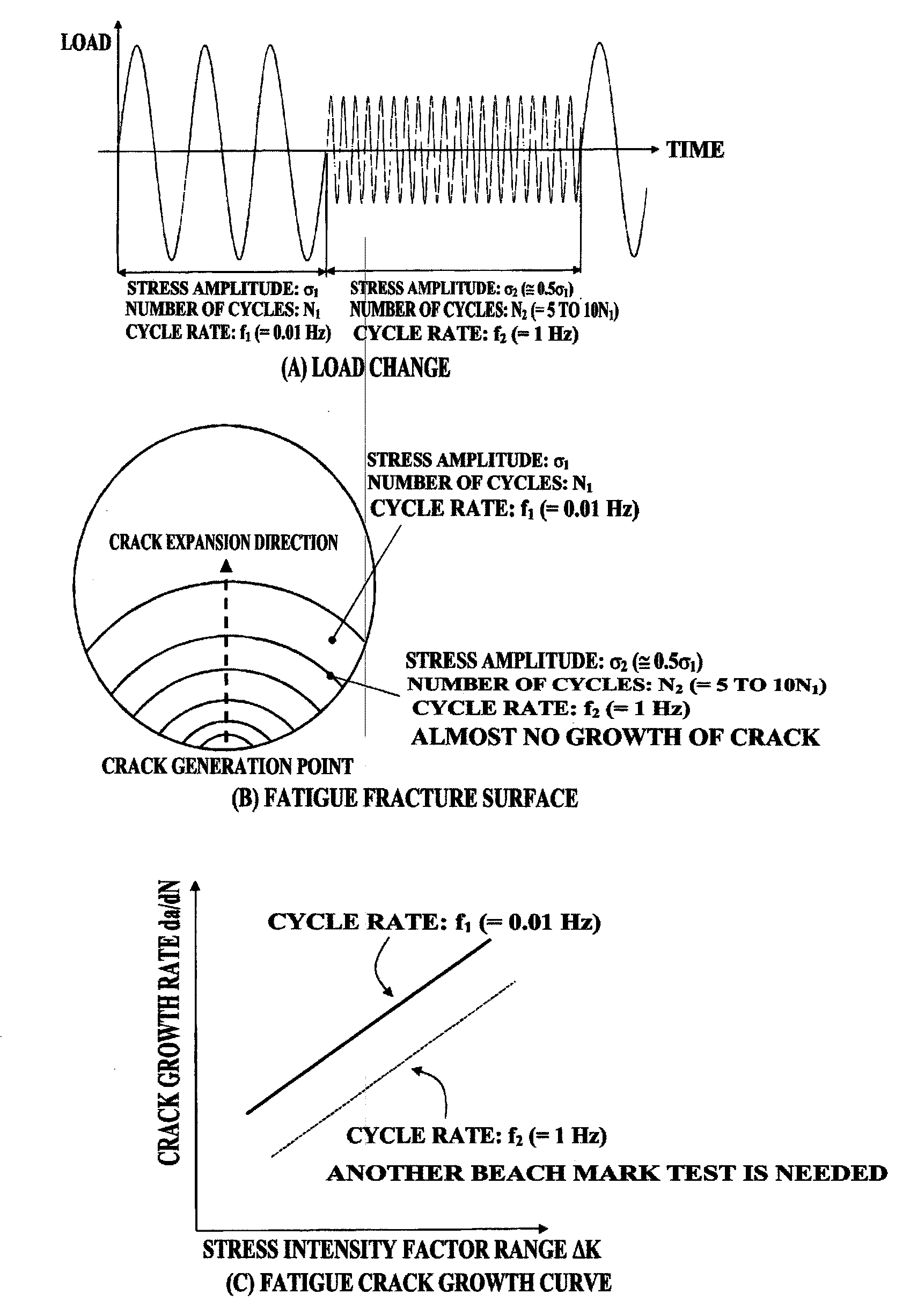
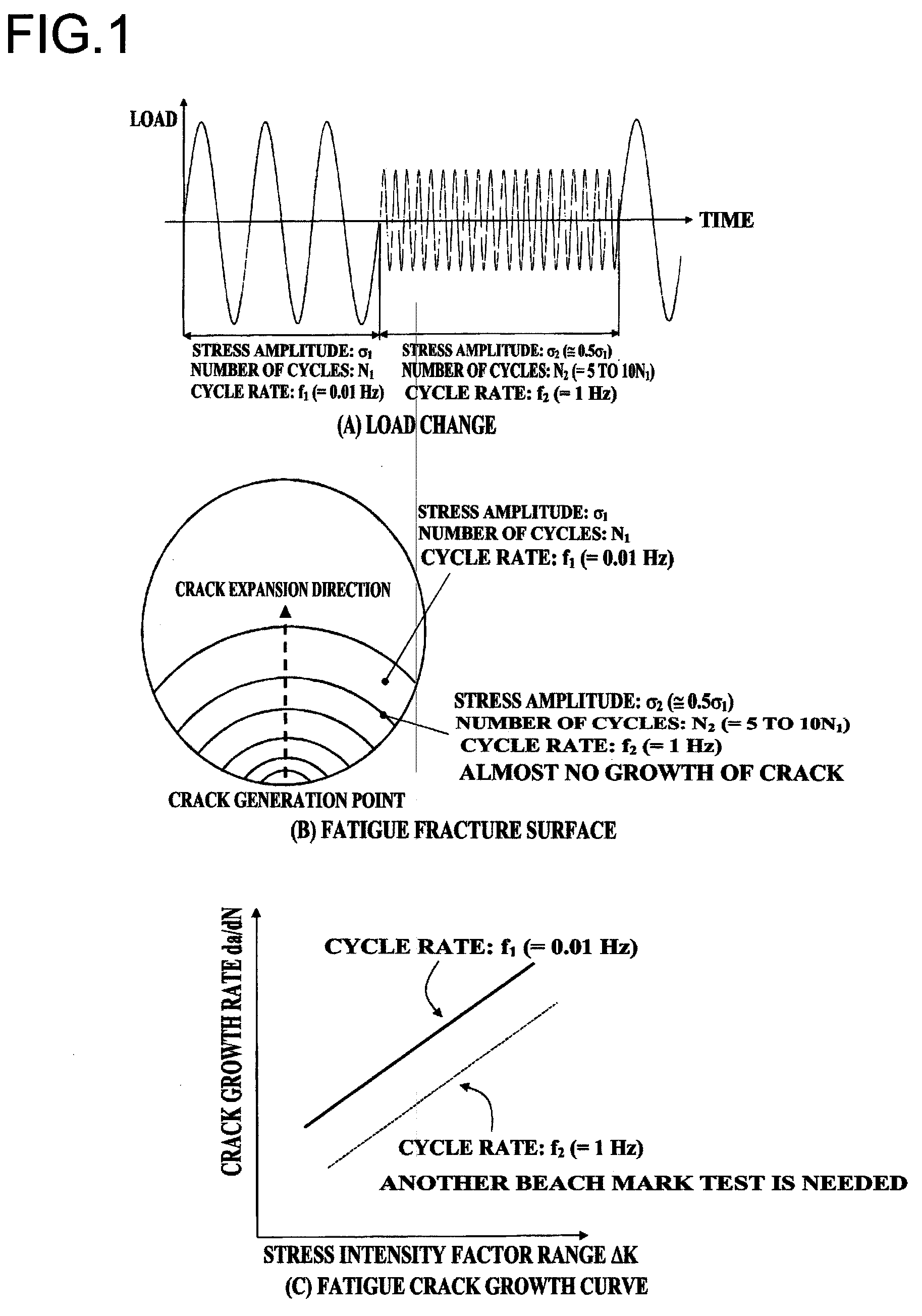
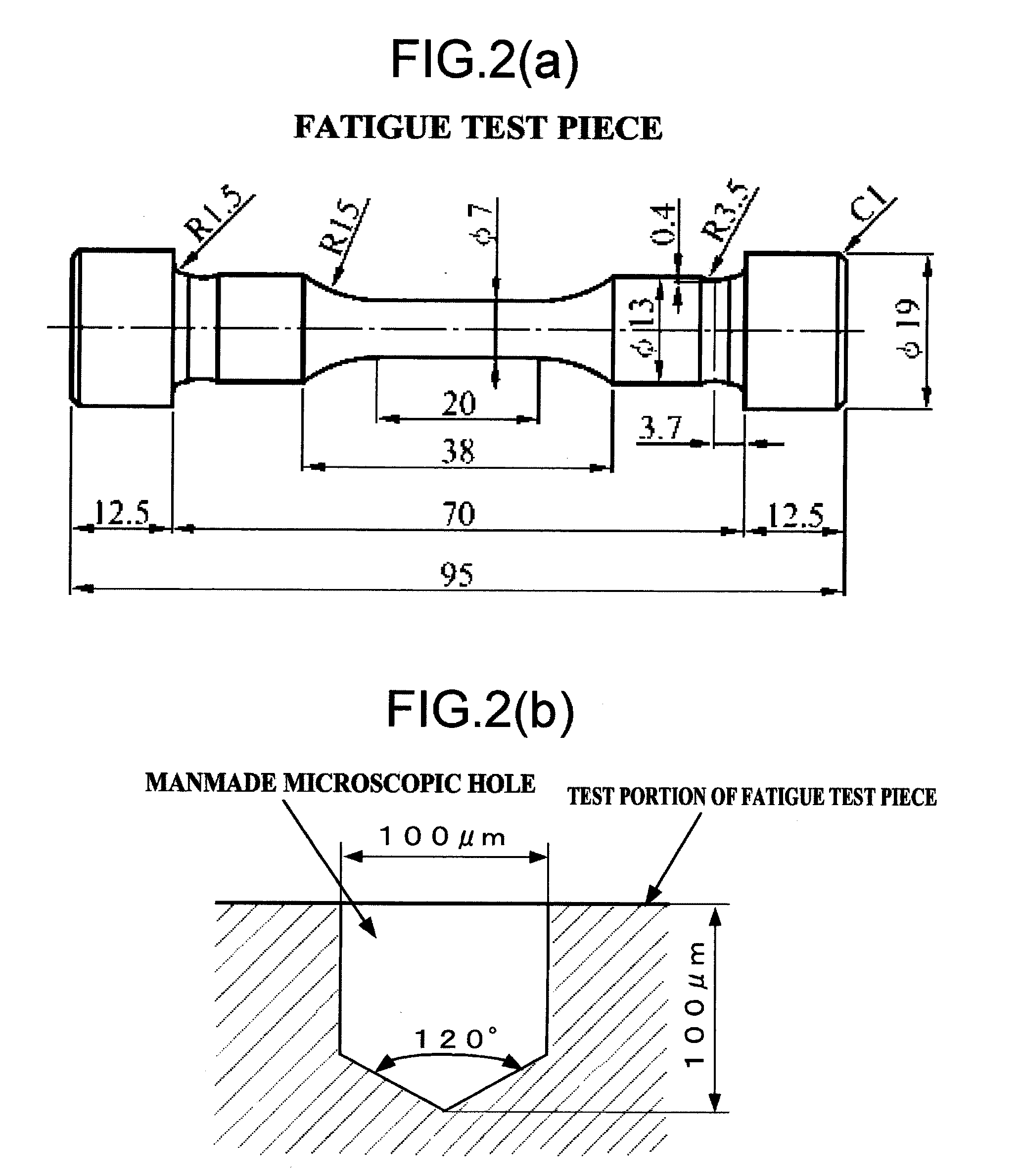
- A method involving a fatigue test in a hydrogen gas atmosphere where the cycle rate is alternated to vary the effect of hydrogen on crack growth, allowing for the specification of crack lengths and growth curves under multiple load conditions without forming fretting oxide, thus enabling efficient acquisition of fatigue crack growth curves for various cycle rates in a single test.

Fatigue testing method in hydrogen gas
PatentInactiveEP2233911A1
Innovation
- A method involving a fatigue test in a hydrogen gas atmosphere where the cycle rate is alternated to vary the effect of hydrogen on crack growth, allowing for the specification of crack lengths and growth curves under multiple load conditions in a single test, without forming fretting oxide, thus eliminating the need for frequent gas changes and optical measurements.


Safety Standards for Hydrogen Environment Applications
The development of comprehensive safety standards for hydrogen environment applications has become increasingly critical as hydrogen technologies expand across industrial sectors. Current regulatory frameworks primarily focus on traditional material failure modes, but the unique challenges posed by hydrogen-induced cracking versus fatigue cracking under cyclic loads require specialized safety protocols and assessment methodologies.
International standards organizations, including ISO, ASME, and API, have established foundational guidelines for hydrogen service applications. ISO 11114 series addresses gas cylinder compatibility, while ASME Section VIII Division 3 provides requirements for high-pressure hydrogen vessels. However, these standards often treat hydrogen embrittlement and mechanical fatigue as separate phenomena, lacking integrated approaches for cyclic loading scenarios where both mechanisms interact synergistically.
The European Industrial Gases Association (EIGA) and the Compressed Gas Association (CGA) have developed sector-specific safety standards that acknowledge the complexity of hydrogen-material interactions. These standards emphasize material selection criteria, design factors, and inspection protocols tailored to hydrogen environments. Recent updates incorporate fracture mechanics principles and damage tolerance assessments specifically addressing the interplay between hydrogen diffusion and cyclic stress conditions.
Emerging safety frameworks are incorporating probabilistic risk assessment methodologies to account for the statistical nature of crack initiation and propagation under combined hydrogen exposure and cyclic loading. These approaches recognize that traditional deterministic safety factors may be insufficient when multiple degradation mechanisms operate simultaneously, requiring more sophisticated reliability-based design criteria.
Current gaps in safety standards include limited guidance on real-time monitoring systems for detecting early-stage cracking in hydrogen environments, insufficient standardization of accelerated testing protocols that accurately simulate field conditions, and lack of unified criteria for distinguishing between hydrogen-induced and fatigue-dominated failure modes during service life assessment.
Future safety standard development is trending toward performance-based regulations that emphasize outcome-oriented requirements rather than prescriptive design rules. This evolution enables innovative materials and designs while maintaining safety integrity through advanced monitoring, predictive maintenance, and risk management strategies specifically adapted to hydrogen applications under dynamic loading conditions.
International standards organizations, including ISO, ASME, and API, have established foundational guidelines for hydrogen service applications. ISO 11114 series addresses gas cylinder compatibility, while ASME Section VIII Division 3 provides requirements for high-pressure hydrogen vessels. However, these standards often treat hydrogen embrittlement and mechanical fatigue as separate phenomena, lacking integrated approaches for cyclic loading scenarios where both mechanisms interact synergistically.
The European Industrial Gases Association (EIGA) and the Compressed Gas Association (CGA) have developed sector-specific safety standards that acknowledge the complexity of hydrogen-material interactions. These standards emphasize material selection criteria, design factors, and inspection protocols tailored to hydrogen environments. Recent updates incorporate fracture mechanics principles and damage tolerance assessments specifically addressing the interplay between hydrogen diffusion and cyclic stress conditions.
Emerging safety frameworks are incorporating probabilistic risk assessment methodologies to account for the statistical nature of crack initiation and propagation under combined hydrogen exposure and cyclic loading. These approaches recognize that traditional deterministic safety factors may be insufficient when multiple degradation mechanisms operate simultaneously, requiring more sophisticated reliability-based design criteria.
Current gaps in safety standards include limited guidance on real-time monitoring systems for detecting early-stage cracking in hydrogen environments, insufficient standardization of accelerated testing protocols that accurately simulate field conditions, and lack of unified criteria for distinguishing between hydrogen-induced and fatigue-dominated failure modes during service life assessment.
Future safety standard development is trending toward performance-based regulations that emphasize outcome-oriented requirements rather than prescriptive design rules. This evolution enables innovative materials and designs while maintaining safety integrity through advanced monitoring, predictive maintenance, and risk management strategies specifically adapted to hydrogen applications under dynamic loading conditions.
Advanced NDT Methods for Early Crack Detection
The differentiation between hydrogen-induced cracking and fatigue cracking under cyclic loading conditions presents significant challenges for conventional inspection methods, necessitating the development and implementation of advanced non-destructive testing techniques. These sophisticated NDT approaches are essential for early crack detection, as both failure mechanisms can initiate at microscopic levels and propagate rapidly under operational stresses.
Electromagnetic acoustic transducers (EMATs) represent a breakthrough technology for detecting subsurface defects without requiring direct contact or couplant materials. This method excels in identifying hydrogen-induced cracking patterns, particularly in high-temperature environments where traditional ultrasonic methods face limitations. EMATs generate ultrasonic waves through electromagnetic induction, enabling detection of crack initiation zones that are typically 0.1-0.5mm in depth, well before visible surface manifestations occur.
Phased array ultrasonic testing (PAUT) has emerged as a cornerstone technology for comprehensive crack characterization. The technique employs multiple ultrasonic elements that can be electronically controlled to steer, focus, and sweep ultrasonic beams through materials. This capability allows for real-time imaging of crack geometry, orientation, and growth patterns, enabling operators to distinguish between the transgranular nature of fatigue cracks and the intergranular characteristics typical of hydrogen-induced failures.
Digital radiography and computed tomography have revolutionized volumetric inspection capabilities, particularly for complex geometries where access is limited. These methods provide three-dimensional visualization of internal crack networks, enabling detection of hydrogen-induced cracking patterns that often manifest as interconnected micro-crack clusters. The enhanced sensitivity of digital detectors allows identification of defects as small as 0.02mm in optimal conditions.
Acoustic emission monitoring systems offer unique advantages for continuous surveillance during operational loading cycles. These systems detect elastic waves generated by crack propagation events, providing real-time information about active crack growth. The frequency characteristics and signal patterns can help differentiate between the continuous, steady progression typical of fatigue cracking and the intermittent, burst-like emissions associated with hydrogen-induced crack advancement.
Eddy current array technology has demonstrated exceptional capability for surface and near-surface crack detection, particularly effective for identifying fatigue crack initiation sites. The multi-coil configuration enables high-resolution scanning with improved probability of detection for cracks oriented in various directions relative to the inspection surface.
Electromagnetic acoustic transducers (EMATs) represent a breakthrough technology for detecting subsurface defects without requiring direct contact or couplant materials. This method excels in identifying hydrogen-induced cracking patterns, particularly in high-temperature environments where traditional ultrasonic methods face limitations. EMATs generate ultrasonic waves through electromagnetic induction, enabling detection of crack initiation zones that are typically 0.1-0.5mm in depth, well before visible surface manifestations occur.
Phased array ultrasonic testing (PAUT) has emerged as a cornerstone technology for comprehensive crack characterization. The technique employs multiple ultrasonic elements that can be electronically controlled to steer, focus, and sweep ultrasonic beams through materials. This capability allows for real-time imaging of crack geometry, orientation, and growth patterns, enabling operators to distinguish between the transgranular nature of fatigue cracks and the intergranular characteristics typical of hydrogen-induced failures.
Digital radiography and computed tomography have revolutionized volumetric inspection capabilities, particularly for complex geometries where access is limited. These methods provide three-dimensional visualization of internal crack networks, enabling detection of hydrogen-induced cracking patterns that often manifest as interconnected micro-crack clusters. The enhanced sensitivity of digital detectors allows identification of defects as small as 0.02mm in optimal conditions.
Acoustic emission monitoring systems offer unique advantages for continuous surveillance during operational loading cycles. These systems detect elastic waves generated by crack propagation events, providing real-time information about active crack growth. The frequency characteristics and signal patterns can help differentiate between the continuous, steady progression typical of fatigue cracking and the intermittent, burst-like emissions associated with hydrogen-induced crack advancement.
Eddy current array technology has demonstrated exceptional capability for surface and near-surface crack detection, particularly effective for identifying fatigue crack initiation sites. The multi-coil configuration enables high-resolution scanning with improved probability of detection for cracks oriented in various directions relative to the inspection surface.
Unlock deeper insights with PatSnap Eureka Quick Research — get a full tech report to explore trends and direct your research. Try now!
Generate Your Research Report Instantly with AI Agent
Supercharge your innovation with PatSnap Eureka AI Agent Platform!