

Improve Siloxane Flexibility at Sub-Zero Temperatures
APR 28, 20269 MIN READ
Generate Your Research Report Instantly with AI Agent
PatSnap Eureka helps you evaluate technical feasibility & market potential.
Siloxane Low-Temperature Flexibility Background and Objectives
Siloxane polymers, characterized by their silicon-oxygen backbone structure, have emerged as critical materials in numerous industrial applications due to their unique combination of thermal stability, chemical inertness, and flexibility. However, their performance at sub-zero temperatures presents significant challenges that limit their effectiveness in cold-weather applications, aerospace systems, automotive components, and outdoor equipment operating in harsh climatic conditions.
The fundamental issue lies in the molecular behavior of siloxane chains at low temperatures. As temperatures decrease, the polymer chains experience reduced molecular mobility, leading to increased stiffness and brittleness. This phenomenon significantly compromises the material's flexibility, elasticity, and overall mechanical performance, potentially resulting in cracking, failure, or complete loss of functionality in critical applications.
Current market demands increasingly require materials that maintain consistent performance across extreme temperature ranges. Industries such as aerospace, where components must function reliably from ground-level conditions to high-altitude environments, and automotive sectors operating in diverse global climates, face mounting pressure to develop siloxane formulations that retain flexibility at temperatures well below freezing point.
The primary objective of improving siloxane flexibility at sub-zero temperatures encompasses several key technical goals. First, maintaining elastic modulus within acceptable ranges at temperatures as low as -40°C to -60°C, ensuring that mechanical properties remain stable across the operational temperature spectrum. Second, preventing glass transition temperature shifts that could compromise material performance during thermal cycling.
Additionally, the development aims to preserve long-term durability and resistance to thermal fatigue while maintaining the inherent advantages of siloxane materials, including UV resistance, oxidation stability, and biocompatibility. The ultimate goal involves creating siloxane formulations that demonstrate consistent flexibility metrics across temperature ranges without sacrificing other critical performance characteristics.
These objectives align with broader industry trends toward developing advanced materials capable of withstanding increasingly demanding operational environments while maintaining reliability, cost-effectiveness, and manufacturing scalability for widespread commercial adoption.
The fundamental issue lies in the molecular behavior of siloxane chains at low temperatures. As temperatures decrease, the polymer chains experience reduced molecular mobility, leading to increased stiffness and brittleness. This phenomenon significantly compromises the material's flexibility, elasticity, and overall mechanical performance, potentially resulting in cracking, failure, or complete loss of functionality in critical applications.
Current market demands increasingly require materials that maintain consistent performance across extreme temperature ranges. Industries such as aerospace, where components must function reliably from ground-level conditions to high-altitude environments, and automotive sectors operating in diverse global climates, face mounting pressure to develop siloxane formulations that retain flexibility at temperatures well below freezing point.
The primary objective of improving siloxane flexibility at sub-zero temperatures encompasses several key technical goals. First, maintaining elastic modulus within acceptable ranges at temperatures as low as -40°C to -60°C, ensuring that mechanical properties remain stable across the operational temperature spectrum. Second, preventing glass transition temperature shifts that could compromise material performance during thermal cycling.
Additionally, the development aims to preserve long-term durability and resistance to thermal fatigue while maintaining the inherent advantages of siloxane materials, including UV resistance, oxidation stability, and biocompatibility. The ultimate goal involves creating siloxane formulations that demonstrate consistent flexibility metrics across temperature ranges without sacrificing other critical performance characteristics.
These objectives align with broader industry trends toward developing advanced materials capable of withstanding increasingly demanding operational environments while maintaining reliability, cost-effectiveness, and manufacturing scalability for widespread commercial adoption.
Market Demand for Cold-Resistant Siloxane Applications
The aerospace industry represents one of the most significant markets driving demand for cold-resistant siloxane applications. Aircraft operating at high altitudes encounter extreme temperature variations, with external temperatures dropping well below -40°C. Siloxane-based sealants, gaskets, and coatings must maintain flexibility and sealing integrity under these harsh conditions to ensure flight safety and operational reliability. The growing commercial aviation sector, coupled with increasing defense spending globally, continues to expand this market segment.
Automotive applications constitute another major demand driver, particularly in cold climate regions. Modern vehicles require siloxane materials for engine seals, weatherstripping, and electronic component protection that must function reliably in sub-zero temperatures. The automotive industry's shift toward electric vehicles has intensified this demand, as battery systems and charging infrastructure require enhanced cold-weather performance. Cold-resistant siloxanes are essential for maintaining battery efficiency and preventing seal failures in extreme weather conditions.
The renewable energy sector, especially wind power generation, has emerged as a rapidly growing market for cold-resistant siloxane applications. Wind turbines installed in northern climates and offshore environments face prolonged exposure to sub-zero temperatures. Siloxane-based lubricants, sealants, and protective coatings must maintain their properties to ensure turbine reliability and minimize maintenance costs. Solar panel installations in cold regions similarly require siloxane encapsulants and sealants that resist thermal cycling and low-temperature brittleness.
Industrial manufacturing processes operating in cold environments or requiring cryogenic applications represent a specialized but valuable market segment. Food processing facilities, pharmaceutical cold storage, and chemical processing plants require siloxane materials that maintain flexibility and chemical resistance at low temperatures. The liquefied natural gas industry particularly demands high-performance cold-resistant siloxanes for sealing and insulation applications.
Geographic demand patterns show strong concentration in northern hemisphere regions, including North America, Northern Europe, and parts of Asia. Countries with harsh winter climates or significant cold-weather industrial operations drive the highest demand levels. The Arctic region's increasing industrial development, including oil and gas exploration, creates additional market opportunities for specialized cold-resistant siloxane formulations.
Market growth is further supported by stringent safety regulations and performance standards across industries. Regulatory requirements for material performance in extreme conditions push manufacturers to seek advanced siloxane solutions that exceed traditional temperature limitations.
Automotive applications constitute another major demand driver, particularly in cold climate regions. Modern vehicles require siloxane materials for engine seals, weatherstripping, and electronic component protection that must function reliably in sub-zero temperatures. The automotive industry's shift toward electric vehicles has intensified this demand, as battery systems and charging infrastructure require enhanced cold-weather performance. Cold-resistant siloxanes are essential for maintaining battery efficiency and preventing seal failures in extreme weather conditions.
The renewable energy sector, especially wind power generation, has emerged as a rapidly growing market for cold-resistant siloxane applications. Wind turbines installed in northern climates and offshore environments face prolonged exposure to sub-zero temperatures. Siloxane-based lubricants, sealants, and protective coatings must maintain their properties to ensure turbine reliability and minimize maintenance costs. Solar panel installations in cold regions similarly require siloxane encapsulants and sealants that resist thermal cycling and low-temperature brittleness.
Industrial manufacturing processes operating in cold environments or requiring cryogenic applications represent a specialized but valuable market segment. Food processing facilities, pharmaceutical cold storage, and chemical processing plants require siloxane materials that maintain flexibility and chemical resistance at low temperatures. The liquefied natural gas industry particularly demands high-performance cold-resistant siloxanes for sealing and insulation applications.
Geographic demand patterns show strong concentration in northern hemisphere regions, including North America, Northern Europe, and parts of Asia. Countries with harsh winter climates or significant cold-weather industrial operations drive the highest demand levels. The Arctic region's increasing industrial development, including oil and gas exploration, creates additional market opportunities for specialized cold-resistant siloxane formulations.
Market growth is further supported by stringent safety regulations and performance standards across industries. Regulatory requirements for material performance in extreme conditions push manufacturers to seek advanced siloxane solutions that exceed traditional temperature limitations.
Current Limitations of Siloxanes at Sub-Zero Conditions
Siloxanes face significant performance degradation when exposed to sub-zero temperatures, primarily due to their inherent molecular structure and thermodynamic properties. The most critical limitation is the dramatic increase in viscosity as temperatures drop below freezing point. This viscosity increase can range from 10 to 100 times the room temperature values, severely compromising the material's flowability and processability in cold environments.
The glass transition temperature (Tg) represents another fundamental constraint for siloxane applications. Most conventional siloxanes exhibit Tg values between -40°C to -60°C, beyond which they transition from a flexible, rubber-like state to a rigid, brittle condition. This transition severely limits their utility in aerospace, automotive, and outdoor applications where temperatures routinely fall below these thresholds.
Crystallization phenomena pose additional challenges at sub-zero conditions. Linear siloxane chains tend to undergo partial crystallization when cooled, leading to phase separation and heterogeneous material properties. This crystallization process results in reduced elongation at break, decreased tear strength, and compromised sealing effectiveness in gasket and O-ring applications.
The coefficient of thermal expansion mismatch becomes particularly problematic in multi-material assemblies. Siloxanes typically exhibit higher thermal expansion coefficients compared to metals and ceramics, creating significant stress concentrations at interfaces during thermal cycling. These stresses can lead to delamination, cracking, and premature failure of bonded assemblies.
Mechanical property deterioration manifests across multiple parameters at low temperatures. Tensile strength typically decreases by 30-50% below -20°C, while elongation at break can drop by up to 70%. The Shore hardness increases substantially, making the material less compliant and reducing its ability to accommodate thermal expansion and contraction cycles.
Chemical compatibility issues emerge more prominently at sub-zero temperatures. The reduced molecular mobility at low temperatures can alter the interaction between siloxanes and various substrates, potentially leading to adhesion failure or unexpected chemical reactions. Additionally, moisture absorption and subsequent ice crystal formation within the siloxane matrix can cause internal stress and microcracking.
Processing and manufacturing constraints become more severe in cold environments. Cure rates for room temperature vulcanizing siloxanes slow dramatically below 0°C, extending processing times and potentially affecting cross-link density uniformity. This limitation significantly impacts field repair applications and cold-weather installation procedures.
The glass transition temperature (Tg) represents another fundamental constraint for siloxane applications. Most conventional siloxanes exhibit Tg values between -40°C to -60°C, beyond which they transition from a flexible, rubber-like state to a rigid, brittle condition. This transition severely limits their utility in aerospace, automotive, and outdoor applications where temperatures routinely fall below these thresholds.
Crystallization phenomena pose additional challenges at sub-zero conditions. Linear siloxane chains tend to undergo partial crystallization when cooled, leading to phase separation and heterogeneous material properties. This crystallization process results in reduced elongation at break, decreased tear strength, and compromised sealing effectiveness in gasket and O-ring applications.
The coefficient of thermal expansion mismatch becomes particularly problematic in multi-material assemblies. Siloxanes typically exhibit higher thermal expansion coefficients compared to metals and ceramics, creating significant stress concentrations at interfaces during thermal cycling. These stresses can lead to delamination, cracking, and premature failure of bonded assemblies.
Mechanical property deterioration manifests across multiple parameters at low temperatures. Tensile strength typically decreases by 30-50% below -20°C, while elongation at break can drop by up to 70%. The Shore hardness increases substantially, making the material less compliant and reducing its ability to accommodate thermal expansion and contraction cycles.
Chemical compatibility issues emerge more prominently at sub-zero temperatures. The reduced molecular mobility at low temperatures can alter the interaction between siloxanes and various substrates, potentially leading to adhesion failure or unexpected chemical reactions. Additionally, moisture absorption and subsequent ice crystal formation within the siloxane matrix can cause internal stress and microcracking.
Processing and manufacturing constraints become more severe in cold environments. Cure rates for room temperature vulcanizing siloxanes slow dramatically below 0°C, extending processing times and potentially affecting cross-link density uniformity. This limitation significantly impacts field repair applications and cold-weather installation procedures.
Existing Solutions for Enhanced Siloxane Cold Flexibility
01 Siloxane chain structure modification for enhanced flexibility
Modification of siloxane polymer chain structures through incorporation of specific functional groups or cross-linking agents to improve flexibility properties. These modifications can include adjusting the molecular weight, introducing branching points, or incorporating flexible spacer units between siloxane segments to enhance the overall flexibility of the material.- Siloxane chain structure modification for enhanced flexibility: Modification of siloxane polymer chain structures through controlled polymerization and cross-linking density adjustments to achieve enhanced flexibility properties. This involves optimizing the molecular weight distribution and backbone architecture to improve mechanical properties while maintaining desired flexibility characteristics.
- Flexible siloxane compositions for coating applications: Development of flexible siloxane-based compositions specifically designed for coating applications where flexibility and durability are critical. These formulations incorporate specific additives and modifiers to enhance the flexibility of the cured siloxane matrix while maintaining adhesion and protective properties.
- Crosslinking systems for flexible siloxane networks: Advanced crosslinking methodologies and catalyst systems designed to create flexible three-dimensional siloxane networks. These systems control the degree of crosslinking to balance mechanical strength with flexibility, often incorporating specific crosslinking agents and reaction conditions.
- Flexible siloxane elastomers and rubber compositions: Formulation of siloxane-based elastomeric materials with enhanced flexibility for various industrial applications. These compositions focus on achieving optimal elastic properties through careful selection of siloxane precursors, fillers, and processing conditions to create materials with superior flexibility and resilience.
- Additive systems for improving siloxane flexibility: Incorporation of specific additives, plasticizers, and modifying agents to enhance the flexibility of siloxane-based materials. These additive systems work by reducing intermolecular forces or creating more mobile polymer segments, resulting in improved flexibility without compromising other essential properties.
02 Flexible siloxane compositions for coating applications
Development of siloxane-based compositions specifically designed for coating applications where flexibility is crucial. These compositions typically involve the use of low modulus siloxane polymers or the incorporation of plasticizing agents to maintain flexibility under various environmental conditions and mechanical stress.Expand Specific Solutions03 Copolymer systems incorporating flexible siloxane segments
Formation of copolymer systems where flexible siloxane segments are combined with other polymer components to achieve desired flexibility characteristics. These systems often involve block or random copolymers that leverage the inherent flexibility of siloxane chains while maintaining other required material properties.Expand Specific Solutions04 Cross-linking methods for maintaining siloxane flexibility
Various cross-linking techniques and curing methods designed to maintain or enhance the flexibility of siloxane materials during polymerization. These methods focus on controlling the degree of cross-linking and the type of cross-linking agents used to prevent excessive rigidity while ensuring adequate mechanical properties.Expand Specific Solutions05 Additive systems for improving siloxane flexibility
Use of various additives, fillers, and modifying agents to enhance the flexibility of siloxane-based materials. These additives can include plasticizers, flexible organic compounds, or specific inorganic fillers that help maintain chain mobility and reduce stiffness in the final siloxane product.Expand Specific Solutions
Key Players in Siloxane and Cold-Weather Materials Industry
The siloxane flexibility enhancement at sub-zero temperatures represents a mature but evolving market segment within the broader specialty chemicals industry. The competitive landscape is dominated by established chemical giants including Wacker Chemie AG, Dow Silicones Corp., Shin-Etsu Chemical, and Evonik Operations, who collectively control significant market share through decades of R&D investment and manufacturing expertise. The technology has reached commercial maturity with proven applications across automotive, aerospace, and electronics sectors, yet continues advancing through specialized formulations and novel polymer architectures. Emerging players like Gelest Inc. and Momentive Performance Materials Japan LLC contribute niche innovations, while research institutions such as MIT and Naval Research Laboratory drive fundamental breakthroughs in molecular design and processing techniques, indicating sustained innovation potential despite the technology's established commercial status.
Wacker Chemie AG
Technical Solution: Wacker has pioneered the development of liquid silicone rubber (LSR) systems with enhanced low-temperature properties through molecular engineering approaches. Their technology involves incorporating flexible spacer groups and optimizing cross-link density to prevent polymer chain stiffening at sub-zero conditions. The company's ELASTOSIL series demonstrates maintained flexibility at temperatures as low as -55°C through careful selection of organosilicon monomers and platinum-catalyzed curing systems. Their formulations also include specialized additives that inhibit crystallization and maintain polymer chain mobility under extreme cold conditions.
Strengths: Strong technical expertise in organosilicon chemistry with comprehensive product portfolio and global manufacturing capabilities. Weaknesses: Limited performance at extremely low temperatures below -60°C and sensitivity to processing conditions during manufacturing.
Evonik Operations GmbH
Technical Solution: Evonik has developed specialized organosilicon compounds with modified side chain structures to improve flexibility at sub-zero temperatures. Their technology focuses on incorporating polar functional groups and plasticizing segments into the siloxane backbone to reduce intermolecular interactions that cause stiffening. The company utilizes advanced catalyst systems and controlled polymerization conditions to achieve optimal molecular weight and polydispersity. Their materials demonstrate enhanced flexibility down to -50°C while maintaining thermal stability and mechanical properties. The technology also includes surface modification techniques to improve compatibility with various substrates and applications.
Strengths: Strong expertise in specialty chemicals with innovative molecular design capabilities and established market presence. Weaknesses: Limited temperature range compared to leading competitors and challenges in scaling up production for specialized formulations.
Core Innovations in Sub-Zero Siloxane Formulations
Synthesis of elastomeric poly(carborane-siloxane-acetelyene)s
PatentInactiveUS20050148750A1
Innovation
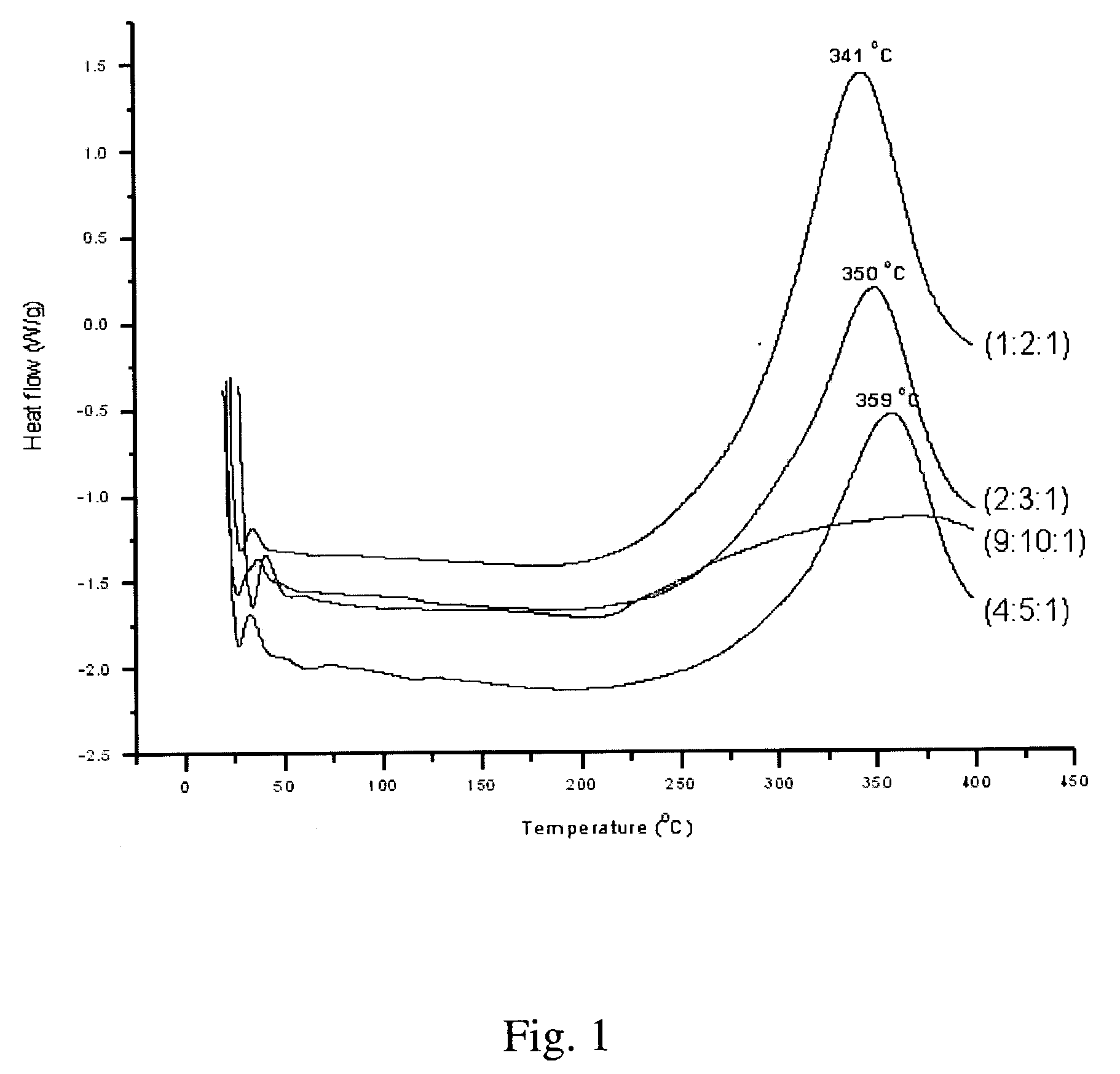
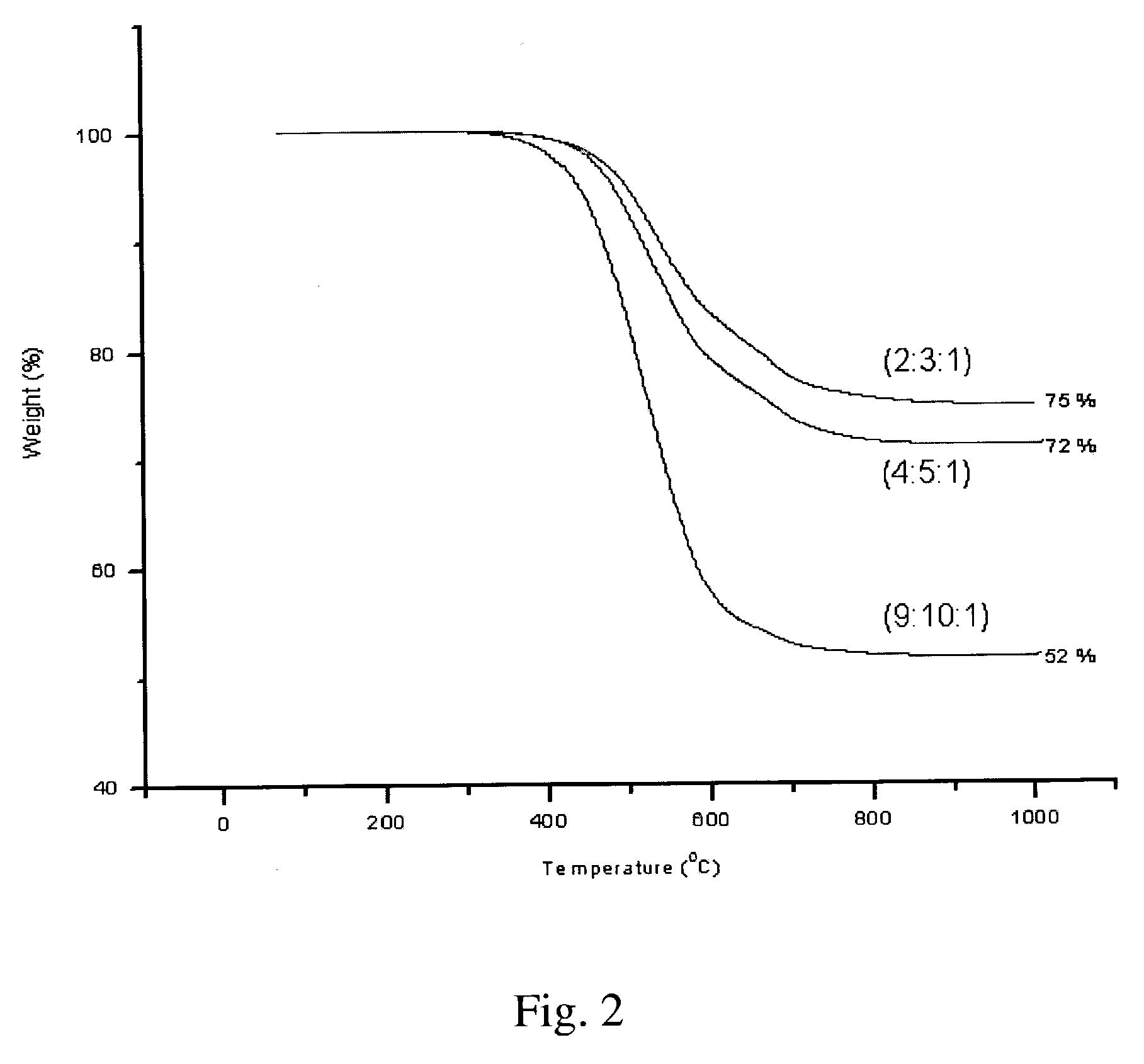
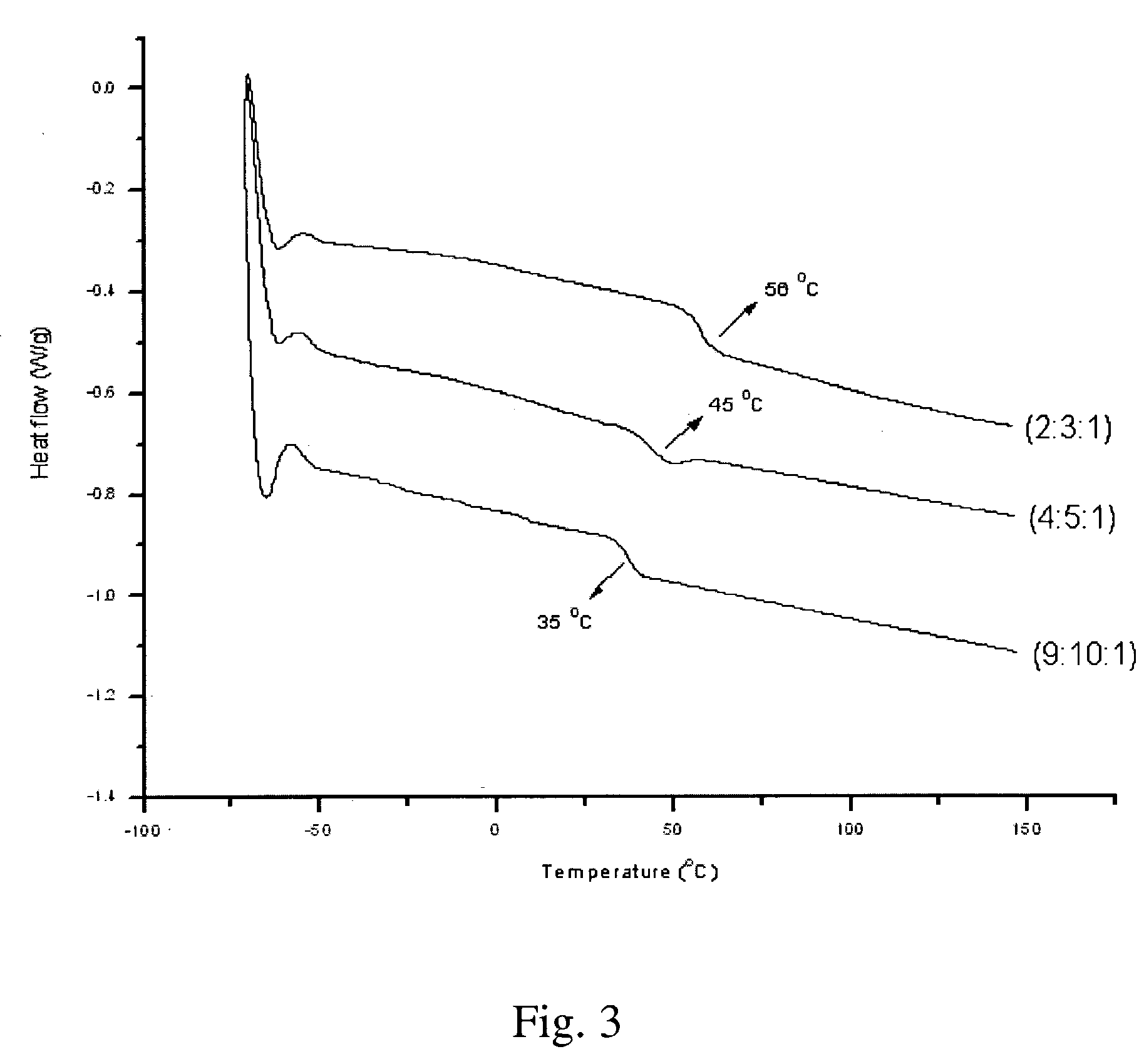
- A linear polymer comprising specific ratios of carborane, siloxane, and acetylene groups is synthesized by reacting siloxane-acetylene and carborane-siloxane precursors, allowing for controlled cross-linking to form a cured polymer with improved thermal and oxidative stability while maintaining flexibility.

Curable resin material composition, optical material, light-emitting device, method for producing light-emitting device, and electronic device
PatentInactiveUS20090283794A1
Innovation
- A curable resin material composition comprising an addition-polymerization-curable silicone resin with a SiH-group-containing siloxane-based compound, a C═C-bond-containing siloxane-based compound, and a non-reactive siloxane-based compound with a pour point of 0° C. or less, which imparts flexibility and adjusts the refractive index to 1.50 or more, enhancing thermal shock resistance and light output efficiency.


Environmental Impact Assessment of Cold-Weather Siloxanes
The environmental implications of cold-weather siloxanes present a complex landscape of considerations that extend beyond traditional performance metrics. As siloxane formulations are modified to maintain flexibility at sub-zero temperatures, their environmental footprint undergoes significant changes that require comprehensive evaluation across multiple impact categories.
Biodegradability characteristics of cold-weather siloxanes differ substantially from conventional formulations. The incorporation of specialized plasticizers and chain modifiers to enhance low-temperature flexibility often introduces compounds with extended degradation pathways. Linear siloxanes typically demonstrate better biodegradation profiles compared to cyclic variants, yet the additives required for sub-zero performance may create persistent environmental residues. Studies indicate that certain cold-weather formulations exhibit 15-30% slower biodegradation rates in soil environments compared to standard siloxanes.
Aquatic ecosystem impacts represent a critical concern for cold-weather siloxane applications. Enhanced flexibility modifiers can increase bioaccumulation potential in marine organisms, particularly in polar and temperate regions where these formulations see primary use. The modified molecular structures often exhibit altered solubility profiles, potentially affecting distribution patterns in water systems and sediment accumulation rates.
Atmospheric release patterns of cold-weather siloxanes show distinct seasonal variations. During freeze-thaw cycles, these materials may experience accelerated volatilization of low-molecular-weight components, contributing to atmospheric siloxane loading. The environmental persistence of these volatile fractions varies significantly based on formulation chemistry, with some exhibiting photodegradation half-lives ranging from 2-14 days under UV exposure.
Manufacturing environmental burdens associated with cold-weather siloxane production typically exceed those of standard formulations by 20-35%. The synthesis of specialized flexibility enhancers requires additional processing steps and often involves more energy-intensive purification procedures. Solvent usage in production frequently increases due to the need for specialized reaction conditions and purification requirements.
End-of-life environmental considerations reveal both challenges and opportunities. While cold-weather siloxanes may exhibit enhanced durability, extending product lifecycles and reducing replacement frequency, their disposal presents unique challenges. Thermal decomposition pathways can differ from standard siloxanes, potentially generating different byproduct profiles during incineration or pyrolysis treatment processes.
Regulatory compliance frameworks for cold-weather siloxanes continue evolving, with emerging restrictions on certain cyclic siloxanes driving formulation changes toward linear alternatives. These regulatory shifts are reshaping the environmental impact profile of the entire cold-weather siloxane category, generally favoring formulations with improved environmental compatibility despite potential performance trade-offs.
Biodegradability characteristics of cold-weather siloxanes differ substantially from conventional formulations. The incorporation of specialized plasticizers and chain modifiers to enhance low-temperature flexibility often introduces compounds with extended degradation pathways. Linear siloxanes typically demonstrate better biodegradation profiles compared to cyclic variants, yet the additives required for sub-zero performance may create persistent environmental residues. Studies indicate that certain cold-weather formulations exhibit 15-30% slower biodegradation rates in soil environments compared to standard siloxanes.
Aquatic ecosystem impacts represent a critical concern for cold-weather siloxane applications. Enhanced flexibility modifiers can increase bioaccumulation potential in marine organisms, particularly in polar and temperate regions where these formulations see primary use. The modified molecular structures often exhibit altered solubility profiles, potentially affecting distribution patterns in water systems and sediment accumulation rates.
Atmospheric release patterns of cold-weather siloxanes show distinct seasonal variations. During freeze-thaw cycles, these materials may experience accelerated volatilization of low-molecular-weight components, contributing to atmospheric siloxane loading. The environmental persistence of these volatile fractions varies significantly based on formulation chemistry, with some exhibiting photodegradation half-lives ranging from 2-14 days under UV exposure.
Manufacturing environmental burdens associated with cold-weather siloxane production typically exceed those of standard formulations by 20-35%. The synthesis of specialized flexibility enhancers requires additional processing steps and often involves more energy-intensive purification procedures. Solvent usage in production frequently increases due to the need for specialized reaction conditions and purification requirements.
End-of-life environmental considerations reveal both challenges and opportunities. While cold-weather siloxanes may exhibit enhanced durability, extending product lifecycles and reducing replacement frequency, their disposal presents unique challenges. Thermal decomposition pathways can differ from standard siloxanes, potentially generating different byproduct profiles during incineration or pyrolysis treatment processes.
Regulatory compliance frameworks for cold-weather siloxanes continue evolving, with emerging restrictions on certain cyclic siloxanes driving formulation changes toward linear alternatives. These regulatory shifts are reshaping the environmental impact profile of the entire cold-weather siloxane category, generally favoring formulations with improved environmental compatibility despite potential performance trade-offs.
Quality Standards for Low-Temperature Siloxane Performance
Establishing comprehensive quality standards for low-temperature siloxane performance requires a multi-faceted approach that addresses the unique challenges posed by sub-zero operating conditions. These standards must encompass mechanical, thermal, and chemical performance criteria that accurately reflect real-world application demands across diverse industries including aerospace, automotive, and outdoor equipment manufacturing.
The foundation of low-temperature quality standards centers on flexibility retention metrics, typically measured through dynamic mechanical analysis (DMA) and tensile testing at specified temperature ranges. Industry standards commonly evaluate performance at -40°C, -55°C, and -65°C, with flexibility retention requirements varying from 70% to 85% of room temperature values depending on application criticality. These benchmarks ensure siloxane materials maintain adequate elasticity for sealing, cushioning, and vibration dampening functions.
Thermal cycling resistance represents another critical quality parameter, requiring materials to withstand repeated temperature fluctuations without degradation. Standard test protocols involve cycling between extreme temperatures, typically ranging from -65°C to +200°C, for predetermined cycles while monitoring changes in hardness, tensile strength, and elongation properties. Acceptable performance thresholds generally limit property changes to less than 15% after 1000 thermal cycles.
Chemical stability standards address the increased susceptibility to environmental degradation at low temperatures, where molecular mobility changes can affect resistance to oils, fuels, and cleaning solvents. Quality specifications must define acceptable swelling ratios, typically below 10% volume increase, and maintain chemical compatibility across the operational temperature spectrum.
Compression set resistance becomes particularly crucial at sub-zero temperatures, where reduced molecular chain mobility can lead to permanent deformation. Industry standards typically require compression set values below 25% after 22 hours at maximum service temperature, with additional verification at minimum operating temperatures to ensure sealing integrity throughout the thermal range.
Quality assurance protocols must also incorporate accelerated aging tests that simulate long-term exposure to low-temperature conditions, including ozone resistance, UV stability, and oxidation resistance evaluations conducted at reduced temperatures to accurately predict service life performance in challenging environments.
The foundation of low-temperature quality standards centers on flexibility retention metrics, typically measured through dynamic mechanical analysis (DMA) and tensile testing at specified temperature ranges. Industry standards commonly evaluate performance at -40°C, -55°C, and -65°C, with flexibility retention requirements varying from 70% to 85% of room temperature values depending on application criticality. These benchmarks ensure siloxane materials maintain adequate elasticity for sealing, cushioning, and vibration dampening functions.
Thermal cycling resistance represents another critical quality parameter, requiring materials to withstand repeated temperature fluctuations without degradation. Standard test protocols involve cycling between extreme temperatures, typically ranging from -65°C to +200°C, for predetermined cycles while monitoring changes in hardness, tensile strength, and elongation properties. Acceptable performance thresholds generally limit property changes to less than 15% after 1000 thermal cycles.
Chemical stability standards address the increased susceptibility to environmental degradation at low temperatures, where molecular mobility changes can affect resistance to oils, fuels, and cleaning solvents. Quality specifications must define acceptable swelling ratios, typically below 10% volume increase, and maintain chemical compatibility across the operational temperature spectrum.
Compression set resistance becomes particularly crucial at sub-zero temperatures, where reduced molecular chain mobility can lead to permanent deformation. Industry standards typically require compression set values below 25% after 22 hours at maximum service temperature, with additional verification at minimum operating temperatures to ensure sealing integrity throughout the thermal range.
Quality assurance protocols must also incorporate accelerated aging tests that simulate long-term exposure to low-temperature conditions, including ozone resistance, UV stability, and oxidation resistance evaluations conducted at reduced temperatures to accurately predict service life performance in challenging environments.
Unlock deeper insights with PatSnap Eureka Quick Research — get a full tech report to explore trends and direct your research. Try now!
Generate Your Research Report Instantly with AI Agent
Supercharge your innovation with PatSnap Eureka AI Agent Platform!