
Improving Alignment Reliability in Zero-Backlash Couplings Long-Term
JUN 1, 20269 MIN READ
Generate Your Research Report Instantly with AI Agent
Patsnap Eureka helps you evaluate technical feasibility & market potential.
Zero-Backlash Coupling Alignment Evolution and Objectives
Zero-backlash couplings have undergone significant technological evolution since their inception in the mid-20th century, driven by the increasing demands for precision in industrial automation and robotics applications. The initial development focused on eliminating mechanical play between rotating shafts, which was critical for accurate motion transmission in early CNC machines and servo systems.
The evolution began with simple split-collar designs in the 1960s, where two halves of a coupling were spring-loaded against each other to eliminate backlash. These early solutions provided basic functionality but suffered from limited torque capacity and durability issues. The 1970s witnessed the introduction of bellows-type couplings, which offered improved flexibility and reduced maintenance requirements while maintaining zero-backlash characteristics.
The 1980s marked a pivotal period with the development of disc-type zero-backlash couplings, featuring thin metallic discs that could accommodate misalignment while transmitting torque without play. This innovation significantly enhanced the reliability and service life of precision drive systems. Simultaneously, the emergence of oldham-style zero-backlash couplings provided solutions for applications requiring substantial parallel misalignment compensation.
Modern developments in the 21st century have focused on advanced materials and manufacturing techniques. The integration of carbon fiber composites, high-strength aluminum alloys, and precision machining technologies has enabled the creation of couplings with superior performance characteristics. Contemporary designs incorporate sophisticated elastomeric elements and multi-piece construction methods that maintain zero-backlash properties while accommodating various types of shaft misalignment.
Current technological objectives center on achieving long-term alignment reliability through enhanced material science, improved manufacturing precision, and advanced design methodologies. The primary goal is to develop coupling systems that maintain their zero-backlash characteristics throughout extended operational periods while withstanding environmental stresses, temperature variations, and mechanical wear. These objectives align with the growing demands of Industry 4.0 applications, where consistent precision and minimal maintenance requirements are paramount for automated manufacturing systems.
The evolution began with simple split-collar designs in the 1960s, where two halves of a coupling were spring-loaded against each other to eliminate backlash. These early solutions provided basic functionality but suffered from limited torque capacity and durability issues. The 1970s witnessed the introduction of bellows-type couplings, which offered improved flexibility and reduced maintenance requirements while maintaining zero-backlash characteristics.
The 1980s marked a pivotal period with the development of disc-type zero-backlash couplings, featuring thin metallic discs that could accommodate misalignment while transmitting torque without play. This innovation significantly enhanced the reliability and service life of precision drive systems. Simultaneously, the emergence of oldham-style zero-backlash couplings provided solutions for applications requiring substantial parallel misalignment compensation.
Modern developments in the 21st century have focused on advanced materials and manufacturing techniques. The integration of carbon fiber composites, high-strength aluminum alloys, and precision machining technologies has enabled the creation of couplings with superior performance characteristics. Contemporary designs incorporate sophisticated elastomeric elements and multi-piece construction methods that maintain zero-backlash properties while accommodating various types of shaft misalignment.
Current technological objectives center on achieving long-term alignment reliability through enhanced material science, improved manufacturing precision, and advanced design methodologies. The primary goal is to develop coupling systems that maintain their zero-backlash characteristics throughout extended operational periods while withstanding environmental stresses, temperature variations, and mechanical wear. These objectives align with the growing demands of Industry 4.0 applications, where consistent precision and minimal maintenance requirements are paramount for automated manufacturing systems.
Market Demand for High-Precision Coupling Solutions
The global precision coupling market has experienced substantial growth driven by increasing automation across manufacturing sectors and the rising demand for high-accuracy motion control systems. Industries such as aerospace, semiconductor manufacturing, medical devices, and robotics require coupling solutions that maintain exceptional alignment precision over extended operational periods. The shift toward Industry 4.0 and smart manufacturing has intensified requirements for zero-backlash couplings that can deliver consistent performance in critical applications where even minimal misalignment can result in significant operational failures or quality defects.
Semiconductor fabrication equipment represents one of the most demanding market segments for high-precision couplings. Wafer handling systems, lithography equipment, and inspection tools require couplings that maintain nanometer-level positioning accuracy throughout millions of operational cycles. The continuous miniaturization of semiconductor devices has pushed tolerance requirements to unprecedented levels, creating sustained demand for advanced coupling technologies that can maintain alignment reliability over years of continuous operation.
Medical device manufacturing and surgical robotics constitute another rapidly expanding market segment. Precision surgical instruments, diagnostic equipment, and automated laboratory systems depend on couplings that provide consistent torque transmission without introducing positional errors. The growing adoption of minimally invasive surgical procedures and robotic-assisted surgeries has created new requirements for compact, lightweight couplings that maintain precision under varying load conditions and environmental factors.
The aerospace and defense sectors continue to drive demand for high-reliability coupling solutions capable of withstanding extreme operating conditions while maintaining precise alignment. Satellite positioning systems, radar equipment, and flight control mechanisms require couplings that can operate reliably in harsh environments with minimal maintenance opportunities. The increasing deployment of unmanned aerial systems and space exploration missions has further expanded market requirements for long-term alignment stability.
Industrial automation and precision manufacturing equipment represent the largest volume market segment for high-precision couplings. CNC machining centers, coordinate measuring machines, and automated assembly systems require couplings that maintain accuracy throughout extended production runs. The growing emphasis on lean manufacturing and reduced downtime has increased focus on coupling solutions that provide predictable long-term performance with minimal maintenance requirements.
Emerging applications in renewable energy systems, particularly wind turbine pitch control mechanisms and solar tracking systems, are creating new market opportunities for precision couplings designed for outdoor environments and extended operational lifespans.
Semiconductor fabrication equipment represents one of the most demanding market segments for high-precision couplings. Wafer handling systems, lithography equipment, and inspection tools require couplings that maintain nanometer-level positioning accuracy throughout millions of operational cycles. The continuous miniaturization of semiconductor devices has pushed tolerance requirements to unprecedented levels, creating sustained demand for advanced coupling technologies that can maintain alignment reliability over years of continuous operation.
Medical device manufacturing and surgical robotics constitute another rapidly expanding market segment. Precision surgical instruments, diagnostic equipment, and automated laboratory systems depend on couplings that provide consistent torque transmission without introducing positional errors. The growing adoption of minimally invasive surgical procedures and robotic-assisted surgeries has created new requirements for compact, lightweight couplings that maintain precision under varying load conditions and environmental factors.
The aerospace and defense sectors continue to drive demand for high-reliability coupling solutions capable of withstanding extreme operating conditions while maintaining precise alignment. Satellite positioning systems, radar equipment, and flight control mechanisms require couplings that can operate reliably in harsh environments with minimal maintenance opportunities. The increasing deployment of unmanned aerial systems and space exploration missions has further expanded market requirements for long-term alignment stability.
Industrial automation and precision manufacturing equipment represent the largest volume market segment for high-precision couplings. CNC machining centers, coordinate measuring machines, and automated assembly systems require couplings that maintain accuracy throughout extended production runs. The growing emphasis on lean manufacturing and reduced downtime has increased focus on coupling solutions that provide predictable long-term performance with minimal maintenance requirements.
Emerging applications in renewable energy systems, particularly wind turbine pitch control mechanisms and solar tracking systems, are creating new market opportunities for precision couplings designed for outdoor environments and extended operational lifespans.
Current Alignment Challenges in Zero-Backlash Systems
Zero-backlash coupling systems face significant alignment challenges that directly impact their long-term reliability and performance. These challenges stem from the inherent complexity of maintaining precise mechanical connections while eliminating backlash through various compensation mechanisms. The primary alignment issues manifest across multiple operational dimensions, creating cascading effects that compromise system integrity over extended periods.
Angular misalignment represents one of the most critical challenges in zero-backlash systems. Even minor deviations from perfect angular alignment can generate substantial stress concentrations within the coupling elements. These stresses are particularly problematic in systems employing preloaded components, where the additional forces from misalignment can exceed design tolerances and accelerate wear patterns. The cumulative effect of angular misalignment becomes more pronounced as operational hours increase, leading to progressive degradation of the zero-backlash characteristics.
Parallel offset misalignment poses equally significant challenges, particularly in high-precision applications. When shaft centerlines are displaced laterally, the coupling must accommodate this offset while maintaining its backlash-free operation. This accommodation typically involves increased internal stresses and altered load distribution patterns across coupling elements. The resulting uneven wear patterns can compromise the coupling's ability to maintain consistent torque transmission and positioning accuracy over time.
Axial misalignment introduces additional complexity by affecting the engagement characteristics of coupling components. In systems utilizing ball-and-groove configurations or similar mechanisms, axial displacement can alter the contact geometry, leading to reduced contact areas and increased contact pressures. This phenomenon is particularly problematic in applications with frequent start-stop cycles or varying load conditions, where the axial forces can fluctuate significantly.
Dynamic alignment variations present perhaps the most challenging aspect of maintaining zero-backlash performance. Unlike static misalignments that remain constant, dynamic variations occur during operation due to thermal expansion, mechanical deflection, and bearing wear. These real-time changes in alignment create continuously varying stress patterns that are difficult to predict and compensate for in the coupling design phase.
The interaction between multiple misalignment types compounds these challenges exponentially. Real-world installations rarely exhibit single-axis misalignment, and the combination of angular, parallel, and axial deviations creates complex stress states that can exceed the individual effects of each misalignment type. This multi-axis misalignment scenario is particularly detrimental to the longevity of zero-backlash systems, as it can lead to unpredictable failure modes and reduced service life.
Angular misalignment represents one of the most critical challenges in zero-backlash systems. Even minor deviations from perfect angular alignment can generate substantial stress concentrations within the coupling elements. These stresses are particularly problematic in systems employing preloaded components, where the additional forces from misalignment can exceed design tolerances and accelerate wear patterns. The cumulative effect of angular misalignment becomes more pronounced as operational hours increase, leading to progressive degradation of the zero-backlash characteristics.
Parallel offset misalignment poses equally significant challenges, particularly in high-precision applications. When shaft centerlines are displaced laterally, the coupling must accommodate this offset while maintaining its backlash-free operation. This accommodation typically involves increased internal stresses and altered load distribution patterns across coupling elements. The resulting uneven wear patterns can compromise the coupling's ability to maintain consistent torque transmission and positioning accuracy over time.
Axial misalignment introduces additional complexity by affecting the engagement characteristics of coupling components. In systems utilizing ball-and-groove configurations or similar mechanisms, axial displacement can alter the contact geometry, leading to reduced contact areas and increased contact pressures. This phenomenon is particularly problematic in applications with frequent start-stop cycles or varying load conditions, where the axial forces can fluctuate significantly.
Dynamic alignment variations present perhaps the most challenging aspect of maintaining zero-backlash performance. Unlike static misalignments that remain constant, dynamic variations occur during operation due to thermal expansion, mechanical deflection, and bearing wear. These real-time changes in alignment create continuously varying stress patterns that are difficult to predict and compensate for in the coupling design phase.
The interaction between multiple misalignment types compounds these challenges exponentially. Real-world installations rarely exhibit single-axis misalignment, and the combination of angular, parallel, and axial deviations creates complex stress states that can exceed the individual effects of each misalignment type. This multi-axis misalignment scenario is particularly detrimental to the longevity of zero-backlash systems, as it can lead to unpredictable failure modes and reduced service life.
Existing Alignment Reliability Enhancement Methods
01 Flexible coupling designs for zero-backlash transmission
Flexible coupling mechanisms utilize elastic elements or flexible materials to eliminate backlash while maintaining torque transmission capability. These designs incorporate bellows, diaphragms, or flexible discs that can accommodate misalignment while providing precise motion transfer without play between connected components.- Flexible coupling designs for zero-backlash transmission: Flexible coupling mechanisms utilize elastic elements or flexible materials to eliminate backlash while maintaining torque transmission capability. These designs incorporate bellows, diaphragms, or flexible discs that can accommodate misalignment while providing precise motion transfer without play between connected components.
- Precision alignment mechanisms and adjustment systems: Advanced alignment systems incorporate adjustable components and precision positioning mechanisms to ensure accurate coupling alignment. These systems feature fine-tuning capabilities, self-centering mechanisms, and measurement systems that enable precise positioning and maintain alignment reliability over extended operational periods.
- Preloaded coupling systems for backlash elimination: Preloaded coupling designs utilize spring mechanisms, tensioning systems, or precompression elements to eliminate clearances and backlash. These systems maintain constant contact between coupling components through controlled preload forces, ensuring immediate response to directional changes and maintaining positional accuracy.
- Multi-element coupling configurations for enhanced reliability: Multi-element coupling systems combine multiple coupling stages or redundant elements to improve overall system reliability and alignment stability. These configurations distribute loads across multiple components, provide backup transmission paths, and incorporate fail-safe mechanisms to maintain operation even if individual elements experience wear or failure.
- Material and manufacturing innovations for coupling durability: Advanced materials and precision manufacturing techniques enhance coupling performance and longevity. These innovations include specialized alloys, surface treatments, precision machining processes, and quality control methods that ensure dimensional accuracy, reduce wear, and maintain coupling performance characteristics throughout the operational lifecycle.
02 Precision alignment mechanisms and adjustment systems
Advanced alignment systems incorporate adjustable components and precision positioning mechanisms to ensure accurate coupling alignment. These systems feature fine-tuning capabilities, measurement devices, and compensation mechanisms that maintain proper alignment under various operating conditions and reduce wear.Expand Specific Solutions03 Preloaded coupling assemblies for backlash elimination
Preloading mechanisms apply controlled tension or compression to coupling components to eliminate clearances and prevent backlash. These assemblies use springs, adjustable elements, or interference fits to maintain constant contact between mating surfaces while allowing for thermal expansion and operational variations.Expand Specific Solutions04 Multi-element coupling configurations for enhanced reliability
Complex coupling designs incorporate multiple interconnected elements that distribute loads and provide redundancy for improved reliability. These configurations feature parallel or series arrangements of coupling components that can compensate for individual element failures while maintaining system operation and alignment accuracy.Expand Specific Solutions05 Monitoring and feedback systems for coupling performance
Integrated sensing and monitoring systems provide real-time feedback on coupling alignment, wear, and performance parameters. These systems utilize sensors, measurement devices, and control algorithms to detect misalignment, predict maintenance needs, and automatically adjust coupling parameters to maintain optimal performance.Expand Specific Solutions
Leading Manufacturers in Precision Coupling Industry
The zero-backlash coupling alignment reliability market represents a mature industrial segment experiencing steady growth driven by precision automation demands across manufacturing, robotics, and aerospace sectors. The market demonstrates significant scale with established players like ABB Ltd., FANUC Corp., and Mitsubishi Electric Corp. leading through comprehensive automation portfolios, while specialized firms such as Rethink Robotics focus on advanced robotic coupling solutions. Technology maturity varies considerably - traditional mechanical coupling manufacturers like Hutchinson SA operate with well-established technologies, whereas companies like Intel Corp. and IBM are advancing smart coupling systems through IoT integration and predictive maintenance algorithms. Research institutions including MIT and National University of Defense Technology are pioneering next-generation materials and sensing technologies for enhanced long-term reliability, indicating ongoing innovation potential in this established market segment.
Mitsubishi Electric Corp.
Technical Solution: Mitsubishi Electric has developed a servo coupling system utilizing precision-ground helical elements with controlled preload mechanisms that eliminate backlash while maintaining long-term alignment stability. Their technology incorporates advanced materials including carbon fiber reinforced composites and specialized lubricants that reduce friction and wear. The coupling design features modular construction allowing for field replacement of wear components without complete system disassembly, significantly reducing maintenance downtime and extending operational life in demanding industrial environments.
Strengths: Modular design enables cost-effective maintenance, excellent performance in high-speed applications. Weaknesses: Complex installation requirements, sensitivity to environmental contamination.
Massachusetts Institute of Technology
Technical Solution: MIT researchers have developed innovative zero-backlash coupling designs utilizing smart materials and adaptive control systems. Their approach incorporates shape memory alloys and piezoelectric actuators that provide real-time backlash compensation and alignment correction. The technology features advanced finite element modeling and machine learning algorithms to predict coupling behavior and optimize performance parameters. Research focuses on bio-inspired coupling mechanisms that self-adjust to maintain optimal alignment under varying load conditions and environmental factors.
Strengths: Cutting-edge research approach with adaptive capabilities, potential for breakthrough innovations. Weaknesses: Technology still in research phase, limited commercial availability and high development costs.
Critical Patents in Zero-Backlash Coupling Design
Zero-Backlash Bushing
PatentInactiveUS20140301802A1
Innovation
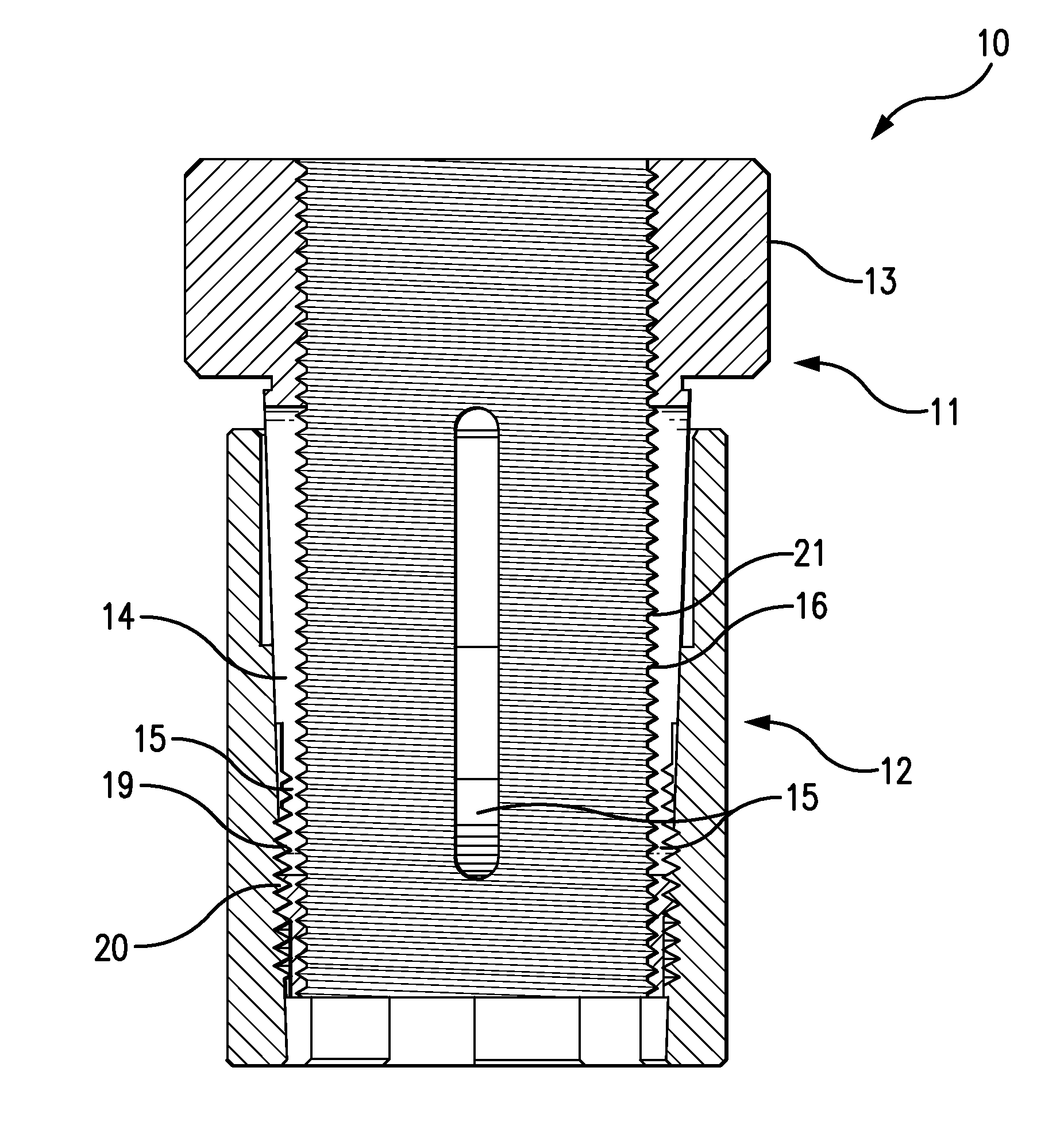
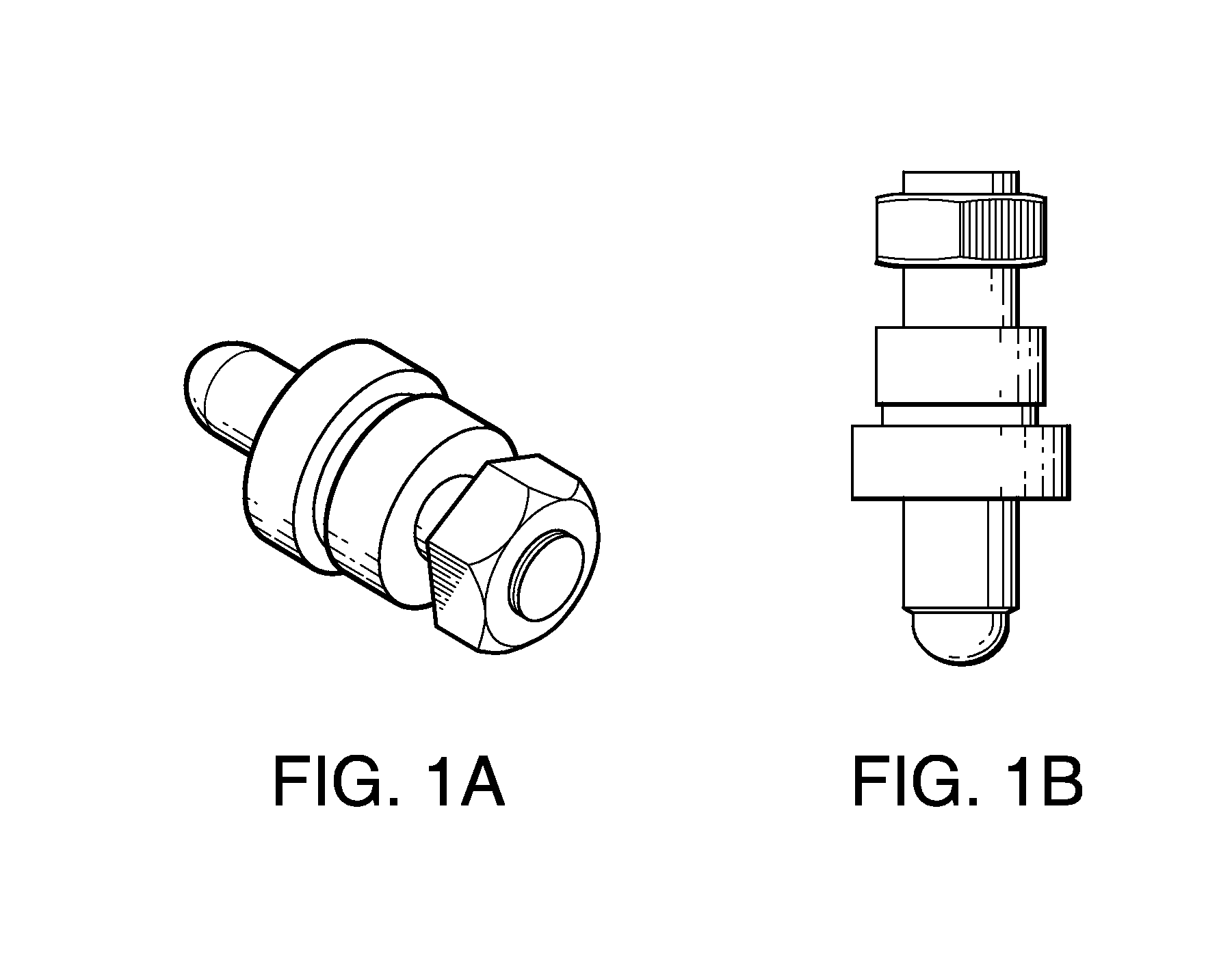
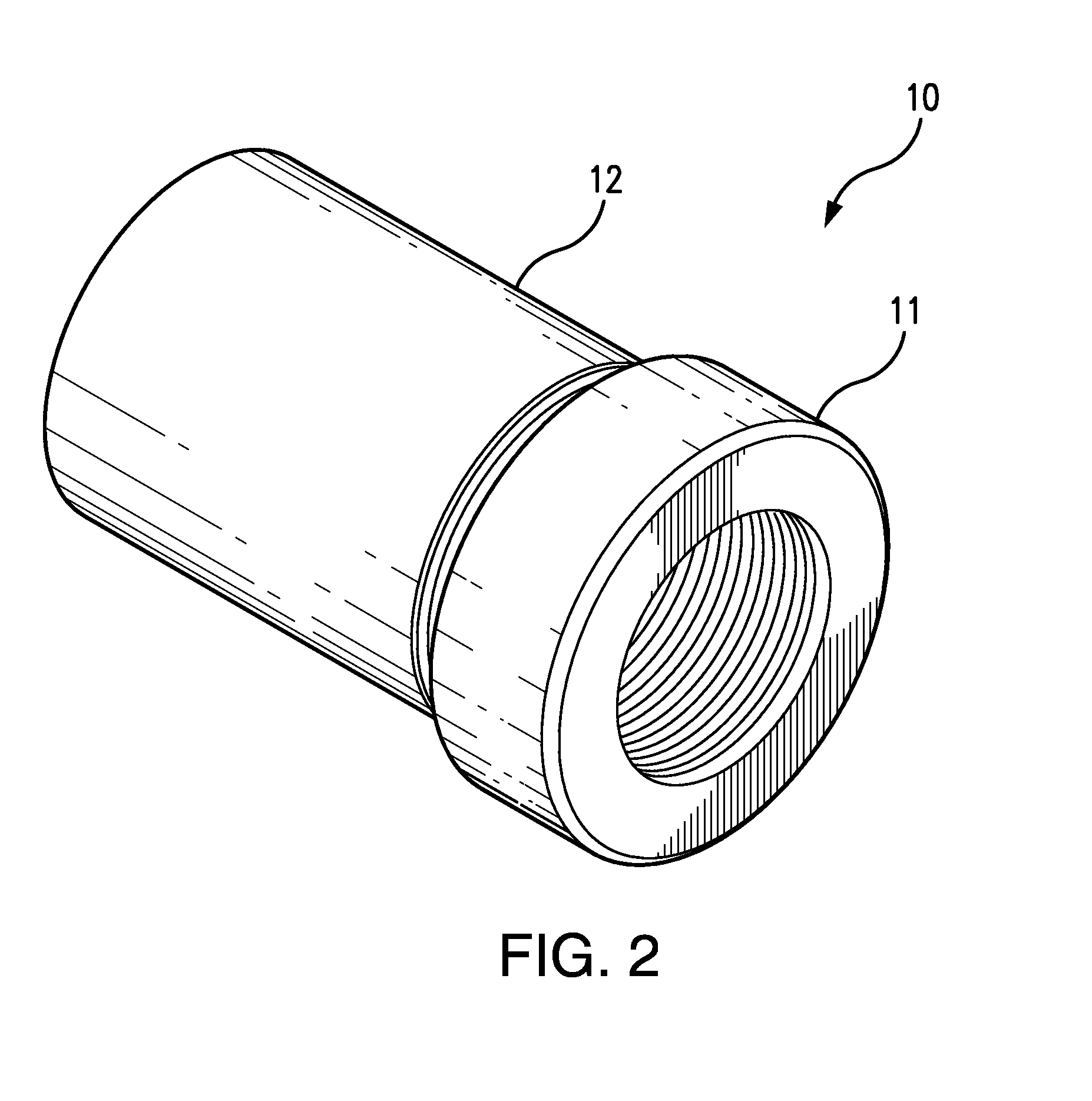
- Dual-component composite design with tapered resilient slotted bushing core and cylindrical annular sleeve creates circumferential pressure instead of traditional axial pressure from locking nuts.
- Tight radial engagement mechanism that creates radial gaps specifically designed for grease retention, preventing grease migration that causes long-term backlash issues.
- Slotted bushing core design enables controlled grease migration and facilitates uniform constriction for consistent radial pressure distribution.

Apparatus and method for accurate, precise, and adjustable kinematic coupling
PatentInactiveUS6746172B2
Innovation
- An adjustable kinematic coupling with convex and concave elements, where at least one element is rotatable, allowing for precise adjustment of the relative position between components in all six degrees of freedom, and featuring a displacement ratio that enables both coarse and fine motion control with interchangeable kinematic elements.


Quality Standards for Industrial Coupling Systems
Quality standards for industrial coupling systems represent a critical framework that ensures zero-backlash couplings maintain their alignment reliability throughout extended operational periods. These standards encompass multiple dimensions of performance evaluation, including dimensional accuracy, material specifications, manufacturing tolerances, and long-term durability requirements that directly impact alignment stability.
International standards such as ISO 14839 and AGMA 9000 series establish fundamental guidelines for coupling performance metrics, while industry-specific standards like API 671 for petroleum applications and IEEE 755 for power generation systems provide specialized requirements. These standards define acceptable limits for angular misalignment, parallel offset, and axial displacement that zero-backlash couplings must accommodate without compromising their precision characteristics over time.
Manufacturing quality standards focus on critical parameters that influence long-term alignment reliability. Surface finish requirements typically specify Ra values between 0.8 to 3.2 micrometers for mating surfaces, while geometric tolerances for concentricity and perpendicularity are maintained within IT6 to IT8 grades. Material standards mandate specific hardness ranges, typically 58-62 HRC for steel components, and define acceptable inclusion levels and grain structure characteristics that prevent premature wear and deformation.
Testing protocols embedded within quality standards require comprehensive validation of alignment retention capabilities under various operating conditions. Dynamic testing procedures simulate real-world loading scenarios, including cyclic torque variations, temperature fluctuations, and vibration exposure. These tests verify that couplings maintain their zero-backlash characteristics and alignment accuracy within specified tolerances after predetermined operational cycles.
Certification processes ensure compliance with established quality benchmarks through rigorous inspection procedures and documentation requirements. Third-party verification organizations conduct periodic audits of manufacturing processes and product performance, validating that zero-backlash couplings meet or exceed specified alignment reliability criteria throughout their intended service life.
International standards such as ISO 14839 and AGMA 9000 series establish fundamental guidelines for coupling performance metrics, while industry-specific standards like API 671 for petroleum applications and IEEE 755 for power generation systems provide specialized requirements. These standards define acceptable limits for angular misalignment, parallel offset, and axial displacement that zero-backlash couplings must accommodate without compromising their precision characteristics over time.
Manufacturing quality standards focus on critical parameters that influence long-term alignment reliability. Surface finish requirements typically specify Ra values between 0.8 to 3.2 micrometers for mating surfaces, while geometric tolerances for concentricity and perpendicularity are maintained within IT6 to IT8 grades. Material standards mandate specific hardness ranges, typically 58-62 HRC for steel components, and define acceptable inclusion levels and grain structure characteristics that prevent premature wear and deformation.
Testing protocols embedded within quality standards require comprehensive validation of alignment retention capabilities under various operating conditions. Dynamic testing procedures simulate real-world loading scenarios, including cyclic torque variations, temperature fluctuations, and vibration exposure. These tests verify that couplings maintain their zero-backlash characteristics and alignment accuracy within specified tolerances after predetermined operational cycles.
Certification processes ensure compliance with established quality benchmarks through rigorous inspection procedures and documentation requirements. Third-party verification organizations conduct periodic audits of manufacturing processes and product performance, validating that zero-backlash couplings meet or exceed specified alignment reliability criteria throughout their intended service life.
Predictive Maintenance Technologies for Coupling Health
Predictive maintenance technologies have emerged as critical enablers for ensuring long-term alignment reliability in zero-backlash couplings. These advanced monitoring systems leverage real-time data collection and analysis to detect early signs of misalignment, wear, and performance degradation before they lead to catastrophic failures. The integration of Internet of Things sensors, machine learning algorithms, and cloud-based analytics platforms creates comprehensive health monitoring ecosystems that continuously assess coupling performance parameters.
Vibration analysis represents one of the most established predictive maintenance approaches for coupling health assessment. Advanced accelerometers and vibration sensors can detect minute changes in coupling dynamics that indicate developing misalignment issues. Modern systems employ frequency domain analysis and pattern recognition algorithms to distinguish between normal operational variations and abnormal conditions that suggest alignment drift or component wear. These systems can identify specific failure modes such as angular misalignment, parallel offset, or flexible element degradation through characteristic vibration signatures.
Temperature monitoring technologies provide another crucial layer of predictive maintenance capability. Infrared thermography and embedded temperature sensors can detect localized heating patterns that often precede alignment failures in zero-backlash couplings. Thermal imaging systems can identify hot spots caused by increased friction from misalignment, while distributed temperature sensing networks provide continuous monitoring of thermal gradients across coupling assemblies.
Strain gauge technology and load monitoring systems offer direct measurement of mechanical stresses within coupling components. These sensors can detect changes in load distribution patterns that indicate developing alignment issues or component fatigue. Advanced strain measurement systems incorporate wireless data transmission capabilities and self-calibrating features to maintain measurement accuracy over extended operational periods.
Machine learning and artificial intelligence algorithms form the analytical backbone of modern predictive maintenance systems. These technologies process vast amounts of sensor data to identify subtle patterns and correlations that human operators might miss. Predictive models can forecast remaining useful life, optimal maintenance intervals, and probability of failure based on historical performance data and current operating conditions. Deep learning networks excel at recognizing complex failure signatures and adapting to changing operational environments.
Digital twin technology represents an emerging frontier in coupling health monitoring. These virtual replicas of physical coupling systems integrate real-time sensor data with physics-based models to simulate coupling behavior and predict future performance. Digital twins enable scenario testing and optimization of maintenance strategies without disrupting actual operations.
Vibration analysis represents one of the most established predictive maintenance approaches for coupling health assessment. Advanced accelerometers and vibration sensors can detect minute changes in coupling dynamics that indicate developing misalignment issues. Modern systems employ frequency domain analysis and pattern recognition algorithms to distinguish between normal operational variations and abnormal conditions that suggest alignment drift or component wear. These systems can identify specific failure modes such as angular misalignment, parallel offset, or flexible element degradation through characteristic vibration signatures.
Temperature monitoring technologies provide another crucial layer of predictive maintenance capability. Infrared thermography and embedded temperature sensors can detect localized heating patterns that often precede alignment failures in zero-backlash couplings. Thermal imaging systems can identify hot spots caused by increased friction from misalignment, while distributed temperature sensing networks provide continuous monitoring of thermal gradients across coupling assemblies.
Strain gauge technology and load monitoring systems offer direct measurement of mechanical stresses within coupling components. These sensors can detect changes in load distribution patterns that indicate developing alignment issues or component fatigue. Advanced strain measurement systems incorporate wireless data transmission capabilities and self-calibrating features to maintain measurement accuracy over extended operational periods.
Machine learning and artificial intelligence algorithms form the analytical backbone of modern predictive maintenance systems. These technologies process vast amounts of sensor data to identify subtle patterns and correlations that human operators might miss. Predictive models can forecast remaining useful life, optimal maintenance intervals, and probability of failure based on historical performance data and current operating conditions. Deep learning networks excel at recognizing complex failure signatures and adapting to changing operational environments.
Digital twin technology represents an emerging frontier in coupling health monitoring. These virtual replicas of physical coupling systems integrate real-time sensor data with physics-based models to simulate coupling behavior and predict future performance. Digital twins enable scenario testing and optimization of maintenance strategies without disrupting actual operations.
Unlock deeper insights with Patsnap Eureka Quick Research — get a full tech report to explore trends and direct your research. Try now!
Generate Your Research Report Instantly with AI Agent
Supercharge your innovation with Patsnap Eureka AI Agent Platform!