
Improving Fault Tolerance in Integrated Tactile Sensor Systems
APR 11, 20269 MIN READ
Generate Your Research Report Instantly with AI Agent
Patsnap Eureka helps you evaluate technical feasibility & market potential.
Tactile Sensor Fault Tolerance Background and Objectives
Tactile sensing technology has emerged as a critical component in modern robotics, prosthetics, and human-machine interface systems over the past three decades. The evolution began with simple pressure-sensitive resistors in the 1990s and has progressed to sophisticated multi-modal sensor arrays capable of detecting pressure, temperature, texture, and slip simultaneously. This technological advancement has been driven by the increasing demand for robots that can safely interact with humans and manipulate delicate objects in unstructured environments.
The integration of tactile sensors into complex systems has introduced significant challenges related to system reliability and fault tolerance. Traditional tactile sensor systems often suffer from single points of failure, where the malfunction of individual sensor elements can compromise entire operational capabilities. This vulnerability becomes particularly critical in applications such as surgical robotics, autonomous manufacturing, and assistive devices where system failures can result in safety hazards or mission-critical disruptions.
Current market demands emphasize the need for tactile sensor systems that can maintain operational integrity even when individual components fail. The automotive industry requires tactile feedback systems for autonomous vehicles that must function reliably under extreme conditions. Healthcare applications demand prosthetic devices with tactile sensing that can operate continuously without maintenance-related downtime. Industrial automation seeks robotic systems capable of maintaining precision handling capabilities despite sensor degradation over time.
The primary objective of improving fault tolerance in integrated tactile sensor systems is to develop robust architectures that can detect, isolate, and compensate for sensor failures in real-time. This involves creating redundant sensing pathways, implementing intelligent fault detection algorithms, and establishing graceful degradation protocols that maintain essential functionality even under partial system failures.
Secondary objectives include extending operational lifespan through predictive maintenance capabilities, reducing system downtime through self-healing mechanisms, and minimizing the impact of environmental factors such as electromagnetic interference, temperature fluctuations, and mechanical wear on sensor performance. These objectives collectively aim to transform tactile sensing from a fragile technology into a reliable foundation for next-generation interactive systems.
The ultimate goal is to establish tactile sensor systems that achieve aerospace-grade reliability standards while maintaining the sensitivity and responsiveness required for sophisticated manipulation tasks. This represents a fundamental shift from reactive maintenance approaches to proactive fault management strategies that ensure continuous operational capability across diverse application domains.
The integration of tactile sensors into complex systems has introduced significant challenges related to system reliability and fault tolerance. Traditional tactile sensor systems often suffer from single points of failure, where the malfunction of individual sensor elements can compromise entire operational capabilities. This vulnerability becomes particularly critical in applications such as surgical robotics, autonomous manufacturing, and assistive devices where system failures can result in safety hazards or mission-critical disruptions.
Current market demands emphasize the need for tactile sensor systems that can maintain operational integrity even when individual components fail. The automotive industry requires tactile feedback systems for autonomous vehicles that must function reliably under extreme conditions. Healthcare applications demand prosthetic devices with tactile sensing that can operate continuously without maintenance-related downtime. Industrial automation seeks robotic systems capable of maintaining precision handling capabilities despite sensor degradation over time.
The primary objective of improving fault tolerance in integrated tactile sensor systems is to develop robust architectures that can detect, isolate, and compensate for sensor failures in real-time. This involves creating redundant sensing pathways, implementing intelligent fault detection algorithms, and establishing graceful degradation protocols that maintain essential functionality even under partial system failures.
Secondary objectives include extending operational lifespan through predictive maintenance capabilities, reducing system downtime through self-healing mechanisms, and minimizing the impact of environmental factors such as electromagnetic interference, temperature fluctuations, and mechanical wear on sensor performance. These objectives collectively aim to transform tactile sensing from a fragile technology into a reliable foundation for next-generation interactive systems.
The ultimate goal is to establish tactile sensor systems that achieve aerospace-grade reliability standards while maintaining the sensitivity and responsiveness required for sophisticated manipulation tasks. This represents a fundamental shift from reactive maintenance approaches to proactive fault management strategies that ensure continuous operational capability across diverse application domains.
Market Demand for Reliable Tactile Sensing Systems
The global tactile sensing market is experiencing unprecedented growth driven by the convergence of robotics, artificial intelligence, and human-machine interaction technologies. Industries ranging from manufacturing automation to healthcare are increasingly recognizing the critical importance of reliable tactile feedback systems. This surge in demand stems from the fundamental need for machines to safely and effectively interact with their physical environment, particularly in applications where human safety and operational precision are paramount.
Manufacturing and industrial automation represent the largest market segment for reliable tactile sensing systems. Assembly line robots require sophisticated touch feedback to handle delicate components, perform quality control inspections, and adapt to variations in material properties. The automotive industry has emerged as a particularly demanding sector, where tactile sensors must maintain consistent performance in harsh environments while ensuring zero-defect assembly processes. Similarly, electronics manufacturing relies heavily on tactile feedback for precise component placement and testing procedures.
Healthcare applications constitute another rapidly expanding market segment, where fault-tolerant tactile systems are essential for patient safety. Surgical robots demand ultra-reliable haptic feedback to enable surgeons to perform minimally invasive procedures with confidence. Prosthetic devices increasingly incorporate advanced tactile sensing to restore natural touch sensations for amputees, requiring systems that can operate reliably over extended periods without failure. Rehabilitation robotics also depends on consistent tactile feedback to provide appropriate assistance levels during patient therapy sessions.
The consumer electronics sector is driving demand for miniaturized yet robust tactile sensing solutions. Smartphones, tablets, and wearable devices require touch interfaces that maintain responsiveness across millions of activation cycles while operating in diverse environmental conditions. Gaming and virtual reality applications push the boundaries of tactile technology, demanding high-fidelity force feedback systems that can operate continuously without degradation.
Emerging applications in autonomous vehicles and service robotics are creating new market opportunities for fault-tolerant tactile systems. Self-driving cars require reliable tactile feedback for parking assistance and collision avoidance, while service robots in hospitality and eldercare settings must safely interact with humans through dependable touch sensing capabilities.
The market demand is further intensified by increasing regulatory requirements and safety standards across industries. Organizations are prioritizing system reliability to minimize downtime, reduce maintenance costs, and ensure compliance with stringent safety protocols, making fault tolerance a critical purchasing criterion rather than an optional feature.
Manufacturing and industrial automation represent the largest market segment for reliable tactile sensing systems. Assembly line robots require sophisticated touch feedback to handle delicate components, perform quality control inspections, and adapt to variations in material properties. The automotive industry has emerged as a particularly demanding sector, where tactile sensors must maintain consistent performance in harsh environments while ensuring zero-defect assembly processes. Similarly, electronics manufacturing relies heavily on tactile feedback for precise component placement and testing procedures.
Healthcare applications constitute another rapidly expanding market segment, where fault-tolerant tactile systems are essential for patient safety. Surgical robots demand ultra-reliable haptic feedback to enable surgeons to perform minimally invasive procedures with confidence. Prosthetic devices increasingly incorporate advanced tactile sensing to restore natural touch sensations for amputees, requiring systems that can operate reliably over extended periods without failure. Rehabilitation robotics also depends on consistent tactile feedback to provide appropriate assistance levels during patient therapy sessions.
The consumer electronics sector is driving demand for miniaturized yet robust tactile sensing solutions. Smartphones, tablets, and wearable devices require touch interfaces that maintain responsiveness across millions of activation cycles while operating in diverse environmental conditions. Gaming and virtual reality applications push the boundaries of tactile technology, demanding high-fidelity force feedback systems that can operate continuously without degradation.
Emerging applications in autonomous vehicles and service robotics are creating new market opportunities for fault-tolerant tactile systems. Self-driving cars require reliable tactile feedback for parking assistance and collision avoidance, while service robots in hospitality and eldercare settings must safely interact with humans through dependable touch sensing capabilities.
The market demand is further intensified by increasing regulatory requirements and safety standards across industries. Organizations are prioritizing system reliability to minimize downtime, reduce maintenance costs, and ensure compliance with stringent safety protocols, making fault tolerance a critical purchasing criterion rather than an optional feature.
Current Fault Tolerance Challenges in Tactile Sensors
Integrated tactile sensor systems face significant fault tolerance challenges that stem from their inherently complex multi-layered architecture and harsh operational environments. These systems typically comprise numerous sensing elements, signal conditioning circuits, multiplexing networks, and data processing units, creating multiple potential failure points that can compromise overall system reliability.
Sensor degradation represents one of the most prevalent challenges in tactile sensing applications. Individual sensing elements are susceptible to mechanical wear, material fatigue, and environmental stress, leading to gradual performance deterioration or complete failure. This degradation often manifests as reduced sensitivity, increased noise levels, or complete signal loss, particularly in high-stress applications such as robotic manipulation or prosthetic devices.
Electrical connectivity issues pose another critical challenge, especially in flexible and stretchable tactile sensor arrays. Wire bonding failures, interconnect degradation, and contact resistance variations can result in intermittent or permanent signal loss. These problems are exacerbated in applications involving repeated mechanical deformation or exposure to temperature fluctuations, where thermal expansion and contraction cycles stress the electrical connections.
Signal integrity problems frequently emerge due to electromagnetic interference, crosstalk between adjacent sensing channels, and power supply variations. In dense sensor arrays, parasitic capacitance and resistance can cause signal distortion and reduce measurement accuracy. Additionally, ground loops and common-mode noise can introduce systematic errors that are difficult to distinguish from actual tactile measurements.
Data processing and communication failures represent system-level challenges that can render entire sensor networks inoperative. Microcontroller malfunctions, memory corruption, and communication protocol errors can disrupt data acquisition and transmission processes. These issues are particularly problematic in real-time applications where sensor data must be processed and acted upon within strict timing constraints.
Environmental factors such as temperature variations, humidity, chemical exposure, and mechanical shock create additional fault scenarios. Temperature-induced drift can cause calibration errors, while moisture ingress can lead to short circuits or corrosion. Chemical contamination may alter sensor material properties, resulting in permanent performance changes that are difficult to detect and compensate for automatically.
Sensor degradation represents one of the most prevalent challenges in tactile sensing applications. Individual sensing elements are susceptible to mechanical wear, material fatigue, and environmental stress, leading to gradual performance deterioration or complete failure. This degradation often manifests as reduced sensitivity, increased noise levels, or complete signal loss, particularly in high-stress applications such as robotic manipulation or prosthetic devices.
Electrical connectivity issues pose another critical challenge, especially in flexible and stretchable tactile sensor arrays. Wire bonding failures, interconnect degradation, and contact resistance variations can result in intermittent or permanent signal loss. These problems are exacerbated in applications involving repeated mechanical deformation or exposure to temperature fluctuations, where thermal expansion and contraction cycles stress the electrical connections.
Signal integrity problems frequently emerge due to electromagnetic interference, crosstalk between adjacent sensing channels, and power supply variations. In dense sensor arrays, parasitic capacitance and resistance can cause signal distortion and reduce measurement accuracy. Additionally, ground loops and common-mode noise can introduce systematic errors that are difficult to distinguish from actual tactile measurements.
Data processing and communication failures represent system-level challenges that can render entire sensor networks inoperative. Microcontroller malfunctions, memory corruption, and communication protocol errors can disrupt data acquisition and transmission processes. These issues are particularly problematic in real-time applications where sensor data must be processed and acted upon within strict timing constraints.
Environmental factors such as temperature variations, humidity, chemical exposure, and mechanical shock create additional fault scenarios. Temperature-induced drift can cause calibration errors, while moisture ingress can lead to short circuits or corrosion. Chemical contamination may alter sensor material properties, resulting in permanent performance changes that are difficult to detect and compensate for automatically.
Existing Fault Tolerance Solutions for Tactile Systems
01 Redundant sensor array architecture for fault tolerance
Implementing redundant tactile sensor arrays where multiple sensors monitor the same or overlapping areas to ensure continued operation when individual sensors fail. The system can detect faulty sensors by comparing outputs from redundant elements and automatically switch to backup sensors. This architecture provides graceful degradation of system performance rather than complete failure, maintaining critical functionality even with partial sensor failures.- Redundant sensor array architecture for fault tolerance: Implementing redundant tactile sensor arrays where multiple sensors monitor the same or overlapping areas to ensure continued operation when individual sensors fail. The system can detect faulty sensors by comparing readings from adjacent or redundant sensors and automatically switch to backup sensors. This architecture provides graceful degradation of system performance rather than complete failure, maintaining critical tactile sensing capabilities even when some sensors malfunction.
- Self-diagnostic and fault detection mechanisms: Integration of self-diagnostic capabilities that continuously monitor sensor health and performance parameters. The system employs algorithms to detect anomalies in sensor outputs, identify degraded or failed sensors, and generate fault reports. Diagnostic mechanisms include baseline calibration checks, signal integrity verification, and pattern recognition to distinguish between actual tactile inputs and sensor malfunctions. These systems can trigger alerts or initiate corrective actions when faults are detected.
- Adaptive signal processing and error correction: Employment of advanced signal processing techniques to compensate for sensor errors and maintain accurate tactile data. The system uses algorithms to filter noise, interpolate missing data from failed sensors, and apply error correction based on historical sensor behavior and neighboring sensor data. Machine learning approaches can be utilized to predict sensor failures and adjust processing parameters dynamically to maintain system accuracy despite component degradation.
- Modular sensor design with hot-swappable components: Development of modular tactile sensor systems where individual sensor modules can be replaced or reconfigured without shutting down the entire system. This design approach allows for maintenance and repair during operation, minimizing downtime. The system architecture supports plug-and-play functionality where new sensor modules are automatically recognized and calibrated. Modular designs also facilitate scalability and customization for different applications while maintaining fault tolerance through component isolation.
- Distributed processing and communication protocols: Implementation of distributed processing architectures where tactile data processing is distributed across multiple nodes rather than relying on a single central processor. This approach includes robust communication protocols that can route data around failed nodes or communication links. The system maintains multiple data pathways and employs redundant communication channels to ensure continuous data flow. Distributed architectures also enable local processing at sensor nodes, reducing dependency on central systems and improving overall fault tolerance.
02 Self-diagnostic and fault detection mechanisms
Integration of built-in self-test capabilities and diagnostic algorithms that continuously monitor sensor health and performance. The system can identify anomalies, degraded signals, or complete sensor failures through signal analysis, baseline comparisons, and pattern recognition. Automated diagnostic routines run periodically or continuously to detect faults before they impact system operation, enabling predictive maintenance and real-time fault isolation.Expand Specific Solutions03 Adaptive signal processing and error correction
Employment of advanced signal processing techniques that can compensate for sensor degradation and correct erroneous readings. The system uses algorithms to filter noise, interpolate missing data from failed sensors, and reconstruct tactile information from partial sensor data. Machine learning approaches can adapt to changing sensor characteristics over time and distinguish between actual tactile events and sensor malfunctions.Expand Specific Solutions04 Distributed processing and modular sensor design
Utilization of distributed processing architecture where sensor modules operate independently with local processing capabilities. This modular approach allows individual sensor units to be isolated, replaced, or reconfigured without affecting the entire system. The distributed design prevents single points of failure and enables the system to continue operating with reduced capacity when specific modules fail.Expand Specific Solutions05 Fault-tolerant communication protocols and data fusion
Implementation of robust communication protocols and data fusion techniques that ensure reliable data transmission between sensors and processing units. The system employs error detection and correction codes, alternative communication pathways, and multi-sensor data fusion algorithms that can reconcile conflicting information and maintain accurate tactile perception despite communication failures or sensor inconsistencies.Expand Specific Solutions
Key Players in Tactile Sensor and Fault Tolerance Industry
The integrated tactile sensor systems market is experiencing rapid growth driven by expanding applications in robotics, consumer electronics, and medical devices. The industry is in a mature development stage with significant investments from major technology corporations. Market leaders like Apple, Samsung Electronics, and Samsung Display are advancing touch interface technologies, while specialized companies such as tacterion GmbH and FabSense focus on innovative tactile sensing solutions. Industrial automation giants including Siemens, Mitsubishi Electric, and NEC are integrating fault-tolerant tactile systems into manufacturing equipment. Research institutions like University of Tokyo, Southeast University, and National Institute for Materials Science are driving fundamental breakthroughs in sensor reliability and fault detection algorithms. The technology maturity varies across applications, with consumer touch interfaces being highly mature while industrial and medical tactile systems remain in active development phases, creating opportunities for enhanced fault tolerance mechanisms.
Apple, Inc.
Technical Solution: Apple has developed advanced tactile sensor systems integrated into their devices, particularly focusing on Force Touch and Haptic Touch technologies. Their approach emphasizes redundant sensor arrays with multiple pressure-sensitive layers to ensure continued functionality even when individual sensors fail. The company implements sophisticated error detection algorithms that can identify faulty sensor nodes and automatically recalibrate the system using neighboring sensors. Apple's fault tolerance strategy includes real-time monitoring of sensor performance, predictive failure analysis, and seamless handover mechanisms between sensor clusters to maintain user experience continuity.
Strengths: Proven commercial implementation with millions of devices, excellent user experience integration, robust error handling algorithms. Weaknesses: Primarily focused on consumer electronics applications, limited scalability for industrial harsh environments.
Siemens AG
Technical Solution: Siemens has developed industrial-grade fault-tolerant tactile sensor systems designed for harsh manufacturing environments. Their solution features modular sensor architectures with hot-swappable components, allowing for maintenance without system shutdown. The technology incorporates advanced diagnostics with continuous health monitoring, predictive maintenance algorithms, and automatic fault isolation capabilities. Siemens' approach emphasizes safety-critical applications where sensor failure could result in significant operational risks, implementing triple redundancy systems and fail-safe mechanisms that ensure graceful degradation rather than complete system failure.
Strengths: Proven industrial reliability, comprehensive safety standards compliance, excellent diagnostic capabilities. Weaknesses: Higher cost due to industrial-grade requirements, may be over-engineered for simpler applications.
Core Innovations in Tactile Sensor Fault Detection
Fault-tolerant method, apparatus, and medium for touch sensor
PatentInactiveUS20070279397A1
Innovation
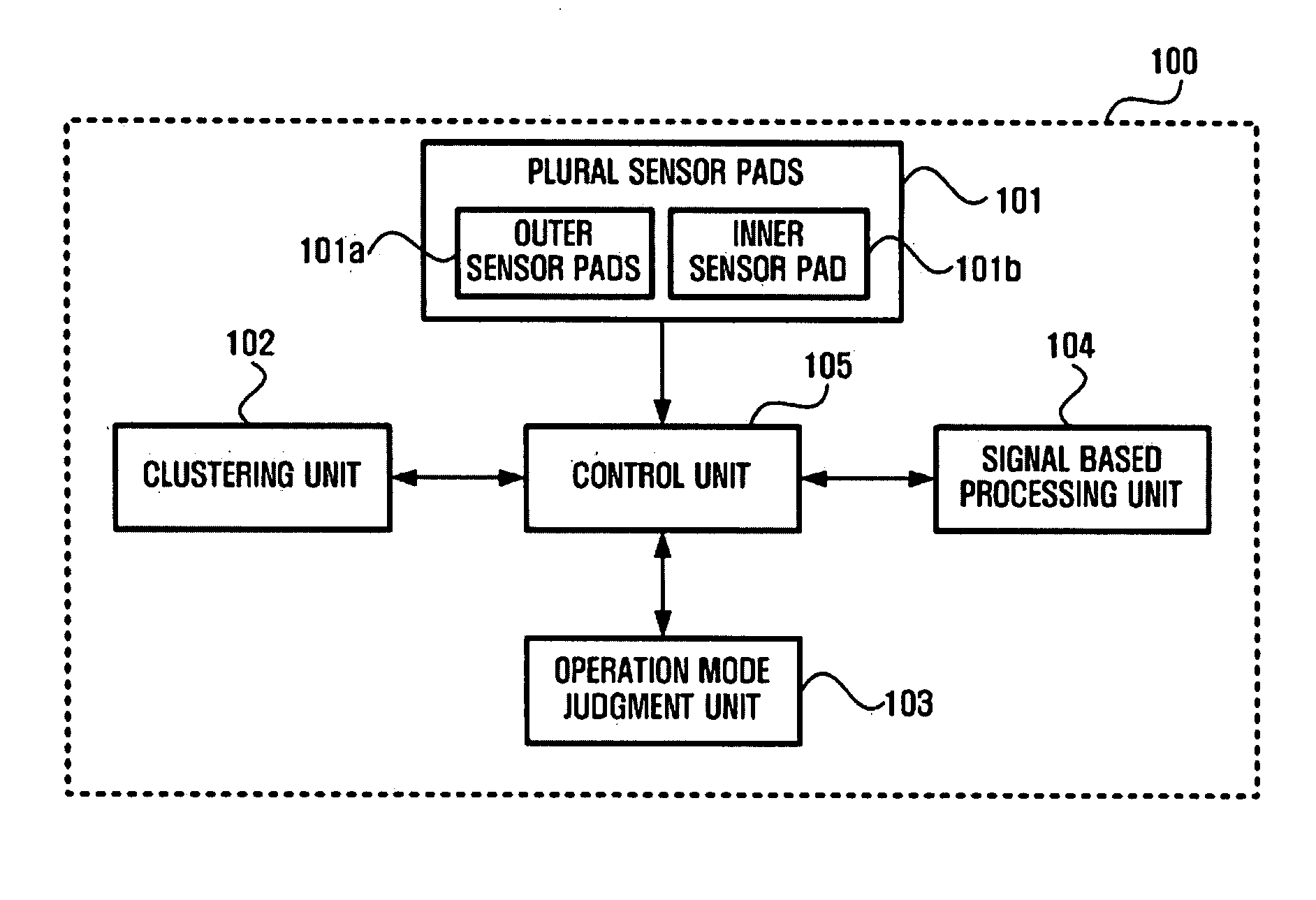
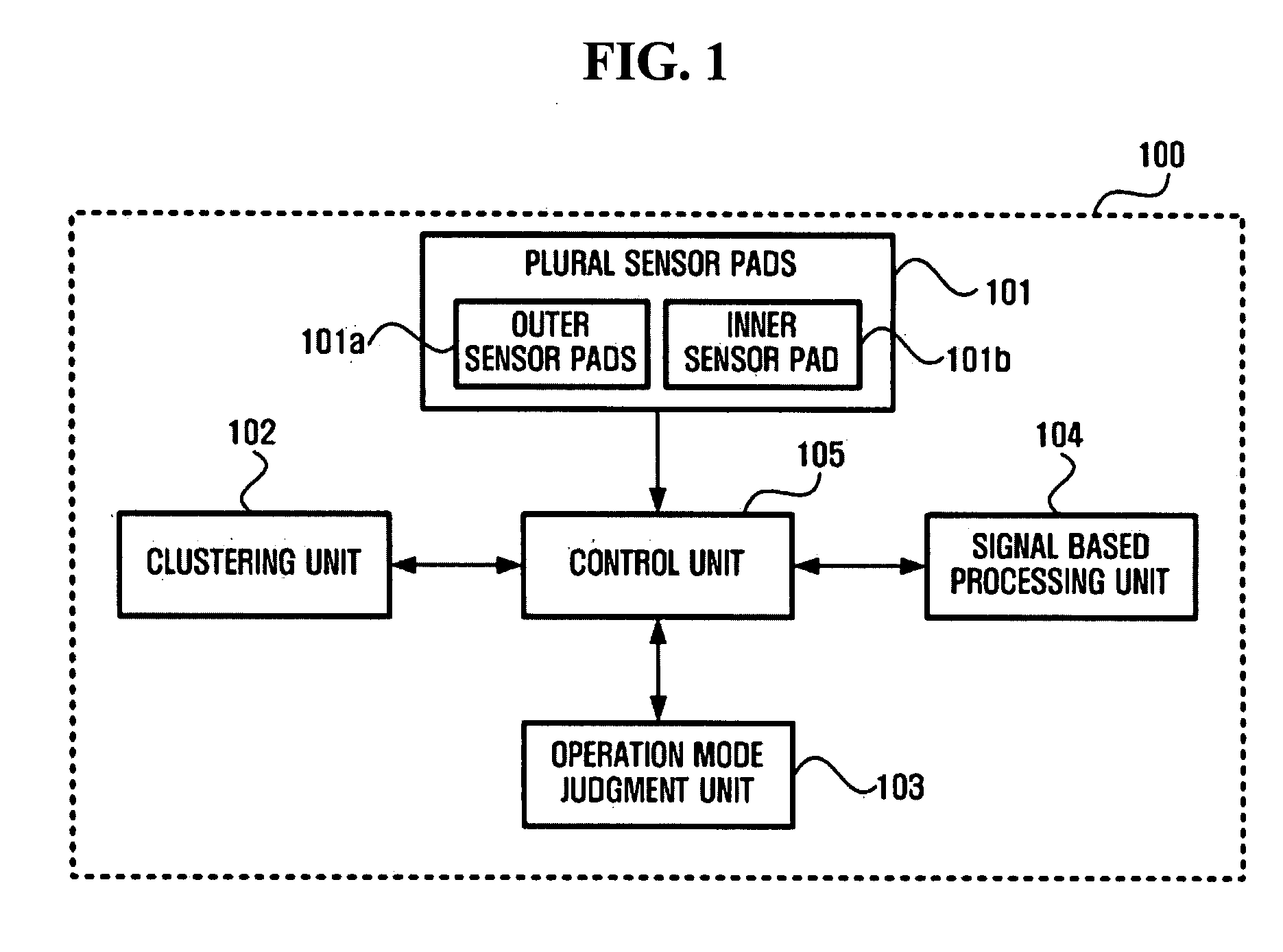
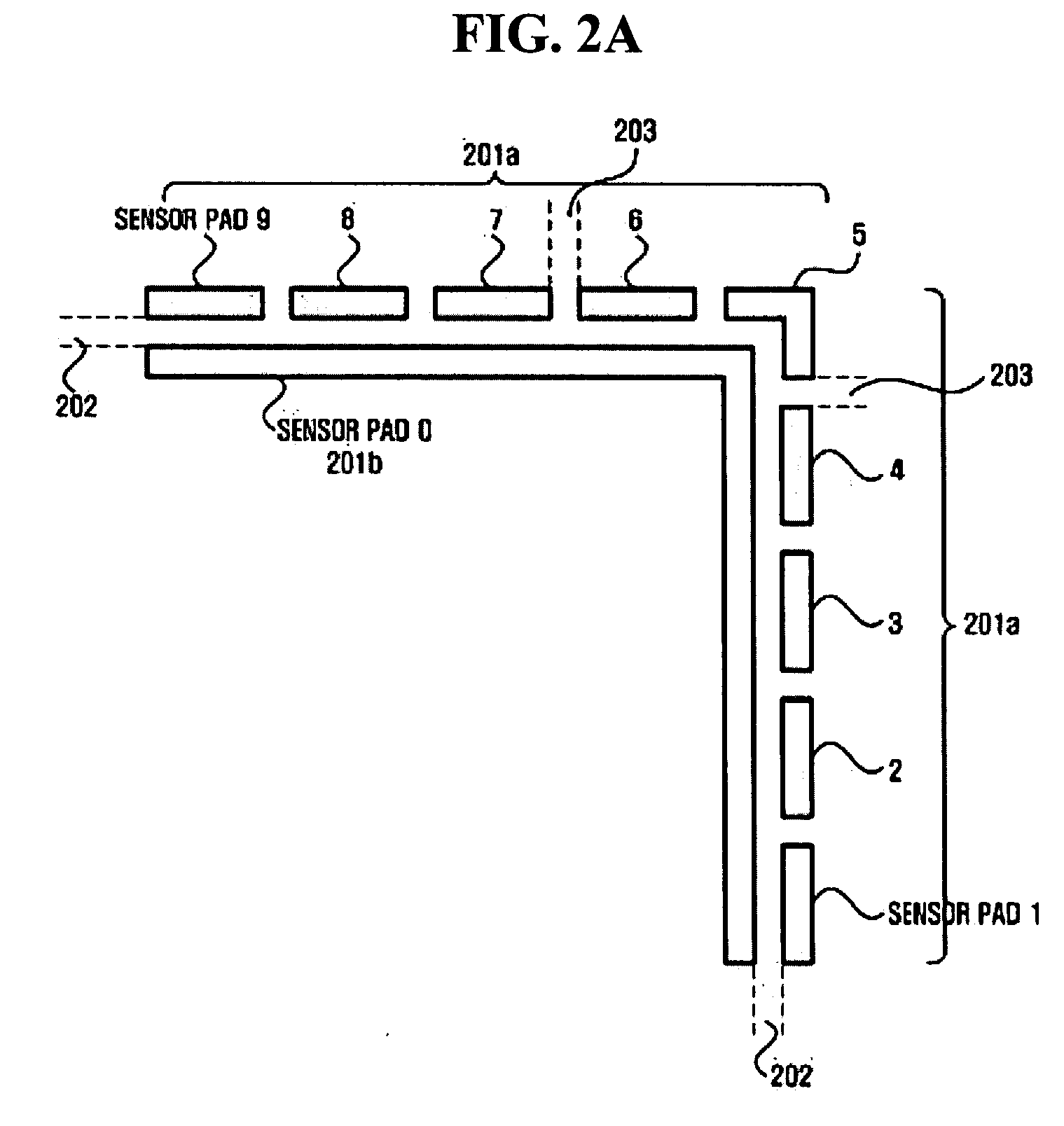
- A fault-tolerant method and apparatus for touch sensors that utilize a clustering unit to detect signals from multiple sensor pads, an operation mode judgment unit to remove noise and interference, and a signal-based processing unit to execute the intended operation mode, maximizing the difference in detection time between adjacent sensor signals.

Method for improving fault tolerance of touchscreen and touchscreen terminal
PatentActiveUS10712870B2
Innovation
- A method is introduced to detect and calibrate capacitance values of nodes, discarding or calibrating abnormal nodes' values to prevent false touch detection, and prompt users to replace the touchscreen if multiple abnormal nodes are close, thereby improving fault tolerance and user experience.


Safety Standards for Fault-Tolerant Tactile Systems
The development of comprehensive safety standards for fault-tolerant tactile systems represents a critical foundation for ensuring reliable operation across diverse applications. Current regulatory frameworks primarily focus on traditional sensor systems, leaving significant gaps in addressing the unique challenges posed by integrated tactile sensor networks that require continuous operational capability despite component failures.
International standards organizations, including ISO and IEC, have begun establishing preliminary guidelines for tactile sensor safety, particularly in medical and automotive applications. ISO 13485 provides medical device quality management requirements that partially address tactile sensor reliability, while ISO 26262 covers automotive functional safety aspects relevant to tactile feedback systems. However, these standards lack specific provisions for fault-tolerant architectures and redundancy mechanisms essential for critical tactile applications.
The emerging safety framework emphasizes multi-layered protection strategies encompassing hardware redundancy, software validation, and real-time monitoring protocols. Key requirements include mandatory backup sensor pathways, continuous self-diagnostic capabilities, and fail-safe operational modes that maintain essential functionality during partial system failures. These standards mandate minimum response times for fault detection, typically requiring identification and isolation of failed components within milliseconds to prevent cascading failures.
Certification processes for fault-tolerant tactile systems involve rigorous testing protocols that simulate various failure scenarios, including sensor degradation, communication interruptions, and environmental interference. Testing standards require validation under extreme conditions, including temperature variations, electromagnetic interference, and mechanical stress that could compromise sensor integrity.
Industry-specific safety requirements vary significantly across applications. Medical tactile systems must comply with FDA regulations and medical device directives, requiring extensive clinical validation and post-market surveillance. Automotive applications demand compliance with functional safety standards that ensure tactile feedback systems maintain critical safety functions even during component failures.
Future safety standards development focuses on establishing unified certification frameworks that address emerging technologies such as flexible tactile arrays, wireless sensor networks, and AI-driven fault prediction systems. These evolving standards will likely incorporate machine learning validation requirements and cybersecurity provisions to address potential vulnerabilities in connected tactile sensor systems.
International standards organizations, including ISO and IEC, have begun establishing preliminary guidelines for tactile sensor safety, particularly in medical and automotive applications. ISO 13485 provides medical device quality management requirements that partially address tactile sensor reliability, while ISO 26262 covers automotive functional safety aspects relevant to tactile feedback systems. However, these standards lack specific provisions for fault-tolerant architectures and redundancy mechanisms essential for critical tactile applications.
The emerging safety framework emphasizes multi-layered protection strategies encompassing hardware redundancy, software validation, and real-time monitoring protocols. Key requirements include mandatory backup sensor pathways, continuous self-diagnostic capabilities, and fail-safe operational modes that maintain essential functionality during partial system failures. These standards mandate minimum response times for fault detection, typically requiring identification and isolation of failed components within milliseconds to prevent cascading failures.
Certification processes for fault-tolerant tactile systems involve rigorous testing protocols that simulate various failure scenarios, including sensor degradation, communication interruptions, and environmental interference. Testing standards require validation under extreme conditions, including temperature variations, electromagnetic interference, and mechanical stress that could compromise sensor integrity.
Industry-specific safety requirements vary significantly across applications. Medical tactile systems must comply with FDA regulations and medical device directives, requiring extensive clinical validation and post-market surveillance. Automotive applications demand compliance with functional safety standards that ensure tactile feedback systems maintain critical safety functions even during component failures.
Future safety standards development focuses on establishing unified certification frameworks that address emerging technologies such as flexible tactile arrays, wireless sensor networks, and AI-driven fault prediction systems. These evolving standards will likely incorporate machine learning validation requirements and cybersecurity provisions to address potential vulnerabilities in connected tactile sensor systems.
Redundancy Design Strategies for Tactile Arrays
Redundancy design strategies for tactile arrays represent a critical approach to enhancing system reliability through multiple layers of fault tolerance mechanisms. These strategies fundamentally rely on the principle of incorporating additional sensing elements, pathways, and processing units beyond the minimum required for basic functionality, ensuring continuous operation even when individual components fail.
Spatial redundancy constitutes the most prevalent approach in tactile array design, involving the deployment of multiple sensing elements within overlapping coverage areas. This strategy typically employs N+1 or N+2 configurations, where additional sensors are strategically positioned to provide backup sensing capabilities for critical regions. Advanced implementations utilize adaptive spatial redundancy, where sensor density varies based on application criticality and historical failure patterns.
Temporal redundancy strategies focus on multiple sampling and measurement approaches over time intervals. These systems perform repeated measurements at high frequencies, applying statistical filtering and majority voting algorithms to identify and compensate for transient faults. Time-diverse redundancy implementations stagger measurement cycles across different sensor groups, reducing the probability of simultaneous failures affecting system performance.
Functional redundancy incorporates diverse sensing technologies within the same tactile array to measure identical or correlated parameters. This approach combines different transduction mechanisms such as capacitive, piezoresistive, and optical sensing elements, providing cross-validation capabilities and reducing susceptibility to technology-specific failure modes. Heterogeneous sensor fusion algorithms process data from multiple sensing modalities to maintain accuracy despite individual sensor degradation.
Analytical redundancy leverages mathematical models and signal processing techniques to estimate sensor outputs based on neighboring elements and system dynamics. These strategies employ interpolation algorithms, machine learning models, and physics-based estimators to reconstruct missing or corrupted sensor data. Advanced implementations utilize real-time model adaptation to maintain estimation accuracy as system characteristics evolve over operational lifetime.
Hardware redundancy extends beyond individual sensors to encompass signal conditioning circuits, analog-to-digital converters, and communication pathways. Redundant processing units with hot-standby configurations ensure continuous data acquisition and processing capabilities. Distributed processing architectures implement local redundancy at the sensor node level while maintaining global system coordination through redundant communication networks.
Spatial redundancy constitutes the most prevalent approach in tactile array design, involving the deployment of multiple sensing elements within overlapping coverage areas. This strategy typically employs N+1 or N+2 configurations, where additional sensors are strategically positioned to provide backup sensing capabilities for critical regions. Advanced implementations utilize adaptive spatial redundancy, where sensor density varies based on application criticality and historical failure patterns.
Temporal redundancy strategies focus on multiple sampling and measurement approaches over time intervals. These systems perform repeated measurements at high frequencies, applying statistical filtering and majority voting algorithms to identify and compensate for transient faults. Time-diverse redundancy implementations stagger measurement cycles across different sensor groups, reducing the probability of simultaneous failures affecting system performance.
Functional redundancy incorporates diverse sensing technologies within the same tactile array to measure identical or correlated parameters. This approach combines different transduction mechanisms such as capacitive, piezoresistive, and optical sensing elements, providing cross-validation capabilities and reducing susceptibility to technology-specific failure modes. Heterogeneous sensor fusion algorithms process data from multiple sensing modalities to maintain accuracy despite individual sensor degradation.
Analytical redundancy leverages mathematical models and signal processing techniques to estimate sensor outputs based on neighboring elements and system dynamics. These strategies employ interpolation algorithms, machine learning models, and physics-based estimators to reconstruct missing or corrupted sensor data. Advanced implementations utilize real-time model adaptation to maintain estimation accuracy as system characteristics evolve over operational lifetime.
Hardware redundancy extends beyond individual sensors to encompass signal conditioning circuits, analog-to-digital converters, and communication pathways. Redundant processing units with hot-standby configurations ensure continuous data acquisition and processing capabilities. Distributed processing architectures implement local redundancy at the sensor node level while maintaining global system coordination through redundant communication networks.
Unlock deeper insights with Patsnap Eureka Quick Research — get a full tech report to explore trends and direct your research. Try now!
Generate Your Research Report Instantly with AI Agent
Supercharge your innovation with Patsnap Eureka AI Agent Platform!