
Increasing System Reliability in Tactile Sensor Solutions
APR 11, 20269 MIN READ
Generate Your Research Report Instantly with AI Agent
Patsnap Eureka helps you evaluate technical feasibility & market potential.
Tactile Sensor Reliability Background and Objectives
Tactile sensing technology has emerged as a critical component in modern robotics, prosthetics, and human-machine interface systems over the past three decades. The evolution began with simple pressure-sensitive resistors in the 1990s and has progressed to sophisticated multi-modal sensors capable of detecting pressure, temperature, texture, and slip simultaneously. This technological advancement has been driven by the increasing demand for more intuitive and responsive robotic systems, particularly in applications requiring delicate manipulation and human-robot collaboration.
The reliability challenges in tactile sensor systems have become increasingly apparent as these technologies transition from laboratory environments to real-world applications. Early tactile sensors suffered from significant limitations including signal drift, environmental sensitivity, mechanical wear, and inconsistent performance across different operating conditions. These issues have historically hindered the widespread adoption of tactile sensing in critical applications where system failure could result in safety hazards or significant economic losses.
Current market demands are pushing tactile sensor reliability requirements to unprecedented levels. Industrial automation applications require sensors that can operate continuously for thousands of hours without degradation, while medical prosthetics demand consistent performance across varying environmental conditions and user activities. The automotive industry's integration of tactile feedback systems in autonomous vehicles has further elevated reliability standards, as sensor failures could compromise passenger safety.
The primary objective of enhancing tactile sensor reliability centers on achieving consistent, predictable performance across extended operational periods and diverse environmental conditions. This encompasses developing robust sensor architectures that maintain calibration accuracy, resist mechanical fatigue, and demonstrate minimal signal degradation over time. Key performance targets include achieving mean time between failures exceeding 10,000 operational hours and maintaining signal accuracy within 2% deviation across temperature ranges from -40°C to 85°C.
Secondary objectives focus on developing predictive maintenance capabilities and fault-tolerant system architectures. This involves implementing real-time health monitoring algorithms that can detect early signs of sensor degradation and trigger appropriate compensatory measures. The goal is to create self-diagnosing tactile sensor networks capable of maintaining system functionality even when individual sensor elements experience partial failures, thereby ensuring continuous operation in mission-critical applications.
The reliability challenges in tactile sensor systems have become increasingly apparent as these technologies transition from laboratory environments to real-world applications. Early tactile sensors suffered from significant limitations including signal drift, environmental sensitivity, mechanical wear, and inconsistent performance across different operating conditions. These issues have historically hindered the widespread adoption of tactile sensing in critical applications where system failure could result in safety hazards or significant economic losses.
Current market demands are pushing tactile sensor reliability requirements to unprecedented levels. Industrial automation applications require sensors that can operate continuously for thousands of hours without degradation, while medical prosthetics demand consistent performance across varying environmental conditions and user activities. The automotive industry's integration of tactile feedback systems in autonomous vehicles has further elevated reliability standards, as sensor failures could compromise passenger safety.
The primary objective of enhancing tactile sensor reliability centers on achieving consistent, predictable performance across extended operational periods and diverse environmental conditions. This encompasses developing robust sensor architectures that maintain calibration accuracy, resist mechanical fatigue, and demonstrate minimal signal degradation over time. Key performance targets include achieving mean time between failures exceeding 10,000 operational hours and maintaining signal accuracy within 2% deviation across temperature ranges from -40°C to 85°C.
Secondary objectives focus on developing predictive maintenance capabilities and fault-tolerant system architectures. This involves implementing real-time health monitoring algorithms that can detect early signs of sensor degradation and trigger appropriate compensatory measures. The goal is to create self-diagnosing tactile sensor networks capable of maintaining system functionality even when individual sensor elements experience partial failures, thereby ensuring continuous operation in mission-critical applications.
Market Demand for Reliable Tactile Sensing Systems
The global tactile sensor market is experiencing unprecedented growth driven by the convergence of multiple technological trends and industrial demands. Robotics applications represent the largest segment, where reliable tactile sensing enables robots to perform delicate manipulation tasks in manufacturing, healthcare, and service industries. The automotive sector increasingly relies on tactile sensors for advanced driver assistance systems, human-machine interfaces, and autonomous vehicle perception systems.
Healthcare applications constitute another rapidly expanding market segment. Medical robotics, prosthetics, and rehabilitation devices require highly reliable tactile feedback systems to ensure patient safety and treatment efficacy. The aging global population and increasing prevalence of limb disabilities are driving demand for sophisticated prosthetic devices with natural tactile sensation capabilities.
Consumer electronics manufacturers are integrating tactile sensors into smartphones, tablets, wearable devices, and gaming controllers to enhance user experience through haptic feedback. The proliferation of virtual and augmented reality applications creates additional demand for precise tactile sensing solutions that can accurately reproduce touch sensations in digital environments.
Industrial automation represents a critical market driver, where tactile sensors enable quality control, material handling, and assembly processes. Manufacturing facilities require sensors that maintain consistent performance under harsh environmental conditions, including extreme temperatures, vibrations, and chemical exposure. System reliability directly impacts production efficiency and product quality standards.
The aerospace and defense sectors demand tactile sensors with exceptional reliability standards for unmanned aerial vehicles, space exploration equipment, and military applications. These applications require sensors capable of operating reliably in extreme environments while maintaining precise sensitivity and response characteristics.
Market research indicates strong growth potential across all application segments, with particular emphasis on solutions that demonstrate superior reliability metrics. End users increasingly prioritize long-term operational stability over initial cost considerations, recognizing that sensor failures can result in significant downtime, safety risks, and maintenance expenses. This shift in purchasing priorities creates substantial opportunities for tactile sensor solutions that can demonstrate enhanced system reliability through improved materials, robust design architectures, and comprehensive testing protocols.
Healthcare applications constitute another rapidly expanding market segment. Medical robotics, prosthetics, and rehabilitation devices require highly reliable tactile feedback systems to ensure patient safety and treatment efficacy. The aging global population and increasing prevalence of limb disabilities are driving demand for sophisticated prosthetic devices with natural tactile sensation capabilities.
Consumer electronics manufacturers are integrating tactile sensors into smartphones, tablets, wearable devices, and gaming controllers to enhance user experience through haptic feedback. The proliferation of virtual and augmented reality applications creates additional demand for precise tactile sensing solutions that can accurately reproduce touch sensations in digital environments.
Industrial automation represents a critical market driver, where tactile sensors enable quality control, material handling, and assembly processes. Manufacturing facilities require sensors that maintain consistent performance under harsh environmental conditions, including extreme temperatures, vibrations, and chemical exposure. System reliability directly impacts production efficiency and product quality standards.
The aerospace and defense sectors demand tactile sensors with exceptional reliability standards for unmanned aerial vehicles, space exploration equipment, and military applications. These applications require sensors capable of operating reliably in extreme environments while maintaining precise sensitivity and response characteristics.
Market research indicates strong growth potential across all application segments, with particular emphasis on solutions that demonstrate superior reliability metrics. End users increasingly prioritize long-term operational stability over initial cost considerations, recognizing that sensor failures can result in significant downtime, safety risks, and maintenance expenses. This shift in purchasing priorities creates substantial opportunities for tactile sensor solutions that can demonstrate enhanced system reliability through improved materials, robust design architectures, and comprehensive testing protocols.
Current Reliability Challenges in Tactile Sensor Technology
Tactile sensor systems face significant reliability challenges that stem from their inherent exposure to harsh operating environments and complex mechanical interactions. The primary reliability concern centers around sensor degradation under repeated mechanical stress, where continuous contact forces and deformation cycles lead to material fatigue, structural damage, and gradual performance deterioration. This mechanical wear manifests as reduced sensitivity, increased noise levels, and eventual sensor failure, particularly problematic in applications requiring long-term operational stability.
Environmental factors pose another critical reliability challenge, as tactile sensors must maintain consistent performance across varying temperature ranges, humidity levels, and exposure to contaminants. Temperature fluctuations cause thermal expansion and contraction of sensor materials, leading to calibration drift and measurement inconsistencies. Moisture ingress can compromise electrical connections and alter material properties, while dust and chemical exposure can degrade sensor surfaces and interfere with tactile perception accuracy.
Signal integrity represents a fundamental technical obstacle, where electromagnetic interference, crosstalk between sensor elements, and noise accumulation significantly impact measurement reliability. Multi-sensor arrays are particularly susceptible to these issues, as densely packed sensing elements create complex electromagnetic environments that can generate false readings and reduce overall system precision. The challenge intensifies in industrial settings where heavy machinery and electrical equipment create substantial electromagnetic disturbances.
Manufacturing variability introduces systematic reliability concerns, as inconsistencies in material properties, fabrication tolerances, and assembly processes result in sensor-to-sensor performance variations. These manufacturing deviations lead to calibration difficulties, reduced interchangeability, and unpredictable long-term behavior patterns. Quality control becomes increasingly complex as sensor designs incorporate more sophisticated materials and miniaturized components.
Integration complexity presents additional reliability challenges when tactile sensors interface with control systems and data processing units. Communication protocol failures, data transmission errors, and synchronization issues between multiple sensor nodes can compromise entire system reliability. The challenge is compounded by the need for real-time processing capabilities, where any delay or data corruption can have cascading effects on system performance and safety-critical applications.
Environmental factors pose another critical reliability challenge, as tactile sensors must maintain consistent performance across varying temperature ranges, humidity levels, and exposure to contaminants. Temperature fluctuations cause thermal expansion and contraction of sensor materials, leading to calibration drift and measurement inconsistencies. Moisture ingress can compromise electrical connections and alter material properties, while dust and chemical exposure can degrade sensor surfaces and interfere with tactile perception accuracy.
Signal integrity represents a fundamental technical obstacle, where electromagnetic interference, crosstalk between sensor elements, and noise accumulation significantly impact measurement reliability. Multi-sensor arrays are particularly susceptible to these issues, as densely packed sensing elements create complex electromagnetic environments that can generate false readings and reduce overall system precision. The challenge intensifies in industrial settings where heavy machinery and electrical equipment create substantial electromagnetic disturbances.
Manufacturing variability introduces systematic reliability concerns, as inconsistencies in material properties, fabrication tolerances, and assembly processes result in sensor-to-sensor performance variations. These manufacturing deviations lead to calibration difficulties, reduced interchangeability, and unpredictable long-term behavior patterns. Quality control becomes increasingly complex as sensor designs incorporate more sophisticated materials and miniaturized components.
Integration complexity presents additional reliability challenges when tactile sensors interface with control systems and data processing units. Communication protocol failures, data transmission errors, and synchronization issues between multiple sensor nodes can compromise entire system reliability. The challenge is compounded by the need for real-time processing capabilities, where any delay or data corruption can have cascading effects on system performance and safety-critical applications.
Current Approaches for Tactile System Reliability
01 Redundancy and fault tolerance mechanisms in tactile sensor systems
Implementing redundancy and fault tolerance mechanisms in tactile sensor systems can significantly enhance system reliability. This includes using multiple sensor arrays, backup sensing elements, and error detection algorithms to ensure continuous operation even when individual sensors fail. Fault-tolerant architectures allow the system to maintain functionality by automatically switching to backup sensors or recalibrating based on remaining functional sensors. These approaches minimize system downtime and improve overall robustness in critical applications.- Redundancy and fault tolerance mechanisms in tactile sensor systems: Implementing redundancy and fault tolerance mechanisms in tactile sensor systems can significantly enhance system reliability. These mechanisms include multiple sensor arrays, backup sensing elements, and error detection algorithms that can identify and compensate for sensor failures. By incorporating redundant components and self-diagnostic capabilities, the system can continue to operate even when individual sensors malfunction, ensuring continuous and reliable tactile feedback in critical applications.
- Signal processing and noise reduction techniques: Advanced signal processing and noise reduction techniques are essential for improving the reliability of tactile sensor systems. These techniques include filtering algorithms, signal conditioning circuits, and adaptive calibration methods that minimize interference and environmental noise. By implementing sophisticated signal processing approaches, the system can maintain accurate tactile measurements under varying conditions and reduce false readings caused by electromagnetic interference or mechanical vibrations.
- Self-calibration and adaptive compensation systems: Self-calibration and adaptive compensation systems enable tactile sensors to maintain accuracy and reliability over extended periods of operation. These systems automatically adjust sensor parameters to compensate for drift, aging effects, and environmental changes. The implementation of machine learning algorithms and real-time calibration routines allows the sensor system to adapt to changing conditions and maintain consistent performance without manual intervention.
- Robust sensor design and material selection: The reliability of tactile sensor systems can be enhanced through robust sensor design and careful material selection. This includes using durable sensing materials that resist wear, corrosion, and environmental degradation, as well as protective encapsulation techniques that shield sensitive components from harsh conditions. Structural designs that minimize stress concentrations and mechanical failures contribute to long-term system reliability and extended operational lifetime.
- Diagnostic monitoring and predictive maintenance capabilities: Incorporating diagnostic monitoring and predictive maintenance capabilities into tactile sensor systems enables proactive identification of potential failures before they occur. These capabilities include continuous health monitoring, performance trend analysis, and early warning systems that alert operators to degrading sensor performance. By implementing predictive algorithms and condition-based maintenance strategies, system downtime can be minimized and overall reliability improved through timely intervention and component replacement.
02 Self-diagnostic and calibration capabilities for tactile sensors
Incorporating self-diagnostic and automatic calibration features into tactile sensor systems improves reliability by detecting sensor degradation, drift, or malfunction in real-time. These systems can perform periodic self-tests, monitor signal quality, and adjust calibration parameters automatically to maintain accurate measurements over time. Self-diagnostic capabilities enable predictive maintenance by identifying potential failures before they occur, thereby reducing unexpected system failures and extending sensor lifespan.Expand Specific Solutions03 Signal processing and noise reduction techniques
Advanced signal processing algorithms and noise reduction techniques enhance the reliability of tactile sensor data by filtering out environmental interference and improving signal-to-noise ratios. These methods include digital filtering, adaptive algorithms, and machine learning approaches that can distinguish between genuine tactile signals and noise. By improving data quality and reducing false readings, these techniques ensure more consistent and reliable sensor performance across varying operating conditions.Expand Specific Solutions04 Robust sensor design and material selection
Designing tactile sensors with robust materials and protective structures enhances reliability by improving resistance to environmental factors such as temperature variations, humidity, mechanical stress, and chemical exposure. This includes using durable sensing materials, protective coatings, and sealed enclosures that prevent contamination and physical damage. Robust design considerations also encompass flexible substrates and strain-resistant structures that maintain sensor integrity during repeated use and mechanical deformation.Expand Specific Solutions05 System integration and communication protocols for reliable data transmission
Implementing reliable communication protocols and system integration strategies ensures consistent data transmission from tactile sensors to processing units. This includes using error-checking mechanisms, data validation protocols, and secure communication channels that prevent data loss or corruption. Proper system integration also involves standardized interfaces, modular architectures, and compatibility with various control systems, which facilitate easier maintenance, troubleshooting, and system upgrades while maintaining overall reliability.Expand Specific Solutions
Key Players in Tactile Sensor and Reliability Solutions
The tactile sensor solutions market is experiencing rapid growth driven by increasing demand for human-machine interaction across automotive, robotics, and consumer electronics sectors. The industry is in an expansion phase with significant market potential, particularly in autonomous vehicles and industrial automation applications. Technology maturity varies considerably across different approaches, with established players like Toyota Motor Corp., Honda Motor Co., and Siemens AG leveraging their automotive and industrial expertise to integrate tactile sensing into next-generation systems. Japanese companies including Kyocera Corp., OMRON Corp., and Yamaha Corp. demonstrate strong capabilities in precision manufacturing and sensor technologies. Research institutions such as University of Tokyo, Tohoku University, and Columbia University are advancing fundamental sensing technologies, while specialized firms like Samsung Display and Nitto Denko Corp. focus on material innovations. The competitive landscape shows a mix of mature industrial solutions and emerging technologies, with reliability improvements being driven by both established manufacturers and innovative startups like Sanctuary Cognitive Systems Corp.
Kyocera Corp.
Technical Solution: Kyocera has developed advanced piezoelectric tactile sensors utilizing their proprietary ceramic materials technology. Their solution incorporates multi-layered piezoelectric elements with enhanced signal processing algorithms to improve sensitivity and reduce noise interference. The company implements redundant sensor arrays and self-diagnostic capabilities to detect sensor failures in real-time. Their tactile sensors feature robust ceramic housings that provide excellent durability against environmental factors such as temperature variations, humidity, and mechanical stress, significantly improving overall system reliability in industrial applications.
Strengths: Excellent durability and environmental resistance due to ceramic materials expertise. Weaknesses: Higher cost compared to polymer-based solutions and limited flexibility for curved surface applications.
Samsung Display Co., Ltd.
Technical Solution: Samsung Display has developed flexible tactile sensor solutions integrated with their OLED display technology. Their approach combines capacitive touch sensing with pressure-sensitive layers to create multi-functional tactile interfaces. The system incorporates advanced error correction algorithms and redundant sensing channels to maintain reliability even when individual sensor elements fail. Their solution features self-calibration mechanisms that automatically adjust sensitivity parameters based on environmental conditions and usage patterns. The integration of tactile sensing with display technology enables real-time visual feedback for system status monitoring.
Strengths: Seamless integration with display technology and flexible form factors. Weaknesses: Complex manufacturing process and potential interference between display and tactile sensing functions.
Core Technologies for Tactile Sensor Fault Tolerance
Capacitive tactile sensor with nested matrix electrodes
PatentInactiveUS9983744B2
Innovation
- A capacitive tactile sensor design featuring a drive electrode layer and a sense electrode layer separated by a non-compressible dielectric substrate, with a deformable conductive shield layer and control electronics that measure capacitance changes due to mechanical compression, allowing for improved reliability and accuracy in detecting touch location and force regardless of the object's conductivity.


Capacitive tactile tile sensor
PatentInactiveUS8127623B2
Innovation
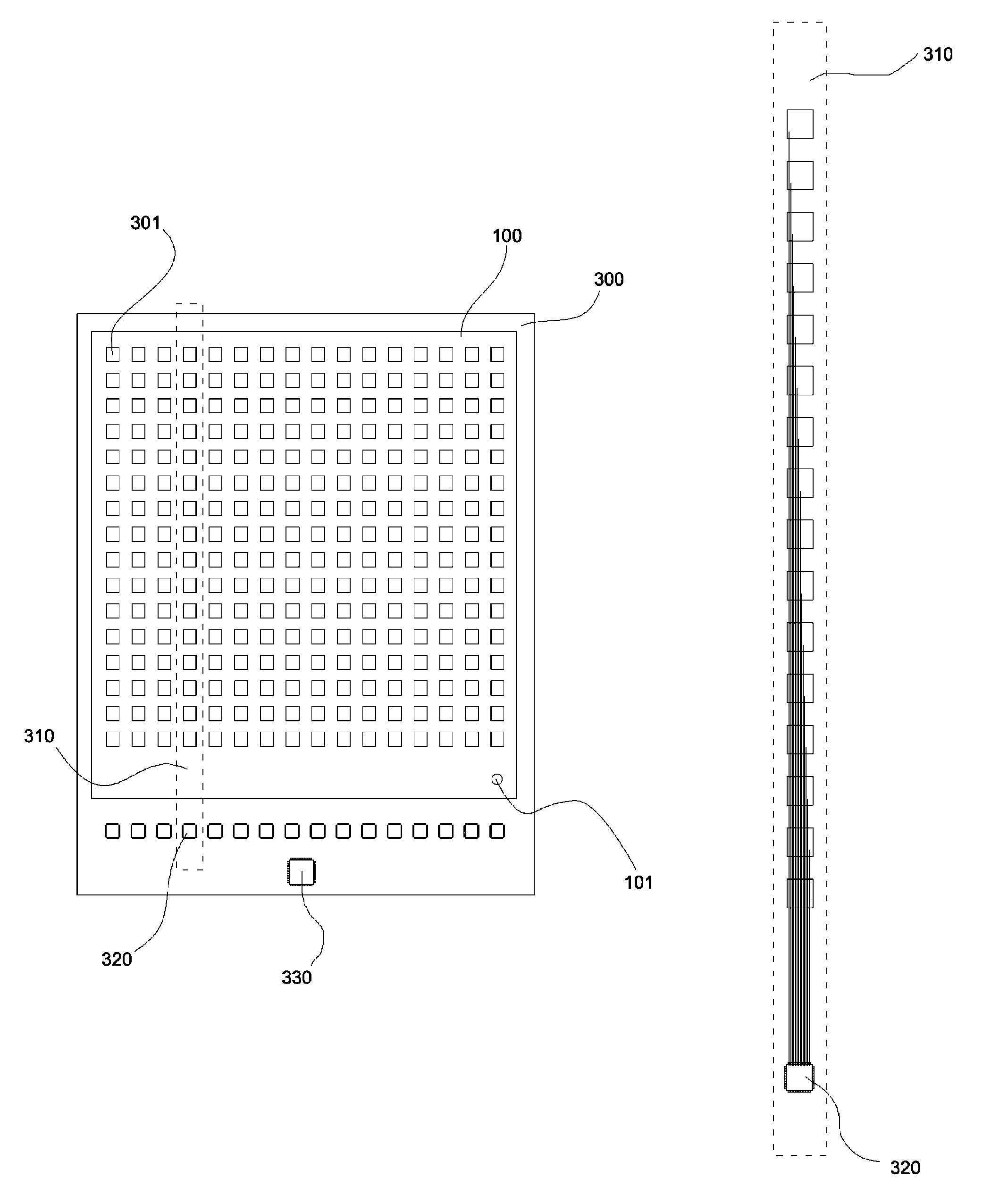
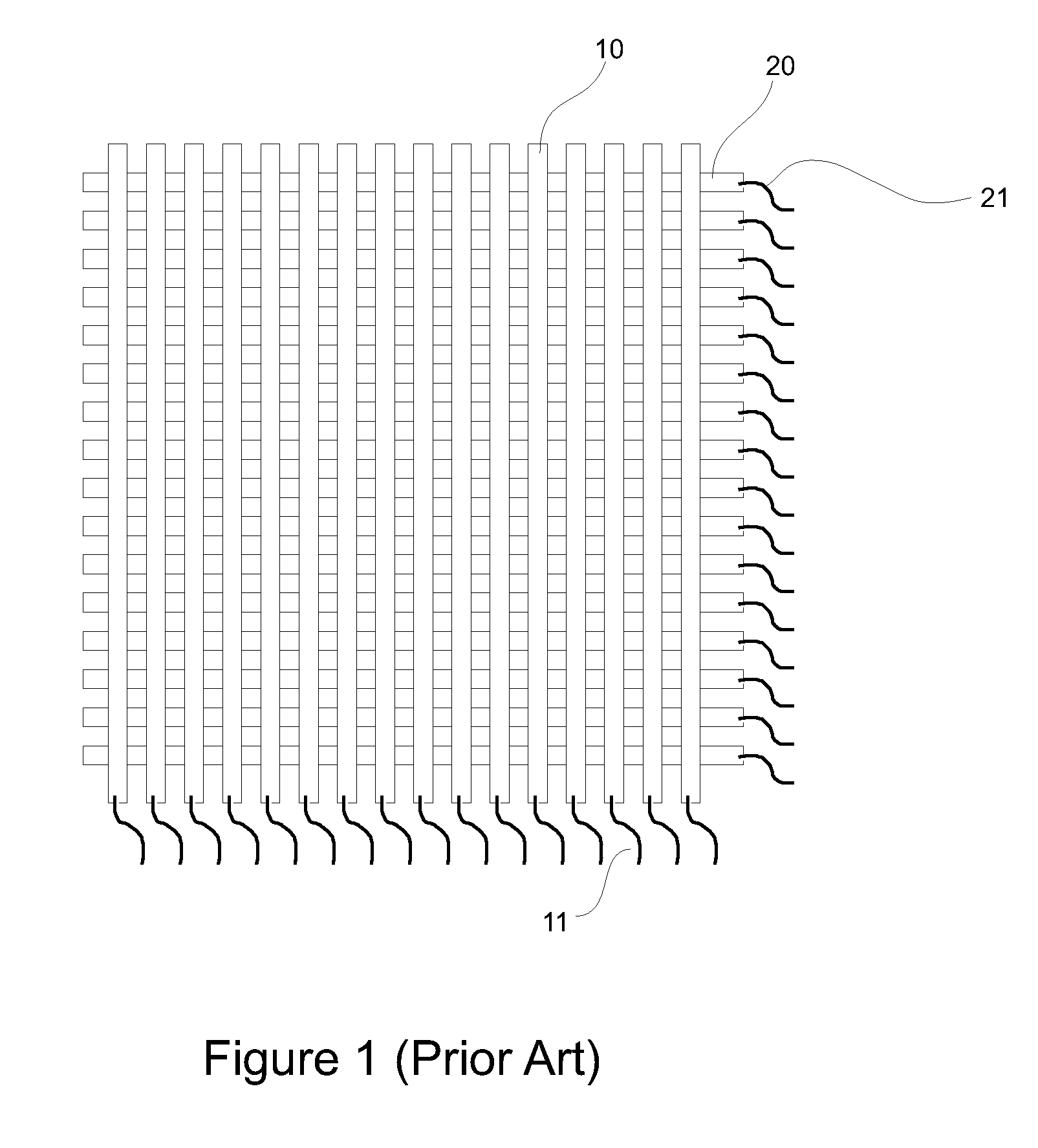
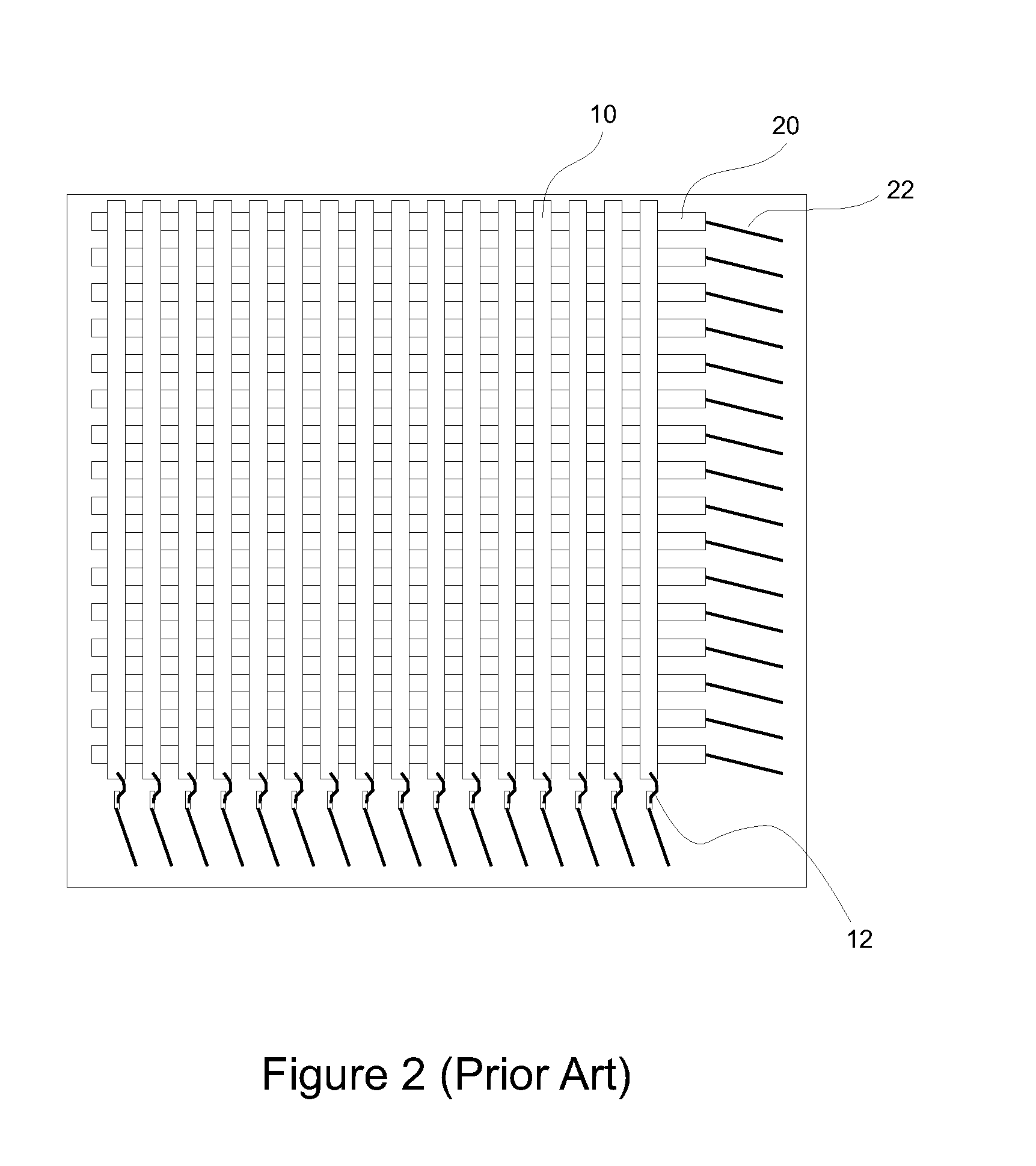
- The design divides the tactile sensor array into capacitive tiles, each controlled by a dedicated ASIC, with a single electrode layer and a compressible dielectric layer, reducing the number of interconnections and enabling easier manufacturing by using off-the-shelf capacitance-sensing ICs to manage a limited number of electrodes (12 to 24) per tile.

Safety Standards for Tactile Sensor Applications
Safety standards for tactile sensor applications represent a critical framework ensuring the secure deployment of these sensitive technologies across diverse industrial and consumer environments. The establishment of comprehensive safety protocols has become increasingly vital as tactile sensors integrate into safety-critical systems such as medical devices, automotive applications, and industrial automation equipment.
International standardization bodies have developed specific guidelines addressing tactile sensor safety requirements. The IEC 61508 functional safety standard provides foundational principles for safety-related systems, while ISO 13849 specifically addresses safety of machinery incorporating sensor technologies. These standards establish Safety Integrity Levels (SIL) and Performance Levels (PL) that tactile sensor systems must achieve based on their application criticality.
Medical applications demand adherence to ISO 14155 for clinical investigations and IEC 60601 series for medical electrical equipment. Tactile sensors used in prosthetics, surgical robotics, and patient monitoring systems must demonstrate biocompatibility, electromagnetic compatibility, and fail-safe operation modes. The FDA's guidance on software validation further reinforces requirements for sensor data processing algorithms.
Automotive tactile sensor applications follow ISO 26262 functional safety standards, particularly relevant for advanced driver assistance systems and autonomous vehicle technologies. These standards mandate rigorous hazard analysis, risk assessment, and verification procedures throughout the sensor development lifecycle. The Automotive Safety Integrity Level (ASIL) classification system determines specific safety requirements based on potential harm severity.
Industrial automation environments require compliance with IEC 62061 and ISO 13849 standards for safety-related control systems. Tactile sensors in collaborative robotics must meet ISO 10218 requirements, ensuring safe human-robot interaction through reliable force and pressure detection capabilities. Emergency stop functions and protective monitoring systems rely heavily on tactile sensor accuracy and response time specifications.
Emerging safety considerations include cybersecurity standards such as IEC 62443, addressing potential vulnerabilities in networked tactile sensor systems. Data integrity, authentication protocols, and secure communication channels become essential safety elements as sensors increasingly connect to cloud-based analytics platforms.
International standardization bodies have developed specific guidelines addressing tactile sensor safety requirements. The IEC 61508 functional safety standard provides foundational principles for safety-related systems, while ISO 13849 specifically addresses safety of machinery incorporating sensor technologies. These standards establish Safety Integrity Levels (SIL) and Performance Levels (PL) that tactile sensor systems must achieve based on their application criticality.
Medical applications demand adherence to ISO 14155 for clinical investigations and IEC 60601 series for medical electrical equipment. Tactile sensors used in prosthetics, surgical robotics, and patient monitoring systems must demonstrate biocompatibility, electromagnetic compatibility, and fail-safe operation modes. The FDA's guidance on software validation further reinforces requirements for sensor data processing algorithms.
Automotive tactile sensor applications follow ISO 26262 functional safety standards, particularly relevant for advanced driver assistance systems and autonomous vehicle technologies. These standards mandate rigorous hazard analysis, risk assessment, and verification procedures throughout the sensor development lifecycle. The Automotive Safety Integrity Level (ASIL) classification system determines specific safety requirements based on potential harm severity.
Industrial automation environments require compliance with IEC 62061 and ISO 13849 standards for safety-related control systems. Tactile sensors in collaborative robotics must meet ISO 10218 requirements, ensuring safe human-robot interaction through reliable force and pressure detection capabilities. Emergency stop functions and protective monitoring systems rely heavily on tactile sensor accuracy and response time specifications.
Emerging safety considerations include cybersecurity standards such as IEC 62443, addressing potential vulnerabilities in networked tactile sensor systems. Data integrity, authentication protocols, and secure communication channels become essential safety elements as sensors increasingly connect to cloud-based analytics platforms.
Redundancy Design in Critical Tactile Systems
Redundancy design represents a fundamental approach to enhancing reliability in critical tactile sensor systems by implementing multiple parallel sensing elements, pathways, or processing units that can maintain system functionality even when individual components fail. This design philosophy becomes particularly crucial in applications where tactile feedback is essential for safety-critical operations, such as robotic surgery, autonomous vehicle navigation, or industrial automation systems handling hazardous materials.
The most common redundancy architecture in tactile systems involves sensor-level redundancy, where multiple tactile sensors are positioned to monitor the same contact area or force application point. This approach typically employs N+1 or N+2 configurations, where additional sensors beyond the minimum required number provide backup capability. Advanced implementations utilize diverse sensing technologies within the same redundant group, such as combining piezoresistive, capacitive, and optical tactile sensors to eliminate common-mode failures that might affect sensors of identical design.
Signal processing redundancy constitutes another critical layer, involving multiple independent processing channels that analyze tactile data simultaneously. These channels often implement different algorithms or computational approaches to interpret the same sensor inputs, enabling cross-validation and error detection. Voting mechanisms, such as majority voting or weighted consensus algorithms, determine the final output when discrepancies arise between processing channels.
Communication pathway redundancy ensures reliable data transmission from tactile sensors to control systems through multiple independent communication channels. This includes implementing redundant wiring harnesses, wireless backup links, or alternative communication protocols that can maintain data flow even when primary pathways experience interference or physical damage.
Power supply redundancy addresses one of the most common failure modes in tactile systems by providing multiple independent power sources with automatic switching capabilities. Battery backup systems, redundant power converters, and distributed power architectures ensure continuous operation during power supply failures.
Modern redundancy designs increasingly incorporate intelligent fault detection and isolation mechanisms that can identify failing components and automatically reconfigure the system to maintain optimal performance. These systems utilize machine learning algorithms to predict component failures before they occur, enabling proactive maintenance and seamless transitions to backup systems.
The most common redundancy architecture in tactile systems involves sensor-level redundancy, where multiple tactile sensors are positioned to monitor the same contact area or force application point. This approach typically employs N+1 or N+2 configurations, where additional sensors beyond the minimum required number provide backup capability. Advanced implementations utilize diverse sensing technologies within the same redundant group, such as combining piezoresistive, capacitive, and optical tactile sensors to eliminate common-mode failures that might affect sensors of identical design.
Signal processing redundancy constitutes another critical layer, involving multiple independent processing channels that analyze tactile data simultaneously. These channels often implement different algorithms or computational approaches to interpret the same sensor inputs, enabling cross-validation and error detection. Voting mechanisms, such as majority voting or weighted consensus algorithms, determine the final output when discrepancies arise between processing channels.
Communication pathway redundancy ensures reliable data transmission from tactile sensors to control systems through multiple independent communication channels. This includes implementing redundant wiring harnesses, wireless backup links, or alternative communication protocols that can maintain data flow even when primary pathways experience interference or physical damage.
Power supply redundancy addresses one of the most common failure modes in tactile systems by providing multiple independent power sources with automatic switching capabilities. Battery backup systems, redundant power converters, and distributed power architectures ensure continuous operation during power supply failures.
Modern redundancy designs increasingly incorporate intelligent fault detection and isolation mechanisms that can identify failing components and automatically reconfigure the system to maintain optimal performance. These systems utilize machine learning algorithms to predict component failures before they occur, enabling proactive maintenance and seamless transitions to backup systems.
Unlock deeper insights with Patsnap Eureka Quick Research — get a full tech report to explore trends and direct your research. Try now!
Generate Your Research Report Instantly with AI Agent
Supercharge your innovation with Patsnap Eureka AI Agent Platform!