Improving Fixed Wing Drone Emission Detection with Sensor Fusion
FEB 13, 20269 MIN READ
Generate Your Research Report Instantly with AI Agent
PatSnap Eureka helps you evaluate technical feasibility & market potential.
Fixed Wing Drone Emission Sensing Background and Objectives
Environmental monitoring has become increasingly critical as global concerns over air quality, industrial emissions, and greenhouse gases intensify. Traditional ground-based monitoring stations, while accurate, suffer from limited spatial coverage and high deployment costs. Fixed-wing drones have emerged as a transformative solution, offering extended flight endurance, broader area coverage, and the ability to access remote or hazardous locations that are impractical for ground-based systems or rotary-wing aircraft.
The application of fixed-wing drones in emission detection addresses several fundamental challenges in environmental monitoring. These platforms can conduct systematic surveys over large industrial complexes, agricultural regions, and urban areas, providing spatially resolved emission data that was previously unattainable. However, single-sensor approaches face inherent limitations including measurement drift, environmental interference, and the inability to distinguish between different emission sources or gas species effectively.
Sensor fusion technology represents a paradigm shift in drone-based emission detection by integrating data from multiple heterogeneous sensors to create a more comprehensive and reliable measurement system. This approach combines various sensing modalities such as electrochemical sensors, optical spectrometers, thermal imaging, and meteorological instruments. The fusion of these diverse data streams enables cross-validation, reduces false positives, and enhances detection sensitivity and specificity.
The primary objective of this technological advancement is to develop robust sensor fusion algorithms and hardware integration frameworks that significantly improve detection accuracy, reduce response time, and enable real-time emission source identification. Secondary objectives include minimizing payload weight and power consumption to preserve flight endurance, developing adaptive sampling strategies that optimize flight paths based on real-time data, and creating standardized data formats for seamless integration with environmental management systems.
Achieving these objectives requires addressing technical challenges in sensor calibration under varying atmospheric conditions, data synchronization across sensors with different sampling rates, and developing computationally efficient fusion algorithms suitable for onboard processing with limited computational resources. Success in this domain will enable more effective environmental compliance monitoring, rapid emergency response to industrial accidents, and improved understanding of emission patterns for policy development.
The application of fixed-wing drones in emission detection addresses several fundamental challenges in environmental monitoring. These platforms can conduct systematic surveys over large industrial complexes, agricultural regions, and urban areas, providing spatially resolved emission data that was previously unattainable. However, single-sensor approaches face inherent limitations including measurement drift, environmental interference, and the inability to distinguish between different emission sources or gas species effectively.
Sensor fusion technology represents a paradigm shift in drone-based emission detection by integrating data from multiple heterogeneous sensors to create a more comprehensive and reliable measurement system. This approach combines various sensing modalities such as electrochemical sensors, optical spectrometers, thermal imaging, and meteorological instruments. The fusion of these diverse data streams enables cross-validation, reduces false positives, and enhances detection sensitivity and specificity.
The primary objective of this technological advancement is to develop robust sensor fusion algorithms and hardware integration frameworks that significantly improve detection accuracy, reduce response time, and enable real-time emission source identification. Secondary objectives include minimizing payload weight and power consumption to preserve flight endurance, developing adaptive sampling strategies that optimize flight paths based on real-time data, and creating standardized data formats for seamless integration with environmental management systems.
Achieving these objectives requires addressing technical challenges in sensor calibration under varying atmospheric conditions, data synchronization across sensors with different sampling rates, and developing computationally efficient fusion algorithms suitable for onboard processing with limited computational resources. Success in this domain will enable more effective environmental compliance monitoring, rapid emergency response to industrial accidents, and improved understanding of emission patterns for policy development.
Market Demand for Airborne Emission Monitoring Solutions
The global demand for airborne emission monitoring solutions has experienced substantial growth driven by increasingly stringent environmental regulations and the urgent need for real-time pollution tracking capabilities. Traditional ground-based monitoring networks, while established, suffer from limited spatial coverage and delayed response times, creating significant gaps in emission detection and enforcement. This has catalyzed interest in drone-based monitoring systems that can provide rapid deployment, flexible coverage patterns, and cost-effective surveillance across industrial zones, urban areas, and remote facilities.
Industrial sectors including oil and gas, chemical manufacturing, power generation, and waste management represent primary demand drivers for advanced emission detection technologies. Regulatory bodies worldwide are mandating more frequent and comprehensive emissions reporting, pushing facility operators to seek automated monitoring solutions that reduce compliance costs while improving data accuracy. Fixed-wing drones equipped with sensor fusion capabilities offer distinct advantages over multirotor platforms for large-area surveillance, including extended flight duration, greater range, and improved operational efficiency for monitoring dispersed emission sources.
The market landscape reveals growing adoption across multiple application domains. Environmental protection agencies require persistent monitoring capabilities for enforcement and policy validation. Energy companies seek leak detection systems for pipeline networks and production facilities where methane and volatile organic compound emissions pose both environmental and safety concerns. Urban air quality management programs increasingly recognize the value of three-dimensional pollution mapping that airborne platforms uniquely provide, enabling identification of emission hotspots and verification of mitigation measures.
Emerging market segments include carbon credit verification programs and corporate sustainability initiatives where independent emission quantification has become essential for credibility and compliance. The integration of multiple sensor types through fusion algorithms addresses a critical market need for simultaneous detection of diverse pollutants with enhanced accuracy and reduced false positive rates. This capability differentiation is particularly valued in complex industrial environments where multiple emission sources and atmospheric conditions challenge single-sensor approaches.
Geographic demand patterns show concentration in regions with mature environmental regulatory frameworks and significant industrial activity, though expanding interest from developing economies reflects growing environmental awareness and infrastructure investment. The market increasingly demands solutions that combine operational autonomy, data reliability, and seamless integration with existing environmental management systems, positioning sensor fusion technology as a key enabler for next-generation emission monitoring platforms.
Industrial sectors including oil and gas, chemical manufacturing, power generation, and waste management represent primary demand drivers for advanced emission detection technologies. Regulatory bodies worldwide are mandating more frequent and comprehensive emissions reporting, pushing facility operators to seek automated monitoring solutions that reduce compliance costs while improving data accuracy. Fixed-wing drones equipped with sensor fusion capabilities offer distinct advantages over multirotor platforms for large-area surveillance, including extended flight duration, greater range, and improved operational efficiency for monitoring dispersed emission sources.
The market landscape reveals growing adoption across multiple application domains. Environmental protection agencies require persistent monitoring capabilities for enforcement and policy validation. Energy companies seek leak detection systems for pipeline networks and production facilities where methane and volatile organic compound emissions pose both environmental and safety concerns. Urban air quality management programs increasingly recognize the value of three-dimensional pollution mapping that airborne platforms uniquely provide, enabling identification of emission hotspots and verification of mitigation measures.
Emerging market segments include carbon credit verification programs and corporate sustainability initiatives where independent emission quantification has become essential for credibility and compliance. The integration of multiple sensor types through fusion algorithms addresses a critical market need for simultaneous detection of diverse pollutants with enhanced accuracy and reduced false positive rates. This capability differentiation is particularly valued in complex industrial environments where multiple emission sources and atmospheric conditions challenge single-sensor approaches.
Geographic demand patterns show concentration in regions with mature environmental regulatory frameworks and significant industrial activity, though expanding interest from developing economies reflects growing environmental awareness and infrastructure investment. The market increasingly demands solutions that combine operational autonomy, data reliability, and seamless integration with existing environmental management systems, positioning sensor fusion technology as a key enabler for next-generation emission monitoring platforms.
Current Status and Challenges in Drone-Based Emission Detection
Drone-based emission detection has emerged as a transformative approach for environmental monitoring, offering unprecedented flexibility and spatial coverage compared to traditional ground-based stations and satellite systems. Fixed-wing drones, in particular, demonstrate significant advantages in terms of flight endurance, operational range, and payload capacity, making them ideal platforms for large-scale atmospheric surveys. Current systems primarily employ electrochemical sensors, optical spectrometers, and infrared detectors to measure pollutants such as carbon dioxide, nitrogen oxides, sulfur dioxide, and particulate matter. These platforms have been successfully deployed in industrial emission monitoring, urban air quality assessment, and volcanic gas detection scenarios.
Despite these advances, several critical challenges persist in achieving reliable and accurate emission detection. Sensor accuracy remains a primary concern, as individual sensors often suffer from cross-sensitivity to interfering gases, temperature drift, and humidity effects that compromise measurement reliability. The dynamic flight environment introduces additional complexities, including vibration-induced noise, rapid altitude changes affecting sensor calibration, and varying atmospheric conditions that influence sensor response characteristics. Data quality issues frequently arise from sensor lag times and response delays, particularly when drones traverse rapidly changing concentration gradients.
Integration challenges represent another significant barrier to widespread adoption. Current systems typically rely on single-sensor approaches or simple multi-sensor configurations without sophisticated data fusion algorithms. This limitation results in suboptimal utilization of complementary sensor information and missed opportunities for cross-validation and error correction. The lack of standardized protocols for sensor calibration in flight conditions further complicates data interpretation and inter-platform comparability.
Power consumption and payload weight constraints impose practical limitations on sensor selection and system design. High-precision analytical instruments often exceed the payload capacity or power budget of fixed-wing platforms, forcing compromises between measurement accuracy and operational capability. Real-time data processing capabilities remain limited, with most systems requiring post-flight analysis rather than providing immediate actionable intelligence. Geographic distribution of technological capabilities shows concentration in developed regions, with limited deployment in areas where emission monitoring is most critically needed, such as rapidly industrializing nations and remote pollution sources.
Despite these advances, several critical challenges persist in achieving reliable and accurate emission detection. Sensor accuracy remains a primary concern, as individual sensors often suffer from cross-sensitivity to interfering gases, temperature drift, and humidity effects that compromise measurement reliability. The dynamic flight environment introduces additional complexities, including vibration-induced noise, rapid altitude changes affecting sensor calibration, and varying atmospheric conditions that influence sensor response characteristics. Data quality issues frequently arise from sensor lag times and response delays, particularly when drones traverse rapidly changing concentration gradients.
Integration challenges represent another significant barrier to widespread adoption. Current systems typically rely on single-sensor approaches or simple multi-sensor configurations without sophisticated data fusion algorithms. This limitation results in suboptimal utilization of complementary sensor information and missed opportunities for cross-validation and error correction. The lack of standardized protocols for sensor calibration in flight conditions further complicates data interpretation and inter-platform comparability.
Power consumption and payload weight constraints impose practical limitations on sensor selection and system design. High-precision analytical instruments often exceed the payload capacity or power budget of fixed-wing platforms, forcing compromises between measurement accuracy and operational capability. Real-time data processing capabilities remain limited, with most systems requiring post-flight analysis rather than providing immediate actionable intelligence. Geographic distribution of technological capabilities shows concentration in developed regions, with limited deployment in areas where emission monitoring is most critically needed, such as rapidly industrializing nations and remote pollution sources.
Existing Sensor Fusion Solutions for Emission Detection
01 Multi-sensor data fusion algorithms for improved detection accuracy
Advanced algorithms are employed to fuse data from multiple sensors, such as radar, lidar, and cameras, to enhance detection accuracy. These algorithms process and integrate information from different sensor modalities to reduce false positives and improve object recognition. Techniques include Kalman filtering, Bayesian inference, and deep learning-based fusion methods that weight sensor inputs based on reliability and environmental conditions.- Multi-sensor data fusion algorithms for improved detection accuracy: Advanced algorithms are employed to fuse data from multiple sensors, such as radar, lidar, and cameras, to enhance detection accuracy. These algorithms process and integrate information from different sensor modalities to reduce false positives and improve object recognition. Techniques include Kalman filtering, Bayesian inference, and deep learning-based fusion methods that weight sensor inputs based on reliability and environmental conditions.
- Calibration and synchronization techniques for sensor fusion systems: Proper calibration and temporal synchronization of multiple sensors are critical for achieving high detection accuracy in fusion systems. Methods include spatial alignment of sensor coordinate systems, time-stamping mechanisms, and compensation for sensor delays. These techniques ensure that data from different sensors corresponds to the same physical events and locations, thereby improving the overall accuracy of the fused output.
- Adaptive weighting mechanisms based on sensor confidence levels: Dynamic weighting strategies adjust the contribution of each sensor to the fused result based on real-time assessment of sensor reliability and environmental conditions. Confidence metrics are calculated considering factors such as signal-to-noise ratio, detection probability, and historical performance. This adaptive approach allows the system to prioritize more reliable sensors in challenging conditions, thereby maintaining high detection accuracy.
- Machine learning models for sensor fusion optimization: Machine learning and artificial intelligence techniques are applied to optimize sensor fusion processes and improve detection accuracy. Neural networks, including convolutional and recurrent architectures, learn optimal fusion strategies from training data. These models can identify complex patterns across sensor modalities and adapt to varying operational scenarios, resulting in enhanced detection performance compared to traditional rule-based fusion methods.
- Error correction and redundancy management in multi-sensor systems: Techniques for detecting and correcting sensor errors, as well as managing redundant sensor information, are essential for maintaining detection accuracy. Methods include outlier detection algorithms, cross-validation between sensors, and fault-tolerant architectures that can isolate malfunctioning sensors. These approaches ensure that sensor failures or inaccuracies do not significantly degrade the overall system performance, maintaining robust detection capabilities.
02 Calibration and synchronization techniques for sensor fusion systems
Proper calibration and temporal synchronization of multiple sensors are critical for achieving high detection accuracy in fusion systems. Methods include spatial alignment of sensor coordinate systems, time-stamping mechanisms, and dynamic calibration procedures that compensate for sensor drift and environmental variations. These techniques ensure that data from different sensors can be accurately correlated and fused.Expand Specific Solutions03 Machine learning models for sensor fusion detection
Machine learning and artificial intelligence techniques are utilized to improve detection accuracy through sensor fusion. Neural networks, including convolutional and recurrent architectures, are trained on multi-modal sensor data to learn complex patterns and relationships. These models can adaptively weight sensor inputs, handle missing data, and improve detection performance in challenging scenarios such as adverse weather or occlusion.Expand Specific Solutions04 Redundancy and fault tolerance in multi-sensor detection systems
Implementing redundancy and fault-tolerant mechanisms enhances the reliability and accuracy of sensor fusion systems. Multiple sensors of the same or different types provide backup information when one sensor fails or produces unreliable data. Fault detection algorithms monitor sensor health and automatically adjust fusion strategies to maintain detection accuracy even under sensor degradation or failure conditions.Expand Specific Solutions05 Environmental adaptation and context-aware sensor fusion
Context-aware fusion strategies adapt to varying environmental conditions to maintain detection accuracy. Systems analyze environmental parameters such as lighting, weather, and terrain to dynamically adjust sensor fusion parameters and algorithms. This includes switching between sensor modalities, adjusting detection thresholds, and applying environment-specific processing techniques to optimize performance across diverse operational scenarios.Expand Specific Solutions
Key Players in Drone Emission Monitoring Industry
The fixed-wing drone emission detection market is experiencing rapid evolution, transitioning from early adoption to growth phase with increasing regulatory pressures driving demand. Market expansion is fueled by environmental monitoring requirements and industrial compliance needs. Technology maturity varies significantly across players: established aerospace manufacturers like Saab AB, Airbus Operations SAS, and Subaru Corp demonstrate advanced integration capabilities, while automotive giants Toyota Motor Corp., DENSO Corp., and Robert Bosch GmbH leverage sensor expertise from vehicle emissions systems. Electronics leaders Intel Corp. and Hitachi Ltd. contribute processing and data fusion technologies. Chinese entities including Autel Robotics, Zhejiang University, and specialized firms like Sapiens Environmental Technology represent emerging innovation centers. Research institutions such as ETRI and CNRS advance fundamental sensor fusion methodologies, indicating a maturing but still-developing technological landscape with diverse cross-industry participation.
Saab AB
Technical Solution: Saab has developed integrated sensor fusion systems for unmanned aerial vehicles that can be adapted for emission detection missions on fixed-wing drones. Their approach leverages military-grade sensor integration expertise, combining electro-optical sensors with environmental monitoring payloads through centralized data fusion architectures. The system utilizes distributed processing nodes that enable real-time correlation of emission data with flight parameters, meteorological conditions, and terrain mapping information. Saab's fusion framework employs Bayesian inference methods to combine measurements from heterogeneous sensors, providing probabilistic emission source localization and plume tracking capabilities. Their technology includes sophisticated data link systems that enable transmission of fused emission data to ground stations for comprehensive analysis, with encryption and integrity verification for sensitive environmental monitoring operations.
Strengths: Military-grade reliability and data security; sophisticated multi-sensor integration capabilities; proven UAV platform experience. Weaknesses: Higher cost associated with defense-grade systems; may be over-engineered for civilian environmental monitoring applications; limited availability for commercial customers due to export restrictions.
DENSO Corp.
Technical Solution: DENSO has developed miniaturized multi-gas sensor modules with integrated fusion capabilities specifically designed for mobile emission monitoring platforms including fixed-wing drones. Their technology combines semiconductor gas sensors with infrared absorption spectroscopy in a compact package, utilizing proprietary signal processing algorithms to enhance selectivity and reduce cross-sensitivity between different gas species. The sensor fusion approach employs temperature-modulated sensing techniques synchronized with optical measurements to improve detection accuracy across varying flight altitudes and atmospheric conditions. DENSO's system includes built-in compensation algorithms for pressure and humidity variations encountered during drone operations, with response times under 5 seconds for most target gases. The technology has been validated for automotive emission testing and adapted for aerial environmental monitoring applications with enhanced sensitivity ranges.
Strengths: Compact and lightweight sensor design ideal for drone integration; fast response times suitable for mobile platforms; robust environmental compensation algorithms. Weaknesses: Primarily focused on automotive emission gases which may not cover all industrial pollutants; limited track record in aerospace applications; may require additional sensors for comprehensive emission profiling.
Core Sensor Fusion Algorithms for Multi-Sensor Integration
Improved gas sensing for fixed wing drones using scoops
PatentWO2021248003A1
Innovation
- A fixed wing drone design with an air channel and an adjustable air scoop that captures and diverts air flow into the channel, positioning the gas sensor within the air channel to enhance sensitivity and accuracy, with active or passive control mechanisms to optimize air flow based on flight conditions.


Technologies for fusing data from multiple sensors to improve object detection, identification, and localization
PatentWO2020139478A1
Innovation
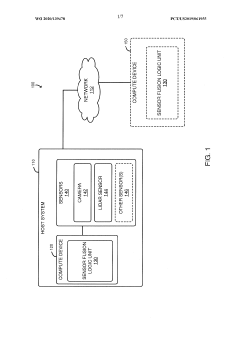
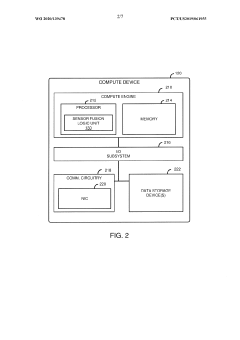
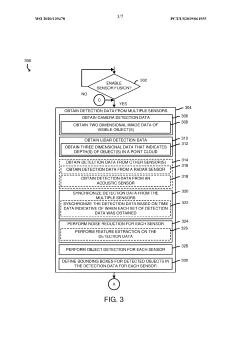
- A system that includes a compute device with a sensor fusion logic unit, which selectively applies weights to data from multiple sensors like cameras and lidar based on context and sensor attributes, and applies user-defined rules to merge bounding boxes, determining degrees of belief for object representation, and performs object localization using depth information from 3D sensors.

Environmental Regulations Impacting Emission Monitoring Standards
Environmental regulations governing emission monitoring have undergone substantial evolution over the past two decades, driven by increasing awareness of air quality impacts on public health and climate change. International frameworks such as the Paris Agreement and regional directives including the European Union's Industrial Emissions Directive have established progressively stringent requirements for continuous emission monitoring systems. These regulatory frameworks mandate not only the detection of traditional pollutants like nitrogen oxides, sulfur dioxide, and particulate matter, but also emerging concerns including volatile organic compounds and greenhouse gases. The shift toward real-time monitoring capabilities has created new compliance challenges for industries while simultaneously opening opportunities for advanced detection technologies.
Recent regulatory developments have emphasized the need for higher spatial and temporal resolution in emission data collection. The United States Environmental Protection Agency's updated standards for fugitive emission detection require more frequent monitoring intervals and lower detection thresholds than previous generations of regulations. Similarly, China's strengthened environmental protection laws have introduced mandatory continuous monitoring requirements for industrial facilities, with penalties for non-compliance becoming increasingly severe. These evolving standards are pushing traditional ground-based monitoring systems toward their operational limits, creating demand for complementary aerial monitoring solutions.
The integration of unmanned aerial systems into regulatory compliance frameworks represents an emerging trend across multiple jurisdictions. Several environmental agencies have begun pilot programs recognizing drone-based monitoring as a supplementary method for emission verification, particularly for large industrial complexes and remote facilities where traditional monitoring infrastructure proves impractical. However, regulatory acceptance requires demonstration of measurement accuracy, repeatability, and traceability to established reference standards. Current certification processes demand that sensor fusion approaches achieve detection limits and measurement uncertainties comparable to or better than conventional methods, while providing the added value of spatial mapping capabilities.
Future regulatory trajectories indicate movement toward performance-based standards rather than prescriptive technology requirements, allowing innovative monitoring approaches including sensor fusion techniques to gain acceptance. This regulatory flexibility, combined with increasing emphasis on comprehensive emission inventories and leak detection programs, positions advanced drone-based systems as viable compliance tools that can meet both current standards and anticipated future requirements.
Recent regulatory developments have emphasized the need for higher spatial and temporal resolution in emission data collection. The United States Environmental Protection Agency's updated standards for fugitive emission detection require more frequent monitoring intervals and lower detection thresholds than previous generations of regulations. Similarly, China's strengthened environmental protection laws have introduced mandatory continuous monitoring requirements for industrial facilities, with penalties for non-compliance becoming increasingly severe. These evolving standards are pushing traditional ground-based monitoring systems toward their operational limits, creating demand for complementary aerial monitoring solutions.
The integration of unmanned aerial systems into regulatory compliance frameworks represents an emerging trend across multiple jurisdictions. Several environmental agencies have begun pilot programs recognizing drone-based monitoring as a supplementary method for emission verification, particularly for large industrial complexes and remote facilities where traditional monitoring infrastructure proves impractical. However, regulatory acceptance requires demonstration of measurement accuracy, repeatability, and traceability to established reference standards. Current certification processes demand that sensor fusion approaches achieve detection limits and measurement uncertainties comparable to or better than conventional methods, while providing the added value of spatial mapping capabilities.
Future regulatory trajectories indicate movement toward performance-based standards rather than prescriptive technology requirements, allowing innovative monitoring approaches including sensor fusion techniques to gain acceptance. This regulatory flexibility, combined with increasing emphasis on comprehensive emission inventories and leak detection programs, positions advanced drone-based systems as viable compliance tools that can meet both current standards and anticipated future requirements.
Flight Endurance and Payload Optimization for Fixed Wing Drones
Flight endurance and payload capacity represent critical interdependent parameters that fundamentally determine the operational effectiveness of fixed-wing drones in emission detection missions. The relationship between these factors creates a complex optimization challenge, as increasing sensor payload typically reduces flight duration, while extended endurance requirements may limit the sophistication of detection equipment that can be carried. Current fixed-wing platforms designed for environmental monitoring typically achieve flight times ranging from two to eight hours, with payload capacities between 500 grams and 5 kilograms, depending on airframe size and propulsion system configuration.
The energy density of power sources constitutes the primary constraint on endurance optimization. Lithium polymer batteries, while offering energy densities of approximately 150-220 Wh/kg, impose significant weight penalties that directly compete with sensor payload allocation. Hybrid propulsion systems combining electric motors with small combustion engines have demonstrated potential for extending operational duration to 12-15 hours, though at increased system complexity and maintenance requirements. Solar-assisted configurations represent an emerging approach, with photovoltaic integration on wing surfaces providing supplementary power generation that can extend mission duration by 20-40% under favorable conditions.
Payload optimization for sensor fusion applications demands careful consideration of weight distribution, power consumption profiles, and data processing requirements. Multi-sensor configurations integrating electrochemical sensors, optical spectrometers, and thermal imaging systems typically require 1.5-3 kilograms of payload capacity, alongside 15-30 watts of continuous power draw. Advanced miniaturization techniques and the adoption of lightweight composite materials for sensor housings have enabled significant reductions in system mass without compromising detection capabilities. Modular payload architectures allow mission-specific sensor configurations, enabling operators to balance detection capability against endurance requirements based on operational priorities.
Aerodynamic efficiency improvements through refined wing design, reduced drag coefficients, and optimized cruise speeds directly enhance the endurance-payload trade space. High aspect ratio wings and laminar flow airfoils can reduce power requirements by 15-25%, effectively increasing either flight duration or available payload capacity. Computational fluid dynamics modeling and wind tunnel validation have become standard practices in optimizing airframe configurations for extended-range emission detection missions.
The energy density of power sources constitutes the primary constraint on endurance optimization. Lithium polymer batteries, while offering energy densities of approximately 150-220 Wh/kg, impose significant weight penalties that directly compete with sensor payload allocation. Hybrid propulsion systems combining electric motors with small combustion engines have demonstrated potential for extending operational duration to 12-15 hours, though at increased system complexity and maintenance requirements. Solar-assisted configurations represent an emerging approach, with photovoltaic integration on wing surfaces providing supplementary power generation that can extend mission duration by 20-40% under favorable conditions.
Payload optimization for sensor fusion applications demands careful consideration of weight distribution, power consumption profiles, and data processing requirements. Multi-sensor configurations integrating electrochemical sensors, optical spectrometers, and thermal imaging systems typically require 1.5-3 kilograms of payload capacity, alongside 15-30 watts of continuous power draw. Advanced miniaturization techniques and the adoption of lightweight composite materials for sensor housings have enabled significant reductions in system mass without compromising detection capabilities. Modular payload architectures allow mission-specific sensor configurations, enabling operators to balance detection capability against endurance requirements based on operational priorities.
Aerodynamic efficiency improvements through refined wing design, reduced drag coefficients, and optimized cruise speeds directly enhance the endurance-payload trade space. High aspect ratio wings and laminar flow airfoils can reduce power requirements by 15-25%, effectively increasing either flight duration or available payload capacity. Computational fluid dynamics modeling and wind tunnel validation have become standard practices in optimizing airframe configurations for extended-range emission detection missions.
Unlock deeper insights with PatSnap Eureka Quick Research — get a full tech report to explore trends and direct your research. Try now!
Generate Your Research Report Instantly with AI Agent
Supercharge your innovation with PatSnap Eureka AI Agent Platform!