Testing Fixed Wing Drone Material Resilience in Extreme Environments
FEB 13, 20269 MIN READ
Generate Your Research Report Instantly with AI Agent
PatSnap Eureka helps you evaluate technical feasibility & market potential.
Fixed Wing Drone Material Testing Background and Objectives
Fixed-wing drones have evolved from military reconnaissance platforms into versatile tools serving civilian applications including agricultural monitoring, infrastructure inspection, environmental surveillance, and logistics delivery. This technological evolution has been driven by advances in lightweight composite materials, aerodynamic design optimization, and autonomous flight systems. However, as operational demands expand into increasingly challenging environments—from Arctic research stations to desert oil field inspections—the structural integrity and material performance of these aircraft face unprecedented tests.
The fundamental challenge lies in ensuring that drone airframes maintain structural reliability when subjected to extreme temperature fluctuations, intense UV radiation, high humidity, corrosive atmospheres, and mechanical stress from turbulent conditions. Traditional aerospace materials testing protocols, designed for manned aircraft operating within controlled parameters, prove insufficient for unmanned systems that must function autonomously in hostile environments with minimal maintenance opportunities.
Current material selection for fixed-wing drones typically involves carbon fiber composites, fiberglass reinforced polymers, and advanced thermoplastics. While these materials offer excellent strength-to-weight ratios under standard conditions, their behavior under combined environmental stressors remains inadequately characterized. Thermal cycling between extreme cold and heat can induce microcracking in composite matrices. Prolonged UV exposure degrades polymer chains, reducing tensile strength. Moisture absorption in humid tropical environments compromises adhesive bonds and delamination resistance.
The primary objective of this technical investigation is to establish comprehensive testing methodologies that accurately simulate real-world extreme conditions and predict long-term material degradation patterns. This includes developing accelerated aging protocols, multi-factor stress testing frameworks, and predictive models correlating laboratory results with field performance data. Secondary objectives encompass identifying material formulations and surface treatments that enhance environmental resilience without compromising aerodynamic efficiency or adding prohibitive weight penalties.
Achieving these objectives will enable drone manufacturers to make evidence-based material selections, extend operational lifespans in harsh environments, reduce maintenance costs, and expand the geographic and climatic range of fixed-wing drone deployments. This research directly supports the strategic goal of establishing drones as reliable platforms for critical missions in previously inaccessible or inhospitable regions.
The fundamental challenge lies in ensuring that drone airframes maintain structural reliability when subjected to extreme temperature fluctuations, intense UV radiation, high humidity, corrosive atmospheres, and mechanical stress from turbulent conditions. Traditional aerospace materials testing protocols, designed for manned aircraft operating within controlled parameters, prove insufficient for unmanned systems that must function autonomously in hostile environments with minimal maintenance opportunities.
Current material selection for fixed-wing drones typically involves carbon fiber composites, fiberglass reinforced polymers, and advanced thermoplastics. While these materials offer excellent strength-to-weight ratios under standard conditions, their behavior under combined environmental stressors remains inadequately characterized. Thermal cycling between extreme cold and heat can induce microcracking in composite matrices. Prolonged UV exposure degrades polymer chains, reducing tensile strength. Moisture absorption in humid tropical environments compromises adhesive bonds and delamination resistance.
The primary objective of this technical investigation is to establish comprehensive testing methodologies that accurately simulate real-world extreme conditions and predict long-term material degradation patterns. This includes developing accelerated aging protocols, multi-factor stress testing frameworks, and predictive models correlating laboratory results with field performance data. Secondary objectives encompass identifying material formulations and surface treatments that enhance environmental resilience without compromising aerodynamic efficiency or adding prohibitive weight penalties.
Achieving these objectives will enable drone manufacturers to make evidence-based material selections, extend operational lifespans in harsh environments, reduce maintenance costs, and expand the geographic and climatic range of fixed-wing drone deployments. This research directly supports the strategic goal of establishing drones as reliable platforms for critical missions in previously inaccessible or inhospitable regions.
Market Demand for Extreme Environment Drones
The global demand for fixed-wing drones capable of operating in extreme environments has experienced substantial growth across multiple sectors. Defense and military applications represent a primary driver, as armed forces worldwide require unmanned aerial vehicles that can conduct surveillance, reconnaissance, and tactical missions in harsh climates ranging from Arctic conditions to desert heat. These operations demand materials that maintain structural integrity and performance reliability under temperature extremes, high-altitude low-pressure conditions, and exposure to corrosive elements such as saltwater spray in maritime environments.
Commercial sectors are increasingly recognizing the value proposition of extreme-environment drones. The energy industry, particularly oil and gas operations in remote locations, requires inspection and monitoring capabilities in challenging terrains including offshore platforms, Arctic drilling sites, and desert pipelines. Similarly, the renewable energy sector needs drones for wind turbine inspection in coastal and mountainous regions where weather conditions can be severe. These applications necessitate materials that resist fatigue, corrosion, and thermal cycling while maintaining aerodynamic efficiency.
Scientific research institutions and environmental monitoring agencies constitute another significant market segment. Climate research in polar regions, atmospheric studies at high altitudes, and volcanic monitoring all require drones with exceptional material resilience. The ability to collect data in previously inaccessible or dangerous locations has created sustained demand for platforms that can withstand extreme temperature fluctuations, high winds, and abrasive particulate matter.
The logistics and delivery sector is emerging as a growth area, particularly for operations in geographically challenging regions. Remote communities in mountainous, polar, or desert environments require reliable supply chains that conventional aircraft cannot economically serve. This application demands materials that balance weight efficiency with durability across diverse environmental stressors.
Market expansion is further accelerated by regulatory developments that increasingly permit beyond-visual-line-of-sight operations in remote areas, coupled with technological advancements in autonomous navigation systems. However, the critical bottleneck remains material science innovation, as existing composite materials often fail to meet the simultaneous demands of lightweight construction, thermal stability, impact resistance, and long-term durability required for economically viable operations in extreme conditions.
Commercial sectors are increasingly recognizing the value proposition of extreme-environment drones. The energy industry, particularly oil and gas operations in remote locations, requires inspection and monitoring capabilities in challenging terrains including offshore platforms, Arctic drilling sites, and desert pipelines. Similarly, the renewable energy sector needs drones for wind turbine inspection in coastal and mountainous regions where weather conditions can be severe. These applications necessitate materials that resist fatigue, corrosion, and thermal cycling while maintaining aerodynamic efficiency.
Scientific research institutions and environmental monitoring agencies constitute another significant market segment. Climate research in polar regions, atmospheric studies at high altitudes, and volcanic monitoring all require drones with exceptional material resilience. The ability to collect data in previously inaccessible or dangerous locations has created sustained demand for platforms that can withstand extreme temperature fluctuations, high winds, and abrasive particulate matter.
The logistics and delivery sector is emerging as a growth area, particularly for operations in geographically challenging regions. Remote communities in mountainous, polar, or desert environments require reliable supply chains that conventional aircraft cannot economically serve. This application demands materials that balance weight efficiency with durability across diverse environmental stressors.
Market expansion is further accelerated by regulatory developments that increasingly permit beyond-visual-line-of-sight operations in remote areas, coupled with technological advancements in autonomous navigation systems. However, the critical bottleneck remains material science innovation, as existing composite materials often fail to meet the simultaneous demands of lightweight construction, thermal stability, impact resistance, and long-term durability required for economically viable operations in extreme conditions.
Current Material Resilience Challenges in Harsh Conditions
Fixed-wing drones operating in extreme environments face multifaceted material resilience challenges that significantly impact operational reliability and mission success rates. The primary constraint stems from the simultaneous exposure to multiple environmental stressors, including temperature extremes ranging from minus forty to plus sixty degrees Celsius, ultraviolet radiation intensity variations, moisture fluctuations, and particulate matter exposure. These conditions create synergistic degradation effects that accelerate material fatigue beyond what individual stressor testing would predict.
Composite materials, which constitute the majority of modern fixed-wing drone airframes, exhibit particular vulnerability to thermal cycling. Repeated expansion and contraction cycles induce microcracking at fiber-matrix interfaces, progressively compromising structural integrity. This phenomenon becomes especially pronounced in carbon fiber reinforced polymers, where coefficient of thermal expansion mismatches between constituents generate internal stresses. Current testing protocols often fail to replicate the rapid temperature transitions encountered during actual flight operations, leading to gaps between laboratory predictions and field performance.
Moisture ingress represents another critical challenge, particularly for drones deployed in maritime or high-humidity environments. Water absorption causes matrix swelling in composite structures, reducing glass transition temperatures and mechanical properties. The freeze-thaw cycling in polar regions exacerbates this issue, as absorbed moisture expands upon freezing, creating internal pressure that propagates existing defects. Conventional accelerated aging tests inadequately simulate these complex moisture-temperature interactions, resulting in underestimated degradation rates.
Surface coating degradation under combined UV exposure and abrasive particle impact poses significant challenges for maintaining aerodynamic efficiency and protecting underlying structures. Desert operations subject drones to sand erosion that removes protective layers, while high-altitude missions expose materials to intense UV radiation that breaks down polymer chains. The interdependency between coating failure and substrate degradation creates cascading failure modes that current single-factor testing methodologies cannot adequately capture.
Adhesive joint performance degradation under environmental stress remains a persistent concern, as these critical load-transfer regions often become failure initiation sites. Temperature extremes affect cure states and viscoelastic properties, while moisture exposure weakens interfacial bonding. The lack of standardized multi-environmental testing protocols for adhesive systems creates uncertainty in long-term durability predictions, forcing conservative design approaches that increase structural weight and reduce operational efficiency.
Composite materials, which constitute the majority of modern fixed-wing drone airframes, exhibit particular vulnerability to thermal cycling. Repeated expansion and contraction cycles induce microcracking at fiber-matrix interfaces, progressively compromising structural integrity. This phenomenon becomes especially pronounced in carbon fiber reinforced polymers, where coefficient of thermal expansion mismatches between constituents generate internal stresses. Current testing protocols often fail to replicate the rapid temperature transitions encountered during actual flight operations, leading to gaps between laboratory predictions and field performance.
Moisture ingress represents another critical challenge, particularly for drones deployed in maritime or high-humidity environments. Water absorption causes matrix swelling in composite structures, reducing glass transition temperatures and mechanical properties. The freeze-thaw cycling in polar regions exacerbates this issue, as absorbed moisture expands upon freezing, creating internal pressure that propagates existing defects. Conventional accelerated aging tests inadequately simulate these complex moisture-temperature interactions, resulting in underestimated degradation rates.
Surface coating degradation under combined UV exposure and abrasive particle impact poses significant challenges for maintaining aerodynamic efficiency and protecting underlying structures. Desert operations subject drones to sand erosion that removes protective layers, while high-altitude missions expose materials to intense UV radiation that breaks down polymer chains. The interdependency between coating failure and substrate degradation creates cascading failure modes that current single-factor testing methodologies cannot adequately capture.
Adhesive joint performance degradation under environmental stress remains a persistent concern, as these critical load-transfer regions often become failure initiation sites. Temperature extremes affect cure states and viscoelastic properties, while moisture exposure weakens interfacial bonding. The lack of standardized multi-environmental testing protocols for adhesive systems creates uncertainty in long-term durability predictions, forcing conservative design approaches that increase structural weight and reduce operational efficiency.
Existing Material Testing Solutions for Extreme Environments
01 Advanced composite materials for structural components
Fixed wing drones utilize advanced composite materials such as carbon fiber reinforced polymers and fiber-reinforced plastics to enhance structural resilience. These materials provide high strength-to-weight ratios while maintaining durability against environmental stresses. The composite structures are designed to withstand impact forces, vibrations, and aerodynamic loads during flight operations. Material selection focuses on optimizing mechanical properties including tensile strength, flexural modulus, and fatigue resistance to ensure long-term operational reliability.- Advanced composite materials for structural components: Fixed wing drones utilize advanced composite materials such as carbon fiber reinforced polymers and fiber-reinforced plastics to enhance structural resilience. These materials provide high strength-to-weight ratios while maintaining durability against environmental stresses. The composite structures are designed to withstand impact forces, vibrations, and aerodynamic loads during flight operations. Material selection focuses on optimizing mechanical properties including tensile strength, flexural modulus, and fatigue resistance to ensure long-term operational reliability.
- Impact-resistant wing and fuselage design: Drone airframes incorporate impact-resistant design features to improve resilience during landing, collision, or crash scenarios. Structural reinforcement techniques include energy-absorbing materials, protective coatings, and strategic placement of reinforcement layers in critical stress areas. The design methodology considers failure modes and implements redundancy in load-bearing structures to prevent catastrophic damage from localized impacts.
- Environmental protection and weathering resistance: Material resilience is enhanced through protective treatments and coatings that resist environmental degradation from UV radiation, moisture, temperature extremes, and chemical exposure. Surface treatments and sealants are applied to prevent corrosion, delamination, and material degradation over extended operational periods. The protective systems maintain structural integrity and aerodynamic performance across diverse environmental conditions.
- Lightweight structural optimization: Material resilience is achieved through structural optimization techniques that reduce weight while maintaining or improving strength characteristics. Advanced manufacturing methods including additive manufacturing and precision molding create optimized geometries with minimal material usage. The lightweight designs incorporate honeycomb structures, lattice frameworks, and variable thickness profiles to distribute loads efficiently and enhance overall durability.
- Damage detection and self-healing materials: Innovative material systems incorporate damage detection capabilities and self-healing properties to enhance operational resilience. Embedded sensors monitor structural health and detect micro-cracks or delamination before critical failure occurs. Self-healing polymers and smart materials can autonomously repair minor damage through chemical or thermal activation mechanisms, extending service life and reducing maintenance requirements.
02 Impact-resistant wing and fuselage design
Drone airframes incorporate impact-resistant design features to improve crashworthiness and material resilience. Structural reinforcements are strategically placed in critical areas such as wing leading edges, fuselage sections, and landing gear attachment points. Energy-absorbing materials and geometric configurations help dissipate impact forces during collisions or hard landings. The design approach includes finite element analysis to predict failure modes and optimize material distribution for maximum resilience under various loading conditions.Expand Specific Solutions03 Environmental protection and weathering resistance
Material resilience is enhanced through protective coatings and treatments that resist environmental degradation. Surface treatments protect against UV radiation, moisture absorption, temperature extremes, and chemical exposure. Specialized coatings prevent corrosion, oxidation, and material fatigue caused by prolonged outdoor exposure. The protective systems maintain structural integrity and aerodynamic performance throughout the operational lifecycle while preventing delamination and surface erosion of composite materials.Expand Specific Solutions04 Flexible and adaptive structural elements
Innovative designs incorporate flexible materials and adaptive structures that enhance resilience through controlled deformation. Morphing wing technologies and compliant mechanisms allow structures to absorb and redistribute stress loads dynamically. These adaptive elements improve damage tolerance by preventing catastrophic failure through gradual yielding rather than brittle fracture. The integration of smart materials enables real-time structural response to changing flight conditions and impact events.Expand Specific Solutions05 Modular construction and damage-tolerant architecture
Modular design approaches improve material resilience by isolating damage to replaceable components and preventing failure propagation. Segmented structures with mechanical joints allow for easy repair and component replacement after impact or material degradation. Redundant load paths ensure continued structural integrity even when individual elements are compromised. The architecture incorporates fail-safe mechanisms and damage detection systems to maintain operational capability under adverse conditions.Expand Specific Solutions
Key Players in Aerospace Material Testing Industry
The fixed-wing drone material resilience testing sector represents a maturing technology domain experiencing robust growth, driven by expanding defense, commercial, and industrial applications requiring operation in harsh conditions. The competitive landscape spans established aerospace giants like Boeing and Mitsubishi Heavy Industries, specialized UAV manufacturers such as Sichuan Tengdun Technology, advanced materials suppliers including Cytec Industries and PPG Industries Ohio, and leading research institutions like Beihang University and Nanjing University of Aeronautics & Astronautics. Technology maturity varies significantly across players: aerospace incumbents leverage decades of materials expertise from manned aviation, while emerging drone-focused companies rapidly innovate with composite materials and protective coatings. Academic institutions contribute fundamental research in extreme environment testing methodologies, bridging laboratory findings with industrial applications, creating a dynamic ecosystem balancing proven aerospace heritage with agile innovation.
The Boeing Co.
Technical Solution: Boeing has developed comprehensive material testing protocols for fixed-wing aircraft operating in extreme environments, including high-altitude, arctic, and desert conditions. Their approach integrates advanced composite materials with rigorous environmental simulation testing chambers that replicate temperature extremes from -65°F to +160°F, humidity variations, salt spray exposure, and UV radiation cycles. Boeing employs accelerated aging tests combined with real-world flight data analytics to validate material performance under thermal cycling, moisture absorption, and mechanical stress conditions. Their testing methodology includes fatigue analysis of carbon fiber reinforced polymers (CFRP) and aluminum alloys under simulated operational loads, utilizing both laboratory-based environmental chambers and actual flight test programs in extreme climate zones to ensure structural integrity and longevity of airframe materials.
Strengths: Extensive aerospace heritage with decades of material testing experience; comprehensive testing infrastructure including environmental chambers and flight test capabilities; integration of real-world operational data with laboratory results. Weaknesses: Testing protocols primarily designed for large commercial aircraft may require adaptation for smaller drone applications; high cost of testing infrastructure and lengthy validation cycles.
Beihang University
Technical Solution: Beihang University (Beijing University of Aeronautics and Astronautics) has established advanced research programs focused on UAV material performance in extreme conditions. Their research encompasses novel composite material development and comprehensive environmental resilience testing for fixed-wing drone applications. The university's testing facilities include climate-controlled chambers capable of simulating temperature ranges from -70°C to +85°C, combined with controlled humidity, UV exposure, and sand/dust ingress testing. Research teams conduct multi-scale material characterization from microscopic fiber-matrix interface analysis to full-scale structural component testing. Their work emphasizes lightweight materials including advanced carbon fiber composites, aramid fiber hybrids, and thermoplastic matrix systems, evaluating mechanical property retention after exposure to thermal cycling, moisture absorption, and oxidative degradation. Beihang integrates computational modeling with experimental validation to predict long-term material behavior under combined environmental stressors.
Strengths: Strong academic research foundation with cutting-edge material science capabilities; integration of computational modeling with experimental testing; focus on emerging lightweight materials for next-generation UAV applications. Weaknesses: Academic research may have longer translation timelines to commercial applications; testing scale may be limited compared to industrial facilities; less emphasis on production-scale validation.
Core Testing Methodologies for Material Resilience Validation
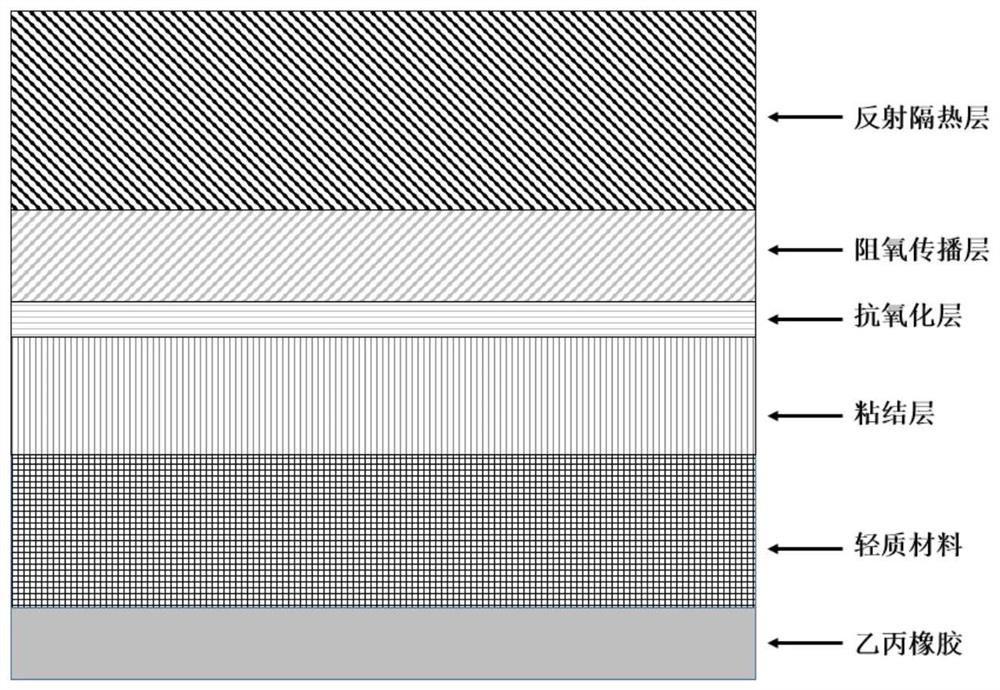
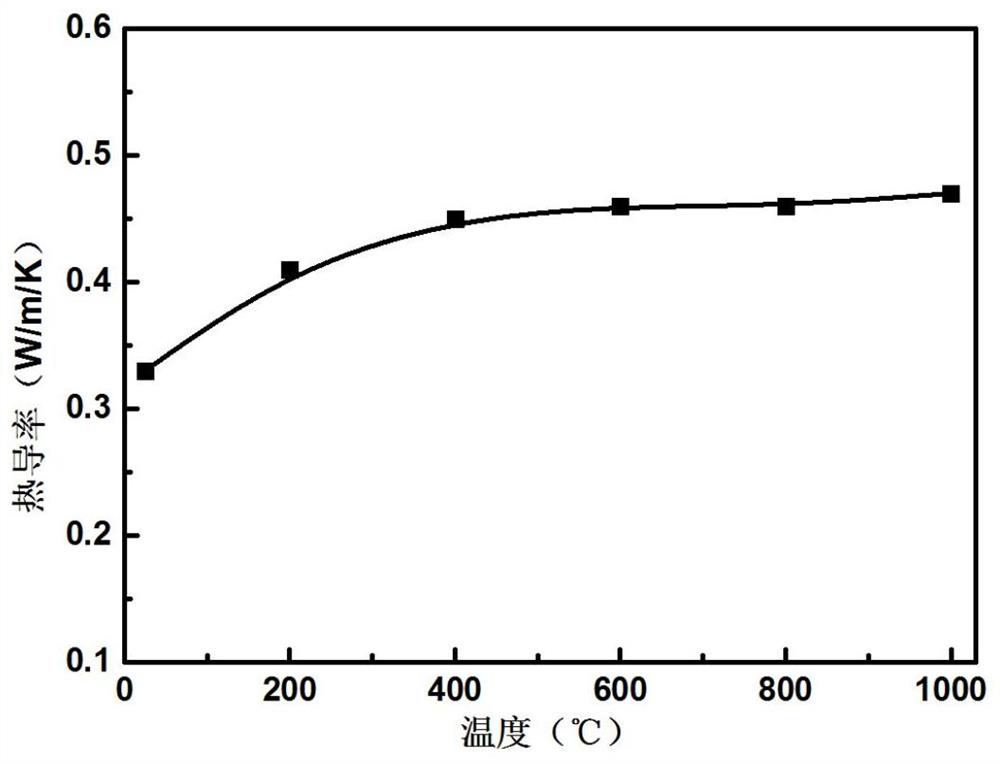
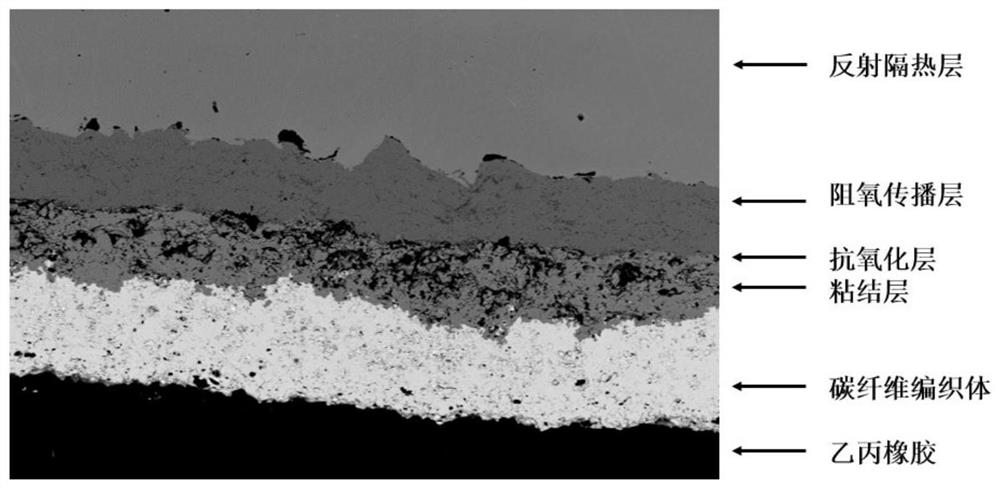
Fire disaster low-altitude flight rescue unmanned aerial vehicle fuselage light material surface coating and preparation method thereof
PatentActiveCN113981381A
Innovation
- A bonding layer, an antioxidant layer, an oxygen propagation barrier layer and a reflective insulation layer are sequentially prepared on the surface of the lightweight material. Materials with a thermal expansion coefficient matching the lightweight material are used to form multiple layers through electron beam physical vapor deposition and atmospheric plasma spraying technology. Coating, combined with ethylene propylene rubber to enhance bond strength and protection.

High-strength drone wing and preparation method thereof
PatentActiveCN106182952A
Innovation
- It adopts a composite structure of polyether ether ketone resin, carbon fiber, graphene and aluminum alloy, and enhances the bonding strength of the materials through oxidation and sulfonation treatment, and uses polytetrafluoroethylene as the binder to form a high-strength machine with a honeycomb sandwich structure. Wing panels.
Environmental Simulation Standards and Certification Requirements
The certification of fixed-wing drone materials for extreme environment operations necessitates adherence to internationally recognized environmental simulation standards. Primary frameworks include MIL-STD-810H for military applications, RTCA DO-160G for airborne equipment, and ISO 9022 series for environmental testing of optical instruments and sensors. These standards establish rigorous protocols for temperature cycling, humidity exposure, salt fog corrosion, sand and dust ingress, vibration, and shock resistance testing. Compliance with these frameworks ensures materials meet baseline performance thresholds across operational temperature ranges typically spanning -55°C to +85°C, with specialized applications extending to -70°C or +125°C extremes.
Aviation regulatory bodies impose additional certification requirements specific to unmanned aerial systems. The Federal Aviation Administration (FAA) Part 107 regulations and European Union Aviation Safety Agency (EASA) guidelines mandate material qualification documentation demonstrating structural integrity under environmental stress. For composite materials commonly used in fixed-wing drones, ASTM D5687 and ASTM D7136 standards govern impact resistance testing, while ASTM E831 addresses thermal expansion characteristics critical for multi-material assemblies experiencing thermal cycling.
Specialized certification pathways exist for polar and desert operations. Arctic deployment requires compliance with NATO STANAG 2895 cold weather testing protocols, validating material performance at sustained sub-zero temperatures with freeze-thaw cycling. Conversely, desert certification follows MIL-STD-810H Method 505 for solar radiation exposure and Method 501 for high-temperature storage, simulating prolonged UV degradation and thermal stress. Coastal and maritime operations demand additional salt fog testing per ASTM B117 to assess corrosion resistance of metallic components and protective coatings.
Third-party certification laboratories accredited under ISO/IEC 17025 provide independent validation of material test results. Leading facilities such as Element Materials Technology, Intertek, and TÜV Rheinland offer comprehensive environmental simulation services with traceability to national metrology standards. Certification documentation must include detailed test reports, material composition disclosures, and failure mode analysis to satisfy regulatory scrutiny and insurance underwriting requirements for commercial drone operations in extreme environments.
Aviation regulatory bodies impose additional certification requirements specific to unmanned aerial systems. The Federal Aviation Administration (FAA) Part 107 regulations and European Union Aviation Safety Agency (EASA) guidelines mandate material qualification documentation demonstrating structural integrity under environmental stress. For composite materials commonly used in fixed-wing drones, ASTM D5687 and ASTM D7136 standards govern impact resistance testing, while ASTM E831 addresses thermal expansion characteristics critical for multi-material assemblies experiencing thermal cycling.
Specialized certification pathways exist for polar and desert operations. Arctic deployment requires compliance with NATO STANAG 2895 cold weather testing protocols, validating material performance at sustained sub-zero temperatures with freeze-thaw cycling. Conversely, desert certification follows MIL-STD-810H Method 505 for solar radiation exposure and Method 501 for high-temperature storage, simulating prolonged UV degradation and thermal stress. Coastal and maritime operations demand additional salt fog testing per ASTM B117 to assess corrosion resistance of metallic components and protective coatings.
Third-party certification laboratories accredited under ISO/IEC 17025 provide independent validation of material test results. Leading facilities such as Element Materials Technology, Intertek, and TÜV Rheinland offer comprehensive environmental simulation services with traceability to national metrology standards. Certification documentation must include detailed test reports, material composition disclosures, and failure mode analysis to satisfy regulatory scrutiny and insurance underwriting requirements for commercial drone operations in extreme environments.
Material Lifecycle Assessment in Extreme Climate Operations
Material lifecycle assessment in extreme climate operations represents a critical framework for evaluating the long-term viability and environmental impact of fixed-wing drone materials subjected to harsh operational conditions. This assessment encompasses the entire material journey from raw material extraction through manufacturing, operational deployment, maintenance cycles, and eventual disposal or recycling. In extreme environments characterized by temperature fluctuations, high humidity, intense UV radiation, and corrosive atmospheric conditions, materials undergo accelerated degradation processes that significantly compress their effective service life compared to standard operating conditions.
The assessment methodology integrates multiple evaluation dimensions including material degradation rates under sustained environmental stress, structural integrity maintenance throughout operational cycles, and the economic implications of premature material failure. Advanced monitoring techniques such as non-destructive testing, real-time sensor integration, and predictive analytics enable continuous tracking of material performance degradation patterns. These data streams provide essential insights into optimal replacement intervals and maintenance scheduling strategies that balance operational safety with cost efficiency.
Environmental sustainability considerations have become increasingly prominent in lifecycle assessments, particularly regarding material selection and end-of-life management. Composite materials commonly used in drone construction present unique challenges in extreme climates, as delamination and matrix degradation can occur rapidly under thermal cycling and moisture exposure. The assessment must quantify not only the carbon footprint associated with material production and replacement but also the environmental burden of disposal in remote operational locations where recycling infrastructure may be limited.
Economic modeling within the lifecycle framework reveals that materials demonstrating superior resilience in extreme conditions, despite higher initial costs, often deliver lower total cost of ownership through extended service intervals and reduced maintenance requirements. This analysis supports strategic procurement decisions and informs material specification standards for extreme environment operations. Furthermore, lifecycle data accumulated across diverse climate zones enables the development of climate-specific material selection guidelines that optimize performance reliability while minimizing environmental impact and operational costs throughout the drone's operational lifespan.
The assessment methodology integrates multiple evaluation dimensions including material degradation rates under sustained environmental stress, structural integrity maintenance throughout operational cycles, and the economic implications of premature material failure. Advanced monitoring techniques such as non-destructive testing, real-time sensor integration, and predictive analytics enable continuous tracking of material performance degradation patterns. These data streams provide essential insights into optimal replacement intervals and maintenance scheduling strategies that balance operational safety with cost efficiency.
Environmental sustainability considerations have become increasingly prominent in lifecycle assessments, particularly regarding material selection and end-of-life management. Composite materials commonly used in drone construction present unique challenges in extreme climates, as delamination and matrix degradation can occur rapidly under thermal cycling and moisture exposure. The assessment must quantify not only the carbon footprint associated with material production and replacement but also the environmental burden of disposal in remote operational locations where recycling infrastructure may be limited.
Economic modeling within the lifecycle framework reveals that materials demonstrating superior resilience in extreme conditions, despite higher initial costs, often deliver lower total cost of ownership through extended service intervals and reduced maintenance requirements. This analysis supports strategic procurement decisions and informs material specification standards for extreme environment operations. Furthermore, lifecycle data accumulated across diverse climate zones enables the development of climate-specific material selection guidelines that optimize performance reliability while minimizing environmental impact and operational costs throughout the drone's operational lifespan.
Unlock deeper insights with PatSnap Eureka Quick Research — get a full tech report to explore trends and direct your research. Try now!
Generate Your Research Report Instantly with AI Agent
Supercharge your innovation with PatSnap Eureka AI Agent Platform!