

Improving Journal Write Speeds with Persistent Memory in Filesystems
MAY 13, 20269 MIN READ
Generate Your Research Report Instantly with AI Agent
PatSnap Eureka helps you evaluate technical feasibility & market potential.
Persistent Memory Journal Write Background and Objectives
Traditional filesystem architectures have long relied on journaling mechanisms to ensure data consistency and crash recovery capabilities. In conventional storage systems, journals serve as write-ahead logs that record metadata changes before they are committed to the main filesystem structures. However, the performance bottleneck created by journal writes has become increasingly problematic as storage technologies evolve and application demands for higher throughput intensify.
The emergence of persistent memory technologies, including Intel Optane DC Persistent Memory and Storage Class Memory, presents unprecedented opportunities to revolutionize filesystem journal operations. Unlike traditional volatile memory that loses data upon power failure, persistent memory combines the speed characteristics of DRAM with the non-volatility of storage devices. This unique combination enables direct manipulation of persistent data structures without the traditional storage stack overhead.
Current filesystem implementations face significant challenges in journal write performance due to the inherent latency of block-based storage devices and the serialization requirements of maintaining consistency. Traditional journaling approaches often require multiple round-trips to storage, creating substantial delays in write-intensive workloads. The synchronous nature of journal commits further exacerbates these performance limitations, particularly in enterprise environments where data integrity cannot be compromised.
The primary objective of integrating persistent memory into filesystem journaling is to dramatically reduce write latencies while maintaining the same level of data consistency guarantees. By leveraging byte-addressable persistent memory, filesystems can potentially eliminate the traditional block-based journal write path and implement more efficient logging mechanisms. This transformation aims to achieve sub-microsecond journal commit times compared to the millisecond-scale latencies typical of conventional storage-based approaches.
Secondary objectives include reducing CPU overhead associated with journal management, minimizing memory bandwidth consumption, and enabling more sophisticated consistency models that were previously impractical due to performance constraints. The integration also seeks to simplify recovery procedures by providing more granular and immediate persistence guarantees, potentially reducing filesystem check times and improving overall system reliability.
The ultimate goal encompasses creating a new paradigm for filesystem design where the traditional distinction between memory and storage becomes less relevant, enabling more efficient data management strategies that can fully exploit the characteristics of emerging memory technologies while maintaining backward compatibility with existing applications and interfaces.
The emergence of persistent memory technologies, including Intel Optane DC Persistent Memory and Storage Class Memory, presents unprecedented opportunities to revolutionize filesystem journal operations. Unlike traditional volatile memory that loses data upon power failure, persistent memory combines the speed characteristics of DRAM with the non-volatility of storage devices. This unique combination enables direct manipulation of persistent data structures without the traditional storage stack overhead.
Current filesystem implementations face significant challenges in journal write performance due to the inherent latency of block-based storage devices and the serialization requirements of maintaining consistency. Traditional journaling approaches often require multiple round-trips to storage, creating substantial delays in write-intensive workloads. The synchronous nature of journal commits further exacerbates these performance limitations, particularly in enterprise environments where data integrity cannot be compromised.
The primary objective of integrating persistent memory into filesystem journaling is to dramatically reduce write latencies while maintaining the same level of data consistency guarantees. By leveraging byte-addressable persistent memory, filesystems can potentially eliminate the traditional block-based journal write path and implement more efficient logging mechanisms. This transformation aims to achieve sub-microsecond journal commit times compared to the millisecond-scale latencies typical of conventional storage-based approaches.
Secondary objectives include reducing CPU overhead associated with journal management, minimizing memory bandwidth consumption, and enabling more sophisticated consistency models that were previously impractical due to performance constraints. The integration also seeks to simplify recovery procedures by providing more granular and immediate persistence guarantees, potentially reducing filesystem check times and improving overall system reliability.
The ultimate goal encompasses creating a new paradigm for filesystem design where the traditional distinction between memory and storage becomes less relevant, enabling more efficient data management strategies that can fully exploit the characteristics of emerging memory technologies while maintaining backward compatibility with existing applications and interfaces.
Market Demand for High-Performance Storage Solutions
The global storage market is experiencing unprecedented demand for high-performance solutions driven by exponential data growth and increasingly demanding computational workloads. Enterprise applications, cloud computing platforms, and data-intensive operations require storage systems that can deliver exceptional throughput, minimal latency, and consistent performance under heavy concurrent access patterns. Traditional storage architectures struggle to meet these evolving requirements, particularly in scenarios involving frequent write operations and transaction-heavy workloads.
Database management systems represent a critical segment driving demand for enhanced storage performance. Modern databases handling real-time analytics, financial transactions, and large-scale enterprise resource planning systems generate substantial write-intensive workloads that directly benefit from improved journal write speeds. The filesystem layer becomes a performance bottleneck when conventional storage media cannot match the speed requirements of these applications.
Cloud service providers constitute another major market segment seeking advanced storage solutions. As organizations migrate to cloud-first strategies, providers must deliver storage infrastructure capable of supporting diverse workloads while maintaining service level agreements. The ability to optimize filesystem performance through persistent memory integration addresses critical pain points in multi-tenant environments where storage performance directly impacts customer satisfaction and operational costs.
High-frequency trading platforms, scientific computing applications, and real-time data processing systems represent specialized markets with extreme performance requirements. These sectors demand storage solutions that can eliminate traditional I/O bottlenecks and provide deterministic performance characteristics. The integration of persistent memory technologies into filesystem architectures offers compelling value propositions for these performance-critical applications.
The enterprise storage market increasingly prioritizes solutions that combine high performance with reliability and data integrity. Organizations require storage systems that can accelerate write operations without compromising data consistency or introducing additional failure points. This demand creates opportunities for innovative approaches that leverage persistent memory characteristics to enhance traditional filesystem journaling mechanisms while maintaining robust data protection capabilities.
Emerging technologies including artificial intelligence workloads, edge computing deployments, and Internet of Things applications further expand market demand for high-performance storage solutions. These applications generate diverse I/O patterns that benefit from optimized write performance and reduced latency characteristics achievable through persistent memory integration in filesystem designs.
Database management systems represent a critical segment driving demand for enhanced storage performance. Modern databases handling real-time analytics, financial transactions, and large-scale enterprise resource planning systems generate substantial write-intensive workloads that directly benefit from improved journal write speeds. The filesystem layer becomes a performance bottleneck when conventional storage media cannot match the speed requirements of these applications.
Cloud service providers constitute another major market segment seeking advanced storage solutions. As organizations migrate to cloud-first strategies, providers must deliver storage infrastructure capable of supporting diverse workloads while maintaining service level agreements. The ability to optimize filesystem performance through persistent memory integration addresses critical pain points in multi-tenant environments where storage performance directly impacts customer satisfaction and operational costs.
High-frequency trading platforms, scientific computing applications, and real-time data processing systems represent specialized markets with extreme performance requirements. These sectors demand storage solutions that can eliminate traditional I/O bottlenecks and provide deterministic performance characteristics. The integration of persistent memory technologies into filesystem architectures offers compelling value propositions for these performance-critical applications.
The enterprise storage market increasingly prioritizes solutions that combine high performance with reliability and data integrity. Organizations require storage systems that can accelerate write operations without compromising data consistency or introducing additional failure points. This demand creates opportunities for innovative approaches that leverage persistent memory characteristics to enhance traditional filesystem journaling mechanisms while maintaining robust data protection capabilities.
Emerging technologies including artificial intelligence workloads, edge computing deployments, and Internet of Things applications further expand market demand for high-performance storage solutions. These applications generate diverse I/O patterns that benefit from optimized write performance and reduced latency characteristics achievable through persistent memory integration in filesystem designs.
Current State and Bottlenecks of Filesystem Journal Performance
Modern filesystem journal performance faces significant challenges that limit overall storage system efficiency. Traditional journaling mechanisms, designed for conventional storage media, struggle to keep pace with contemporary workload demands and emerging storage technologies. The fundamental architecture of filesystem journals creates inherent bottlenecks that affect both transactional integrity and system throughput.
Current filesystem implementations rely heavily on write-ahead logging mechanisms that serialize metadata operations through journal commits. This serialization creates a critical performance bottleneck, particularly in multi-threaded environments where concurrent operations must wait for journal synchronization. The sequential nature of journal writes forces even independent filesystem operations to compete for the same journal space, resulting in artificial dependencies that limit parallelism.
Block-based storage systems introduce additional latency through their layered architecture. Journal writes must traverse multiple software layers, including the virtual filesystem layer, block device layer, and storage driver stack. Each layer adds overhead through context switching, buffer management, and I/O scheduling decisions. The cumulative effect of these layers significantly increases the latency between journal write initiation and completion.
Storage device characteristics further compound journal performance limitations. Traditional spinning disk drives exhibit poor random write performance, making frequent journal commits expensive operations. Even solid-state drives, while offering better random access patterns, still suffer from write amplification effects and garbage collection overhead that can unpredictably impact journal write latency.
Memory hierarchy inefficiencies represent another critical bottleneck in current journal implementations. Journal data typically flows from processor caches through main memory to storage devices, creating multiple copy operations and cache coherency overhead. The temporal locality of journal writes is often poor, leading to frequent cache misses and memory bandwidth contention.
Synchronization overhead in multi-core systems creates scalability limitations for journal performance. Lock contention around journal data structures becomes increasingly problematic as core counts increase. The global nature of journal commit operations requires coordination across multiple processor cores, limiting the ability to scale journal throughput with available hardware parallelism.
Current filesystem designs also struggle with write ordering requirements that ensure crash consistency. These ordering constraints force expensive barrier operations and limit the storage system's ability to optimize write patterns. The rigid ordering requirements prevent many potential optimizations that could improve journal throughput while maintaining data integrity guarantees.
Current filesystem implementations rely heavily on write-ahead logging mechanisms that serialize metadata operations through journal commits. This serialization creates a critical performance bottleneck, particularly in multi-threaded environments where concurrent operations must wait for journal synchronization. The sequential nature of journal writes forces even independent filesystem operations to compete for the same journal space, resulting in artificial dependencies that limit parallelism.
Block-based storage systems introduce additional latency through their layered architecture. Journal writes must traverse multiple software layers, including the virtual filesystem layer, block device layer, and storage driver stack. Each layer adds overhead through context switching, buffer management, and I/O scheduling decisions. The cumulative effect of these layers significantly increases the latency between journal write initiation and completion.
Storage device characteristics further compound journal performance limitations. Traditional spinning disk drives exhibit poor random write performance, making frequent journal commits expensive operations. Even solid-state drives, while offering better random access patterns, still suffer from write amplification effects and garbage collection overhead that can unpredictably impact journal write latency.
Memory hierarchy inefficiencies represent another critical bottleneck in current journal implementations. Journal data typically flows from processor caches through main memory to storage devices, creating multiple copy operations and cache coherency overhead. The temporal locality of journal writes is often poor, leading to frequent cache misses and memory bandwidth contention.
Synchronization overhead in multi-core systems creates scalability limitations for journal performance. Lock contention around journal data structures becomes increasingly problematic as core counts increase. The global nature of journal commit operations requires coordination across multiple processor cores, limiting the ability to scale journal throughput with available hardware parallelism.
Current filesystem designs also struggle with write ordering requirements that ensure crash consistency. These ordering constraints force expensive barrier operations and limit the storage system's ability to optimize write patterns. The rigid ordering requirements prevent many potential optimizations that could improve journal throughput while maintaining data integrity guarantees.
Existing Solutions for Optimizing Journal Write Performance
01 Journal write optimization techniques for persistent memory
Various optimization techniques can be employed to improve journal write speeds in persistent memory systems. These include buffering strategies, write coalescing methods, and selective journaling approaches that reduce the overhead of maintaining consistency while maximizing write throughput. Advanced algorithms can minimize the number of write operations required for journaling by intelligently batching and ordering writes.- Journal write optimization techniques for persistent memory: Various optimization techniques can be employed to improve journal write speeds in persistent memory systems. These include buffering strategies, write coalescing, and selective journaling approaches that reduce the overhead of maintaining consistency while maximizing write throughput. Advanced algorithms can minimize the number of write operations required for journal maintenance.
- Memory controller enhancements for journal performance: Memory controllers can be specifically designed or enhanced to handle journal write operations more efficiently in persistent memory environments. These enhancements include specialized write scheduling, priority management for journal operations, and hardware-level optimizations that reduce latency and increase bandwidth for journaling workloads.
- Write ordering and consistency mechanisms: Implementing efficient write ordering and consistency mechanisms is crucial for maintaining data integrity while achieving high journal write speeds. These mechanisms ensure that journal entries are written in the correct sequence and that crash consistency is maintained without significantly impacting performance through advanced ordering protocols and dependency tracking.
- Cache and buffer management for journal writes: Sophisticated cache and buffer management strategies can significantly improve journal write performance in persistent memory systems. These approaches include intelligent cache replacement policies, write-through and write-back optimizations, and buffer allocation schemes specifically designed for journaling workloads to minimize write amplification and reduce access latency.
- Parallel and concurrent journal writing methods: Parallel and concurrent writing methods enable multiple journal operations to be processed simultaneously, thereby increasing overall write throughput. These techniques include multi-threaded journaling, lock-free data structures, and concurrent transaction processing that allows for overlapping write operations while maintaining consistency and reducing contention.
02 Memory controller enhancements for journal performance
Memory controllers can be specifically designed or enhanced to accelerate journal write operations in persistent memory environments. These enhancements include specialized command queuing, priority-based write scheduling, and hardware-level optimizations that reduce latency for journal-specific write patterns. Controller firmware can implement intelligent caching and prefetching mechanisms tailored for journaling workloads.Expand Specific Solutions03 Parallel and concurrent journal writing mechanisms
Implementation of parallel processing techniques enables multiple journal write operations to occur simultaneously, significantly improving overall throughput. These mechanisms include multi-threaded journaling systems, concurrent write pipelines, and distributed journaling approaches that leverage multiple memory channels or devices. Lock-free data structures and atomic operations facilitate safe concurrent access to journal structures.Expand Specific Solutions04 Write ordering and consistency protocols for persistent memory journals
Specialized protocols ensure data consistency while optimizing write speeds in persistent memory journaling systems. These protocols manage the ordering of write operations, implement efficient barrier mechanisms, and provide crash recovery guarantees without sacrificing performance. Advanced consistency models balance durability requirements with speed optimization through relaxed ordering constraints and intelligent synchronization points.Expand Specific Solutions05 Hardware-software co-design for journal write acceleration
Integrated hardware and software solutions specifically target journal write performance improvements in persistent memory systems. These approaches combine specialized hardware features with optimized software stacks to minimize write latency and maximize throughput. Co-design strategies include custom instruction sets, dedicated hardware accelerators, and optimized memory access patterns that work together to enhance journaling performance.Expand Specific Solutions
Key Players in Persistent Memory and Filesystem Industry
The persistent memory filesystem technology sector is experiencing rapid evolution as the industry transitions from traditional storage architectures to hybrid memory-storage solutions. The market demonstrates significant growth potential, driven by increasing demands for low-latency data access and improved journal write performance in enterprise applications. Technology maturity varies considerably across market participants, with established storage leaders like NetApp, IBM, and Intel advancing comprehensive persistent memory integration, while Samsung Electronics and KIOXIA focus on hardware innovations. Academic institutions including Tsinghua University and Huazhong University of Science & Technology contribute foundational research, particularly in memory management algorithms. Cloud giants Amazon Technologies and Google LLC are implementing these solutions at scale, while traditional enterprise vendors like Hewlett Packard Enterprise and Nutanix integrate persistent memory capabilities into their infrastructure platforms, indicating a maturing but still competitive landscape.
Samsung Electronics Co., Ltd.
Technical Solution: Samsung has developed Storage Class Memory (SCM) solutions and Z-NAND technology specifically designed to accelerate filesystem operations including journal writes. Their approach combines ultra-low latency NAND flash with enhanced controllers that support byte-addressable operations. Samsung's persistent memory solutions focus on optimizing write endurance and reducing write amplification in journal-heavy workloads. They have implemented advanced wear leveling algorithms and error correction specifically tuned for frequent small writes typical in filesystem journals. Their technology demonstrates up to 5x improvement in journal write throughput while maintaining enterprise-grade reliability and endurance ratings exceeding 10 drive writes per day.
Strengths: Strong manufacturing capabilities with cost-effective solutions and high endurance ratings. Weaknesses: Less mature ecosystem compared to Intel and limited software optimization tools.
NetApp, Inc.
Technical Solution: NetApp has developed NVRAM-based solutions for accelerating filesystem journal operations through their WAFL (Write Anywhere File Layout) filesystem architecture. Their approach utilizes persistent memory as a high-speed write buffer for journal operations, enabling immediate acknowledgment of write operations while ensuring data persistence. NetApp's technology implements sophisticated algorithms for managing the transition of data from persistent memory to traditional storage, optimizing for both performance and data protection. Their solutions include advanced deduplication and compression techniques specifically optimized for persistent memory characteristics. Performance improvements include up to 70% reduction in write latency and 3x improvement in small random write IOPS, particularly beneficial for database and virtualization workloads with intensive journal activity.
Strengths: Mature enterprise storage expertise with proven data protection capabilities and strong integration with existing storage infrastructure. Weaknesses: Primarily focused on proprietary systems with limited open-source compatibility.
Core Innovations in Persistent Memory Journal Integration
Method to consistently store large amounts of data at very high speed in persistent memory systems
PatentWO2018086557A1
Innovation
- Utilizes high-speed persistent storage medium for data journal to enable immediate write recovery capability while maintaining data consistency through atomic operations.
- Enables asynchronous and parallel data copying from journal to file while allowing write reordering based on storage geometry optimization (cylinder seek position, rotational disk head location).
- Leverages CPU cache line-sized atomic operations to ensure data consistency without requiring complex locking mechanisms for small data writes.


Small write optimizing method for log file system based on nonvolatile memory
PatentActiveCN107784121A
Innovation
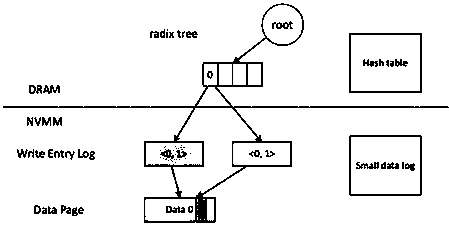
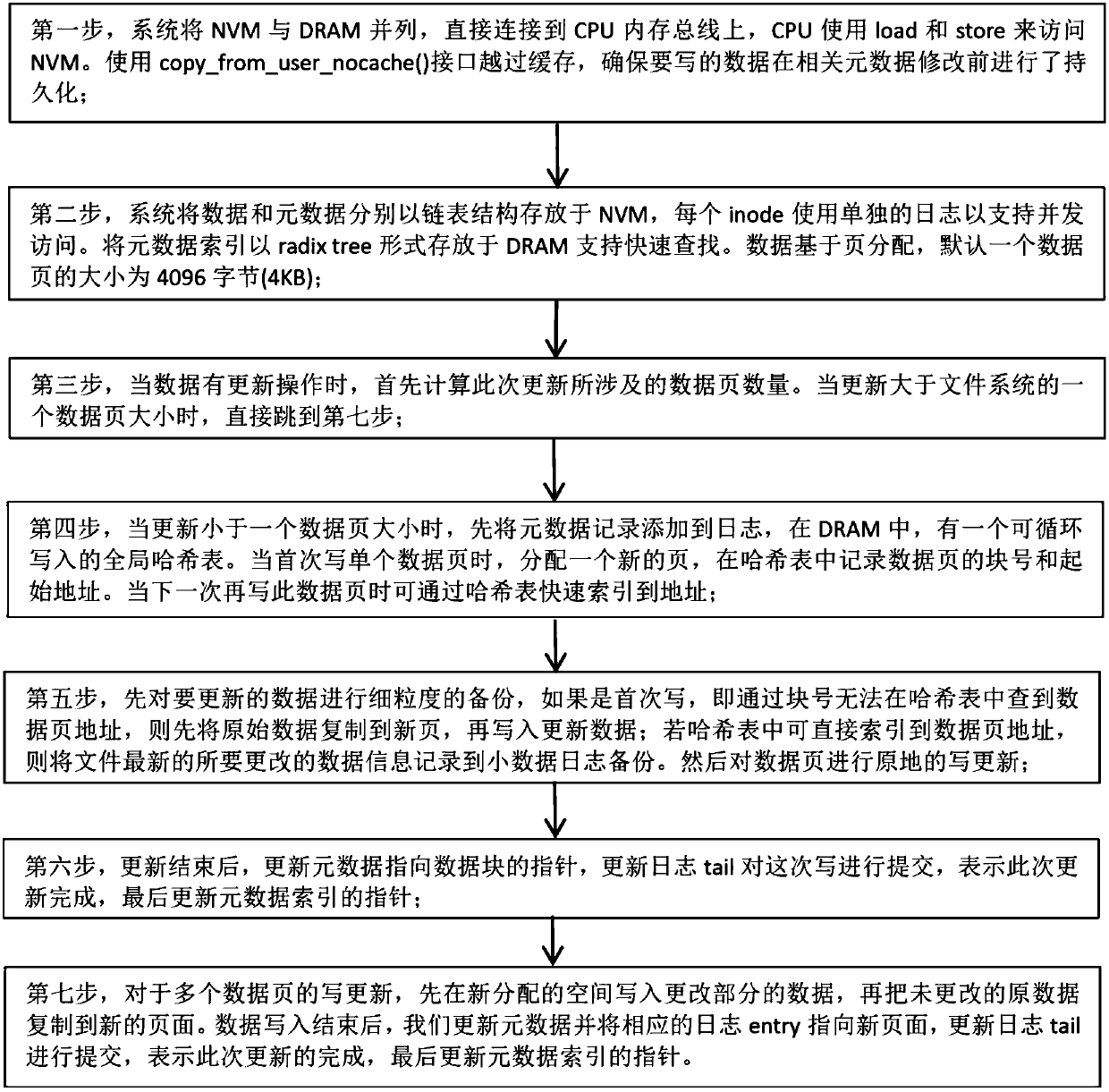
- Design a log file system based on non-volatile memory. By connecting NVM and DRAM to the CPU memory bus in parallel, using the global hash table and log structure to achieve in-place writing and fast indexing of small data updates, combined with radix tree index and Linked list structure ensures data consistency and performance.
Data Consistency and Reliability Standards
Data consistency and reliability represent fundamental pillars in filesystem design, particularly when integrating persistent memory technologies for journal optimization. The introduction of persistent memory creates new paradigms for maintaining data integrity while achieving enhanced performance characteristics. Traditional consistency models must be reevaluated to accommodate the unique properties of persistent memory, including byte-addressability and near-DRAM performance with storage-class persistence.
ACID properties remain essential in persistent memory-enhanced filesystems, yet their implementation requires sophisticated adaptation. Atomicity mechanisms must account for the granular write capabilities of persistent memory, ensuring that partial updates do not compromise system integrity. Consistency enforcement becomes more complex as the traditional storage hierarchy boundaries blur, necessitating new protocols for maintaining coherent state across volatile and persistent memory domains.
Durability guarantees in persistent memory environments demand careful consideration of write ordering and cache flush operations. The CPU cache hierarchy introduces potential inconsistencies that must be managed through explicit cache line flushing and memory barrier instructions. Modern processors provide specialized instructions like CLFLUSH, CLWB, and SFENCE to ensure proper ordering and persistence of data modifications.
Write-ahead logging protocols require substantial modifications when persistent memory serves as the journal medium. Traditional WAL implementations assume significant latency differences between memory and storage, but persistent memory eliminates this assumption. New consistency protocols must balance the benefits of reduced latency with the need for robust recovery mechanisms, often implementing hybrid approaches that leverage both volatile and persistent memory characteristics.
Crash recovery mechanisms must evolve to handle the unique failure modes associated with persistent memory systems. Unlike traditional storage devices, persistent memory may experience partial failures or inconsistent states that require sophisticated detection and correction algorithms. Recovery protocols must validate data integrity across memory regions while minimizing system downtime and ensuring complete restoration of consistent filesystem state.
Error detection and correction capabilities become increasingly critical as persistent memory technologies mature. Advanced ECC mechanisms, checksumming strategies, and redundancy schemes must be integrated seamlessly into filesystem operations. These reliability measures must operate transparently while maintaining the performance advantages that justify persistent memory adoption in journal optimization scenarios.
ACID properties remain essential in persistent memory-enhanced filesystems, yet their implementation requires sophisticated adaptation. Atomicity mechanisms must account for the granular write capabilities of persistent memory, ensuring that partial updates do not compromise system integrity. Consistency enforcement becomes more complex as the traditional storage hierarchy boundaries blur, necessitating new protocols for maintaining coherent state across volatile and persistent memory domains.
Durability guarantees in persistent memory environments demand careful consideration of write ordering and cache flush operations. The CPU cache hierarchy introduces potential inconsistencies that must be managed through explicit cache line flushing and memory barrier instructions. Modern processors provide specialized instructions like CLFLUSH, CLWB, and SFENCE to ensure proper ordering and persistence of data modifications.
Write-ahead logging protocols require substantial modifications when persistent memory serves as the journal medium. Traditional WAL implementations assume significant latency differences between memory and storage, but persistent memory eliminates this assumption. New consistency protocols must balance the benefits of reduced latency with the need for robust recovery mechanisms, often implementing hybrid approaches that leverage both volatile and persistent memory characteristics.
Crash recovery mechanisms must evolve to handle the unique failure modes associated with persistent memory systems. Unlike traditional storage devices, persistent memory may experience partial failures or inconsistent states that require sophisticated detection and correction algorithms. Recovery protocols must validate data integrity across memory regions while minimizing system downtime and ensuring complete restoration of consistent filesystem state.
Error detection and correction capabilities become increasingly critical as persistent memory technologies mature. Advanced ECC mechanisms, checksumming strategies, and redundancy schemes must be integrated seamlessly into filesystem operations. These reliability measures must operate transparently while maintaining the performance advantages that justify persistent memory adoption in journal optimization scenarios.
Performance Benchmarking and Evaluation Methodologies
Performance benchmarking and evaluation methodologies for persistent memory-enhanced filesystem journaling require comprehensive frameworks that address the unique characteristics of non-volatile memory technologies. Traditional storage benchmarking approaches prove insufficient when evaluating hybrid storage architectures that combine DRAM, persistent memory, and conventional storage devices.
Synthetic benchmarking tools such as FIO, IOzone, and custom microbenchmarks provide controlled environments for measuring journal write performance across different workload patterns. These tools enable precise measurement of latency, throughput, and IOPS under varying conditions including sequential writes, random writes, and mixed workloads. However, synthetic benchmarks must be carefully configured to reflect realistic journal access patterns rather than generic storage workloads.
Application-level benchmarking using database workloads, file server simulations, and enterprise applications offers more realistic performance insights. Tools like YCSB, TPC benchmarks, and filesystem-specific test suites such as Postmark and FileBench provide workload diversity that stresses journaling mechanisms under real-world conditions. These benchmarks reveal how persistent memory journaling improvements translate to actual application performance gains.
Evaluation methodologies must account for persistent memory's unique performance characteristics, including asymmetric read-write latencies, wear leveling effects, and power failure recovery scenarios. Specialized metrics beyond traditional storage measurements become essential, such as write amplification ratios, journal replay times, and consistency verification overhead.
Multi-dimensional analysis frameworks incorporating latency percentiles, tail latency distributions, and performance stability over time provide comprehensive evaluation coverage. Statistical significance testing and confidence interval analysis ensure benchmark results reliability, while power consumption and thermal characteristics evaluation addresses operational deployment considerations.
Cross-platform validation across different persistent memory technologies, filesystem implementations, and hardware configurations establishes benchmark result generalizability and identifies performance optimization opportunities specific to particular deployment scenarios.
Synthetic benchmarking tools such as FIO, IOzone, and custom microbenchmarks provide controlled environments for measuring journal write performance across different workload patterns. These tools enable precise measurement of latency, throughput, and IOPS under varying conditions including sequential writes, random writes, and mixed workloads. However, synthetic benchmarks must be carefully configured to reflect realistic journal access patterns rather than generic storage workloads.
Application-level benchmarking using database workloads, file server simulations, and enterprise applications offers more realistic performance insights. Tools like YCSB, TPC benchmarks, and filesystem-specific test suites such as Postmark and FileBench provide workload diversity that stresses journaling mechanisms under real-world conditions. These benchmarks reveal how persistent memory journaling improvements translate to actual application performance gains.
Evaluation methodologies must account for persistent memory's unique performance characteristics, including asymmetric read-write latencies, wear leveling effects, and power failure recovery scenarios. Specialized metrics beyond traditional storage measurements become essential, such as write amplification ratios, journal replay times, and consistency verification overhead.
Multi-dimensional analysis frameworks incorporating latency percentiles, tail latency distributions, and performance stability over time provide comprehensive evaluation coverage. Statistical significance testing and confidence interval analysis ensure benchmark results reliability, while power consumption and thermal characteristics evaluation addresses operational deployment considerations.
Cross-platform validation across different persistent memory technologies, filesystem implementations, and hardware configurations establishes benchmark result generalizability and identifies performance optimization opportunities specific to particular deployment scenarios.
Unlock deeper insights with PatSnap Eureka Quick Research — get a full tech report to explore trends and direct your research. Try now!
Generate Your Research Report Instantly with AI Agent
Supercharge your innovation with PatSnap Eureka AI Agent Platform!