Improving Memristor Based FPGA Functional Reliability
APR 17, 20269 MIN READ
Generate Your Research Report Instantly with AI Agent
PatSnap Eureka helps you evaluate technical feasibility & market potential.
Memristor FPGA Technology Background and Reliability Goals
Memristor-based Field Programmable Gate Arrays represent a revolutionary convergence of emerging non-volatile memory technology with reconfigurable computing architectures. This technology emerged from the theoretical foundation laid by Leon Chua in 1971, who postulated the existence of memristors as the fourth fundamental circuit element. The practical realization came decades later when HP Labs demonstrated the first working memristor device in 2008, opening new possibilities for neuromorphic computing and reconfigurable hardware systems.
The evolution of memristor FPGA technology has been driven by the inherent limitations of traditional SRAM-based FPGAs, particularly their volatility, high static power consumption, and limited scalability. Memristors offer compelling advantages including non-volatility, ultra-low power operation, high integration density, and the ability to perform both storage and computation functions within the same device. These characteristics make them particularly attractive for implementing reconfigurable logic blocks, routing switches, and configuration memory in FPGA architectures.
The development trajectory has progressed through several distinct phases, beginning with basic device characterization and moving toward complex circuit implementations. Early research focused on understanding fundamental switching mechanisms in various memristive materials including titanium dioxide, hafnium oxide, and organic compounds. Subsequently, efforts shifted toward developing reliable programming schemes, addressing variability issues, and creating hybrid architectures that leverage memristor advantages while mitigating their limitations.
Current reliability goals center on achieving deterministic switching behavior, minimizing device-to-device variations, and ensuring long-term operational stability under diverse environmental conditions. The primary objectives include establishing consistent resistance states with sufficient margin for reliable logic operations, achieving endurance cycles exceeding 10^12 operations, maintaining data retention for over 10 years at operating temperatures, and developing robust error correction mechanisms to handle inherent device variability.
The technology aims to enable instant-on functionality, dramatically reduced power consumption compared to conventional FPGAs, and support for adaptive computing applications that can dynamically reconfigure based on workload requirements. These ambitious goals require addressing fundamental challenges in materials science, device physics, circuit design, and system-level architecture optimization.
The evolution of memristor FPGA technology has been driven by the inherent limitations of traditional SRAM-based FPGAs, particularly their volatility, high static power consumption, and limited scalability. Memristors offer compelling advantages including non-volatility, ultra-low power operation, high integration density, and the ability to perform both storage and computation functions within the same device. These characteristics make them particularly attractive for implementing reconfigurable logic blocks, routing switches, and configuration memory in FPGA architectures.
The development trajectory has progressed through several distinct phases, beginning with basic device characterization and moving toward complex circuit implementations. Early research focused on understanding fundamental switching mechanisms in various memristive materials including titanium dioxide, hafnium oxide, and organic compounds. Subsequently, efforts shifted toward developing reliable programming schemes, addressing variability issues, and creating hybrid architectures that leverage memristor advantages while mitigating their limitations.
Current reliability goals center on achieving deterministic switching behavior, minimizing device-to-device variations, and ensuring long-term operational stability under diverse environmental conditions. The primary objectives include establishing consistent resistance states with sufficient margin for reliable logic operations, achieving endurance cycles exceeding 10^12 operations, maintaining data retention for over 10 years at operating temperatures, and developing robust error correction mechanisms to handle inherent device variability.
The technology aims to enable instant-on functionality, dramatically reduced power consumption compared to conventional FPGAs, and support for adaptive computing applications that can dynamically reconfigure based on workload requirements. These ambitious goals require addressing fundamental challenges in materials science, device physics, circuit design, and system-level architecture optimization.
Market Demand for Reliable Memristor-Based FPGA Solutions
The market demand for reliable memristor-based FPGA solutions is experiencing significant growth driven by the convergence of several technological and industrial trends. Traditional SRAM-based FPGAs face increasing limitations in power consumption, area efficiency, and non-volatility requirements, creating substantial market opportunities for memristor-enhanced alternatives that can address these fundamental challenges.
Data center and cloud computing infrastructure represent the largest demand segment for reliable memristor-based FPGA solutions. These environments require high-performance computing platforms that can maintain configuration states during power cycling while delivering superior energy efficiency. The growing adoption of artificial intelligence and machine learning workloads in cloud environments has intensified the need for reconfigurable hardware that combines the flexibility of FPGAs with the non-volatile characteristics of memristors.
Edge computing applications constitute another rapidly expanding market segment. Internet of Things devices, autonomous vehicles, and industrial automation systems require FPGA solutions that can operate reliably in harsh environments while maintaining low power consumption. Memristor-based FPGAs offer compelling advantages in these scenarios through their inherent non-volatility and reduced static power requirements, eliminating the need for external configuration memory and enabling instant-on functionality.
The aerospace and defense sectors demonstrate strong demand for radiation-hardened memristor-based FPGA solutions. These applications require exceptional reliability under extreme conditions, where traditional SRAM-based configurations are vulnerable to single-event upsets and radiation-induced failures. Memristor technology's inherent resistance to radiation effects positions it as a critical enabler for space-based systems and military applications.
Telecommunications infrastructure modernization, particularly the deployment of 5G networks and beyond, creates substantial market opportunities. Network equipment manufacturers seek FPGA solutions that can provide real-time reconfiguration capabilities while maintaining service continuity. Memristor-based FPGAs enable dynamic protocol adaptation and feature updates without service interruption, addressing critical reliability requirements in telecommunications infrastructure.
The automotive electronics market represents an emerging high-growth segment, driven by the increasing complexity of advanced driver assistance systems and autonomous driving technologies. These applications demand FPGA solutions that can guarantee functional safety while operating in temperature-variable and vibration-prone environments. Memristor-based FPGAs offer enhanced reliability through their solid-state nature and reduced susceptibility to mechanical stress compared to traditional volatile memory technologies.
Market adoption faces challenges related to manufacturing maturity and cost competitiveness. However, the compelling value proposition of improved reliability, reduced power consumption, and enhanced functionality continues to drive investment and development efforts across multiple industry verticals, establishing a strong foundation for sustained market growth.
Data center and cloud computing infrastructure represent the largest demand segment for reliable memristor-based FPGA solutions. These environments require high-performance computing platforms that can maintain configuration states during power cycling while delivering superior energy efficiency. The growing adoption of artificial intelligence and machine learning workloads in cloud environments has intensified the need for reconfigurable hardware that combines the flexibility of FPGAs with the non-volatile characteristics of memristors.
Edge computing applications constitute another rapidly expanding market segment. Internet of Things devices, autonomous vehicles, and industrial automation systems require FPGA solutions that can operate reliably in harsh environments while maintaining low power consumption. Memristor-based FPGAs offer compelling advantages in these scenarios through their inherent non-volatility and reduced static power requirements, eliminating the need for external configuration memory and enabling instant-on functionality.
The aerospace and defense sectors demonstrate strong demand for radiation-hardened memristor-based FPGA solutions. These applications require exceptional reliability under extreme conditions, where traditional SRAM-based configurations are vulnerable to single-event upsets and radiation-induced failures. Memristor technology's inherent resistance to radiation effects positions it as a critical enabler for space-based systems and military applications.
Telecommunications infrastructure modernization, particularly the deployment of 5G networks and beyond, creates substantial market opportunities. Network equipment manufacturers seek FPGA solutions that can provide real-time reconfiguration capabilities while maintaining service continuity. Memristor-based FPGAs enable dynamic protocol adaptation and feature updates without service interruption, addressing critical reliability requirements in telecommunications infrastructure.
The automotive electronics market represents an emerging high-growth segment, driven by the increasing complexity of advanced driver assistance systems and autonomous driving technologies. These applications demand FPGA solutions that can guarantee functional safety while operating in temperature-variable and vibration-prone environments. Memristor-based FPGAs offer enhanced reliability through their solid-state nature and reduced susceptibility to mechanical stress compared to traditional volatile memory technologies.
Market adoption faces challenges related to manufacturing maturity and cost competitiveness. However, the compelling value proposition of improved reliability, reduced power consumption, and enhanced functionality continues to drive investment and development efforts across multiple industry verticals, establishing a strong foundation for sustained market growth.
Current State and Challenges of Memristor FPGA Reliability
Memristor-based FPGAs represent a promising convergence of emerging non-volatile memory technology with reconfigurable computing architectures. Current implementations primarily utilize metal-oxide memristors, particularly titanium dioxide and hafnium oxide variants, integrated into traditional FPGA routing matrices and configuration memory blocks. Leading research institutions including Stanford University, MIT, and several industry players like Hewlett Packard Enterprise have demonstrated prototype systems achieving density improvements of 10-100x over conventional SRAM-based configurations.
The fundamental reliability challenges stem from the inherent variability in memristor switching behavior. Device-to-device variations in resistance states can reach 20-30% even within the same fabrication batch, significantly impacting the predictability of logic operations. Temporal drift represents another critical concern, where resistance values gradually shift over time due to ionic migration and structural relaxation, potentially causing configuration errors in long-running applications.
Endurance limitations pose substantial operational constraints, with most current memristor technologies supporting only 10^6 to 10^9 switching cycles before degradation becomes pronounced. This limitation is particularly problematic for dynamic reconfiguration scenarios where frequent reprogramming is required. Additionally, temperature sensitivity affects both switching thresholds and retention characteristics, with performance degradation observed at temperatures above 85°C.
Process variation and manufacturing defects introduce systematic reliability issues that compound device-level challenges. Current fabrication processes for memristor arrays exhibit higher defect densities compared to mature CMOS technologies, resulting in stuck-at faults and parametric failures that can render entire routing resources unusable.
Read disturb phenomena present unique challenges in memristor FPGA architectures, where unintended resistance changes occur during normal operation due to parasitic currents through unselected devices. This issue becomes more severe as array sizes increase, potentially causing spontaneous configuration changes that compromise system functionality.
Existing mitigation strategies include error correction coding, redundant routing architectures, and adaptive calibration schemes, but these approaches typically incur significant area and power overheads. The lack of standardized reliability testing methodologies and accelerated aging models further complicates the development of robust memristor FPGA systems for commercial deployment.
The fundamental reliability challenges stem from the inherent variability in memristor switching behavior. Device-to-device variations in resistance states can reach 20-30% even within the same fabrication batch, significantly impacting the predictability of logic operations. Temporal drift represents another critical concern, where resistance values gradually shift over time due to ionic migration and structural relaxation, potentially causing configuration errors in long-running applications.
Endurance limitations pose substantial operational constraints, with most current memristor technologies supporting only 10^6 to 10^9 switching cycles before degradation becomes pronounced. This limitation is particularly problematic for dynamic reconfiguration scenarios where frequent reprogramming is required. Additionally, temperature sensitivity affects both switching thresholds and retention characteristics, with performance degradation observed at temperatures above 85°C.
Process variation and manufacturing defects introduce systematic reliability issues that compound device-level challenges. Current fabrication processes for memristor arrays exhibit higher defect densities compared to mature CMOS technologies, resulting in stuck-at faults and parametric failures that can render entire routing resources unusable.
Read disturb phenomena present unique challenges in memristor FPGA architectures, where unintended resistance changes occur during normal operation due to parasitic currents through unselected devices. This issue becomes more severe as array sizes increase, potentially causing spontaneous configuration changes that compromise system functionality.
Existing mitigation strategies include error correction coding, redundant routing architectures, and adaptive calibration schemes, but these approaches typically incur significant area and power overheads. The lack of standardized reliability testing methodologies and accelerated aging models further complicates the development of robust memristor FPGA systems for commercial deployment.
Existing Solutions for Memristor FPGA Functional Reliability
01 Memristor-based reconfigurable logic circuits for FPGA
Memristors can be integrated into FPGA architectures to create reconfigurable logic circuits that enhance functional reliability. These circuits utilize the resistance switching properties of memristors to implement programmable logic functions with improved stability and reduced power consumption. The non-volatile nature of memristors allows for configuration retention without continuous power supply, thereby increasing system reliability.- Memristor-based reconfigurable logic circuits for FPGA: Memristors can be integrated into FPGA architectures to create reconfigurable logic circuits that enhance functional reliability. These circuits utilize the resistance switching properties of memristors to implement programmable logic functions with improved stability and reduced power consumption. The non-volatile nature of memristors allows for configuration retention without continuous power supply, contributing to overall system reliability.
- Fault tolerance and error correction mechanisms: Implementation of fault tolerance techniques specifically designed for memristor-based FPGA systems to improve functional reliability. These mechanisms include redundancy schemes, error detection and correction algorithms, and self-healing architectures that can compensate for memristor variability and degradation over time. Such approaches ensure continued operation even when individual memristor elements fail or drift from their intended resistance states.
- Testing and verification methodologies for memristor FPGA: Specialized testing and verification approaches developed to assess the functional reliability of memristor-based FPGA implementations. These methodologies encompass built-in self-test circuits, reliability assessment algorithms, and characterization techniques that evaluate memristor switching behavior, endurance, and retention properties. Such testing frameworks enable early detection of potential reliability issues during design and manufacturing phases.
- Hybrid memristor-CMOS FPGA architectures: Development of hybrid architectures that combine traditional CMOS technology with memristor elements to optimize FPGA functional reliability. These designs leverage the strengths of both technologies, using CMOS for critical control and timing functions while employing memristors for configuration storage and routing. The hybrid approach balances performance, reliability, and power efficiency while mitigating the limitations of pure memristor implementations.
- Reliability modeling and lifetime prediction: Mathematical models and simulation frameworks for predicting the long-term reliability and lifetime of memristor-based FPGA systems. These models account for various degradation mechanisms including resistance drift, cycling endurance limitations, and environmental stress factors. Predictive modeling enables designers to optimize circuit parameters and operating conditions to maximize functional reliability throughout the expected product lifetime.
02 Fault tolerance and error correction mechanisms
Implementation of fault tolerance techniques and error correction mechanisms in memristor-based FPGA systems to improve functional reliability. These approaches include redundancy schemes, error detection and correction codes, and self-healing architectures that can detect and compensate for memristor device variations and failures. Such mechanisms ensure continued operation even when individual memristor elements experience degradation or malfunction.Expand Specific Solutions03 Testing and verification methodologies for memristor FPGA
Development of specialized testing and verification methodologies to ensure the functional reliability of memristor-based FPGA systems. These methodologies include built-in self-test circuits, online monitoring techniques, and characterization methods that assess memristor performance parameters such as switching speed, endurance, and retention. Comprehensive testing approaches help identify potential reliability issues during manufacturing and operation.Expand Specific Solutions04 Memristor device optimization and material engineering
Optimization of memristor device structures and materials to enhance reliability in FPGA applications. This includes selection of appropriate switching materials, electrode configurations, and fabrication processes that minimize device-to-device variations and improve long-term stability. Advanced material engineering techniques focus on reducing defects and controlling switching mechanisms to achieve consistent and reliable operation across large arrays.Expand Specific Solutions05 Hybrid architectures combining memristors with conventional FPGA elements
Design of hybrid architectures that combine memristor-based components with traditional CMOS-based FPGA elements to balance performance and reliability. These architectures leverage the advantages of both technologies, using memristors for non-volatile configuration storage and high-density integration while relying on conventional circuits for critical control functions. The hybrid approach provides enhanced functional reliability by distributing tasks according to the strengths of each technology.Expand Specific Solutions
Key Players in Memristor FPGA and Reliability Solutions Industry
The memristor-based FPGA functional reliability sector represents an emerging technology domain in the early development stage, characterized by significant research activity but limited commercial deployment. The market remains nascent with substantial growth potential as memristive devices offer advantages in non-volatility and reconfigurability over traditional SRAM-based FPGAs. Technology maturity varies significantly across players, with established semiconductor companies like Samsung Electronics, Fujitsu, and Renesas Electronics leveraging their manufacturing expertise to advance memristor integration, while specialized FPGA developers such as Gowin Semiconductor and Xi'an Intelligence Silicon Technology focus on programmable logic innovations. Academic institutions including Huazhong University of Science & Technology, University of Electronic Science & Technology of China, and Peking University drive fundamental research in memristive device physics and reliability mechanisms. The competitive landscape shows a convergence of traditional semiconductor manufacturers, emerging FPGA specialists, and research institutions working to overcome technical challenges in device variability, endurance, and integration complexity that currently limit widespread commercial adoption.
Fujitsu Ltd.
Technical Solution: Fujitsu has developed ReRAM-based FPGA architectures with focus on improving endurance and retention characteristics through novel switching mechanisms and optimized programming algorithms. Their solution incorporates adaptive programming voltage control and multi-level cell management to extend device lifetime. The company has implemented comprehensive testing methodologies and built-in self-test capabilities to ensure reliable operation in harsh environments, particularly for automotive and industrial applications.
Strengths: Proven track record in memory technologies and strong focus on automotive applications. Weaknesses: Limited scalability to advanced process nodes and relatively slower switching speeds.
Samsung Electronics Co., Ltd.
Technical Solution: Samsung has developed advanced memristor-based FPGA architectures with integrated error correction mechanisms and adaptive voltage scaling techniques. Their approach focuses on hybrid CMOS-memristor designs that utilize redundant memristor arrays to compensate for device variability and aging effects. The company implements dynamic reconfiguration algorithms that can detect and isolate faulty memristor cells while redistributing functionality to healthy cells, ensuring continuous operation and improved functional reliability.
Strengths: Strong manufacturing capabilities and extensive experience in memory technologies. Weaknesses: High development costs and complex integration challenges with existing FPGA architectures.
Core Innovations in Memristor FPGA Reliability Technologies
Field programmable gate array (FPGA) for improving reliability of key configuration bitstream by reusing buffer memory
PatentActiveUS20220114052A1
Innovation
- An FPGA design that reuses a buffer memory with an error correcting code (ECC) check function, where configuration bitstreams are written in units of configuration chains, with a key configuration chain stored in a configuration buffer and periodically updated, ensuring accurate content storage and correction.


Field Programmable Gate Array
PatentActiveUS20180113757A1
Innovation
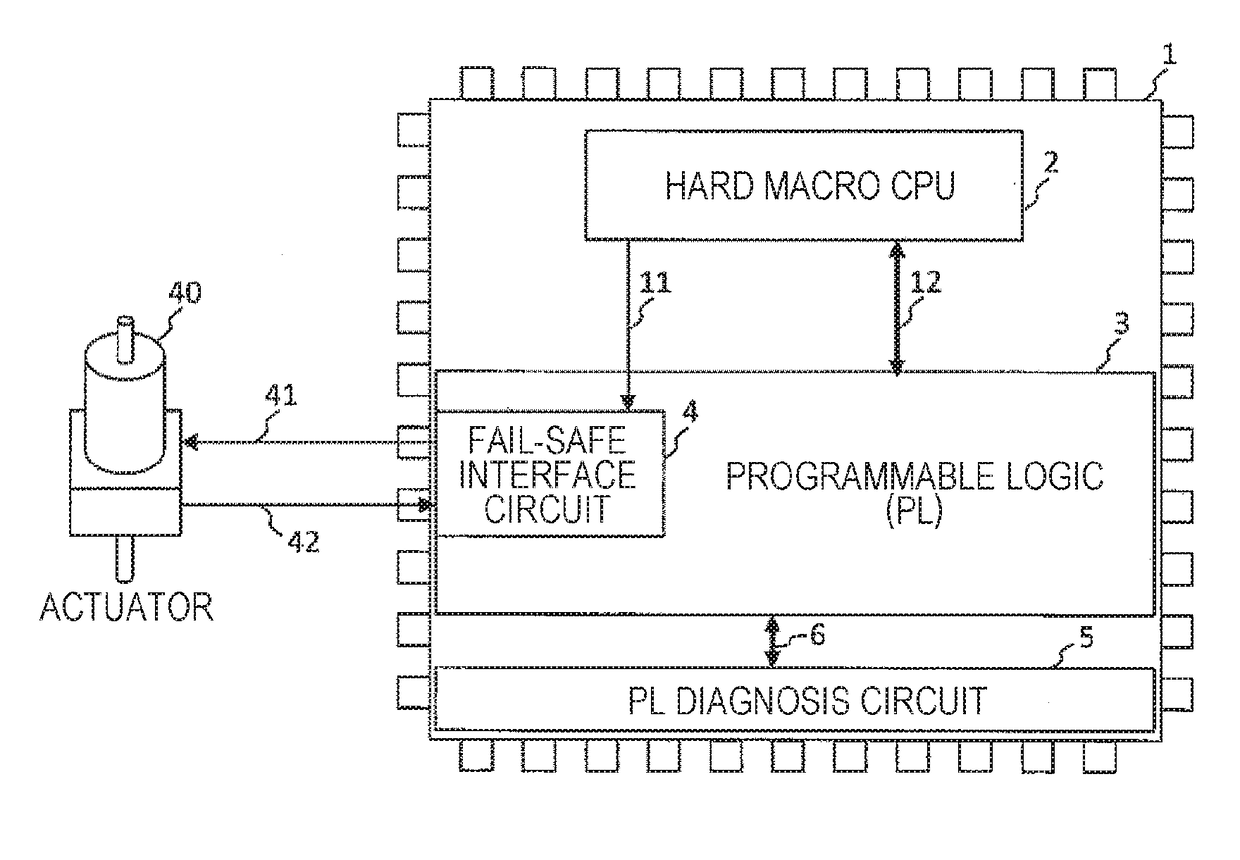
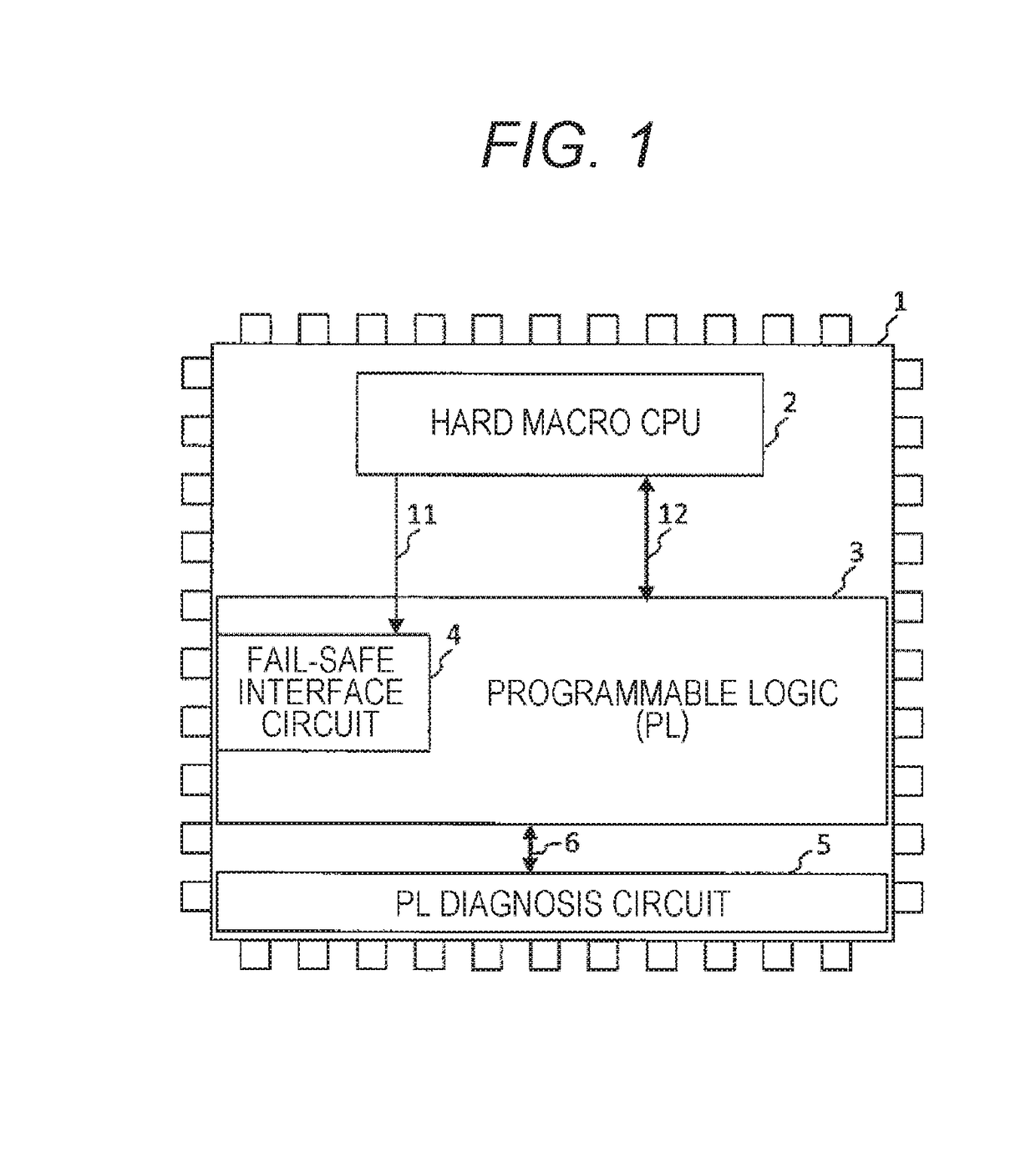
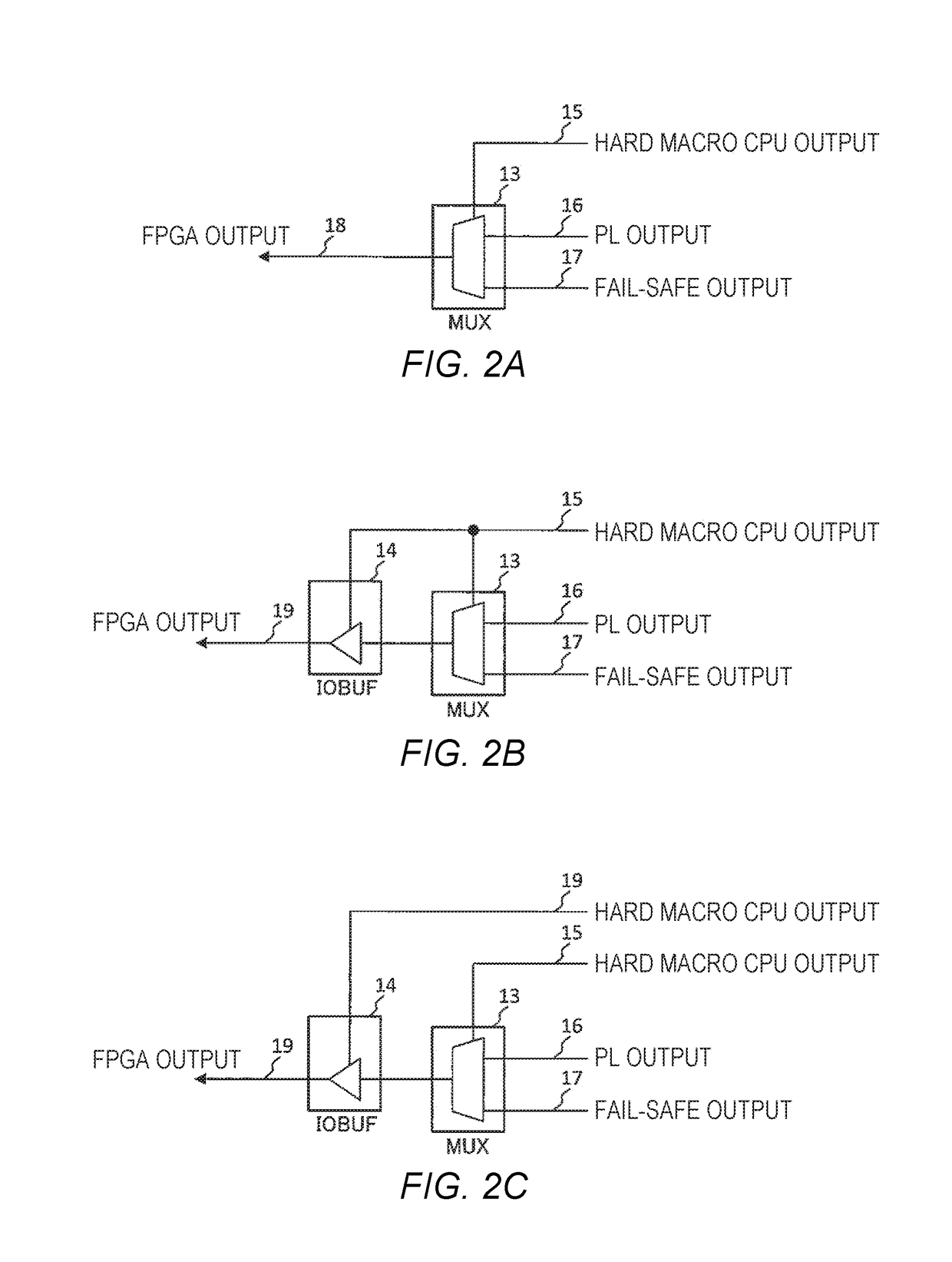
- Incorporating a hard macro CPU with a fixed circuit structure, a programmable logic section, a diagnosis circuit, and a fail-safe interface circuit that outputs a fail-safe signal to prevent inappropriate values from being sent outside when errors are detected, ensuring system safety.

Fault Tolerance and Error Correction Mechanisms
Memristor-based FPGAs face unique reliability challenges due to the inherent variability and degradation characteristics of memristive devices. Fault tolerance mechanisms must address both transient errors caused by environmental factors and permanent faults resulting from device wear-out or manufacturing defects. The stochastic nature of memristor switching behavior necessitates sophisticated error detection and correction strategies that go beyond traditional semiconductor fault tolerance approaches.
Error correction mechanisms for memristor-based FPGAs typically employ multi-level redundancy schemes. Triple Modular Redundancy (TMR) represents the most common approach, where critical circuit blocks are replicated three times with majority voting to mask single-point failures. However, the area overhead of TMR can be prohibitive for resource-constrained applications. Alternative approaches include Error Correcting Codes (ECC) integrated at the configuration memory level, which can detect and correct single-bit errors while requiring significantly less hardware overhead than full TMR implementation.
Advanced fault tolerance strategies leverage the unique properties of memristors to implement self-healing circuits. These mechanisms utilize the programmable nature of memristive devices to dynamically reconfigure around failed components. Adaptive routing algorithms can redirect signal paths when memristor-based switches exhibit degraded performance, effectively extending the operational lifetime of the FPGA fabric. Machine learning-based predictive maintenance algorithms analyze device behavior patterns to anticipate failures before they occur.
Hybrid error correction approaches combine hardware redundancy with software-based fault detection. Real-time monitoring circuits continuously assess the health of memristive elements by measuring resistance drift and switching characteristics. When anomalies are detected, the system can trigger reconfiguration procedures to isolate faulty regions and redistribute functionality to healthy areas of the FPGA fabric.
The implementation of fault tolerance mechanisms must balance reliability improvements against performance penalties and area overhead. Selective protection strategies focus error correction resources on the most critical circuit components while accepting higher error rates in less sensitive areas. This approach optimizes the trade-off between fault tolerance capability and system efficiency, making memristor-based FPGAs viable for applications with stringent reliability requirements while maintaining competitive performance characteristics.
Error correction mechanisms for memristor-based FPGAs typically employ multi-level redundancy schemes. Triple Modular Redundancy (TMR) represents the most common approach, where critical circuit blocks are replicated three times with majority voting to mask single-point failures. However, the area overhead of TMR can be prohibitive for resource-constrained applications. Alternative approaches include Error Correcting Codes (ECC) integrated at the configuration memory level, which can detect and correct single-bit errors while requiring significantly less hardware overhead than full TMR implementation.
Advanced fault tolerance strategies leverage the unique properties of memristors to implement self-healing circuits. These mechanisms utilize the programmable nature of memristive devices to dynamically reconfigure around failed components. Adaptive routing algorithms can redirect signal paths when memristor-based switches exhibit degraded performance, effectively extending the operational lifetime of the FPGA fabric. Machine learning-based predictive maintenance algorithms analyze device behavior patterns to anticipate failures before they occur.
Hybrid error correction approaches combine hardware redundancy with software-based fault detection. Real-time monitoring circuits continuously assess the health of memristive elements by measuring resistance drift and switching characteristics. When anomalies are detected, the system can trigger reconfiguration procedures to isolate faulty regions and redistribute functionality to healthy areas of the FPGA fabric.
The implementation of fault tolerance mechanisms must balance reliability improvements against performance penalties and area overhead. Selective protection strategies focus error correction resources on the most critical circuit components while accepting higher error rates in less sensitive areas. This approach optimizes the trade-off between fault tolerance capability and system efficiency, making memristor-based FPGAs viable for applications with stringent reliability requirements while maintaining competitive performance characteristics.
Aging and Degradation Mitigation Strategies
Memristor-based FPGAs face significant aging and degradation challenges that directly impact their long-term functional reliability. The primary degradation mechanisms include resistance drift, endurance limitations, and temperature-induced variations that progressively degrade device performance over operational lifetime. These phenomena manifest as gradual shifts in switching thresholds, increased programming voltages, and reduced retention characteristics.
Proactive aging mitigation strategies focus on adaptive programming techniques that dynamically adjust operating parameters based on device aging state. Wear leveling algorithms distribute write operations across memristor arrays to prevent localized degradation hotspots. These algorithms monitor usage patterns and redirect programming operations to less-utilized devices, effectively extending overall array lifetime by balancing stress distribution.
Temperature management represents a critical mitigation approach, as elevated temperatures accelerate ionic migration and structural changes within memristor devices. Advanced thermal management systems incorporate real-time temperature monitoring with dynamic voltage scaling to maintain optimal operating conditions. Predictive thermal models enable preemptive adjustments to programming sequences, reducing thermal stress during high-activity periods.
Error correction and redundancy strategies provide robust defense against aging-induced failures. Adaptive error correction codes adjust protection levels based on observed error rates, while spare element allocation enables graceful degradation through dynamic remapping of failed components. These techniques maintain functional integrity even as individual devices approach end-of-life conditions.
Refresh and rejuvenation techniques offer promising approaches for reversing certain aging effects. Periodic low-voltage refresh cycles can restore memristor characteristics by redistributing ionic species and reducing resistance drift. Advanced rejuvenation protocols apply controlled stress patterns to partially reverse structural degradation, effectively extending device operational lifetime.
Machine learning-based predictive maintenance algorithms analyze degradation patterns to forecast failure events and optimize mitigation timing. These systems learn from historical performance data to identify early aging indicators and trigger appropriate countermeasures before critical failures occur, ensuring sustained FPGA functionality throughout extended operational periods.
Proactive aging mitigation strategies focus on adaptive programming techniques that dynamically adjust operating parameters based on device aging state. Wear leveling algorithms distribute write operations across memristor arrays to prevent localized degradation hotspots. These algorithms monitor usage patterns and redirect programming operations to less-utilized devices, effectively extending overall array lifetime by balancing stress distribution.
Temperature management represents a critical mitigation approach, as elevated temperatures accelerate ionic migration and structural changes within memristor devices. Advanced thermal management systems incorporate real-time temperature monitoring with dynamic voltage scaling to maintain optimal operating conditions. Predictive thermal models enable preemptive adjustments to programming sequences, reducing thermal stress during high-activity periods.
Error correction and redundancy strategies provide robust defense against aging-induced failures. Adaptive error correction codes adjust protection levels based on observed error rates, while spare element allocation enables graceful degradation through dynamic remapping of failed components. These techniques maintain functional integrity even as individual devices approach end-of-life conditions.
Refresh and rejuvenation techniques offer promising approaches for reversing certain aging effects. Periodic low-voltage refresh cycles can restore memristor characteristics by redistributing ionic species and reducing resistance drift. Advanced rejuvenation protocols apply controlled stress patterns to partially reverse structural degradation, effectively extending device operational lifetime.
Machine learning-based predictive maintenance algorithms analyze degradation patterns to forecast failure events and optimize mitigation timing. These systems learn from historical performance data to identify early aging indicators and trigger appropriate countermeasures before critical failures occur, ensuring sustained FPGA functionality throughout extended operational periods.
Unlock deeper insights with PatSnap Eureka Quick Research — get a full tech report to explore trends and direct your research. Try now!
Generate Your Research Report Instantly with AI Agent
Supercharge your innovation with PatSnap Eureka AI Agent Platform!