

Iron-Air Cell Architecture for Monitored Application
APR 27, 20269 MIN READ
Generate Your Research Report Instantly with AI Agent
PatSnap Eureka helps you evaluate technical feasibility & market potential.
Iron-Air Battery Technology Background and Development Goals
Iron-air battery technology represents a revolutionary approach to large-scale energy storage, leveraging the abundant availability of iron and oxygen from ambient air to create cost-effective, long-duration storage solutions. This electrochemical system operates through the reversible oxidation and reduction of iron, where metallic iron is oxidized to iron oxide during discharge and reduced back to metallic iron during charging. The technology has gained significant momentum as industries seek sustainable alternatives to lithium-ion batteries for grid-scale applications.
The historical development of iron-air batteries traces back to the early 20th century, with initial concepts emerging in the 1970s during the first energy crisis. However, practical implementation faced substantial challenges related to cycle life, efficiency, and system complexity. Recent technological breakthroughs in materials science, particularly in electrolyte formulations and electrode design, have revitalized interest in this technology. The past decade has witnessed accelerated research efforts focusing on overcoming traditional limitations such as hydrogen evolution, electrolyte management, and iron electrode morphology changes.
Current technological evolution demonstrates a clear trajectory toward commercial viability, with several key milestones achieved in recent years. Advanced iron electrode architectures now incorporate sophisticated porous structures and protective coatings to minimize parasitic reactions. Electrolyte systems have evolved from simple alkaline solutions to complex formulations incorporating additives that suppress hydrogen generation and enhance iron utilization efficiency. These developments have significantly improved round-trip efficiency from historical levels of 40-50% to current achievements exceeding 65%.
The primary development goals for iron-air battery technology center on achieving commercial competitiveness through enhanced performance metrics and reduced system costs. Target specifications include extending cycle life beyond 10,000 cycles, improving round-trip efficiency to 70-75%, and reducing levelized cost of storage below $20/MWh. Additionally, system integration objectives focus on developing modular architectures suitable for various deployment scales, from residential applications to utility-scale installations.
Monitored application requirements introduce specific technical objectives related to real-time performance tracking and predictive maintenance capabilities. These goals encompass developing integrated sensor networks for monitoring electrolyte conditions, iron electrode state-of-health, and thermal management parameters. Advanced battery management systems must provide comprehensive data analytics for optimizing charging protocols and predicting maintenance intervals, ensuring reliable operation in critical infrastructure applications where continuous monitoring and high availability are paramount.
The historical development of iron-air batteries traces back to the early 20th century, with initial concepts emerging in the 1970s during the first energy crisis. However, practical implementation faced substantial challenges related to cycle life, efficiency, and system complexity. Recent technological breakthroughs in materials science, particularly in electrolyte formulations and electrode design, have revitalized interest in this technology. The past decade has witnessed accelerated research efforts focusing on overcoming traditional limitations such as hydrogen evolution, electrolyte management, and iron electrode morphology changes.
Current technological evolution demonstrates a clear trajectory toward commercial viability, with several key milestones achieved in recent years. Advanced iron electrode architectures now incorporate sophisticated porous structures and protective coatings to minimize parasitic reactions. Electrolyte systems have evolved from simple alkaline solutions to complex formulations incorporating additives that suppress hydrogen generation and enhance iron utilization efficiency. These developments have significantly improved round-trip efficiency from historical levels of 40-50% to current achievements exceeding 65%.
The primary development goals for iron-air battery technology center on achieving commercial competitiveness through enhanced performance metrics and reduced system costs. Target specifications include extending cycle life beyond 10,000 cycles, improving round-trip efficiency to 70-75%, and reducing levelized cost of storage below $20/MWh. Additionally, system integration objectives focus on developing modular architectures suitable for various deployment scales, from residential applications to utility-scale installations.
Monitored application requirements introduce specific technical objectives related to real-time performance tracking and predictive maintenance capabilities. These goals encompass developing integrated sensor networks for monitoring electrolyte conditions, iron electrode state-of-health, and thermal management parameters. Advanced battery management systems must provide comprehensive data analytics for optimizing charging protocols and predicting maintenance intervals, ensuring reliable operation in critical infrastructure applications where continuous monitoring and high availability are paramount.
Market Demand Analysis for Long-Duration Energy Storage
The global energy storage market is experiencing unprecedented growth driven by the accelerating transition to renewable energy sources and the critical need for grid stability solutions. Long-duration energy storage systems, particularly those capable of storing energy for 8-24 hours or longer, represent a rapidly expanding segment within this broader market landscape. Traditional lithium-ion batteries, while dominant in short-duration applications, face economic and technical limitations for extended storage periods, creating substantial market opportunities for alternative technologies.
Renewable energy integration challenges are driving significant demand for long-duration storage solutions. As wind and solar installations continue to expand globally, grid operators face increasing difficulties managing intermittency and maintaining reliable power supply. The seasonal and daily variability of renewable generation creates extended periods where energy must be stored and later discharged, making long-duration storage technologies essential infrastructure components rather than optional enhancements.
Industrial and commercial sectors are emerging as key demand drivers for monitored long-duration energy storage applications. Manufacturing facilities, data centers, and critical infrastructure operators require reliable backup power systems that can operate for extended periods during grid outages. These applications demand sophisticated monitoring capabilities to ensure system reliability and optimize performance, creating specific market niches for advanced iron-air cell architectures with integrated monitoring systems.
Utility-scale energy storage deployment is accelerating as regulatory frameworks increasingly mandate renewable energy targets and grid reliability standards. Many jurisdictions are implementing energy storage procurement programs and providing financial incentives for long-duration storage projects. This regulatory support is creating predictable revenue streams for storage operators and encouraging investment in innovative technologies that can deliver cost-effective long-duration storage solutions.
The economic case for long-duration energy storage continues to strengthen as renewable energy costs decline and grid services markets mature. Energy arbitrage opportunities, capacity payments, and ancillary services revenue streams are making extended storage duration increasingly profitable. Iron-air cell technologies, with their potential for low-cost materials and long cycle life, are well-positioned to capture value in these emerging market segments where monitoring and reliability are paramount considerations.
Renewable energy integration challenges are driving significant demand for long-duration storage solutions. As wind and solar installations continue to expand globally, grid operators face increasing difficulties managing intermittency and maintaining reliable power supply. The seasonal and daily variability of renewable generation creates extended periods where energy must be stored and later discharged, making long-duration storage technologies essential infrastructure components rather than optional enhancements.
Industrial and commercial sectors are emerging as key demand drivers for monitored long-duration energy storage applications. Manufacturing facilities, data centers, and critical infrastructure operators require reliable backup power systems that can operate for extended periods during grid outages. These applications demand sophisticated monitoring capabilities to ensure system reliability and optimize performance, creating specific market niches for advanced iron-air cell architectures with integrated monitoring systems.
Utility-scale energy storage deployment is accelerating as regulatory frameworks increasingly mandate renewable energy targets and grid reliability standards. Many jurisdictions are implementing energy storage procurement programs and providing financial incentives for long-duration storage projects. This regulatory support is creating predictable revenue streams for storage operators and encouraging investment in innovative technologies that can deliver cost-effective long-duration storage solutions.
The economic case for long-duration energy storage continues to strengthen as renewable energy costs decline and grid services markets mature. Energy arbitrage opportunities, capacity payments, and ancillary services revenue streams are making extended storage duration increasingly profitable. Iron-air cell technologies, with their potential for low-cost materials and long cycle life, are well-positioned to capture value in these emerging market segments where monitoring and reliability are paramount considerations.
Current Status and Challenges of Iron-Air Cell Technology
Iron-air cell technology has emerged as a promising solution for long-duration energy storage applications, particularly in monitored systems where real-time performance tracking is essential. Currently, the technology demonstrates significant potential with theoretical energy densities reaching 1,300 Wh/kg, substantially higher than conventional lithium-ion batteries. Several companies including Form Energy, ESS Inc., and Aquion Energy have developed commercial prototypes, with Form Energy leading the charge through their 100-hour discharge duration systems designed for grid-scale applications.
The fundamental architecture of iron-air cells relies on the reversible oxidation and reduction of iron, utilizing ambient air as the cathode reactant. During discharge, iron undergoes oxidation to form iron oxide (rust), while oxygen from air is reduced at the air cathode. The reverse process occurs during charging, converting iron oxide back to metallic iron. This electrochemical process operates in alkaline electrolyte solutions, typically potassium hydroxide, which facilitates ion transport between electrodes.
Despite promising developments, iron-air cell technology faces several critical challenges that limit widespread adoption. The primary technical obstacle involves managing the volumetric expansion and contraction of iron electrodes during charge-discharge cycles. This mechanical stress leads to electrode degradation, reduced cycle life, and compromised structural integrity. Current systems typically achieve only 1,000-3,000 cycles, significantly lower than the 6,000+ cycles required for commercial viability in monitored applications.
Corrosion management presents another substantial challenge, as the iron electrodes are inherently susceptible to parasitic reactions with the alkaline electrolyte. This results in hydrogen gas evolution, electrolyte consumption, and gradual capacity fade. Advanced electrode formulations incorporating carbon additives and protective coatings have shown promise but require further optimization for long-term stability.
The air cathode design poses additional complexities, particularly in maintaining consistent oxygen access while preventing electrolyte evaporation and carbonation from atmospheric CO2. Bifunctional air electrodes must efficiently catalyze both oxygen reduction and evolution reactions, requiring sophisticated catalyst materials that remain stable under alkaline conditions.
For monitored applications, integration challenges include developing robust sensing systems capable of tracking cell state-of-charge, temperature variations, and electrolyte conditions in real-time. The inherently slow kinetics of iron-air cells, while advantageous for long-duration storage, complicate accurate state estimation and require advanced battery management systems specifically designed for this chemistry.
Manufacturing scalability remains a significant hurdle, as current production methods for iron electrodes and air cathodes are not yet optimized for large-scale, cost-effective manufacturing. The technology requires substantial capital investment in specialized production facilities and quality control systems to ensure consistent performance across monitored deployment scenarios.
The fundamental architecture of iron-air cells relies on the reversible oxidation and reduction of iron, utilizing ambient air as the cathode reactant. During discharge, iron undergoes oxidation to form iron oxide (rust), while oxygen from air is reduced at the air cathode. The reverse process occurs during charging, converting iron oxide back to metallic iron. This electrochemical process operates in alkaline electrolyte solutions, typically potassium hydroxide, which facilitates ion transport between electrodes.
Despite promising developments, iron-air cell technology faces several critical challenges that limit widespread adoption. The primary technical obstacle involves managing the volumetric expansion and contraction of iron electrodes during charge-discharge cycles. This mechanical stress leads to electrode degradation, reduced cycle life, and compromised structural integrity. Current systems typically achieve only 1,000-3,000 cycles, significantly lower than the 6,000+ cycles required for commercial viability in monitored applications.
Corrosion management presents another substantial challenge, as the iron electrodes are inherently susceptible to parasitic reactions with the alkaline electrolyte. This results in hydrogen gas evolution, electrolyte consumption, and gradual capacity fade. Advanced electrode formulations incorporating carbon additives and protective coatings have shown promise but require further optimization for long-term stability.
The air cathode design poses additional complexities, particularly in maintaining consistent oxygen access while preventing electrolyte evaporation and carbonation from atmospheric CO2. Bifunctional air electrodes must efficiently catalyze both oxygen reduction and evolution reactions, requiring sophisticated catalyst materials that remain stable under alkaline conditions.
For monitored applications, integration challenges include developing robust sensing systems capable of tracking cell state-of-charge, temperature variations, and electrolyte conditions in real-time. The inherently slow kinetics of iron-air cells, while advantageous for long-duration storage, complicate accurate state estimation and require advanced battery management systems specifically designed for this chemistry.
Manufacturing scalability remains a significant hurdle, as current production methods for iron electrodes and air cathodes are not yet optimized for large-scale, cost-effective manufacturing. The technology requires substantial capital investment in specialized production facilities and quality control systems to ensure consistent performance across monitored deployment scenarios.
Current Iron-Air Cell Architecture Solutions
01 Iron electrode design and composition
Iron-air cells utilize iron-based electrodes with specific compositions and structures to optimize electrochemical performance. The iron electrode design focuses on maximizing surface area, controlling porosity, and incorporating additives to enhance conductivity and prevent corrosion. Various iron alloys and composite materials are employed to improve the electrode's durability and efficiency during charge-discharge cycles.- Iron electrode design and composition: Iron-air cells utilize iron-based electrodes with specific compositions and structures to optimize electrochemical performance. The iron electrode design focuses on maximizing surface area, controlling porosity, and incorporating additives to enhance conductivity and prevent corrosion. Various iron alloys and composite materials are employed to improve the electrode's durability and efficiency during charge-discharge cycles.
- Air cathode architecture and oxygen management: The air cathode in iron-air cells is designed to facilitate efficient oxygen reduction and evolution reactions. This involves specialized catalyst layers, gas diffusion structures, and membrane configurations that allow controlled air access while preventing electrolyte evaporation. The architecture includes provisions for oxygen flow management and water vapor control to maintain optimal operating conditions.
- Electrolyte systems and ionic conductivity: Iron-air cells employ various electrolyte formulations to facilitate ion transport between electrodes while maintaining chemical stability. The electrolyte system design considers factors such as ionic conductivity, pH stability, and compatibility with iron and air electrodes. Advanced electrolyte architectures may include gel-based systems, solid-state conductors, or hybrid configurations to optimize performance and prevent leakage.
- Cell housing and structural integration: The physical architecture of iron-air cells encompasses housing designs, sealing mechanisms, and structural components that maintain cell integrity while allowing air access. This includes considerations for thermal management, mechanical stability, and modular configurations for scaling applications. The housing design must balance protection of internal components with the need for air circulation and maintenance accessibility.
- Battery management and control systems: Iron-air cell architectures incorporate sophisticated monitoring and control systems to optimize performance and ensure safe operation. These systems manage charging protocols, monitor cell health parameters, and control environmental conditions such as humidity and temperature. Advanced architectures include smart grid integration capabilities, remote monitoring features, and automated maintenance scheduling to maximize operational efficiency and lifespan.
02 Air cathode architecture and oxygen management
The air cathode system is designed to facilitate efficient oxygen reduction and evolution reactions. This includes specialized gas diffusion layers, catalyst integration, and air flow management systems. The architecture ensures optimal oxygen access while preventing electrolyte evaporation and maintaining proper humidity levels for sustained cell operation.Expand Specific Solutions03 Electrolyte systems and ionic conductivity
Iron-air cells employ various electrolyte formulations including alkaline, neutral, and solid-state systems. The electrolyte design focuses on maintaining high ionic conductivity, preventing iron electrode passivation, and ensuring long-term stability. Advanced electrolyte management includes circulation systems and additives to enhance performance and cycle life.Expand Specific Solutions04 Cell stack configuration and thermal management
The overall cell architecture includes stack design for scalable energy storage applications. This encompasses cell interconnection methods, thermal management systems, and mechanical support structures. The configuration optimizes space utilization while ensuring uniform current distribution and effective heat dissipation throughout the battery system.Expand Specific Solutions05 Separator technology and cell sealing
Advanced separator materials and sealing technologies prevent cross-contamination between electrodes while maintaining ionic transport. The separator design addresses issues such as iron dendrite formation, gas crossover, and electrolyte leakage. Innovative sealing methods ensure long-term reliability and safety of the iron-air cell system.Expand Specific Solutions
Major Players in Iron-Air Battery Industry
The iron-air cell architecture for monitored applications represents an emerging sector within the long-duration energy storage market, currently in early commercialization stages with significant growth potential driven by renewable energy integration demands. The market demonstrates substantial scale opportunities, particularly in grid-scale applications, as evidenced by involvement from major automotive manufacturers like Toyota Motor Corp., Hyundai Motor Co., and Kia Corp., alongside energy infrastructure leaders such as State Grid Corp. of China. Technology maturity varies significantly across players, with established companies like IBM and Agilent Technologies contributing advanced monitoring and analytical capabilities, while specialized firms like e-Zinc Inc. focus on metal-air battery innovations. Research institutions including University of Rochester and Wuhan University of Technology are advancing fundamental technologies, indicating the field's developmental nature. The competitive landscape spans traditional automotive, energy infrastructure, and technology sectors, suggesting broad industrial recognition of iron-air systems' potential for scalable, cost-effective energy storage solutions.
Toyota Motor Corp.
Technical Solution: Toyota has been developing iron-air battery technology as part of their next-generation energy storage portfolio for automotive and stationary applications. Their approach focuses on creating a robust cell architecture that can withstand harsh operating conditions while maintaining consistent performance monitoring. The system uses iron electrodes with specialized air cathodes and incorporates Toyota's proprietary battery management system for comprehensive cell monitoring. Their design emphasizes thermal management and includes multiple sensor arrays to monitor individual cell performance, electrolyte levels, and system health indicators for both automotive and grid storage applications.
Strengths: Automotive-grade reliability, advanced thermal management, comprehensive monitoring systems, manufacturing expertise. Weaknesses: Higher initial costs, complex system integration requirements.
State Grid Corp. of China
Technical Solution: State Grid has implemented iron-air battery systems for large-scale grid energy storage with sophisticated monitoring infrastructure. Their architecture features modular iron-air cells designed for utility-scale deployment with centralized monitoring and control systems. Each cell bank includes distributed sensors for voltage, current, temperature, and electrolyte monitoring, integrated with SCADA systems for real-time grid management. The design incorporates redundant safety systems and automated fault detection capabilities. Their approach emphasizes grid stability applications where long-duration storage and reliable monitoring are critical for maintaining power quality and managing renewable energy integration across China's electrical grid network.
Strengths: Grid-scale deployment experience, robust monitoring infrastructure, proven reliability in utility applications. Weaknesses: Limited flexibility for smaller applications, high infrastructure requirements.
Core Technologies in Iron-Air Cell Design
Charge Rate Modulation of Metal-Air Cells as a Function of Ambient Oxygen Concentration
PatentActiveUS20120041622A1
Innovation
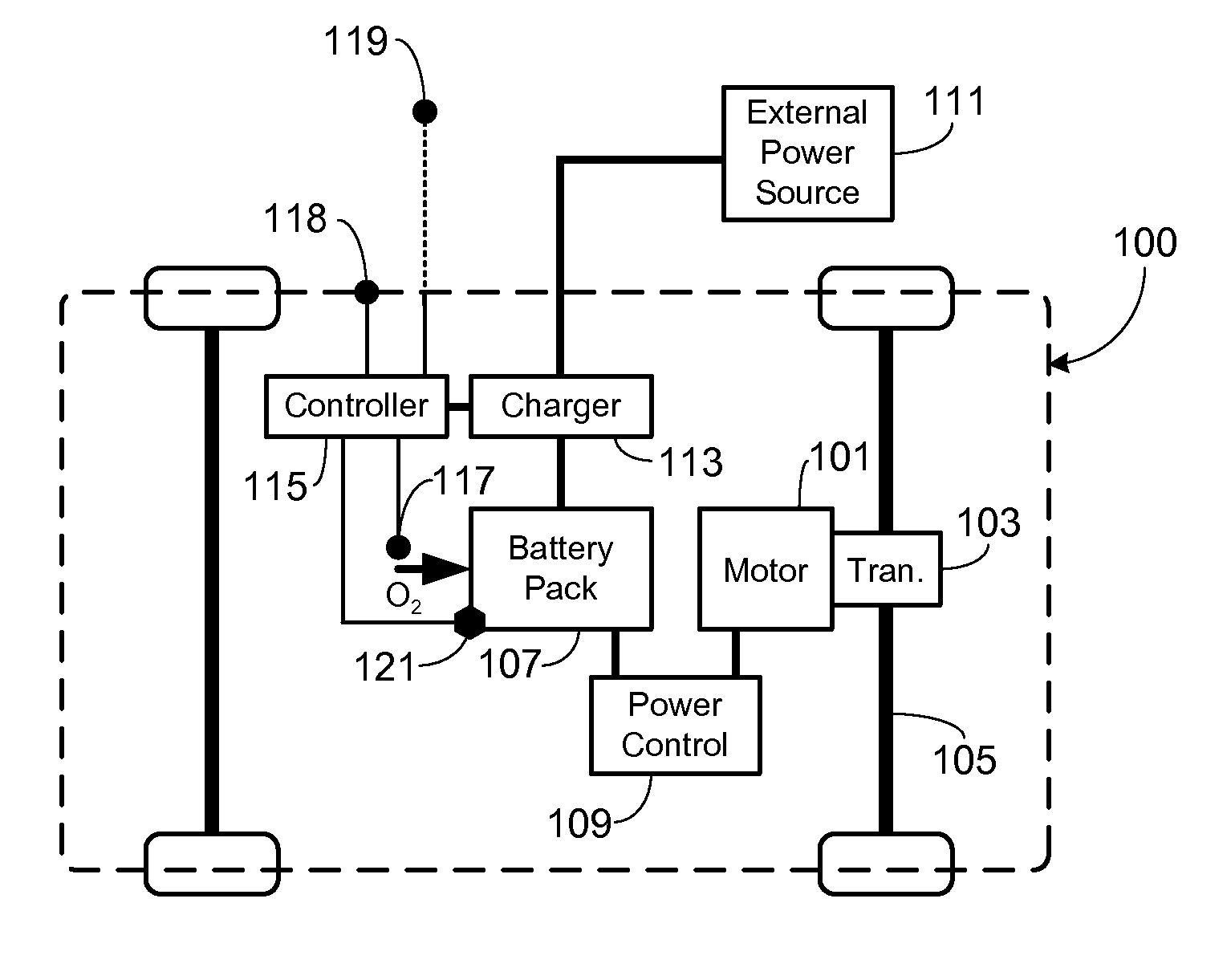
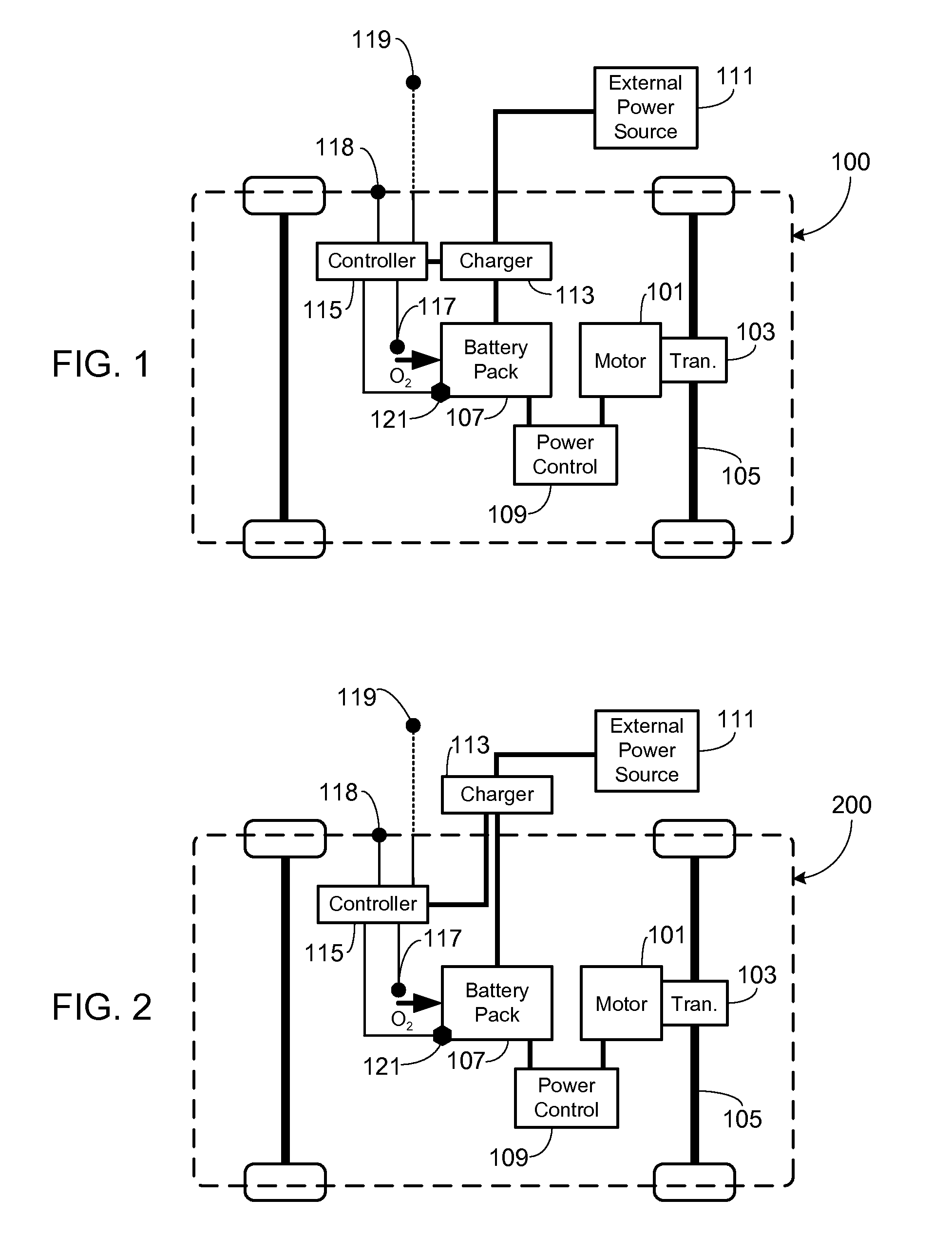
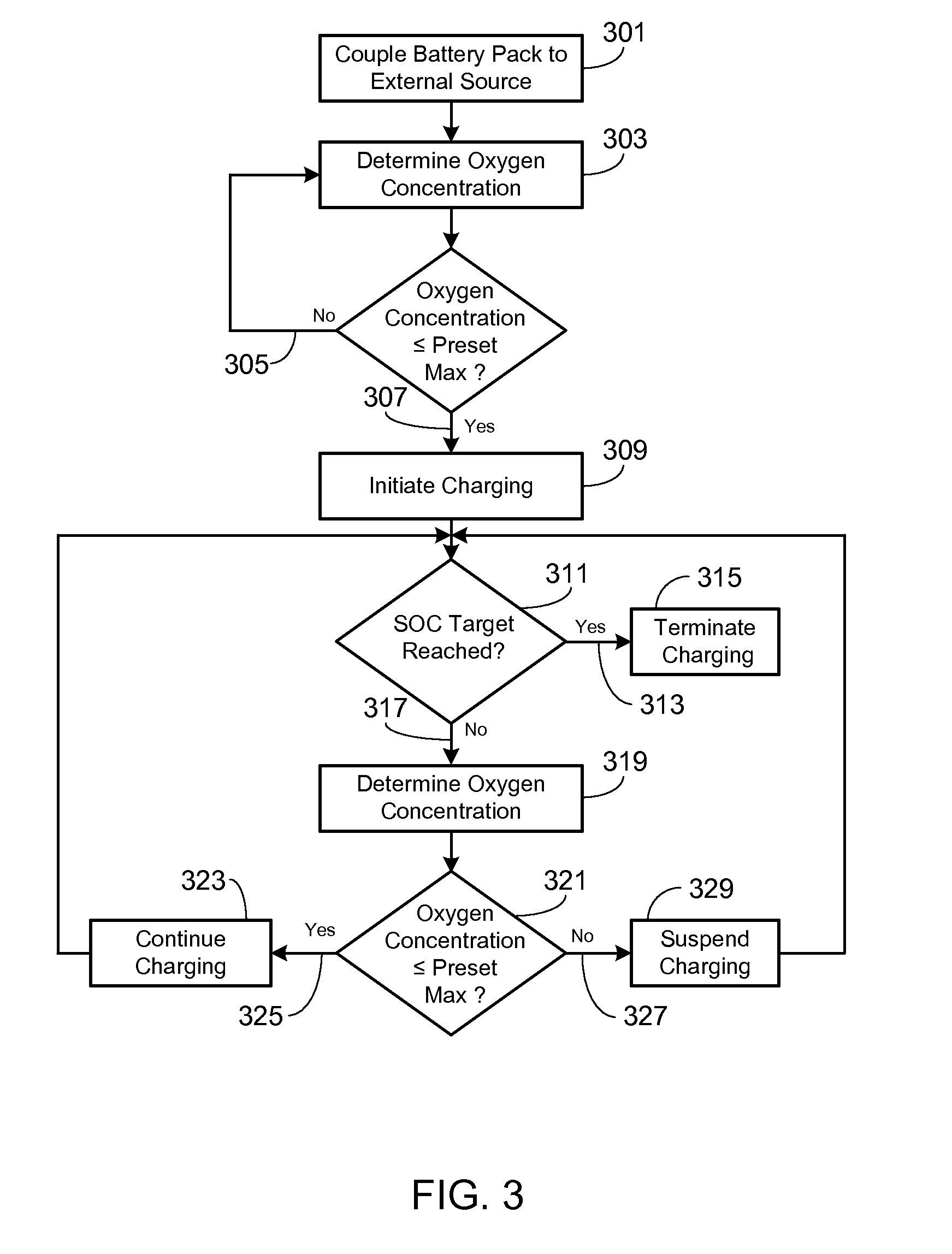
- A system that monitors oxygen concentration levels using sensors and a charging system controller to suspend or resume charging based on preset levels, activate warning systems, and adjust charging rates to maintain safe oxygen concentrations, ensuring safe charging conditions.

Iron/air battery system having circulating electrolyte and a horizontal cell configuration
PatentInactiveUS4168349A
Innovation
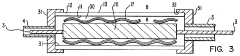
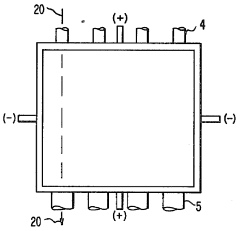
- A compact, flat, stationary electrode configuration with horizontal cell design and a pumping means that evacuates electrolyte instead of pumping it in, ensuring uniform electrolyte availability and efficient gas removal by creating a pressure difference between the electrolyte inlet and outlet, preventing delamination and overheating.
Grid Integration Standards for Iron-Air Systems
Grid integration of iron-air battery systems requires adherence to multiple interconnected standards that ensure safe, reliable, and efficient operation within existing electrical infrastructure. The primary regulatory framework encompasses IEEE 1547 standards for distributed energy resources, which establish fundamental requirements for voltage regulation, frequency response, and power quality maintenance. These standards mandate specific performance criteria including voltage ride-through capabilities, anti-islanding protection, and harmonic distortion limits that iron-air systems must satisfy.
Power conversion interface standards play a critical role in iron-air grid integration, particularly IEC 61727 and UL 1741 certifications for inverter systems. These standards define the electrical characteristics, safety protocols, and testing procedures for power conditioning equipment that converts the DC output of iron-air cells to grid-compatible AC power. The unique discharge characteristics of iron-air technology, including extended duration capabilities and variable power output profiles, necessitate specialized inverter designs that comply with grid codes while optimizing system efficiency.
Communication and monitoring standards are essential for iron-air systems in monitored applications, with IEC 61850 providing the foundational protocol for substation automation and smart grid integration. This standard enables real-time data exchange between iron-air battery management systems and grid operators, facilitating advanced functions such as demand response participation, frequency regulation services, and predictive maintenance scheduling. The protocol supports standardized data models that allow seamless integration with existing SCADA systems and energy management platforms.
Safety and installation standards, including NFPA 855 for energy storage systems and local electrical codes, establish requirements for fire protection, ventilation, and emergency response procedures specific to iron-air technology. These standards address the unique characteristics of iron-air systems, including their air-breathing operation and potential for thermal management challenges during extended cycling periods.
Emerging grid modernization standards, such as IEEE 2030 series for smart grid interoperability, are increasingly relevant for iron-air systems deployed in advanced grid applications. These standards facilitate participation in wholesale electricity markets, enable virtual power plant aggregation, and support grid services that leverage the long-duration storage capabilities inherent to iron-air technology.
Power conversion interface standards play a critical role in iron-air grid integration, particularly IEC 61727 and UL 1741 certifications for inverter systems. These standards define the electrical characteristics, safety protocols, and testing procedures for power conditioning equipment that converts the DC output of iron-air cells to grid-compatible AC power. The unique discharge characteristics of iron-air technology, including extended duration capabilities and variable power output profiles, necessitate specialized inverter designs that comply with grid codes while optimizing system efficiency.
Communication and monitoring standards are essential for iron-air systems in monitored applications, with IEC 61850 providing the foundational protocol for substation automation and smart grid integration. This standard enables real-time data exchange between iron-air battery management systems and grid operators, facilitating advanced functions such as demand response participation, frequency regulation services, and predictive maintenance scheduling. The protocol supports standardized data models that allow seamless integration with existing SCADA systems and energy management platforms.
Safety and installation standards, including NFPA 855 for energy storage systems and local electrical codes, establish requirements for fire protection, ventilation, and emergency response procedures specific to iron-air technology. These standards address the unique characteristics of iron-air systems, including their air-breathing operation and potential for thermal management challenges during extended cycling periods.
Emerging grid modernization standards, such as IEEE 2030 series for smart grid interoperability, are increasingly relevant for iron-air systems deployed in advanced grid applications. These standards facilitate participation in wholesale electricity markets, enable virtual power plant aggregation, and support grid services that leverage the long-duration storage capabilities inherent to iron-air technology.
Environmental Impact Assessment of Iron-Air Technology
Iron-air battery technology represents a significant advancement in sustainable energy storage solutions, offering substantial environmental benefits compared to conventional battery systems. The technology's environmental impact assessment reveals predominantly positive outcomes across multiple ecological dimensions, positioning it as a cornerstone technology for clean energy transition.
The primary environmental advantage stems from iron-air batteries' utilization of abundant, non-toxic materials. Iron, comprising approximately 5% of Earth's crust, eliminates the dependency on rare earth elements and hazardous materials commonly found in lithium-ion batteries. This fundamental material choice significantly reduces mining-related environmental degradation and associated carbon emissions from extraction processes.
Life cycle assessment studies demonstrate that iron-air battery systems exhibit substantially lower carbon footprints throughout their operational lifespan. The manufacturing process generates approximately 60-70% fewer greenhouse gas emissions compared to equivalent lithium-ion systems. Additionally, the absence of cobalt, nickel, and other environmentally problematic materials eliminates concerns related to toxic mining practices and associated water contamination issues.
Recyclability represents another critical environmental advantage of iron-air technology. The system's components can achieve recycling rates exceeding 95%, with iron being infinitely recyclable without performance degradation. This circular economy approach significantly reduces waste generation and minimizes long-term environmental burden associated with battery disposal.
Water usage during manufacturing processes shows marked improvement over traditional battery technologies. Iron-air cell production requires approximately 40% less water consumption, reducing strain on local water resources and minimizing industrial wastewater generation. The absence of toxic electrolytes further eliminates risks of groundwater contamination during manufacturing or end-of-life processing.
However, certain environmental considerations require ongoing attention. The technology's lower energy density necessitates larger installation footprints, potentially impacting land use efficiency in space-constrained applications. Additionally, the corrosion management systems required for long-term operation may introduce minor environmental considerations related to protective coating materials and maintenance procedures.
Overall environmental impact assessment indicates that iron-air battery technology delivers substantial ecological benefits, supporting global sustainability objectives while providing reliable energy storage capabilities for monitored applications across diverse operational environments.
The primary environmental advantage stems from iron-air batteries' utilization of abundant, non-toxic materials. Iron, comprising approximately 5% of Earth's crust, eliminates the dependency on rare earth elements and hazardous materials commonly found in lithium-ion batteries. This fundamental material choice significantly reduces mining-related environmental degradation and associated carbon emissions from extraction processes.
Life cycle assessment studies demonstrate that iron-air battery systems exhibit substantially lower carbon footprints throughout their operational lifespan. The manufacturing process generates approximately 60-70% fewer greenhouse gas emissions compared to equivalent lithium-ion systems. Additionally, the absence of cobalt, nickel, and other environmentally problematic materials eliminates concerns related to toxic mining practices and associated water contamination issues.
Recyclability represents another critical environmental advantage of iron-air technology. The system's components can achieve recycling rates exceeding 95%, with iron being infinitely recyclable without performance degradation. This circular economy approach significantly reduces waste generation and minimizes long-term environmental burden associated with battery disposal.
Water usage during manufacturing processes shows marked improvement over traditional battery technologies. Iron-air cell production requires approximately 40% less water consumption, reducing strain on local water resources and minimizing industrial wastewater generation. The absence of toxic electrolytes further eliminates risks of groundwater contamination during manufacturing or end-of-life processing.
However, certain environmental considerations require ongoing attention. The technology's lower energy density necessitates larger installation footprints, potentially impacting land use efficiency in space-constrained applications. Additionally, the corrosion management systems required for long-term operation may introduce minor environmental considerations related to protective coating materials and maintenance procedures.
Overall environmental impact assessment indicates that iron-air battery technology delivers substantial ecological benefits, supporting global sustainability objectives while providing reliable energy storage capabilities for monitored applications across diverse operational environments.
Unlock deeper insights with PatSnap Eureka Quick Research — get a full tech report to explore trends and direct your research. Try now!
Generate Your Research Report Instantly with AI Agent
Supercharge your innovation with PatSnap Eureka AI Agent Platform!