

Iron-Air Storage Vs Pumped Hydro: Application Scope
APR 27, 20269 MIN READ
Generate Your Research Report Instantly with AI Agent
PatSnap Eureka helps you evaluate technical feasibility & market potential.
Iron-Air vs Pumped Hydro Storage Background and Objectives
The global energy landscape is undergoing a fundamental transformation driven by the urgent need to decarbonize power systems and integrate increasing shares of renewable energy sources. As wind and solar power generation continue to expand rapidly, the intermittent nature of these resources has created unprecedented challenges for grid stability and energy security. This paradigm shift has elevated energy storage technologies from supplementary grid services to critical infrastructure components essential for maintaining reliable electricity supply.
Energy storage systems serve as the bridge between variable renewable generation and consistent energy demand, enabling the capture of excess renewable energy during peak production periods and its release when generation is insufficient. The scale of this challenge is immense, requiring storage solutions capable of handling both short-term grid balancing and long-duration energy storage spanning hours to days. Traditional battery technologies, while effective for short-duration applications, face economic and technical limitations when deployed for extended storage periods.
Among the various long-duration energy storage technologies, iron-air batteries and pumped hydro storage have emerged as two of the most promising solutions, each offering distinct advantages and facing unique constraints. Iron-air storage represents an innovative electrochemical approach that leverages abundant and low-cost iron as the primary storage medium, promising scalable and cost-effective long-duration storage. This technology operates through the reversible oxidation and reduction of iron, offering theoretical storage durations of 100+ hours at competitive costs.
Pumped hydro storage, conversely, represents the most mature and widely deployed grid-scale storage technology, utilizing gravitational potential energy by pumping water between reservoirs at different elevations. With over 95% of global energy storage capacity currently comprised of pumped hydro systems, this technology has demonstrated reliability and longevity across decades of operation worldwide.
The primary objective of this comparative analysis is to evaluate the distinct application scopes and deployment scenarios where each technology demonstrates optimal performance and economic viability. This assessment encompasses technical performance characteristics, geographical and environmental constraints, economic considerations, and grid integration capabilities. Understanding these complementary roles is crucial for developing comprehensive energy storage strategies that maximize renewable energy utilization while ensuring grid reliability and economic efficiency in the transition toward sustainable energy systems.
Energy storage systems serve as the bridge between variable renewable generation and consistent energy demand, enabling the capture of excess renewable energy during peak production periods and its release when generation is insufficient. The scale of this challenge is immense, requiring storage solutions capable of handling both short-term grid balancing and long-duration energy storage spanning hours to days. Traditional battery technologies, while effective for short-duration applications, face economic and technical limitations when deployed for extended storage periods.
Among the various long-duration energy storage technologies, iron-air batteries and pumped hydro storage have emerged as two of the most promising solutions, each offering distinct advantages and facing unique constraints. Iron-air storage represents an innovative electrochemical approach that leverages abundant and low-cost iron as the primary storage medium, promising scalable and cost-effective long-duration storage. This technology operates through the reversible oxidation and reduction of iron, offering theoretical storage durations of 100+ hours at competitive costs.
Pumped hydro storage, conversely, represents the most mature and widely deployed grid-scale storage technology, utilizing gravitational potential energy by pumping water between reservoirs at different elevations. With over 95% of global energy storage capacity currently comprised of pumped hydro systems, this technology has demonstrated reliability and longevity across decades of operation worldwide.
The primary objective of this comparative analysis is to evaluate the distinct application scopes and deployment scenarios where each technology demonstrates optimal performance and economic viability. This assessment encompasses technical performance characteristics, geographical and environmental constraints, economic considerations, and grid integration capabilities. Understanding these complementary roles is crucial for developing comprehensive energy storage strategies that maximize renewable energy utilization while ensuring grid reliability and economic efficiency in the transition toward sustainable energy systems.
Market Demand Analysis for Long-Duration Energy Storage
The global energy storage market is experiencing unprecedented growth driven by the accelerating deployment of renewable energy sources and the urgent need for grid stability solutions. Long-duration energy storage technologies have emerged as critical infrastructure components to address the intermittency challenges associated with solar and wind power generation. The market demand spans multiple sectors including utility-scale grid applications, industrial energy management, and distributed energy systems.
Utility companies represent the largest demand segment for long-duration energy storage solutions, seeking technologies capable of storing energy for 8-24 hours or longer to manage daily and seasonal renewable energy variations. Grid operators require reliable storage systems to provide frequency regulation, peak shaving, and load balancing services while maintaining power quality standards. The increasing penetration of renewable energy sources has created substantial market opportunities for both iron-air storage and pumped hydro technologies.
Industrial and commercial sectors demonstrate growing interest in long-duration storage solutions to reduce energy costs through peak demand management and to ensure operational continuity during grid outages. Manufacturing facilities, data centers, and large commercial complexes are evaluating storage technologies that can provide sustained power delivery over extended periods while offering favorable economics compared to traditional backup power systems.
Geographic market dynamics reveal distinct regional preferences and constraints that influence technology adoption patterns. Regions with suitable topographical conditions show continued investment in pumped hydro projects, while areas lacking appropriate terrain increasingly consider alternative technologies like iron-air storage. Emerging markets with rapidly expanding renewable energy capacity present significant growth opportunities for both technologies.
The market demand is further amplified by supportive policy frameworks and financial incentives promoting clean energy storage deployment. Government initiatives targeting carbon neutrality goals and grid modernization programs are creating favorable market conditions for long-duration storage technologies. Investment flows from both public and private sectors continue to accelerate, reflecting strong confidence in the long-term market potential for energy storage solutions that can effectively complement renewable energy infrastructure.
Utility companies represent the largest demand segment for long-duration energy storage solutions, seeking technologies capable of storing energy for 8-24 hours or longer to manage daily and seasonal renewable energy variations. Grid operators require reliable storage systems to provide frequency regulation, peak shaving, and load balancing services while maintaining power quality standards. The increasing penetration of renewable energy sources has created substantial market opportunities for both iron-air storage and pumped hydro technologies.
Industrial and commercial sectors demonstrate growing interest in long-duration storage solutions to reduce energy costs through peak demand management and to ensure operational continuity during grid outages. Manufacturing facilities, data centers, and large commercial complexes are evaluating storage technologies that can provide sustained power delivery over extended periods while offering favorable economics compared to traditional backup power systems.
Geographic market dynamics reveal distinct regional preferences and constraints that influence technology adoption patterns. Regions with suitable topographical conditions show continued investment in pumped hydro projects, while areas lacking appropriate terrain increasingly consider alternative technologies like iron-air storage. Emerging markets with rapidly expanding renewable energy capacity present significant growth opportunities for both technologies.
The market demand is further amplified by supportive policy frameworks and financial incentives promoting clean energy storage deployment. Government initiatives targeting carbon neutrality goals and grid modernization programs are creating favorable market conditions for long-duration storage technologies. Investment flows from both public and private sectors continue to accelerate, reflecting strong confidence in the long-term market potential for energy storage solutions that can effectively complement renewable energy infrastructure.
Current Status and Challenges of Iron-Air and Pumped Hydro
Iron-air battery technology represents an emerging long-duration energy storage solution that leverages the reversible oxidation and reduction of iron to store and release electrical energy. Currently, this technology is in the early commercial deployment phase, with companies like Form Energy leading development efforts. The technology demonstrates promising characteristics including low material costs, scalability potential, and the ability to provide 100+ hour discharge durations. However, iron-air systems face significant challenges in terms of round-trip efficiency, typically achieving only 50-60% efficiency compared to other storage technologies.
Pumped hydro storage stands as the most mature and widely deployed grid-scale energy storage technology globally, representing over 95% of current utility-scale storage capacity. This technology utilizes gravitational potential energy by pumping water between upper and lower reservoirs during periods of excess electricity generation and releasing it through turbines when power is needed. Pumped hydro systems demonstrate excellent technical performance with round-trip efficiencies of 75-85% and operational lifespans exceeding 50 years.
The primary challenge facing iron-air battery deployment centers on technological maturation and performance optimization. Current systems exhibit relatively low power density and require sophisticated thermal management systems to maintain optimal operating temperatures. Manufacturing scalability remains uncertain, as the technology has yet to demonstrate large-scale production capabilities. Additionally, the corrosive nature of iron oxidation processes presents long-term durability concerns that require extensive field validation.
Pumped hydro storage confronts fundamentally different challenges, primarily related to geographical constraints and environmental considerations. Suitable topographical conditions with significant elevation differences and adequate water resources limit potential deployment sites. Environmental impact assessments, permitting processes, and community acceptance issues often extend project development timelines significantly. The substantial capital investment requirements and long construction periods further complicate project financing and implementation.
Both technologies face integration challenges within evolving grid infrastructure. Iron-air systems must demonstrate reliable performance across varying operational conditions and establish standardized interconnection protocols. Pumped hydro projects encounter grid connection complexities due to their typical remote locations and large-scale power injection requirements. Regulatory frameworks for both technologies continue evolving, creating uncertainty around long-term market mechanisms and revenue streams that support investment decisions.
Pumped hydro storage stands as the most mature and widely deployed grid-scale energy storage technology globally, representing over 95% of current utility-scale storage capacity. This technology utilizes gravitational potential energy by pumping water between upper and lower reservoirs during periods of excess electricity generation and releasing it through turbines when power is needed. Pumped hydro systems demonstrate excellent technical performance with round-trip efficiencies of 75-85% and operational lifespans exceeding 50 years.
The primary challenge facing iron-air battery deployment centers on technological maturation and performance optimization. Current systems exhibit relatively low power density and require sophisticated thermal management systems to maintain optimal operating temperatures. Manufacturing scalability remains uncertain, as the technology has yet to demonstrate large-scale production capabilities. Additionally, the corrosive nature of iron oxidation processes presents long-term durability concerns that require extensive field validation.
Pumped hydro storage confronts fundamentally different challenges, primarily related to geographical constraints and environmental considerations. Suitable topographical conditions with significant elevation differences and adequate water resources limit potential deployment sites. Environmental impact assessments, permitting processes, and community acceptance issues often extend project development timelines significantly. The substantial capital investment requirements and long construction periods further complicate project financing and implementation.
Both technologies face integration challenges within evolving grid infrastructure. Iron-air systems must demonstrate reliable performance across varying operational conditions and establish standardized interconnection protocols. Pumped hydro projects encounter grid connection complexities due to their typical remote locations and large-scale power injection requirements. Regulatory frameworks for both technologies continue evolving, creating uncertainty around long-term market mechanisms and revenue streams that support investment decisions.
Current Technical Solutions for Grid-Scale Energy Storage
01 Iron-air battery system design and configuration
Iron-air battery systems utilize iron as the anode material and air as the cathode, providing a cost-effective energy storage solution. These systems are designed with specific configurations to optimize energy density and cycle life. The technology focuses on the electrochemical reactions between iron and oxygen from ambient air, making it suitable for long-duration energy storage applications.- Iron-air battery system design and configuration: Iron-air battery systems utilize iron as the anode material and air as the cathode, providing a cost-effective energy storage solution. These systems are designed with specific configurations to optimize energy density and cycle life. The technology focuses on the electrochemical reactions between iron and oxygen from ambient air, making it suitable for long-duration energy storage applications.
- Pumped hydro storage system integration: Pumped hydro storage systems are integrated with various energy generation sources to provide grid-scale energy storage. These systems utilize gravitational potential energy by pumping water to higher elevations during low demand periods and releasing it through turbines during peak demand. The integration involves sophisticated control systems and infrastructure to maximize efficiency and grid stability.
- Hybrid energy storage system applications: Hybrid systems combining iron-air batteries with pumped hydro storage offer complementary advantages for different time scales of energy storage. These applications leverage the fast response capabilities of battery systems with the long-duration storage capacity of pumped hydro. The hybrid approach optimizes overall system performance for various grid applications and renewable energy integration scenarios.
- Grid-scale energy management and control systems: Advanced control systems are developed to manage large-scale energy storage deployments including both iron-air and pumped hydro technologies. These systems incorporate predictive algorithms, load balancing mechanisms, and grid synchronization capabilities. The control infrastructure enables optimal dispatch strategies and maintains grid stability while maximizing economic benefits from energy arbitrage.
- Environmental and economic optimization strategies: Optimization strategies focus on minimizing environmental impact while maximizing economic viability of large-scale energy storage projects. These approaches consider factors such as site selection, environmental mitigation measures, lifecycle cost analysis, and integration with existing infrastructure. The strategies aim to enhance the sustainability and commercial attractiveness of both iron-air and pumped hydro storage technologies.
02 Pumped hydro storage system integration
Pumped hydro storage systems are integrated with various energy generation sources to provide grid-scale energy storage. These systems utilize gravitational potential energy by pumping water to higher elevations during low demand periods and releasing it through turbines during peak demand. The integration involves sophisticated control systems and infrastructure to maximize efficiency and grid stability.Expand Specific Solutions03 Hybrid energy storage system optimization
Hybrid systems combining iron-air batteries with pumped hydro storage offer complementary advantages for different time scales of energy storage. These systems are optimized to leverage the fast response capabilities of battery systems with the long-duration storage capacity of pumped hydro. The optimization involves advanced control algorithms and energy management systems to coordinate between different storage technologies.Expand Specific Solutions04 Grid-scale application and power management
Large-scale deployment of iron-air and pumped hydro storage systems requires sophisticated power management and grid integration capabilities. These applications focus on providing grid services such as frequency regulation, load balancing, and renewable energy integration. The systems are designed to handle varying power demands and maintain grid stability across different operational scenarios.Expand Specific Solutions05 Energy conversion efficiency and control systems
Advanced control systems and energy conversion technologies are employed to maximize the efficiency of both iron-air and pumped hydro storage systems. These systems incorporate intelligent monitoring, predictive maintenance, and adaptive control strategies to optimize performance under varying operational conditions. The focus is on minimizing energy losses during charge-discharge cycles and improving overall system reliability.Expand Specific Solutions
Major Players in Iron-Air and Pumped Hydro Industries
The iron-air storage versus pumped hydro competition represents a mature energy storage market experiencing technological diversification. The industry is in a transitional phase where established pumped hydro solutions, dominated by traditional engineering firms like Powerchina Huadong Engineering Corp and China Three Gorges Corp, face emerging iron-air technologies from innovative companies like Form Energy. Market size continues expanding driven by renewable integration demands. Technology maturity varies significantly - pumped hydro represents proven, decades-old technology with extensive deployment by State Grid Corp of China and Hitachi Mitsubishi Hydro Corp, while iron-air storage remains in early commercialization stages. Research institutions including MIT, KAIST, and North China Electric Power University are advancing both technologies. The competitive landscape shows geographic concentration in China and established players leveraging existing infrastructure expertise, while newer entrants focus on novel electrochemical approaches for long-duration storage applications.
State Grid Corp. of China
Technical Solution: State Grid Corporation of China has implemented comprehensive energy storage strategies that include both iron-air battery pilot projects and extensive pumped hydro storage integration across their vast electrical grid network. They are evaluating iron-air storage for distributed applications and grid-edge deployments where long-duration storage is needed to support renewable energy integration. SGCC operates multiple pumped hydro facilities totaling over 30GW capacity and continues expanding this portfolio to support China's carbon neutrality goals. Their technical approach emphasizes system-level optimization, combining different storage technologies based on specific grid requirements and geographical constraints. The corporation is actively researching hybrid storage solutions that leverage both technologies' complementary characteristics for optimal grid performance.
Advantages: Vast operational experience, comprehensive grid integration capabilities, strong financial resources. Disadvantages: Complex regulatory environment, technology selection challenges across diverse regions, coordination complexity.
Massachusetts Institute of Technology
Technical Solution: MIT researchers have conducted extensive comparative studies on iron-air storage versus pumped hydro applications, developing advanced modeling frameworks to optimize deployment strategies for different use cases. Their research focuses on techno-economic analysis of both technologies, examining lifecycle costs, environmental impacts, and grid integration challenges. MIT's Energy Initiative has published significant research on iron-air battery chemistry improvements and pumped hydro efficiency optimization techniques. The institute's work includes development of novel iron-air electrode materials that enhance energy density and cycle life, while also advancing pumped hydro turbine designs for improved part-load efficiency. Their interdisciplinary approach combines materials science, mechanical engineering, and energy economics to provide comprehensive technology assessments for utilities and policymakers.
Advantages: Cutting-edge research capabilities, comprehensive analytical frameworks, strong industry partnerships. Disadvantages: Limited commercial deployment experience, focus primarily on research rather than implementation, technology still in development phases.
Core Technology Analysis of Iron-Air vs Pumped Hydro
Compressed air pumped hydro energy storage and distribution system
PatentInactiveUS7281371B1
Innovation
- A compressed air pumped hydro energy system that integrates underground cavities or tunnels to store both water and compressed air, utilizing a pump/turbine-motor/generator unit and an air compressor to efficiently generate power and store energy, allowing for flexible energy transfer and reduced environmental impact.
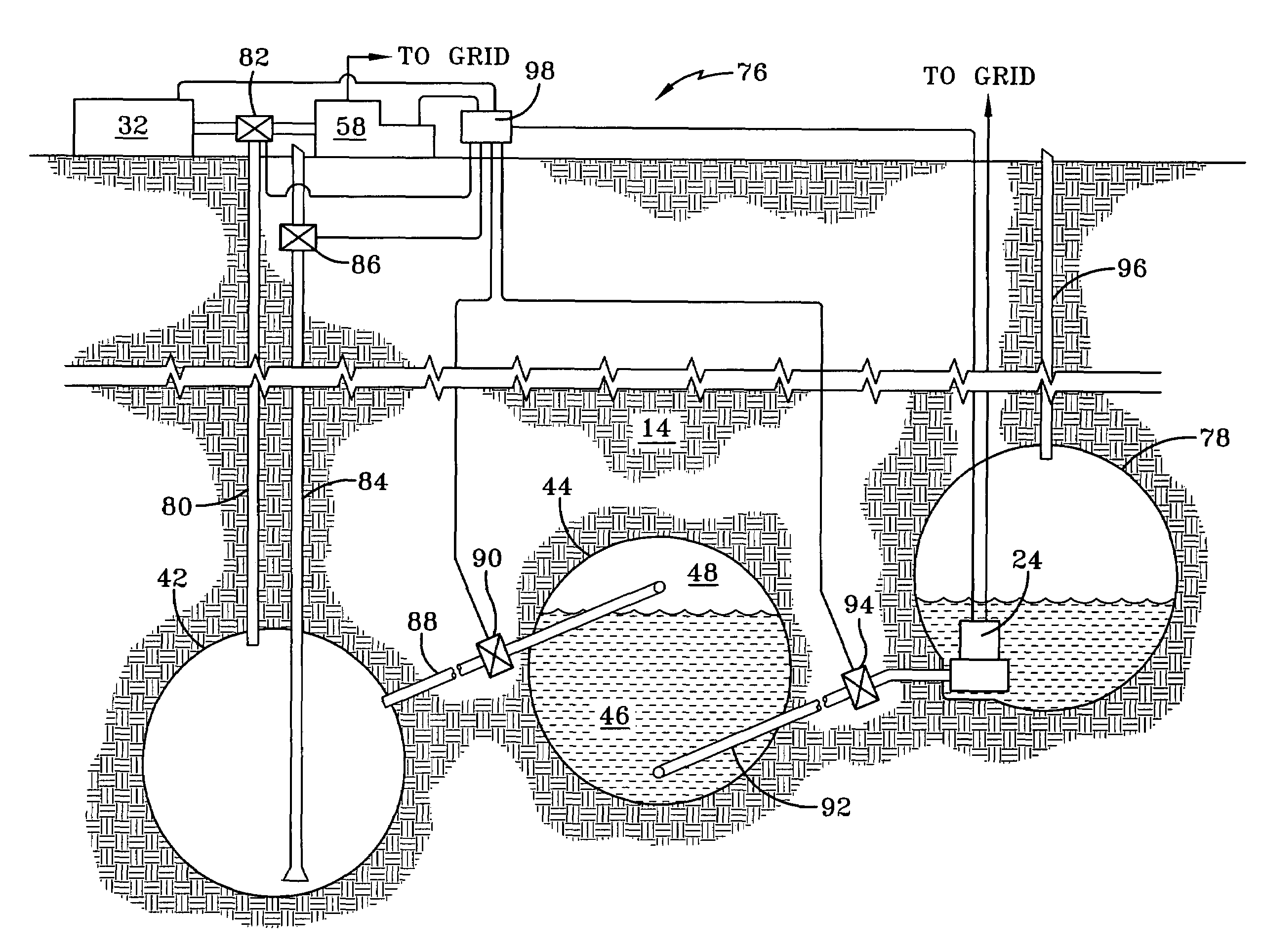
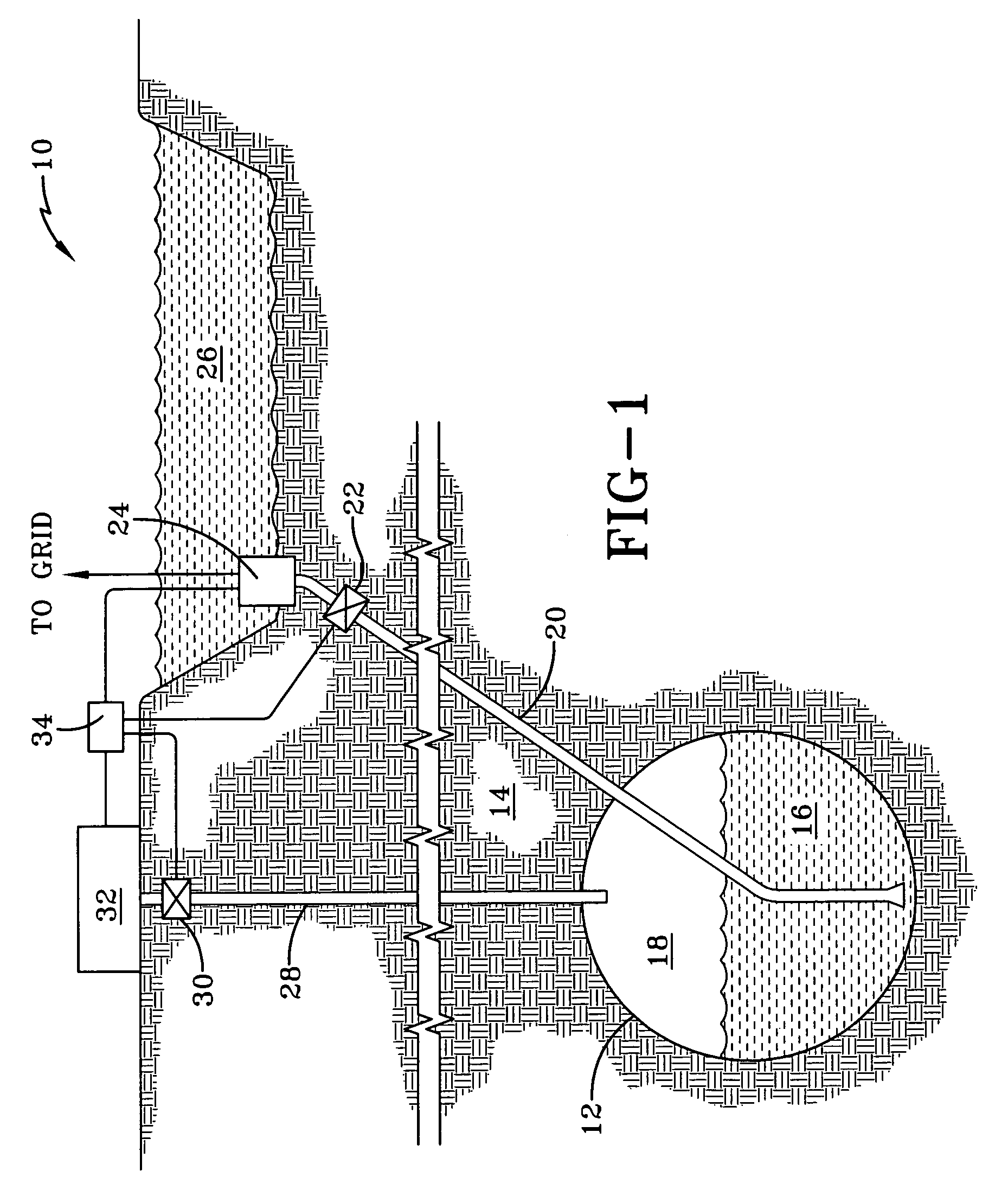
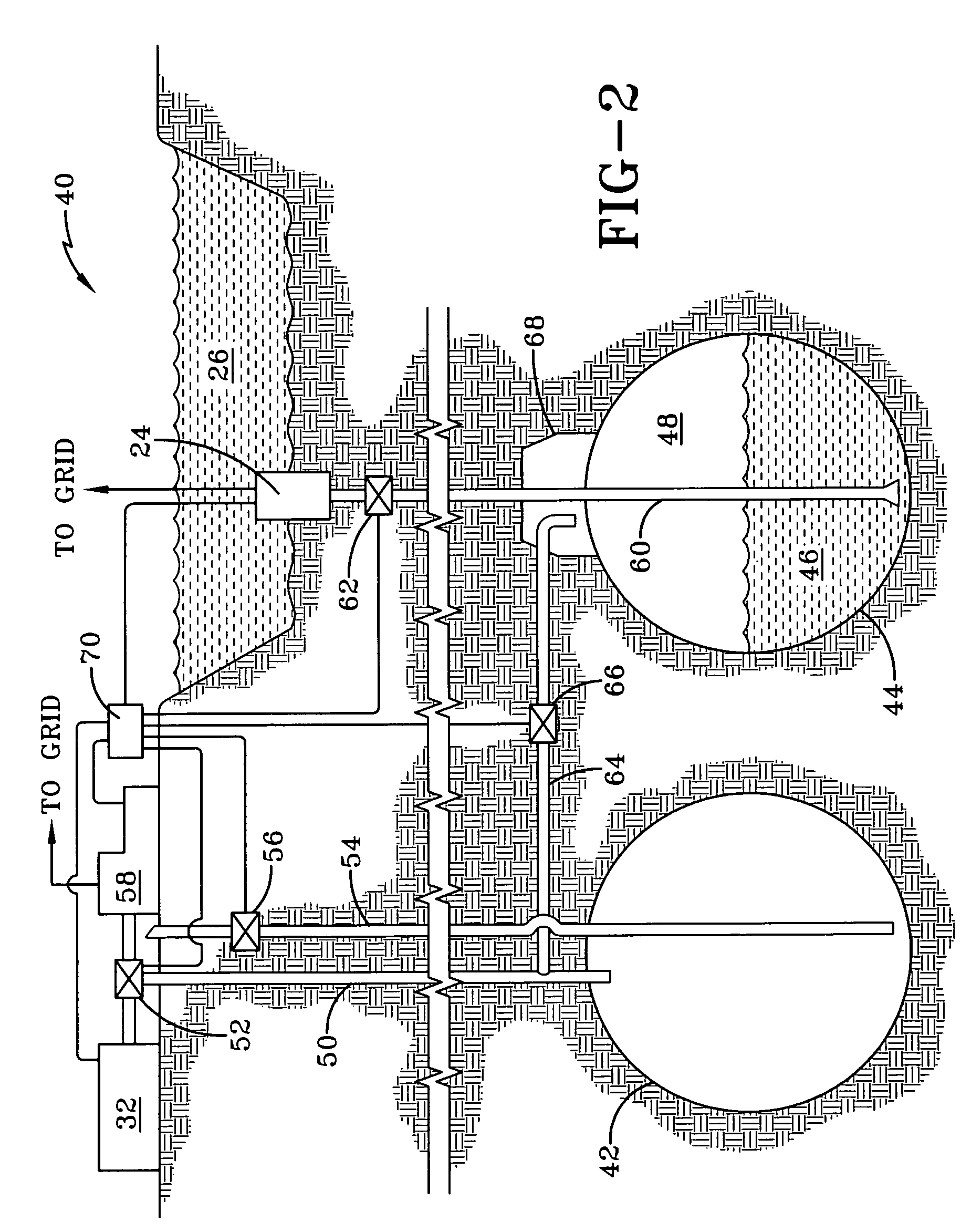

Method and apparatus for power storage
PatentActiveUS20180128171A1
Innovation
- A cryogenic energy storage system utilizing a low-pressure heat transfer fluid to capture and store cold thermal energy, with a network of heat exchangers and thermal stores that operate at pressures below 4 bar, allowing for efficient energy recovery and reuse during both power recovery and liquefaction phases.


Policy Framework for Grid-Scale Energy Storage Deployment
The deployment of grid-scale energy storage technologies, particularly iron-air storage and pumped hydro systems, requires comprehensive policy frameworks that address their distinct operational characteristics and application scopes. Current regulatory environments often lack the specificity needed to optimize the deployment of these complementary technologies, creating barriers to efficient market penetration and grid integration.
Regulatory frameworks must differentiate between the unique value propositions of iron-air storage and pumped hydro systems. Iron-air storage systems benefit from policies that recognize their modular deployment capabilities and minimal geographical constraints, making them suitable for distributed grid applications. Policy mechanisms should include streamlined permitting processes for smaller-scale installations and incentive structures that reward rapid deployment timelines.
Pumped hydro storage requires policy frameworks that acknowledge its large-scale infrastructure requirements and long development cycles. Regulatory approaches should incorporate environmental impact assessment procedures while recognizing the technology's proven reliability and decades-long operational lifespan. Policies must address land use considerations, water rights management, and community engagement requirements specific to major infrastructure projects.
Financial incentive structures within policy frameworks should reflect the different economic profiles of these technologies. Iron-air storage policies should emphasize shorter payback periods and operational flexibility benefits, while pumped hydro policies should recognize long-term capacity value and grid stability contributions. Tax incentives, depreciation schedules, and capacity payment mechanisms must be tailored accordingly.
Grid interconnection standards represent another critical policy dimension. Frameworks should establish technical requirements that leverage iron-air storage's fast response capabilities for frequency regulation and grid balancing services. Simultaneously, policies must ensure pumped hydro systems can provide bulk energy storage and black-start capabilities during grid emergencies.
Regional policy coordination becomes essential given the complementary nature of these technologies. Frameworks should encourage integrated planning approaches that optimize the deployment mix based on local grid requirements, geographical constraints, and economic conditions. This includes establishing clear guidelines for technology selection criteria and performance metrics that reflect each system's optimal application scope within the broader energy storage ecosystem.
Regulatory frameworks must differentiate between the unique value propositions of iron-air storage and pumped hydro systems. Iron-air storage systems benefit from policies that recognize their modular deployment capabilities and minimal geographical constraints, making them suitable for distributed grid applications. Policy mechanisms should include streamlined permitting processes for smaller-scale installations and incentive structures that reward rapid deployment timelines.
Pumped hydro storage requires policy frameworks that acknowledge its large-scale infrastructure requirements and long development cycles. Regulatory approaches should incorporate environmental impact assessment procedures while recognizing the technology's proven reliability and decades-long operational lifespan. Policies must address land use considerations, water rights management, and community engagement requirements specific to major infrastructure projects.
Financial incentive structures within policy frameworks should reflect the different economic profiles of these technologies. Iron-air storage policies should emphasize shorter payback periods and operational flexibility benefits, while pumped hydro policies should recognize long-term capacity value and grid stability contributions. Tax incentives, depreciation schedules, and capacity payment mechanisms must be tailored accordingly.
Grid interconnection standards represent another critical policy dimension. Frameworks should establish technical requirements that leverage iron-air storage's fast response capabilities for frequency regulation and grid balancing services. Simultaneously, policies must ensure pumped hydro systems can provide bulk energy storage and black-start capabilities during grid emergencies.
Regional policy coordination becomes essential given the complementary nature of these technologies. Frameworks should encourage integrated planning approaches that optimize the deployment mix based on local grid requirements, geographical constraints, and economic conditions. This includes establishing clear guidelines for technology selection criteria and performance metrics that reflect each system's optimal application scope within the broader energy storage ecosystem.
Environmental Impact Assessment of Storage Technologies
The environmental implications of energy storage technologies represent a critical factor in determining their long-term viability and societal acceptance. Iron-air storage and pumped hydro systems present distinctly different environmental profiles that must be carefully evaluated across multiple dimensions including ecosystem disruption, resource consumption, and lifecycle impacts.
Iron-air storage systems demonstrate relatively minimal direct environmental footprint during operation, primarily due to their use of abundant materials and absence of toxic substances. The technology relies on iron and air as primary components, both of which are environmentally benign and widely available. Manufacturing processes involve standard steel production techniques, resulting in moderate carbon emissions during facility construction. Land use requirements are comparatively modest, typically occupying industrial sites without necessitating significant landscape modification.
Pumped hydro storage presents more complex environmental considerations due to its substantial infrastructure requirements. Construction typically involves creating or modifying water reservoirs, which can significantly alter local ecosystems and hydrological patterns. The technology may impact fish migration routes, alter water temperature profiles, and affect downstream water availability. However, operational emissions are virtually zero, and many installations can provide additional benefits such as flood control and recreational opportunities.
Water resource implications differ markedly between these technologies. Iron-air systems require minimal water for cooling and maintenance purposes, making them suitable for arid regions where water scarcity is a concern. Pumped hydro systems, conversely, depend entirely on water availability and may compete with other water uses during drought conditions, though they typically operate in closed-loop systems that minimize consumption.
Lifecycle assessments reveal that iron-air storage generates most environmental impacts during manufacturing and end-of-life phases, with steel production contributing to carbon emissions and potential recycling challenges. Pumped hydro systems concentrate environmental impacts during construction phases, with concrete production and landscape modification representing primary concerns. Long-term operation of pumped hydro facilities may gradually integrate with natural ecosystems, while iron-air installations maintain consistent environmental profiles throughout their operational lifetime.
Waste generation patterns also distinguish these technologies significantly. Iron-air systems produce recyclable steel components at end-of-life, though battery degradation may create disposal challenges for certain system components. Pumped hydro installations generate minimal operational waste but leave permanent landscape modifications that persist beyond facility decommissioning.
Iron-air storage systems demonstrate relatively minimal direct environmental footprint during operation, primarily due to their use of abundant materials and absence of toxic substances. The technology relies on iron and air as primary components, both of which are environmentally benign and widely available. Manufacturing processes involve standard steel production techniques, resulting in moderate carbon emissions during facility construction. Land use requirements are comparatively modest, typically occupying industrial sites without necessitating significant landscape modification.
Pumped hydro storage presents more complex environmental considerations due to its substantial infrastructure requirements. Construction typically involves creating or modifying water reservoirs, which can significantly alter local ecosystems and hydrological patterns. The technology may impact fish migration routes, alter water temperature profiles, and affect downstream water availability. However, operational emissions are virtually zero, and many installations can provide additional benefits such as flood control and recreational opportunities.
Water resource implications differ markedly between these technologies. Iron-air systems require minimal water for cooling and maintenance purposes, making them suitable for arid regions where water scarcity is a concern. Pumped hydro systems, conversely, depend entirely on water availability and may compete with other water uses during drought conditions, though they typically operate in closed-loop systems that minimize consumption.
Lifecycle assessments reveal that iron-air storage generates most environmental impacts during manufacturing and end-of-life phases, with steel production contributing to carbon emissions and potential recycling challenges. Pumped hydro systems concentrate environmental impacts during construction phases, with concrete production and landscape modification representing primary concerns. Long-term operation of pumped hydro facilities may gradually integrate with natural ecosystems, while iron-air installations maintain consistent environmental profiles throughout their operational lifetime.
Waste generation patterns also distinguish these technologies significantly. Iron-air systems produce recyclable steel components at end-of-life, though battery degradation may create disposal challenges for certain system components. Pumped hydro installations generate minimal operational waste but leave permanent landscape modifications that persist beyond facility decommissioning.
Unlock deeper insights with PatSnap Eureka Quick Research — get a full tech report to explore trends and direct your research. Try now!
Generate Your Research Report Instantly with AI Agent
Supercharge your innovation with PatSnap Eureka AI Agent Platform!