

LS1 Engine Heat Management Solutions
AUG 25, 20259 MIN READ
Generate Your Research Report Instantly with AI Agent
PatSnap Eureka helps you evaluate technical feasibility & market potential.
LS1 Engine Thermal Evolution and Objectives
The LS1 engine, introduced by General Motors in 1997, represented a significant advancement in V8 engine technology. This aluminum small-block engine initially faced considerable thermal management challenges due to its high-performance characteristics and the transition from cast iron to aluminum construction. The evolution of heat management solutions for the LS1 has been driven by the need to optimize performance while ensuring reliability and longevity under various operating conditions.
Early LS1 engines utilized a conventional cooling system with a mechanical water pump, thermostat, and radiator configuration. However, as performance demands increased, engineers recognized the limitations of this traditional approach, particularly in high-performance and racing applications where thermal loads could exceed design parameters. This recognition sparked a series of innovations aimed at more effective heat dissipation and temperature regulation.
The technical evolution trajectory has progressed from passive cooling systems to more sophisticated active thermal management solutions. Initial improvements focused on optimizing coolant flow paths within the engine block and cylinder heads to eliminate hot spots. Subsequently, developments included enhanced water pump designs, more efficient radiator configurations, and the integration of auxiliary oil coolers to manage transmission and differential temperatures alongside engine cooling.
A significant milestone in LS1 thermal management came with the introduction of computer-controlled cooling systems that could adjust coolant flow rates based on real-time engine operating conditions. This adaptive approach represented a paradigm shift from static cooling solutions to dynamic systems capable of responding to varying thermal loads, significantly improving efficiency and performance across different driving scenarios.
The primary objective of modern LS1 heat management solutions is to maintain optimal operating temperatures across all engine components while minimizing parasitic power losses associated with cooling system operation. This balance is crucial for maximizing both performance and fuel efficiency. Additional objectives include reducing warm-up times to improve emissions performance and ensuring consistent temperature control during extreme operating conditions such as track use or towing.
Current technological trends point toward increasingly integrated thermal management systems that coordinate engine cooling with transmission, differential, and electronic component cooling. The development of advanced materials with superior thermal properties continues to play a crucial role in this evolution, with ceramic coatings and composite materials offering new possibilities for heat management without adding significant weight.
Looking forward, the technical goals for LS1 heat management include further refinement of precision cooling techniques, development of smart thermal management systems utilizing predictive algorithms, and integration with vehicle-wide thermal management strategies to optimize overall efficiency and performance across all operating conditions.
Early LS1 engines utilized a conventional cooling system with a mechanical water pump, thermostat, and radiator configuration. However, as performance demands increased, engineers recognized the limitations of this traditional approach, particularly in high-performance and racing applications where thermal loads could exceed design parameters. This recognition sparked a series of innovations aimed at more effective heat dissipation and temperature regulation.
The technical evolution trajectory has progressed from passive cooling systems to more sophisticated active thermal management solutions. Initial improvements focused on optimizing coolant flow paths within the engine block and cylinder heads to eliminate hot spots. Subsequently, developments included enhanced water pump designs, more efficient radiator configurations, and the integration of auxiliary oil coolers to manage transmission and differential temperatures alongside engine cooling.
A significant milestone in LS1 thermal management came with the introduction of computer-controlled cooling systems that could adjust coolant flow rates based on real-time engine operating conditions. This adaptive approach represented a paradigm shift from static cooling solutions to dynamic systems capable of responding to varying thermal loads, significantly improving efficiency and performance across different driving scenarios.
The primary objective of modern LS1 heat management solutions is to maintain optimal operating temperatures across all engine components while minimizing parasitic power losses associated with cooling system operation. This balance is crucial for maximizing both performance and fuel efficiency. Additional objectives include reducing warm-up times to improve emissions performance and ensuring consistent temperature control during extreme operating conditions such as track use or towing.
Current technological trends point toward increasingly integrated thermal management systems that coordinate engine cooling with transmission, differential, and electronic component cooling. The development of advanced materials with superior thermal properties continues to play a crucial role in this evolution, with ceramic coatings and composite materials offering new possibilities for heat management without adding significant weight.
Looking forward, the technical goals for LS1 heat management include further refinement of precision cooling techniques, development of smart thermal management systems utilizing predictive algorithms, and integration with vehicle-wide thermal management strategies to optimize overall efficiency and performance across all operating conditions.
Market Demand for Advanced Heat Management Systems
The global market for advanced heat management solutions in high-performance engines, particularly for the LS1 platform, has experienced significant growth over the past decade. This expansion is primarily driven by increasing consumer demand for enhanced engine performance, improved fuel efficiency, and extended engine lifespan. The aftermarket sector for LS1 engine modifications has shown consistent annual growth rates between 5-7%, with heat management solutions representing one of the fastest-growing segments.
Performance enthusiasts constitute a substantial portion of this market, seeking solutions that allow engines to operate at optimal temperatures under extreme conditions. Racing applications demand heat management systems capable of maintaining consistent performance during extended high-RPM operation, while street performance applications require systems that function effectively across varying driving conditions and ambient temperatures.
The commercial transportation sector has also emerged as a significant market driver, with fleet operators increasingly recognizing the economic benefits of advanced heat management. Improved thermal efficiency translates directly to fuel savings, with properly managed engine temperatures potentially reducing consumption by 3-8% depending on operating conditions. Additionally, the extended engine lifespan resulting from effective heat management presents compelling long-term cost advantages for commercial operators.
Environmental regulations worldwide have further accelerated market demand, as manufacturers and vehicle owners seek solutions to meet increasingly stringent emissions standards. Properly managed engine temperatures contribute to more complete combustion processes, reducing harmful emissions while simultaneously improving performance metrics. This regulatory pressure has expanded the market beyond traditional performance sectors into mainstream automotive applications.
Regional market analysis reveals particularly strong demand in North America, where the LS1 platform enjoys widespread popularity across multiple vehicle categories. The European market shows growing interest driven primarily by efficiency concerns, while emerging markets in Asia display rapid adoption rates as performance modification culture expands globally.
The aftermarket heat management ecosystem has diversified significantly, encompassing cooling system upgrades, thermal barrier coatings, oil cooling solutions, and integrated thermal management systems. Consumer preferences increasingly favor comprehensive solutions that address multiple heat-related challenges simultaneously, creating market opportunities for integrated systems rather than isolated component upgrades.
Industry forecasts project continued market expansion at compound annual growth rates between 6-9% through 2028, with particularly strong growth in digital thermal management systems that incorporate real-time monitoring and adaptive control technologies. This evolution toward smart thermal management represents a significant shift from traditional passive cooling approaches.
Performance enthusiasts constitute a substantial portion of this market, seeking solutions that allow engines to operate at optimal temperatures under extreme conditions. Racing applications demand heat management systems capable of maintaining consistent performance during extended high-RPM operation, while street performance applications require systems that function effectively across varying driving conditions and ambient temperatures.
The commercial transportation sector has also emerged as a significant market driver, with fleet operators increasingly recognizing the economic benefits of advanced heat management. Improved thermal efficiency translates directly to fuel savings, with properly managed engine temperatures potentially reducing consumption by 3-8% depending on operating conditions. Additionally, the extended engine lifespan resulting from effective heat management presents compelling long-term cost advantages for commercial operators.
Environmental regulations worldwide have further accelerated market demand, as manufacturers and vehicle owners seek solutions to meet increasingly stringent emissions standards. Properly managed engine temperatures contribute to more complete combustion processes, reducing harmful emissions while simultaneously improving performance metrics. This regulatory pressure has expanded the market beyond traditional performance sectors into mainstream automotive applications.
Regional market analysis reveals particularly strong demand in North America, where the LS1 platform enjoys widespread popularity across multiple vehicle categories. The European market shows growing interest driven primarily by efficiency concerns, while emerging markets in Asia display rapid adoption rates as performance modification culture expands globally.
The aftermarket heat management ecosystem has diversified significantly, encompassing cooling system upgrades, thermal barrier coatings, oil cooling solutions, and integrated thermal management systems. Consumer preferences increasingly favor comprehensive solutions that address multiple heat-related challenges simultaneously, creating market opportunities for integrated systems rather than isolated component upgrades.
Industry forecasts project continued market expansion at compound annual growth rates between 6-9% through 2028, with particularly strong growth in digital thermal management systems that incorporate real-time monitoring and adaptive control technologies. This evolution toward smart thermal management represents a significant shift from traditional passive cooling approaches.
Current Thermal Challenges in LS1 Engines
The LS1 engine, while renowned for its performance capabilities, faces significant thermal management challenges that impact both reliability and efficiency. The primary thermal issue stems from the engine's high-performance design, which generates substantial heat during operation. Under demanding conditions, cylinder head temperatures can exceed 210°C (410°F), particularly in the areas between exhaust valves where thermal concentration is most severe.
Heat soak represents another critical challenge, occurring when engine operation ceases and cooling systems stop functioning, allowing accumulated heat to migrate throughout the engine components. This phenomenon is especially problematic in performance applications where repeated high-load operation is common, leading to potential warping of aluminum components and accelerated wear of critical engine parts.
The stock cooling system demonstrates inadequate capacity when the engine is pushed beyond factory performance parameters. The OEM water pump, designed for standard operating conditions, struggles to maintain sufficient coolant flow rates during sustained high-RPM operation. Additionally, the factory radiator often proves insufficient for modified engines, creating a thermal bottleneck in the cooling system.
Oil cooling presents another significant challenge, as the stock oil cooling provisions were designed for standard driving conditions rather than performance applications. Under extended high-load scenarios, oil temperatures can climb beyond optimal operating ranges (above 130°C/266°F), compromising lubrication properties and accelerating oxidation processes.
The exhaust manifold design contributes substantially to thermal management issues. The cast iron factory manifolds retain significant heat in the engine bay, raising underhood temperatures and exacerbating heat soak conditions. This design limitation becomes particularly evident in vehicles with forced induction modifications, where heat generation increases exponentially.
Modern emissions requirements have further complicated thermal management, as catalytic converters must reach and maintain specific operating temperatures. This necessity often results in design compromises that prioritize emissions compliance over optimal thermal efficiency, creating additional heat management challenges.
Aftermarket modifications frequently exacerbate these thermal issues. Performance enhancements that increase power output invariably generate additional heat, while engine bay packaging constraints often limit the implementation of more effective cooling solutions. The integration of forced induction systems particularly intensifies thermal loads, creating compound challenges that the stock thermal management system cannot adequately address.
Heat soak represents another critical challenge, occurring when engine operation ceases and cooling systems stop functioning, allowing accumulated heat to migrate throughout the engine components. This phenomenon is especially problematic in performance applications where repeated high-load operation is common, leading to potential warping of aluminum components and accelerated wear of critical engine parts.
The stock cooling system demonstrates inadequate capacity when the engine is pushed beyond factory performance parameters. The OEM water pump, designed for standard operating conditions, struggles to maintain sufficient coolant flow rates during sustained high-RPM operation. Additionally, the factory radiator often proves insufficient for modified engines, creating a thermal bottleneck in the cooling system.
Oil cooling presents another significant challenge, as the stock oil cooling provisions were designed for standard driving conditions rather than performance applications. Under extended high-load scenarios, oil temperatures can climb beyond optimal operating ranges (above 130°C/266°F), compromising lubrication properties and accelerating oxidation processes.
The exhaust manifold design contributes substantially to thermal management issues. The cast iron factory manifolds retain significant heat in the engine bay, raising underhood temperatures and exacerbating heat soak conditions. This design limitation becomes particularly evident in vehicles with forced induction modifications, where heat generation increases exponentially.
Modern emissions requirements have further complicated thermal management, as catalytic converters must reach and maintain specific operating temperatures. This necessity often results in design compromises that prioritize emissions compliance over optimal thermal efficiency, creating additional heat management challenges.
Aftermarket modifications frequently exacerbate these thermal issues. Performance enhancements that increase power output invariably generate additional heat, while engine bay packaging constraints often limit the implementation of more effective cooling solutions. The integration of forced induction systems particularly intensifies thermal loads, creating compound challenges that the stock thermal management system cannot adequately address.
Existing LS1 Heat Management Solutions
01 Cooling system design for LS1 engines
Advanced cooling system designs specifically tailored for LS1 engines help manage heat effectively. These systems include optimized coolant flow paths, improved radiator designs, and strategic placement of cooling components to ensure efficient heat dissipation. Enhanced water pumps and cooling jackets around critical engine components help maintain optimal operating temperatures even under high-performance conditions.- Cooling system design for LS1 engines: Advanced cooling system designs specifically tailored for LS1 engines help manage heat effectively. These systems include optimized coolant flow paths, improved water pumps, and strategic placement of cooling channels around critical engine components. Enhanced radiator designs and cooling fans are also incorporated to increase heat dissipation efficiency, preventing overheating during high-performance operation.
- Thermal barrier coatings and materials: Specialized thermal barrier coatings and heat-resistant materials are applied to LS1 engine components to manage heat transfer. These coatings help insulate critical parts from excessive heat, improving engine efficiency and longevity. Advanced ceramic and composite materials are used to create barriers that reflect heat away from sensitive components while allowing the engine to maintain optimal operating temperatures.
- Oil cooling and lubrication systems: Enhanced oil cooling and lubrication systems play a crucial role in LS1 engine heat management. These systems include high-capacity oil pumps, external oil coolers, and optimized oil passages that efficiently transfer heat away from critical engine components. Advanced oil formulations with improved thermal stability help maintain proper lubrication under high-temperature conditions, reducing friction and associated heat generation.
- Electronic thermal management systems: Sophisticated electronic thermal management systems monitor and control LS1 engine temperatures. These systems utilize temperature sensors, electronic control units, and variable-speed cooling fans to maintain optimal operating temperatures. Advanced algorithms adjust cooling system performance based on engine load, ambient conditions, and other parameters to prevent overheating while maximizing efficiency and performance.
- Exhaust heat management solutions: Specialized exhaust system designs help manage heat in LS1 engines by efficiently removing hot exhaust gases and reducing heat transfer to surrounding components. These solutions include heat shields, thermal wraps, and optimized exhaust manifold designs that minimize heat soak into the engine bay. Some systems also incorporate heat recovery mechanisms that capture exhaust heat for use in other vehicle systems, improving overall efficiency.
02 Thermal management components and materials
Specialized thermal management components and materials are used in LS1 engines to control heat. These include heat shields, thermal barriers, and advanced materials with superior heat dissipation properties. High-temperature resistant materials protect sensitive components from excessive heat, while thermal conductors help transfer heat away from critical areas. These components work together to maintain optimal engine temperature and prevent overheating.Expand Specific Solutions03 Oil cooling and lubrication systems
Enhanced oil cooling and lubrication systems play a crucial role in LS1 engine heat management. These systems include oil coolers, improved oil pumps, and optimized oil passages that ensure proper lubrication while simultaneously removing heat from engine components. The strategic routing of oil through high-temperature areas helps maintain consistent engine temperatures and extends component life by reducing thermal stress.Expand Specific Solutions04 Electronic thermal control systems
Advanced electronic thermal control systems monitor and regulate LS1 engine temperatures. These systems use sensors to detect temperature variations in different engine zones and adjust cooling mechanisms accordingly. Electronic fan controls, variable-speed water pumps, and computerized thermal management algorithms work together to maintain optimal operating temperatures under varying load conditions, improving both performance and efficiency.Expand Specific Solutions05 Exhaust heat management solutions
Specialized exhaust heat management solutions help control thermal energy in LS1 engines. These include optimized exhaust manifold designs, heat-resistant coatings, and strategic routing of exhaust components to minimize heat transfer to other engine parts. Some systems also incorporate heat recovery mechanisms that capture exhaust heat for useful purposes, improving overall engine efficiency while maintaining appropriate operating temperatures.Expand Specific Solutions
Key Manufacturers in Engine Cooling Industry
The LS1 Engine Heat Management Solutions market is in a growth phase, with increasing demand driven by automotive performance optimization needs. The market is characterized by a mix of established automotive giants and specialized component manufacturers. Major players like SAIC Motor, Weichai Power, Geely, BYD, and FAW are competing alongside global firms such as Behr GmbH, Bosch, and Toyota. Technical maturity varies significantly, with companies like Weichai Power and Behr demonstrating advanced cooling system expertise, while newer entrants like Wuhan Grove Hydrogen Automotive are bringing innovative approaches. The competitive landscape is evolving as traditional manufacturers adapt to new efficiency requirements and thermal management challenges, particularly as vehicle electrification advances.
Behr GmbH & Co. KG
Technical Solution: Behr has engineered a comprehensive thermal management solution for LS1 engines that focuses on system-wide heat balance. Their approach centers on a modular cooling module that integrates the radiator, charge air cooler, condenser, and oil coolers into a single optimized unit. Behr's system employs advanced CFD-designed coolant channels that ensure uniform temperature distribution across all cylinders, eliminating hot spots that can lead to detonation or premature component failure. A standout feature is their map-controlled thermostat system that adapts opening characteristics based on engine load, ambient conditions, and driving profile. Behr has developed specialized high-efficiency radiators with optimized fin designs that provide superior heat rejection in a more compact package. Their solution includes intelligent fan control modules that precisely match cooling airflow to actual system requirements, significantly reducing parasitic losses during normal operation while ensuring adequate cooling during extreme conditions or when idling.
Strengths: Exceptional integration with vehicle HVAC systems for holistic thermal management, reduced packaging space requirements, and optimized for both performance and efficiency. Weaknesses: Complex integration requirements with engine management systems and higher replacement costs for specialized components.
Valeo Japan Co., Ltd.
Technical Solution: Valeo has developed an innovative thermal management solution for LS1 engines that centers around their Ultimate Cooling™ system architecture. This comprehensive approach integrates multiple cooling circuits with electronically controlled multi-way valves that precisely direct coolant flow based on real-time thermal demands. Valeo's system features their patented water-charged air cooler technology that improves intercooling efficiency while reducing overall system complexity. A key innovation is their split cooling strategy that maintains cylinder heads at higher temperatures than the block, optimizing combustion efficiency while protecting critical components. Valeo has implemented advanced micro-channel heat exchangers that provide significantly greater cooling surface area in a more compact package. Their solution includes intelligent electric water pumps with variable speed control that operate independently of engine RPM, reducing parasitic losses during normal operation while providing maximum cooling capacity when needed. Valeo's system also incorporates thermal energy recovery from exhaust gases to accelerate warm-up times and improve overall efficiency.
Strengths: Exceptional packaging efficiency allowing for more compact engine bay designs, reduced warm-up times improving emissions performance, and compatibility with hybrid powertrains. Weaknesses: Higher system complexity requiring specialized diagnostic equipment and potential reliability concerns with multiple electronic control components.
Critical Thermal Control Innovations
Heat management method and system of engine
PatentInactiveCN102808679A
Innovation
- An engine thermal management system is designed. By setting the first and second control valves in the heat exchange device, the flow of the engine exhaust is controlled to realize heat exchange between the exhaust and the intake air or cooling water, and is adjusted according to the working mode. Control the opening of the valve to recover and utilize exhaust heat energy.


Engine thermal management system
PatentActiveCN108643998A
Innovation
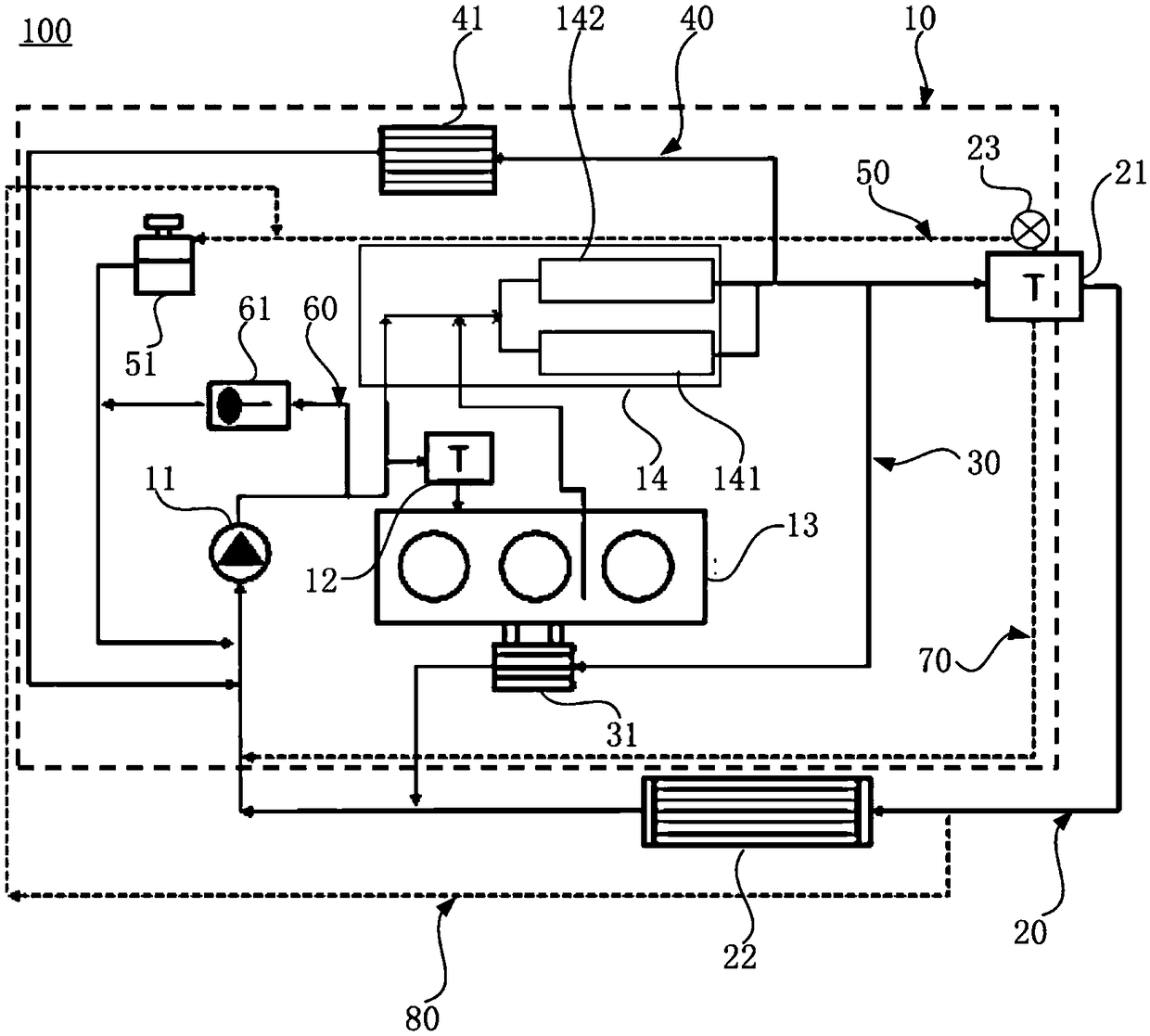
- It adopts a separate cooling system for the cylinder water jacket and the cylinder head water jacket, and uses mechanical water pumps, cylinder valves, cylinder head water jackets, thermostats, radiators and other components to form a multi-circulation cooling circuit to realize the diversion and heat exchange of the coolant. , heats up quickly and reduces friction losses.
Environmental Impact of Cooling Solutions
The environmental impact of cooling solutions for LS1 engines extends beyond performance considerations to encompass broader ecological concerns. Traditional cooling systems often rely on glycol-based coolants containing ethylene glycol or propylene glycol, which pose significant environmental hazards if improperly disposed of. These substances can contaminate soil and water sources, causing harm to aquatic ecosystems and potentially entering the food chain. Moreover, the production process of these coolants involves petrochemical derivatives, contributing to carbon emissions and resource depletion.
Recent advancements in cooling technology have introduced more environmentally friendly alternatives. Organic Acid Technology (OAT) coolants offer extended service life, reducing the frequency of fluid changes and subsequent waste. These formulations typically last 150,000-200,000 miles compared to conventional coolants' 30,000-50,000 mile lifespan, significantly decreasing the volume of waste coolant generated over an engine's operational life.
Water-wetter additives represent another eco-conscious approach, enhancing the thermal efficiency of existing cooling systems without requiring complete fluid replacement. By improving heat transfer capabilities, these additives allow engines to operate at optimal temperatures with reduced coolant volume, minimizing both resource consumption and waste generation.
The manufacturing processes for cooling system components also carry environmental implications. Aluminum radiators, while offering superior heat dissipation, require energy-intensive production methods. However, their lightweight properties contribute to overall vehicle efficiency, potentially offsetting initial production impacts through reduced fuel consumption during the vehicle's operational lifespan.
Recycling infrastructure for cooling system components presents both challenges and opportunities. While metals like aluminum and copper from radiators are highly recyclable, composite materials in modern cooling systems often end up in landfills. Emerging closed-loop recycling programs specifically designed for automotive cooling components show promise in reducing this waste stream.
Electric water pump systems, increasingly adopted in performance LS1 applications, offer environmental benefits through precise flow control and reduced parasitic power loss. These systems can operate only when needed and at optimal speeds, improving overall engine efficiency and reducing unnecessary fuel consumption, thereby lowering the carbon footprint of vehicle operation.
Future developments point toward integrated thermal management systems that holistically address engine cooling while minimizing environmental impact. These systems incorporate smart controllers, recyclable materials, and biodegradable coolant formulations, representing a comprehensive approach to sustainable heat management in high-performance engines.
Recent advancements in cooling technology have introduced more environmentally friendly alternatives. Organic Acid Technology (OAT) coolants offer extended service life, reducing the frequency of fluid changes and subsequent waste. These formulations typically last 150,000-200,000 miles compared to conventional coolants' 30,000-50,000 mile lifespan, significantly decreasing the volume of waste coolant generated over an engine's operational life.
Water-wetter additives represent another eco-conscious approach, enhancing the thermal efficiency of existing cooling systems without requiring complete fluid replacement. By improving heat transfer capabilities, these additives allow engines to operate at optimal temperatures with reduced coolant volume, minimizing both resource consumption and waste generation.
The manufacturing processes for cooling system components also carry environmental implications. Aluminum radiators, while offering superior heat dissipation, require energy-intensive production methods. However, their lightweight properties contribute to overall vehicle efficiency, potentially offsetting initial production impacts through reduced fuel consumption during the vehicle's operational lifespan.
Recycling infrastructure for cooling system components presents both challenges and opportunities. While metals like aluminum and copper from radiators are highly recyclable, composite materials in modern cooling systems often end up in landfills. Emerging closed-loop recycling programs specifically designed for automotive cooling components show promise in reducing this waste stream.
Electric water pump systems, increasingly adopted in performance LS1 applications, offer environmental benefits through precise flow control and reduced parasitic power loss. These systems can operate only when needed and at optimal speeds, improving overall engine efficiency and reducing unnecessary fuel consumption, thereby lowering the carbon footprint of vehicle operation.
Future developments point toward integrated thermal management systems that holistically address engine cooling while minimizing environmental impact. These systems incorporate smart controllers, recyclable materials, and biodegradable coolant formulations, representing a comprehensive approach to sustainable heat management in high-performance engines.
Performance Optimization Through Thermal Management
Thermal management is a critical factor in maximizing the performance potential of the LS1 engine. Effective heat management directly correlates with power output, efficiency, and longevity of engine components. The LS1's aluminum block and heads, while beneficial for weight reduction, present unique thermal challenges compared to traditional iron block engines.
When optimizing LS1 performance through thermal management, engineers focus on maintaining ideal operating temperatures across various engine systems. The optimal operating temperature range for the LS1 engine typically falls between 180-210°F (82-99°C), where combustion efficiency peaks and oil viscosity remains within ideal parameters. Deviations from this range can result in significant power losses and accelerated component wear.
Advanced cooling system modifications represent a primary approach to thermal optimization. High-flow water pumps increase coolant circulation by 15-30% compared to stock units, while aluminum radiators with increased surface area can improve heat dissipation by up to 40%. Performance thermostats calibrated to open at lower temperatures (160-180°F) help maintain more consistent engine temperatures during high-load operations.
Oil cooling systems play an equally important role in thermal management. Data indicates that maintaining oil temperatures between 180-240°F (82-116°C) can extend engine life by up to 30% while supporting optimal power output. Aftermarket oil coolers can reduce operating oil temperatures by 20-30°F during sustained high-performance driving conditions.
Intake air temperature management represents another critical thermal consideration. Each 10°F reduction in intake air temperature can yield approximately 1% increase in power output. Heat shields, thermal barriers, and cold air intake systems collectively work to reduce intake temperatures by 30-50°F compared to stock configurations under identical operating conditions.
Exhaust heat management through ceramic coatings and thermal wraps serves dual purposes: reducing under-hood temperatures by containing exhaust heat and improving exhaust gas velocity. Properly implemented exhaust thermal management can reduce key under-hood temperatures by 50-100°F while potentially adding 5-10 horsepower through improved scavenging effects.
Comprehensive thermal management strategies must address the integrated nature of engine systems. Modern approaches utilize thermal imaging and data acquisition to identify heat concentration points, allowing for targeted solutions rather than generalized modifications. This precision approach has demonstrated performance gains of 3-5% while simultaneously extending component life in high-performance applications.
When optimizing LS1 performance through thermal management, engineers focus on maintaining ideal operating temperatures across various engine systems. The optimal operating temperature range for the LS1 engine typically falls between 180-210°F (82-99°C), where combustion efficiency peaks and oil viscosity remains within ideal parameters. Deviations from this range can result in significant power losses and accelerated component wear.
Advanced cooling system modifications represent a primary approach to thermal optimization. High-flow water pumps increase coolant circulation by 15-30% compared to stock units, while aluminum radiators with increased surface area can improve heat dissipation by up to 40%. Performance thermostats calibrated to open at lower temperatures (160-180°F) help maintain more consistent engine temperatures during high-load operations.
Oil cooling systems play an equally important role in thermal management. Data indicates that maintaining oil temperatures between 180-240°F (82-116°C) can extend engine life by up to 30% while supporting optimal power output. Aftermarket oil coolers can reduce operating oil temperatures by 20-30°F during sustained high-performance driving conditions.
Intake air temperature management represents another critical thermal consideration. Each 10°F reduction in intake air temperature can yield approximately 1% increase in power output. Heat shields, thermal barriers, and cold air intake systems collectively work to reduce intake temperatures by 30-50°F compared to stock configurations under identical operating conditions.
Exhaust heat management through ceramic coatings and thermal wraps serves dual purposes: reducing under-hood temperatures by containing exhaust heat and improving exhaust gas velocity. Properly implemented exhaust thermal management can reduce key under-hood temperatures by 50-100°F while potentially adding 5-10 horsepower through improved scavenging effects.
Comprehensive thermal management strategies must address the integrated nature of engine systems. Modern approaches utilize thermal imaging and data acquisition to identify heat concentration points, allowing for targeted solutions rather than generalized modifications. This precision approach has demonstrated performance gains of 3-5% while simultaneously extending component life in high-performance applications.
Unlock deeper insights with PatSnap Eureka Quick Research — get a full tech report to explore trends and direct your research. Try now!
Generate Your Research Report Instantly with AI Agent
Supercharge your innovation with PatSnap Eureka AI Agent Platform!