

Materials Selection for Pressurized Water Reactor Fuel Cladding
APR 28, 20269 MIN READ
Generate Your Research Report Instantly with AI Agent
PatSnap Eureka helps you evaluate technical feasibility & market potential.
PWR Fuel Cladding Material Background and Objectives
Pressurized Water Reactor fuel cladding represents one of the most critical safety barriers in nuclear power generation, serving as the primary containment for radioactive fission products while maintaining structural integrity under extreme operating conditions. The evolution of cladding materials has been driven by the nuclear industry's relentless pursuit of enhanced safety, improved fuel utilization efficiency, and extended operational lifespans since the inception of commercial nuclear power in the 1950s.
The historical development of PWR fuel cladding materials began with aluminum alloys in early research reactors, quickly transitioning to stainless steel in the first generation of commercial PWRs. However, the superior nuclear properties of zirconium alloys, particularly their low thermal neutron absorption cross-section and excellent corrosion resistance in high-temperature water environments, led to their widespread adoption as the industry standard by the 1960s. This technological shift marked a pivotal moment in nuclear fuel design, enabling higher fuel burnup rates and improved reactor economics.
Contemporary PWR operations demand cladding materials that can withstand neutron fluences exceeding 10²² neutrons per square centimeter, temperatures ranging from 280°C to 350°C, and internal pressures up to 15 MPa while maintaining dimensional stability and corrosion resistance for fuel cycles extending beyond 18 months. The material must simultaneously provide mechanical support for fuel pellets, facilitate efficient heat transfer, and serve as an impermeable barrier preventing fission product release into the reactor coolant system.
Current technological objectives focus on developing advanced cladding materials capable of supporting accident-tolerant fuel concepts, extending fuel cycle lengths to 24 months or longer, and enhancing safety margins during both normal operations and postulated accident scenarios. These objectives encompass improved oxidation resistance at elevated temperatures, enhanced mechanical properties under irradiation, reduced hydrogen uptake rates, and superior dimensional stability throughout extended exposure periods.
The strategic importance of cladding material advancement extends beyond operational efficiency improvements to encompass fundamental safety enhancements, waste minimization through higher burnup achievements, and economic optimization through reduced fuel replacement frequencies and enhanced plant capacity factors.
The historical development of PWR fuel cladding materials began with aluminum alloys in early research reactors, quickly transitioning to stainless steel in the first generation of commercial PWRs. However, the superior nuclear properties of zirconium alloys, particularly their low thermal neutron absorption cross-section and excellent corrosion resistance in high-temperature water environments, led to their widespread adoption as the industry standard by the 1960s. This technological shift marked a pivotal moment in nuclear fuel design, enabling higher fuel burnup rates and improved reactor economics.
Contemporary PWR operations demand cladding materials that can withstand neutron fluences exceeding 10²² neutrons per square centimeter, temperatures ranging from 280°C to 350°C, and internal pressures up to 15 MPa while maintaining dimensional stability and corrosion resistance for fuel cycles extending beyond 18 months. The material must simultaneously provide mechanical support for fuel pellets, facilitate efficient heat transfer, and serve as an impermeable barrier preventing fission product release into the reactor coolant system.
Current technological objectives focus on developing advanced cladding materials capable of supporting accident-tolerant fuel concepts, extending fuel cycle lengths to 24 months or longer, and enhancing safety margins during both normal operations and postulated accident scenarios. These objectives encompass improved oxidation resistance at elevated temperatures, enhanced mechanical properties under irradiation, reduced hydrogen uptake rates, and superior dimensional stability throughout extended exposure periods.
The strategic importance of cladding material advancement extends beyond operational efficiency improvements to encompass fundamental safety enhancements, waste minimization through higher burnup achievements, and economic optimization through reduced fuel replacement frequencies and enhanced plant capacity factors.
Market Demand for Advanced Nuclear Fuel Cladding Materials
The global nuclear power industry is experiencing a renaissance driven by increasing energy security concerns and carbon neutrality commitments. This resurgence has created substantial demand for advanced nuclear fuel cladding materials that can withstand more demanding operational conditions while maintaining safety standards. Traditional zirconium-based alloys, while proven, face limitations in accident tolerance and extended burnup scenarios that modern reactor designs require.
Market drivers for advanced cladding materials stem from multiple converging factors. Existing nuclear facilities are pursuing license extensions and power uprates, necessitating materials capable of longer service lives and higher neutron exposures. New reactor construction programs worldwide, particularly in Asia and emerging markets, demand improved fuel performance and enhanced safety margins. The growing emphasis on accident-tolerant fuels following the Fukushima incident has accelerated regulatory and industry interest in alternative cladding solutions.
The pressurized water reactor segment represents the largest market opportunity, given that PWRs constitute approximately two-thirds of global nuclear capacity. Utilities are increasingly focused on fuel cycle economics, seeking cladding materials that enable higher burnup rates, longer cycle lengths, and reduced fuel replacement costs. Enhanced corrosion resistance and improved thermal conductivity have become critical performance requirements driving material innovation.
Regulatory frameworks are evolving to accommodate advanced cladding technologies, with licensing pathways being established for accident-tolerant fuel concepts. The Nuclear Regulatory Commission and international counterparts have initiated programs to expedite qualification of innovative cladding materials, creating market confidence for technology developers and potential adopters.
Supply chain considerations significantly influence market dynamics. The specialized nature of nuclear-grade materials requires extensive qualification processes and certified manufacturing capabilities. Established suppliers are investing in advanced material production facilities, while new entrants face substantial barriers related to quality assurance and regulatory compliance requirements.
Economic factors play a decisive role in market adoption patterns. While advanced cladding materials typically command premium pricing compared to conventional zirconium alloys, the total cost of ownership benefits through improved fuel utilization and reduced outage frequency provide compelling value propositions for utility operators focused on long-term operational efficiency.
Market drivers for advanced cladding materials stem from multiple converging factors. Existing nuclear facilities are pursuing license extensions and power uprates, necessitating materials capable of longer service lives and higher neutron exposures. New reactor construction programs worldwide, particularly in Asia and emerging markets, demand improved fuel performance and enhanced safety margins. The growing emphasis on accident-tolerant fuels following the Fukushima incident has accelerated regulatory and industry interest in alternative cladding solutions.
The pressurized water reactor segment represents the largest market opportunity, given that PWRs constitute approximately two-thirds of global nuclear capacity. Utilities are increasingly focused on fuel cycle economics, seeking cladding materials that enable higher burnup rates, longer cycle lengths, and reduced fuel replacement costs. Enhanced corrosion resistance and improved thermal conductivity have become critical performance requirements driving material innovation.
Regulatory frameworks are evolving to accommodate advanced cladding technologies, with licensing pathways being established for accident-tolerant fuel concepts. The Nuclear Regulatory Commission and international counterparts have initiated programs to expedite qualification of innovative cladding materials, creating market confidence for technology developers and potential adopters.
Supply chain considerations significantly influence market dynamics. The specialized nature of nuclear-grade materials requires extensive qualification processes and certified manufacturing capabilities. Established suppliers are investing in advanced material production facilities, while new entrants face substantial barriers related to quality assurance and regulatory compliance requirements.
Economic factors play a decisive role in market adoption patterns. While advanced cladding materials typically command premium pricing compared to conventional zirconium alloys, the total cost of ownership benefits through improved fuel utilization and reduced outage frequency provide compelling value propositions for utility operators focused on long-term operational efficiency.
Current Status and Challenges in Cladding Material Performance
The current landscape of pressurized water reactor fuel cladding materials is dominated by zirconium-based alloys, which have served the nuclear industry for over five decades. Zircaloy-2, Zircaloy-4, and advanced variants such as ZIRLO and M5 represent the state-of-the-art in commercial applications. These materials demonstrate excellent neutron transparency, adequate corrosion resistance under normal operating conditions, and sufficient mechanical properties for fuel rod integrity maintenance.
However, significant performance challenges have emerged that limit the operational envelope and safety margins of current cladding systems. Waterside corrosion remains a primary concern, particularly under high burnup conditions where oxide layer thickness can approach regulatory limits. The formation of protective oxide films, while initially beneficial, becomes problematic as these layers thicken and potentially spall, leading to accelerated corrosion rates and hydrogen pickup.
Hydrogen embrittlement presents another critical challenge, as absorbed hydrogen during corrosion processes can precipitate as hydrides under certain temperature and stress conditions. This phenomenon reduces cladding ductility and can lead to delayed hydride cracking, particularly during reactor shutdown and startup cycles when thermal gradients are most severe.
The mechanical integrity of cladding materials faces additional stress from pellet-cladding interaction effects, where fuel swelling and fission gas release create internal pressures that challenge the structural limits of the cladding. Irradiation-induced growth and creep further complicate the mechanical performance picture, as neutron bombardment alters the microstructure and dimensional stability of zirconium alloys over extended operational periods.
Recent accident scenarios have highlighted the inadequate high-temperature oxidation resistance of zirconium-based claddings. Beyond 1200°C, rapid steam oxidation occurs with significant hydrogen generation, creating potential safety hazards. This limitation has intensified research into accident-tolerant fuel concepts and alternative cladding materials.
Geographical distribution of cladding technology development shows concentration in established nuclear nations, with significant research programs in the United States, France, Japan, and South Korea. Emerging nuclear markets face technology transfer challenges and regulatory acceptance hurdles for advanced cladding materials, creating a technological divide in global nuclear fuel cycle capabilities.
The industry currently grapples with balancing extended burnup requirements against material performance limitations, while simultaneously addressing enhanced safety requirements and economic pressures for improved fuel utilization efficiency.
However, significant performance challenges have emerged that limit the operational envelope and safety margins of current cladding systems. Waterside corrosion remains a primary concern, particularly under high burnup conditions where oxide layer thickness can approach regulatory limits. The formation of protective oxide films, while initially beneficial, becomes problematic as these layers thicken and potentially spall, leading to accelerated corrosion rates and hydrogen pickup.
Hydrogen embrittlement presents another critical challenge, as absorbed hydrogen during corrosion processes can precipitate as hydrides under certain temperature and stress conditions. This phenomenon reduces cladding ductility and can lead to delayed hydride cracking, particularly during reactor shutdown and startup cycles when thermal gradients are most severe.
The mechanical integrity of cladding materials faces additional stress from pellet-cladding interaction effects, where fuel swelling and fission gas release create internal pressures that challenge the structural limits of the cladding. Irradiation-induced growth and creep further complicate the mechanical performance picture, as neutron bombardment alters the microstructure and dimensional stability of zirconium alloys over extended operational periods.
Recent accident scenarios have highlighted the inadequate high-temperature oxidation resistance of zirconium-based claddings. Beyond 1200°C, rapid steam oxidation occurs with significant hydrogen generation, creating potential safety hazards. This limitation has intensified research into accident-tolerant fuel concepts and alternative cladding materials.
Geographical distribution of cladding technology development shows concentration in established nuclear nations, with significant research programs in the United States, France, Japan, and South Korea. Emerging nuclear markets face technology transfer challenges and regulatory acceptance hurdles for advanced cladding materials, creating a technological divide in global nuclear fuel cycle capabilities.
The industry currently grapples with balancing extended burnup requirements against material performance limitations, while simultaneously addressing enhanced safety requirements and economic pressures for improved fuel utilization efficiency.
Current Material Solutions for PWR Fuel Cladding
01 Zirconium-based cladding materials
Zirconium alloys are widely used as fuel cladding materials due to their excellent corrosion resistance, low neutron absorption cross-section, and good mechanical properties at operating temperatures. These materials provide effective containment of nuclear fuel while maintaining structural integrity under reactor conditions. Various zirconium alloy compositions have been developed to optimize performance characteristics including creep resistance and oxidation behavior.- Zirconium-based cladding materials: Zirconium alloys are widely used as fuel cladding materials due to their excellent corrosion resistance, low neutron absorption cross-section, and good mechanical properties at operating temperatures. These materials provide effective containment of nuclear fuel while maintaining structural integrity under reactor conditions. Various zirconium alloy compositions have been developed to optimize performance characteristics including creep resistance and oxidation behavior.
- Advanced ceramic cladding materials: Ceramic materials offer enhanced accident tolerance and improved performance under extreme conditions compared to traditional metallic claddings. These materials exhibit superior high-temperature stability, oxidation resistance, and reduced hydrogen generation during loss-of-coolant accidents. Silicon carbide and other advanced ceramics are being developed to provide better safety margins and extended fuel cycle capabilities.
- Composite and multi-layer cladding systems: Multi-layered cladding designs incorporate different materials to combine beneficial properties and overcome individual material limitations. These systems may include barrier layers, structural components, and protective coatings that work together to enhance overall performance. Composite approaches allow for optimization of specific properties such as corrosion resistance, mechanical strength, and thermal conductivity.
- Surface treatments and protective coatings: Surface modification techniques and protective coatings are applied to cladding materials to improve their performance characteristics and extend service life. These treatments can enhance corrosion resistance, reduce fretting wear, and provide additional barriers against fission product release. Various coating technologies and surface engineering methods have been developed to address specific operational challenges.
- Manufacturing and fabrication processes: Specialized manufacturing techniques are employed to produce fuel cladding materials with precise dimensions, controlled microstructures, and consistent properties. These processes include advanced forming methods, heat treatment procedures, and quality control measures to ensure reliable performance under reactor conditions. Manufacturing innovations focus on improving material properties and reducing production costs while maintaining strict quality standards.
02 Advanced ceramic cladding materials
Ceramic materials offer enhanced accident tolerance and improved performance under extreme conditions compared to traditional metallic claddings. These materials exhibit superior high-temperature stability, oxidation resistance, and reduced hydrogen generation during loss-of-coolant accidents. Silicon carbide and other advanced ceramics are being developed to provide better safety margins and extended fuel cycle capabilities.Expand Specific Solutions03 Composite and multi-layer cladding systems
Multi-layered cladding designs incorporate different materials to optimize various performance aspects simultaneously. These systems may combine metallic substrates with ceramic coatings or utilize fiber-reinforced composites to achieve enhanced mechanical properties, corrosion resistance, and thermal performance. The layered approach allows for tailored properties at different interfaces and improved overall cladding performance.Expand Specific Solutions04 Surface treatment and coating technologies
Surface modification techniques are employed to enhance the performance of base cladding materials through specialized coatings, surface alloying, or texturing processes. These treatments can improve corrosion resistance, reduce crud deposition, enhance heat transfer characteristics, and provide additional barriers against fission product release. Various coating materials and application methods have been developed to address specific operational challenges.Expand Specific Solutions05 Manufacturing and fabrication processes
Specialized manufacturing techniques are critical for producing high-quality fuel cladding materials with precise dimensional control and optimized microstructures. These processes include advanced forming methods, heat treatment procedures, welding techniques, and quality control measures to ensure consistent material properties and structural integrity. Manufacturing innovations focus on improving production efficiency while maintaining stringent quality standards required for nuclear applications.Expand Specific Solutions
Major Players in Nuclear Fuel Cladding Material Industry
The pressurized water reactor fuel cladding materials sector represents a mature, highly regulated industry dominated by established nuclear technology leaders. The market operates within a stable oligopoly structure, with major players including Westinghouse Electric Co., Framatome SA, and AREVA GmbH controlling significant market shares through decades of technological expertise and regulatory compliance. Asian manufacturers like Mitsubishi Heavy Industries and Korea Hydro & Nuclear Power have emerged as competitive forces, while Chinese entities such as China Nuclear Power Research & Design Institute and Shanghai Nuclear Engineering Research & Design Institute are rapidly advancing their capabilities. The technology maturity is high, with zirconium-based alloys remaining the industry standard, though companies like TerraPower LLC are exploring advanced materials for next-generation reactor designs. Research institutions including Tsinghua University, Harbin Institute of Technology, and Penn State Research Foundation continue driving incremental innovations in corrosion resistance and thermal performance, while the overall market growth remains tied to global nuclear capacity expansion and fleet modernization requirements.
Westinghouse Electric Co. LLC
Technical Solution: Westinghouse has developed advanced zirconium-based alloy cladding materials, particularly the ZIRLO alloy, which incorporates niobium additions to enhance corrosion resistance and mechanical properties under high-temperature pressurized water reactor conditions. The company has also pioneered accident-tolerant fuel (ATF) cladding technologies, including silicon carbide fiber-reinforced silicon carbide (SiC/SiC) composite cladding and chromium-coated zirconium alloys. These materials demonstrate superior performance during loss-of-coolant accidents, maintaining structural integrity at temperatures exceeding 1200°C while providing enhanced oxidation resistance compared to traditional Zircaloy materials.
Strengths: Extensive operational experience with proven ZIRLO alloy performance, leading ATF technology development. Weaknesses: High development costs for advanced materials, regulatory approval challenges for new cladding designs.
Framatome SA
Technical Solution: Framatome has developed the M5 zirconium alloy cladding system, which contains niobium as the primary alloying element to improve corrosion resistance and reduce hydrogen pickup in PWR environments. The company has also advanced chromium-coated zirconium alloy cladding as part of their Enhanced Accident Tolerant Fuel (EATF) program. This coating provides a protective barrier that significantly reduces oxidation rates during high-temperature transients. Additionally, Framatome is developing silicon carbide-based cladding materials that offer superior thermal conductivity and chemical stability, potentially extending fuel burnup limits while maintaining safety margins during normal and accident conditions.
Strengths: Strong European market presence, proven M5 alloy performance, comprehensive EATF development program. Weaknesses: Limited market share in Asia-Pacific region, competition from established zirconium alloy suppliers.
Core Material Science Innovations in Cladding Technology
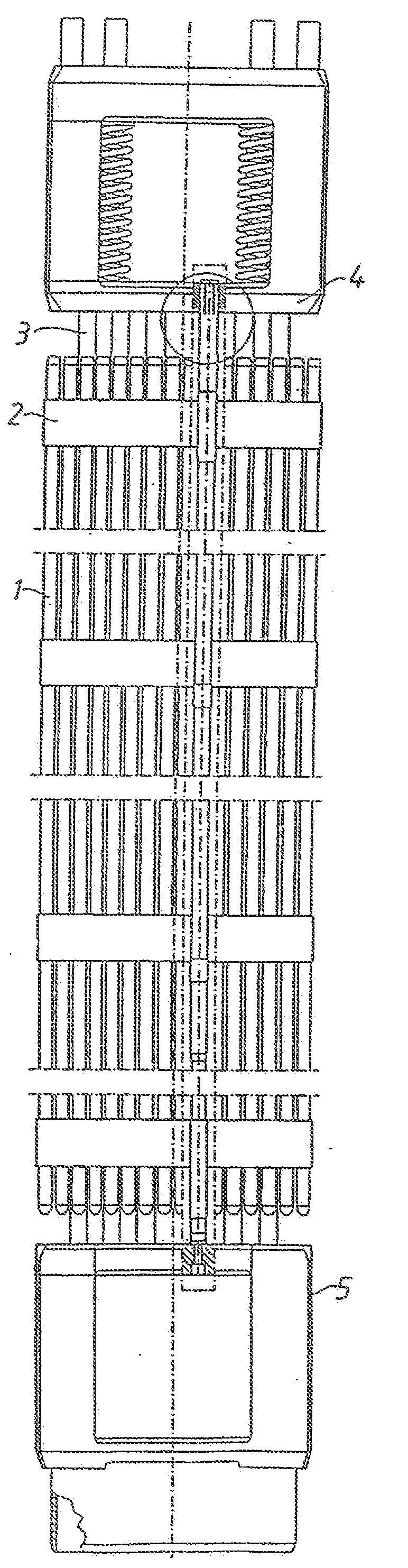
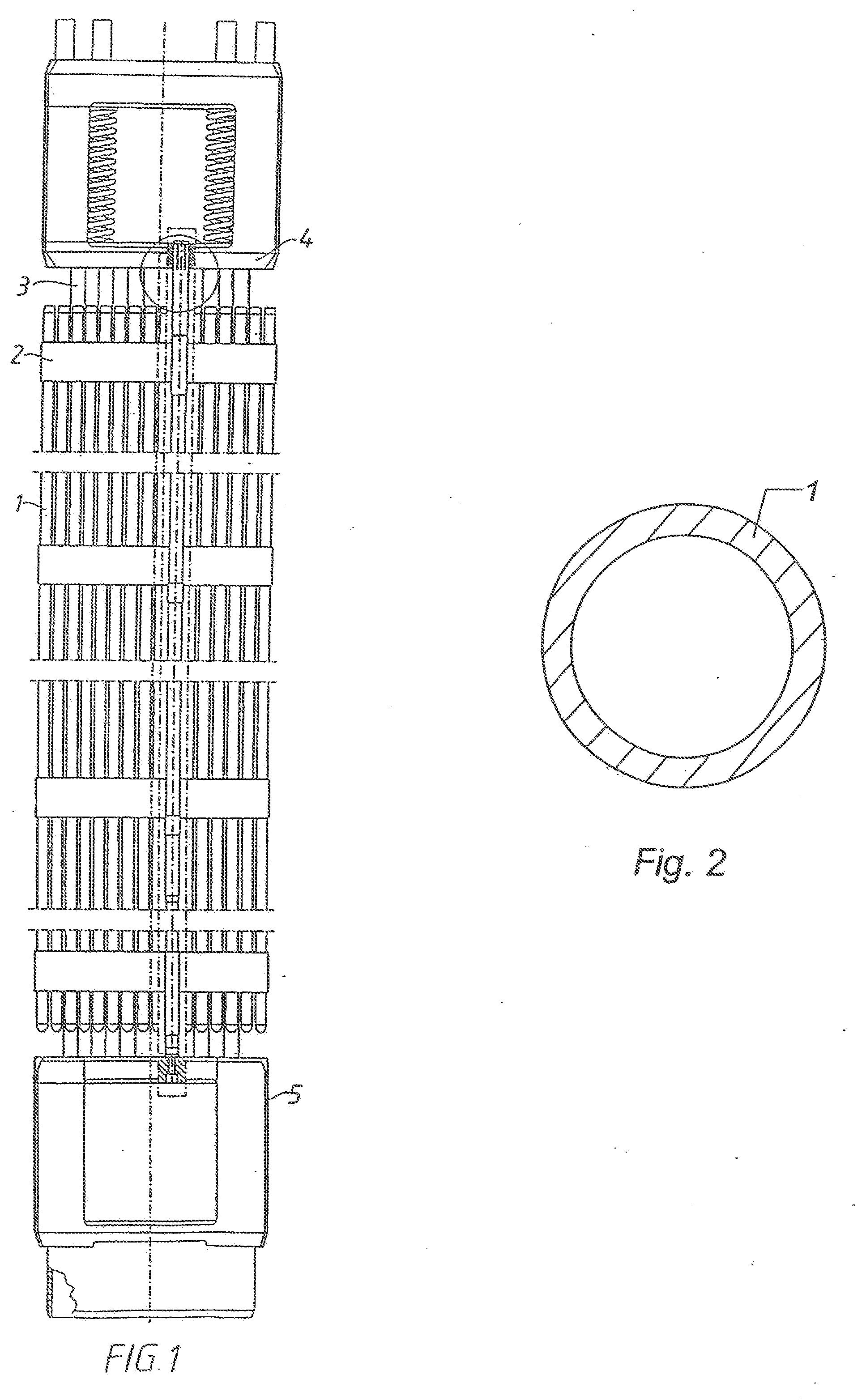
Method, use and device concerning cladding tubes for nuclear fuel and a fuel assembly for a nuclear pressure water reactor
PatentInactiveUS20090060115A1
Innovation
- A method involving a final annealing process that partially recrystallizes the Zr-based alloy cladding tubes, maintaining residual stresses to prevent radial hydride formation, while ensuring high ductility and low creep rates, by controlling the annealing temperature and time to achieve a degree of recrystallization between 5% and 95%, preferably 60% to 90%, to enhance resistance against pellet-cladding interaction and neutron radiation effects.
Composite nuclear fuel cladding, method of making same and use thereof to prevent oxidation/hydrogenation
PatentActiveJP2017531181A
Innovation
- A manufacturing process using High Power Impulse Magnetron Sputtering (HiPIMS) to deposit a chromium-based outer layer on a zirconium-based inner layer, optionally with an intervening layer like tantalum, enhancing resistance to oxidation and hydrogenation at high temperatures.


Nuclear Safety Regulations for Fuel Cladding Materials
Nuclear safety regulations for fuel cladding materials represent a comprehensive framework of international and national standards that govern the selection, qualification, and deployment of materials in pressurized water reactor environments. These regulations have evolved significantly since the early days of commercial nuclear power, driven by operational experience, research findings, and lessons learned from various incidents. The regulatory landscape encompasses multiple layers of oversight, including design basis requirements, material specifications, manufacturing standards, and in-service monitoring protocols.
The International Atomic Energy Agency (IAEA) provides foundational safety standards that serve as the basis for national regulatory frameworks worldwide. These standards establish fundamental safety principles for fuel cladding materials, emphasizing the importance of maintaining fuel geometry, preventing fission product release, and ensuring structural integrity under normal and accident conditions. National regulatory bodies, such as the U.S. Nuclear Regulatory Commission (NRC), European nuclear safety authorities, and other regional organizations, have developed detailed technical specifications that translate these principles into enforceable requirements.
Material qualification processes under current regulations require extensive testing and documentation to demonstrate compliance with safety criteria. Cladding materials must undergo rigorous evaluation including mechanical property testing, corrosion resistance assessment, neutron irradiation studies, and thermal performance validation. The regulatory framework mandates that materials maintain their protective function throughout the entire fuel cycle, from initial loading through extended burnup conditions and potential transient scenarios.
Recent regulatory developments have focused on accommodating advanced cladding materials while maintaining stringent safety standards. Regulatory bodies are updating their guidance documents to address accident-tolerant fuel concepts, enhanced corrosion-resistant alloys, and improved manufacturing techniques. These updates require comprehensive technical justification, including comparative safety analyses and extensive experimental validation programs.
Compliance verification mechanisms include pre-licensing reviews, manufacturing oversight, quality assurance programs, and continuous monitoring requirements. Regulatory authorities maintain active surveillance of cladding performance through mandatory reporting systems, periodic safety reviews, and investigation of any anomalous behavior. This regulatory structure ensures that material selection decisions for PWR fuel cladding are grounded in proven safety performance and supported by robust technical evidence.
The International Atomic Energy Agency (IAEA) provides foundational safety standards that serve as the basis for national regulatory frameworks worldwide. These standards establish fundamental safety principles for fuel cladding materials, emphasizing the importance of maintaining fuel geometry, preventing fission product release, and ensuring structural integrity under normal and accident conditions. National regulatory bodies, such as the U.S. Nuclear Regulatory Commission (NRC), European nuclear safety authorities, and other regional organizations, have developed detailed technical specifications that translate these principles into enforceable requirements.
Material qualification processes under current regulations require extensive testing and documentation to demonstrate compliance with safety criteria. Cladding materials must undergo rigorous evaluation including mechanical property testing, corrosion resistance assessment, neutron irradiation studies, and thermal performance validation. The regulatory framework mandates that materials maintain their protective function throughout the entire fuel cycle, from initial loading through extended burnup conditions and potential transient scenarios.
Recent regulatory developments have focused on accommodating advanced cladding materials while maintaining stringent safety standards. Regulatory bodies are updating their guidance documents to address accident-tolerant fuel concepts, enhanced corrosion-resistant alloys, and improved manufacturing techniques. These updates require comprehensive technical justification, including comparative safety analyses and extensive experimental validation programs.
Compliance verification mechanisms include pre-licensing reviews, manufacturing oversight, quality assurance programs, and continuous monitoring requirements. Regulatory authorities maintain active surveillance of cladding performance through mandatory reporting systems, periodic safety reviews, and investigation of any anomalous behavior. This regulatory structure ensures that material selection decisions for PWR fuel cladding are grounded in proven safety performance and supported by robust technical evidence.
Environmental Impact Assessment of Cladding Materials
The environmental impact assessment of pressurized water reactor fuel cladding materials encompasses multiple critical dimensions that extend far beyond operational performance considerations. The lifecycle environmental footprint begins with raw material extraction and processing, where zirconium-based alloys require energy-intensive mining and purification processes that generate significant carbon emissions and industrial waste streams.
Manufacturing processes for cladding materials involve high-temperature metallurgical operations, chemical treatments, and precision fabrication techniques that consume substantial energy resources and produce various byproducts. The production of zirconium alloys, particularly Zircaloy variants, requires extensive chemical processing including chlorination, reduction, and alloying steps that generate hazardous waste materials requiring specialized disposal methods.
During reactor operation, cladding materials undergo neutron irradiation that fundamentally alters their atomic structure, creating radioactive isotopes and degradation products. While these materials remain contained within the reactor system during normal operation, the long-term environmental implications become significant during decommissioning phases when activated cladding components require careful handling and disposal.
Post-irradiation environmental considerations involve complex waste management challenges, as spent fuel cladding becomes highly radioactive with extended half-lives. The zirconium matrix absorbs neutrons to form various isotopes, creating materials that require geological disposal solutions spanning thousands of years. Current environmental impact assessments indicate that cladding materials contribute approximately 15-20% of the total radioactive waste volume from nuclear fuel cycles.
Alternative cladding materials under development, including silicon carbide composites and advanced metallic alloys, present different environmental profiles. Silicon carbide offers potential advantages in terms of reduced activation products and enhanced accident tolerance, potentially minimizing long-term environmental burdens. However, the manufacturing processes for these advanced materials currently involve higher energy consumption and more complex chemical synthesis routes.
Regulatory frameworks increasingly emphasize comprehensive environmental impact assessments that consider entire material lifecycles, driving research toward more sustainable cladding solutions that balance operational safety requirements with environmental stewardship objectives.
Manufacturing processes for cladding materials involve high-temperature metallurgical operations, chemical treatments, and precision fabrication techniques that consume substantial energy resources and produce various byproducts. The production of zirconium alloys, particularly Zircaloy variants, requires extensive chemical processing including chlorination, reduction, and alloying steps that generate hazardous waste materials requiring specialized disposal methods.
During reactor operation, cladding materials undergo neutron irradiation that fundamentally alters their atomic structure, creating radioactive isotopes and degradation products. While these materials remain contained within the reactor system during normal operation, the long-term environmental implications become significant during decommissioning phases when activated cladding components require careful handling and disposal.
Post-irradiation environmental considerations involve complex waste management challenges, as spent fuel cladding becomes highly radioactive with extended half-lives. The zirconium matrix absorbs neutrons to form various isotopes, creating materials that require geological disposal solutions spanning thousands of years. Current environmental impact assessments indicate that cladding materials contribute approximately 15-20% of the total radioactive waste volume from nuclear fuel cycles.
Alternative cladding materials under development, including silicon carbide composites and advanced metallic alloys, present different environmental profiles. Silicon carbide offers potential advantages in terms of reduced activation products and enhanced accident tolerance, potentially minimizing long-term environmental burdens. However, the manufacturing processes for these advanced materials currently involve higher energy consumption and more complex chemical synthesis routes.
Regulatory frameworks increasingly emphasize comprehensive environmental impact assessments that consider entire material lifecycles, driving research toward more sustainable cladding solutions that balance operational safety requirements with environmental stewardship objectives.
Unlock deeper insights with PatSnap Eureka Quick Research — get a full tech report to explore trends and direct your research. Try now!
Generate Your Research Report Instantly with AI Agent
Supercharge your innovation with PatSnap Eureka AI Agent Platform!